Is the Coast Guard Going to Bring a Knife to a Gun Fight? A Gun to a Missile Fight?

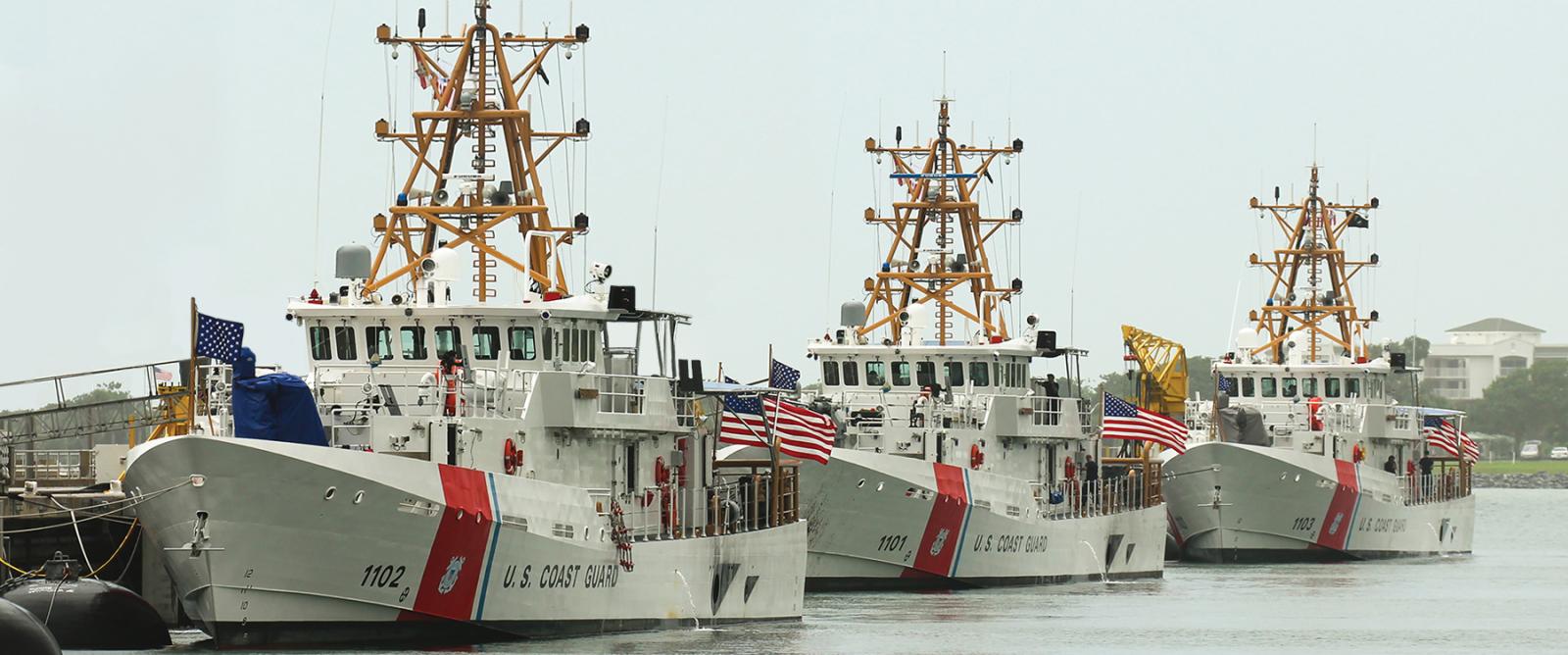
The first three fast response cutters—the USCGC Richard Etheridge (WPC-1102), Bernard C. Webber (WPC-1101), and William Flores (WPC-1103). Credit U.S. COAST GUARD. In case of a maritime terrorist attack, Webber class Fast Response Cutters are likely to be the most potent response the Coast Guard would be able field. 

Why is it that the Coast Guard has not mounted missiles or torpedoes on their ships since about 1991?

Currently the US Coast Guard’s most powerful weapons are the 57mm Mk110 and the 76mm Mk75. Do they assure that the Coast Guard will be able to take actions inherent in Coast Guard missions, including the ability to forcibly stop any vessel–any vessel— regardless of size? Will the larger cutters mounting these weapons even be in the vicinity when needed? When called upon, will the units on scene have any effective weapons?

I don’t think so.  In fact, we are less capable of doing so than we were in the 1930s.

When asked about this in 2020, then Commandant, Admiral Fagan, is reported to have said essentially, “For the present time, the U.S. Coast Guard is satisfied with keeping the current ‘gun and no missiles’ weapons fit the same and exercising the White-Hull Humanitarian symbol of Search and Rescue and Maritime Law Enforcement wherever and whenever the large Coast Guard Cutters sail into far off seas.”

My response at the time was here. I recognize some advantage in being seen as non-threatening, but few people would mistake even a missile armed Cutter for an invading force, and torpedoes are useless against targets on land. Coast Guard cutters overseas missions are primarily law enforcement. In the future, cutters may be in gray zone conflicts with the aggressive China Coast Guard–the largest coast guard fleet in the world, which usually operates cutters in groups. We don’t want USCG cutters to look like they can be pushed around.

Looking helpless may not inspire confidence in our allies.
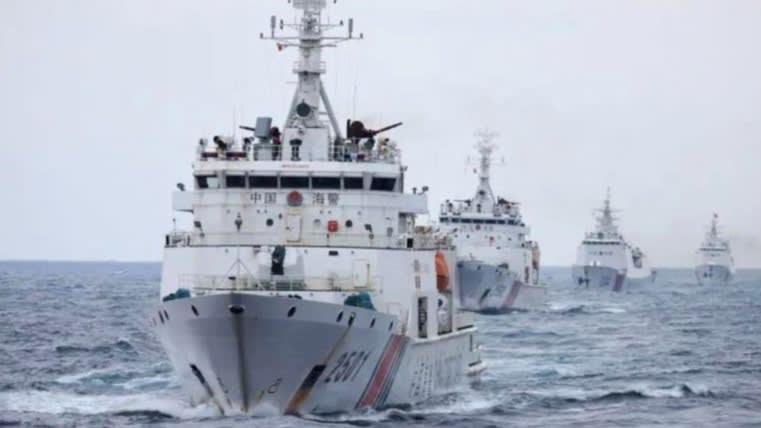
This Chinese coast guard ships armed with 76mm and 30mm guns© Kyodo

Wartime:

It seems likely that, if the US has a conflict with China, one of the first things the Coast Guard will have to do is seize all Chinese owned/flagged/manned vessels in US waters. Naturally some will resist. The Coast Guard will need to be able to overcome any resistance without asking for help from other armed services because they will be busy elsewhere.

As the conflict develops, it it likely the Coast Guard will be involved in blockade operations and otherwise tasked with hunting down Chinese controlled shipping that might be carrying agents, special forces, mines, or even containerized missile launchers.

We are not just talking about small vessels here. Some are over a thousand feet long and there are hundreds of them.

Law Enforcement/Counter-Terrorism:

Coast Guard vessels patrol boat size and larger are not just SAR assets. They are law enforcement units and in wartime combatants. Included in their peacetime law enforcement role is counter terrorism.

Wise men learn from the mistakes of others. Consider the lessons to be learned from the response to attacks on 9/11 and the North Hollywood shootout.

9/11: We knew about kamikazes. We knew airplanes loaded with fuel could be used as weapons. We knew that big planes were more destructive than small ones.

Domain awareness failed when the aircraft turned off or changed their transponder codes. Communications between FAA and NORAD were poor. Interceptors were too few and too far between. Interceptors once launched were sent in the wrong directions. Managers focused on the first attack, which was then already over, refused to receive a report of the second attack in progress.

Too many layers of decision making between detection and action. For timely action, best if the unit that detects an attack can respond immediately, and Coast Guard units are likely to be the first to recognize a maritime terrorist attack.
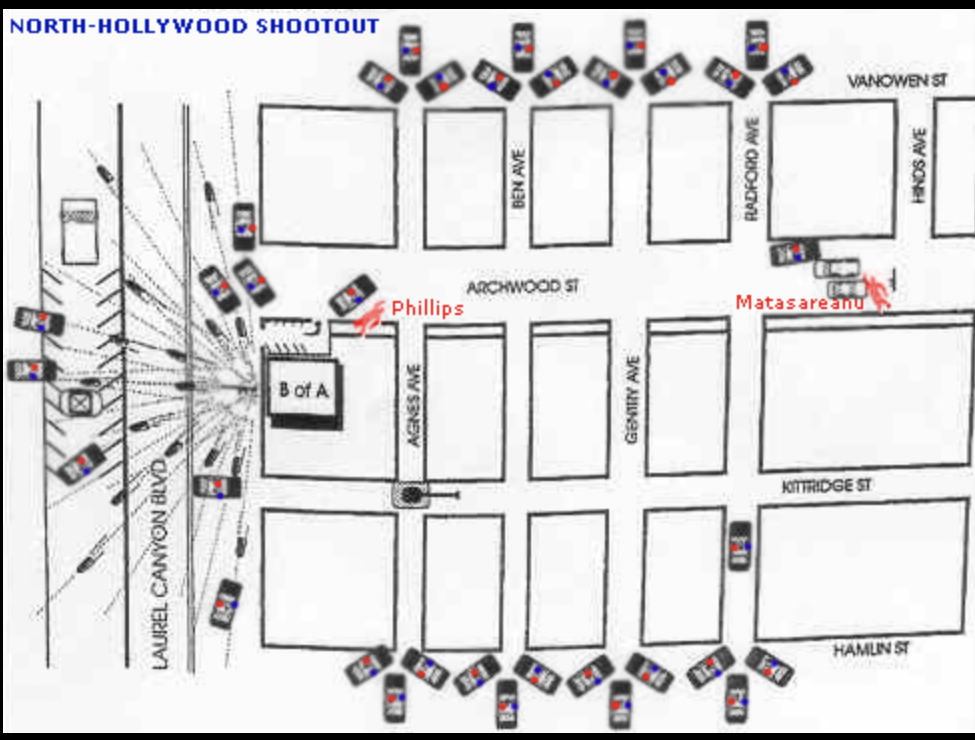
North Hollywood Shootout:

“The North Hollywood shootout, also known as the Battle of North Hollywood, was a confrontation between two heavily armed and armored bank robbers, Larry Phillips Jr. and Emil Mătăsăreanu, and police officers in the North Hollywood neighborhood of Los Angeles on February 28, 1997.

In this case the response to the crime was prompt but inadequate. At the time, the police on patrol were generally armed with only the classic 38 Special revolver, 9mm handguns, and a few shotguns. The bank robbers armor was impervious to these weapons. The robbers carried automatic rifles with high capacity magazines with up to 100 rounds. The two robbers fired approximately 1100 rounds. Some police officers even reequipped themselves with weapons from a local firearms dealer.

An inventory of the weapons used by the two bank robbers:

  • A Bushmaster XM-15 converted illegally to fire full auto with two 100-round Beta Magazines and fitted with a M16A1-style handguard
  • A Heckler & Koch HK-91 semi automatic rifle with several 30-round magazines
  • A Beretta 92FS with several magazines
  • Three different civilian-model Norinco Kalashnikov-style rifles converted illegally to fire full auto with several 75- to 100-round drum magazines and 30-round box magazines

The police were ultimately successful because of the overwhelming response. Over 300 law enforcement officers from various forces had responded to the citywide tactical alert, but they were really not prepared to confront just two men who were armed or protected in ways they did not expect. The perpetrators, Phillips was shot 11 times, including his self-inflicted gunshot wound to the chin, while Mătăsăreanu was shot 29 times. Twelve police officers and eight civilians were injured.

If terrorist sage a maritime attack, it is unlikely to be what the Coast Guard has trained for. Coast Guard capabilities are public knowledge. Ballistic protection to protect terrorist operators or shooters against common Coast Guard weapons is relatively easy.

Terrorist can easily put protected firing positions and strong points on a ship, even if the Coast Guard has not done it.

Tests have shown that 25mm Mk38 rounds may not even penetrate a quarter inch of aluminum.

Even relatively small terrorist controlled vessels could be armed with a variety of weapons more destructive than the .50 caliber machine gun or the 25mm gun. RPGs (rocket propelled grenades) are common, but there are recoilless rifles, heavy machine guns, anti-tank and anti-aircraft guns up to 152mm, and anti-tank guided missiles that would also work well against a cutter, that are widely distributed.

Here are two examples. Both are widely available, compact, and hard hitting. The options are almost endless.
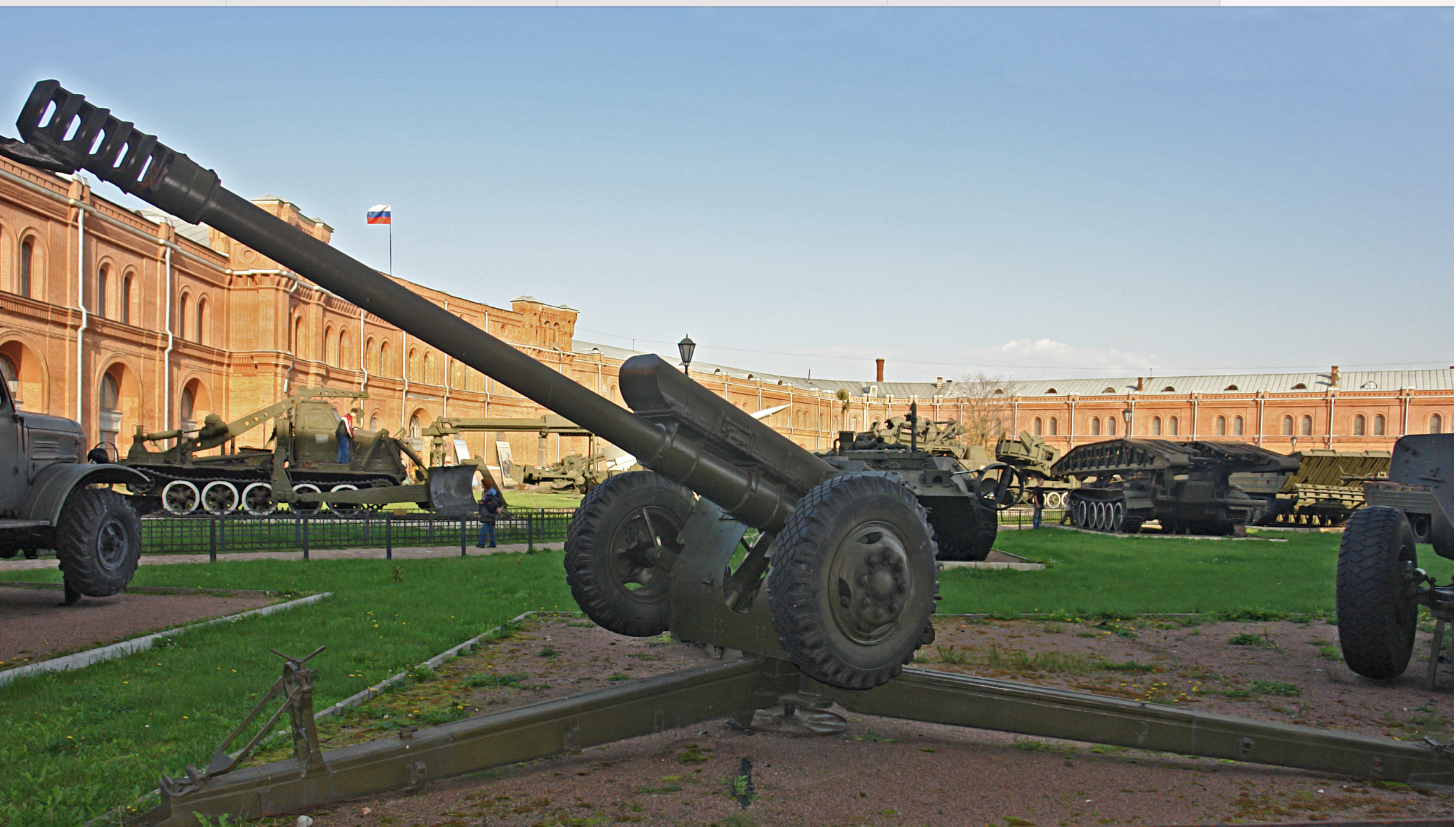
122mm howitzer D-30 (2A-18) Chief Designer F. F. Petrov (1960) Maximum range: 15300 meters Rate of fire: 6 – 8 rounds per minute Mass: 3200 kg Shell mass: 22 kg. Photo credit George Shuklin

The 122-mm howitzer D-30

 … is a Soviet howitzer that first entered service in 1960. It is a robust piece that focuses on the essential features of a towed field gun suitable for all conditions. The D-30 has a maximum range of 15.4 km (9.6 mi) or 21.9 km (13.6 mi) using rocket-assisted projectile ammunition.

With its three-leg mounting, the D-30 can be rapidly traversed through 360 degrees. Although no longer manufactured in the countries of the former Soviet Union, the D-30 is still manufactured internationally and is in service in more than 60 countries’ armed forces.
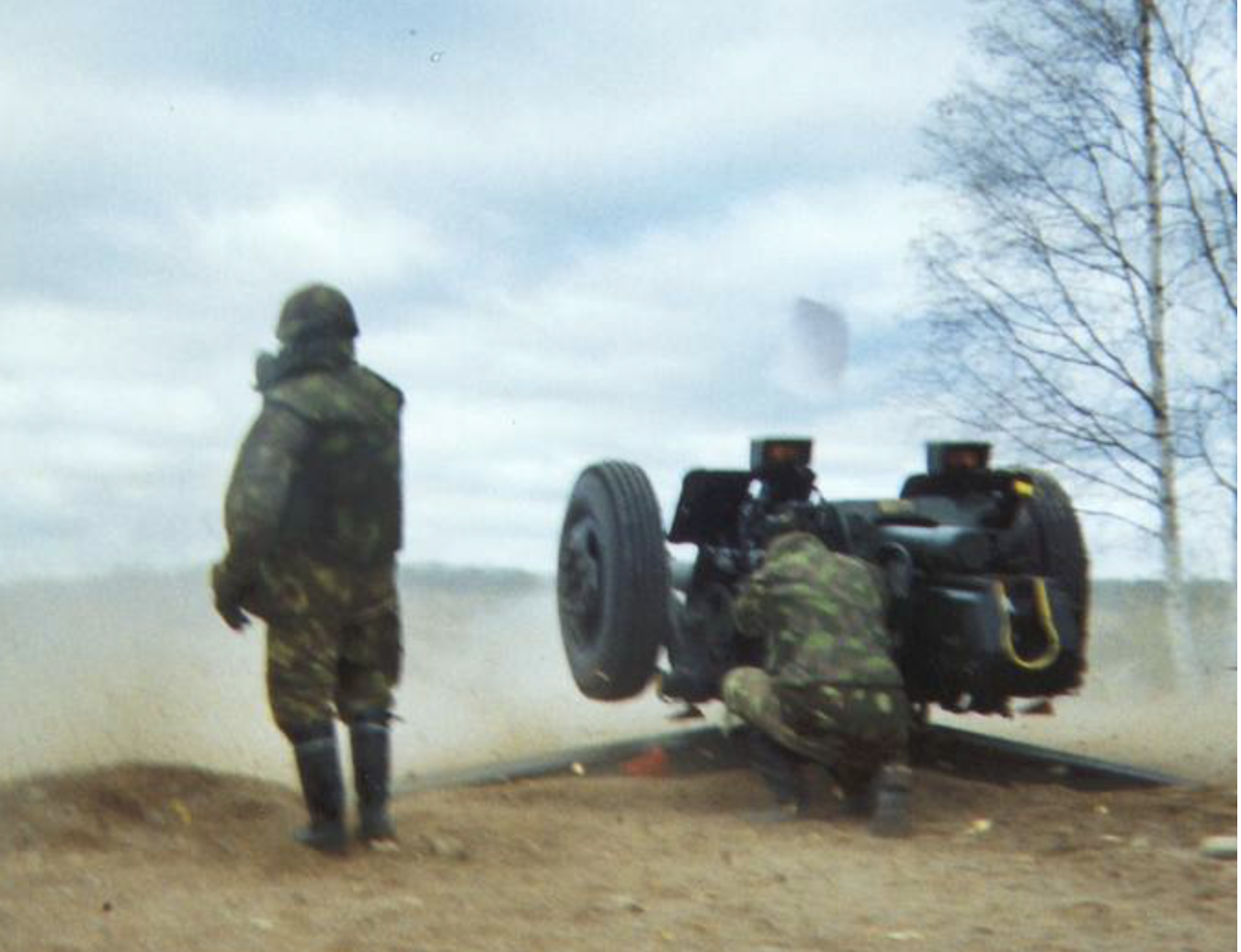
Finnish D-30 in direct fire during a training exercise. Photo credit: Jaakko Pulkkinen
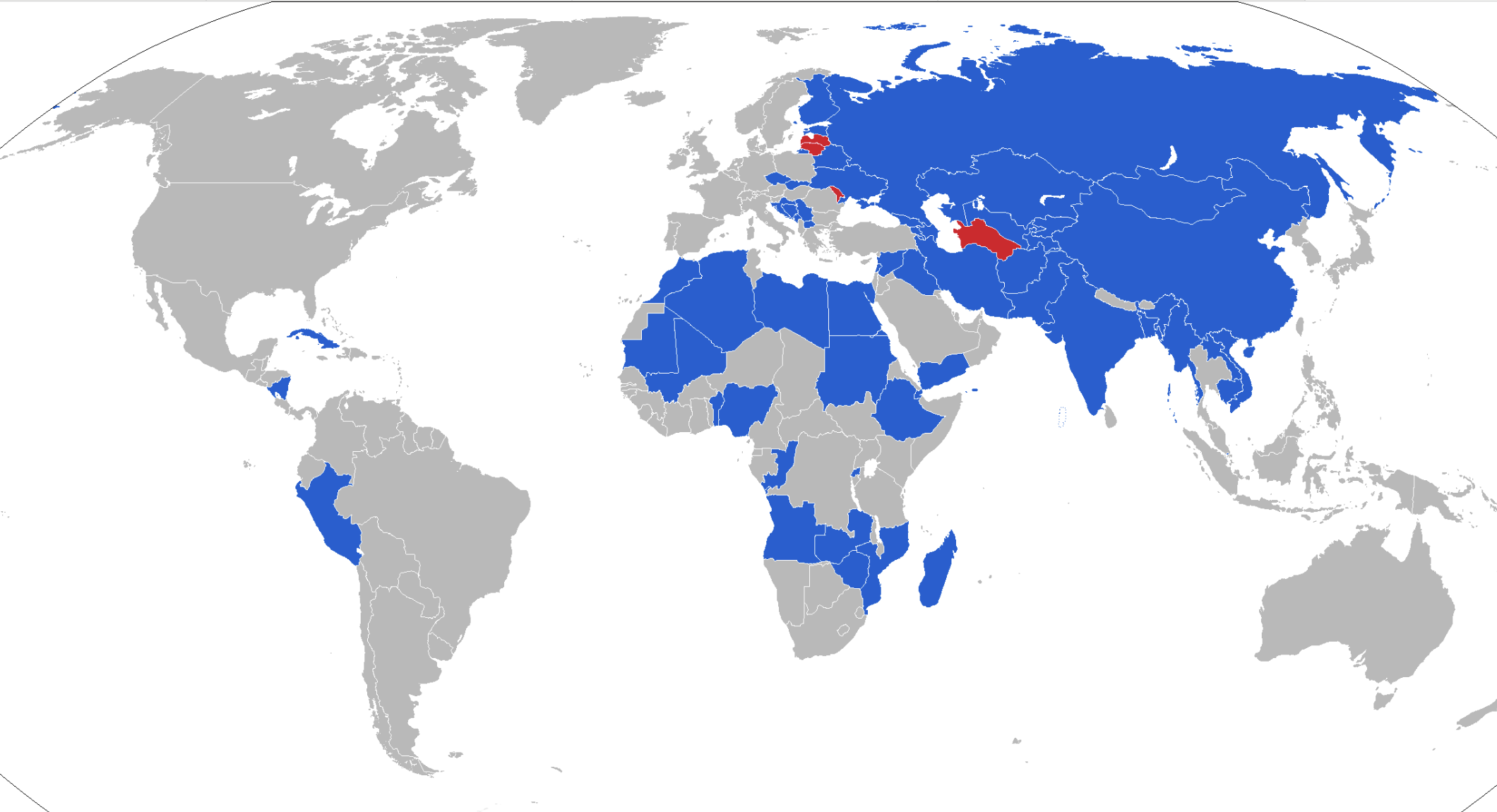
Map of D-30 operators in blue with former operators in red. From Wikipedia. Credit: Jurying
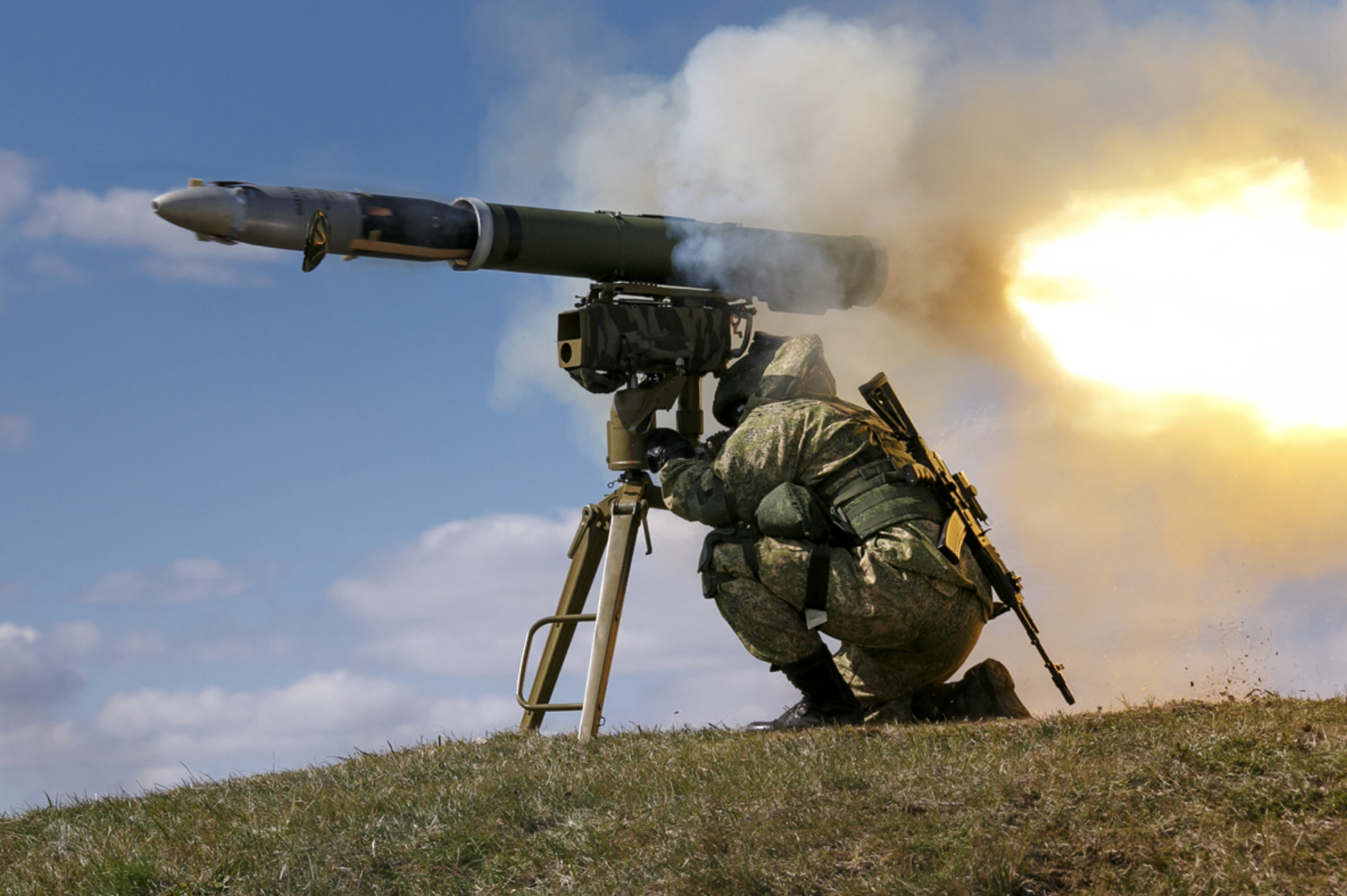
9M133 Kornet:

9M133 Kornet. Control check of cadets of the Training Center for Combat Use of Missile Troops and Artillery of the Ground Forces of the Western Military District (Moscow Region).

The 9M133 Kornet (Russian: Корнет; “Cornet”, NATO reporting name AT-14 Spriggan, export designation Kornet-E) is a Russian man-portable anti-tank guided missile (ATGM) intended for use against main battle tanks. It was first introduced into service with the Russian army in 1998.

The Kornet is among the most capable Russian ATGMs. It was further developed into the 9M133 Kornet-EM, which has increased range, an improved warhead, and equipped with an automatic target tracker (fire-and-forget capability).

The Kornet has been widely exported and is produced under license in several countries. It was first used in combat in 2003 and has since been used in many conflicts.
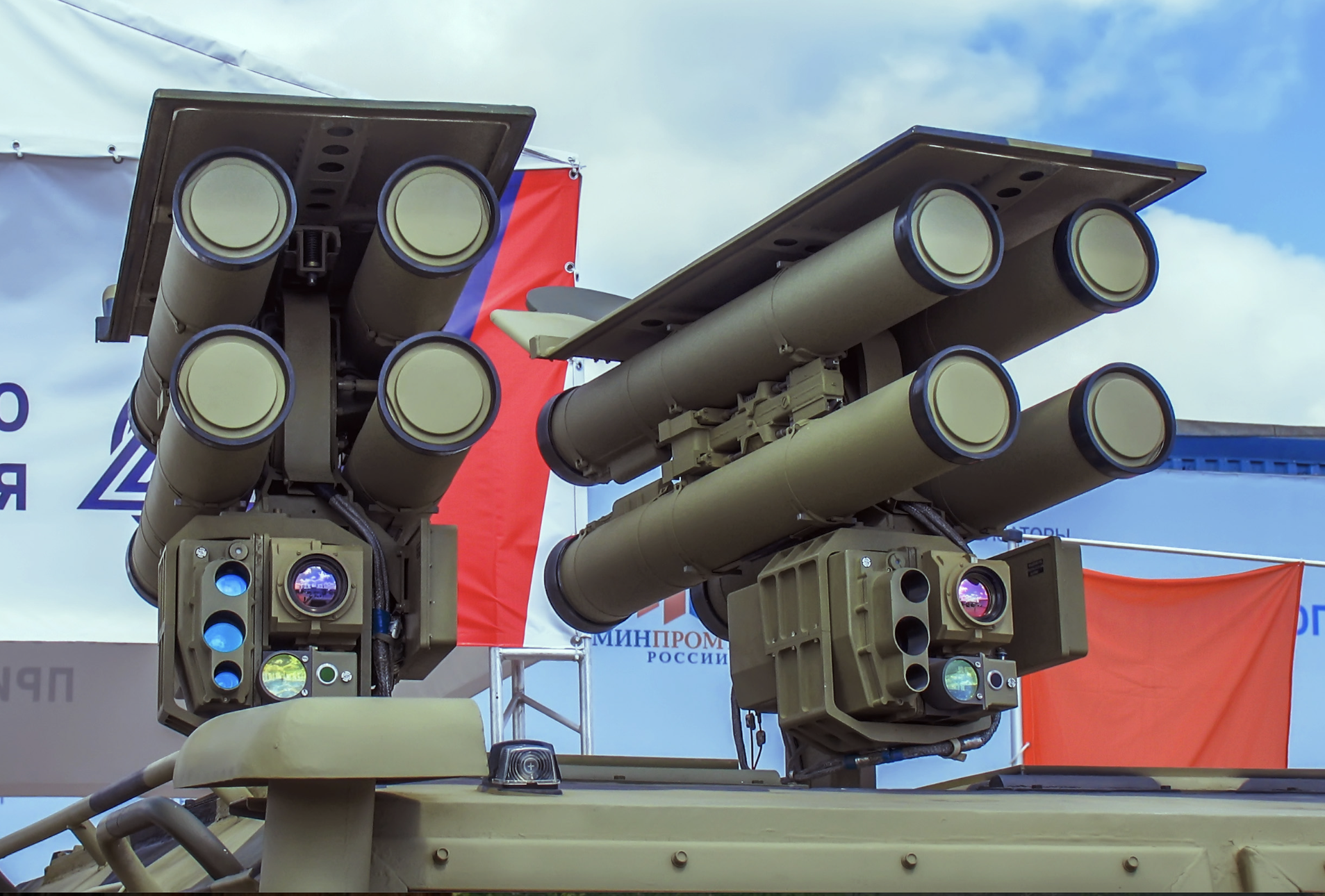
Kornet-EM missiles truck mounted Kornet-D launcher. Credit: Mike1979 Russia. Looks like this could be easily mounted in a container.
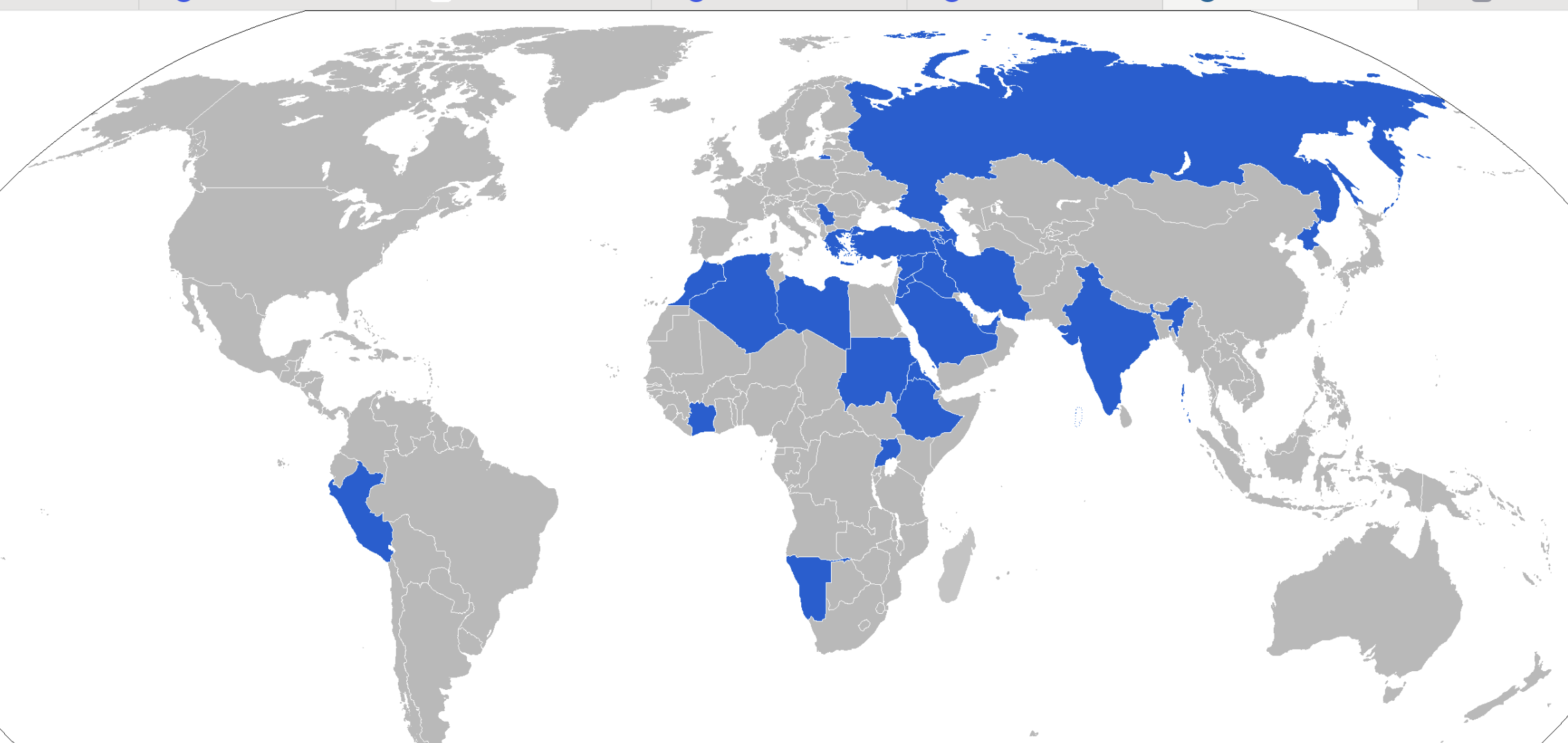
Map with 9M133 operators in blue. Author: Jurryaany

NON-STATE USERS:

“Ukraine’s New Maritime Drone Is A Jet Ski” –Covert Shores

Click to enlarge. Photo credit: hisutton.com

Covert Shores reports,

Both Ukraine and Russia have developed ‘maritime drones’ (USVs – uncrewed surface vessels) with explosive charges. These one-way attack USVs, aka ‘kamikaze’ drones, have been used to attack ships and bridges. The initial design, first seen in September 2022, already employed jet ski parts. However the hull was bespoke. This latest USV is a minimally modified commercial jet ski.

Based on the blurred imagery, the jet ski used appears to be a Kawasaki STX type. The seats, handlebars and some unnecessary casings have been stripped off. Then some communication and control devices have been added.

This seems to show how easy it would be for terrorists to field an offensive unmanned surface kamikaze drone.

“Italian commandos storm Turkish ship to foil migrant hijackers” –The Telegraph

The heavily armed commandos dropped onto the ship from helicopters. ©IMPA

The Telegraph reports,

“Italian special forces stormed a cargo ship after 15 “illegal migrants” armed with knives attempted to hijack a ship and take its crew hostage.”

The Brits had a similar incident in 2018, involving four migrants, also without firearms. “Special forces retake cargo ship after stowaways threatened staff” –The Telegraph (UK)

The Coast Guard does train for this sort of thing. “CBS Reports on MSRT Exercise

Even in a benign environment, fast roping can be dangerous. “Two FBI Agents Die in Maritime FAST Roping from Helicopter Training Exercise

Not to take anything away from the professionalism of the Italian commandoes, but if you are going to do something like this, you hope the opposition will be something like the Italians faced, desperate untrained people without a plan or organization, without firearms. One man with an RPG or a .50 caliber could ruin your entire day. Even when confronted by “peaceful protesters,” things can go terribly wrong. “Israeli Navy intercept of Gaza aid convoy turns deadly

There are sometimes alternatives, “Israeli Blockade–Lessons Applied

If you consider worst case, this is what we might be facing. “Potential Terrorist Threat Weapons

“Confronting All Ten Modalities of Maritime Terrorism” –Real Clear Defense

Taj Mahal Palace hotel, Mumbai Terrorist Attack,

Real Clear Defense has a post explaining ten modalities of maritime terrorism including some examples you may not be aware of. They are:

  1. An Attack on the Water from the Water
  2. An Attack on the Water from the Land
  3. An Attack on the Land from the Water
  4. A Precursor Attack in the Maritime Domain
  5. A Maritime Activity Related to Terrorist Financing
  6. Money Laundering of Terrorist Funds Through Maritime Activity
  7. Maritime Activity Related to Terrorist Logistics, Intelligence and Sustainment
  8. Cyberattacks by Terrorists Targeted at Maritime Activity
  9. Indirect Attacks on the Maritime Domain
  10. Hybrid Aggression

You may find the explanations interesting. The author summarizes,

“These ten modalities of maritime terrorism are not necessarily exhaustive, but they do provide a somewhat parsimonious taxonomy to assist security professionals in identifying and countering terrorist activity in the maritime domain. As a practical reality, most states have limited maritime law enforcement capacity, and the same agency is often tasked with countering everything from fishing without a license to oil spills to drug trafficking to piracy. Understanding how terrorists may be engaging in the maritime space can help sensitize analysts and operators to terrorist activity that may otherwise be obscured. At the same time, that understanding can help inform policy makers how to create a national-level approach that limits opportunities for terrorists to engage in any of the ten modalities. A state’s national security may be significantly impaired by any one of these terrorist activities, so every state should proactively strive to make itself as inhospitable as possible to all ten modalities of maritime terrorism.”

Potential Terrorist Threat Weapons

Regular readers know I have long been concerned that our cutters may not be adequately armed, if they are placed in a situation where they need to forcibly stop almost anything larger than a large cabin cruiser. It is not just that larger vessels are hard to sink. They may shoot back.

While I regard this as possible, but unlikely to occur in US waters (sort of like 9/11 was unlikely), it’s even more of concern, for countries with ongoing insurgencies, like the Philippines. Still, I don’t want to see the Coast Guard tested and found unprepared.

It becomes more likely to affect USCG personnel if they are overseas, doing counter piracy, doing counterinsurgency as we did in Vietnam, looking for weapons smugglers, or if we just stumble across terrorists enroute to their target and mistake them for drug smugglers. It also might be the work of an overconfident, vengeful drug lord.

In all probability, the situation will begin with an attempt to board a vessel of interest. It is probably most dangerous if they feign compliance, and the cutter comes close alongside. If the cutter sends a boarding party, it may be ambushed while they also attempt to disable the cutter. They would almost certainly make an effort to kill any exposed gunners.

That we might encounter small arms is a given, but I will look at other weapons, that might give them an edge, particularly if the cutter is surprised.

Any weapon that is man-portable, can be mounted on a pickup truck, or can be towed by one, can certainly be mounted on a vessel.

An aviation overwatch–fixed wing, helicopter, or UAV–could help us detect the presence of weapons, but it is not too hard to conceal weapons behind crates, in containers, or under canvas.

The most likely candidates are rocket propelled grenades, recoilless rifles/guns, heavy machine guns and autocannon, and Anti-Tank Guided Missiles (ATGM).

I will be using primarily Wikipedia and NavWeaps for reference. First, I will talk about the weapon type in general and then offer examples. Most of the examples are of Russian/Soviet or Chinese origin. They were chosen because these types seem very widely distributed and frequently fall into the hands of non-state actors.

Many of these weapons go back many decades, but that does not make them any less effective. Remember, we are still using the .50 caliber, a design that goes back to WWI.

As you go through the examples, I think you will see why I have advocated for weapons that can engage effectively from at least 4,000 yards.

Rocket Propelled Grenades:

From Wikipedia:

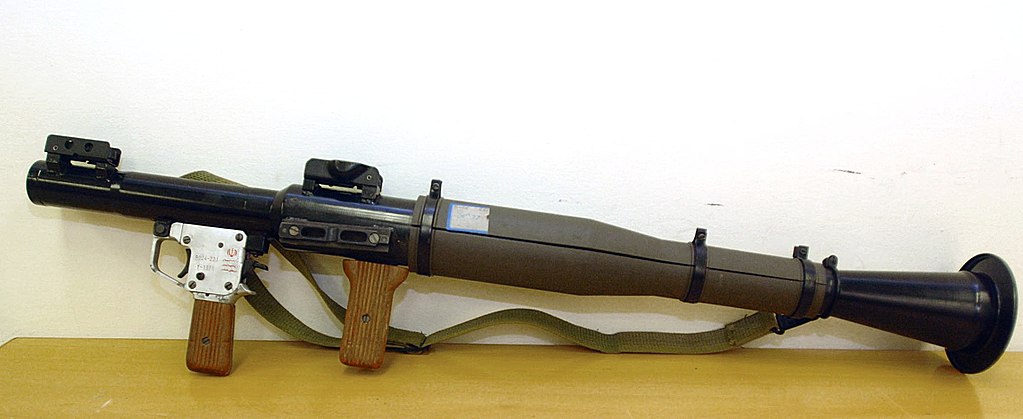
rocket-propelled grenade (often abbreviated RPG) is a shoulder-fired missile weapon that launches rockets equipped with an explosive warhead. Most RPGs can be carried by an individual soldier and are frequently used as anti-tank weapons. These warheads are affixed to a rocket motor which propels the RPG towards the target, and they are stabilized in flight with fins. Some types of RPG are reloadable with new rocket-propelled grenades, while others are single-use.”

These were initially designed as anti-tank weapons but there are warheads optimized for other targets as well. Reportedly fifteen different countries have made dozens of different weapons of this type.

An RPG missile found in Lebanon with a manufacturing symbol of the Iranian Army displayed by the IDF intelligence branch. Photo: Israeli Defense Force

The RPG-7

The ruggedness, simplicity, low cost, and effectiveness of the RPG-7 has made it the most widely used anti-armor weapon in the world. Currently around 40 countries use the weapon; it is manufactured in several variants by nine countries. It is popular with irregular and guerrilla forces. The RPG has been used in almost all conflicts across all continents since the mid-1960s from the Vietnam War to the ongoing Syrian Civil War.

Reportedly 9,000,000 of these have been produced. After the AK-47, it may be the most ubiquitous weapon in the world. A version is even made in the US. Different projectiles are available with different warheads. Projectile weight varies from 2 kg (4.4 pounds) for the fragmentation round to 4.5 kg (9.9 pounds) for those with a thermobaric warhead. Effective range is 300 meters or about 330 yards. Accuracy is affected significantly by crosswind.

The weapon has been used by ISIS and Al Qaeda.

Recoilless Rifles/Guns: 

recoilless riflerecoilless launcher or recoilless gun, sometimes abbreviated “RR” or “RCL” (for ReCoilLess) is a type of lightweight artillery system or man-portable launcher that is designed to eject some form of countermass such as propellant gas from the rear of the weapon at the moment of firing, creating forward thrust that counteracts most of the weapon’s recoil. This allows for the elimination of much of the heavy and bulky recoil-counteracting equipment of a conventional cannon as well as a thinner-walled barrel, and thus the launch of a relatively large projectile from a platform that would not be capable of handling the weight or recoil of a conventional gun of the same size. Technically, only devices that use spin-stabilized projectiles fired from a rifled barrel are recoilless rifles, while smoothbore variants (which can be fin-stabilized or unstabilized) are recoilless guns. This distinction is often lost, and both are often called recoilless rifles.

These weapons have generally been replaced by ATGMs except in the case of the Carl Gustaf, which is now being assigned, one to every US Marine infantry squad, and one to every US Army infantry platoon. Still, there are many of these weapons in circulation and they are commonly used mounted on the technicals of various non-state actors.

Forces belonging to the Iranian Navy using SPG-9. Velayat 94 Military exercise that held in February 2016 in the range of Strait of Hormuz and northern Indian Ocean. Tasmin News Agency.

The SPG-9:

“The SPG-9 Kopyo (Spear) is a tripod-mounted man-portable, 73 millimetre calibre recoilless gun developed by the Soviet Union. It fires fin-stabilised, rocket-assisted HE and HEAT projectiles similar to those fired by the 73 mm 2A28 Grom low pressure gun of the BMP-1 armored vehicle. It was accepted into service in 1962, replacing the B-10 recoilless rifle.”

Wight of the projectile is from 3.2 to 6.9 kg and range is reported up to 7500 meters, but effective range is 700 to 1300 meters. Rate of fire is 5-6 rounds per minute.

Heavy Machine Guns and Autocannon:

The modified pick-up truck, or “technical,” is a trademark of modern, unconventional warfare. Both rebels and government forces have used them extensively during the conflict. This one is carrying an anti-aircraft gun, ammunition, and petrol stored in plastic barrels. Photo Ajdabiya technical – Flickr – Al Jazeera English.jpg
Created: 23 April 2011

Moroccan ZPU-2, April 2006, Photo credit: Dieter Vogeler via Wikipedia

The ZPU-2 (more here) was developed as an antiaircraft mount and entered service in 1949. Projectile weight is 2.08 to 2.25 oz (64.0 gms), It has a range of 8,000 meters and an effective range of 1.4 km or about 1,500 yards (also reported as 2,400 yards). Each of its KPV heavy machine guns has a cyclical rate of fire of 600 rounds per minute and a practical rate of about 150 rpm.  “Muzzle energy of the KPV reaches 31 kJ (for comparison, the 12.7 mm Browning M2HB machine gun has 17 kJ…)” .

Reportedly, in 2007 ammunition for the weapon was still being produced in Bulgaria, Egypt, People’s Republic of China, Poland, Romania and Russia.

The ZU-23-2 was developed as an anti-aircraft gun, first deployed in 1960. It fires a 186 g (6.27 oz) projectile to an effective range of 2-2.5 km or 2200 to 2750 yards. The cyclical rate of fire is 2,000 rounds per minute, but the practical rate is 400 rpm. It is employed by over 70 users including Boko Harum.
“In the Soviet Union, some 140,000 units were produced. The ZU-23 has also been produced under licence by Bulgaria, Poland, Egypt and the People’s Republic of China.”

Soviet S-60 57 mm AA gun at Muzeyon Heyl ha-Avir, Hatzerim airbase, Israel. 2006. This gun was sold to 37 different countries during the Soviet era and has been used by “Islamic State of Iraq and the Levant.” Photo credit Bukvoed via Wikipedia.

The 57mm S-60 goes back to the World War II. The gun was manufactured in the USSR, China, Poland, and Hungary. Reportedly it is still used by 35 nations and was previously operated by many more.
The projectile weighs 6.17 lbs. Rate of fire is 120 rounds per minute cyclic, but 70 rpm sustained.
The Islamic State allegedly shot down a Cessna 208 Caravan operated by the Iraqi Air Force near Hawija, Iraq on 16 March 2016 with a truck-mounted S-60.
There are a huge number of Anti-Tank Guided Missiles (ATGM) available, any of which could ruin your entire day. “As of 2016, ATGMs were used by over 130 countries and many non-state actors around the world.” I’ll just talk about a couple.

9K111 Fagot in Polish service. Photo credit: Ministerstwo Obrony Narodowej

The missile weighs 12.5 kg (28 lbs) and the warhead is 1.7 kg or 3.7 lbs. It has an effective range of 70-2500 meters, about 77 to 2750 yards.
IDEF ’07, Baktar Shikan, original Wikipedia upload by KIZILSUNGUR at Turkish Wikipedia,1 June 2007.
The HJ-8 or Hongjian-8 (Chinese Red Arrow-8) and Bhaktar Shikan (Pakistani version) was developed in China. This tube-launched, optically tracked and wire-guided missile weighs 24.5 kg, has a range of up to 4,000 meters (one version reportedly 6,000 meters). It entered mass production in 1984 and has been operated by 21 countries and by non-state actors including ISIS. There is even a variant (HJ-8S) with an anti-ship warhead. Versions are also made in Pakistan and Sudan. Reportedly, in 2009, the Sri Lankan Army used these weapons against fast attack craft of the Tamil separatist LTTE’s Sea Tigers naval wing.