“Guam’s first Coast Guard Fast Response Cutter arrives at Apra Harbor” –D14

Below is a press release from D14. This is significant as the first FRC homeported in the Western Pacific. The ability of these little ships to self deploy to the Western Pacific is impressive. The crew has every reason to be proud, but we really should not be too surprised. Flat bottomed Landing Craft Infantry (LCI), 28 of which were Coast Guard manned, transited similar distances during World War II. They were essentially the same size (160 ft loa and 385 tons full load) and also had a crew of 24, but they usually did these transits in groups.
united states coast guard

News Release

U.S. Coast Guard 14th District Hawaii and the Pacific
Contact: 14th District Public Affairs
Office: (808) 535-3230
After Hours: HawaiiPacific@uscg.mil
14th District online newsroom

Guam’s first Coast Guard Fast Response Cutter arrives at Apra Harbor

Myrtle Hazard Myrtle Hazard Myrtle Hazard

Editors’ Note: Click on images to download a high-resolution version.

HONOLULU — The Coast Guard Cutter Myrtle Hazard (WPC 1139) arrived at its new homeport in Santa Rita, Guam, Thursday.

The crew of the Myrtle Hazard traveled from Key West, Florida to Guam, covering a distance of over 10,000 nautical miles during the two month journey.

The new Fast Response Cutter (FRC) is the first of three scheduled to be stationed on Guam and replaces the 30-year old 110-foot Island-class patrol boats. FRCs are equipped with advanced command, control, communications, computers, intelligence, surveillance, and reconnaissance systems and boast greater range and endurance.

“FRC’s in Guam strengthen and affirm the U.S. Coast Guard’s operational presence in Oceania,” said Lt. Tony Seleznick, commanding officer of the Myrtle Hazard. “We increase the fleet’s range, endurance, and capabilities to deter illegal behavior, support Search and Rescue, promote maritime stability, and strengthen partnerships.”

The FRCs represent the Coast Guard’s commitment to modernizing service assets to address the increasingly complex global Maritime Transportation System. Like the Island-class patrol boats before them, the Myrtle Hazard will support the people of Guam, the Commonwealth of the Northern Mariana Islands, and our international partners throughout Oceania.

FRC’s are designed for various missions including drug interdiction, defense operations, maritime law enforcement, search and rescue, marine safety, and environmental protection. FRC’s can reach speeds of up to 28 knots and endure 5 days out at sea while covering over 2,500 nautical miles.

“Myrtle Hazard will significantly increase the capabilities of the Coast Guard throughout the region,” said Capt. Chris Chase, commander, Coast Guard Sector Guam. “I am excited to welcome the crew of the Myrtle Hazard home and look forward to them conducting operations with our partners in the near future.”

Myrtle Hazard, the cutter’s namesake, was the first female to enlist in the Coast Guard. Enlisting in January, 1918, she became a radio operator during World War I. She ended her service in 1919 as an Electrician’s Mate 1st Class.

Each FRC has a standard 24-person crew. This will bring over 70 new Coast Guard members to Guam, along with a projected 100 family members. In addition to the crews of the three ships additional Coast Guard support members and their families will also be in Guam.

Coast Guard cutter arrives in Japan following an onboard fire” –Pacific Area

Below is a Pacific Area news release. A couple of interesting things about this. First of course is that one of our ships had a fire. But there is more. Waesche was well on her way. Based on a photo caption, she left Alameda on Aug. 22. Unlike the last time a National Security Cutter went to the Western Pacific, there was no public announcement of departure. The lack of publicity may have something to do with the COVID 19 pandemic. It might be that, it is now considered a routine deployment. Maybe something else?

united states coast guard

News Release

Sep. 22, 2020
U.S. Coast Guard Pacific Area
Contact: Coast Guard Pacific Area Public Affairs
D11-DG-M-PACAREA-PA@uscg.mil
Pacific Area online newsroom

Coast Guard cutter arrives in Japan following an onboard fire

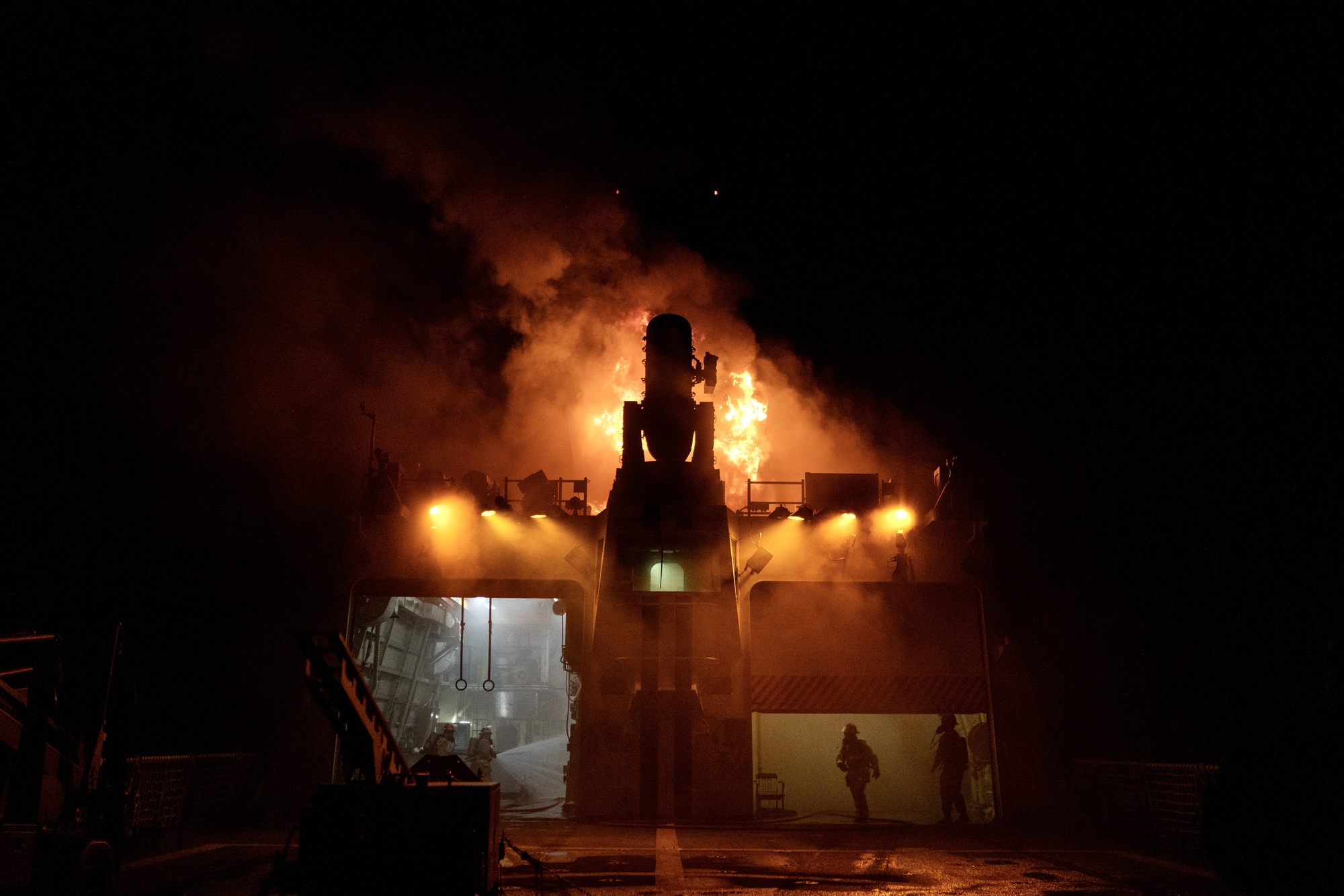
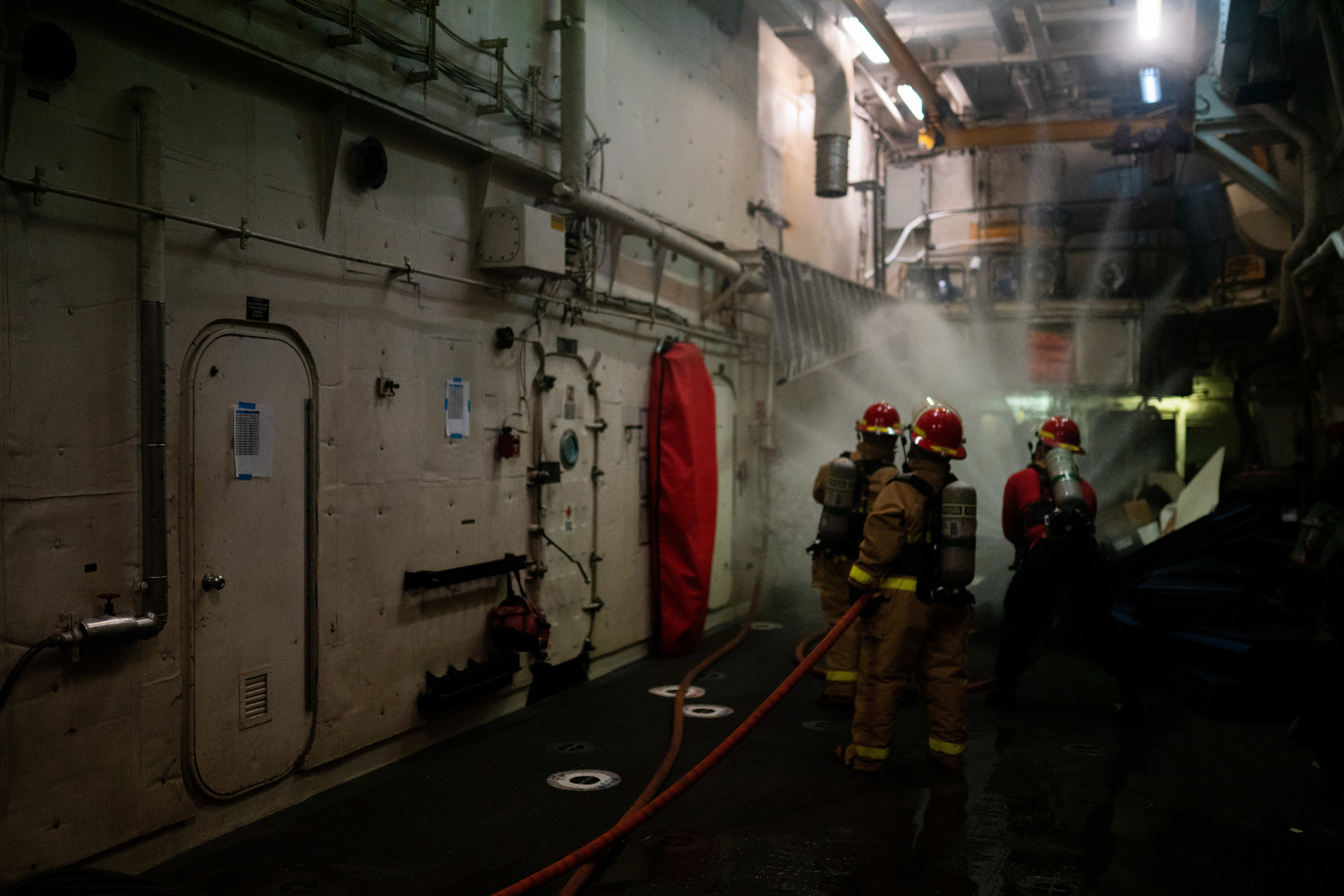
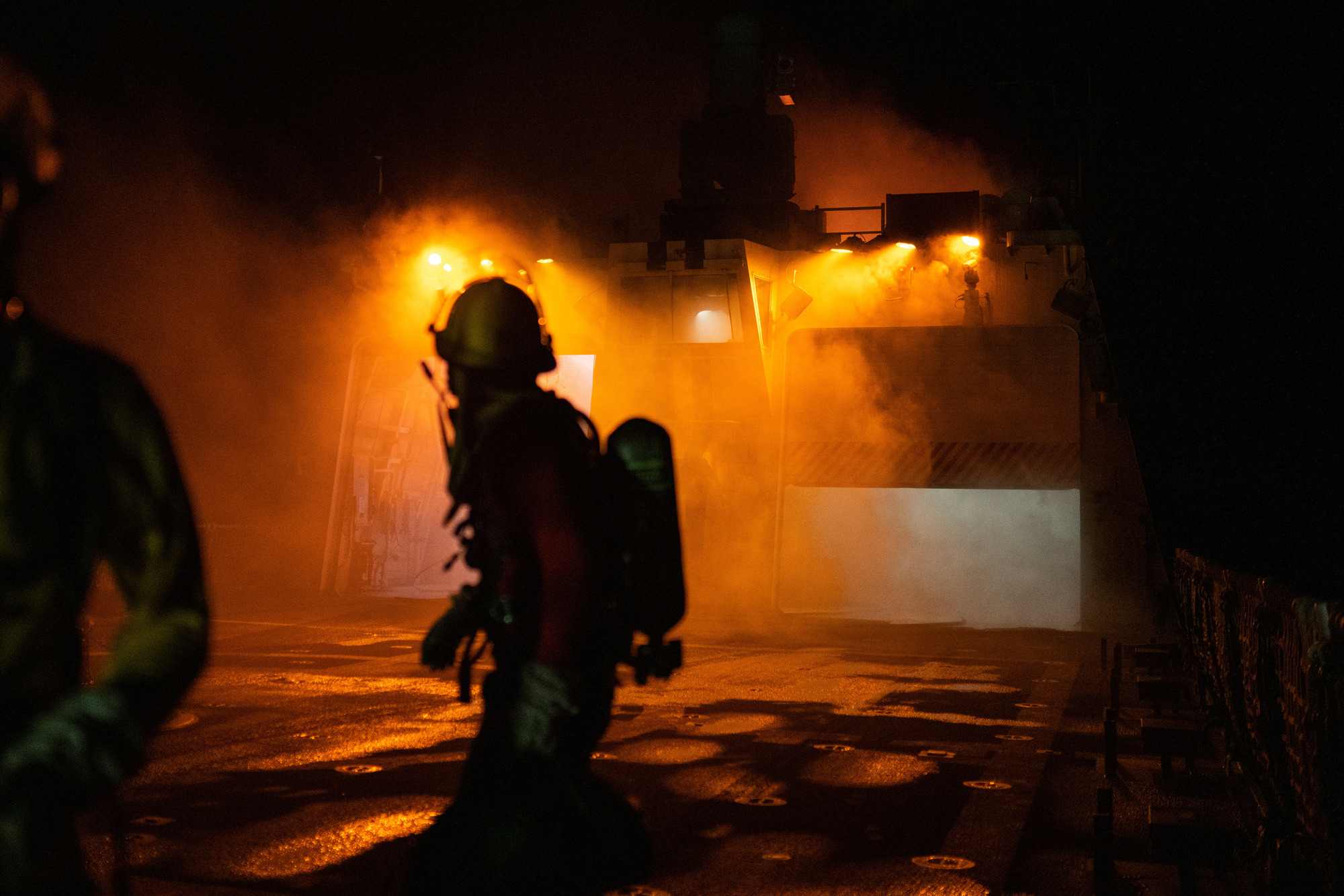
Photo: Crews battle fire onboard Coast Guard Cutter Waesche 

Photo: Crews battle fire onboard Coast Guard Cutter Waesche PHOTO: Alameda, California-based Coast Guard cutter departs for Western Pacific patrol Photo: Crews battle fire onboard Coast Guard Cutter Waesche
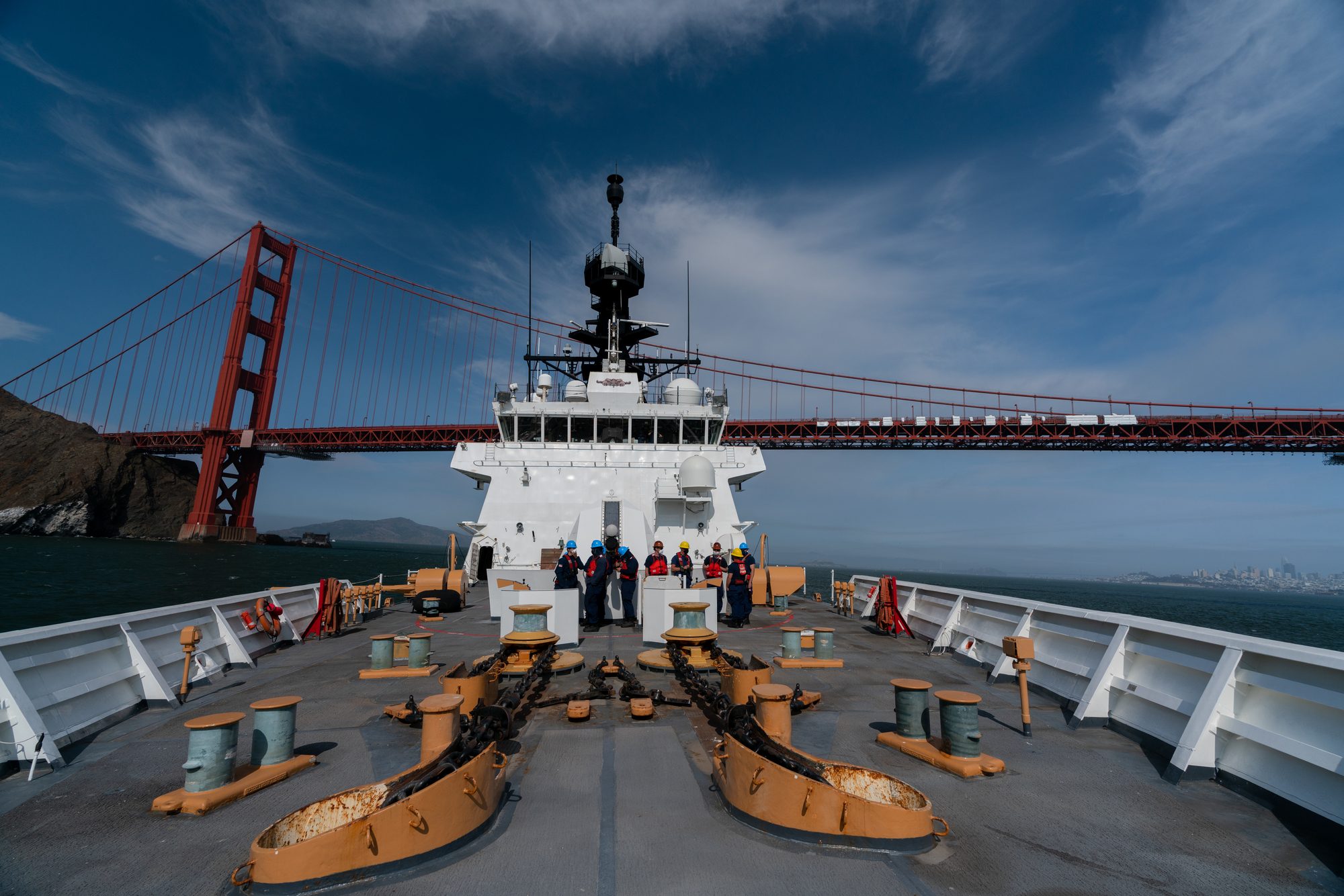
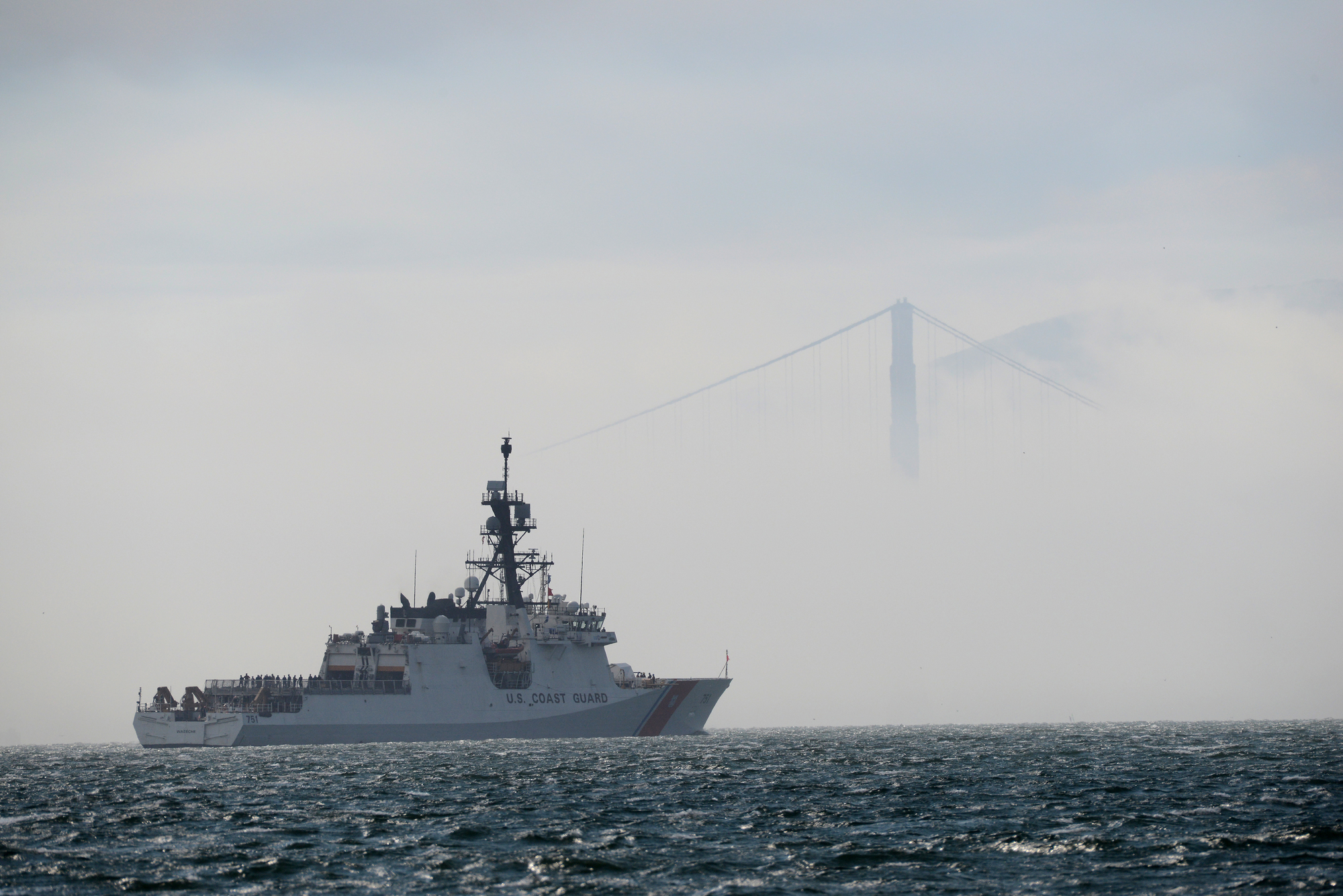
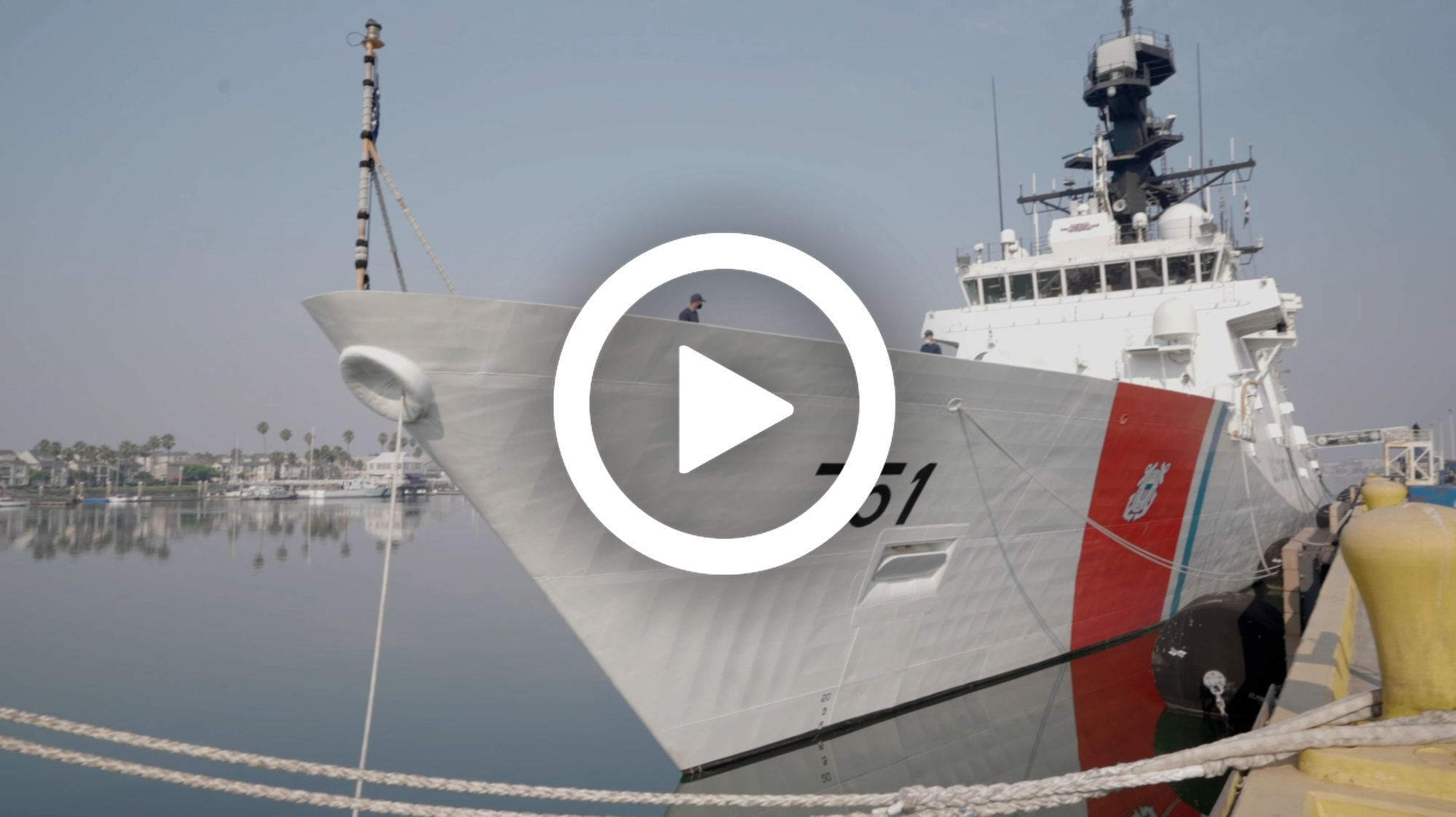
PHOTO: Alameda, California-based Coast Guard cutter departs for Western Pacific patrol VIDEO: Alameda, California-based Coast Guard cutter departs for Western Pacific patrol PHOTO: Alameda, California-based Coast Guard cutter departs for Western Pacific patrol

Editors’ Note: Click on images to download high resolution version.

ALAMEDA, Calif. — The U.S. Coast Guard Cutter Waesche (WMSL 751) arrived at Yokosuka, Japan today after combatting a shipboard engineering fire on Sept. 20, during a scheduled deployment to the U.S. 7th Fleet’s area of operations.

Black smoke was reported at 5:18 p.m. (local time) Sunday, and investigations revealed fires in the exhaust stack and nearby spaces.

After 90 minutes of firefighting, the fires were confirmed extinguished.

Five crew members reported minor injuries sustained during firefighting efforts and were treated by the onboard medical team.

The extent of the damages and cause of the fire are currently under investigation. While at Fleet Forces Yokosuka, the cutter will undergo further inspection and potentially repairs.

“The rapid response and courageous efforts from the crewmembers aboard Waesche to quickly contain and extinguish the fire are a testament to the bravery and skill of this crew,” said Capt. Jason Ryan, Waesche’s commanding officer.

The cutter is under the tactical control of U.S. 7th Fleet as part of routine presence operations in support of the United States’ commitment to a free and open Indo-Pacific.

In 2019, Coast Guard Cutter Bertholf and Stratton deployed for a combined 326 days to the Western Pacific.

Both cutters enforced United Nations Security Council resolutions against the Democratic People’s Republic of Korea by monitoring and gathering intelligence on vessels conducting ship-to-ship transfers in the East China, South China, and Yellow Seas.

Bertholf and Stratton also engaged in professional exchanges and capacity-building exercises with partner navies and coast guards while visiting ports in Japan, South Korea, Hong Kong, Singapore, Fiji, Australia, Indonesia, Malaysia, and the Philippines.

Bertholf made history during their patrol as the first Coast Guard cutter to transit the Taiwan Strait March 24-25, 2019.

Stratton’s crew combated illegal fishing by conducting seven high seas fisheries boardings under the authority of the Western and Central Pacific Fisheries Commission while transiting between the Philippines and Guam.

The Coast Guard’s ongoing deployment of resources to the Indo-Pacific directly supports U.S. foreign policy and national security objectives. The service’s unique capabilities, mission sets, and longstanding partnerships strengthen maritime governance, security, and the rule of law throughout the region.

Waesche is the Coast Guard’s second 418-foot Legend-class national security cutter and one of four homeported in Alameda. National security cutters have a crew of more than 150 and are among the largest and most technologically sophisticated vessels in the Coast Guard’s fleet.

Vice Commandant testifies before Congressional hearing focused on Arctic

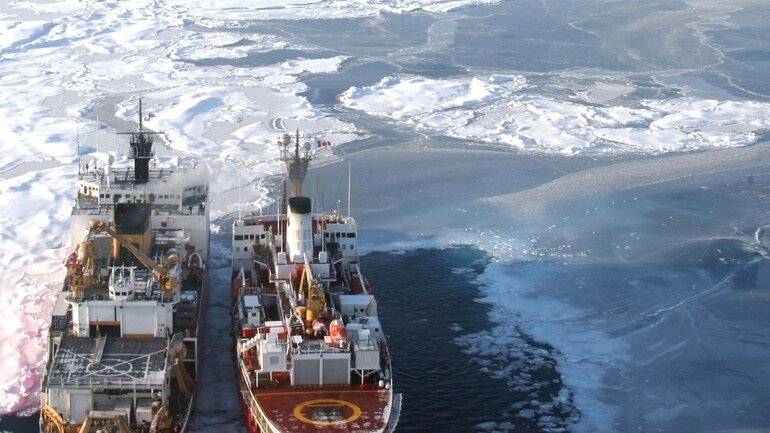
USCGC Healy and CCGC Louis S St.Laurent (Photo by Jessica Robertson, US Geological Survey)

From the MyCG web site.

Vice Commandant testifies before Congressional hearing focused on Arctic

Watch live Tuesday, Sept. 22, 2020, as Vice Commandant, Adm. Charles Ray testifies before a Congressional Hearing focused on the Arctic.

The details and an internet link to a live-webcast of the hearing are contained below:

Date/Time:         Tuesday – September 22, 2020 (Time: 2:30 p.m. E.D.T.)
Hearing Title:    “U.S. Coast Guard Capabilities for Safeguarding National Interests and Promoting Economic Security in the Arctic”
Before the:         Senate Commerce, Science, and Transportation – Security Subcommittee (S.CST-S)

Coast Guard
Witness:
              Admiral Charles Ray, Vice Commandant, U.S. Coast Guard

If you wish to view this Congressional Hearing via “Live-Webcast” a video-feed will be available shortly before the hearing begins (approx. 2:25 p.m. E.D.T.) at this website:

Please e-mail Mr. Joseph Bowes at joseph.r.bowes@uscg.mil if you have any questions regarding this information.

“Court martial concludes following death of Coast Guard member in Alaska” –News Release

Just passing this along. No comments please.

united states coast guard

News Release

U.S. Coast Guard Pacific Area
Contact: Coast Guard Pacific Area Public Affairs
Sept. 18, 2020
(510) 816-1700
D11-DG-M-PACAREA-PA@uscg.mil
Pacific Area online newsroom

Court martial concludes following death of Coast Guard member in Alaska

ALAMEDA, Calif. — A general court martial concluded Thursday for a Coast Guard member accused of violating various articles under the Uniform Code of Military Justice related to the death of a Coast Guard member in Alaska in January 2019.

The court martial of Seaman Ethan Tucker, convened by the U.S. Coast Guard Pacific Area commander, commenced Sept. 8.  A military judge found Tucker not guilty of Article 119, involuntary manslaughter, and Article 134, negligent homicide. The judge found Tucker guilty of: one specification of Article 107, false official statement; one specification of Article 128, assault consummated by a battery; one specification of Article 92, violation of a general order for consuming alcohol underage; and one specification of Article 134 for doing or failing to do certain acts that contributed to a Coast Guard member’s death which was to the prejudice of good order and discipline in the Armed Forces. 

Tucker was sentenced to a bad conduct discharge, reduction to paygrade E-1, and 14 months confinement.

“When COVID-19 sidelined 18 members of a Coast Guard cutter crew, cadets stepped in” –Task and Purpose

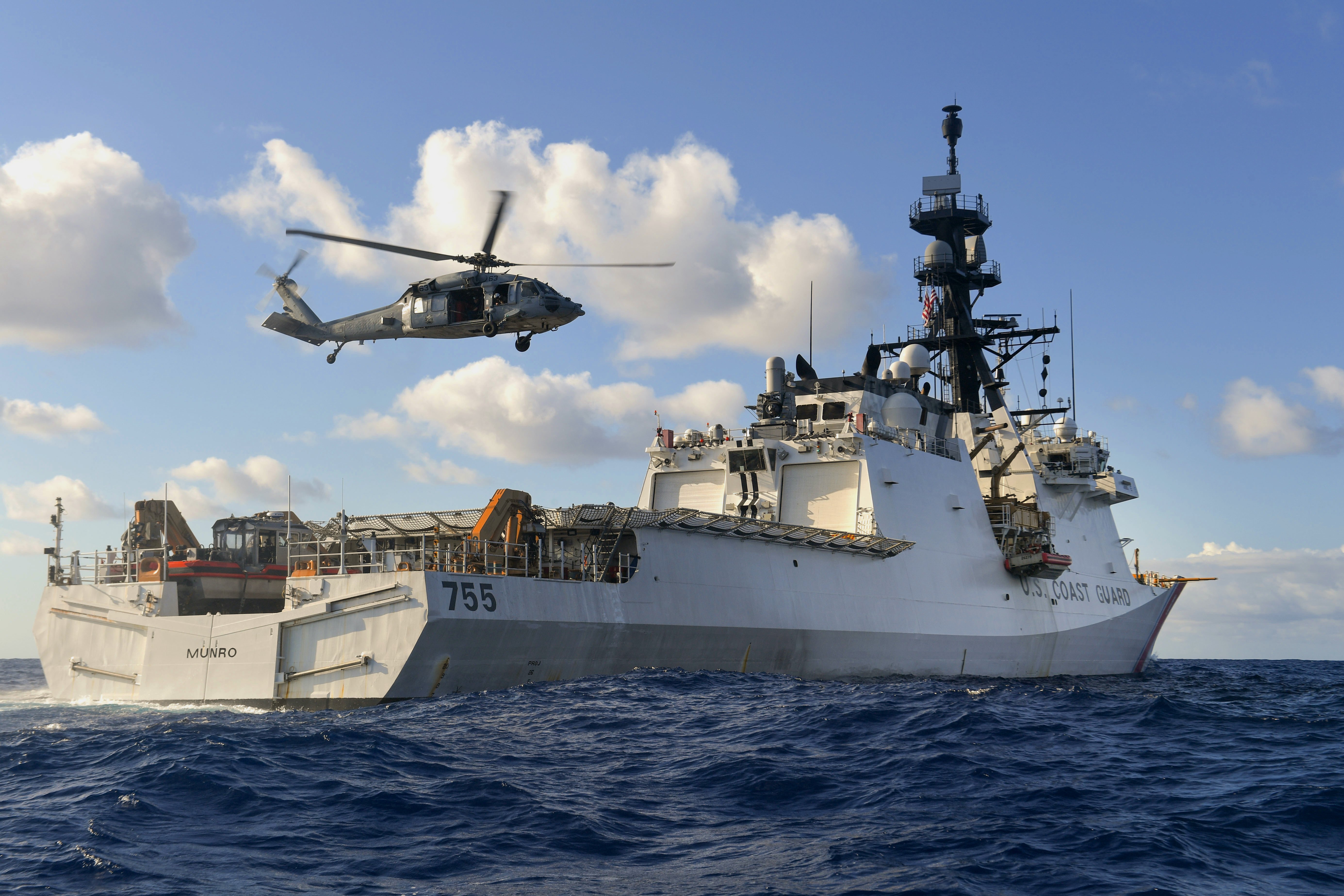
An MH-60S Knight Hawk Helicopter assigned to Helicopter Sea Combat Squadron (HSC) 21 conducts ‘touch and go’ drills aboard U.S. Coast Guard Legend-class cutter USCGC Munro (WMSL-755) during exercise Rim of the Pacific (RIMPAC) 2020 on Aug. 25, 2020. US Navy Photo

Task and Purpose reports on an unexpected summer cruise for CG Academy third class brought on when USCGC Munro crewmembers came down with COVID19. A little ALPAT and RIMPC 2020.

IUU Enforcement

As if to prove the new emphasis on IUU is not just a paper exercise, we have a report of a National Security Cutter and a C-130 involved in a multi-national fisheries enforcement operation in the Western Pacific.

united states coast guard

News Release

U.S. Coast Guard 14th District Hawaii and the Pacific
Contact: 14th District Public Affairs
Office: (808) 535-3230
After Hours: HawaiiPacific@uscg.mil
14th District online newsroom

Coast Guard cutter returns to Hawaii after completing multi-country operation targeting illegal fishing in the South Pacific Ocean

Coast Guard Cutter Kimball and Air Station Barbers Point HC-130

Editors’ Note: Click on images to download a high-resolution version.

HONOLULU — The Coast Guard Cutter Kimball (WMSL 756) returned to Honolulu Sunday following its nearly two month patrol supporting the multi-country maritime Operation Nasse throughout Oceania.

Operation Nasse is an annual Pacific Quadrilateral Defense Coordination Group operation consisting of assets from the United States, Australia, France, New Zealand, and Pacific Island Forum Fisheries Agency which completed August 23.

“This is the first time the Coast Guard has sent a surface asset to participate during the Pacific Quadrilateral Defense Coordination Group’s operation,” said Lt. j.g. Joseph Fox, an assistant combat systems officer aboard the Kimball. “Service members from the Coast Guard Cutter Kimball and an Air Station Barbers Point HC-130 aircrew conducted joint missions with their multi-national counterparts to achieve the common goal of preventing illegal, unreported, and unregulated fishing in the Pacific.”

The purpose of this year’s operation was to investigate the effect COVID-19 had on fishing activities on the high seas and to identify fishing vessels not complying with the Western and Central Pacific Fisheries Commission (WCPFC) conditions. Illegal, unregulated or unreported (IUU) fishing undermines a nation’s sovereignty, threatens its economic security, and weakens global rules-based order.

Each participating country provided assets to support the operation including flights by RNZAF P3K Orions based out of Auckland, Australian Maritime Border Command Dash 8s based out of Brisbane, and French Guardians from Noumea.

The partner’s cooperation provided a significant reach in surveillance which allowed the French patrol boat “La Glorieuse” and the Kimball to hone in on specific vessels identified as possibly being of interest to confirm their activities were within regulations.

Air and sea surveillance, and maritime intelligence sharing provided an opportunity for the participants to work collaboratively to detect, deter, suppress, and report potential IUU fishing activity.

In addition to Operation Nasse, the crew of the Kimball also conducted a high seas patrol off American Samoa and Fiji.

Working closely with their Fijian counterparts, the crew supported U.S.-Fiji bilateral agreements and enforced partner nations respective Exclusive Economic Zones while promoting legal, sustainable fisheries.

In the Pacific, annual Tuna catch is estimated at over $5 billion and provides a significant percentage of the income of many of the South Pacific Nations. Ensuring that vessels operating on the high seas are complying with WCPFC regulations to protect fish stocks and other marine life resulting in these valuable resources remaining sustainable for future generations.

All asset crews were working to national rules regarding COVID-19 which were implemented to keep all personnel as safe as possible while still being able to achieve many of the operational goals.

Coast Guard IUU Strategy to be Published

Chinese fishing vessel fleet (Photo: The Maritime Executive)

The Coast Guard is coming out with its first ever strategy to counter Illegal, Unreported, Unregulated (IUU) fishing. The Commandant talks about it in a US Naval Institute Podcast.

The Commandant makes it clear the Coast Guard is not going to become the World’s fish cops. Apparently the Coast Guard will look to increased intelligence and information exchange, enforcement modeling/training/capacity building, and working with NGO. There was a suggestion, we might have some law enforcement “fish dets.”

Interestingly one remark was, “We don’t know what we don’t know.” That sounds like the first order of business.

IUU has been a problem in South East Asia and off the East and West coasts of Africa. Increasingly it is becoming serious problem for Latin America.  For a recent example, CIMSEC just published a piece regarding Chile’s response to IUU, “ILLEGAL FISHING IN THE SOUTH PACIFIC: WHAT CAN THE CHILEAN NAVY DO?”

The Commandant kept referring to the recent operation of Bertholf in support of Ecuadorian enforcement efforts. We discussed this earlier here.

This is a serious world wide problem. The US Coast Guard is going to see what they can do.

When the strategy is published, I will provide a link.

ALCOAST 321/20 – AUG 2020 SOLICITATION FOR RESEARCH DEVELOPMENT TEST AND EVALUATION (RDT&E) IDEAS

Below is a solicitation. Hopefully it will generate some ideas. We have a good group here that might have some suggestions. 

ALCOAST 321/20 – AUG 2020 SOLICITATION FOR RESEARCH DEVELOPMENT TEST AND EVALUATION (RDT&E) IDEAS

R 271021 AUG 20
FM COMDT COGARD WASHINGTON DC//CG-9//
TO ALCOAST
UNCLAS //N03900//
ALCOAST 321/20
COMDTNOTE 3900
SUBJ:  SOLICITATION FOR RESEARCH DEVELOPMENT TEST AND EVALUATION (RDT&E) IDEAS
1. The Research, Development, Test & Evaluation (RDT&E) and Innovation Program
invites all military, civilian, reserve, auxiliary, and contractor personnel to
submit research project ideas for the FY22 RDT&E Project Portfolio. Visit the
Coast Guard’s crowdsourcing platform, CG_Ideas@Work
(https://cg-ideasatwork.ideascalegov.com), and submit ideas directly to:
https://cg-ideasatwork.ideascalegov.com/a/ideas/recent/campaigns/1078.
2. If you do not yet have a CG_Ideas@Work account, you can easily register using
your ‘.mil’ email address to access the platform from any personal or Coast Guard
device. If you are unable to access the idea submission form, please submit your
idea via email to: research@uscg.mil including your idea title, a short summary,
and your contact information.
3. The deadline to submit ideas for the FY22 RDT&E Project Portfolio is 11 SEP 2020.
Project ideas will be reviewed and ranked by stakeholders from across the service
at an Idea Submission Review in 1st Quarter FY21.
4. The Coast Guard’s senior leadership has identified the following research priorities:
    a. Growing Advanced Computing Capabilities to Maximize Readiness. How can we apply
artificial intelligence, machine learning, and advanced analytics to manage risk and
make decisions based on data?
    b. Continued Development of Mobile Solutions to Deliver Mission Excellence Anytime,
Anywhere. What mobile-enhanced tools can we provide to our members to improve the Coast
Guard’s operational impact and mission support delivery?
    c. Utilize Autonomous Systems to Address the Nation’s Complex Maritime Challenges.
How can we integrate unmanned aerial systems (UAS), unmanned surface vehicles (USV),
and unmanned underwater vehicles (UUV) to improve operational safety, effectiveness,
and efficiency?
    d. Strengthen Resilience, Safety, and Security of Coast Guard systems and personnel
to Deliver Mission Excellence Anytime, Anywhere. What tools or ways of doing business
can improve our members’ safety and security and position the Coast Guard to take on
complex and difficult to predict challenges like COVID-19 and emerging cyber threats?
    e. Develop Human Machine Teaming to Maximize Readiness. How can we manage the
relationship between our people and automated systems in a way that maximizes the
capabilities of humans and machines while guarding against complacency and the loss of
key skills?
    f. Maximize Readiness Today and Tomorrow by Enhancing C5I capabilities.
What command, control, communications, computers, cyber, and intelligence
capabilities can we put in the field to make the Coast Guard more ready and more agile?
5. Not all great ideas fit in the priorities above. All potential research project
ideas will be reviewed and considered. Your ideas and input are requested.
For inspiration, check out the current RDT&E Project Portfolio and website here:
http://www.dcms.uscg.mil/acquisition/rdte.
6. POC: Ms. Alexandra Swan, COMDT (CG-926), at: 202-309-8255 or
Alexandra.P.Swan@uscg.mil.
7. RADM M. J. Johnston, Assistant Commandant for Acquisition and Chief Acquisition
Officer, sends.
8. Internet release is authorized.

Growth in Arctic Shipping –Pollution Worries

The Coast Guard Cutter Healy breaks ice around the Russian-flagged tanker Renda 250 miles south of Nome Jan. 6, 2012. The vessels are transiting through ice up to five-feet thick in this area. The 370-foot tanker Renda will have to go through more than 300 miles of sea ice to get to Nome, a city of about 3,500 people on the western Alaska coastline that did not get its last pre-winter fuel delivery because of a massive storm. If the delivery of diesel fuel and unleaded gasoline is not made, the city likely will run short of fuel supplies before another barge delivery can be made in spring. (AP Photo/US Coast Guard – Petty Officer 1st Class Sara Francis) NY112

gCaptain has an interesting article that tracks the growth of shipping in the Arctic and accompanying environmental concerns.