Research, Development, Test and Evaluation Spotlight: Night vision devices evaluation

The following is copy of a release on Coast Guard Compass. Good to see new capabilities coming on line. 

Research, Development, Test and Evaluation Spotlight: Night vision devices evaluation

Written by Loretta Haring
Office of Strategic Planning and Communication
Acquisition Directorate

A law enforcement team from Coast Guard Cutter Bertholf (WMSL-750)consisting of Petty Officer 1st Class Jordan Baptiste, Petty Officer 1st Class Asher Thomas, Petty Officer 2nd Class Jean Latimer, Lt. j.g. Kenji Awamura and Petty Officer 3rd Class Brandon Scott, man the cutter's Over The Horizon (OTH) boat, Nov. 4, 2008, during law enforcement training. Team members train constantly to be proficient in their maritime law enforcement mission. U.S. Coast Guard photo by Petty Officer 3rd Class Henry G. Dunphy.

A law enforcement team from Coast Guard Cutter Bertholf (WMSL-750) consisting of Petty Officer 1st Class Jordan Baptiste, Petty Officer 1st Class Asher Thomas, Petty Officer 2nd Class Jean Latimer, Lt. j.g. Kenji Awamura and Petty Officer 3rd Class Brandon Scott, man the cutter’s Over The Horizon (OTH) boat, Nov. 4, 2008, during law enforcement training. Team members train constantly to be proficient in their maritime law enforcement mission. U.S. Coast Guard photo by Petty Officer 3rd Class Henry G. Dunphy.

The Coast Guard Research, Development, Test and Evaluation Program on behalf of the Office of Boat Forces (CG-731) recently completed a research project on newer night vision technology. As a result of that project, CG-731 developed policy and training that allows qualified Coast Guard pursuit coxswains operating the Coast Guard’s over the horizon cutter boats to use night vision technology in the execution of their missions.

Since technology is constantly changing and improving, CG-731 asked the Coast Guard Research and Development Center to research capability improvements in the latest generations of commercial off-the-shelf night vision devices (NVD). Counterdrug and migrant interdiction operations sometimes require the ability to see in low-light or no-light situations, necessitating NVD use.

“We knew night vision capabilities had significantly improved in recent years,” said Lt. Tyson Finn, who is the program lead for this initiative within the Office of Boat Forces. “We wanted to see if the newer capabilities could provide increased performance and safety for our pursuit forces. Working with the RDC and the Deployable Specialized Forces community, we did exactly that.”

The RDC first issued a commercial request for information to determine the state of the NVD market and its new capabilities, said Michael Coleman, an RDC researcher and project manager for the NVD evaluation. Researchers also communicated with commercial entities and government and military agencies to get as much information as possible. They found advancements including field of vision, depth perception, amplification methods and performance characteristics. From that research, a group of NVDs was down-selected and an evaluation methodology developed for underway evaluations.

Limited user evaluations (LUE) to assess NVD capabilities based on specific missions sets using simulated tactics were conducted in both protected and open water in San Diego, and Charleston, South Carolina. NVDs were evaluated for performance, utility and ergonomics; boat evaluation platforms were modified by filtering lights and changing light bulbs to mitigate impacts on NVD use, Coleman said.

Coxswains involved in the limited user evaluations were excited by the increased capabilities of the NVDs.

“Extremely effective, I can see really well,” one coxswain told researchers.

“Looking through the NVD it seemed like a bright sunny day in the fog,” another remarked.

The newer NVD technology demonstrated increased field of view and improved depth perception as well as significant clarity and resolution improvements.

Based on the LUEs, the RDC provided recommendations to CG-731 on specific NVD capabilities and use, Coleman said. The Office of Boat Forces used the recommendations to develop policy on specific NVD use for certain mission sets and established a training and qualification process.

“In time as the cost for this technology decreases, we hope to further evaluate whether this newer NVD technology can be safely and effectively employed on additional platforms and other missions,” said Cmdr. Mike Keane, chief of the boat forces policy division.

Coleman said it is especially satisfying to see the RDC’s research transition to the workforce.

“These updated NVDs provide another tool for the coxswain to use that can be advantageous in completing their mission,” said Coleman.

“Having the ability to evaluate how advancements in technology and equipment can make Coast Guard Boat Forces more capable is key,” Finn said. “The RDT&E Program is an important tool we have available to help us advance how boat crews execute their missions safely and effectively; without their assistance this project would not have been as successful.”

“It is the RDT&E Program’s goal to transition meaningful and impactful projects to the field to enhance mission performance,” said Steve Hager, Surface Domain lead for the RDT&E Program. “This project is a fantastic representation of how partnering with the RDT&E Program can further capabilities in the fleet at the deck-plate level.”

New French Patrol Boat

OCEA to build customs patrol boats for France

BairdMaritime reports the French Ministry of Finance has awarded the OCEA shipyard a contract for construction of a new Customs patrol boat for the West Indies. There is also an option for a second vessel.

We might have an opportunity to work with this class in the Caribbean. At 31.2 meters (102 feet), it falls between Coast Guard 87 foot Marine Protector and 110 foot Island class cutters. The speed, at 27 knots, also falls between that of the 87 footers (25 knots) and 110s (29 knots). It will have accommodations for 16 and a crew of ten.

This might be about the size of the design chosen to replace the 87 foot WPBs. The design appears mostly unremarkable, an aluminum construction mono-hull.

What I find interesting is their boat handling arrangement. Rather than a stern ramp, it appears to carry a relatively large RHIB launched by davit over the starboard side. This is the same arrangement we see on smaller patrol boats built by OCEA for the Philippines.  (see photo below.)

While stern ramps certainly allow rapid launch, recovery can be problematic in rough seas, and they require sacrifice of hull volume. Modern davit systems can be operated with no more personnel than a ramp system, are relatively quick, and impose minimal design penalties on the hull.

Ocea FPB 72

The smaller 24 meter (78.7 foot) OCEA FPB 72 provided to the Philippine Coast Guard, also with davit launched RHIB on the stern. This class is also used by Nigeria and Suriname

Cyber Attack on Port of San Diego

Aerial view of the Port of San Diego with three cruise ships in Port, from Oct. 4, 2012. Port of San Diego photo

As you may have heard, there was a cyber attack on the Port of San Diego, Sept 25, 2018. The port includes 34 miles of waterfront along Chula Vista, Coronado, Imperial Beach, National City, and San Diego.

There have been earlier attacks on the Port of Barcelona 20 Sept. 2018, and the Maersk shipping company. June 27, 2017.

Fortunately in both the San Diego and Barcelona cases, safety and maritime shipping operations appear to have been essentially unaffected.

The Coast Guard was one of the organizations responding to the San Diego attack. Quoting a Coast Guard news release.

“On Tuesday, September 25, the Port of San Diego reported a cybersecurity incident impacting port offices and some physical security aspects of Maritime Transportation Security Act regulated facilities. The local Coast Guard Captain of the Port along with other federal, state, and local partners, have been actively engaged in response efforts to ensure port safety and security. The cyber incident did not adversely impact Marine Transportation System operations.

“For the benefit of our readers, the Office of Port and Facility Compliance is sharing a Federal Bureau of Investigation public service announcement titled “Cyber Actors Increasingly Exploit the Remote Desktop Protocol to Conduct Malicious Activity,” found at the following link:

“https://www.ic3.gov/media/2018/180927.aspx”

Coast Guard to Mark 100th Anniversary of one of World War I’s largest U. S. naval combat losses”–Washington Post

Miami-class cutter USCGC Tampa photographed in harbour, prior to the First World War. Completed in 1912 as the U.S. Revenue Cutter Miami, this ship was renamed Tampa in February 1916. On 26 September 1918, while operating in the English Channel, she was torpedoed and sunk by the German Submarine UB-91. All 131 persons on board Tampa were lost with her, the largest loss of life on any U.S. combat vessel during the First World War. Official U.S. Navy photo NH 1226 from the U.S. Navy Naval History and Heritage Command

As we approach the 100th anniversary, the Washington Post has an excellent article recounting the loss of the Cutter Tampa and it effect on some of the families. Well worth the read.

MH-65 Service Life Extension Program

US Coast Guard photo, by PAC Dana Warr

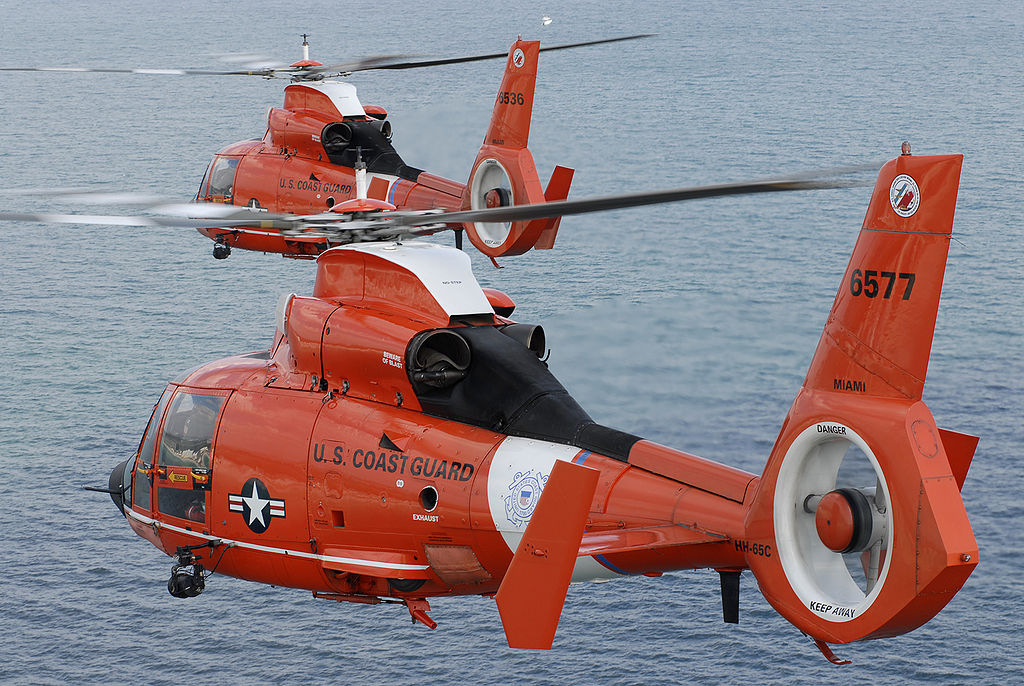
The Acquisitions Directorate (CG-9) is reporting award of a contract to Airbus for components for a Service Life Extension Program for CG MH-65s. I have reproduced the press release in full below. Significantly it indicates the H-65s will continue to serve until phased out between 2035 and 2039. We are also SLEPing the H-60s so their replacement and that of the H-65 may both come due about the same time. In the 2030s we will have an entire fleet of 50 year old helicopters. This could create a huge budgeting problem in the mid 2030s.. At least it appears the “Future Vertical Lift” program should be mature by then. 

———————-

The Coast Guard awarded a $15.9 million contract to Airbus Helicopters Inc. Aug. 22 to procure three critical structural components for its H-65 short range recovery helicopters as part of a Service Life Extension Program (SLEP).

The sole source contract includes the following commercial items; the canopy, center console floor assembly and the lower right nine degree frame. The Coast Guard elected to order 87 canopies in the base period, which resulted in a $2.5 million cost savings to the government. Under the contract, canopy deliveries will be spread out over a five-year performance period.

The SLEP will replace five critical components that are essential to the airworthiness and flight safety of the aircraft. Contracts for the other two components, the floor boards and side panel, were awarded in May.

The SLEP will extend the service life of the H-65 from 20,000 to 30,000 flight hours. The 10,000-flight-hour extension will provide a 50% increase in service life and will ensure that the Coast Guard can maintain its H-65 fleet until its planned phase-out between 2035 and 2039.

The MH-65 is also undergoing an avionics upgrades that will convert the airframe to an MH-65E configuration. In order to achieve schedule and cost efficiencies, the avionics upgrades and SLEP are being completed at the same time. One low rate initial production aircraft, CGNR-6556, is currently undergoing SLEP and the avionics upgrades; work is scheduled to be completed by the end of 2018.

For more information: MH-65 program page

“Embrace the Coast Guard’s Strength”–USNI

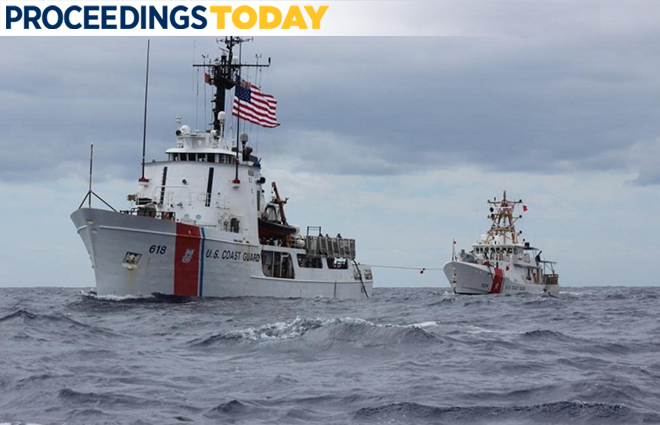
The USCGC Active (WMEC-618) was commissioned in 1966 and is still serving–a tribute to the Coast Guard’s “can do” culture.

By admitting that  Semper Paratus is an aspiration, the Coast Guard can allow itself to celebrate the truth that while the service is not  Always Ready , Coast Guardsmen embrace every task to meet their mission. That might not be the service’s aspiration, but it should be its inspiration.

Seems like I have been pointing to the US Naval Institute publications a lot recently, but it does seem they are paying more attention to the Coast Guard. Latest is “Embrace the Coast Guard’s Strengths” by LCdr. Luke Petersen, USCG. It discusses how we should view the motto, “Semper Paratus–Always Ready.”

Aspirational, Inspirational, or a curse?

Midshipmen and Cadets Essay Contest–USNI

In hopes I have at least one cadet (academy or OCS) in the readership, I have duplicated the following from a US Naval Institute web site

The Challenge:

This new Contest encourages Navy, Marine, and Coast Guard midshipmen, cadets, and officer candidates (Naval Academy, NROTC, Coast Guard Academy, Kings Point and State Maritime Academies, and Officer Candidate Schools) to think and write about the challenges that face the Sea Services today and in the coming decade. Some questions to consider include: What is the right mix of forces? How can the different services partner in new ways to enhance national security? How will peer competition with China and Russia impact your Navy, Marine Corps, Coast Guard, and Merchant Marine? What capabilities will tomorrow’s forces require that are not yet in the force? What could the Academies learn from NROTC or OCS and vice versa? Are naval commissioning sources preparing future officers well for what lies ahead? And what lessons from the past should guide your futures?

Prior Publication: Your essay must be original and not previously published (online or in print) or being considered for publication elsewhere.

Submission Guidelines:

  • Email essay as a Microsoft Word attachment to essay@usni.org by 31 October 2018.
  • Include Midshipmen and Cadets Essay Contest on subject line of email.
  • Include word count on title page of essay but do not include your name on title page or within the essay.
  • Provide a separate attachment to include biography and compete contact information — i.e., work, home, and cell phone numbers; and home mailing address.

Selection Process: The Proceedings staff members will evaluate every essay and screen the top essays to a special Essay Selection Committee of at least six members who will include two member’s of the Naval Institute’s Editorial Board and four subject experts.  All essays will be judged in the blind — i.e., the Proceedings staff members and judges will not know the authors of the essays.

Announcement of the Winners: The top three winners will be published in Proceedings magazine.

About Naval Institute Essay Contests

Essay contests have been central to the work of the Naval Institute for more than 130 years. They directly fulfill the Institute’s educational mission by encouraging writing on issues of concern to the Sea Services. They provide thought-provoking articles that spur ongoing discussion of these same issues, not only in Naval Institute media, print and digital, but also in other leading defense and national security forums.

  • Essay Publication: The top three winners will be published in Proceedings
  • Essay Awards: First Prize: $5,000; Second Prize: $2,500; Third Prize: $1,500
  • Essay Length: 2,000 word maximum (excludes endnotes/resources).
  • Essay Year: 2018

“Brandish America’s ‘Small Stick’”–USNI

These are the Unified Combatant Commander’s Areas of Responsibility. 

It starts like this:

“Congress and the Trump administration could do far worse than double or triple the size of the U.S. Coast Guard fleet. (Let’s hear no more about drastic cutbacks.) Last month Military Times reported that the Coast Guard leadership has entered talks with the U.S. Indo-Pacific Command to send a cutter to the region to help “temper” Chinese influence while “building partner capacity” with friendly African navies and coast guards. The troubling thing about the report is the definite article the reporter deploys: the coast guard will dispatch “a” ship if the talks with IndoPaCom bear fruit. A = 1.”

The US Naval Institute blog has a small post,  ‘Brandish America’s ‘Small Stick’

The author of the piece is significant. James R. Holmes , currently professor of strategy at the Naval War College, one of the most prominent naval thinkers of the 21st century. It would be hard to find a more influential voice in support of a more international role for the Coast Guard.

If we really want to do something like this, I will insert a shameless plug for my idea of a “Combined Maritime Security Task Force Pacific.”

While we are building a Webber class replacements for the 110s assigned to PATFORSWA under CENTCOM perhaps we should be building a batch to be based in Guam or Singapore for INDO-PACOM. Maybe some for SOUTHCOM and maybe AFRICOM too.

Some previous articles along these lines:

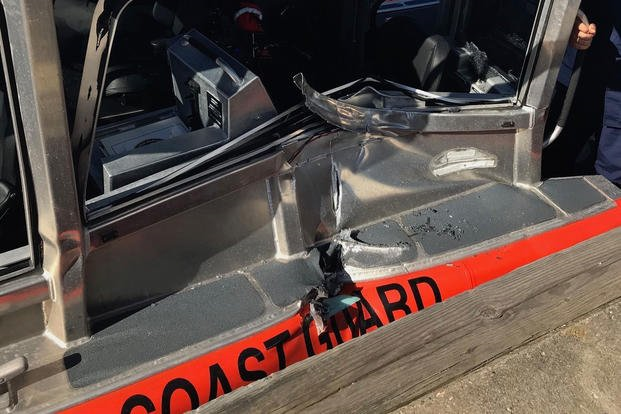
Four Coasties Injured in Training Accident

This is a damaged 29-foot response boat small from Maritime Safety and Security Team Cape Cod located on Air Station Cape Cod on Wednesday, Sept. 5, 2018. Two tactical boat crews collided during training off Falmouth, Massachusetts. (U.S. Coast Guard photo)

We have a report four members of Martime Safety and Security Team Cape Cod were injured when two 29 foot boats collided during a training exercise, Wednesday, Sept. 5, 2018. Reportedly none of the injures are life threatening.  

Close up view of the damage of a 29-foot response boat small after it collided with another 29-foot response boat during training off Falmouth, Massachusetts, Wednesday, Sept. 5, 2018. (U.S. Coast Guard photo)