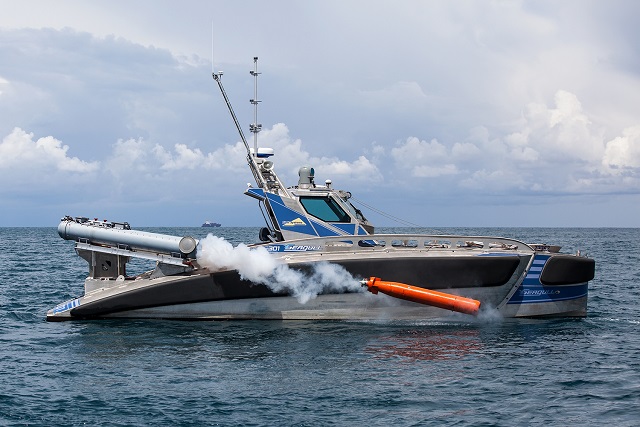
Liberator, Containerized Launcher for Torpedoes and Maybe More

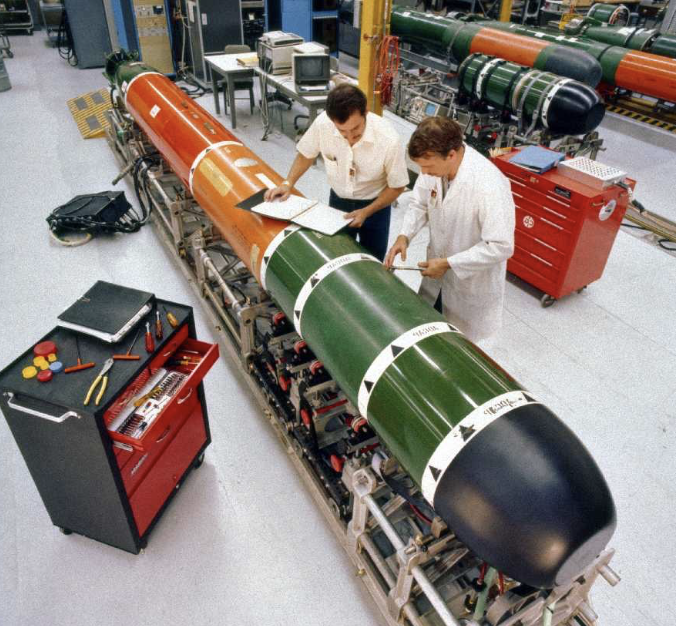
Keyport Technicians working on a Mark 48 in early 1982. U.S. Navy Photograph No. DN-SC-86-00553.

Naval News reports,

A new line item in the U.S. Navy Fiscal Year 2026 budget is supporting a containerized Mark 48 Advanced Capability (ADCAP) torpedo launcher for use on unmanned surface vessels (USV) and small combatants.

But looks like there may be more to it than the very expensive Mk48 torpedo.

“Program Executive Office, Unmanned and Small Combatants (PEO USC) is leading the effort and will deliver a 3.5 hour presentation about Liberator and a related unmanned undersea vehicle (UUV) payload…The Liberator provides for the development of alternative methods for launching torpedoes or similar devices…”

The Mk48 is intended to be used against the most demanding (nuclear submarines) in the most hostile environment. They have to be fast and they need to be capable of surviving great pressure. For this reason they are extremely expensive. The basic design goes back to 1972 but there have been many improvements.

Torpedo tubes are already being used to launch and recover Uncrewed Underwater Vehicles (UUVs). Plus we have begun seeing new cheaper torpedoes.

I find this exciting because it looks like we might have a relative inexpensive anti-surface torpedo. It would allow a Patrol Boat to stop even a large ship.
“Army 2023: Russian firm Gidropribor displays new torpedo” –Navy Recognition

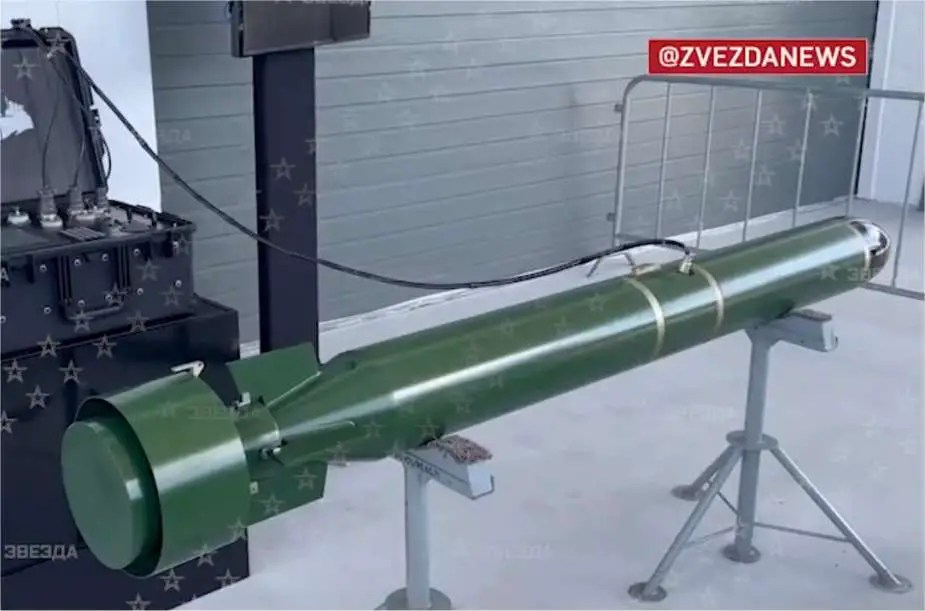
New torpedo on the Gidropribor booth at Army 2023. (Picture source: Zvezda)

Navy Recognition reports, a Russian firm has developed a compact torpedo,

“It can target submarines, unmanned underwater vehicles, which is very relevant today, and surface ships…220mm in caliber, varies in length from 2.1 to 2.4 meters and weighs between 100 and 140 kg.”

I suspect the Russians saw what the US was doing with the Common Very Light Weight Torpedo (CVLWT) and figured we had a good idea.

The CVLWT is reportedly 6.75″ (171mm) in diameter, about 85″ (2.16 meters) in length, and weighs about 220 pounds (100 kilos).

I contend the Coast Guard could use the CVLWT to forcibly stop even large merchant ships that might be used by terrorists or for other nefarious purposes, probably without sinking it, which might lead to serious unintended consequence.

“Turkish “MIR” USV Test-Fires Torpedo For The First Time” –Naval News

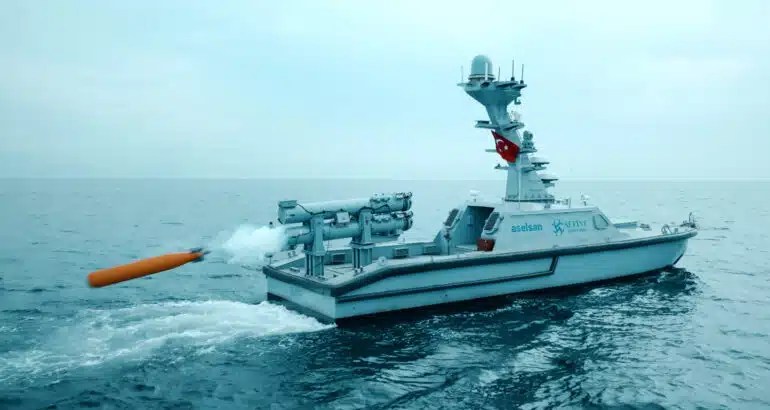
MIR USV firing torpedo (Screenshot from SSB video)

Naval News reports,

On April 18, 2023, the Turkish armed unmanned surface vessel (USV) “MIR” fired a light torpedo from a double torpedo tube at the stern of the ship. The test firing was the first torpedo launch from a Turkish USV.

This is offered as an ASW system, but if you are a regular reader here, you know I had to show the photo to illustrate how even a very small vessel can launch light weight torpedoes. (Of course, we have had previous examples, see photos at the end of the post.)

This is important because the Coast Guard has an unaddressed Required Operational Capability implicit in its Ports, Waterways, and Coastal Security Mission, that the Coast Guard needs to be able to forcibly stop any vessel regardless of size. A lightweight torpedo that targets a ship’s propeller(s) seems to be the best solution for stopping larger vessels (hopefully without sinking it and causing a major pollution incident).

Existing lightweight ASW torpedoes, like those launched from the USV illustrated above, might do the job if they also have an anti-surface capability. Distribution to Coast Guard units might be thought of as a storage option for a war reserve, in that, while the Coast Guard would need to have them widely distributed, even in the worst case the Coast Guard would actually use very few.

The author notes,

“…submarines are unlikely to engage these small units because of the limited minimum depth of some torpedoes or the limited amount of torpedoes the submarines have loaded.”

But if USVs become a threat to submarines, it will not be long before there is a counter. In fact, the already existing 6.75″ diameter (171.45mm), 220 pound (100 kilos), Very Light Weight Torpedo that would not displace any existing submarine weapons might anticipate this need. This weapon system might meet the Coast Guard’s needs.

A Navy briefing slide showing the internal components and describing the various features of the PSU_ARL Common Very Light Weight Torpedo (CVLWT) design

Camera drone’s-eye view of IRGC boats on display, March 2023. A) The air defense boat. B) Light missile boat with Bladerunner hull. C) light missile boats on Interceptor hull. D) light missile boats on Interceptor hull (alternative design). E) Missile boat, with type of missile unclear. F) RIB, possibly explosive boat or uncrewed. G) RIB with lightweight anti-ship torpedoes, can be carried aboard a Shahid Soleimani-class missile corvette. H) Interceptor boat. I) Interceptor boat with new type of missile.

Elbit Systems’ Seagull unmanned surface vessel launching a lightweight torpedo.