1 March 1968, During the Tet Offensive, the Coast Guard Fought in the Most Significant Naval Battle of the Vietnam War

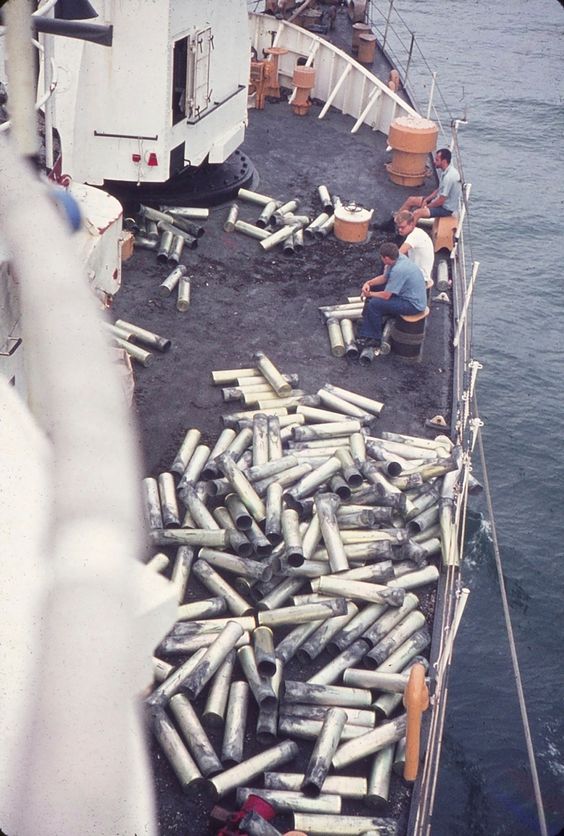
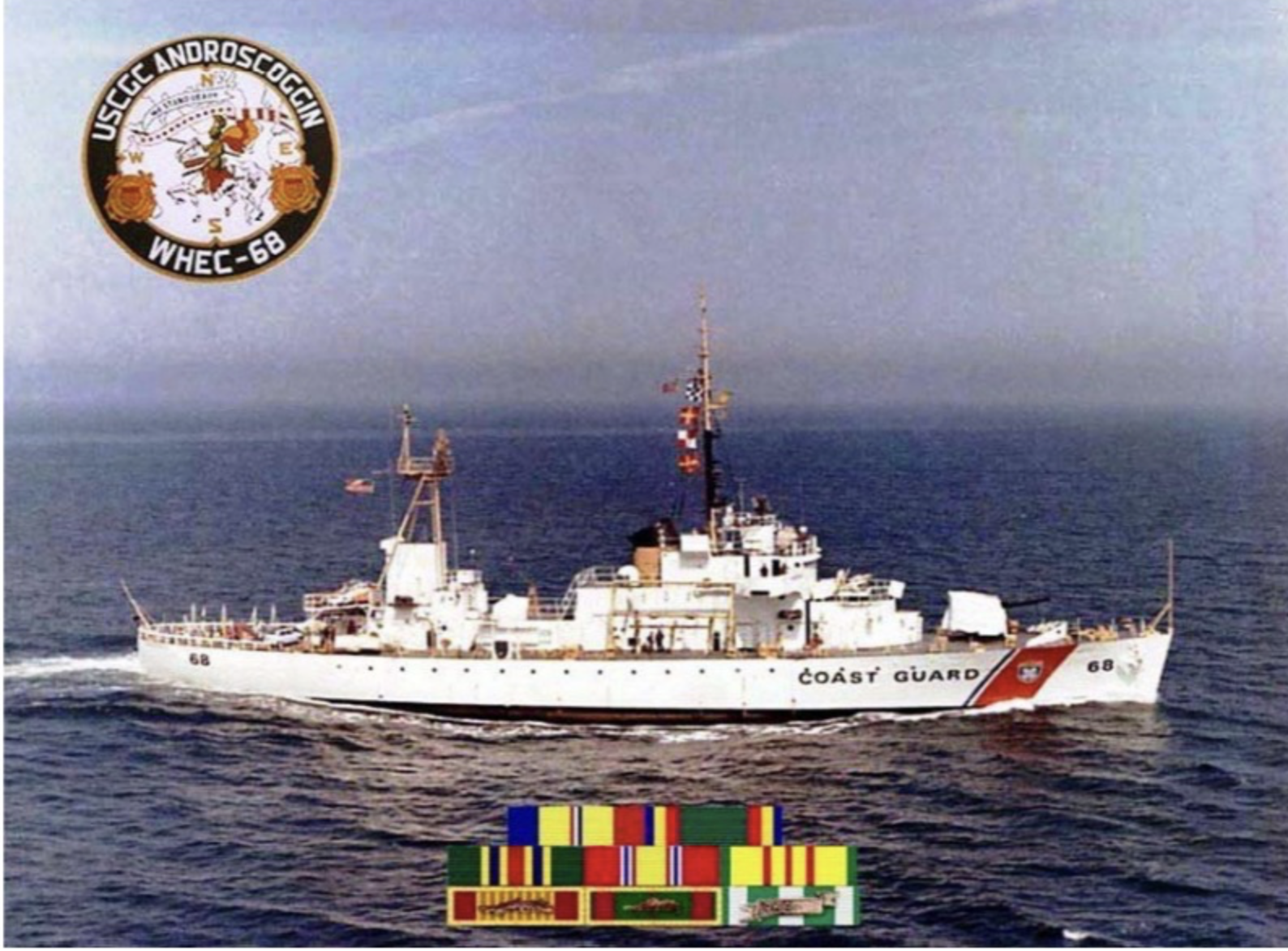
Androscoggin, WPG/WHEC-68 Provided courtesy of former Androscoggin crewman William C. Bishop. He noted: “I believe this picture was taken after we left the ship yard in 66 or 67 steaming through the Chesapeake Bay after the midship superstructure was added before our deployment to Viet Nam in 67.” USCGC Minnetonka and Winona were the same class.

57 Years ago, multiple Coast Guard units fought in the largest and perhaps most successful naval engagement of the Vietnam War.

The Tet Offensive had been launched 30 January 1968. As the fighting dragged on North Vietnam sailed four 100 foot trawlers South load with supplies for the VietCong.

Waiting for them were units assigned to Operation Markettime–South Vietnamese Navy, US Navy, 82 foot patrol boats of Coast Guard Squadrons One and 255 foot WHECs of Coast Guard Squadron Three.

The following is quoted from a Wikipedia post, Action of 1 March 1968” which includes a map showing where the actions took place and footnotes. 

The action of 1 March 1968 was a co-ordinated attempt by four North Vietnamese trawlers to resupply the Viet Cong and the efforts of Operation Market Time elements to stop them during the Vietnam War. On 28 February 1968, United States Navy SP-2H Neptune aircraft on routine patrol detected a North Vietnamese SL class naval trawler heading towards the South Vietnamese coast from north of the DMZ. By the next morning, three more trawlers were discovered and units of Operation Market Time were deployed for a surprise interception. The suspect trawlers did not fly flags so it was not until the start of the engagement that their origin was discovered. The trawlers were steel-hulled vessels, 100 feet long and armed with 57-millimeter recoilless rifles and machine guns. All four vessels were loaded with weapons and ammunition intended to be delivered to the Viet Cong. American and South Vietnamese forces that engaged in action included the United States Coast Guard cutters Androscoggin, Point Grey, Point Welcome, Winona, Point Grace, Point Hudson, Point Marone, the swift boats USS PCF-18, USS PCF-20, USS PCF-42, USS PCF-43, USS PCF-46, USS PCF-47 and USS PCF-48, two South Vietnamese navy junks and one patrol boat. Two U.S. Army helicopter gunships also participated in combat as well as aircraft used to fire flares.


Background:

The United States Navy, South Vietnamese navy, and the U.S. Coast Guard, operating under the authority of the South Vietnamese government, established a blockade of South Vietnam designated Operation Market Time to prevent infiltrations of personnel, munitions and equipment by the North Vietnamese government. A twelve mile wide restricted zone existed along the entire South Vietnamese coast and ships assigned to Market Time had the authority to stop and search any vessel within the zone for contraband material and check the identity papers of any person on a detained vessel.

“Action off Bo De River”
“The trawler designated in U.S. Navy records as An Xuyen Province Trawler… was first sighted on 28 February approximately 150 miles east southeast of Vũng Tàu holding a southeasterly course. On the evening of the 29th she changed to a westerly course and USCGC Winona started a covert surveillance. The trawler crossed the 12-mile limit at 0120 1 March and began a run for the beach near the mouth of the Bo De River at 0200. A blocking force placed near the mouth of the river consisted of several Navy PCF’s and the Coast Guard cutters Point Hudson, Point Grace, and Point Marone. Winona fired warning shots eight miles off the coast which were ignored so she opened up with her 5-inch/38 caliber gun after receiving return fire from the trawler. The trawler exploded in a huge fireball after taking several direct hits and sank approximately seven miles off the beach. Winona was struck by several pieces of debris from the explosion, however only minor injuries were sustained by the crew during the action.

(“Damage controlman first class Thomas Lisk was on board at the time, and reported that a round penetrated the hull and bounce repeatedly around the room but fortunately neither he nor any shipmates were injured.” –Chuck)

Action off Nha Trang

The trawler designated Khánh Hòa Province Trawler…was first sighted by Market Time aircraft on 29 February approximately 90 miles east northeast of Nha Trang with a southwesterly course. Surveillance was continued by Market Time vessels until she crossed the 12-mile limit 28 miles northeast of Nha Trang. Ignoring warning to heave to for boarding, the trawler continued on towards the beach. A South Vietnamese Navy patrol boat opened fire on the trawler and it quickly changed course and returned fire. Assisted by a U.S. Air Force AC-47 gunship, swift boats PCF-42, PCF-43, PCF-46, PCF-47, PCF-48and two SVN junks sortied to help the patrol craft chase the trawler to a cove where it ran aground in the Hon Heo Secret Zone.  At 0230, 1 March, five 81-millimeter mortar rounds from PCF-47 were direct hits and the trawler exploded with a massive explosion due to the munitions aboard. Fourteen dead North Vietnamese sailors were recovered the following morning. Rifles, machine guns and rocket launchers; along with considerable ammunition and explosives were recovered from the sunken trawler. The salvage operations extended over 12 days and included the recovery of a 14.5 millimeter antiaircraft gun and 68 cases of ammunition.[1]

Action off Tha Cau River

Forty miles from Chu Lai and six miles off the coast, USCGC Androscoggin intercepted a third trawler designated in U.S. Navy records as the Quảng Ngãi Province Trawler. Androscoggin signaled the trawler to identify itself at 0112 but there was no response so Androscoggin shot 5-inch star shells into the air to illuminate the trawler. It was then that the trawler was positively identified as an SL class North Vietnamese trawler so the Androscoggin opened fire at 0120 with 5-inch high explosive naval gunfire and .50 caliber machine guns. The trawler returned fire with a recoilless rifle, laid a smoke screen and turned into Androscoggin’s direction but one of the cutter’s shells hit the after starboard side, so the trawler turned reversed course and headed for the shore. As a result of a civilian junk passing through the battle area the Market Time ships had to cease fire. Two United States Army helicopters were directed to engage the trawler with rockets and miniguns at 0129 and after their attack a reduction in the amount of fire coming from the trawler was noticed. At 0140 Point Grey, Point Welcome, PCF-18 and PCF-20 were ordered to take the trawler under fire with mortars and machine guns at close range because the trawler had moved too close to shore for Androscoggin to maneuver. Point Welcome struck the trawler twice with 81-millimeter rounds. The trawler then grounded 50 yards off the mouth of the Tha Cau River at 0210. At 0220, the North Vietnamese tried to scuttle their ship and failed but a second attempt at 0235 succeeded in destroying the vessel in a 500-foot fireball. The explosion caused some damage to the pilothouse of Point Welcome and the deck was littered with debris but no casualties were reported.

Other Action on 1 March

USCGC Minnetonka shadowed the trawler designated as the Bình Định Province Trawler…but soon after being detected, the trawler turned around and headed back out to sea without being engaged. It was apparently headed for the Lo Dien area 42 miles north of Qui Nhơn. The trawler never got any closer to the coast than 30 miles and after she reversed course was monitored by aircraft until she approached the coast of the People’s Republic of China.

While on Market Time patrol duties on 1 March, USS Persistent discovered an abandoned junk at anchor 52 miles southeast of Da Nang. After a search of the area failed to locate persons in the water, the junk was boarded and items were found of a Communist Chinese origin including a Communist Chinese flag. The junk was hoisted on board Persistent and delivered to Da Nang for further inspection.[1]

Aftermath: 

The destruction of three of the four trawlers and the turning back of the fourth demonstrated that Operation Market Time was an effective net for the interception of supplies destined for resupply of the Viet Cong. Except for the 1 March trawlers and one other instance in the days after Tet 1968 no other trawlers were spotted between July 1967 and August 1969. The North Vietnamese were forced to use the Ho Chi Minh trail through Laos or the neutral port of Sihanoukville in Cambodia to ship supplies to the Viet Cong. With the closing of the port at Sihanoukville to Communist shipping in August 1969, attempted North Vietnamese trawler traffic into South Vietnam resumed. Of 15 trawlers detected by Market Time assets from August 1969 to late 1970, one was sunk, 13 were turned back and only one got through. In 1970, ten out of eleven trawlers were either sunk or were turned back.

“Chinese Maritime Safety Officers Beat Vietnamese Fishermen During South China Sea Interdiction, Say Officials” –USNI

Personnel from the China Maritime Safety Administration board and attack the crew of the Vietnamese fishing vessel QNg 95739 TS. Screenshot of a Maritime Safety Administration video released by SCSPI on Sept. 29, 2024. 

The US Naval Institute News Service reports an incident in which personnel of the China Maritime Safety Agency boarded a Vietnamese fishing vessel. The boarding was resisted by the Vietnamese fishermen (see the video below) and when the Chinese agents came aboard, they severely beat the fishermen with metal rods.

This is just another example of the Chinese attempting to intimidate their perceived enemies by using brutal, but usually less than deadly force. There have been conflicts with India and the Philippines at similar levels of violence. Chinese fishermen have also responded with similar levels of violence when being boarded by South Korean Coast Guard.

I am surprised this was done by the China Maritime Safety Agency rather than by the China Coast Guard. This may reflect an attempt by the Maritime Safety Agency to enhance its status in the Chinese government, perhaps even an effort to prove its continued relevance.

Where this happened is not stated. Presumably it was inside China’s self-declared Nine Dash Line, but outside China’s internationally recognized Exclusive Economic Zone (EEZ) and probably within Vietnam’s EEZ.


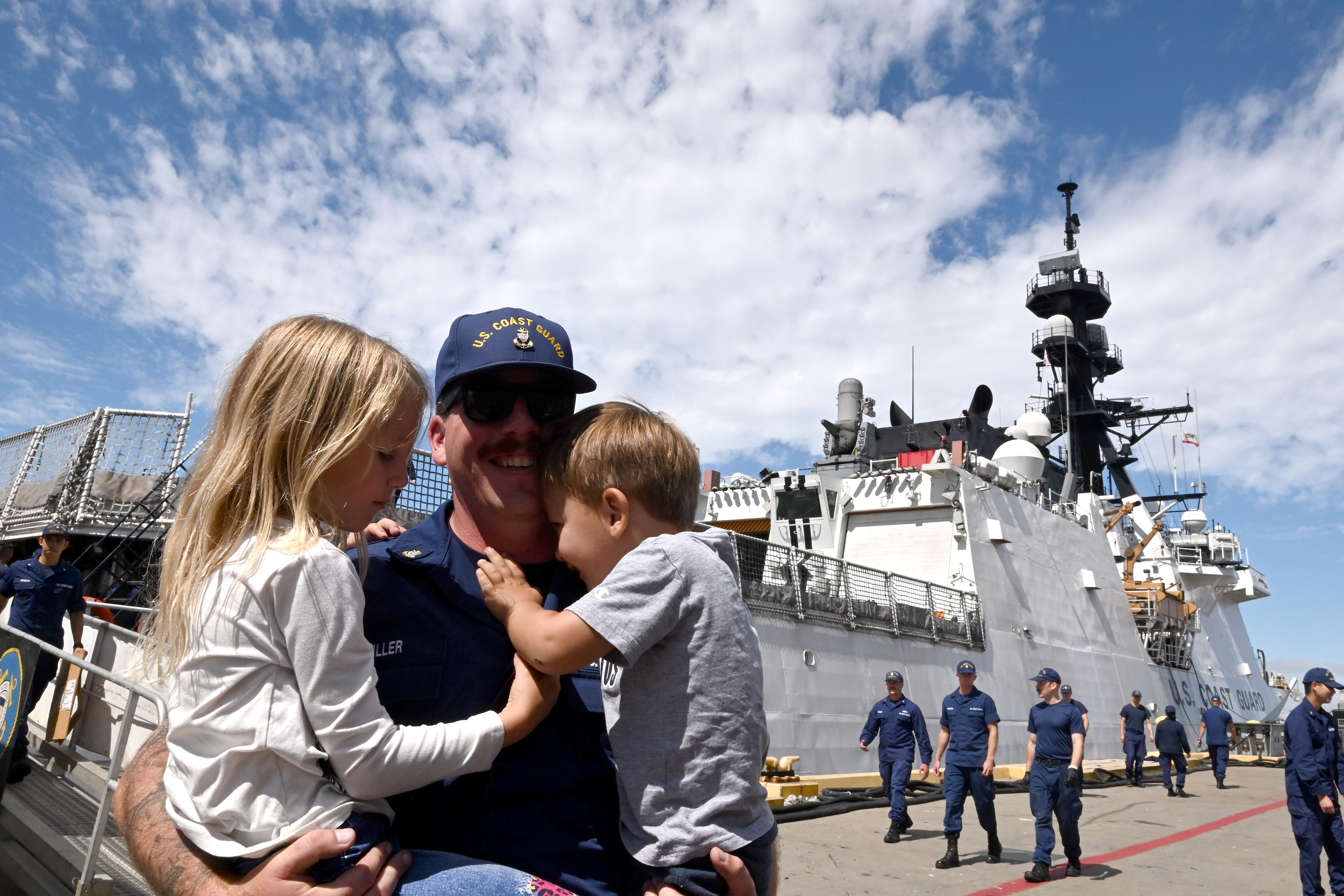
U.S. Coast Guard Cutter Waesche returns home following a 120-day Indo-Pacific patrol

The U.S. Coast Guard Cutter Waesche (WSML 751) crew members reunite with family, friends and loved ones after returning to their Base Alameda, California, home port, Aug. 11, 2024, following a 120-day Indo-Pacific patrol. The Waesche participated in various engagements, exercises, and events throughout their deployment. U.S. Coast Guard photo by Chief Petty Officer Matthew Masaschi.

Below is a news release from Coast Guard News (more photos and a video there). Looks like the Coast Guard is aiming to keep at least one cutter in the Western Pacific at all times.

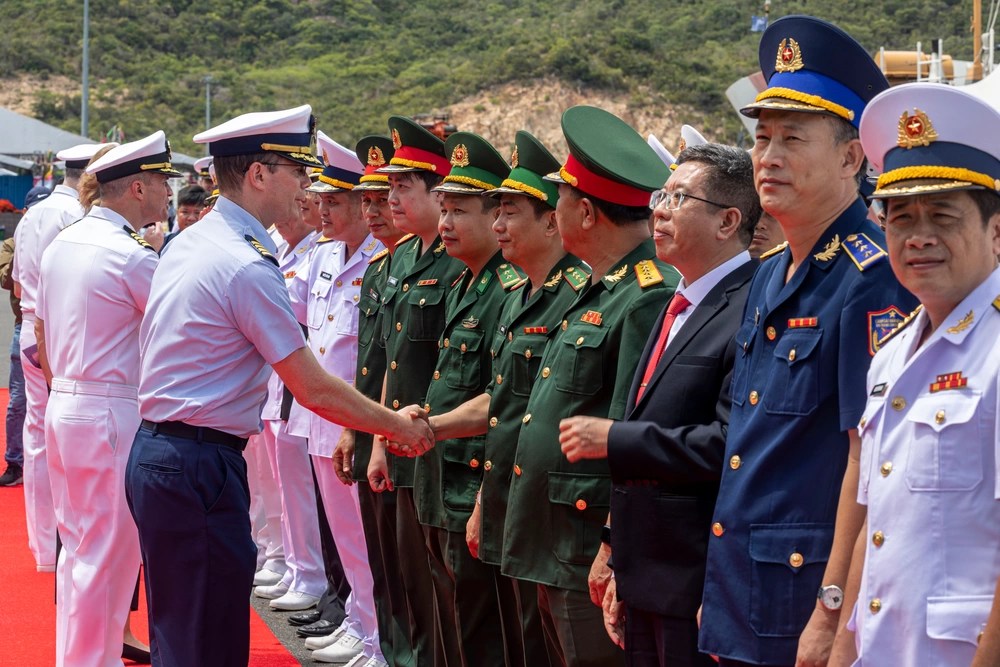
Those of my generation can’t help but see the irony of the friendly relations with the Socialist Republic of Vietnam as Waesche accompanied the 7th Fleet Flagship to Cam Ranh Bay.

U.S. Coast Guard Capt. Tyson Scofield, commanding officer of the U.S. Coast Guard Cutter Waesche (WMSL 751), shakes hands with leadership from the Vietnamese People’s Army during a reception at the Cam Ranh International Port in Vietnam, July 8, 2024. Leadership from the Vietnam Coast Guard and Vietnam Peoples Navy welcomed U.S. Sailors and Coast Guardsmen upon their arrival. Waesche is deployed to the Indo-Pacific to advance relationships with ally and partner nations to build a more stable, free, open and resilient region with unrestricted, lawful access to the maritime commons. (U.S. Marine Corps photo by Cpl. Elijah Murphy)

Aug. 12, 2024

U.S. Coast Guard Cutter Waesche returns home following a 120-day Indo-Pacific patrol

ALAMEDA, Calif. — The U.S. Coast Guard Cutter Waesche (WSML 751) and crew returned to their Base Alameda home port Sunday, following a 120-day patrol throughout the Indo-Pacific.

Waesche participated in various engagements, exercises, and events throughout their deployment.

The cutter’s leadership and crew met with officials and military personnel during port calls in Japan, Republic of Korea, Singapore, and Vietnam.

Following Waesche’s visit to Maizuru, Japan, Waesche joined crews from the Japan Coast Guard vessel Wakasa (PL 93) and the Republic of Korea Coast Guard patrol vessel Taepyongyang (KCG 3016) for a joint search-and-rescue exercise at sea.

Waesche’s crew also conducted a bilateral U.S.-Philippine search-and-rescue exercise with the Philippine Coast Guard in the South China Sea.

“We are thankful to have traveled safely home to our loved ones and to have completed a successful and meaningful patrol,” said Capt. Tyson Scofield, Waesche’s command officer. “Waesche’s patrol strengthened U.S. relationships with our partner nations to foster a free and open Indo-Pacific. The opportunity to work alongside our allies and partners in the Indo-Pacific through impactful engagements was an honor and a rewarding experience that the crew will remember for the rest of their lives.”

Tyson assumed command of the Waesche during a change of command ceremony held in Honolulu as the cutter transited to the Indo-Pacific.

Waesche deployed with a San Francisco-based MH-65E Dolphin helicopter and an aircrew from Air Station Barbers Point, Hawaii.

Waesche was assigned to Destroyer Squadron (DESRON) 15, the Navy’s largest DESRON and the U.S. 7th Fleet’s principal surface force. DESRON 15 regularly assumes tactical control of surface units operating in the area.

Commissioned in 2010, Waesche is one of four Legend-class national security cutters homeported in Alameda. National security cutters are 418-feet long, 54-feet wide, has a top speed of over 28 knots, a range of 12,000 nautical miles, endurance of up to 90 days, and can hold a crew of up to 170. The advanced technologies of the national security cutter class ships are designed to support the operations and missions in the Indo-Pacific region.

“The Long Blue Line: Villarreal – Silver Star savior of Vietnam 55 years ago” –MyCG

MyCG has a great first-person Vietnam war story. There is another telling of the same story with more background here. Check it out.

I note, we don’t have a Webber class cutter named after either of these two silver star recipients, EN2 Larry D. Villarreal and GM1 Willis J. Goff.

We need to honor these men.

USS/USCGC Chincoteague (AVP-24/WAVP/WHEC-375)/RVNS Lý Thường Kiệt (HQ-16)/RPS Andrés Bonifacio (PF-7)

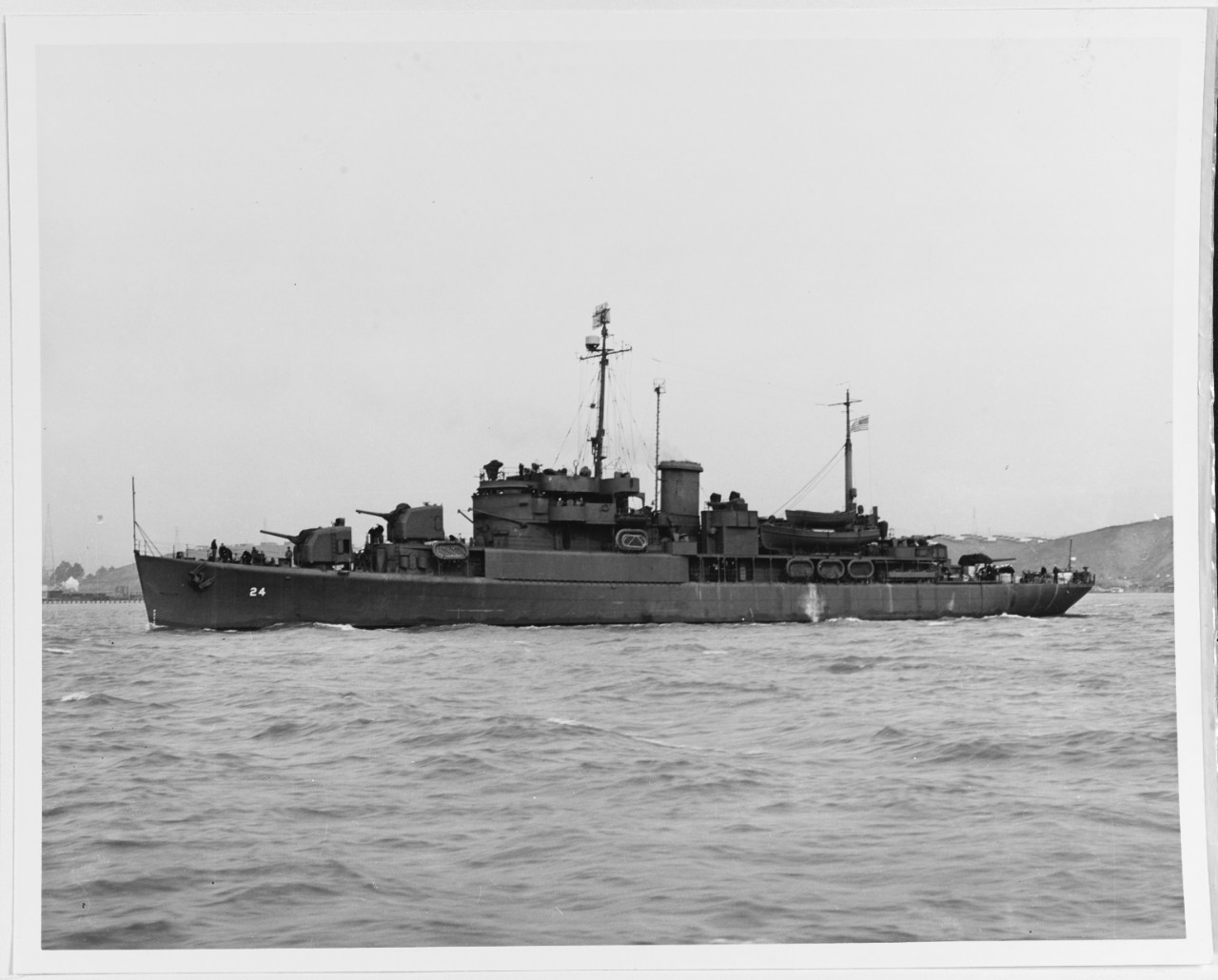
Title: USS Chincoteague (AVP-24) Photographed on 27 December 1943 off the Mare Island Navy Yard following repairs to severe battle damage incurred in July 1943. One of the four 5/38 guns in her original armament has been replaced by a quadruple 40mm mount. Photograph from the Bureau of Ships Collection  in the U.S. National Archives. Catalog #: 19-N-57482

Recently finished reading “USS Chincoteague the Ship That Wouldn’t Sink” by Frank D. Murphy. It is a small, large print book, the first-person story of a young sailor, then 19, and his first ship, a newly commissioned small seaplane tender, USS Chincoteague, that endured eleven air attacks 16-17 July 1943, only three months after she had been commissioned.

I had a personal interest because my first ship, USCGC McCulloch, the former USS Wachapreague, was also Barnegat class ship.

The attacks on Chincoteague were during a period when the US was moving up the Soloman Island Chain. The Allies had invaded New Georgia, but the fighting was heavy, and the Japanese were making a strong effort to push the allies off the island.

Consolidated PBY-5A Catalina. US Navy photo.

USS Chincoteague was anchored in Sabot Bay, Santa Cruz Islands, Southeast of the Soloman Islands, servicing a squadron PBY patrol planes when the attacks began. When an attack was expected she would get underway to maneuver. Between attacks she would return to service her brood of sea planes.

Attacks on the 16th caused only minor fragment damage. During attacks on the 17th, she received two damaging near misses that caused flooding and fires, then a direct bomb hit that wrecked the after engineroom killing ten crew members, followed by another near miss that dented the hull and knocked the remaining engines offline. Dead in the water, having taken on 663 tons of water, she had a negative GM, and was listing 12 to 18 degrees, it looked as if she would be sunk by the eleventh attack when four Marine Corsairs arrived splashing three of the attackers and driving off the fourth.

After repairs to the forward engineroom, which powered the starboard shaft, the ship got underway at 2350, but at 0245 on the 18th one of the engines was overheating. In an attempt to deal with the overheating, control of the engine was lost, and it ran away in spite of a closed throttle, causing a severe fire that forced the crew to abandon the engineroom.

The ship was taken in tow and, after temporary repairs at Espiritu Santo, was towed by to the West Coast where complete repairs were made including addition of eight 40 mm anti-aircraft guns and additional 20 mm guns. Ultimately, she would earn six battle stars.

You can read the full original damage report here.

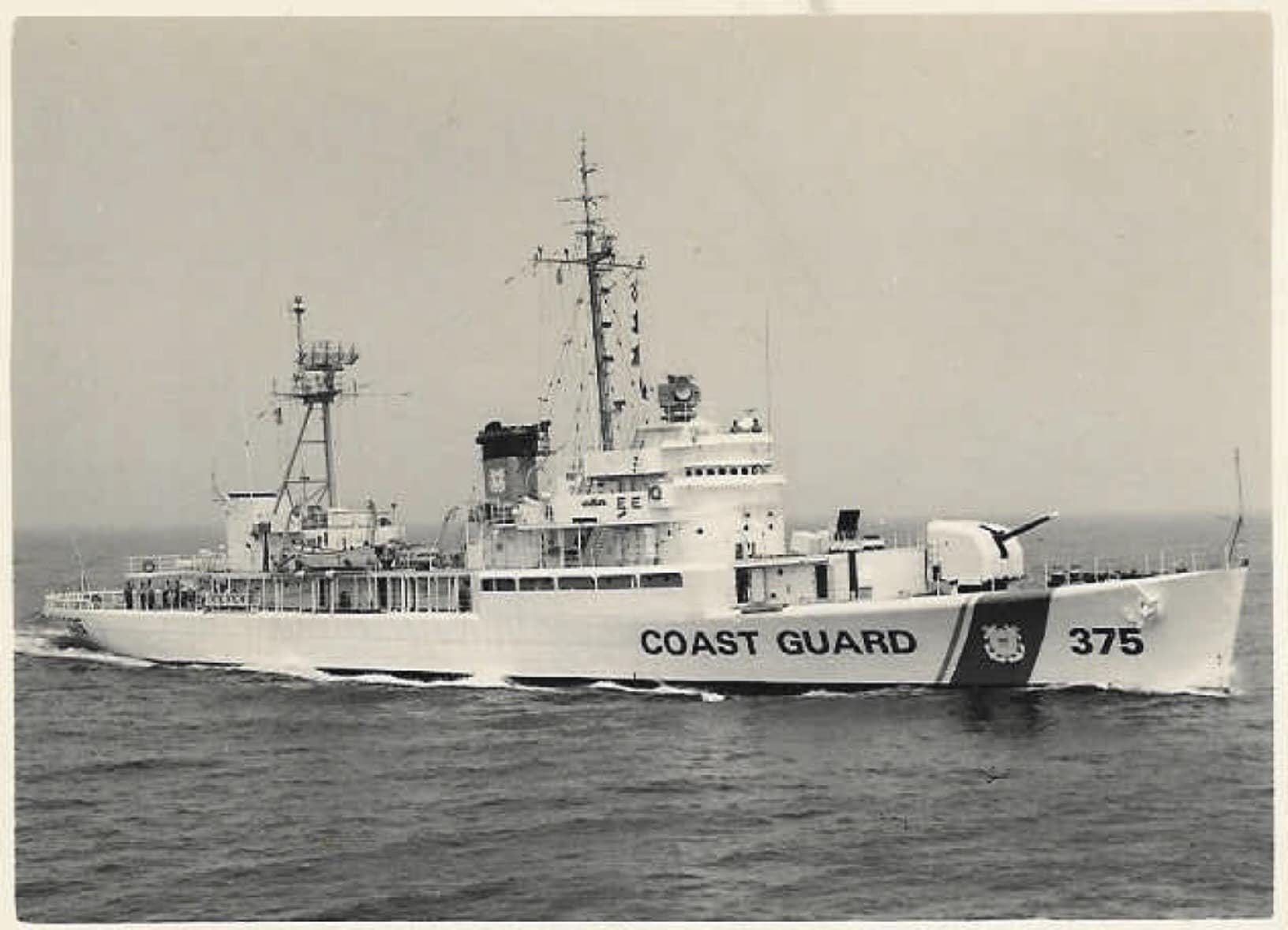
USCGC Chincoteague (WHEC-375) seen here late in her service with the Coast Guard, armed with a single 5″/38, Mk 56 Gun Fire Control System, torpedo tubes for ASW torpedoes, and Hedgehog ASW mortar.

In the 1940s Chincoteague and 17 of here sisters were transferred to the Coast Guard, where they primarily served as weather ships on a number of “Ocean Stations.” In Coast Guard service, these were referred to as the Casco Class.

As part of “Vietnamization” Chincoteague and six of her sister Coast Guard cutters were turned over to the South Vietnamese.

After being turned over to the South Vietnamese, the former Chincoteague, along with another former Coast Guard cutter of her class and two former US Navy ships fought the Chinese Navy in the “Battle of the Paracel Islands,” 16 January 1974.

RVNS Lý Thường Kiệt (HQ-16), the former USCGC Chincoteague

As the South Vietnamese government collapsed, the former Chincoteague along with five other ships of the class (the former Yakutat, Bering Strait, Castle Rock, Cook Inlet, and McCulloch) crowded with hundreds of refugees made their way to the Philippines. In 1976 these ships were turned over to the Philippine Navy as the Andrés Bonifacio class, with four of them commissioned and two (the former Yakutat and Cook Inlet) retained to provide spare parts. They remained in service until at least 1985.

The former USS/USCGC Absecon continued in service with the Vietnamese People’s Navy perhaps as late as 2000 and was probably the only Barnegat class ship ever armed with guided missiles, the SS-N-2 Styx and the SA-N-5 Grail.

“US, PH, Japan coast guards hold maritime law enforcement training” –The Manila Times

More than 30 participants from the Philippines, Malaysia, Thailand and Vietnam joined the Multinational Vessel Boarding Officer Course funded by the US Department of State’s Bureau of International Narcotics and Law Enforcement Affairs in Puerto Princesa City, Palawan on May 15-26, 2023. CONTRIBUTED PHOTO

The Manila Times reports on a US sponsored, Philippines hosted, boarding officer course that was also extended to officers from other ASEAN partners.

“Through this course, 33 participants from the PCG, Philippine National Police Maritime Group, Malaysia’s Maritime Enforcement Agency, Thailand’s Maritime Enforcement Command Center, and Vietnam’s Department of Fisheries enhanced their knowledge of the law of the sea and policy on the use of force.”

Thanks to Paul for bring this to my attention. 

“How a new Vietnam-Indonesia deal will affect South China Sea disputes” –Defense News

Defense News reports that Vietnam and Indonesia have agreed on demarcation of their respective EEZs where they had previously been in dispute.

Peaceful settlement of conflicting SE Asian nation claims would go a long way toward presenting a united front against China’s expansive 9 Dash Line claims and clarify IUU fisheries enforcement.

“Practically, the successful Indonesia-Vietnam EEZ [exclusive economic zone] demarcation will help both countries to resolve illegal, unreported, and unregulated (IUU) fishing, which has been a serious bilateral irritant and a broader issue involving third-party countries, including China and Thailand,” according to Bich Tran, a visiting fellow writing in the Fulcrum, a publication of the ISEAS—Yusof Ishak Institute in Singapore.

“China Accused of Building on Unoccupied Reefs in South China Sea” –gCaptain

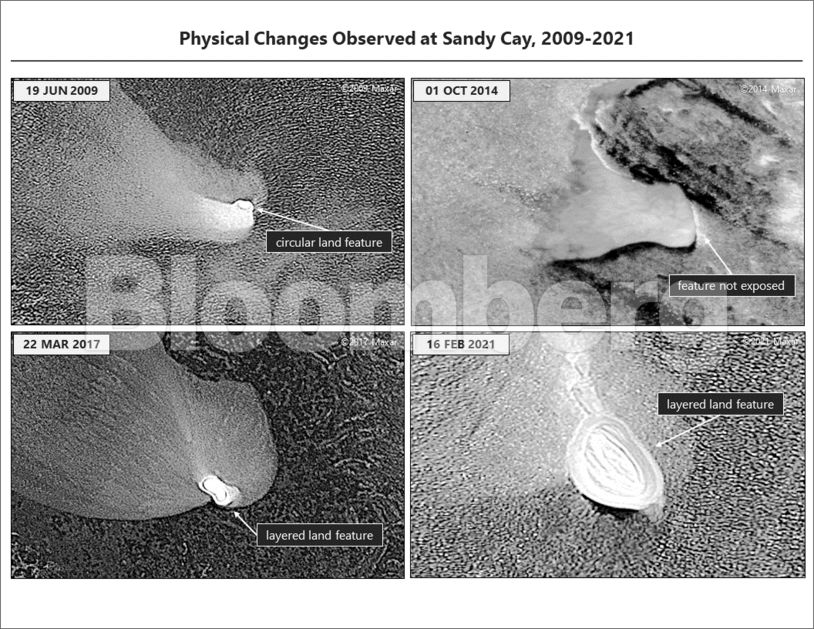
Satellite images obtained by Bloomberg News depict physical changes to a layered land feature at Sandy Cay between 2009 and 2021. Credit: Bloomberg

gCaptain reports,

China is building up several unoccupied land features in the South China Sea, according to Western officials, which they said was part of Beijing’s long-running effort to strengthen claims to disputed territory and potentially bolster its military presence in a region critical to global trade.

Apparently, China is not satisfied with the military outposts they have created in the South China Sea and are in the process of creating more. These actions may be taken by the Chinese both in support their systematic theft of EEZ resources from other nations and as support for a future blockade of Taiwan.

Certainly, these will be upgraded to military installations just as has been done with other artificial islands.

The nations whose EEZs are being violated by these activities have an opportunity to put a stop to it, while they are being done by fishing vessels, before there is a Chinese military presence, if they act quickly and aggressively to stop this illegal activity.

NATIONAL 5-YEAR STRATEGY FOR COMBATING ILLEGAL, UNREPORTED, AND UNREGULATED FISHING (2022-2026) / and the Missing Air Element

Under NOAA auspices, the U. S. Interagency Working Group on IUU Fishing has issued a five year strategy to address IUU fishing.

There are three identified objectives:

  • Promote Sustainable Fisheries Management and Governance
  • Enhance the Monitoring, Control, and Surveillance of Marine Fishing Operations
  • Ensure Only Legal, Sustainable, and Responsibly Harvested Seafood Enters
    Trade

Five nations have been identified as priorities for development of self sufficiency in the prevention of IUU fishing: Ecuador, Panama, Senegal, Taiwan, and Vietnam. These “Priority States” were selected because their “…vessels: “actively engage in, knowingly profit from, or are complicit in IUU fishing” and, at the same time, the priority flag state “is willing, but lacks the capacity, to monitor or take effective enforcement action against its fleet.”

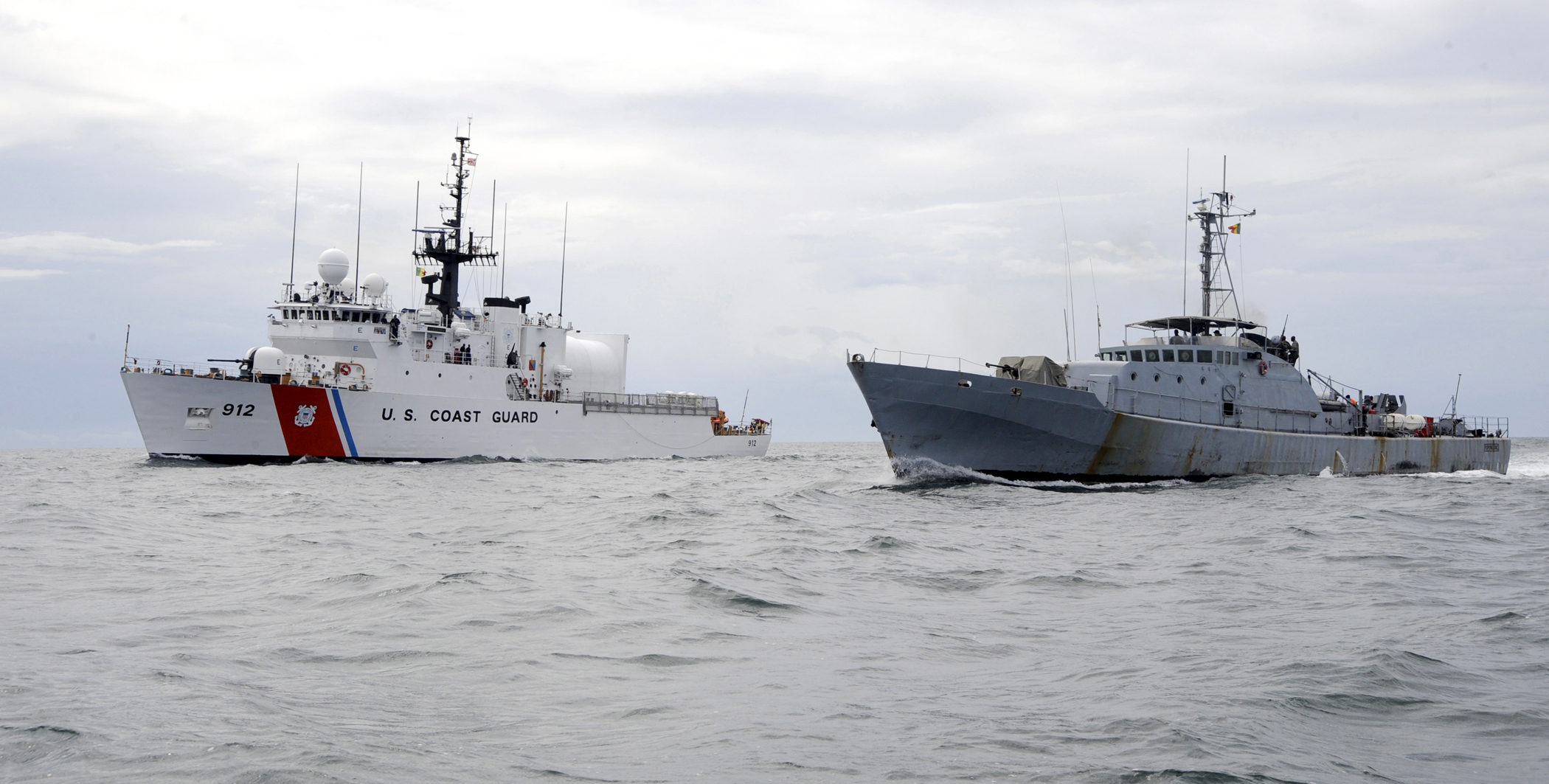
090808-G-3885B-136
ATLANTIC OCEAN (Aug. 8, 2009) The U.S. Coast Guard Cutter Legare (WMEC 912), left, patrols along side the Senegalese Navy vessel, Poponquine, during joint operations as part of the Africa Partnership Station. The Legare is deployed off the west and central coast of Africa for the six-day joint U.S/Senegalese operation, during which several Senegalese naval vessel boarding team members embarked aboard the Legare and participated in joint boarding and training exercises. (U.S. Coast Guard photo by Petty Officer 2nd Class Thomas M. Blue/ Released)

It is likely the Coast Guard will be spending time helping these states build capacity in their navies, coast guards, or maritime police.

The Missing Air Element  

One of the great strengths of the US Coast Guard is its fleet of fixed wing aircraft. They provide an essential detection capability. An air search capability allows the patrol vessels to do less searching and more boardings. Most smaller nations’ maritime law enforcement agencies have only limited, or in many cases, no comparable organic air search capability. Frequently, if they are to have an air search, they require cooperation of another service.

What I have seen of our capacity building efforts, seem to have been focused on surface operations and boarding team work.

Recognizing fishing vessels is not in the skill set of most air force crews. Frequently communications between surface vessels and air units are not compatible. In many air forces their aircraft virtually never go out over blue water.

The US Coast Guard could certainly help build capacity on the air side, as well as the surface side of the IUU fishing problem.

Land based Unmanned Air Systems now appear to be a way maritime law enforcement agencies might have an organic fixed wing air search capability at a lower cost. Unfortunately the US Coast Guard still is not particularly experienced in this area. The Japanese Coast Guard might be able to provide valuable advice to at least Taiwan and Vietnam in the use of UAS, as they gain experience with their newly acquired MQ-9Bs.