

Based on the Coast Guard Historian’s timeline, https://www.history.uscg.mil/research/chronology/
With inspiration from Mike Kelso

1892 After ten years of difficult and costly construction, the St. George Reef Lighthouse, built on a rock lying six miles off the northern coast of California, midway between Capes Mendocino and Bianco, was first lit. “St. George Reef Light marks a hazardous line of rock outcrops that extend northwest from Crescent City to form Saint George Reef. The light was abandoned in 1975 and replaced with a navigational buoy to the west of its current location.”
1920 The Superintendent of the 5th Lighthouse District inspected the aids to navigation “in New River Inlet and Bogue Sound, North Carolina by hydroplane in two hours, which would have required at least four days by other means of travel, owning to the inaccessibility of the aids inspected.”
 1944 Allied landings on Leyte, Philippine Islands commenced. Many Coast Guard units participated in the landings, which marked the fulfillment of General Douglas MacArthur’s promise to the Filipino people that he would return to liberate them from the Japanese.
1950 President Harry S. Truman issued an executive order “activating” the Magnuson Act, which had been passed by Congress earlier that month. This act, authorizing the president to invoke the Espionage Act of 1917, tasked the Coast Guard once again with the port security mission.
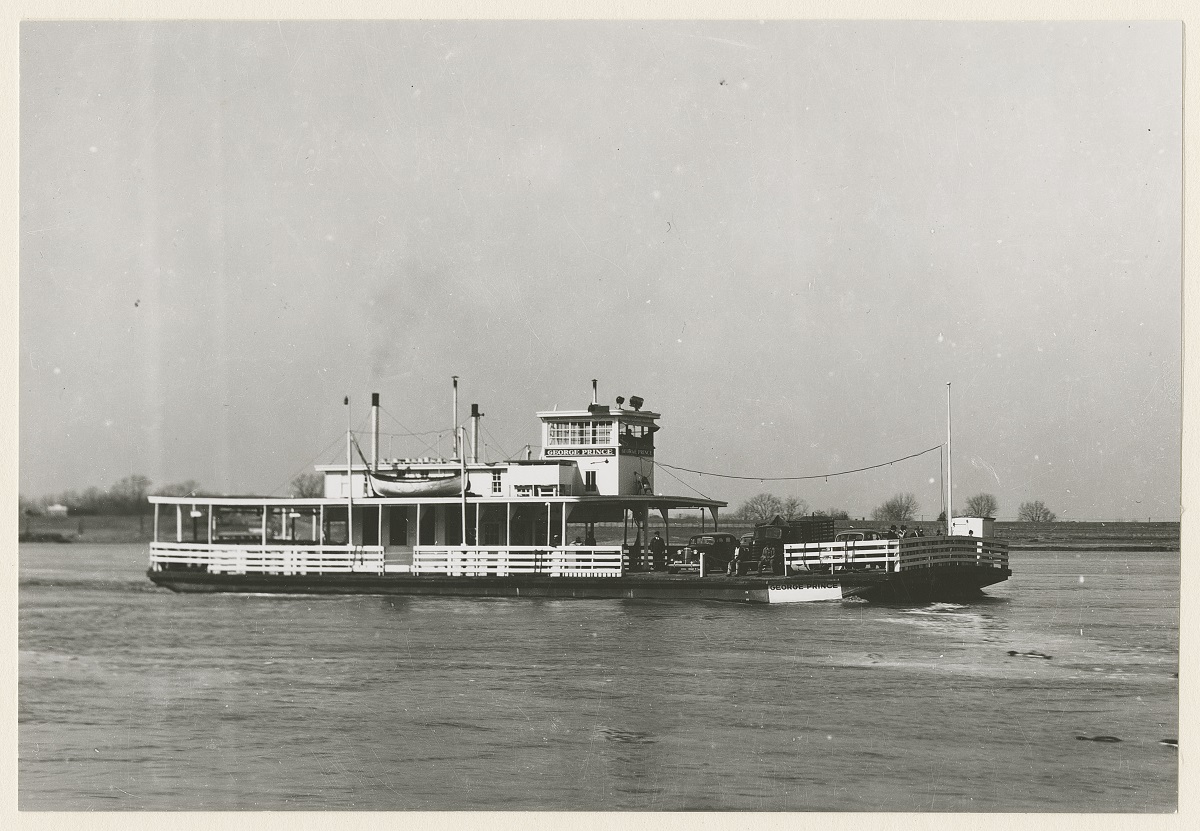
Ferry George Prince
1976 The 120-foot ferry vessel George Prince, carrying 96 passengers and crew along with approximately 30 vehicles, collided with the Norwegian tank vessel Frosta in the Mississippi River about 20 miles above New Orleans. George Prince was underway from Destrehan to Luling, Louisiana and was loaded to capacity. Frosta struck George Prince on the port side aft and the ferry quickly capsized and drifted upside down until it grounded on the right descending bank approximately one mile downstream from the point of collision. “Ninety-six passengers and crew were aboard the ferry when it was struck, and seventy-eight perished. This accident is the deadliest ferry disaster in United States history.”
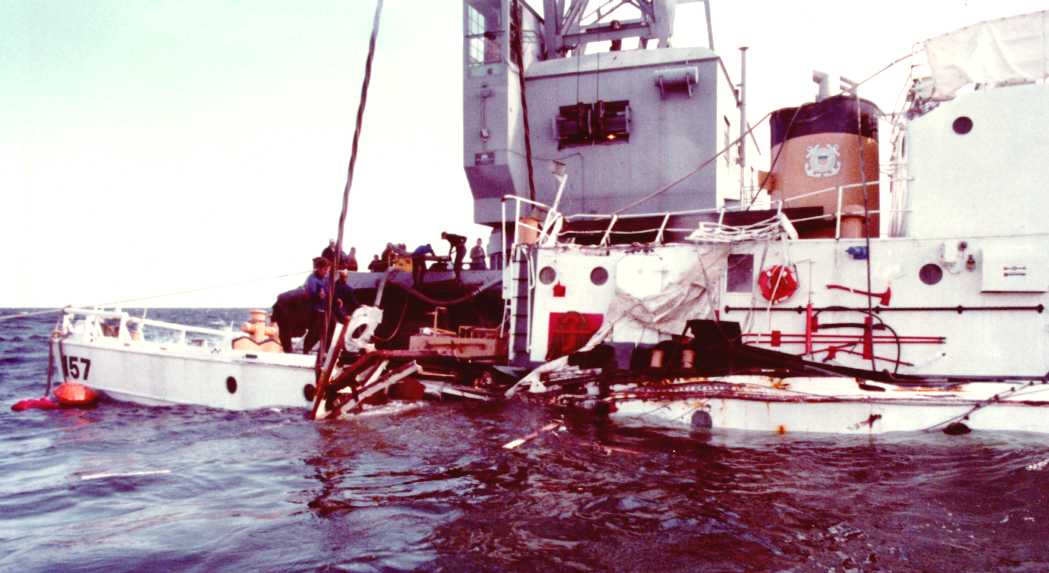
USCGC Cuyahoga (WIX-157) after being raised. USCG photo.
1978 CGC Cuyahoga sank after colliding with M/V Santa Cruz II near the mouth of the Potomac River. Eleven Coast Guard crewmen were killed.

USCGC MUNRO
2021 CGC Munro (WMSL 755) and crew returned to their Alameda, California homeport after a 102-day, 22,000 nautical mile deployment to the Western Pacific. Munro departed Alameda in July and operated under the tactical control of the U.S. Navy’s 7th Fleet to promote a “free and open Indo-Pacific.” Munro’s crew executed numerous cooperative engagements, professional exchanges and capacity building efforts with naval allies and partners, including the Japan Coast Guard, Japan Maritime Self Defense Force, Philippine Coast Guard and Bureau of Fisheries and Aquatic Resources, Royal Australian Navy, and Indonesia Maritime Security Agency.
 Chuck Hill's CG Blog
The history of the St. George Reef Lighthouse is very interesting, the construction was very difficult. There is a preservation society that is working on restoring it, it has also been relighted as a private aid and helicopter tours are I think again available.