
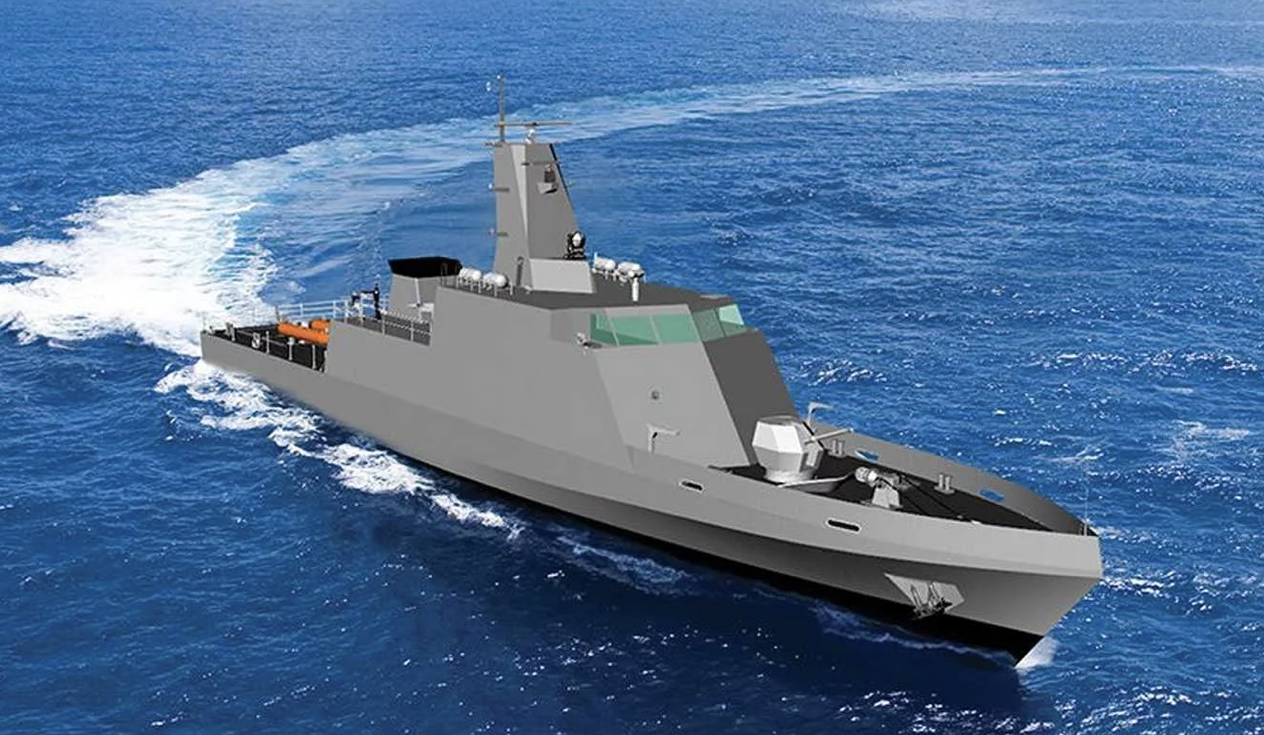
The planned total cost for the eight NPa500MB OPVs is estimated at 2.8 billion reais (~476 million USD), while three other vessels will be specifically configured for mine countermeasures operations. (Picture source: Emgepron)
Army Recognition’s Navy News reports,
“…February 24, 2025, the Brazilian Navy’s Naval Systems Design Center (CPSN) delivered the basic engineering plan for the 500-ton offshore patrol vessel (NPa500MB) to Emgepron, a state-owned company responsible for naval projects, in late January. This step is part of the Patrol Vessel Acquisition Program (PRONAPA), which involves the domestic construction of 11 offshore patrol vessels (OPVs) with a high percentage of locally sourced components. These vessels are designed for the surveillance and protection of the Exclusive Economic Zone (EEZ), search and rescue operations, and combating illegal activities such as illegal fishing.
Brazil has the tenth largest EEZ in the world at 3,830,955 km sq., about one third that of the US, less than Canada, Japan, or New Zealand, but more than Chile, Kiribati, or Mexico.
Brazil has no Coast Guard. The Brazilian Navy operates 22 vessels they refer to as offshore patrol vessels. Only three are what the USCG would call medium endurance cutters. Four are near 40 year old former Royal Navy 890 ton 14 knot steel hulled minesweepers. 12 are 217 tons full load, 152’7″ (46.5 m), 26.5 knot patrol craft commissioned 1993 to 2009.
The remaining three are 500 ton, 182’5″, 21 knot Macaé class. Two vessels of this class are still building.
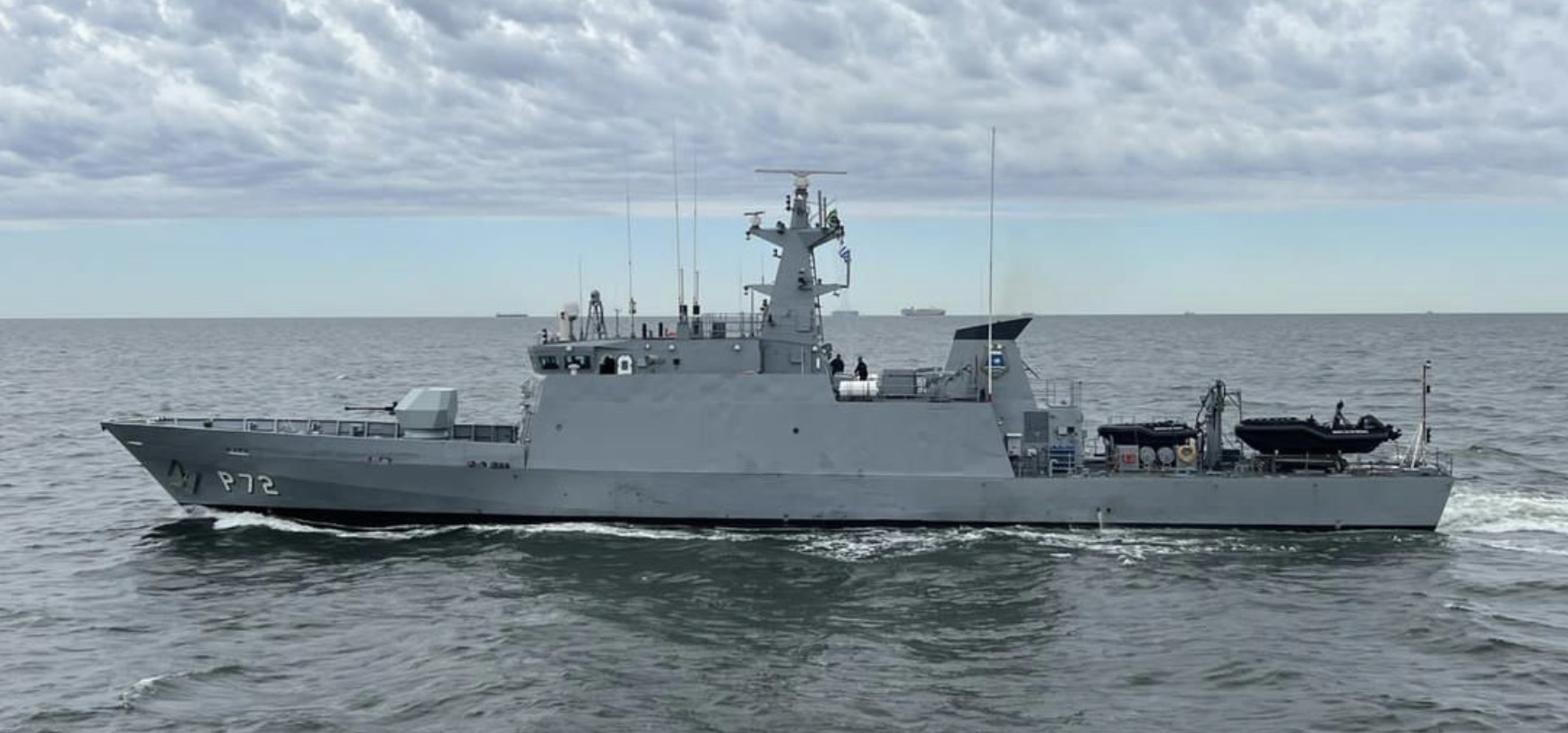
Macaé class patrol craft Navio-Patrulha Maracanã (P72) – 2023
If the Brazilian patrol vessel fleet were to provide the same coverage as the US Coast Guard in proportion to the size of their EEZ, they would need 12 large patrol ships (over 1000 tons) and about 20 smaller patrol craft. (They may be supplementing their patrol force with other classes of vessels.)
The new design appears to be an evolutionary outgrowth of the Macaé class since it is only slightly larger and has similar layout and performance: overall length of 58.9 meters (193’3″), a beam of 9.0 meters (29’6″), a maximum draft of 2.5 meters (8’2″), and a displacement of 564 tons
Presumably the Brazilian Navy sees the Macaé class as successful, but the new ships do not appear to be a significant improvement over the Macaé class. As I noted earlier (How Long Should an OPV be? Is There a Minimum?) I believe a length of at least 80 meters is the minimum for a truly fully capable OPV. In addition to better range, endurance, and seakeeping, the additional length allows incorporation of features that appear to be becoming standard on OPVs, including multiple, more capable, 8 to 11 meter RHIBs (perhaps a stern ramp), space for containerized mission modules and unmanned systems, and a flight deck and hangar for at least UASs.
The Macaé class was based on the 400 ton, 55 meter French P400 class patrol vessel. The French came to believe they needed a larger vessel and have begun replacing their P400 class with vessels with the 80 meter POM. Perhaps Brazil should again look to France and base their next OPV on the more capable POM.
 Chuck Hill's CG Blog