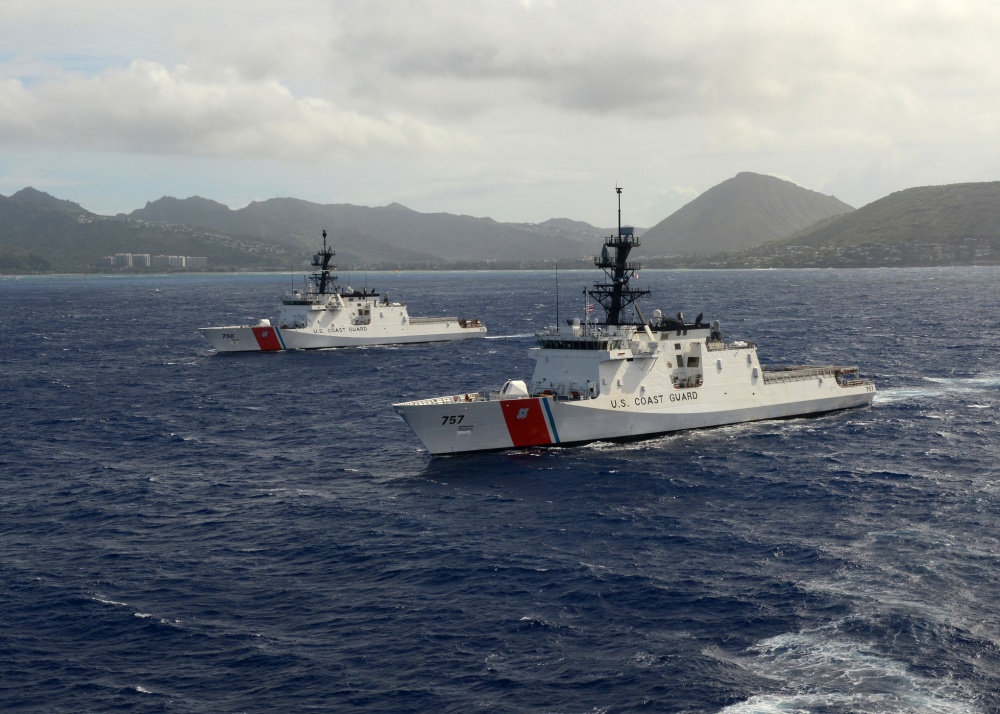
Major Patrol Cutter Homeports

The crews of the Coast Guard Cutters Midgett (WMSL 757) and Kimball (WMSL 756) transit past Koko Head on Oahu, Hawaii, Aug. 16, 2019. The Kimball and Midgett are both homeported in Honolulu. (U.S. Coast Guard photo by Petty Officer 3rd Class Matthew West/Released)

I published a list of homeports in 2022. Maybe it’s time for another. Let’s take a look at where they are now and see what has changed.

Since the Coast Guard does not seem to have a consolidated listing of ships and their homeports, and the District lists are sometimes incomplete, I relied on the Navy League’s 2026 Almanac for the information that follows. I think it is correct.

THE FORCE LAYDOWN:

NE DISTRICT: 2 WMEC270s

  • Newport, RI: Tahoma (908), Legare (912)

East DISTRICT: 8 WMEC270s, 3 WMEC210s

  • Portsmouth, VA: 8 WMEC270s, 2 WMEC210s: Bear (901), Tampa (902), Northland (904), Spencer (905), Seneca (906), Escanaba (907), Campbell (909), Forward (911), Resolute (620), Venturous (625)
  • Virginia Beach, VA: WMEC210: Dependable (626)

SE DISTRICT: 4 National Security Cutters, 2 WMEC270s, 2 WMEC210s

  • Charleston, SC: 4 NSCs: Hamilton (753), James (754), Stone (758), Calhoun (759)
  • Cape Canaveral: 2 WMEC210s: Vigilant (617), Alert (630)
  • Key West: 2 WMEC270s: Thetis (910), Mohawk (913)

Heartland DISTRICT: 2 WMEC210s

  • Pensacola:  Reliance (615), Diligence (616),

SW DISTRICT: 4 National Security Cutters

  • Alameda, CA: 4 NSCs: Bertholf (750), Waesche (751), Stratton (752), Munro (755)

NW DISTRICT: one WMEC210

  • Port Angeles, WA: Active (618)

Oceania DISTRICT: 2 National Security Cutters, one WMEC270

  • Honolulu, HI: Kimball (756), Midgett (757), Harriett Lane (903)

Arctic DISTRICT: 1 WMEC283

  • Kodiak, AK: Alex Haley (WMEC-39)

What has changed?

When the Program of record was devised the Coast Guard had 47 large patrol cutters and planned to replace them with 33 ships, 8 NSCs and 25 OPCs.

In the last four years the Coast Guard has gone from 37 large patrol cutters to 32, with the loss of six WMEC210s and the addition of one National security cutters. There are now 8 WMEC210s instead of 14 and 10 NSCs in addition to 13 WMEC270s and USCGC Alex Haley.

Atlantic Area has gone from 27 large patrol cutters to 23 and PAC area from 10 to nine.

I still think there is something out of balance when PACAREA, which has 84% of the US EEZ, has less than a third of the large longer ranged patrol cutters. The first four OPCs are supposed to go to San Pedro, CA, Kodiak, AK, but if they replace the current three PACAREA WMECs, there will still be only nine or ten large patrol cutters in PACAREA until Arctic Security Cutters start to arrive.

When I retired in 1991, PACAREA had ten WHEC378s and several (I think six) WMECs and we were not doing many of the things PACAREA cutters do now.
“U.S. Coast Guard announces $212 million in Base Charleston improvements” –News Release

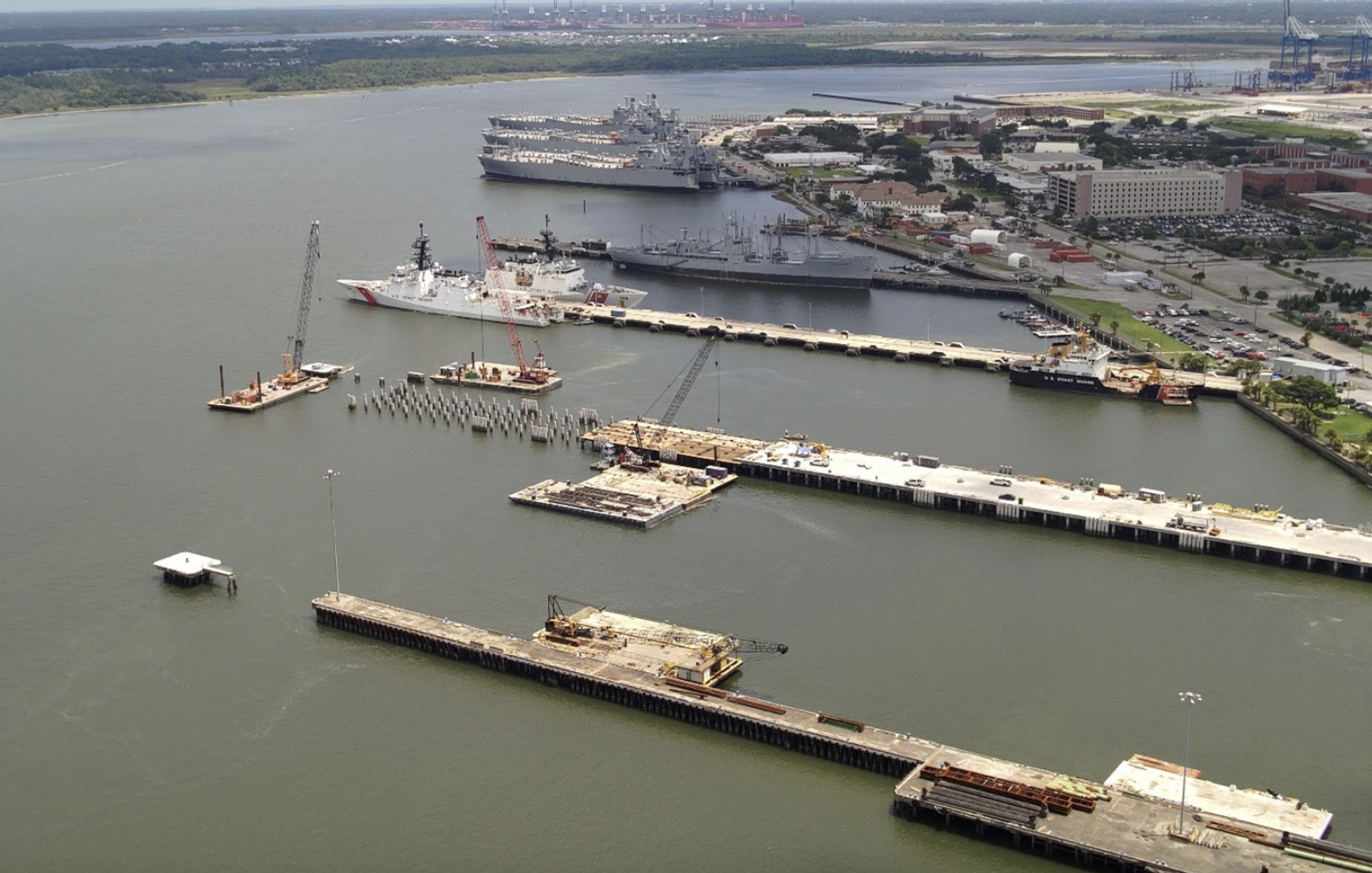
Reconstruction of Pier November (second from the bottom) continues July 23, 2025, at Base Charleston in North Charleston, South Carolina. The Coast Guard used funding made available under the One Big Beautiful Bill Act to modify an existing contract to remove submerged pilings in the vicinity of the piers to facilitate construction of new and modernized facilities to support Coast Guard major cutter operations. U.S. Coast Guard photo.

Below is a CG HQ news release reporting the award of two contracts.

Joint Base Charleston includes Air Force, Navy, Marines, and Army as well as Coast Guard , NOAA and various other Federal agencies. It is big. A Naval Weapons Station up river is included. It is a major military out load port.

The Coast Guard relies on Joint Base Charleston for personnel support, including housing, medical/dental services, child care, and commissary/exchange services. (AI)

Coast Guard Base Charleston is one of only three bases where National Security Cutters (NSC) are home-ported and the only NSC base in the Atlantic area. Based on the news release below, apparently four OPCs are also expected to be based there.


May 11, 2026

U.S. Coast Guard announces $212 million in Base Charleston improvements

WASHINGTON – The U.S. Coast Guard today awarded two contracts that will deliver critical new operational and support facilities at Base Charleston in North Charleston, South Carolina. These projects support the Coast Guard’s transformation initiatives and will deliver critical new operational and support facilities to the expanding base.

One contract, awarded to The Whiting-Turner Contracting Company of Greenbelt, Maryland and executed by the U.S. Coast Guard Facilities Design and Construction Center in Norfolk, Virginia, is for the full recapitalization of Base Charleston’s Pier Mike. This $116.7 million, fixed-price, design-build project includes demolition of the existing pier and replacing it with a state-of-the-art structure designed to homeport four Offshore Patrol Cutters (OPCs) and one visiting cutter. Each berth will also be capable of mooring National Security Cutters, providing significant strategic flexibility for the fleet. Contract completion is expected in 2030.

The second contract has been awarded to Brasfield & Gorrie, LLC of Birmingham, Alabama for the design and construction of a new 30,000-square-foot combined medical and dental facility, a new entry control point/visitor’s center and various supporting utilities at Base Charleston. This $95.5 million project is a major step forward in increasing personnel readiness through improved access to medical and dental care, ensuring crews receive necessary support to sustain mission readiness. Contract completion is expected by July 2029.

Both contracts were awarded under the Department of Homeland Security’s National Multiple Award Construction Contract III and were made possible by the Coast Guard’s historic $25 billion investment included in the Working Families’ Tax Cut Act.

“I am excited for the incredible potential these projects have to improve the welfare of our Servicemembers and their families, to homeport our future fleet of Offshore Patrol Cutters and to operationalize the generous investments being made in our Service by the American people,” said Vice Admiral Jo-Ann Burdian, commander of Coast Guard Atlantic Area. “Our people are our greatest asset, and everything we do on their behalf, to ensure they are ready, trained and well-supported will enable us to act with clarity, cohesion, and purpose to deliver the outcomes our Nation expects.”

The Pier Mike project follows Whiting-Turner’s successful demolition and ongoing reconstruction of the nearby Pier November. This adjacent project is progressing on time and on budget.

“Portugal approves €24 Million sale of four Tejo-class patrol vessels to Dominican Republic” –Navy News

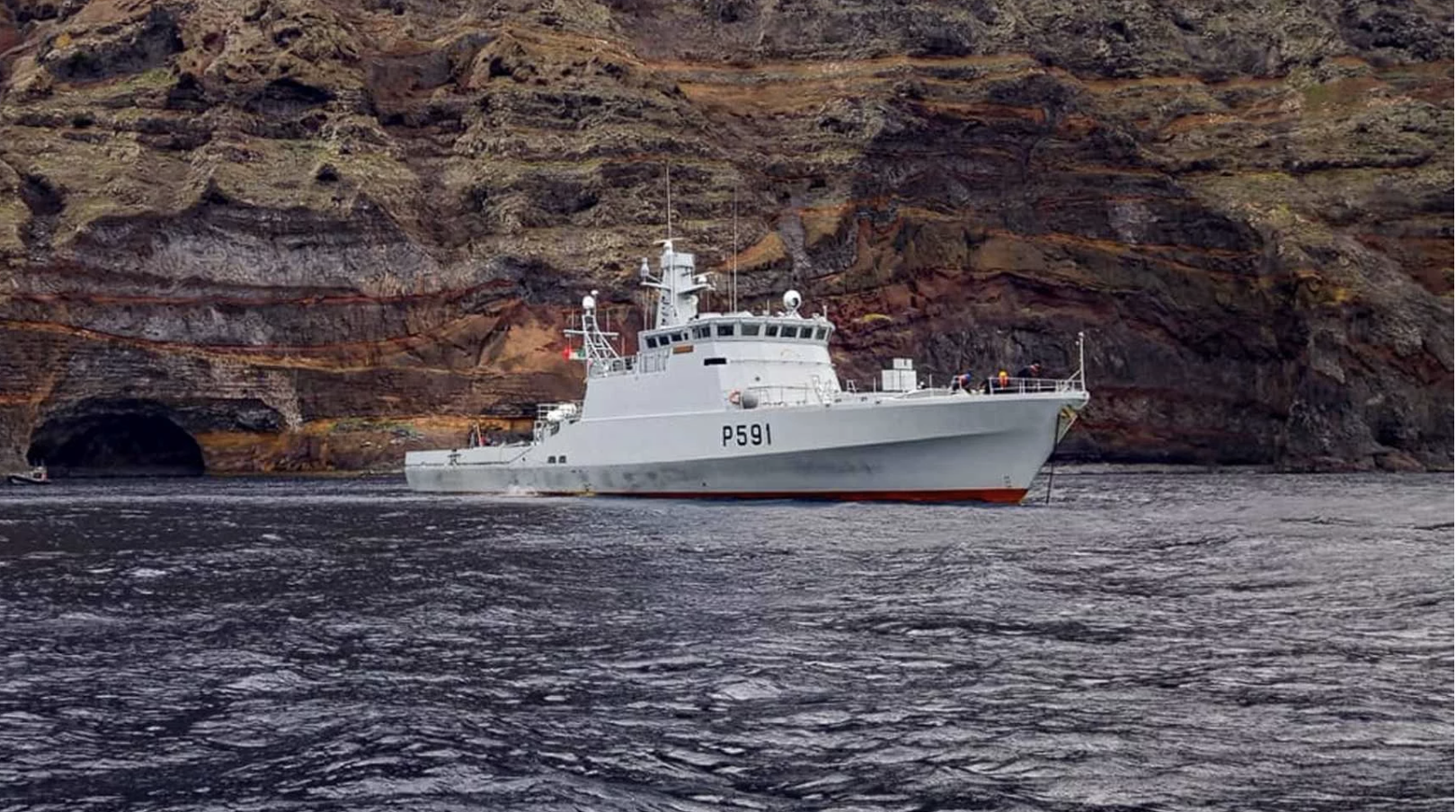
A defining feature of the Tejo-class is the StanFlex modular system, which can be exchanged in approximately 48 hours, enabling role conversion between surveillance and pollution control, combat, mine countermeasures, minehunter, and minelayer tasks. (Picture source: Portuguese Navy)

Army Recognition’s Navy News reports,

“On February 17, 2026, Portugal authorized the sale of four Tejo-class coastal patrol vessels to the Dominican Republic Navy for €24 million. The transfer of NRP Tejo, NRP Douro, NRP Mondego, and NRP Guadiana follows approval by the Portuguese Council of Chiefs of Staff and forms part of bilateral defense cooperation. The vessels will strengthen Dominican maritime security and counter drug trafficking operations in the Caribbean.”

These are not new ships having been built in Denmark and commissioned 1992-1996, decommissioned in 2010, sold to Portugal and recommissioned in 2015, but they are very interesting and innovative little ships. In some respects they compare favorably to the Webber class WPCs.

These ships were part of the 14 ship Flyvefisken class that used the Danish modular “Stanflex” system. At one time they were armed with,

I do not think any of the sophisticated weapons were included when they were sold to Portugal, but they will make a major improvement to the Dominican Republic fleet.

“U.S. Coast Guard completes the President’s contract awards for 11 Arctic Security Cutters” –CG News

Digital Render of Arctic Security Cutter

Below is a news release from Coast Guard News. This will be the second class of Arctic Security Cutters. The contracts for six ship of the first class were awarded to Rauma Marine Constructions Oy of Rauma, Finland, and Bollinger Shipyard in late December.

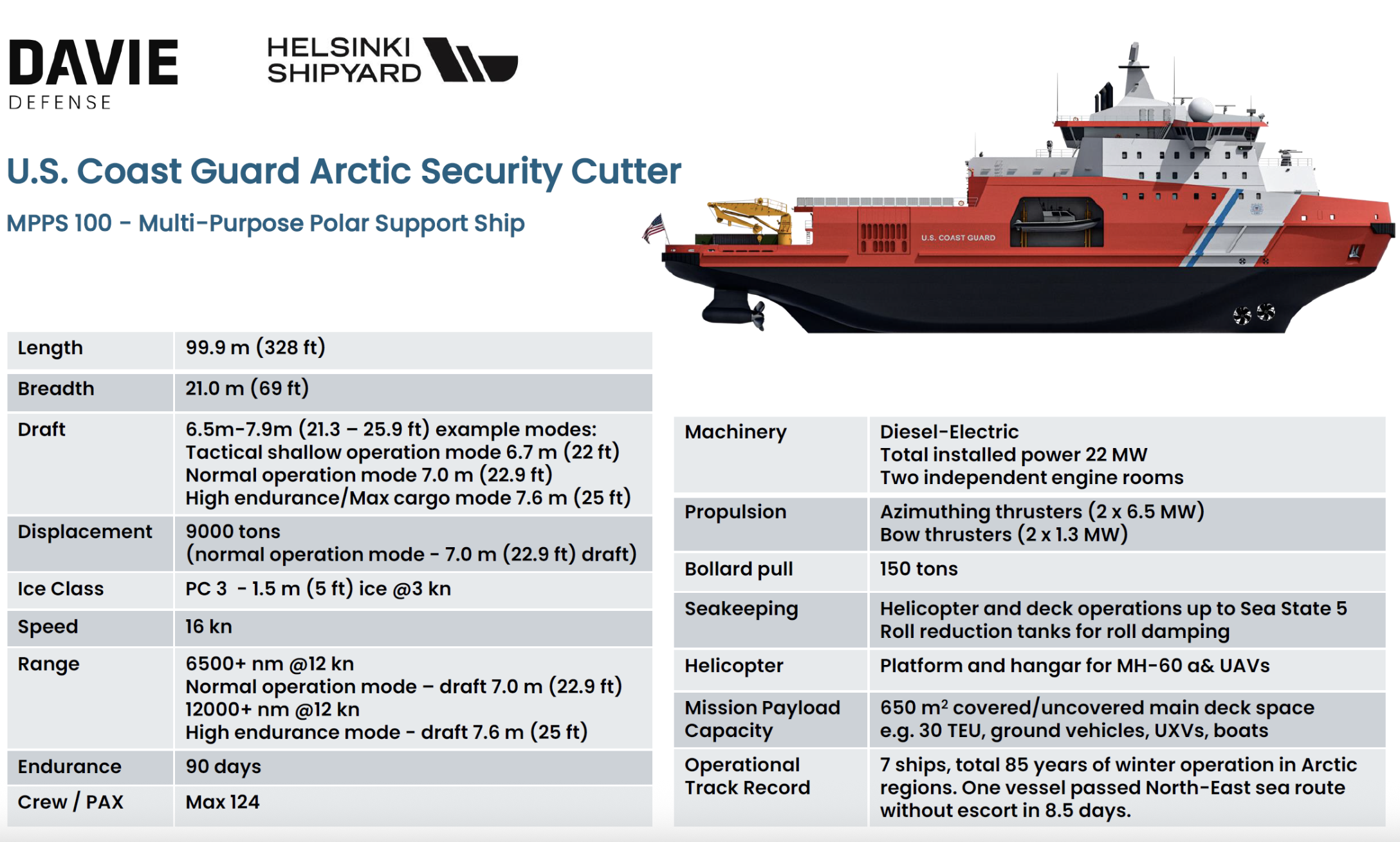
This second class of five ships will be more powerful with 2×6.5 MW (17,433 HP) propulsion while the first class of six has a total of 7.2 MW (9,655 HP). These are considerably smaller than USCGC Healy which has 30,000 HP. They are both more than twice the size of USCGC Mackinaw (9,119 shp), but are still small enough to transit the St. Lawrence Seaway into the Great Lakes.

Davie’s proposal for the USCG Arctic Security Cutter.

Related:

Feb. 11, 2026

U.S. Coast Guard completes the President’s contract awards for 11 Arctic Security Cutters

WASHINGTON — The U.S. Coast Guard announced today it has completed the award of contracts for 11 Arctic Security Cutters, fulfilling President Trump’s directive to rapidly expand America’s icebreaker fleet. The latest award is for construction of up to five Arctic Security Cutters, bringing the President’s initial order to completion and marking a historic milestone in U.S. Arctic capability.

The contract awarded today builds on previous awards announced Dec 29, 2025, and delivers the 11 Arctic Security Cutters directed by the President. Together, these cutters will form the backbone of a revitalized U.S. icebreaker fleet, protecting U.S. sovereignty and dominance in the Arctic.

“America has been an Arctic nation for over 150 years, and we’re finally acting like it under President Trump. Our adversaries continue to look to grow their presence in the Arctic, equipping the Coast Guard with Arctic Security Cutters will help reassert American maritime dominance there,” said Secretary Kristi Noem. “Revitalizing the U.S. Coast Guard’s icebreaking capabilities is crucial for our security and prosperity, and today’s announcement is an important step in that direction.”

Davie Defense, Inc. will construct two Arctic Security Cutters at Helsinki Shipyard in Finland and three domestically. The Arctic Security Cutters will defend U.S. sovereignty, secure critical shipping lanes, protect energy and mineral resources, and counter foreign malign influence in the Arctic region. A robust icebreaker fleet will enable the Coast Guard to control, secure and defend U.S. Alaskan borders and Arctic maritime approaches, facilitate maritime commerce vital to economic prosperity and strategic mobility, and respond to crises and contingencies in the region.

“Awarding these contracts ensures the United States maintains its leadership as a maritime power in the Arctic,” said Adm. Kevin E. Lunday, commandant of the Coast Guard. “Accelerating construction of these cutters will enable the Coast Guard to defend our northern border and approaches, while strengthening domestic shipbuilding and reinforcing the nation’s industrial base.”

Delivery of the first Arctic Security Cutter is expected in early 2028.

Acquisition of Arctic Security Cutters supports the Coast Guard’s modernization under Force Design 2028, transforming the Service into a more agile, capable and responsive fighting force.

“Coast Guard cutter returns to Florida after escorting recently seized motor tanker” –SE District

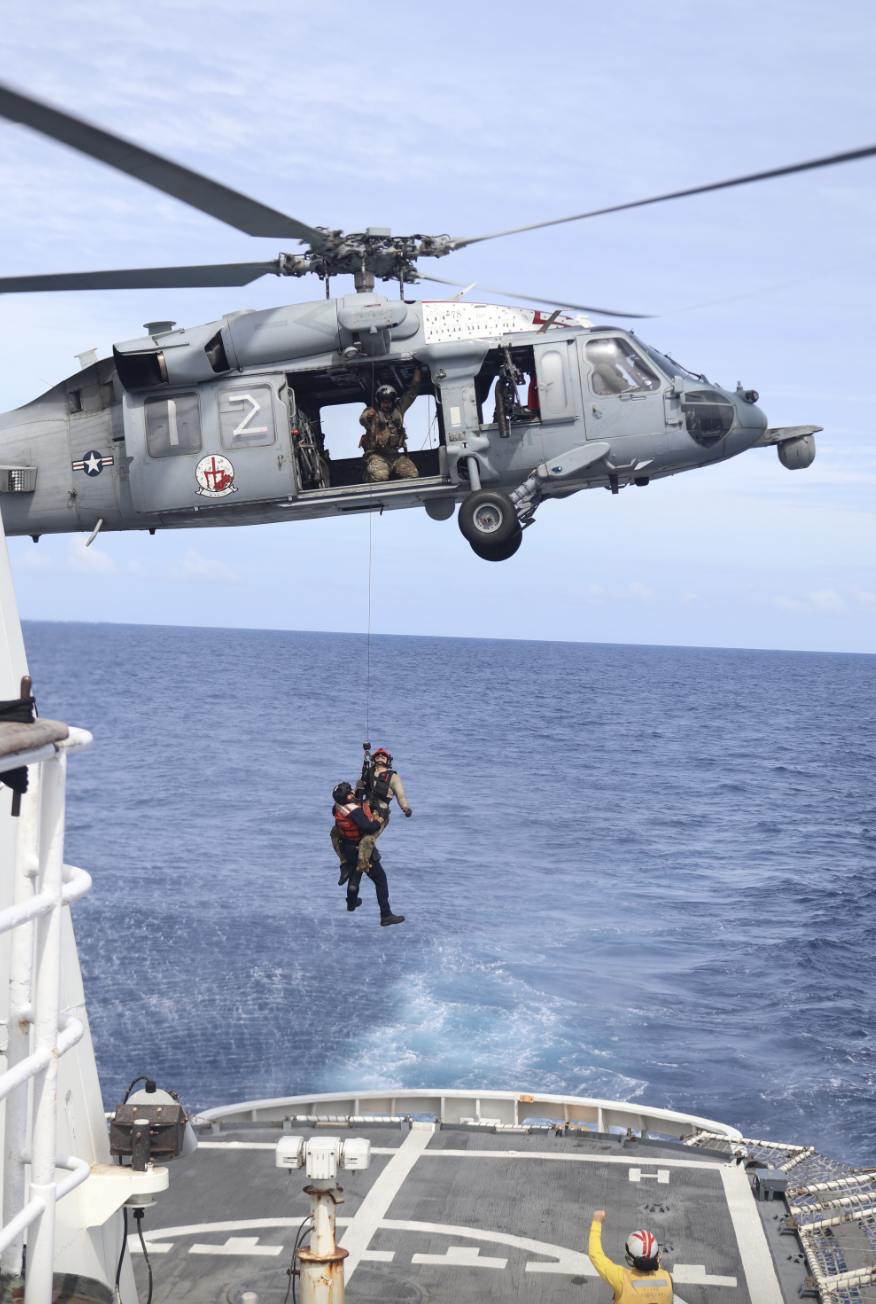
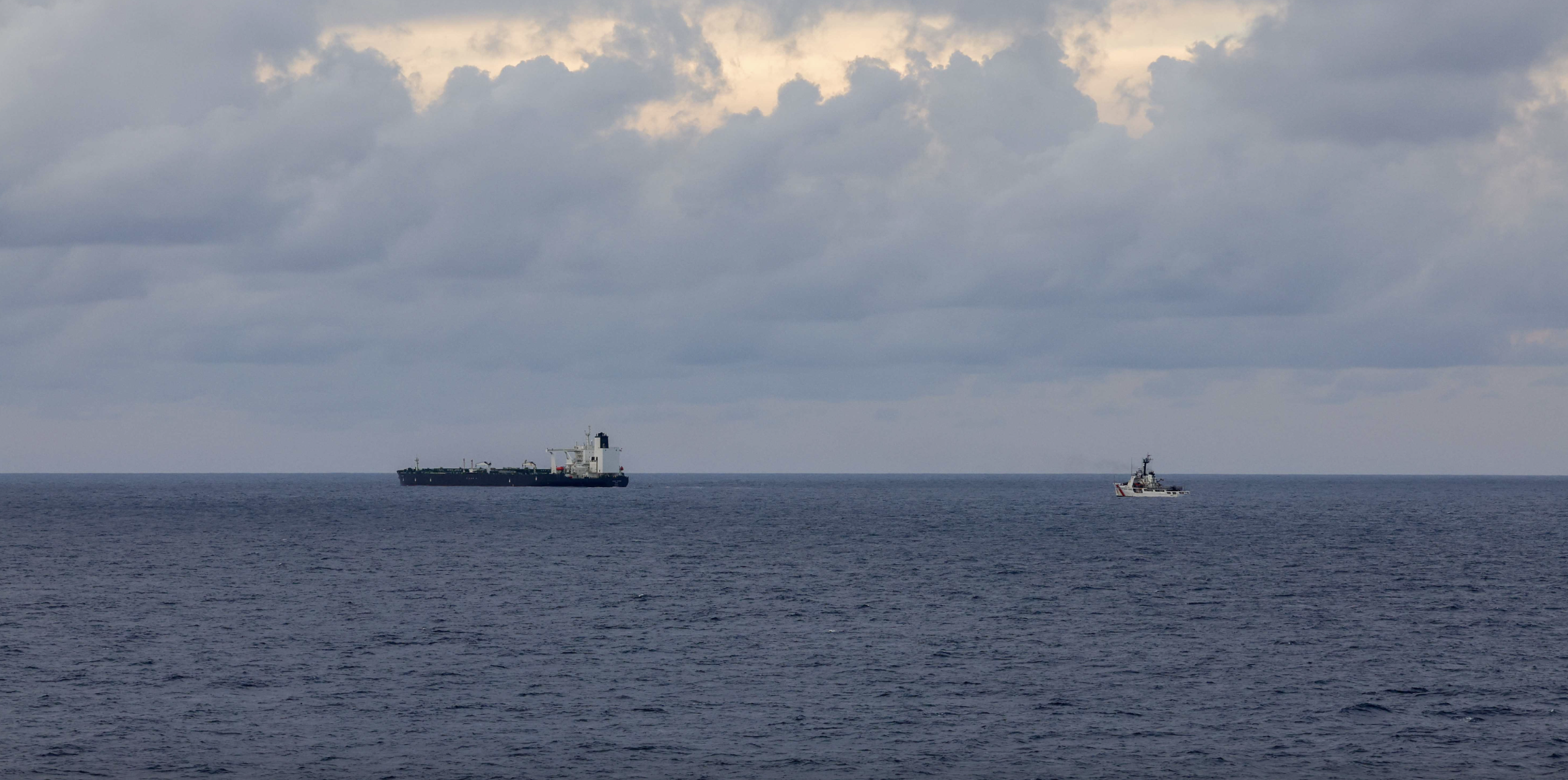
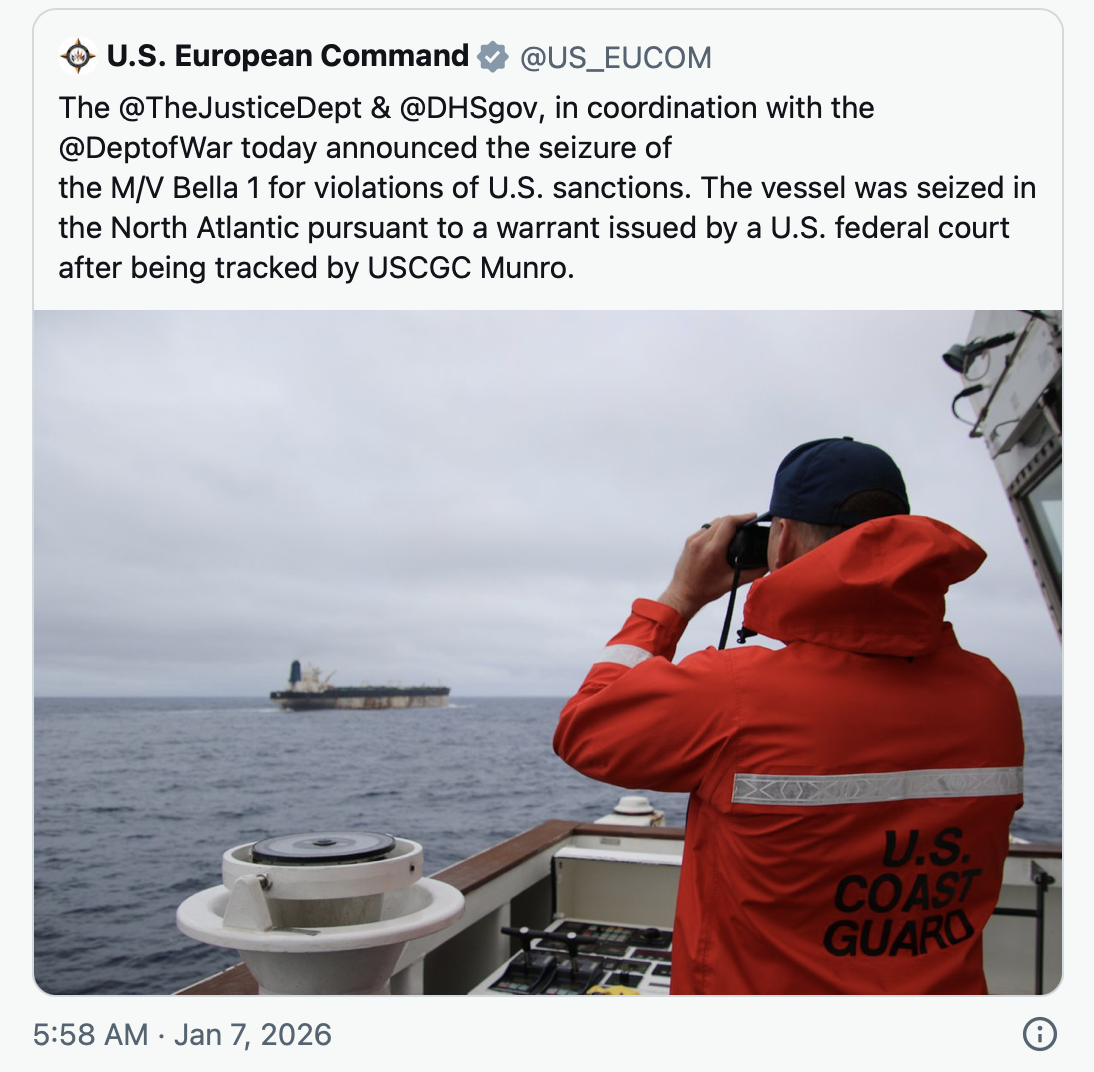
U.S. Coast Guard crewmembers transfer from the Coast Guard Cutter Vigilant (WMEC 617) to a motor tanker by a helicopter crew assigned to U.S. Navy Helicopter Sea Combat Squadron 9 in the Atlantic Ocean, Jan. 7, 2026. Vigilant escorted the tanker, which was seized by a joint Coast Guard and Department of War team for conducting illicit activities in the Caribbean Sea. (U.S. Coast Guard photo by Petty Officer 2nd Class Brandon Feehery)

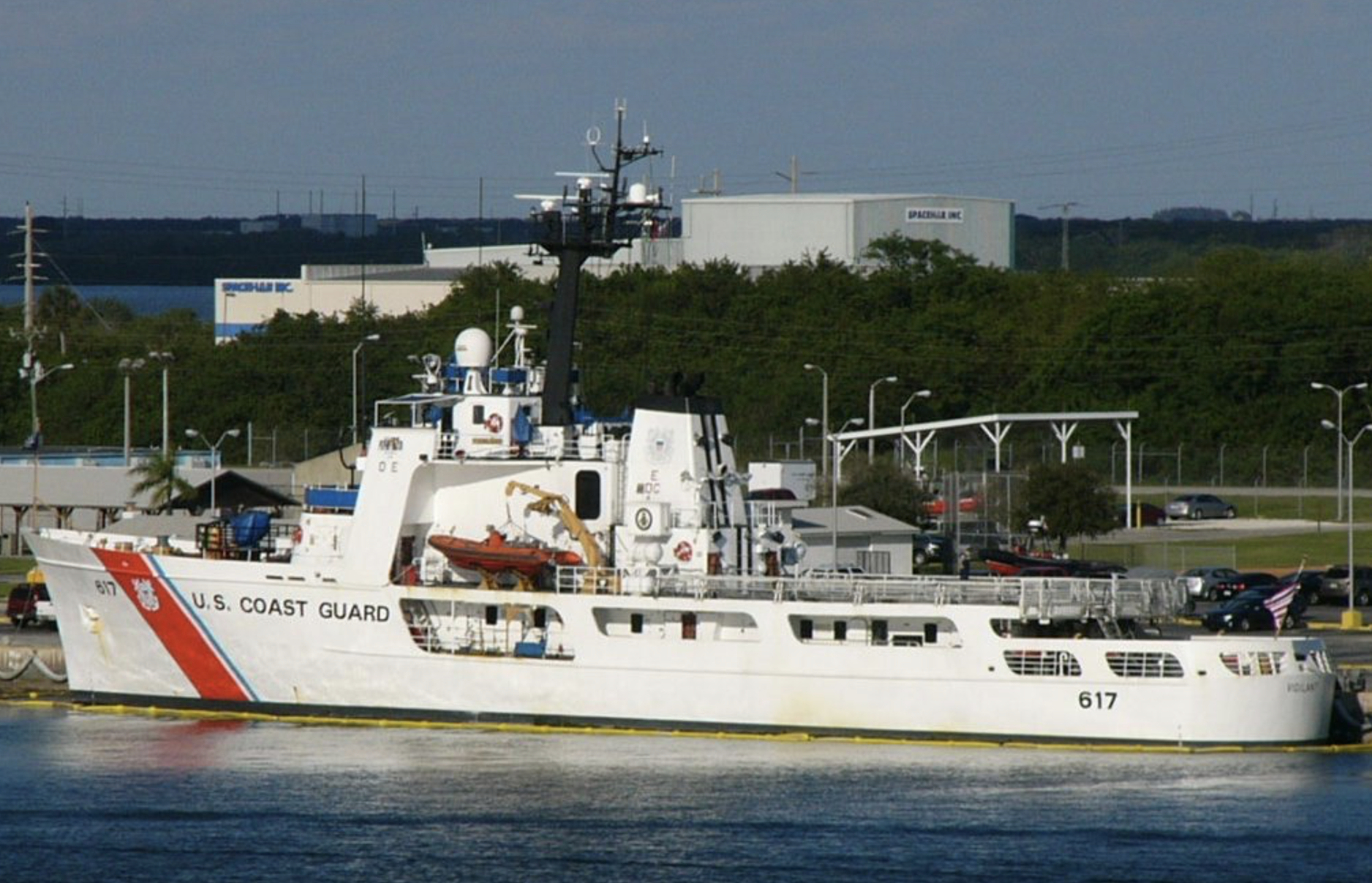
Below is a press release from the Southeast District. This is a 61 year old ship, still doing the job.

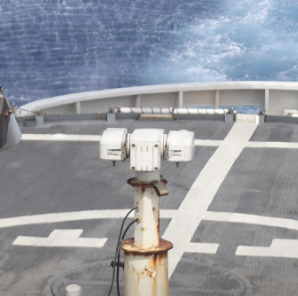
Anyone know what this device, pictured below, cropped from photo above, is?

U.S. Coast Guard cutter USCGC Vigilant (WMEC-617). 2 March 2008. Photo by Workman via Wikipedia.

U.S. Coast Guard Cutter Vigilant (WMEC 617), right, sails in the Western Atlantic Ocean while escorting a motor tanker after a right of visit boarding, Jan. 7, 2026. Vigilant escorted the motor tanker, which was seized by a Coast Guard tactical boarding team with support from the Department of War, for operating as a vessel without nationality in the Caribbean Sea. (U.S. Navy Photo)


Jan. 20, 2026

Coast Guard cutter returns to Florida after escorting recently seized motor tanker

CAPE CANAVERAL, Fla. — The U.S. Coast Guard Cutter Vigilant (WMEC 617) returned to Cape Canaveral on Friday after a 33-day patrol in the Caribbean Sea supporting operations Pacific Viper and Southern Spear.

During the patrol, Vigilant escorted a motor tanker, which was seized by a U.S. Coast Guard tactical boarding team with support from the Department of War, for operating as a vessel without nationality in the Caribbean Sea. Vigilant’s crew coordinated with naval and law enforcement partners to transfer personnel and provisions to the tanker. A law enforcement team from Vigilant boarded the vessel to provide security during the 600-nautical-mile transit to the United States.

Cmdr. Steve Welch, commanding officer of Vigilant, said, “I am proud of the crew’s adaptability and professionalism during this mission of national importance. Their performance ensured the safe execution of the operation in partnership with the Department of War.”

Unique statutory authorities enable the Coast Guard to enforce international and domestic law in the maritime domain, deploying assets to conduct missions in U.S. waters and on the high seas. The Coast Guard’s involvement in this seizure was conducted under Title 14, U.S. Code and in accordance with customary international law. The Coast Guard exercises these authorities to protect maritime safety, security, and U.S. interests.

“Coast Guard awards contract to rebuild Station South Padre Island” –CG-9

Below is a post from the Acquisitions Directorate (CG-9).

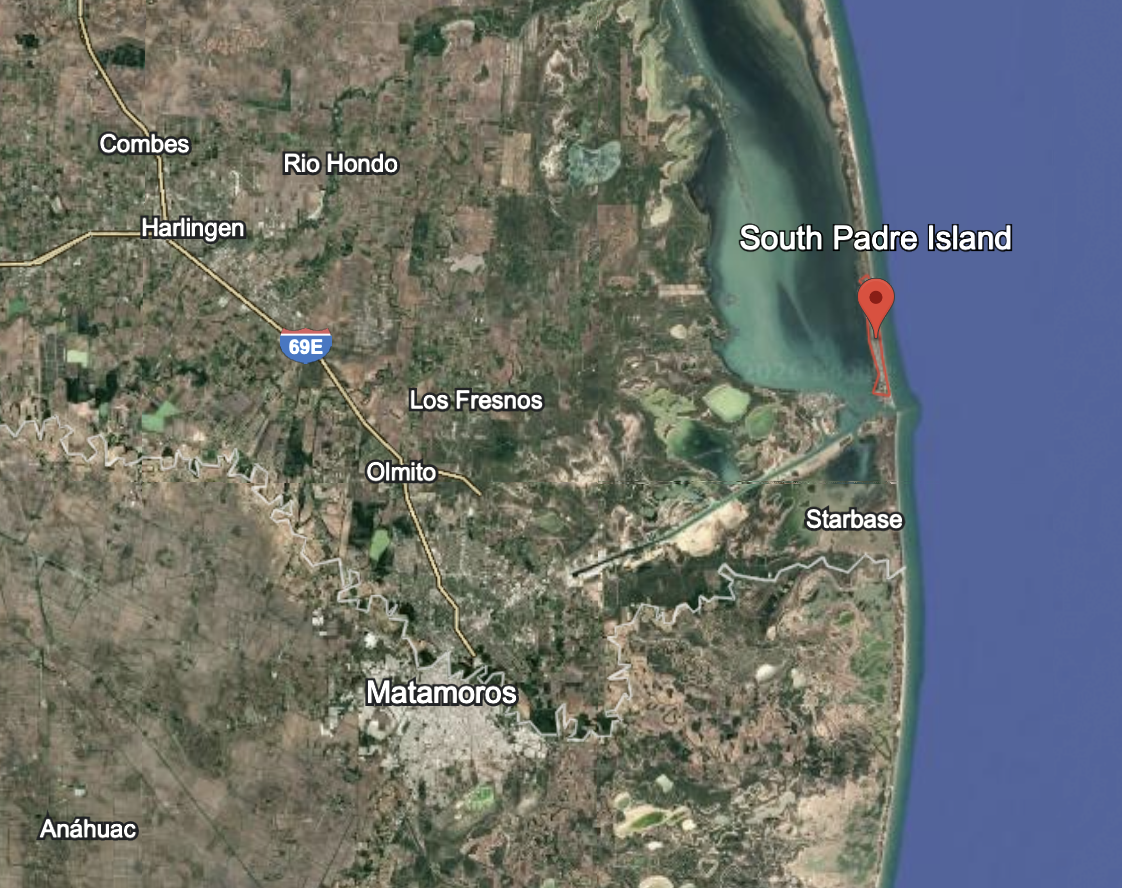
The location near the Mexican border is obviously significant, but it is also near Starbase, TX.

“Starbase, Texas, is a burgeoning city and SpaceX hub in the Rio Grande Valley near Brownsville, established around SpaceX’s Starship development and launch facilities, becoming an official municipality in May 2025 with hundreds of residents, mostly SpaceX employees, creating a unique space-focused company town known as the ‘Gateway to Mars'” —AI overview.

I presume South Padre Station also supports Operation River Wall. 


Coast Guard awards contract to rebuild Station South Padre Island

The Coast Guard’s Facilities Design and Construction Center awarded a $200 million design-build contract to The Haskell Company Jan. 9 for the comprehensive recapitalization and expansion of Coast Guard Station South Padre Island in South Padre Island, Texas. The award was made as a task order through the National Multi-Award Construction Contract III and is the largest single task order in the history of the Coast Guard’s Military Construction program.

The task order, made possible through the historic investment in Coast Guard shore infrastructure as part of the One Big Beautiful Bill Act, will deliver the design and construction of more than 120,000 square feet of essential facilities and supporting infrastructure, directly enhancing mission readiness and execution for Coast Guard personnel in the region. Preliminary design and environmental work will begin immediately, with project completion anticipated in summer 2028.

The full scope of work under the task order includes:

  • Completion of an environmental assessment, site survey investigations and design services for various facilities.
  • Construction of new station facilities.
  • Construction of unaccompanied personnel housing, additional berthing and mission support facilities.
  • Rebuilding of waterfront infrastructure.
  • Construction of a Joint Operations Center and Customs and Border Protection support space.
  • Forward operations space for Deployable Specialized Forces.
  • Delivery of a new harbor operations center and other mission support facilities.
  • Comprehensive site development, utilities and outfitting.

Station South Padre Island is strategically positioned to support border security, interdict illicit trafficking and ensure the safe and lawful movement of commerce. The rebuild effort will address damages at the boathouse that were caused by a fire in April 2025 and enhance mission capabilities to fully support Coast Guard core missions of securing the U.S. border and maritime approaches, facilitating commerce vital to economic prosperity and strategic mobility and responding to contingencies along the Gulf Coast and surrounding waterways.

The project represents the largest award value for a shore infrastructure construction project in Coast Guard history and will be delivered on the shortest timeline to date. The planning phase was compressed from the standard 18 months to 45 days, while the contracting process was reduced from 15 months to four months.

For more information: Shore Programs

“A polar plunge: The Coast Guard bets on the burgeoning Arctic” –MyCG

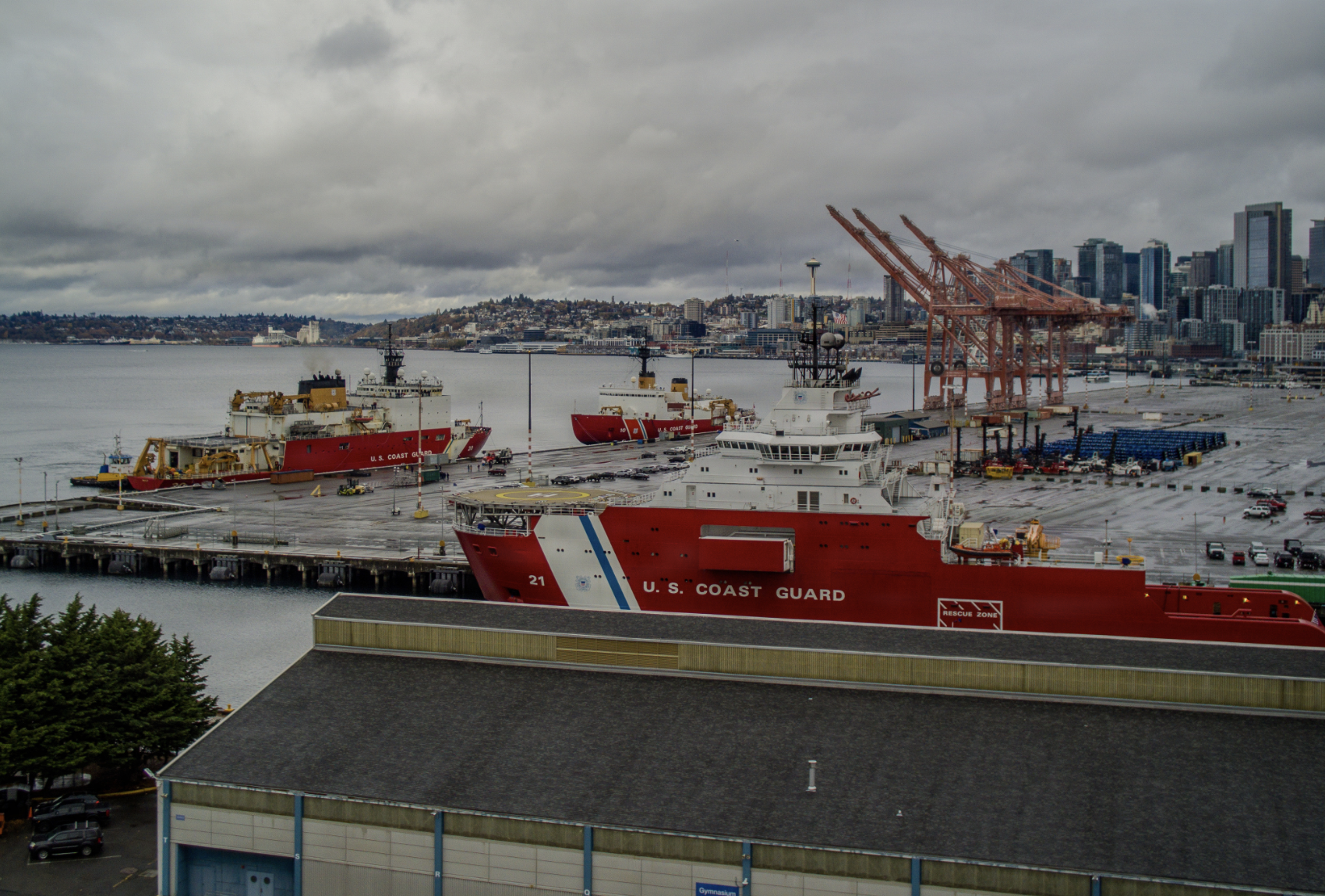
Polar Star, Storis, and Healy. U.S. Coast Guard Cutter Healy (WAGB-20) arrives at Pier 46 on Coast Guard Base Seattle, Oct. 26, 2025. The crew of the Healy transited over 20,000 miles, supporting Operation Arctic West Summer and Operation Frontier Sentinel, protecting U.S. sovereign rights and territory, and promoting national security in the Arctic. (U.S. Coast Guard photo by Lieutenant Christopher Butters)

Below is a post from MyCG.

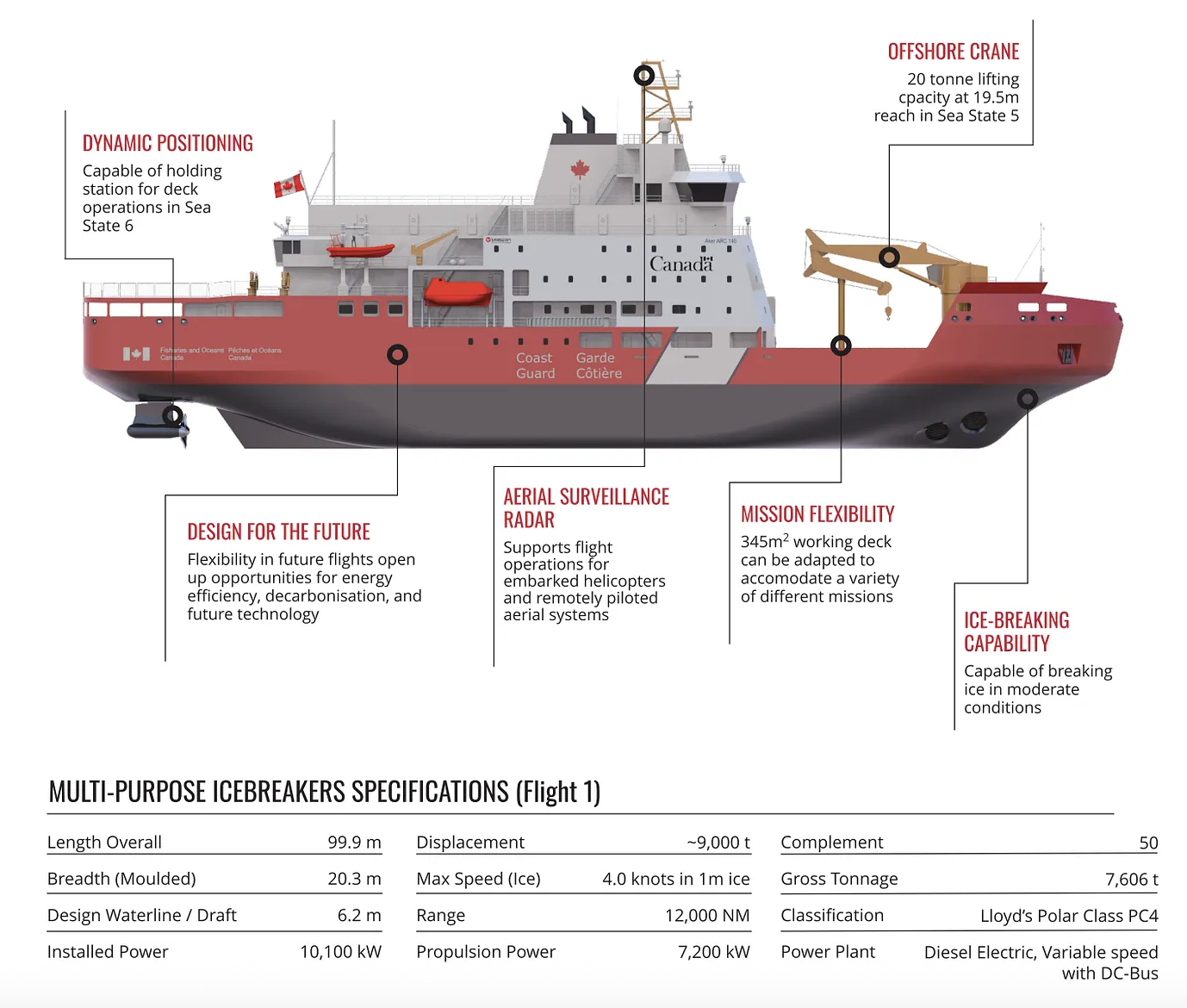
It is worth noting that our ally, Canada, is also building a new generation of icebreakers in cooperation with the Finns. In fact the Arctic Security Cutters will be built to two designs shared with Canada.

Canadian Coast Guard Multi-Purpose Icebreaker (MPI). Source: Seaspan
Note: The MPI image does not show the right propulsors; it will use Steerprop’s contra-rotating propulsors (CRP). Additionally according to Seaspan, the design could easily be upgraded to PC3. Confirmation from Seaspan and Aker Arctic.


Jan. 6, 2026

A polar plunge: The Coast Guard bets on the burgeoning Arctic

By Katie Duckett, The Circuit writer

Editor’s note: This article was originally published in The Circuit C5ISC blog. (CAC required)

After decades of watching its polar fleet degrade toward obsolescence, the Coast Guard is now poised for a historic transformation in the world’s coldest waters. The spending bill signed on July 4, 2025 has delivered nearly $9 billion for icebreaker construction to the Coast Guard, the single largest polar investment in service history, setting the stage for what officials are calling a new era of American presence in the Arctic and Antarctic.

The timing couldn’t be more fitting. For years America’s polar ambitions have rested largely on the shoulders of USCGC POLAR STAR (WAGB-10), an icebreaker commissioned in 1976. Now 49 years old and nearly two decades past her designed service life, she remains the only American ship capable of punching through the thick ice surrounding McMurdo Station in Antarctica, a mission she has performed faithfully for 28 consecutive years during Operation Deep Freeze.

Alongside POLAR STAR, USCGC HEALY (WAGB-20) has spent a quarter century conducting Arctic research and patrol, identifying underwater volcanoes and mapping the seafloor while monitoring the increasing presence of Russian and Chinese vessels in polar waters. But electrical fires and mechanical strain have tested this workhorse; in December 2024, USCGC STORIS (WMEC-38) became the first polar icebreaker added to the fleet in 25 years, offering immediate relief. Commissioned in Juneau last August, she completed a 112-day inaugural Arctic patrol that fall, shadowing five Chinese research vessels operating in American waters. The purchase served as a bridge strategy, buying time until heavier reinforcements would arrive.

Announced this May, the Coast Guard’s Force Design 2028 initiative has designated polar capability a cornerstone of service transformation. FD28 explicitly calls for delivering “icebreakers needed to provide assured U.S. access and presence to the polar regions” while streamlining acquisitions to accelerate timelines that have historically lagged.

The Coast Guard’s vision for polar operations is now bankrolled at historic scale. This year’s spending bill allocates $4.3 billion for three Polar Security Cutters, massive 460-foot heavy icebreakers capable of smashing through ice 21 feet thick. The first of these, USCGC POLAR SENTINEL (WMSP-21), is expected to enter service around 2030. Another $3.5 billion will fund the Arctic Security Cutter program, which received a dramatic boost in October 2025 when the President signed an agreement with Finland to deliver 11 medium icebreakers, with the first five set to arrive by 2028. When combined with the additional light icebreaker funding included in the bill, the legislation enables construction of 17 new vessels in total, a number that would have seemed unthinkable just five years ago.

The urgency of Arctic operations extends beyond aging hulls. Russia currently operates more than 40 icebreakers, continuing to militarize its Arctic coastline. China, despite possessing no Arctic territory, has declared itself a “near-Arctic state” and deployed its own coast guard vessels alongside Russian patrols near Alaska. And a changing climate is unlocking shipping lanes and resources that will demand American presence and enforcement.

After decades of deferred maintenance and delayed procurement, the Coast Guard’s polar plans are finally scaled to the challenge. This frozen frontier, once patrolled by a single aging ship, will soon host a fleet befitting American strategic interests at both poles.

“USS St. Louis Returns from Deployment in Support of Southern Border Operations” –Seapower

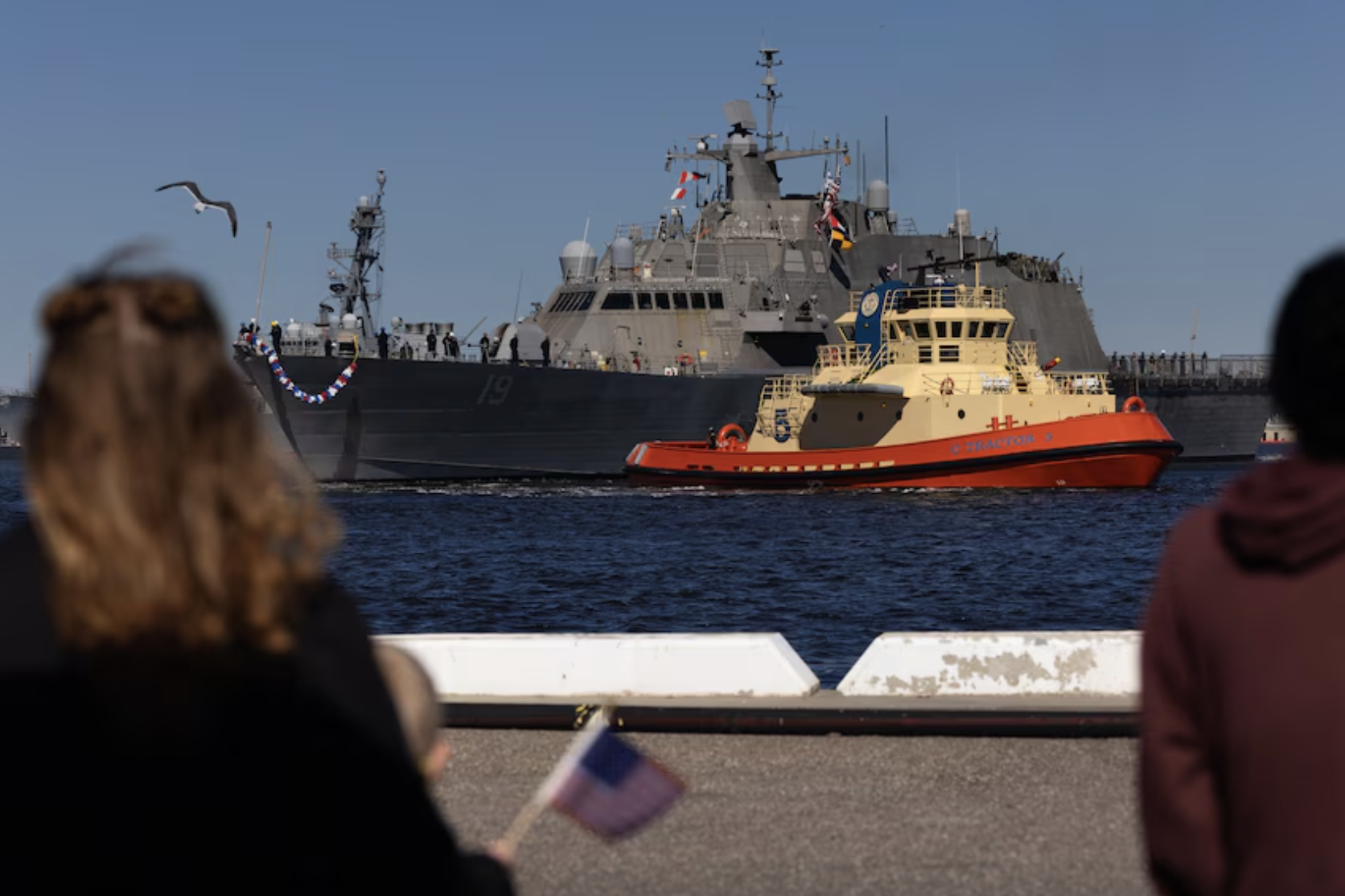
NAVAL STATION MAYPORT, Fla. (Nov. 10, 2025) — The Freedom-variant littoral combat ship USS St. Louis (LCS 19), operating under U.S. Northern Command (USNORTHCOM), returns to Naval Station Mayport, Fla., after completing a surge deployment, Nov. 10, 2025. (U.S. Navy photo by MC3 Jasmin L. Aquino)

The Navy League on-line magazine, Seapower reports,

The Freedom-variant littoral combat ship USS St. Louis (LCS 19), operating under U.S. Northern Command (USNORTHCOM) in the Gulf of America, returned to Naval Station Mayport ), along with the “Valkyries” of Helicopter Maritime Strike Squadron (HSM) 50 Detachment 5 and embarked U.S. Coast Guard Law Enforcement Detachment (LEDET) 408 after completing a surge deployment on November 10, 2025.

This deployment is a bit unusual in that apparently the patrol was in the Gulf under the direction of NORTHCOM and Second Fleet, rather than in the Caribbean and or Eastern Pacific under SOUTHCOM and Forth Fleet like her last patrol.

Neither NORTHCOM nor 2nd Fleet included the news release on their website, 2nd Fleet apparently sending it directly to the Navy League. (In fact 2nd Fleet has not had a news release on their website since 10 August.) We don’t know how long this deployment was since their departure date was not included in the release.

There was no report of a successful interdiction, which is not surprising since historically we do not find much maritime drug smuggling in the Gulf.

USS St. Louis’ previous patrol was more successful, spending eight months operating under 4th Fleet, where she, “disrupted and confiscated over $100 million worth of illicit contraband in five different operations” in addition to participating in exercise UNITAS 2024.


Coast Guard “Rear Admiral Randall takes the helm of Key West Joint military command” –SOUTHCOM

Below is a SOUTHCOM news release.

I knew the Coast Guard had officers on the staff of Joint Interagency South, but I was not aware that a Coast Guard Officer was in charge, though it makes a lot of sense.


July 16, 2025

Rear Admiral Randall takes the helm of Key West Joint military command

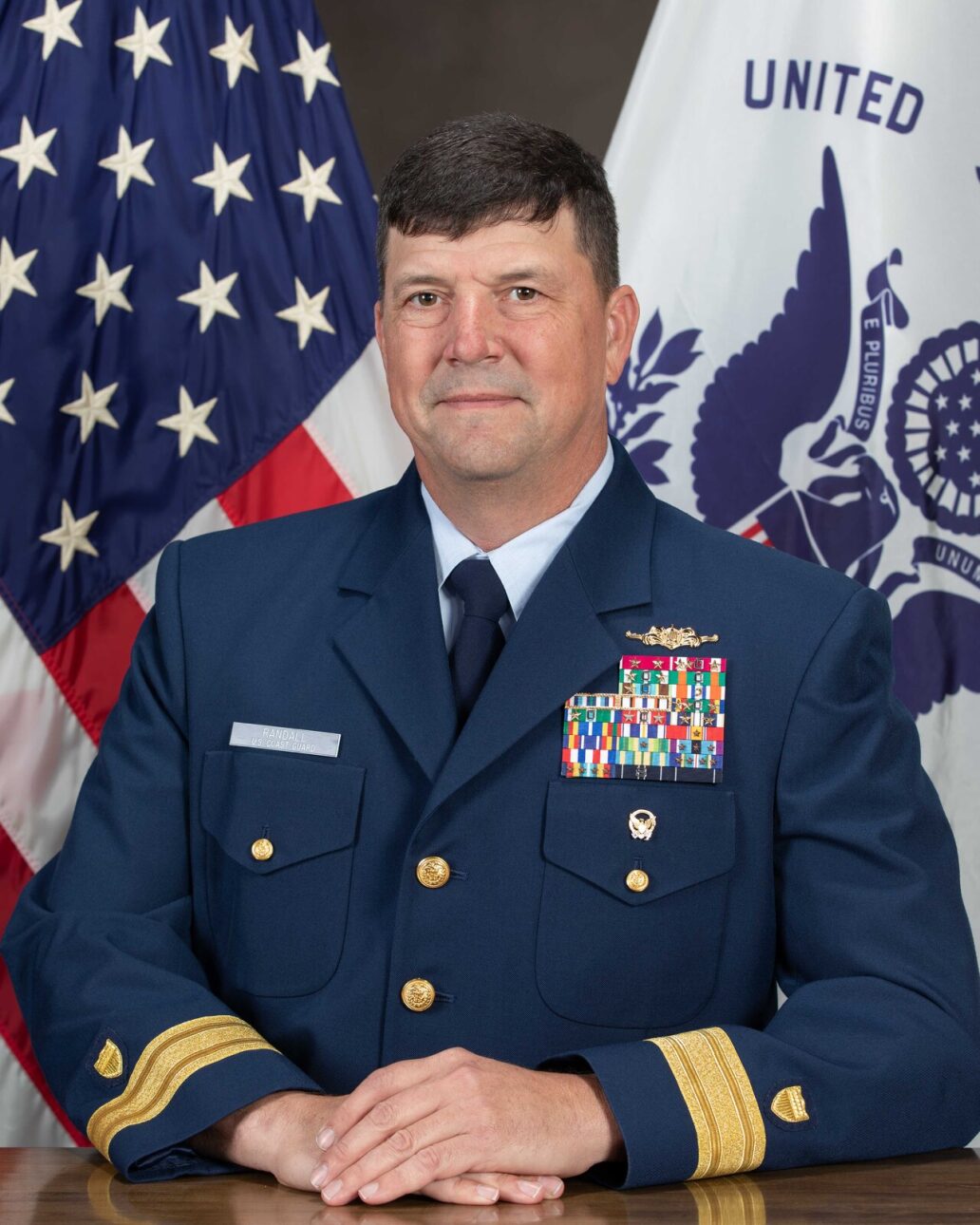
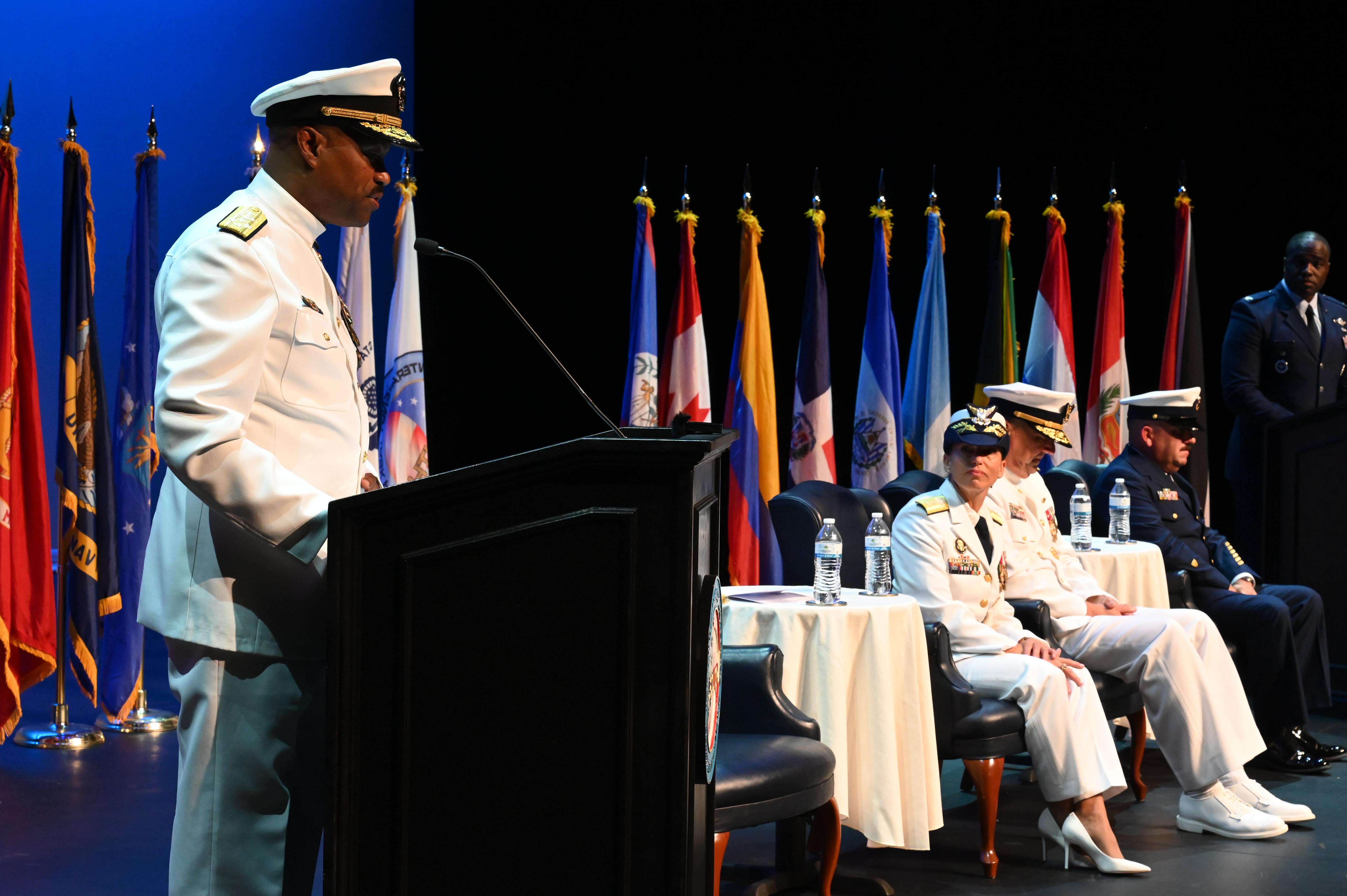
Coast Guard Rear Admiral Jeff Randall assumed command of Joint Interagency Task Force South (JIATFS) in a Change of Command ceremony held today at the Tennessee Williams Theater in Key West, FL.

Supporting U.S. national security priorities, JIATFS is a U.S. Department of Defense command that leverages the capabilities of U.S. Intelligence and Law Enforcement agencies, Allies and Partner Nations to detect, monitor, and support interdiction of illicit narcotics movements in the air and maritime throughout the Western hemisphere.

Rear Admiral Randall is the 19th director of the 36-year-old task force and assumed command from Coast Guard Rear Admiral Jo-Ann Burdian, who has been nominated as Commander, Coast Guard Atlantic Area.

A native of Abilene TX, Rear Admiral Randall is a 1993 graduate of the U.S. Coast Guard Academy where he earned a Bachelor of Science in Civil Engineering. He also holds a Master of Marine Affairs from the University of Washington and served as the Coast Guard’s Fellow to the Brookings Institution and Council on Foreign Relations.

He was awarded numerous personal, unit, campaign, and service awards.

The Change of Command ceremony was presided over by Admiral Alvin Holsey, Commander of U.S. Southern Command.