

USCGC Alex Haley moored in Nome, AK.
The US has begun to improve the port of Nome.
The initial phase of the project will extend Nome’s causeway by 1,200 feet and add about 600 feet of new dock face. Phase 1B will add an additional 1,870 feet of dock space, followed by Phase 2 which will primarily focus on deepening the harbor. Phase 3 will widen the port’s inner harbor by shifting the east causeway further east. Additional dredging will occur to aid in inner harbor navigation.
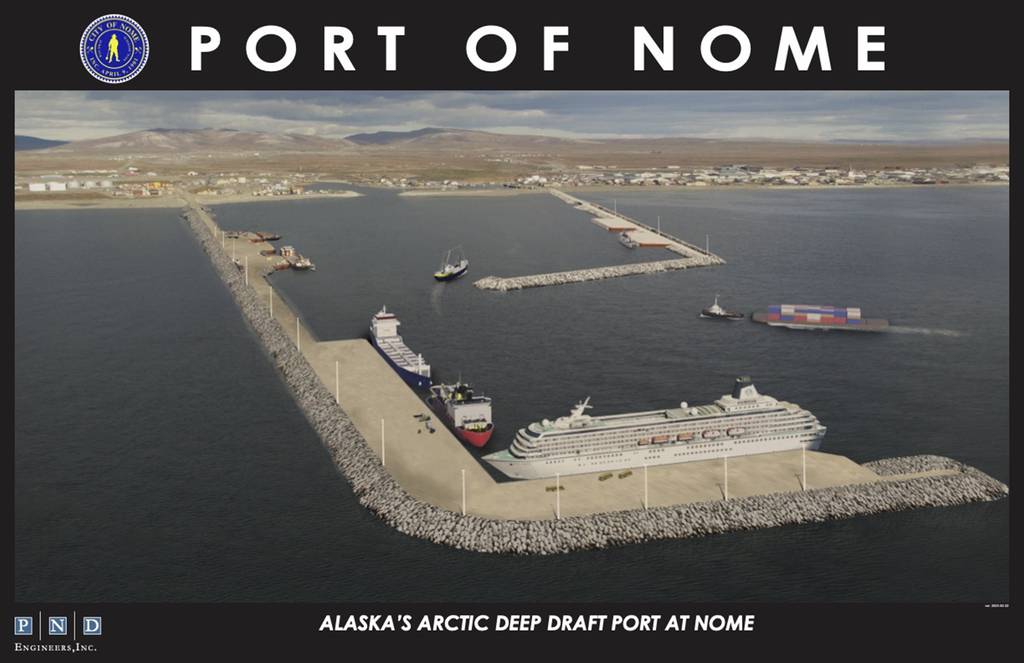
This rendering provided by the City of Nome shows how the Port of Nome, Alaska, will appear following an expansion project. Shipping lanes that were once clogged with ice for much of the year along Alaska’s western and northern coasts have relented thanks to global warming. (PND Engineers Inc./City of Nome via AP)
66 North reports on Russian and Chinese views of the strategic effects of Nome Port expansion, with Russians viewing it as a threat.
“A 2015 article republished by the Russian State Commission for Arctic Development already described Nome as a potential naval base that could provide the U.S. with “control” over passage between the Arctic and Pacific oceans. In 2023, an article in the military journal Arsenal Otechestva situated Nome within expanding American naval activity in the Arctic, which it associated with alleged U.S. ambitions to “displace Russia and internationalize the Northern Sea Route.” The underlying concern has remained quite consistent. The U.S. has never recognized Russia’s legislative authority over the entire Northern Sea Route, and Moscow fears that a stronger American presence could allow Washington to gain leverage over the route’s eastern entry point.”
I doubt the US will lead any effort to internationalize the Northern Sea Route, but the Chinese and Europeans may. If so, the US would likely support that position.
Expanding the port at Nome is of course, important for the Coast Guard, because icebreakers, including the smaller Arctic Security Cutters, and National Security Cutters have too deep a draft to use the harbor currently. (Looks like OPC could use it with no change.) Controlling depth is 22 feet (mean lower low water), meaning ships with draft greater than 18 feet have to anchor offshore and lighter their cargo and passengers to the docks.
The article indicates that the Chinese are much less concerned but recognize that a conflict between Russia and the US could jeopardize access.
My view is that US military interest in the Bering Strait in war time, would be primarily to cut the sea lines of communication between Russian Arctic Ocean ports and Russian and/or possibly Chinese Pacific ports. Because we don’t necessarily need access, it is a sea denial problem and contrary to Russian concerns, doesn’t necessarily require expansion of the port of Nome.
Denial of access to the Bering Sea and the Bering Strait could be done by shore based anti-ship missiles, aircraft, or submarines. We don’t need a naval base at Nome.
A more important move would be to reopen NAS Adak, not only to patrol the Bering Sea, but also to protect the middle of the sea lanes between the lower 48 and Asia which pass near the Aleutians.
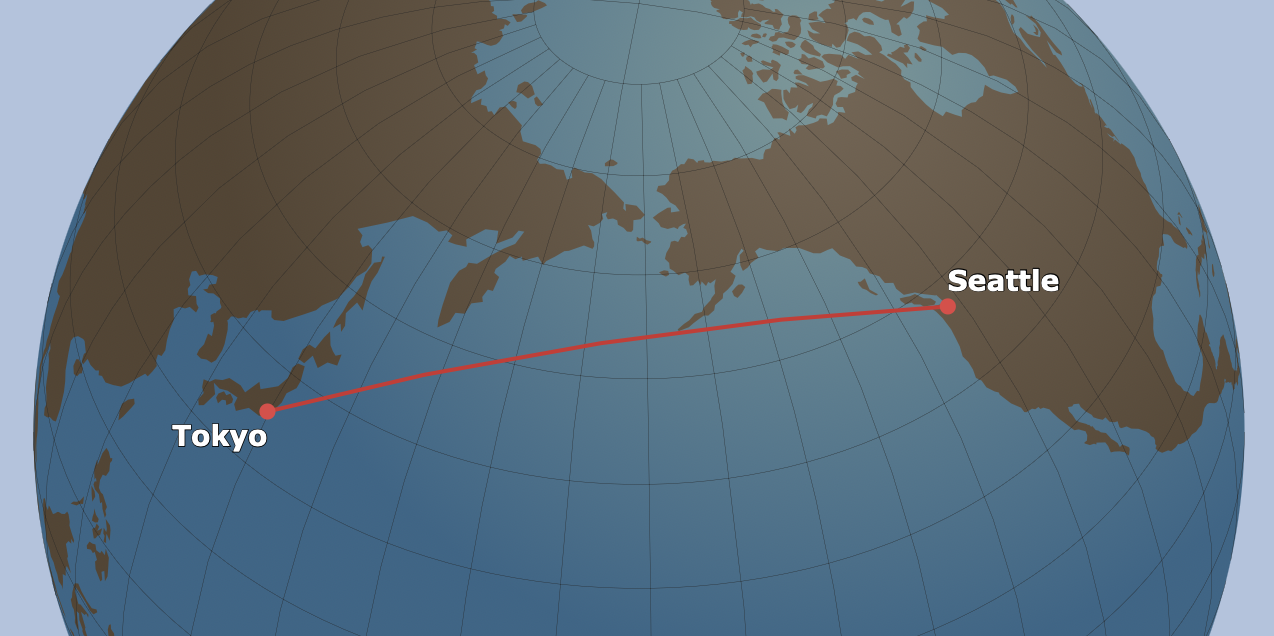
Great Circle route, Seattle to Japan

