
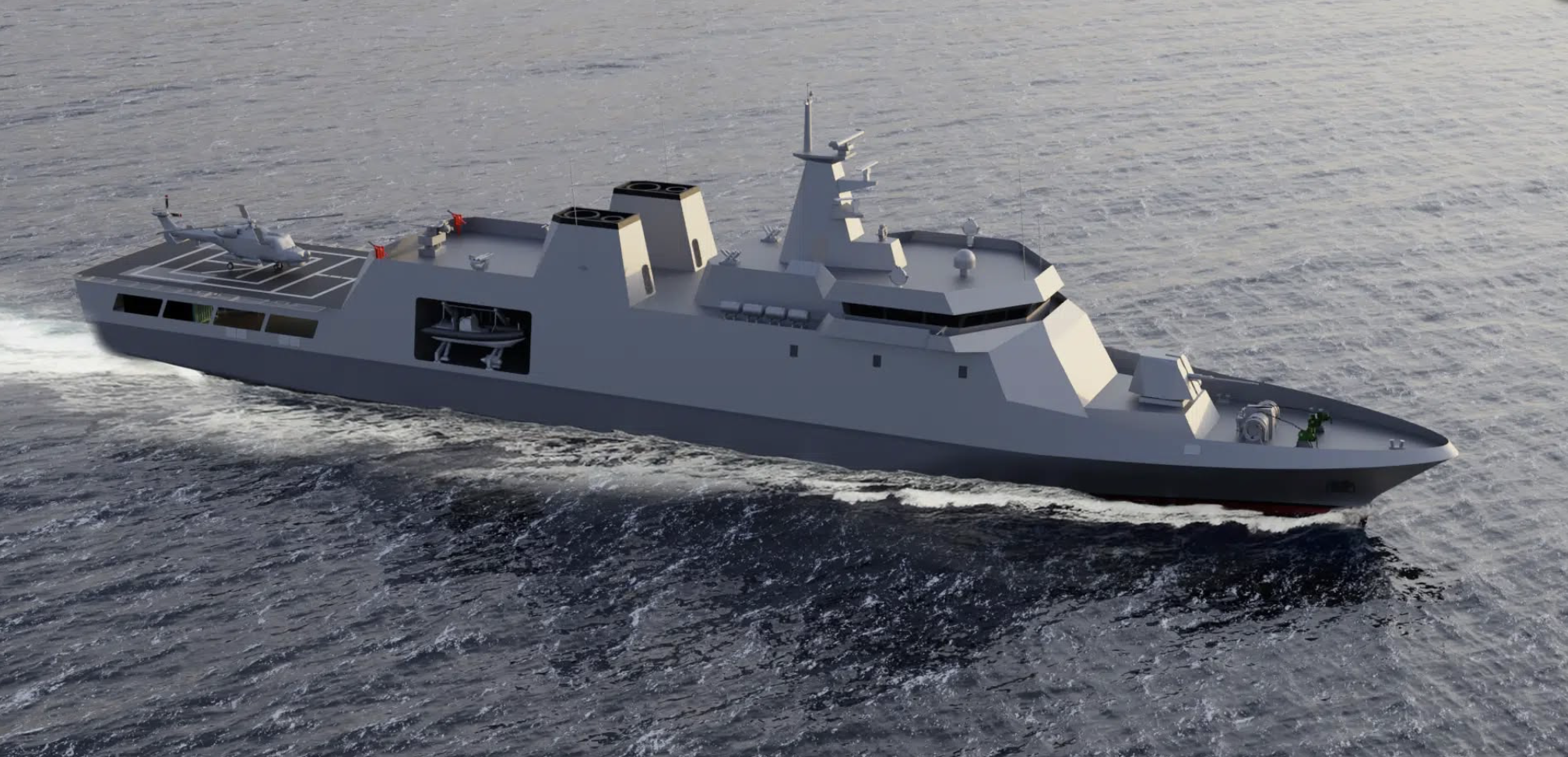
Philipine Rajah Sulayman-class offshore patrol vessel
Just to review.
- Fleet the new generation of ships was supposed to replace included 12 WHECs, 32 WMECs, and 49 WPB 110s or 93 ships including 44 large patrol ships.
- The “Program of Record” was to give us 8 NSCs, 25 OPC, and 58 FRCs, a total of 91 ships but only 33 large patrol ships.
- The shortfall in large patrol ship was to be made up by the magic of the “CREW ROTATION CONCEPT,” having four crews for every three ships so we could keep the ships underway 33% more and 33 ships could do the work of 44.
- The “CREW ROTATION CONCEPT” was killed in the FY2019 budget cycle
- Two addition NSCc and many FRCs have been added, but the current plan is now only 35 large cutters leaving us with far fewer large cutter days. Currently I think we are down to 32 large cutters.
- OPCs are more expensive and require a larger crew than originally projected. They were originally expected to have a crew of about 90 and to cost about half as much as the NSCs.
- Crew size for NSCs has also grown and of course crew size for FRCs are considerably greater than that of the 110 and 87 foot WPCs they are replacing.
- Meanwhile the Coast Guard budget has declined $5.1 billion in a decade in real terms.
Since 2012 I have been advocating for a mid-sized patrol cutter between the 4500 ton OPCs and the 353 ton Webber class that I have called Cutter X. The Philippine Navy is acquiring a new class of six Offshore Patrol Vessels built by South Korean ship builder Hyundai Heavy Industries. These 2400 ton ships are an example of what can be achieved on that kind of intermediate displacement.
Now I think we have an additional reason for developing a new class. We need a design that is more readily usable as a warship since conflict appears more likely. (In some ways I like the 2600 ton Damen designed Pakistan Navy OPV–faster and better armed.).
These are what I would call prototypical modern OPVs, good examples of the type. They are little more than half the size of NSCs or OPCs, but they are significant improvements over the 210 and 270s. They are large enough to perform typical large patrol cutter peacetime missions, but do it more economically the than an OPC both in terms of initial procurement and operating cost.
One feature I like that sets them apart from most OPVs is the mission bay below the flight deck. This could be used for disaster response equipment, as a holding area for migrants, or for a towed array during war time.
There is a good description of the Philippine OPV and its origin in Wikipedia. Their specs:
| Displacement | 2,400 tons |
| Length | 94.4 m (309 ft 9 in) |
| Beam | 14.3 m (46 ft 11 in) |
| Draft | 3.7 m (12 ft 2 in) |
| Propulsion |
|
| Speed | 22 knots (41 km/h; 25 mph) @ 85% MCR |
| Range | 5,500 nmi (10,200 km; 6,300 mi) @ 15 knots (28 km/h; 17 mph) |
| Endurance | 30 days[3] |
| Boats & landing craft carried |
|
| Complement | 72 |
| Sensors & processing systems |
|
| Electronic warfare & decoys |
|
| Armament |
|
| Aircraft carried | 1 × 10 tonne naval helicopter |
| Aviation facilities | Flight deck for a 10-tonne helicopter and/or unmanned aerial vehicle |
| Notes |
|
As for for characteristic of my more militant Cutter X, I would say:
- Speed at least 24 knots,
- Weapons: 8 cell Mk41 VLS; SeaRAM, two 30mm Mk38 Mod4
- Aviation: H-60 helicopter and spaces to support ASW version including torpedo magazine and sonobuoy stores; additional space for ISR UAS such as V-Bat
- Boats: Peace time normally one Long Range interceptor on stern ramp in the mission bay and two OTH on davits.
- Mission Bay at least large enough for Long Range Interceptor in peacetime and towed array sonar system in wartime.
 Chuck Hill's CG Blog
Really like the new Philippine OPCs. Philippine Surface Combatants have traditionally not been well armed which is a problem they are in the process of remedying.
The Philippines has had an internal problems that preoccupied their military. Until they got the three WHEC378s virtually all their navy was built in WWII.
They now have a clear enemy in China which is overwhelming were it not for the Philippines allies but they are now rearming. Korea and Japan are helping them too.
Perhaps surprisingly France has been helpful too. France has a lot of interests in the Pacific.
Wiki has an excellent overview of all Philippine Navy equipment.
Big fan of some of the French weapons systems. Lower cost and great effectiveness. I do hope that the Israeli influence remains for datalinks, and other situational awareness tools. The Philippines is keen on the Python Missile and already use it in ground defense and should be adding it to their fighter aircraft.
The two primary Pacific Allies (Japan/South Korea) are both upgrading their arms and many of their replaced units should be refurbished and going to the Philippines. The Wildcat ASW Helos is a case in point, and there are many others.
I do wish the Philippines would adopt a non-rotating AESA radar and develop their own Aegis system. They can build upon the Hanwha Ocean Naval Shield whose baseline already incorporates that capability in the system.
The first of the Philippine Navy OPVs is now conducting sea trials.
https://www.armyrecognition.com/news/navy-news/2025/philippine-navys-new-offshore-patrol-vessel-brp-rajah-sulayman-begins-sea-trials-off-south-korea
This reports also notes, “GeoSpectrum Technologies of Canada supplies TRAPS towed active-passive sonar systems for three ships in the class, expanding detection range against submarines or underwater threats.”
All six should be delivered by 2028.
TRAPS sonar
https://geospectrum.ca/catalog/defence/surface-systems/traps-towed-reelable-active-passive-sonar/
Philippine Navy Launches Second Korean Offshore Patrol Vessel
https://news.usni.org/2025/12/01/philippine-navy-launches-second-korean-offshore-patrol-vessel?mc_cid=64b59d80e4&mc_eid=e873a959e6
Philippine Navy welcomes newest offshore patrol vessel
https://www.navaltoday.com/2026/01/20/philippine-navy-welcomes-newest-offshore-patrol-vessel/?utm_source=newsletter&utm_medium=email&utm_campaign=NavalToday_Newsletter&cdmwt=QQAJhBIcWLGiRoQfkxiSlgzMiWbAHwdYJHoUCg
“Philippines receives first Rajah Sulayman-class offshore patrol vessel from South Korea.”
https://www.armyrecognition.com/news/navy-news/2026/philippines-receives-first-rajah-sulayman-class-offshore-patrol-vessel-from-south-korea
“New Philippine Navy OPVs to Operate VTOL Drones”
https://www.navalnews.com/naval-news/2026/01/new-philippine-navy-opvs-to-operate-vtol-drones/