
This is the second in a series about some of the weapons I thought would be most appropriate for cutters, particularly the Webber class WPCs, that would allow them to respond to range of threats including:
- Unmanned aircraft, from the smallest to converted light planes
- Small, fast, highly maneuverable surface craft including personal watercraft
- Merchant ships of any size
The first was about APKWS, this one is about Hellfire and its closely related replacement JAGM.

ATLANTIC OCEAN—A Longbow Hellfire Missile is fired from Littoral Combat Ship USS Detroit (LCS 7) on Feb. 28 2017 as part of a structural test firing of the Surface to Surface Missile Module (SSMM). The test marked the first vertical missile launched from an LCS and the first launch of a missile from the SSMM from an LCS. (Photo by U.S. Navy)
There is precedence for this, in that the Navy has equipped Littoral Combat Ships with Longbow Hellfire.
Like APKWS, Hellfire has demonstrated success against UAS and small watercraft. With a 20 pound warhead, it should be more effective than APKWS against shipping, but its ability to stop larger vessels is still limited, although it might be able to target selected parts of the ship (bridge, steering gear, engine room) using semi-active laser homing.
In some ways Hellfire and APKWS are similar. In their original form both were guided to their target by a reflected laser beam. Both were developed specifically for one type of target but were found useful for a variety of targets. Both have been used to take down UAS and have had some success against lower altitude sub-sonic aircraft in the surface to air mode.
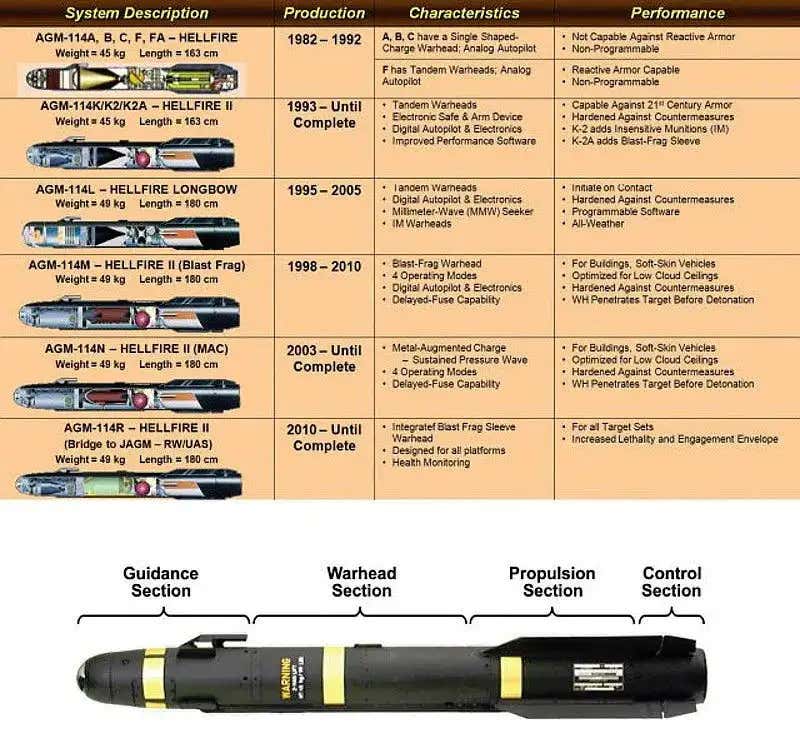
Hellfire is now more than 40 years old and has seen progressive improvements. APKWS adds a recently developed guidance section to previously unguided rockets developed during World War II. Both weapons are now being made in huge numbers.
Costs are around $30K for an APKWS, about $150K for the current Hellfire, and over $300K for a JAGM MR.
Ranges are approximately 5,000 yards for the APKWS; 8,700 yards for the current Hellfire; and 17,500 yards for the JAGM MR.
Weight varies for APKWS, but a typical weight is 32 pounds. Weight for Hellfire and JAGM is 108 pounds.
Hellfire/JAGM are bigger and more expensive so you are probably going to have fewer of them, but with the improvements (dual or triple seeker, new propellant) it will perform better, particularly in conditions of poor visibility, and will have a greater range. The latest JAGM MR has a range of 16km. It would be a significant asset even for the NSCs and OPCs, providing an upgrade in Anti-Air as well as Anti-Surface capability.
Longbow Hellfire test against small targets 12 November 2018
While the original Hellfire would be a major improvement, the JAGM MR would give us both the dual seekers of the Longbow Hellfire and greater range.
JAGM’s multi-mode seeker provides an improved Semi-Active Laser (SAL) sensor for precision-strike and a fire-and-forget Millimeter Wave (MMW) radar for moving targets in all-weather conditions. These new sensors have been integrated into the JAGM guidance section and mated with the AGM-114R missile bus and demonstrated during multiple guided flight tests.
Fire-and-forget engagement modes significantly increase JAGM user survivability against threat defenses in GPS denied and austere communications environments. JAGM can engage multiple stationary and moving targets, in the presence of adverse weather, battlefield obscurants and advanced countermeasures. Laser and radar guided engagement modes allow JAGM users to strike accurately across wide target sets and reduce collateral damage.
While we might see Hellfire/JAGM or APKWS as an either or choice, some remote weapon stations might be able to handle both.
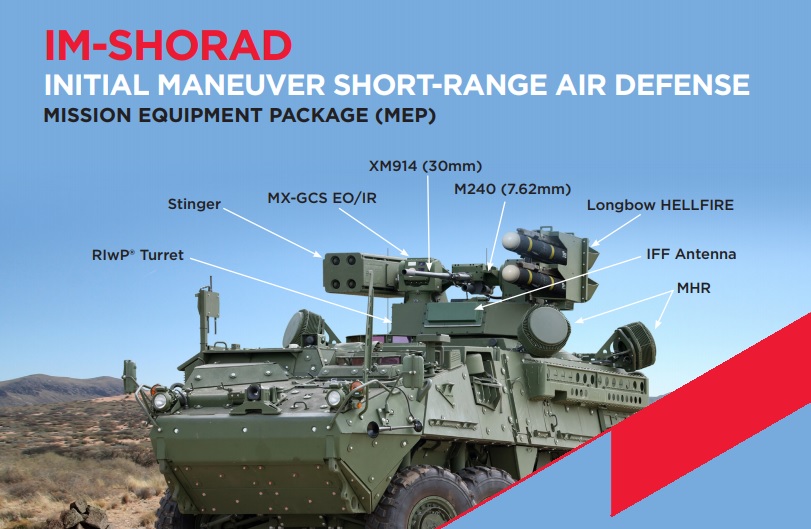
Interim Maneuver Short-Range Air Defense (IM-SHORAD)

This type of launcher would be appropriate for the NSCs and OPCs. The possibility of vertical launch provides flexibility in location while allowing 360 degree targeting.
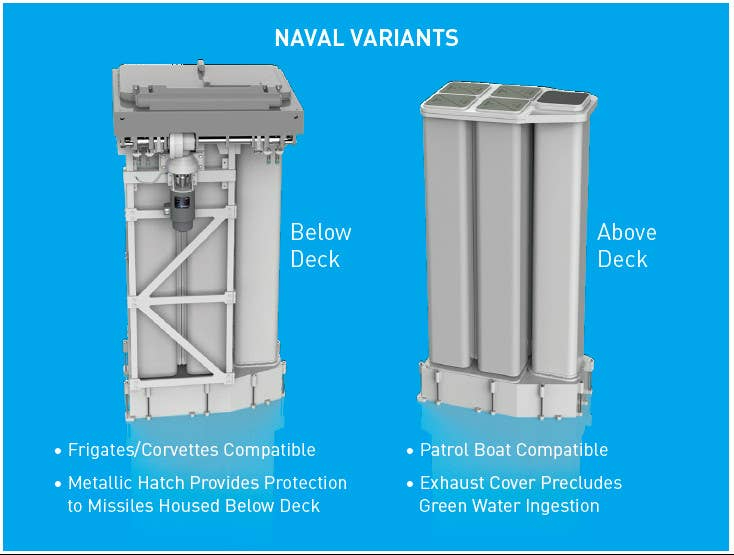
JAGM/Hellfire quad launcher. The launcher in the video seems to be a variation of these launchers.
 Chuck Hill's CG Blog
I like Hellfire and JAGM, but I am a greater fan of SPIKE NLOS based upon range. Similar capabilities but traveling 20+ miles and able to attack hidden targets.
I kinda like the man in the loop feature of the Spike NLOS and have talked about it, but US use of the Spike NLOS is very limited and in order for the Coast Guard to get a weapon system, realistically, it has to be in common use by the US Navy or at least the Marines.
Does JAGM or Hellfire have the indirect attack on defilade targets? SPIKE NLOS does!
Pardon my ignorance, but how long is a Weber Class Patrol Boat?
Thanks
It is 154 feet long and 353 tons full load.
The Wikipedia has excellent and mostly up to date info on this and other Coast Guard vessel classes and frequently information on specific ships. https://en.wikipedia.org/wiki/Sentinel-class_cutter
Thanks much
I tried doing a search and got confused since the class is names after a person (or so it seems) and lumped in with FRC Fast Response Cutter
I asked the US Navy Public Affairs about the SPIKE missile a few years ago and the US Navy said that they’re not pursuing the SPIKE missile anymore. Thus, I doubt that the US Marines can get SPIKE unless they go through the US Army. No reason or explanation was given as to why the US Navy lost interest in SPIKE, but USSOCOM seems to have canceled their missile armament module for their fast boats.
Personally, I would prefer the Anduril Industries’ Barracuda-100 with its 90+ mile range and about the same size as the JAGM/Hellfire Longbow missile. Of course tweaking to the launch box and testing needs to occur, but with Barracuda-100, the cutters and LCSs would be very formidable for such a low cost anti-surface and perhaps anti-drone missile.
The nice thing about VL JAGM-MR is it is both multi-purpose and fire-and-forget.
There is a lot of development work going on in the area of small cruise missiles and loitering munitions. Eventually, the Navy will pick a winner.
The priority for the Coast Guard though should be defending their ships from modern threats as well as increasing their ability to stop, larger, non-compliant merchant ships.
JAGM seems to tick the right boxes.
The increase from $150k for Hellfire to $300k for it’s successor is problematic imho. Just 5-6 years ago the SM series of missiles were about $1 million each. Now a small short range missile is heading in that direction?
Not to say the CG couldn’t do with more firepower. But the cheaper options aren’t available anymore, it seems.
Andrew
APKWS is about the cheapest option. As JAGM goes into full rate production it will probably get a bit cheaper.
The Coast Guard could use Hellfire as it gets withdrawn in favor of JAGM for front line units.
The guidance system is different. It is more sophisticated.
Plus, we are surely paying for the development costs now. The cost “should” come down as production ramps up and more are bought.
“Should” is the key word. We will see.
A very interesting report on the state of our weapons manufacturing industry – among other things “full production” is at non-warfare conditions – so when something like Ukraine happens where the conflict lasts more than a few weeks we run short of weapons –
Subject: America Doesn’t Have Enough Weapons for a Major Conflict. These Workers Know Why. – POLITICO
https://www.politico.com/news/magazine/2025/10/27/lockheed-martin-strike-orlando-weapons-missiles-00514386
Very appropriate in that these are the people that make Hellfire and JAGM.
“Navy Rushing To Arm Carrier Strike Groups With Hellfire Missiles”
https://www.twz.com/sea/rush-to-arm-carrier-strike-groups-with-hellfire-missiles-for-anti-drone-defense-disclosed-by-navy