
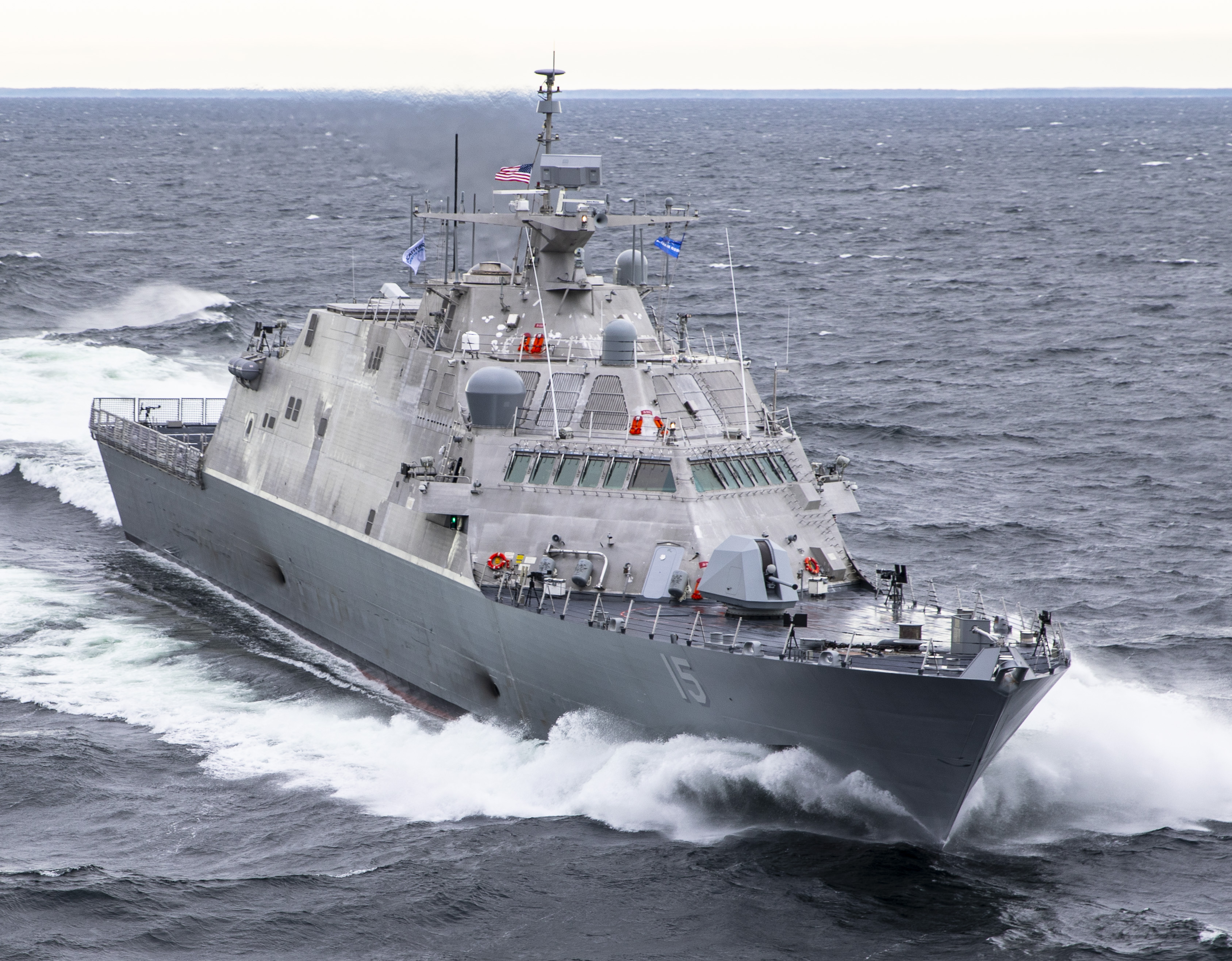
181206-N-N0101-028
MARINETTE, Wis. (Dec. 6, 2018) The future littoral combat ship USS Billings (LCS 15) conducts acceptance trials on Lake Michigan, Dec. 6, 2018. (U.S. Navy photo courtesy of Marinette Marine/Released)
Below is a District SE news release. Nice to see the Navy helping the Coast Guard with drug enforcement again.
After the last FFG-7 class frigates were decommissioned in 2015 it seemed logical that LCS would be used for drug enforcement. All the Freedom class LCS (those with odd hull numbers) are based in Mayport, FL, relatively near the drug transit zones, even those in the Eastern Pacific. Essentially it did not happen.
It appears the Navy has decided to retain 11 Freedom class LCS to provide “presence.” Given the new National Strategy’s emphasis on the Western Hemisphere, that presence might best be in the drug transit zones working for the Forth Fleet through the Joint Interagency Task Force. They should be able to keep three on patrol.
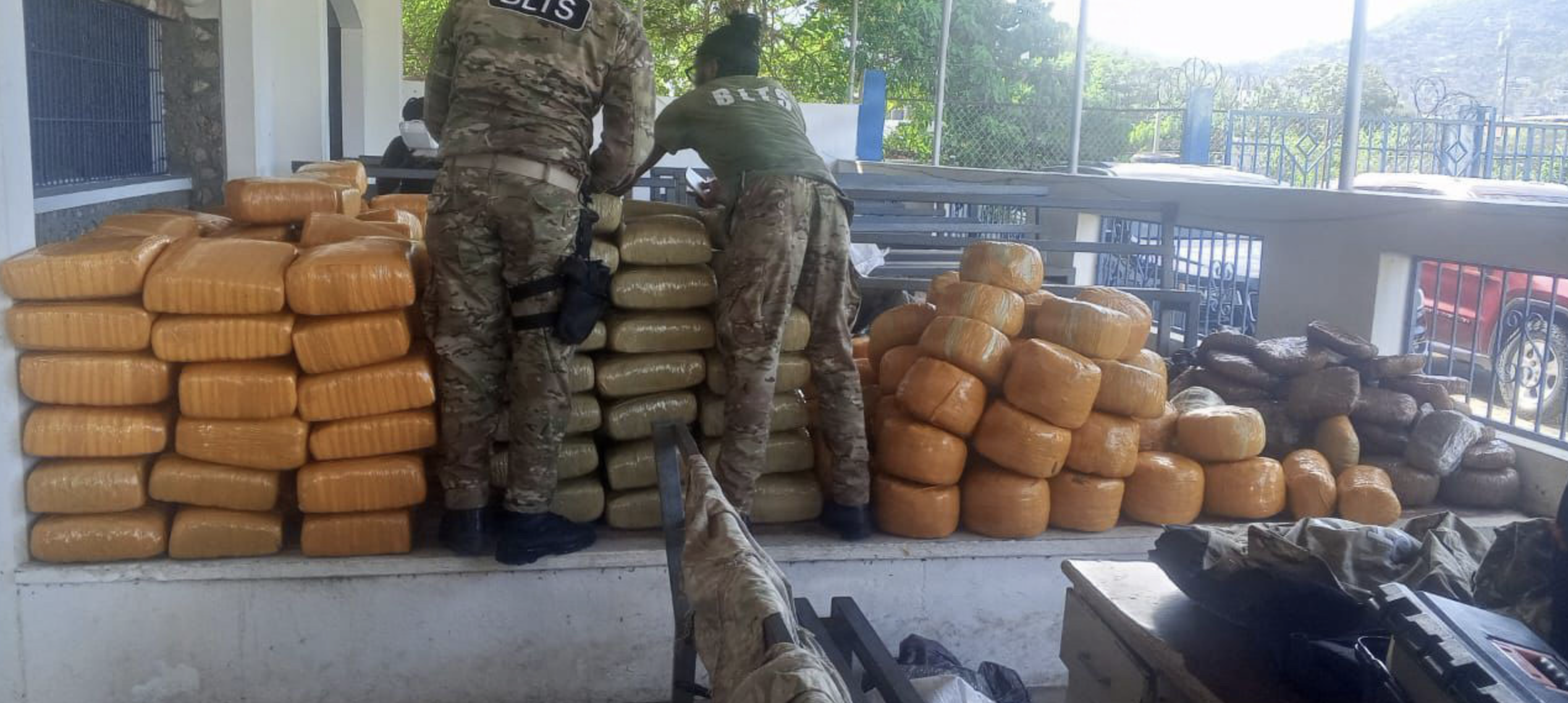
Haitian National Police members inspect interdicted drugs following a drug interdiction off Haiti, May 3, 2026. At the behest of the Haitian government, a U.S. Coast Guard law enforcement detachment deployed on the USS Billings stopped a suspected drug vessel carrying approximately 3,200 pounds of marijuana. (U.S. Coast Guard photo)
Coast Guard, U.S. Navy, interdicts suspected drug vessel off Haiti
Southeast Public Affairs – 206-815-6903
MIAMI – A Coast Guard law enforcement detachment deployed on the USS Billings stopped a suspected drug smuggling vessel, Thursday, approximately 8 miles off Mole Saint-Nicolas, Haiti.
With the permission of the Haitian government, the boarding team’s investigation resulted in approximately 3,200 pounds of marijuana being found, worth approximately $3.8 million, and one person was detained. The contraband and suspected smuggler were transferred to Haitian authorities, Sunday.
“In close coordination with the Haitian government, the U.S. Coast Guard remains steadfast in our shared mission to safeguard the maritime approaches of the Caribbean,” said Lt. Cmdr. Cory Arsenault, the Coast Guard liaison officer for Haiti. “Together, we are strengthening joint operations to disrupt the illegal flow of narcotics, protect vulnerable communities, and uphold the security and stability of the region. Our partnership reflects a continued commitment to collaboration, vigilance, and the rule of law.”
The following assets and crews were involved in the interdiction operations:
- USS Billings
- U.S. Coast Guard Tactical Law Enforcement Team South, LEDET 405
- Helicopter Maritime Strike Squadron 48, Detachment 3
- Joint Interagency Task Force South
- Coast Guard Southeast District watchstanders
80% of interdictions of U.S.-bound drugs occur at sea. This underscores the importance of maritime interdiction in combatting the flow of illegal narcotics and protecting American communities from this deadly threat. Detecting and interdicting illicit drug traffickers on the high seas involves significant interagency and international coordination. Joint Interagency Task Force South, in Key West, conducts the detection and monitoring of aerial and maritime transit of illegal drugs. Once an interdiction becomes imminent, the law enforcement phase of the operation begins, and control of the operation shifts to the U.S. Coast Guard for the interdiction and apprehension phases. Interdictions in the Caribbean Sea are performed by members of the U.S. Coast Guard under the authority and control of the Coast Guard Southeast District, headquartered in Miami.

