
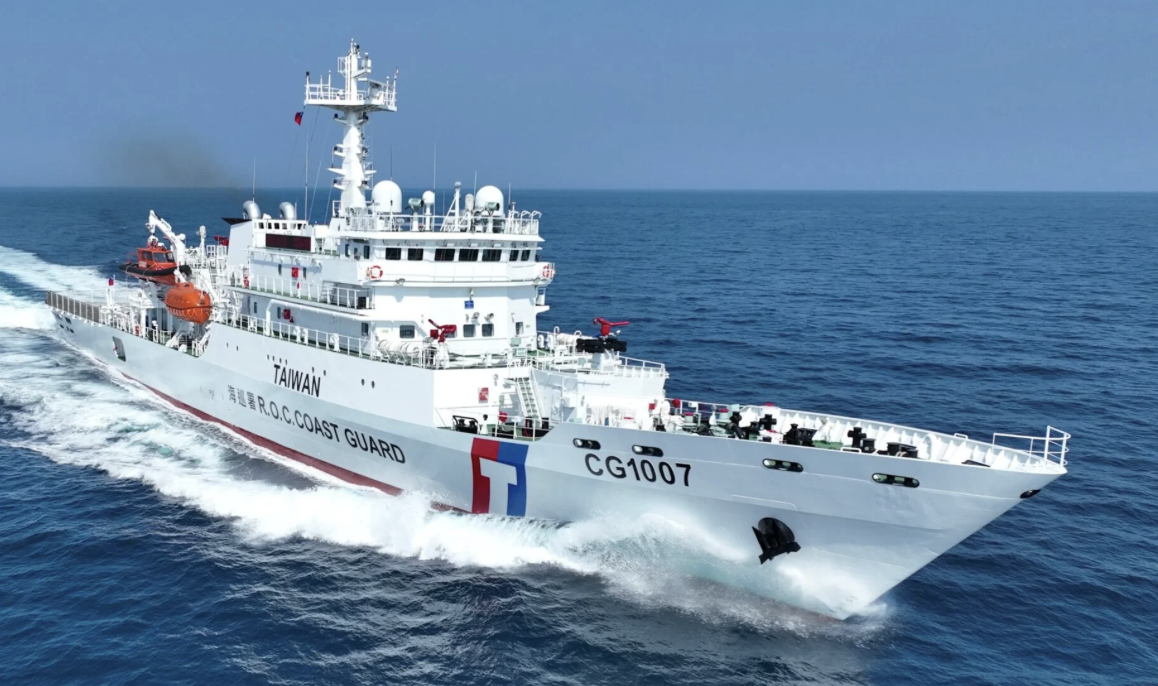
Taiwan received Penghu (CG 1007) from the CSBC Corporation’s Keelung shipyard on July 21, 2026. Taiwan Coast Guard photo
The US Naval Institute News service reports the Taiwan Coast Guard has received the fifth of a class of six new Offshore Patrol Vessels.
The ship is a pretty typical Offshore Patrol Vessel. reportedly 2,077 tons full load with a speed of 24 knots and a range of 6,000 nautical miles.
What I found remarkable was the ship’s armament, a remote weapon station that can fire up to 42 rockets before being required to reload. It is called the NCSIST 2.75in rockets remote weapon station. These rockets are 70mm in diameter, the same as standard Hydra Rockets and APKWS. Turns out, these have been fitted to several Taiwan CG cutters in place of the Bofors 40mm gun they used previously.
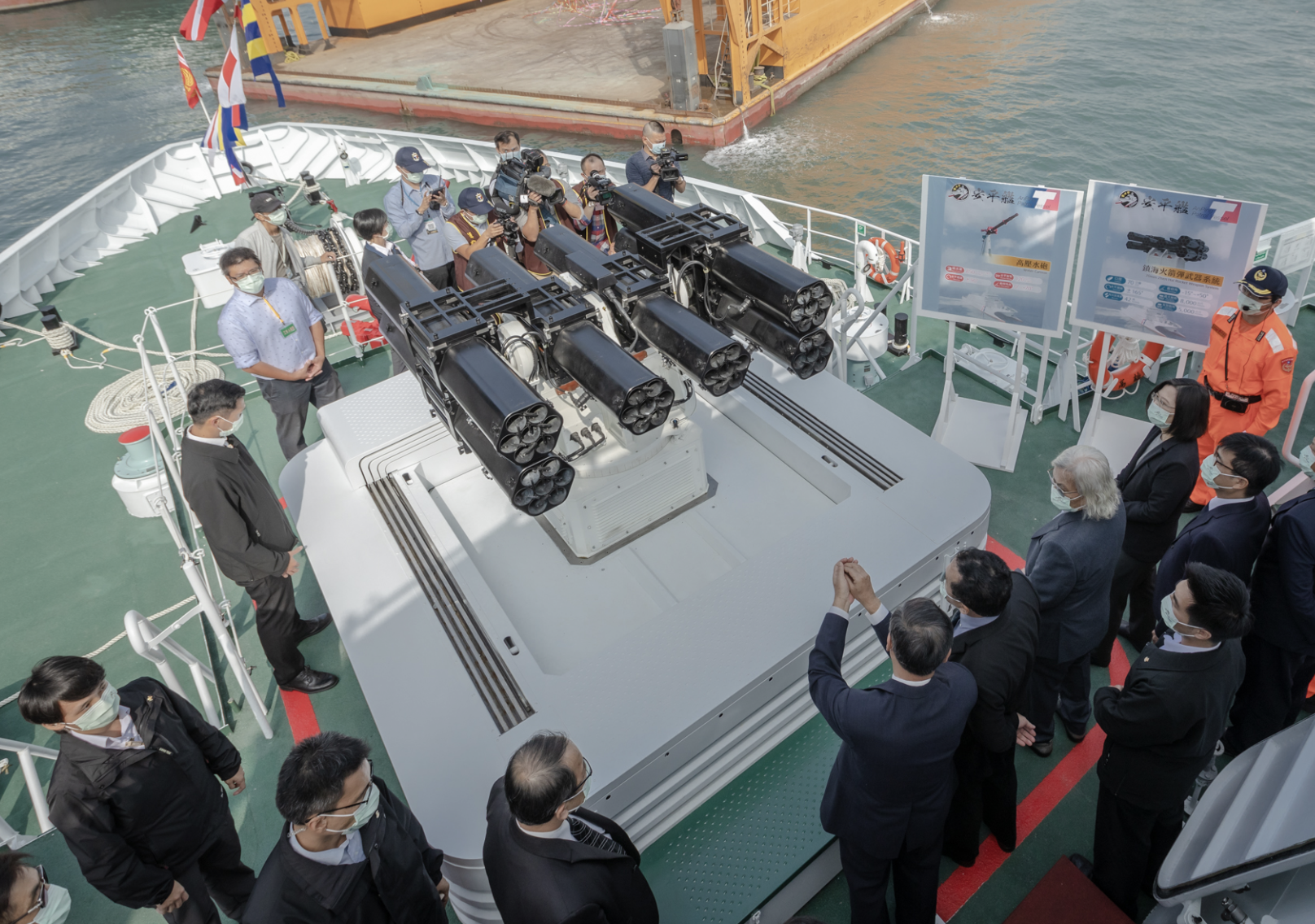
NCSIST 2.75in rockets remote weapon station
There is no indication that the rockets used by this system are guided in any way. Even unguided rockets could be devastating at close range. It is almost certain that these mounts could fire guided rounds. They also have a flare illumination round that reportedly can burn up to five minutes.
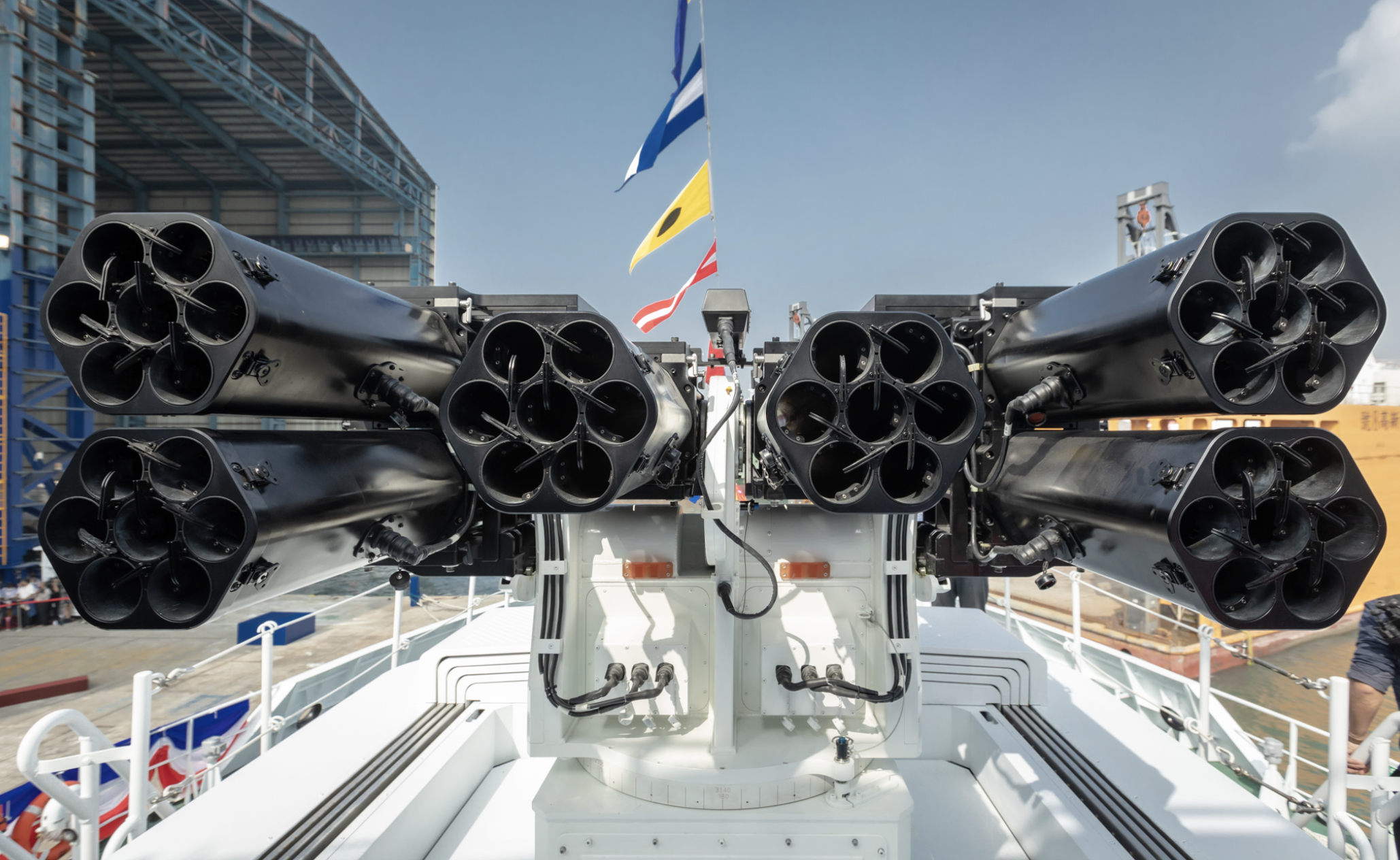
System carried on Coast Guard Administration (Taiwan) vessel Anping-class offshore patrol vessel. This appears to be the breech, looking forward.
I don’t see any electro-optics mounted on the remote weapon station, so presumably the fire control system is mounted separately.
Equipped with APKWS, this system could be very effective out to at least 8,000 yards.


I am impressed. Been saying that we need to develop rockets like this for U.S. forces for some time. Using the new the Next-Generation Short-Range Interceptor (NGSRI) with IR/RF/APKWS sensors (take your pick) would be very cost effective as well are effective against inbound targets. Easier to stow/handle/reload and takes up very little space compared to a Standard Missile. This 2.75″ (70mm) rocket format with the new fuel is safer to handle, uses more powerful fuel that is less dangerous to handle. These new rockets have greater impulse in the same package providing greater speed and range. I hope SOMEONE is the U.S. is working on these for U.S. vessels, vehicles, and aircraft. Probably need some more warhead work though.
The US is now making APKWS in huge numbers now and making versions with fire and forget seekers as well as the original semi-active laser homers. It has become the standard air-to-air counter UAS weapon.
I would really like to see them introduced into the Coast Guard. Small foot print would not require much modification. Simple to operate, so minimum training and maintenance requirement. Doubt if their addition would require any additional crew members.
Replace the four .50 cal. with two 30mm M230s remote weapon stations and two APKWS launchers. It would make them so much more capable against UAS, low flying aircraft, cruise missiles, USVs and large surface craft.
A U.S. Navy Aviation Ordnanceman (AO) is required and maybe more than one. Weapons storage and assembly is required near the helo hangar which will be near where the shipboard launcher would most likely be. Adding LAU launchers to existing MH-60T Jayhawks is the easy part.
I don’t have much hope of putting them on CG aircraft, as much as that might make sense, and yes that would require additional personnel, but other than than the single Helicopter Interdiction Squadron (HITRON) the rest of Coast Guard aviation seems to be against arming aircraft.
Arming cutters with upgraded weapons would be easier.