
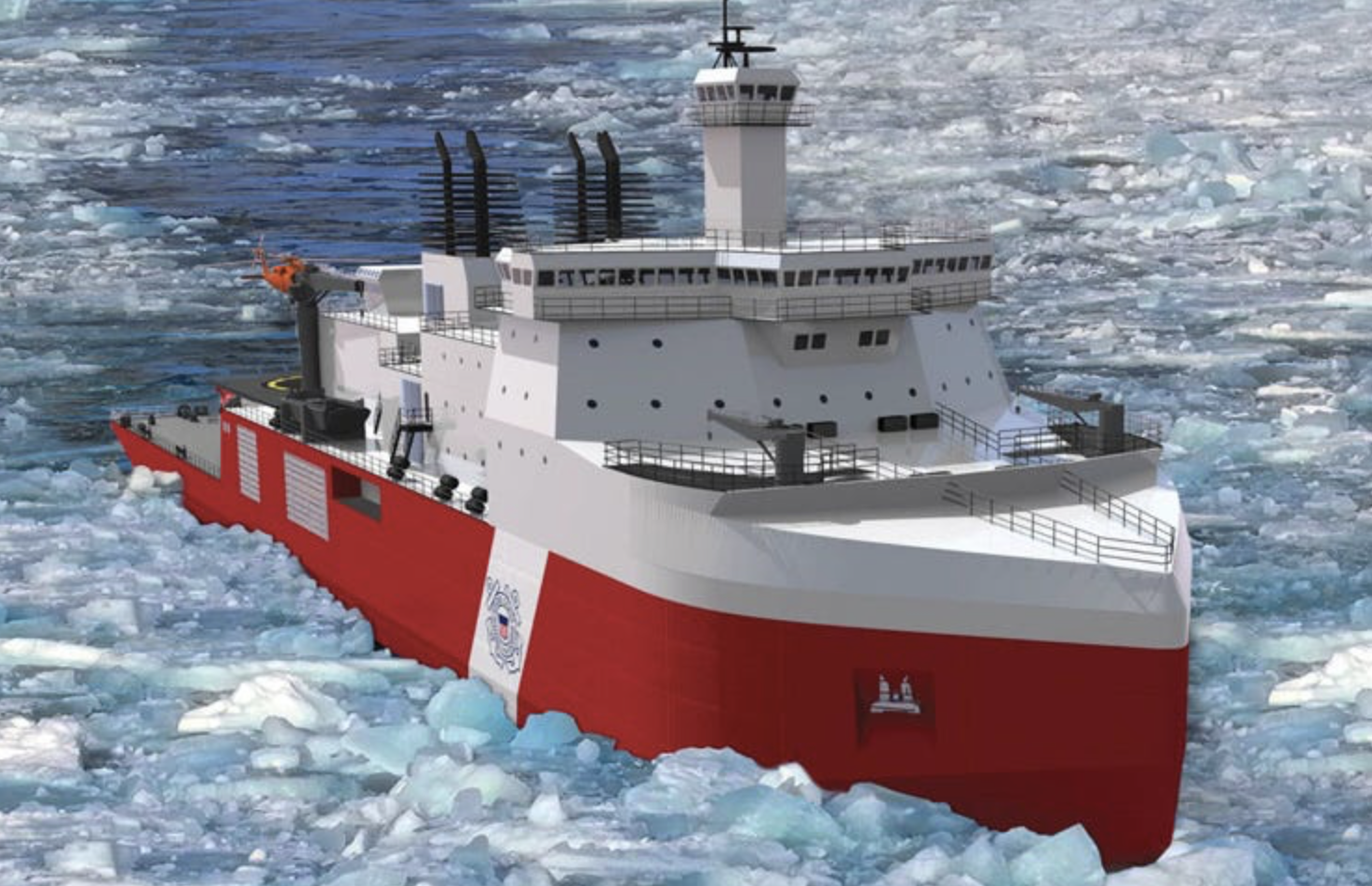
Artist’s rendering of the Polar Security Cutter: U.S. Coast Guard
Two recent articles provide updates on icebreaker programs currently underway.
First, “July 2026 U.S. Coast Guard Update Part Two: Procurement and Ports” from Sixty Degrees North provides an overview of all icebreaker programs, Polar Security Cutter, Arctic Security Cutter, and Homeland Security Cutter–Light Icebreaker, written by the Directory of Polar Intelligence for Davie Group. It also looks at future basing possibilities.
When all of the upgrades are complete, we will have the Polar Star (to be replaced by the PSCs) and Healy in Seattle, Storis in Juneau, two ASCs in Kodiak, and one ASC in Seward. That will place many of our assets closer to the Arctic Circle (which is about 150 nautical miles north of Nome):
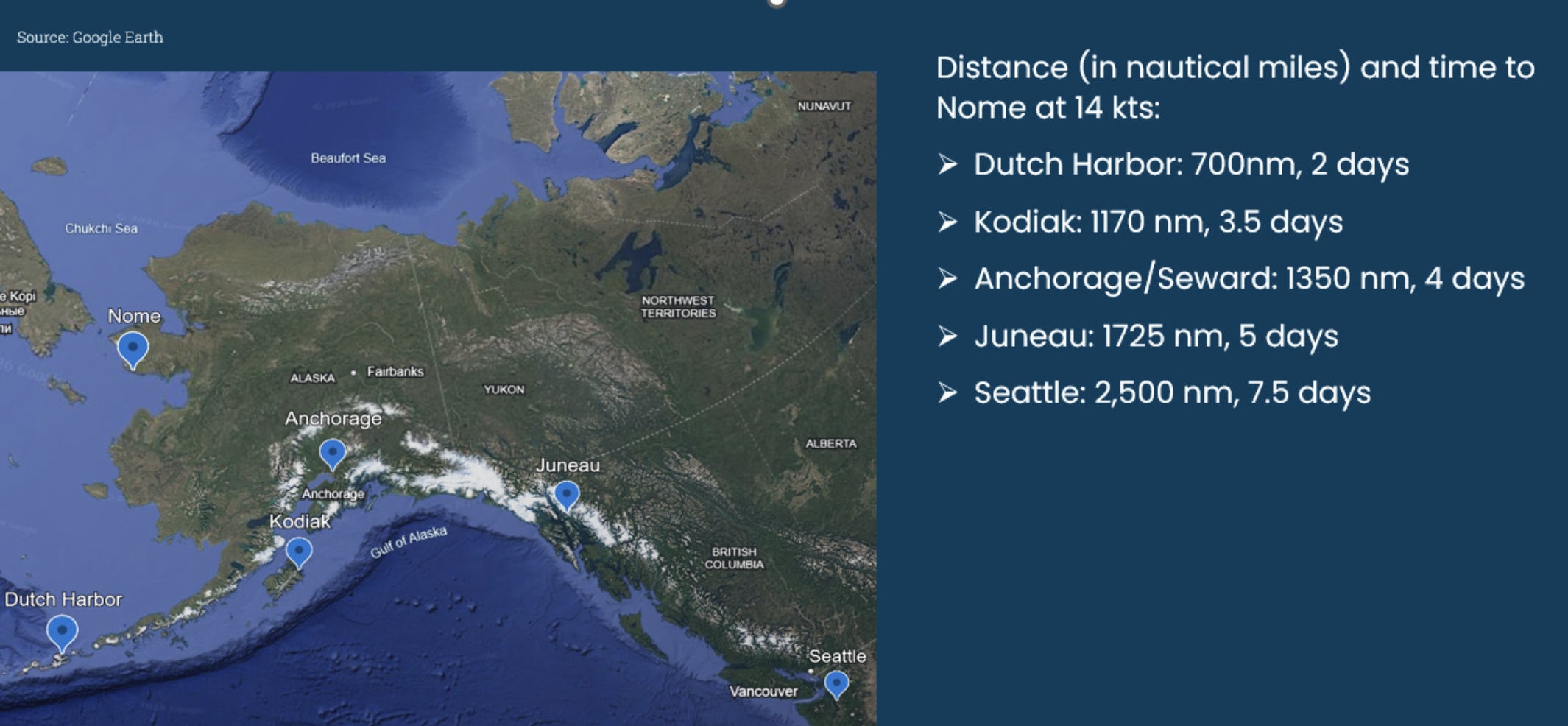
From Sixty Degrees North
Second we have “Twin Icebreaker Projects Progressing at Bollinger’s Gulf Coast Yards” that follows a US Naval Institute reporter’s visit to Bollinger shipyards building the Polar Security Cutter and the Arctic Security Cutter.
We are still a long way from delivery but nice to hear progress is being made.
First deliveries of the Bollinger/Rauma Marine ASCs is expected in 2028 and all six by 2031.
The first of the Davie/Helsinki built ASCs is expected in 2028 with all five complete by 2035.
First delivery of the Polar Security Cutter is nominally 2030 but GAO suggests 2033. Delivery of all three Polar Security Cutters is expected 2039. And yes the price has gone up. $6B for the three ships. Actually that does not sound too unreasonable since we are paying about $2B each for USS San Antonio class LPDs which are about the same size.
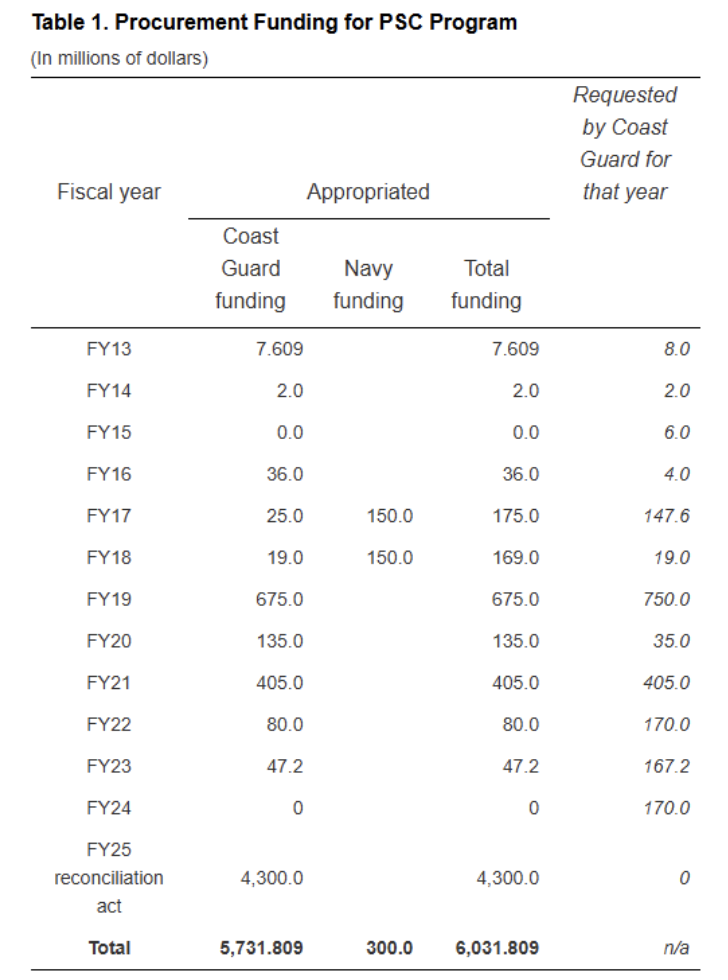
From Sixty Degrees North


The contract for Nome, Alaska improvements is expanding its harbor to create the United States’ first deep-water Arctic port. Managed by the U.S. Army Corps of Engineers and built by Kiewit Infrastructure West Co. under a $399.4 million contract, active in-water construction is underway with an expected completion target by 2029.
Nome construction comes in phases:
* Phase 1 Work: Extending the existing western causeway by 1,200 feet using aggregate, rock, and heavy armor stone, alongside building a 600-foot sheet pile dock face for greater protected/secure access.
* Basin Deepening: Dredging and creating a new deep-water basin down to minus 40 feet (the current outer basin is limited to minus 22 feet) sufficient to accommodate deeper draft vessels projected to use this Northern port.
* Future Phases: Subsequent work includes further causeway extensions, utility infrastructure installations, and comprehensive dredging to accommodate large military, research, and cargo vessels.
* Road & Drainage Improvements.
Required construction to support greater access for future Arctic tasked vessels should be complete to the point of logistical support by the time the first Polar Security Cutter arrives.
The Nome Airport is set to receive a $285,000 federal funding award to resurface its aprons, taxiways, and runways. This follows a major $27.9 million runway rehabilitation project completed in recent years that fixed long-term settlement issues. Meanwhile, planned terminal upgrades by Alaska Airlines have been placed on a temporary backburner while the carrier prioritizes other statewide hub projects.
Recent and Current Airport Work
Related Regional and Terminal Status
$2B for a PSC is still pricey, but they’re thick steel, take a lot of man hours and expensive steel, and most of all needed. Glad progress is being made.
I do have a question regarding the ASC though. The USNI News article made it seem as if they are 2 different designs. Is that your read of the situation also? If so, has anyone seen/compared the two designs from the two design/build teams and why did we do that? The logistics could be a nightmare if the systems and propulsion are different.
yes there are two different designs for the Arctic Security Cutters. There are some comparisons here:
https://chuckhillscgblog.net/2026/02/11/u-s-coast-guard-completes-the-presidents-contract-awards-for-11-arctic-security-cutters-cg-news/
and here:
https://chuckhillscgblog.net/2026/01/30/replacing-the-polar-research-vessel-nathaniel-b-palmer-sixtydegreesnorth-with-cg-icebreakers/
The Davie version is more powerful. The Bollinger version is more like a cargo ship or buoy tender.
Actually neither of the two designs would qualify as a “medium icebreaker” using the Coast Guard definitions used when the coast Guard said they needed a total of nine medium and heavy icebreakers.
That definition for medium icebreakers was from 20,000 to 45,000 HP. The Davie design is 17,433 HP while the Bollinger design is 9,655 HP, just a little more than Mackinaw.
Thanks for this. I recall now that the Bollinger sub-class will in essence be the Canadian Coast Guard’s Multi-purpose Icebreaker design (Multi-Purpose Icebreakers – Seaspan ) with an upgraded helo deck for the heavier H-60 class. Not a bad design at all, but lighter than original expectations. I guess logistically that we join the Canadian supply chain. No idea who makes the generators and if there will be any commonality with the other Arctic Security Cutter sub-class.
“Bollinger taps Steerprop by USCG Iceabreaker Propulsion”
https://www.marinelink.com/news/bollinger-taps-steerprop-uscg-iceabreaker-542505