
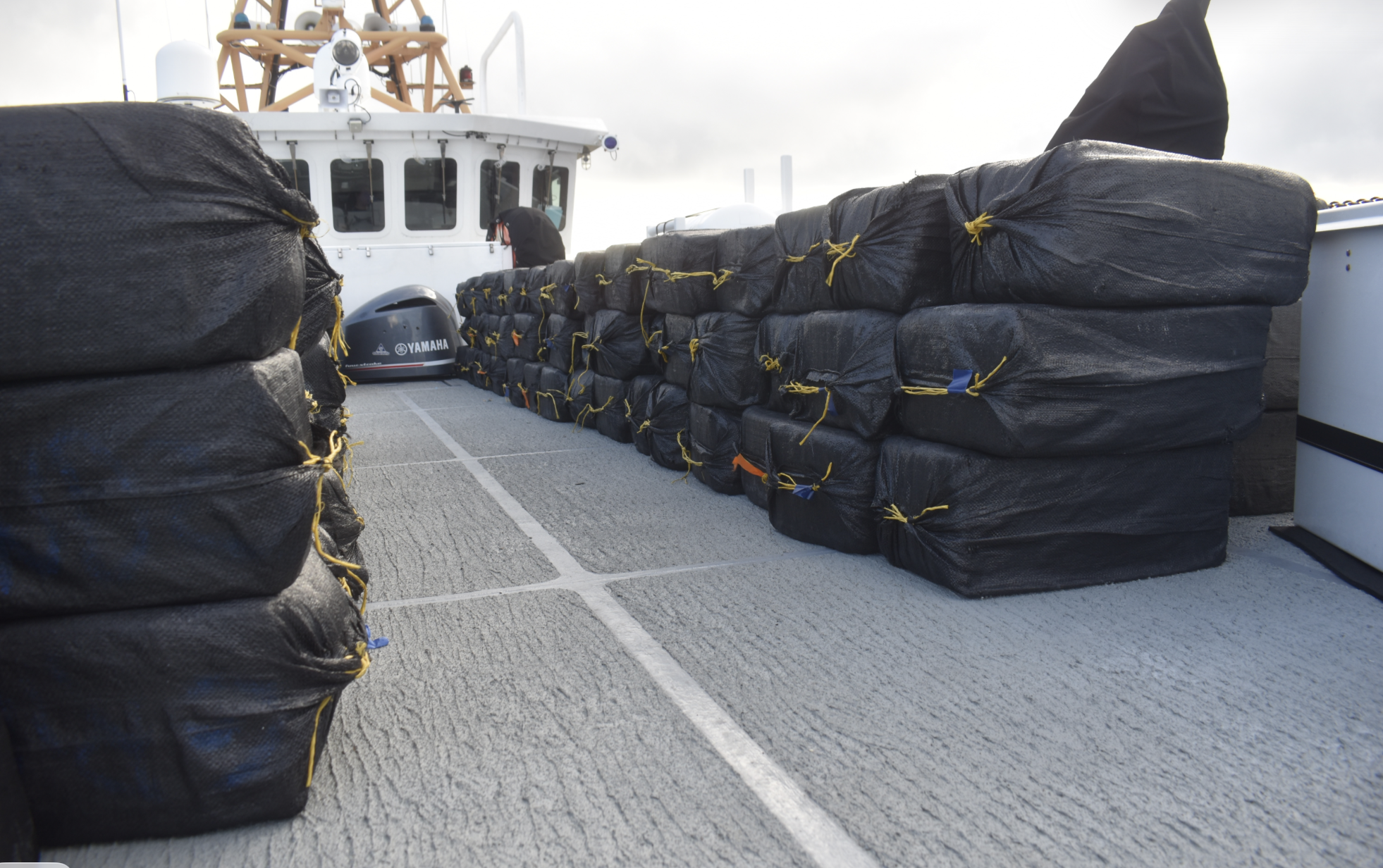
Seized narcotics sit on the deck of Coast Guard Cutter Charles Sexton, Oct. 28, 2026, off Cartagena, Colombia. The crew interdicted two suspected drug vessels carrying approximately 10,900 pounds of cocaine worth an estimated $89.2 million. (U.S. Coast Guard photo)
Below is a news release from CG HQ. (Note, not from District SE or LANT AREA. I think this is because of an interest in putting the individual unit efforts in the context of the total national effort reflected in the last two paragraphs of the release.)
Two things to note.
First the use of disabling fire in both cases by a WPC. We are used to seeing disabling fire from helicopters of the highly trained HITRON (Helicopter Interdiction Tactical Squadron, but lately we are seeing it more frequently from Webber class WPCs that are too small to deploy with a helicopter. I am curious what weapon they are using to do disabling fire. The helicopters use a .50 caliber sniper rifle.
Second these interdictions took place deep in the Caribbean, about as far South as drug interdiction units need to go. This essentially shows that Webber class WPC can do drug interdiction anywhere in the Caribbean that we might use a WMEC or NSC.
Coast Guard Cutter Charles Sexton stops 2 suspected drug vessels at sea
Washington – Coast Guard Cutter Charles Sexton’s crew interdicted two suspected drug vessels carrying approximately 10,900 pounds of cocaine worth an estimated $89.2 million, Oct. 28, approximately 175 miles off Cartagena, Colombia.
Both drug vessels were stopped using disabling fire and 10 suspected narco-terrorists were detained and repatriated to Colombia for further investigation and potential prosecution.
“I am incredibly proud of this crew’s professionalism and resilience that allows us to complete these dynamic and dangerous missions at sea,” said Lt. Peter Fager, Charles Sexton’s commanding officer. “We are determined to keep drugs off America’s streets and protecting our nation from transnational criminal organizations and cartels.”
Coast Guard Cutter Charles Sexton’s interdictions continue the Coast Guard’s mission to interdict, seize, and disrupt transshipment of cocaine and other bulk illicit drugs by sea. The Coast Guard’s persistent operations and rapid response denied criminal organizations billions in illicit revenue and prevented the flow of dangerous drugs into American communities. In Fiscal Year 2026, the Coast Guard seized nearly 198,000 pounds of cocaine, exceeding its annual average. Since August 2025, the Coast Guard seized over 262,000 pounds of cocaine through Operation Pacific Viper, continuing aggressive counter-drug operations in the Eastern Pacific.
The U.S. Coast Guard works alongside local, state, federal, and international partners to detect, disrupt, and deter transnational criminal organizations and illicit maritime trafficking in support of Operation Pacific Viper. Operating under the Coast Guard’s Title 14 law enforcement authorities, and with critical support from partner nations, these unified efforts span every stage of counter-drug operations from initial detection and monitoring to maritime interdiction and criminal prosecution. Focused on critical regions such as the Eastern Pacific Ocean and the Southwest District’s area of responsibility, the Coast Guard is part of a whole-of-government approach to combat transnational organized crime.

