“Availability and Use of Aircraft in the Coast Guard” –Congressional Budget Office

The Congressional Budget Office (CBO) prepared a report “at the request of the Chairman and Ranking Member of the Coast Guard and Maritime Transportation Subcommittee of the House Committee on Transportation and Infrastructure” on the use and availability of Coast Guard aircraft. Below the break is CBO’s “At a Glance” summary. I added some additional detail and observations below.

“CBO found that Coast Guard helicopters tend to have availability rates that are lower than the rates for Army helicopters, higher than the rates for Department of the Navy (DoN) helicopters, and similar to those of Air Force helicopters.

“On average, Coast Guard helicopters flew significantly more hours than DoD’s helicopters. (About twice as much–Chuck) (CBO also compared Coast Guard H-60s with DoD’s H-60s and found a similar result.)”

There is also a Graphic showing the total flight hours during 2024 for each air station that I included above.


At a Glance

In this report, the Congressional Budget Office analyzes patterns in the availability and use of aircraft by the U.S. Coast Guard, the agency responsible for protecting the nation’s waterways, from 2006 to 2024. CBO looks at availability—a measure of the percentage of time aircraft can be flown for training or missions—and flying hours, both in total and per aircraft.

Here are CBO’s findings about the fleet’s size, availability, and use:

  • Size. As of 2024, the Coast Guard had about 200 manned aircraft. About three-fourths of those are rotary-wing aircraft (H-65 and H-60 helicopters), and the rest are fixed-wing aircraft. Since the early 2010s, the number of Coast Guard aircraft has declined.
  • Availability. From 2006 to 2024, the availability of Coast Guard aircraft decreased slightly. Availability of fixed-wing aircraft has been generally lower than that of helicopters, although their respective availability rates have converged in recent years. In 2024, the Coast Guard’s average availability rate for its aircraft was 49 percent.
  • Use. Total flying hours for Coast Guard aircraft have decreased since 2006. Use of the H-65 fleet has declined the most, especially since 2019. The fixed-wing C-144 fleet has logged the most flying hours per aircraft.
  • Comparison With Availability and Use of Other Aircraft. In general, Coast Guard aircraft fly much more than similar Department of Defense (DoD) aircraft, but their availability rates are about the same as those of DoD’s aircraft.
  • Comparison With Availability and Use When Operated by the Navy. CBO analyzed 10 Coast Guard H-60s that were formerly operated by the Department of the Navy. During service in the Navy, those H-60s flew fewer hours, on average, than other H-60s operated by the Navy. After those H-60s were refurbished in a depot to perform different missions, the Coast Guard began to operate them. Availability rates and flying hours per year for those helicopters were markedly greater than when they were operated by the Navy.
  • Availability and Use During the Pandemic. Even though the availability rate of Coast Guard aircraft did not change markedly during the coronavirus pandemic, their flying hours dropped in March 2020 and reached their lowest point in April 2020.

This Day in Coast Guard History, April 2

Based on the Coast Guard Historian’s timeline, https://www.history.uscg.mil/research/chronology/
With inspiration from Mike Kelso

April 2

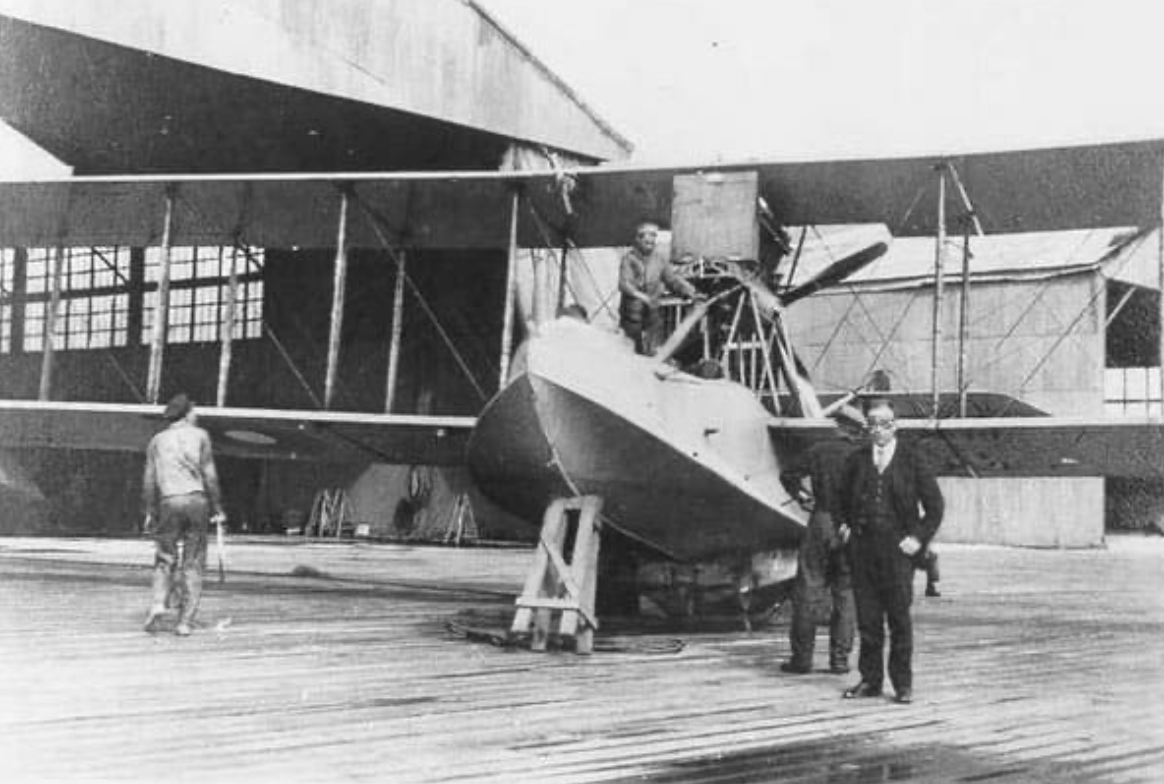
Aircraft maintenance on the ramp at the Morehead City air station. Aircraft was a Curtis HS-2L

1924  Congress appropriated $13,000,000 for ten air stations and equipment.  Congress first authorized the stations on August 29, 1916, but did not provide for sufficient funding until this date. The first Coast Guard Air Station had been established in 1920 in Morehead City, NC.

The Morehead City air station remained in commission until July, 1922 at which time personnel were transferred to other assignments and the aircraft were returned to the Navy. There would be no more Coast Guard aviation activity until the advent of the Coast Guard Air Station at Gloucester Massachusetts in 1926. Only five out eleven of the initial cadre returned to flight status.

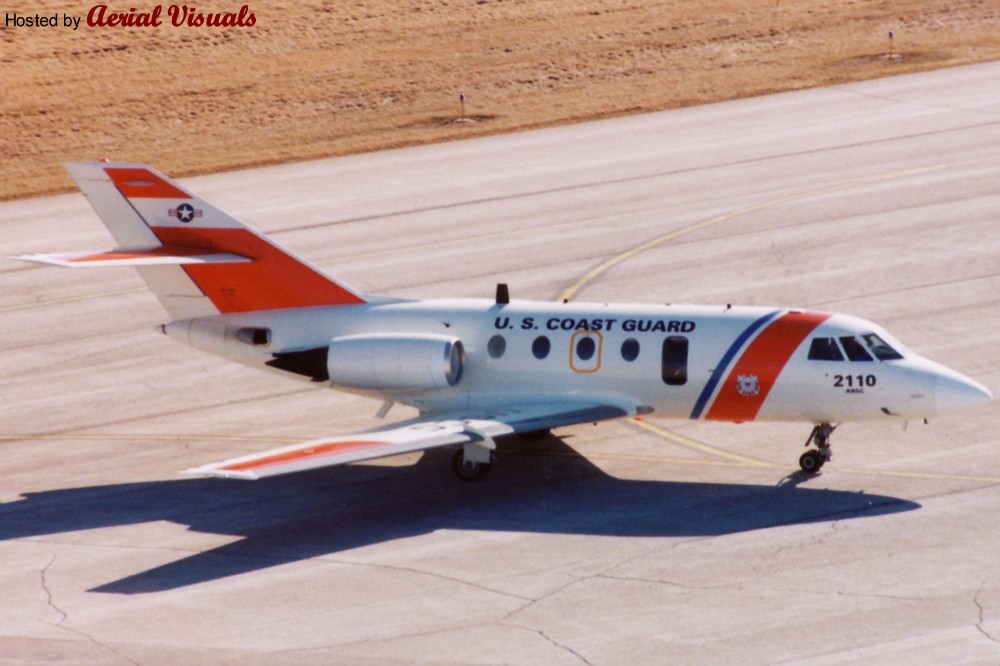
HU-25 CGNR 2110 Photographer: Glenn Chatfield
Notes: At Cedar Rapids, IA

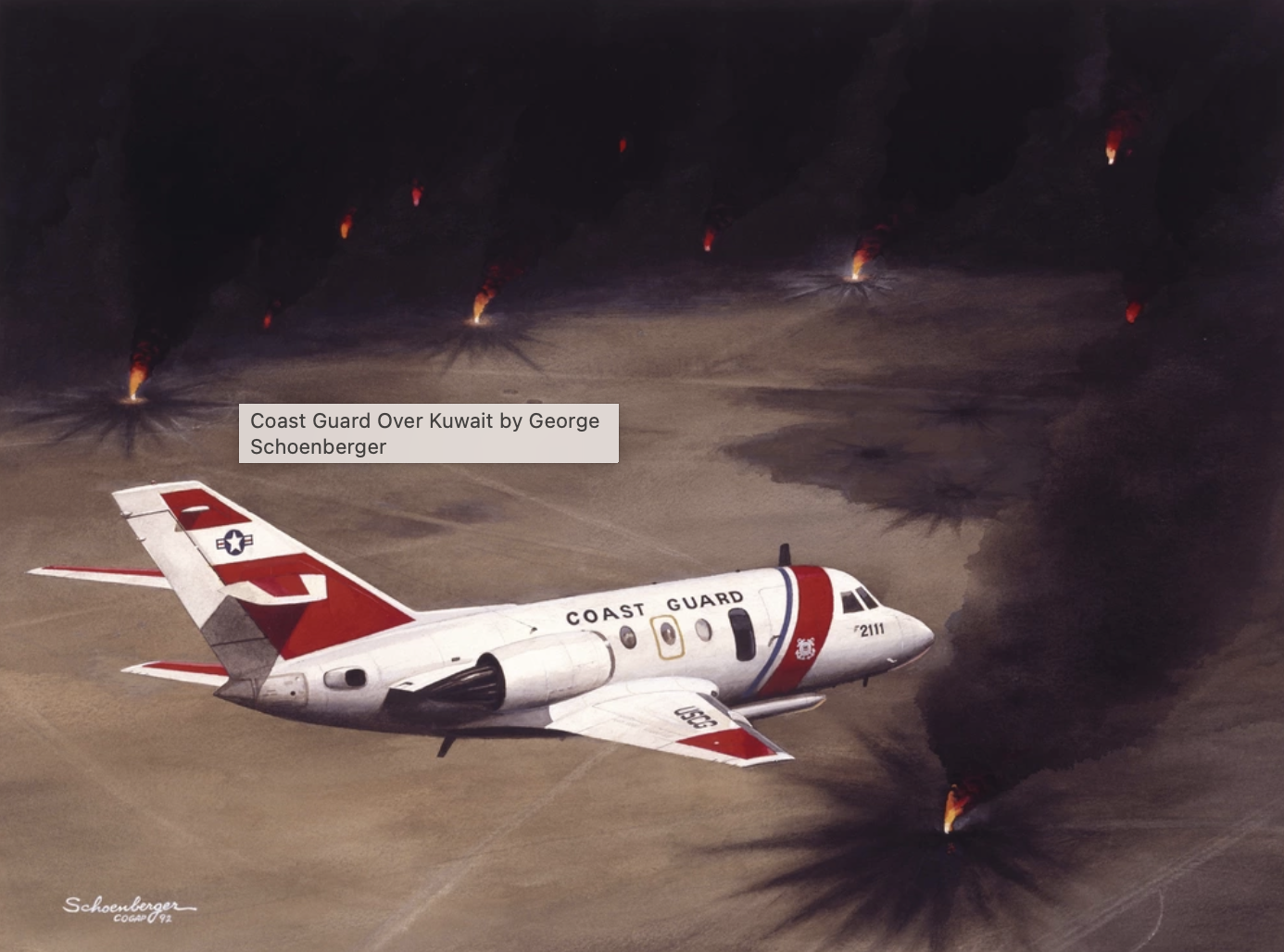
1982  The first of a new type of aircraft was added to the Coast Guard’s air fleet, a HU-25A Guardian, was dedicated and christened at Aviation Training Center Mobile.

In response to the Iraqi action of firing oil wells and pumping stations in Kuwait, two HU-25A Falcon jets from Air Station Cape Cod, equipped with Aireye technology, which precisely locates and records oil as it floats on water], departed for Saudi Arabia. The Falcons mapped over 40,000 square miles in theatre and located every drop of oil on the water. This was used to produce a daily updated surface analysis of the location, condition and drift projections of the oil. The Aviation Detachment was deployed for 84 days, flew 427 flight hours and maintained an aircraft readiness rate of over 96 percent.

1983  The State Department forwarded a request for assistance from the United Arab Emirates to help prepare for an oil spill cleanup in the Persian Gulf.  The spill occurred after combat operations during the Iran-Iraq war had left many oil wells burning and leaking oil.  Four Coast Guard pollution experts responded to the request.

Airbus and U.S. Coast Guard sign support agreement for MH-65 fleet” –AIRBUS News Release

US Coast Guard photo, by PAC Dana Warr

Below is a news release from AIRBUS.

Looks like we expect the H-65 to continue serving in the Coast Guard until at least 2037. Cutters with flight decks but incapable of operating larger helicopters should all be gone by then.


Grand Prairie, Texas  – Airbus Helicopters has signed a Memorandum of Understanding (MOU) with the United States Coast Guard (USCG) to continue providing support for the service’s fleet of MH-65 Dolphin helicopters through 2037. The agreement reaffirms Airbus Helicopters’ commitment to ensuring the mission readiness of the USCG’s fleet as it performs critical search and rescue, law enforcement, and disaster response missions.

Under the terms of the MOU, Airbus Helicopters will deliver enhanced maintenance, spare parts, and technical support to optimize the performance and availability of the MH-65 fleet. The agreement also includes provisions for fleet modernization and engineering services to extend the operational life of the aircraft.

“The U.S. Coast Guard’s MH-65 helicopters are at the forefront of safeguarding our nation’s coastlines and saving lives,” said Bart Reijnen, President of Airbus Helicopters in the U.S. and Head of the North America region. “We are honored to continue working with the Coast Guard to ensure their fleet remains mission-ready for years to come. This agreement demonstrates our shared commitment to safety, reliability, and operational excellence.”

The MH-65 Dolphin has been the backbone of the Coast Guard’s aviation fleet for more than four decades. With this new MOU, Airbus Helicopters and the USCG aim to maintain the fleet’s high level of operational capability, enabling continued support for critical missions across the country.

Airbus Helicopters has a long-standing partnership with the USCG, providing tailored solutions to meet the service’s dynamic operational demands. The extended collaboration will build on this history, leveraging Airbus’ global support network and industry-leading expertise.

@AirbusHeli #MH65

“Coast Guard celebrates 40 years of service with H-65 helicopter” –CG-9

Great article about the history of the H-65 in Coast Guard service by the Acquisitions Directorate, CG-9 reproduced below.

Don’t get the impression that the H-65 is going away anytime soon. Expect at least another decade of service. The last of the parent design AS365 Dauphin was manufactured in 2021. The closely related Eurocopter AS565 Panther is still being manufactured and has seen service in eleven countries.


Coast Guard celebrates 40 years of service with H-65 helicopter

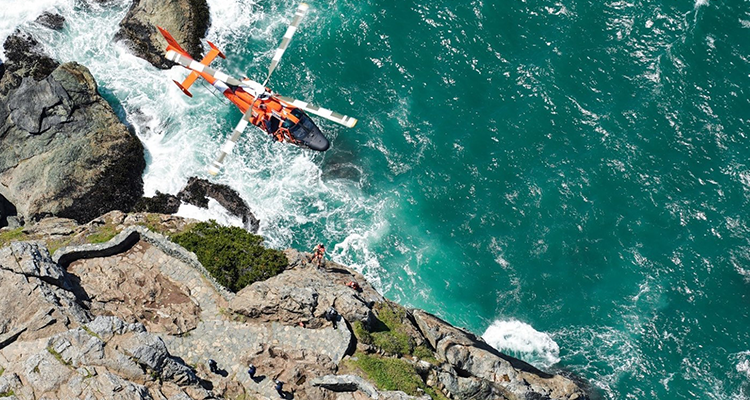
Upgrades throughout the 40-year history of the H-65 were strategically completed to allow for expanding missions and operations in the most challenging maritime conditions, such as cliff rescues. Here an MH-65 crew conducts vertical surface training off the coast of Humboldt Bay, California, to hone critical skills to ensure precise and efficient hoisting techniques in this rugged, coastal environment. U.S. Coast Guard photo.


It’s 2007. Coast Guard Air Station Port Angeles, Washington, receives a call about an injured mountain climber at the summit of The Brothers, a pair of prominent mountain peaks in Olympic National Park near Seattle. The elevation: 6,866 feet. And it’s snowing.

A search and rescue mission was deployed using the HH-65C short range recovery helicopter. “We were right up against that line where it was clear. If we had gone much further toward the peak, we would have been in blizzard conditions. We had to dump fuel at altitude to get light enough,” recalled Cmdr. Christian Polyak, co-pilot on the rescue mission and now commanding officer of Coast Guard Air Station Detroit. “We were able to reach the summit, pluck the injured mountain climber off the peak and get back to the airport in about 15 minutes.”

Unknown to the mountain climber, the Coast Guard H-65 Conversion/Sustainment Program had been working for years – and would continue working in subsequent years – to update the H-65 fleet and support missions like the one that brought the mountain climber to safety. “The rescue couldn’t have been done without the HH-65 and the engine upgrade from Bravo to Charlie,” Polyak explained.

In November 2024, the Coast Guard marked the 40th anniversary of the initial H-65 operation, but the tenure of this critical asset in supporting Coast Guard missions is slowly coming to an end. The service has completed the transition from the MH-65D to the MH-65E, the final upgrade of this airframe. Obsolescence challenges with the MH-65 will lead to the sundowning of aircraft as they reach the end of their service lives.
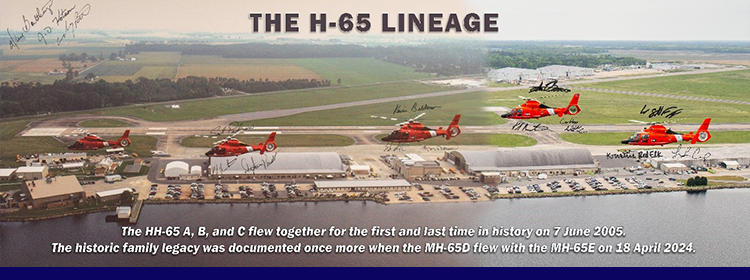
HH-65A HH-65B HH-65C/MH-65C  MH-65D MH-65E
Began operations: 1984 Began operations: 2001 Began operations: 2004 Began operations: 2009 Began operations: 2015
Original Coast Guard version. Avionics upgrade undertaken on a portion of the fleet, including a night vision goggle compatible integrated flight management avionics suite. Engines replaced with Turbomeca Arriel 2C2-CG engines, adding 40% more power. Airborne use of force capability added, including 7.62 mm general-purpose machine gun and a .50-caliber precision rifle. Obsolete subsystems replaced, such as replacing navigation systems and gyros with digital GPS and inertial navigation systems. Remaining obsolete subsystems modernized, including replacing analog automatic flight control with digital systems, installing digital weather radar systems and installing digital glass cockpit instruments.
Other program milestones included purchase of seven new MH-65 aircraft to identify and intercept non-compliant light aircraft operating within the Washington, D.C., Air Defense Identification Zone and execution of a service life extension program to extend the service life of the helicopters by an additional 10,000 flight hours.

Since their introduction more than 40 years ago, Coast Guard H-65s have been credited with rescuing approximately 26,000 people. For nearly two decades, the Coast Guard has planned and executed targeted improvements to enhance reliability and performance of the operational fleet. Across each iteration, starting with the initial designation of the HH-65A (Alpha) to the current MH-65E (Echo), every upgrade enhanced the airframe’s capabilities, enabling crews to complete lifesaving, law enforcement and national security missions more efficiently and effectively.

Retired Capt. Keith Overstreet has flown every model of the H-65, starting with the Alpha in 1995 at Air Station Savannah, Georgia. “I started flying the 65 when it was relatively new … when we purchased the H-65 it was really an advanced aircraft with advanced avionics. It allowed us to fly coupled approaches down to the water with a fairly precise position. It could control not only the lateral, the guiding left to right, but vertically down to the water as well.”

As modern as it was for its time, regular upgrades kept it relevant.

“The Alpha had a small navigation screen where you could create a flight plan. It had a forward-looking radar that would map out vessels and terrain,” said retired Cmdr. Kevin Barres, who flew 65s throughout his entire 25 years in the Coast Guard. “Then Bravo came up and you had a color display that differentiated some terrain,” which helped in developing flight plans.

“Charlie meant changes to the engine, and the engine control. It went from mechanical control using air and linkages to digital control. Echo replaced analog avionics components with a digital cockpit that has significant commonality with the H-60 fleet. There were enhancements to the automatic flight control system and there was a complete rewire of the aircraft. Its modern glass cockpit is standard across the board,” Overstreet said.
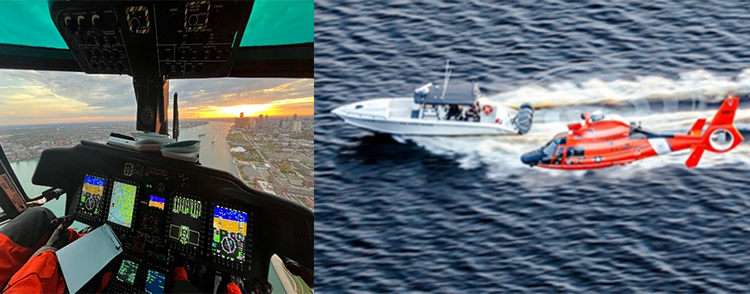
LEFT: A glass or digital cockpit replaced analog instruments in the MH-65E. RIGHT: The updates for missions requiring airborne use of force capability got underway in August 2006. The Helicopter Interdiction Tactical Squadron specializes in those missions, often used for drug-interdiction, and moved to the MH-65 from the Agusta MH-68A Stingray in 2008. U.S. Coast Guard photos.


“Every upgrade was significant and addressed a specific problem or modernization to accommodate how the mission, aviation and airspace were changing,” Barres said.

Cumulatively, these three pilots have flown nearly 16,000 hours in the H-65 and remember missions completed with fondness and pride.

Barres remembers when a bear-watching float plane split in half in the water, stranding six tourists, the bear guide and the pilot in Haro Bay, Alaska. It was 2006, and he was on his first deployment in Kodiak.

“It was a very windy day. The seas in the bay had built a little bit. When the aircraft tried to take off, the tube that goes across the front that connects the two floats failed and split. The aircraft did a nosedive into the wave and was swamped. They were all able to get out and were standing on the wing while it floated for a little while.”

The Coast Guard responded with an HC-130, an MH-60 and an MH-65. Barres was in the office and volunteered to pilot the MH-65.

“The C-130 got on scene and dropped two survival rafts to them. The bear guide was able to climb up on the capsized life raft and hang on. All the other people were hanging on to the float plane. The plane sunk, and they all ended up in the water for about 10 to 20 minutes.”

They were able to float due to their safety devices, but they all were hypothermic. The two helicopters were able to retrieve everyone, and all survived.

Another “miraculous” search and rescue mission Barres recalls was when he was stationed in Barbers Point, Hawaii. He was involved in rescuing a family that was stranded on a very small skiff in ocean waters for just short of two weeks, surviving on sea water and flying fish, after their small outboard motor malfunctioned. When the family was taken back to their home in Kiribati aboard an H-65, they were met with ecstatic school children and an elected official showered them with gifts of bananas and coconuts.

H-65 does more than search and rescue

“The H-65 has been heavily relied upon for all our aviation special missions,” said Polyak, who currently ranks as the most senior active-duty H-65 aviator.

During a deployment to Japan from Kodiak on a mission to enforce an international fisheries treaty, Polyak was grateful for the enhancements of the satellite communications on the MH-65C.

“Without that upgrade, we wouldn’t have been able to maintain radio communications with the cutter at the distances we were operating the helicopter,” he said. “As a pilot I always want to be able to talk to the ship if I’m 100 miles away from it. When you’re thousands of miles away from land and there’s nowhere else to go, you need to be able to talk to the ship so you can find out where they are and get back to them.”

The stories of the missions are endless. But without the behind-the-scenes mechanics that keep the aircraft operational, none of this would be possible.

“It takes 21 maintenance labor hours for every flight hour,” said Polyak, who served as the branch chief for the H-65 Echo conversion at the Aviation Logistics Center (ALC) in Elizabeth City, North Carolina, leading a team of 36 to deliver MH-65 Echoes to the fleet from 2017 to 2020. “There’s a lot of work happening on the hangar deck. Our enlisted mechanics work very hard to allow this aircraft to continue to operate and do lifesaving missions. There’s an equally important component at the ALC where the overhaul for the aircraft occurs. And there are hundreds of active-duty members, civilians and contractors that only support the H-65 fleet. These quiet professionals are supporting frontline operations. Along that same vein, the Aviation Training Center in Mobile, Alabama, has continued to provide excellent standardization and training support so that pilots and air crews can work together and execute these challenging missions.”

Looking forward, pilots are grateful they had the opportunity to fly the H-65s.

“It’s amazing the way we in the Coast Guard were able to bring it online,” Barres said. “Basically, going from 1960s helicopters to the most modern helicopters in the world at that time and then over 40 years keeping the aircraft upgraded and relevant.”

“At one point we had nearly 100 airframes in the fleet,” he continued. “The 65 never let me down on a mission or my crew or the folks that we were out there trying to help, whether it was law enforcement, or a fisheries patrol or a search and rescue case.”

All three pilots find immense career fulfillment in completing search and rescue missions made possible by the capabilities of the H-65.

“That day when you look somebody in the eye,” Overstreet said. “And you know, and they know that they would not be on this earth alive if you hadn’t been there. That makes it easy to put your all into your work every day.”
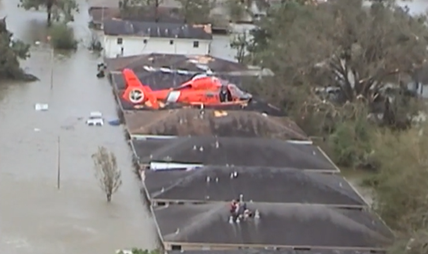
An airman from Air Station New Orleans, who was on the first helicopter that returned following the Hurricane Katrina, recounted, “The second that everyone heard us on Channel 16, Channel 16 just blew up with mayday calls.” Flying on waivers, he did rescues for five days and nights straight. At the time, this was considered the biggest search and rescue event in U.S. history. U.S. Coast Guard photo.


Related:

40 years in service!

Genesis of the Coast Guard HH-65 Helicopter

For more information: MH-65 Short Range Recovery Helicopter Program page


“Coast Guard completes final delivery of MH-65E helicopter” –CG-9

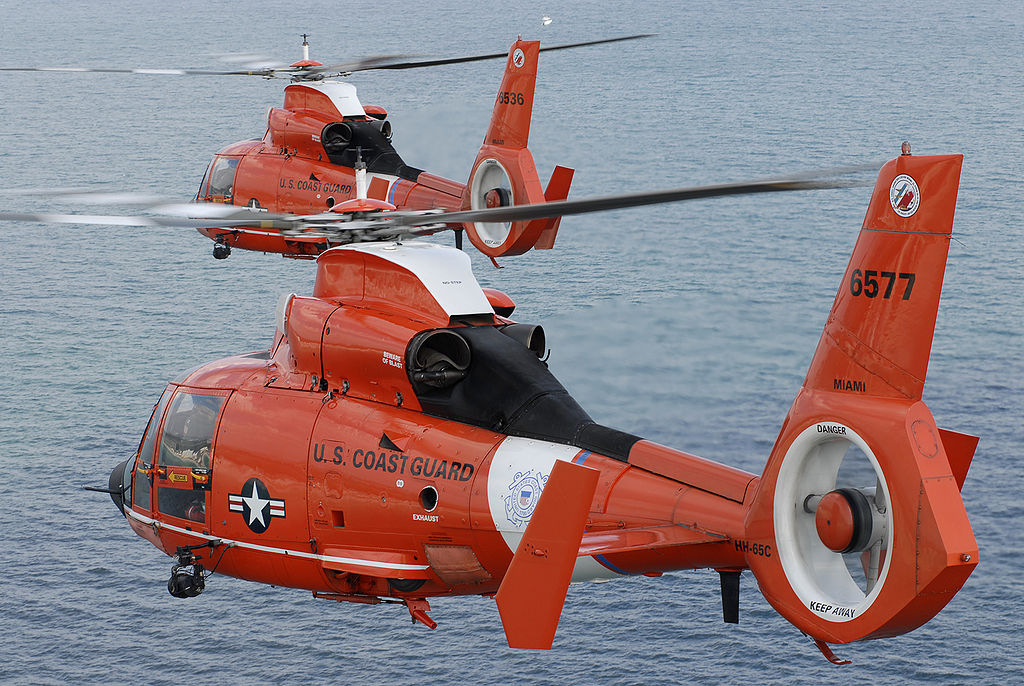
CGNR 6577 is readied for departure from the Aviation Logistics Center on Aug. 19. Its delivery to the Aviation Training Center in Mobile, Alabama, marks the 90th and final MH-65 helicopter to complete the service life extension program and upgrades resulting in the Echo configuration. U.S. Coast Guard photo

Below is a story from the Acquisitions Directorate (CG-9). This comes only days after they also reported that they had completed upgrades to the Fleet of 18 HC-144s.

Despite completion of these two programs, Aviation Logistics Center, Elizabeth City still has plenty of work to do. There is an on-going program to upgrade the C-27J fleet and newly acquired C-130Js with Minotaur Mission Systems and a Service Life Extension Program and additional procurement/remanufacture of MH-60Ts to ultimately allow conversion of eight air stations from MH-65 to MH-60T.


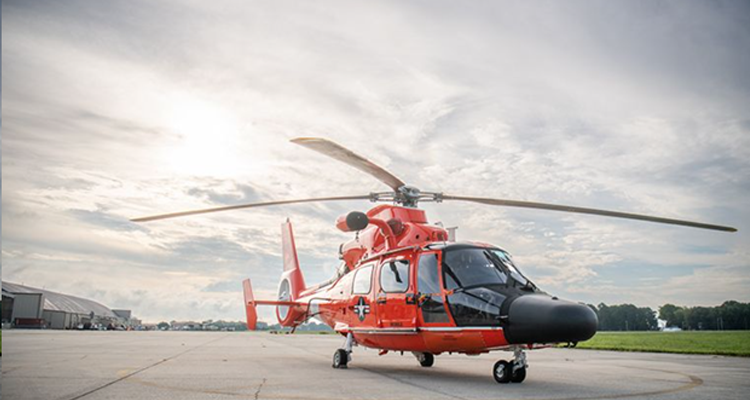
The H-65 Conversion/Sustainment Program reached an important milestone Aug. 19, sending off the 90th and final MH-65E to its operational unit at Aviation Training Center (ATC) in Mobile, Alabama. The transition from the MH-65D to the MH-65E (commonly referred to as the “Delta” and “Echo” configurations, respectively) has been in development for over a decade.

The Short Range Recovery (SRR) production line at the Aviation Logistics Center has been executing the Echo conversion since 2018 when the very first Echo was delivered to ATC Mobile to prepare for pilot training and course development in the new model. By happenstance, the final Echo was also delivered to ATC, an altogether fitting accomplishment as the program came full circle and achieved full operating capability.

A highlight of the program was SRR’s consistency and adherence to the delivery schedule as they produced an Echo aircraft every 22 days and achieved an 80% on-time delivery rate, a testament to the product line after factoring in the pace of early production activities and the negative impacts of COVID-19.

The avionics upgrade to the MH-65E configuration provides enhanced search and rescue capabilities including modern “glass cockpit” technology that increases pilot and aircrew situational awareness and provides commonality with the service’s MH-60T Jayhawk fleet. The upgrades also include reliability and capability improvements for the automatic flight control system, enhanced digital weather and surface radar, and multifunctional displays with more accurate fuel calculations.

The upgrades bring the fleet into compliance with the Federal Aviation Administration’s Next Generation Airspace Transportation System requirements and extend the aircraft service life through the Coast Guard’s transition to an all-MH-60T rotary wing fleet.

Since the first Echo delivery, the aircraft has surpassed 100,000 flight hours and has been involved in more than 8,000 search and rescue cases. The model is responsible for saving and assisting more than 1,200 lives, making a substantial contribution to the 26,000 lives rescued throughout the 40 years the Coast Guard has flown different variants of the H-65.

The MH-65E is a multi-mission helicopter, responsible for over 100 ship deployments across the world and participated in more than 15 hurricane response efforts. Air Station Atlantic City commenced its transition in October 2022 and has executed over 100 land-based deployments conducting rotary wing air intercept missions as part of national defense. The Helicopter Interdiction Squadron in Jacksonville, Florida, which commenced its transition to the MH-65E in July 2021, has conducted 62 deployments in the MH-65E, with 133 interdictions and seizing nearly 300,000 pounds of cocaine and over 60,000 pounds of marijuana totaling nearly $4 billion in illegal narcotics.

“Coast Guard completes upgrade of its HC-144 fleet” –CG-9

Below is news from the Acquisitions Directorate, (CG-9)


Coast Guard completes upgrade of its HC-144 fleet

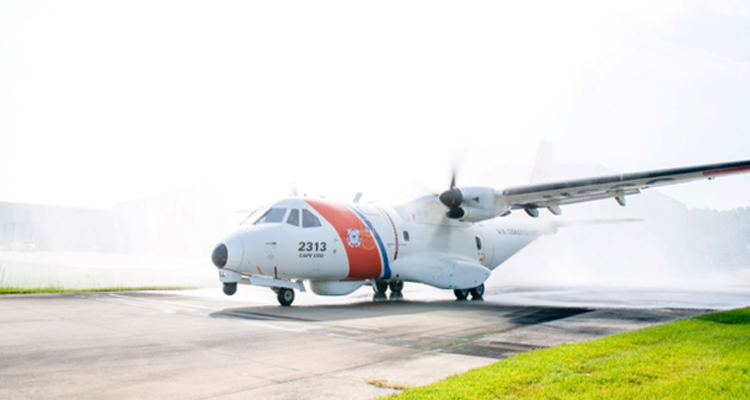
The crew of CGNR 2313 prepares the aircraft for takeoff from the Coast Guard Aviation Logistics Center (ALC) in Elizabeth City, North Carolina, and delivery to Coast Guard Air Station Miami. This is the 18th and final HC-144 to be outfitted with the Ocean Sentry Refresh and Minotaur mission system architecture. U.S. Coast Guard photo by the Aviation Logistics Center.


The Coast Guard completed the upgrade of its HC-144 Ocean Sentry medium range surveillance aircraft fleet with the delivery of the 18th and final plane to undergo the Ocean Sentry Refresh (OSR) and integration of Minotaur mission system architecture.  On Aug. 6, a crew flew CGNR 2313 from the Aviation Logistics Center (ALC), the site of the upgrade work, to Air Station Miami, where the plane is now based.

The delivery marks the end of the decade-long modification effort, restoring full fleet complement and providing advance situational awareness and mission system capabilities necessary to carry out missions around the clock.

CGNR 2313 receives the traditional “water salute” as it prepares to depart ALC for delivery to Air Station Miami. U.S. Coast Guard photo.


Upon completion of the upgrade, the aircraft have been redesignated as HC-144Bs. The Bravo iteration merged two significant upgrade projects, OSR and Minotaur missionization.

OSR upgrades the aircraft with a new flight management system, which serves as the primary avionics computer for communication control, navigation and equipment monitoring.

Minotaur missionization integrates installed sensors and radar and provides dramatically improved data fusion as well as information processing capabilities.

The modifications to the HC-144B have made missions faster and more effective, according to Pesebra Cartwright, program manager for the Medium Range Surveillance Aircraft Program. “It enables crews to fly with lower cloud ceilings, allowing on-scene coverage.”

Cartwright added, “Feedback from the fleet on the HC-144B aircraft is overwhelmingly positive.”

He quoted a pilot as saying, “I’d rather fly an HC-144B with one operational Minotaur mission system workstation than to fly an HC-144A with a full function legacy mission system pallet.”

On search and rescue missions, the operator can locate vessels matching the search profile faster using the improved radar software. The high-definition forward-looking infrared (FLIR) sensor provides better pictures to quickly identify vessel type, name and people onboard. Also, the improved direction-finding equipment provides location information based on the signal from a 406 MHz Emergency Position Indicating Radio Beacon, allowing crews to fly directly to position, a significant advancement over the Alpha configuration’s limits of following a line of bearing. “This undoubtedly leads to more lives assisted and/or saved,” Cartwright said.

Faster and more effective applies to law enforcement missions as well. The improved radar allows for quicker location of vessels suspected of transporting illegal drugs or undocumented migrants or fishing in prohibited areas. The high-definition FLIR then provides better pictures to properly document the vessel while providing a compass location to a Coast Guard intercept vessel. With this upgrade, HC-144B mission system operators are now able to share Minotaur data with other Minotaur-equipped aircraft, ultimately improving mission effectiveness.

For more information: Medium Range Surveillance Program page and Minotaur Program page

“NATO Selects Three Companies For Next-Generation Rotorcraft Concept Study” –The War Zone

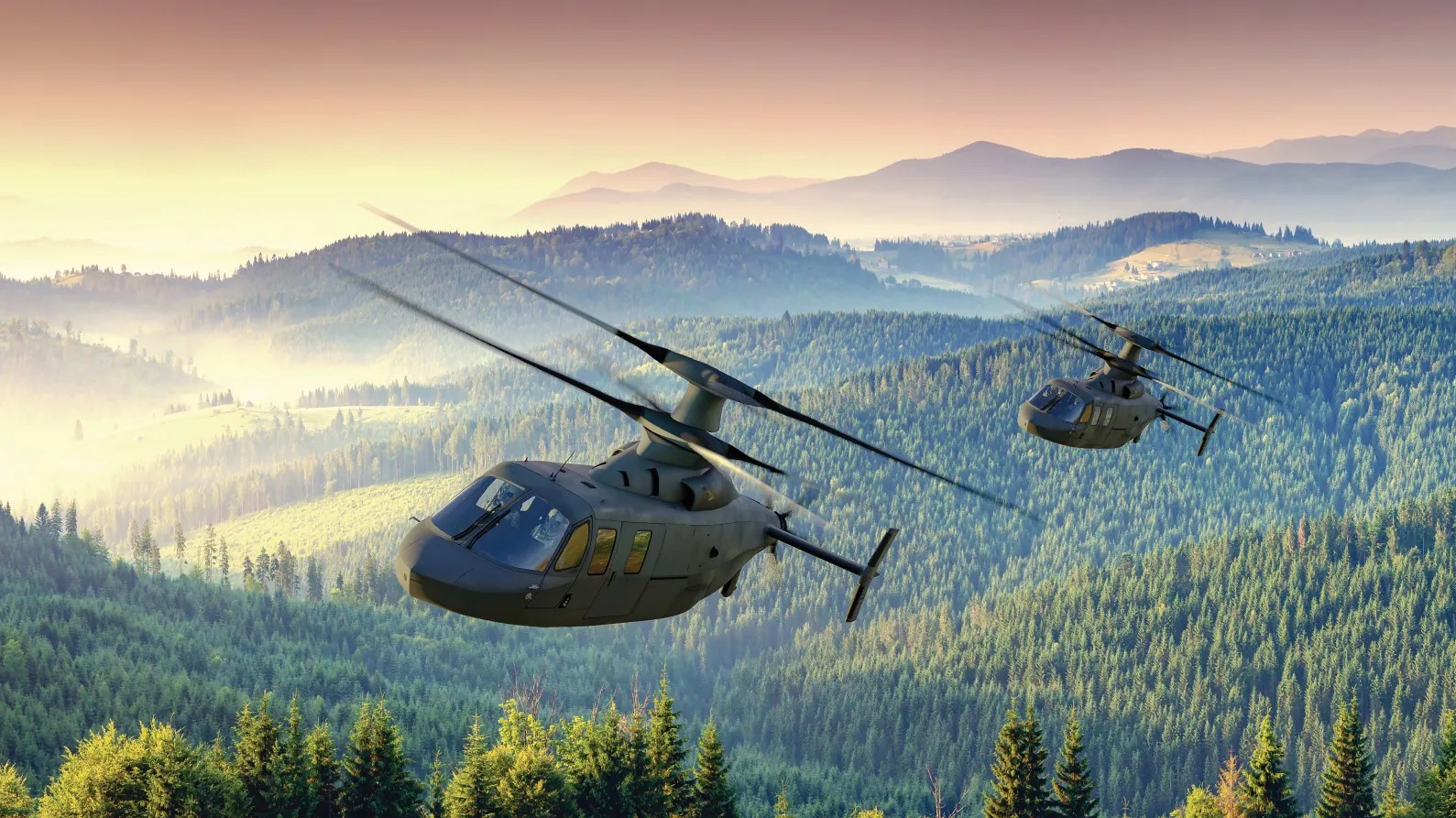
Lockheed Martin Sikorsky’s concept will be based on X2 technology. Lockheed Martin rendering

The War Zone Reports,

“NATO, seeking to replace its aging fleet of helicopters, awarded three contracts on Friday to provide parallel concept studies for a new medium-lift, multirole rotorcraft. The alliance hopes to field that aircraft beginning in 2035

“Dubbed “Concept Study #5, the goal is to “provide a broad range of potential concepts” to help participating nations choose what kind of vertical lift platform they want in the future. The NGRC program initiative began in 2022 and includes France, Germany, Greece, Italy, the Netherlands, the United Kingdom, and Canada. It was initially created with €26.7 million ($28.98 million) dedicated to defining the future of their helicopter fleets. The United States and Spain are currently acting as observers.”

Given that the Future Vertical Lift program is not producing an aircraft the Coast Guard can operate from cutters, this program may be of interest.

It is intended to replace AW101s, H-60s, Super Pumas, and NH90s.

The three contracts were awarded to Airbus Helicopters, Leonardo (partnered with Bell), and Lockheed Martin Sikorsky.

“At this stage in the process, NATO is agnostic when it comes to the choice of a traditional helicopter or non-traditional rotary aircraft. The alliance does, however, have many “required attributes” that the ultimate winning design must have, according to procurement documents.”

Among those attributes,

“Able to be deployed for medium-long periods (6-9 months) and fully operate from Frigate (FF)/Destroyer (DD) class of vessel, i.e. not larger than the footprint or dimension of either NH-90 (NFH), or AW-101, including the optional capability of folding main rotor/tail to be moved onto ship’s elevator/hangar for maritime operations.”

“California to Deploy Surplus C-130 Aircraft from Coast Guard to Fight Wildfires” –Military.Com

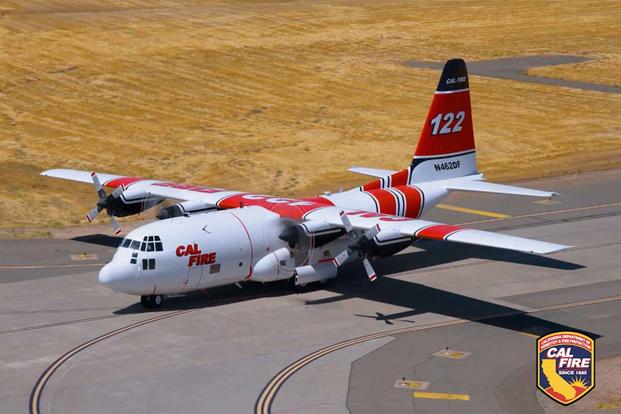
California officials have added a C-130 Hercules cargo plane to the firefighting fleet of the California Department of Forestry and Fire Protection, the state’s primary firefighting agency. (Courtesy Cal Fire/TNS)

It has taken a long time to make it happen, but Military.com reports, CalFire is finally getting the first of seven former USCG C-130H aircraft that will join their fire flighting fleet. I’ve been told that necessary changes were actually made by the Coast Guard at CGAS Elizabeth City.

Change is Coming, “Coast Guard delivers first MH-60T to new Air Station Ventura” –News Release

The first MH-60T medium range recovery helicopter to operate out of new Air Station Ventura lands on the station’s ramp on June 8, 2024. U.S. Coast Guard photo.

Below is information from the Acquisitions Directorate (CG-9) website. The first new Coast Guard Air Station in 25 years, and a money saving approach that will organically produce 36 aircraft and transition eight air stations from MH-65 to MH-60T operations.

The new airstation replaces a Coast Guard Airstation San Francisco detachment that operated two H-65s out of a leased hangar at Point Mugu.


The Coast Guard on June 8 delivered an MH-60T medium range recovery helicopter to the service’s first new air station in 25 years, Air Station Ventura, located at Naval Base Ventura County in Point Mugu, California. CGNR 6055 is the first of three MH-60T Jayhawk helicopters that will be delivered to the air station; all will be derived from Navy hull conversions completed by the Aviation Logistics Center (ALC) in Elizabeth City, North Carolina.

This is the third delivery under the MH-60T Acquisition/Sustainment Program, which started as a service life extension program (SLEP) for the Coast Guard’s fleet of 45 Jayhawks. The program has since expanded to include increments for fleet growth as the service transitions to an all-MH-60T fleet.

Converted Navy hulls are one of the two hull sources being used in the program, along with newly manufactured hulls from the original equipment manufacturer, Sikorsky Aircraft Corp. Low-flight-hour Navy HH-60H and SH-60F Seahawk hulls are structurally converted into the MH-60T configuration. The program also includes replacement of critical dynamic components, such as main rotor blades, and new electrical wire harnesses. All aircraft production – the assembly and installation of dynamic components on the hulls – is completed at ALC.

The deliveries to Air Station Ventura are the first under Increment 2, the first fleet growth phase of the program, which will organically produce 36 aircraft and transition eight air stations from MH-65 to MH-60T operations. Converted Navy hulls will form the majority of the aircraft to be produced under Increment 2, according to Reid Adams, program manager for the MH-60T Acquisition/Sustainment Program. He noted that Navy conversion hulls are cost effective, saving the Coast Guard at least $5 million per aircraft compared to purchasing new hulls. ALC also has developed efficiencies that have shaved months off the Navy conversion process; each conversion can now be completed in under one year.

“We were able to utilize completed Navy hull conversions that were already in storage to facilitate the Ventura stand-up; this allowed the program to save one year on the ability to stand up Ventura,” Adams said.

Crew members inspect the folding rotors on CGNR 6055 at Air Station Ventura. U.S. Coast Guard photo.


The MH-60T delivered to Air Station Ventura includes main and tail rotor fold-capability, enabling the helicopter to be deployed and hangared aboard the national security cutter, as well as future offshore patrol cutters and polar security cutters. This is the first Jayhawk with this feature since the 1990s, when the smaller MH-65s were deployed. With the move to an all-MH-60T fleet, this capability is essential for aircraft that will be used to support cutter operations.

This is the third Navy conversion hull delivered to the fleet under the MH-60T Acquisition/Sustainment Program; the first went to Aviation Training Center Mobile in 2021 and the second to Air Station Clearwater in 2022, both in support of SLEP activities on the legacy fleet of 45 MH-60Ts and now incorporated as Increment 1 of the expanded acquisition/sustainment program. Thirteen additional Navy hulls are in various stages of work from structural conversion to completed and in storage.

Each conversion of Navy HH-60H and SH-60F Seahawk hulls takes over 1,500 separate maintenance cards for mechanics to follow. U.S. Coast Guard photo.


“The next 13 hulls will be used to fulfill the SLEP or fleet growth demands, as required; with the new hulls now in the mix, the program anticipates the majority of the converted Navy hulls to be utilized for fleet growth purposes,” Adams said. Three new hulls have been delivered of the 45 currently on order with Sikorsky.

Ventura marks the Coast Guard’s first permanent air station in the region since 2016. Prior to breaking ground for Air Station Ventura in 2021, the service conducted aviation operations from a forward-operating base at Naval Base Ventura County supported by Coast Guard Air Station San Francisco.

Air Station Ventura features a $70 million state-of-the-art 43,000-square-foot hangar and a 12,000-square-foot administration and berthing facility. At full capacity it will house three MH-60T Jayhawk helicopters and approximately 100 personnel, significantly enhancing the Coast Guard’s capabilities in the region.

The new Coast Guard Air Station Ventura and its MH-60T hangar is located at Naval Base Ventura County in Point Mugu, California. U.S. Coast Guard photos.


For more information: MH-60T Acquisition/Sustainment Program page.

“Q&A: Vice Admiral Andrew J. Tiongson, Commander, Pacific Area and Commander, Defense Force West, U.S. Coast Guard” –Seapower

Tiongson speaks at a press conference before the crew of the Coast Guard Cutter Waesche offloads 18,219 pounds of cocaine, worth more than $239 million, on Dec. 6, 2023. U.S. Coast Guard

The Navy League’s on-line magazine, Seapower, has an interview with the Pacific Area Commander. There is a lot of good information here.

HC-130Js (and C-27Js):

CGAS Sacramento will “transition” to HC-130Js. Pacific Area certainly needs the long range aircraft because, while 84% of the US EEZ is in Pacific Area they have only three fixed wing air stations (Kodiak, Barbers Point, and Sacramento) while Atlantic Area has five fixed wing air stations to cover only 16% of the US EEZ.

What will happen to the C-27Js? No mention was made of these. They might go to Guam. That would be helpful in providing fixed wing search aircraft in the Western Pacific. Recently there was a SAR case in the Western Pacific. A C-130 was dispatched from Barbers Point, but the flight was so long the crew needed a day’s rest before the aircraft could be used in the search. On the other hand, Guam might not be an optimal location since it is so far West. There are other options.

Fast Response Cutters:

As I read the statement, the intention is to have a total of six FRCs in Guam and add a fourth in Hawaii.

His discussion about these little ships clearly indicates that their nominal five-day endurance (same as the preceding 110 foot WPBs) is being exceeded regularly.

“The FRCs, first off, are game changers for the Coast Guard in general. Back in the day, we had patrol boats that were limited in terms of the sea states they could handle, the food that they could carry, the number of crew members and certainly their duration at sea. The FRCs have changed that.”

Six WPCs in the same port is not unusual. District 7 has three different ports, each homeport to six or seven Webber class, but this may be a move toward replicating a PATFORSWA type organization to support 7th Fleet in the Western Pacific.

Large Patrol Cutters:

There was a brief discussion of the Offshore Patrol Cutters, but no indication of when they are expected to arrive in PACAREA.

A second “Harriet Lane or Indo-Pacific support cutter” is on PACAREA’s unfunded priority list. For some reason, I think this may happen.

Commercial Icebreaker Procurement:

Plans for the commercial icebreaker (Aiviq) were discussed. It will be homeported in Juneau, as reported here in March, but still has not been purchased and it will take two years to complete changes to make it fully operational.

The admiral was asked, “Is the commercial icebreaker going to be crewed by Coast Guardsmen or by a contract crew?” and there was no definitive answer. Should the Coast Guard adopt a hybrid crew, as has been done by some Navy vessels it would be a major change in Coast Guard policy.

The Eastern Pacific Drug Transit Zone: 

Atlantic Area cutters are not assisting in Eastern Pacific drug transit zone interdiction efforts, as they normally would, because they are heavily engaged in migrant interdiction operations.

Trusted Partner:

The Area Commander talked a lot about what being a trusted partner meant, about partnerships with Asian coast guards, and the outsized effect of having a few good people in liaison positions.