“U.S. Coast Guard encounters Russian naval vessels near Point Hope, Alaska” — CG News

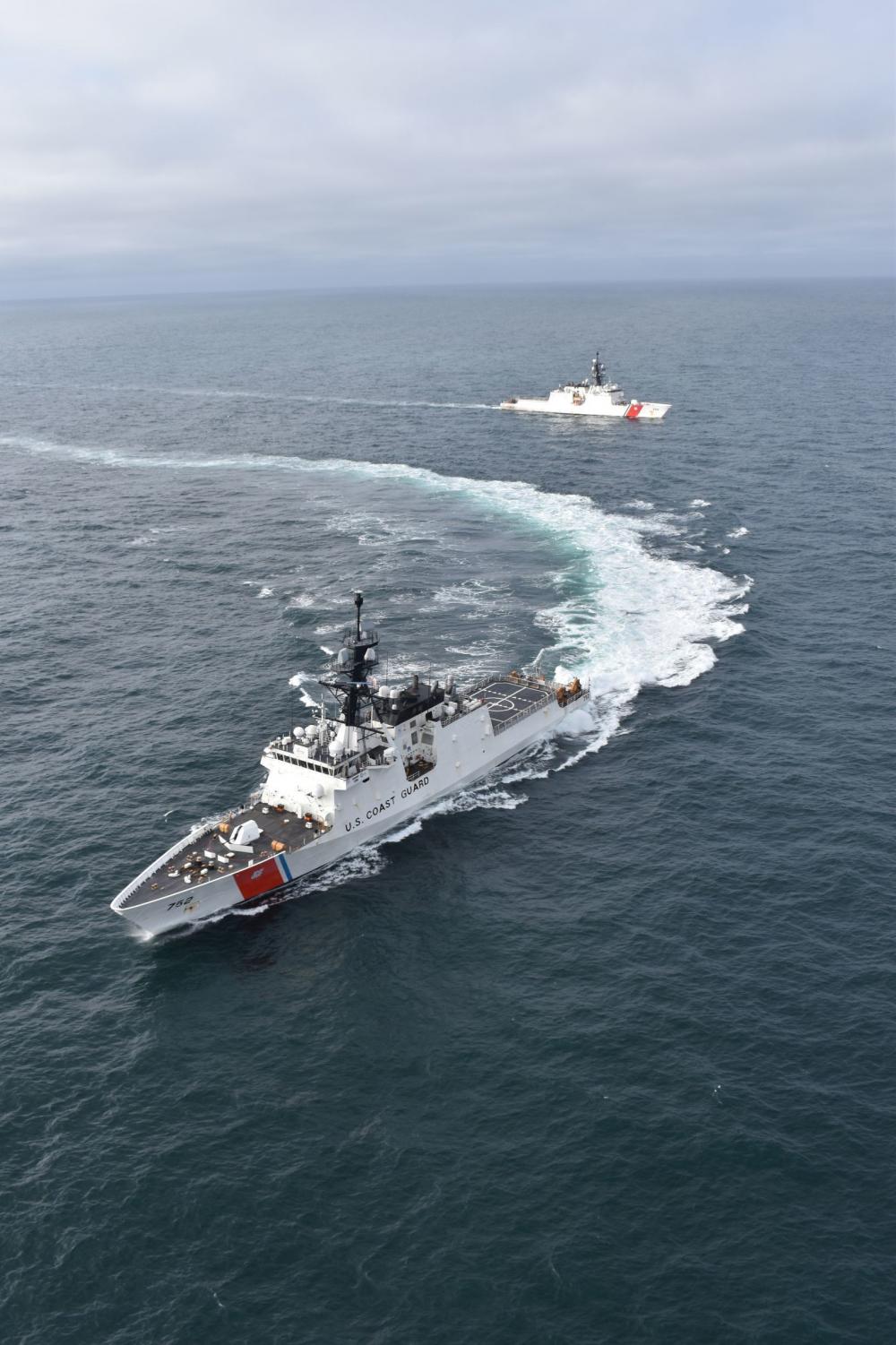
“The crew of U.S. Coast Guard Cutter Stratton (WMSL 752) encountered and shadowed four Russian Federation Navy (RFN) vessels 57 miles northwest of Point Hope, Alaska, Sept. 15, 2024. The Russian Surface Action Group consisted of a Severodvinsk-class submarine, a Dolgorukiy-class submarine, a Steregushchiy– class Frigate, and a Seliva-class tug. Stratton patrolled under Operation Frontier Sentinel, a Coast Guard operation designed to meet presence with presence when strategic competitors operate in and around U.S. waters. (U.S. Coast Guard courtesy photo)”

Below is a news release from Coast Guard news.

Point Hope, Alaska is well North of the Bering Strait and the Arctic Circle, bordering the Chukchi Sea, 312 miles SW of Utqiagvik (formerly Pt. Barrow) and almost a thousand miles North of Dutch Harbor. None of my Alaska Patrols ever got that far North.

Russian Yasen class SSGN

The Severodvinsk or Yasen class submarine is a nuclear submarine equipped with eight missile silos for up to 32 cruise missiles and ten torpedo tubes.

Russian Borei class SSBN

The Dolgorukiy or Borei class submarine is a SSBN with 16 silos for ballistic missiles.
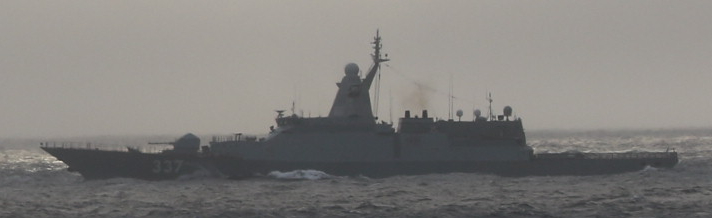
The surface combatant seems to have been miss identified. It is Gremyashchiy (337) lead ship of her class of 2,500 ton Project 20385 corvettes (NATO considers them frigates).

Note, USCGC Stratton is not an ice strengthened vessel.

This may have been a transfer of the SSGN and SSBN to the Russian Pacific Fleet.

The post story seems to indicate Stratton stumbled across this group. Shouldn’t we have known they were there?


Sept. 16, 2024

JUNEAU, Alaska — The U.S. Coast Guard located four Russian Federation Navy (RFN) vessels Sunday, 57 miles northwest of Point Hope, Alaska.

While on a routine patrol in the Chukchi Sea, the crew of U.S. Coast Guard Cutter Stratton (WMSL 752) observed the RFN vessels transiting southeast along the Russian side of the Maritime Boundary Line (MBL).

The crew of the Stratton witnessed the RFN vessels cross the MBL into the U.S. Arctic and moved to observe the vessels. The Russian vessels were assessed to be avoiding sea ice on the Russian side of the MBL and operated in accordance with international rules and customs as they transited approximately 30 miles into the U.S. Exclusive Economic Zone.

“We are actively patrolling our maritime border in the Bering Sea, Bering Strait, and Chukchi Sea, with our largest and most capable cutters and aircraft, to protect U.S. sovereign interests, U.S. fish stocks, and to promote international maritime norms,” said Rear Adm. Megan Dean, Commander of Coast Guard District Seventeen. “Coast Guard Cutter Stratton ensured there were no disruptions to U.S. interests.”

The Russian Surface Action Group consisted of a Severodvinsk-class submarine, Dolgorukiy-class submarine, Steregushchiy– class Frigate, and Seliva-class tug.

The Stratton is patrolling under Operation Frontier Sentinel, an operation designed to meet presence with presence when strategic competitors operate in and around U.S. waters. The Coast Guard’s presence strengthens the international rules-based order and promotes the conduct of operations in a manner that follows international law and norms.

Coast Guard Cutter Stratton is a 418-foot legend class national security cutter homeported in Alameda, Calif.
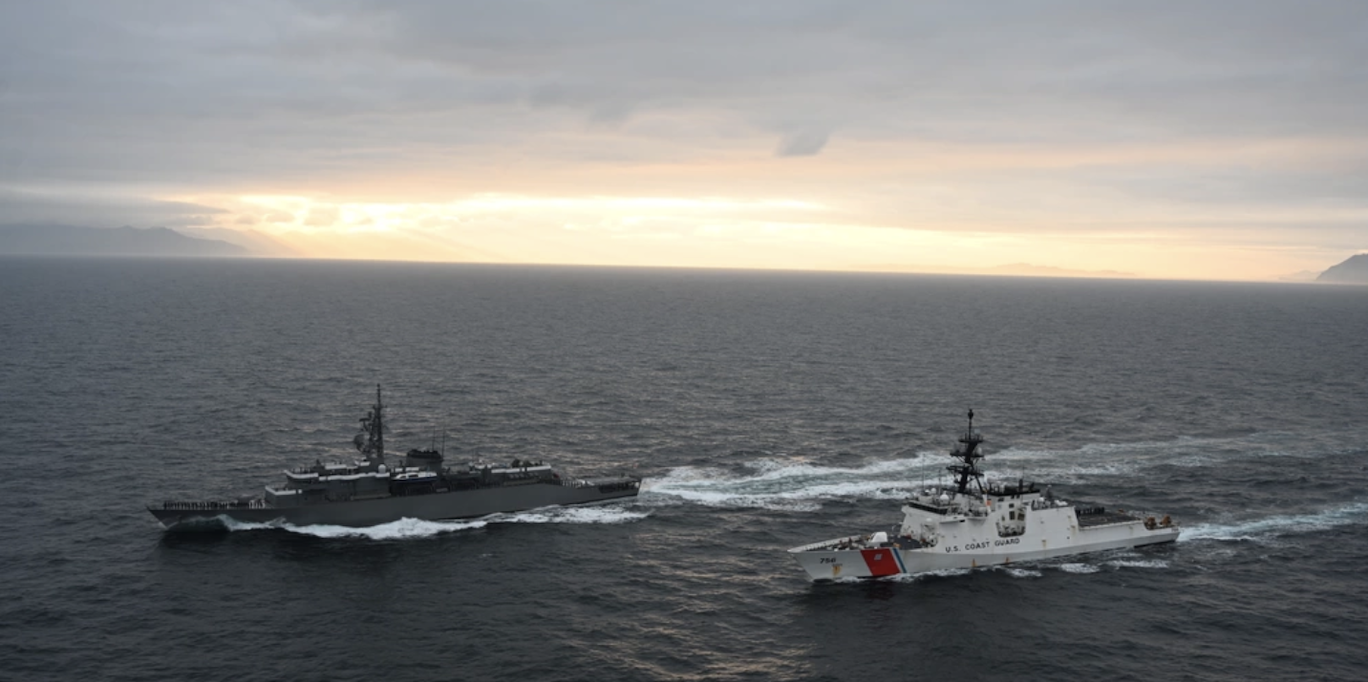
“Inside the U.S. Coast Guard’s Aleutian encounter with China’s military — and what it means” –Alaska Beacon

The U.S. Coast Guard Cutter Kimball, right, and a Japanese naval training vessel travel near the island of Unalaska in 2021. (U.S. Coast Guard photo)

The Alaska Beacon reports on the local reaction to the presence of Chinese ships in the Bering Sea, July 6 and 7.

The reaction clearly favored a more powerful and more visible response than a Coast Guard cutter and C-130.

So why use a cutter? Wouldn’t a destroyer or frigate be more appropriate?

A destroyer would have been faster, but the cutter is actually faster than the frigates the Navy is currently building.

The immediate answer is that there probably were no US Navy surface combatants in the vicinity, but would that have even been desirable?

What if they had suddenly become hostile?

Well, the cutter would probably have been sunk. That is a fact, but that is probably equally true of a destroyer outnumbered and taken by surprise at close range. Losing a cutter would be less of a loss and a prompt response from the Air Force would follow, probably quickly sinking the Chinese warships that have no fighter protection. That’s assuming they had not already been sunk by a US Navy submarine that may or may not have also been following them.

The US Navy just does not routinely keep surface vessels in the area of the Aleutians. Apparently, the Chinese were only there for two days. It would probably take longer than that for a USN combatant to make a transit, putting it out of position for its normal duties.

They were probably only doing this because the US does Freedom of Navigation Exercises in their backyard. But their response just plays into our narrative that we have every right to transit the Taiwan Straits–Look, they are transiting a narrow passage between US islands, and we didn’t object.

Would I like to see the cutters better equipped to defend themselves, sure, but it probably would not make any difference if they came to blows. Meanwhile the cutter makes a pretty good AGI. 

The Chinese are unlikely to start a war in the Aleutians unless they simultaneously also start it somewhere else, like Taiwan, but we still want to keep an eye on them, to discourage mischief.

Thanks to David for bringing this to my attention.

“Coast Guard MH-65 Dolphin helicopters retired after 36 years of service in Alaska” –News Release


An MH-65 Dolphin helicopter crew based out of Air Station Kodiak and
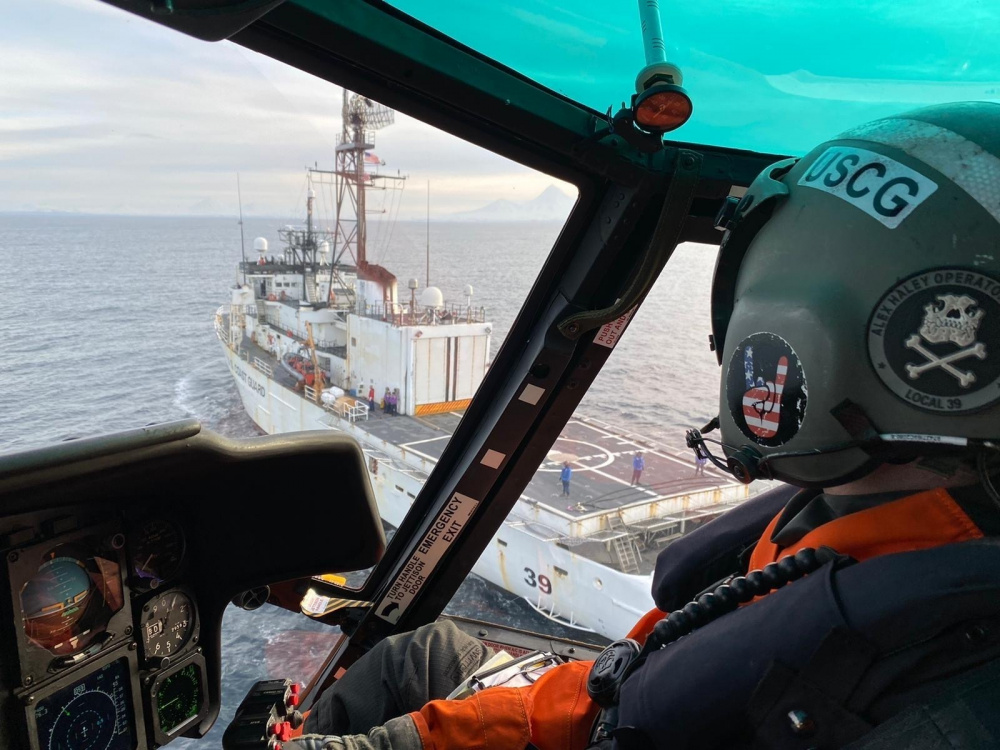
deployed aboard Cutter Alex Haley, prepares for a helicopter in-flight refueling at sea evolution with the cutter crew during a search and rescue case near Dutch Harbor, Alaska, Wednesday, Dec. 30, 2020. The crew hoisted an injured fisherman from the vessel Magnus Martens and placed him in the care of awaiting Guardian Flight Alaska personnel for further transport to Anchorage. (U.S. Coast Guard photo by Lt. Benjamin DeGroot)

Below is a District 17 news release. This marks an important step in the move to an all H-60 rotary wing fleet and it also means that ships on ALPAT will be moving to operating MH-60s rather than H-65s.

I have to wonder, since recently upgraded MH-65Es will be with us for a very long time, if perhaps we might be able to open a new Coast Guard air station in Guam or the Northern Marianas (probably Tinian where the USAF is refurbishing an air base) and perhaps in American Samoa using H-65s. (I notice, when USCGC Harriet Lane recently deployed to the Western Pacific, she apparently did so without a helicopter, which would have made the ship more effective.) Certainly, the people of these American territories would welcome the additional SAR resources. That additional Western Pacific air stations might also, at least temporarily, operate Coast Guard fixed wing aircraft would also help to counter Illegal, Unreported, Unregulated (IUU) fishing.


 April 24, 2024

KODIAK, Alaska – The Coast Guard retired the Air Station Kodiak MH-65 Dolphin helicopter fleet during a ceremony, Tuesday.

Capt. Timothy Williams, commanding officer of Air Station Kodiak, presided over the ceremony honoring the 36 years of service the MH-65 Dolphin airframe and its crews provided to the Arctic region.

Air Station Kodiak currently has a rotary-wing fleet of six MH-60 Jayhawk helicopters. The unit will shift to a rotary-wing ship-and-shore based fleet of nine MH-60 Jayhawks in 2025.

Air Station Kodiak will be the fourth Coast Guard Air Station to transition to a single rotary wing fleet of MH-60 Jayhawk helicopters. Air Stations Borinquen, Traverse City, and New Orleans all recently completed similar transitions.

“For decades, the cutter and helicopter team were the core of the ALPAT mission,” said Cmdr. James Kenshalo, MH-65 Dolphin pilot. “Together they projected force and protection to the most extreme remote regions of our nation’s territories, operating beyond where help could reach. Countless lives have been saved because of these dedicated crews.”

Commissioned in January of 1988, the Alaksa Patrol (ALPAT) mission executed solely by MH-65 Dolphin aircrews provided Coast Guard Cutters with a reliable airborne asset during Alaska Patrols.

To read more about the Coast Guard MH-65 Dolphin and MH-60 Jayhawk helicopters click the following links:

SRR – MH-65 (uscg.mil)

MH-60T Service Life Extension Program (uscg.mil)

“Coast Guard Cutter Munro arrives in Juneau, Alaska” –D17

USCGC MUNRO

Below is a news release from District 17 with insight into Alaska Patrol as it is being currently conducted. This is what is class was designed for.

Feb. 28, 2023

Coast Guard Cutter Munro arrives in Juneau, Alaska

Juneau, Alaska — Coast Guard Cutter Munro (WMSL 755) arrived in Juneau, Alaska, for a scheduled port visit Monday.

This port visit marks Munro’s final stop before returning to its homeport in Alameda, Calif., after 11,500 miles and 105 days away from homeport.

During the patrol, Munro served as the primary search and rescue (SAR) asset in the Bering Sea, performing 452 flight evolutions with five separate aircraft from Air Station Kodiak, qualifying seven pilots and ensuring SAR readiness.

Munro also partnered with the NOAA Office of Law Enforcement to conduct 24 boardings of commercial fishing vessels with the goal of enforcing sustainable fishing practices and ensuring compliance with federal regulations.

Munro was on scene for the opening of the Pacific Cod Pot derby and the Alaska Pollock trawl season, two of the nation’s most valuable fisheries.

“The continued existence of these fisheries depends on a healthy and productive ecosystem,” said Capt. Rula Deisher, Munro commanding officer. “As a federal law enforcement agency, it is the Coast Guard’s responsibility to ensure the longevity of these resources and safety of the fishing fleet. We’re happy to do our part combating unsustainable fishing and promoting maritime commerce that is essential to a strong U.S. economy.”

The nation’s maritime ecosystems are key to the United States’ economy and well-being, and ensuring the country enjoys a diverse and sustainable marine environment is an important Coast Guard mission. This effort includes aiding in the prevention and decline of protected marine species populations, promoting the recovery of endangered marine habitats and partnering with other agencies to enhance the sustainment of marine ecosystems.

Commissioned in 2017, Munro is one of four Coast Guard legend class national security cutters homeported in Alameda. The cutter is named for Signalman First Class Douglas A. Munro, the only Coast Guardsman awarded the Congressional Medal of Honor in 1942 for his actions and sacrifice in the defense, rescue, and evacuation of a U.S. Marine battalion from Point Cruz at Guadalcanal in the Solomon Islands.

“Media Advisory: Coast Guard cutter to return home following 97-day multi-mission Arctic deployment” –PACAREA

U.S. Coast Guard Cutters Stratton (WMSL 752) and Kimball (WMSL 756) steam in formation while patrolling the U.S.-Russian Maritime Boundary Line (MBL), in the Bering Sea, Sept. 26, 2022. This marked the first time two national security cutters jointly patrolled the MBL above the Arctic Circle. (U.S. Coast Guard courtesy photo).

This isn’t like the Alaska Patrols I went on, which concentrated on the Aleutians/Bering Sea and never went much North of the Arctic Circle. This patrol went across the top of Alaska and apparently, this is getting to be more common.

Media Advisory

Nov. 22, 2022
U.S. Coast Guard Pacific Area

Media Advisory: Coast Guard cutter to return home following 97-day multi-mission Arctic deployment

Coast Guard cutter returns home following 97-day multi-mission Arctic deployment

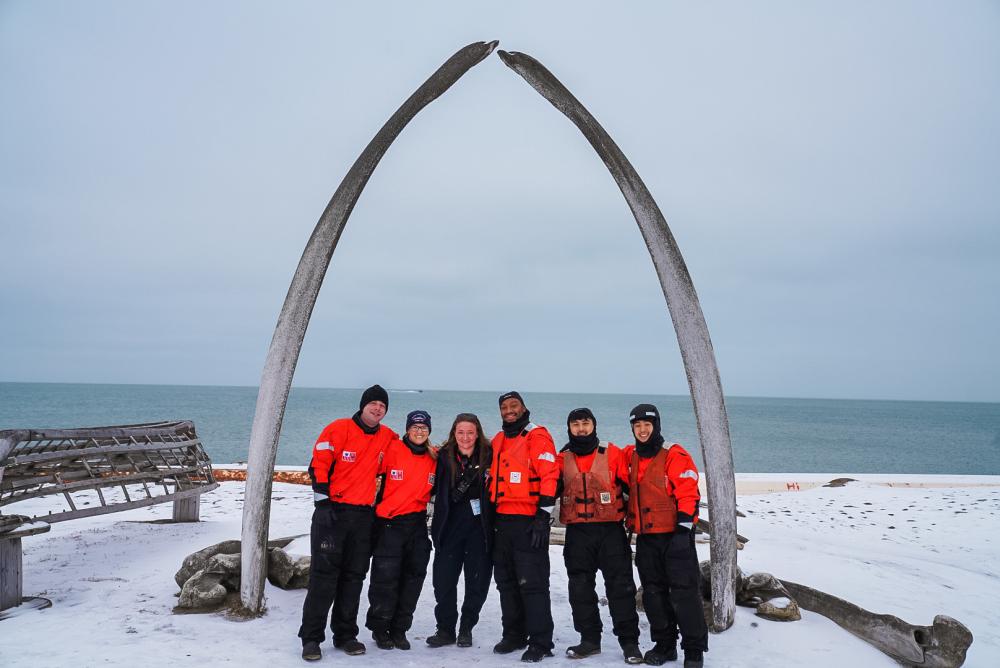
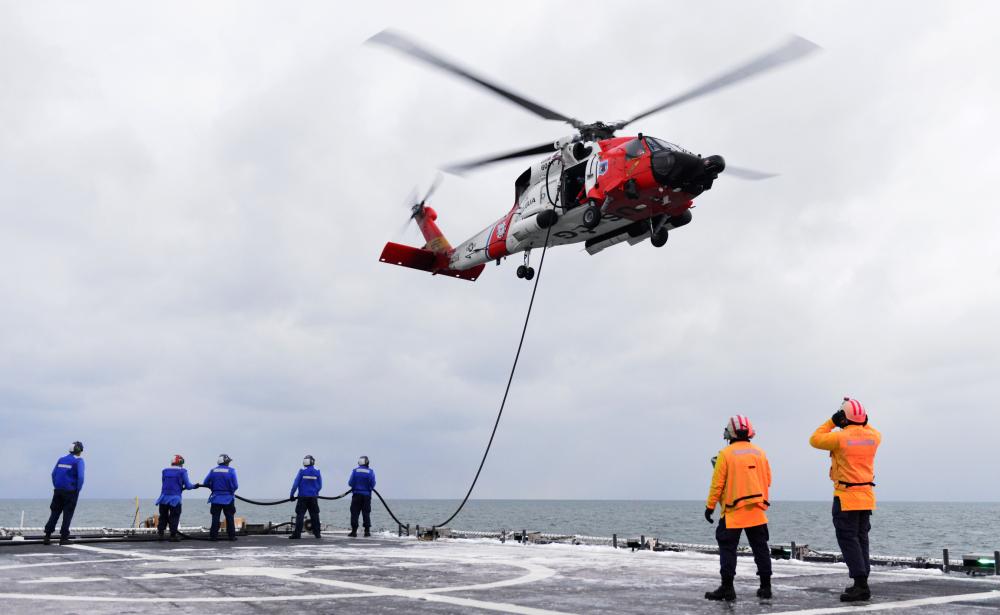
USCGC Stratton conducts operations offshore Little Diomede, Alaska Coast Guard cutter returns home following 97-day multi-mission Arctic deployment USCGC Stratton conducts flight operations while underway in Arctic Ocean

Editors’ Note: Click on images to download high resolution version.

Who: U.S. Coast Guard Cutter Stratton (WMSL 752) and crew

What: Return home from multi-mission Arctic deployment

When: Wednesday, Nov. 23, 2022 at 9 a.m.

Where: Coast Guard Base Alameda, 1 Eagle Rd., Alameda, CA, 94501

ALAMEDA, Calif. — The Coast Guard Cutter Stratton (WMSL 752) and crew are scheduled to return to Alameda, Wednesday, following a 97-day multi-mission deployment to the Arctic Ocean and Bering Sea.

The cutter and crew departed Alameda in August to project U.S. sovereignty throughout U.S. Arctic waters, provide search-and-rescue capabilities in the region, meet with Alaskan communities and conduct an Arctic search-and-rescue exercise with international partners.

Stratton operated along the length of the U.S.-Russian maritime boundary line (MBL) from the Diomede Islands to well above the Arctic Circle, while they patrolled within the U.S. Arctic zone. Stratton also patrolled the U.S.- Canadian MBL in the Beaufort Sea, providing Coast Guard presence in the distant regions of the Arctic.

“I’m extremely proud of this crew and all they have accomplished,” said Capt. Stephen Adler, Stratton’s commanding officer. “The U.S. Coast Guard provides the Nation’s most active and visible maritime presence in the high latitudes, and coordinates with our international partners through joint exercises and professional exchanges to maintain a safe and prosperous Arctic region. The Coast Guard remains ‘Always Ready’ to preserve and protect our northern shores and waters. As more ships and people move into the Arctic, the Coast Guard will be there to ensure safety of navigation and preserve our national sovereignty, as it always has. The crew has truly lived up to our ship’s motto of, ‘We Can’t Afford Not To’ throughout our patrol.”

Stratton is one of four 418-foot national security cutters (NSC) homeported in Alameda. National security cutters are capable of extended, worldwide deployment in support of homeland security and defense missions. These cutters and crews routinely conduct operations from South America to the Arctic, where the combination of range, speed, and ability to operate in extreme weather provides the mission flexibility necessary to conduct vital strategic missions.

Media are encouraged to contact Coast Guard Pacific Area Public Affairs at pacificareapublicaffairs@uscg.mil to arrange an escort on Base Alameda to attend the ship’s arrival. Adler and crew will be available for interviews following the ship’s arrival.