“Coast Guard Will Get A New MH-60 Variant To Replace MH-65 Helicopters” –The War Zone

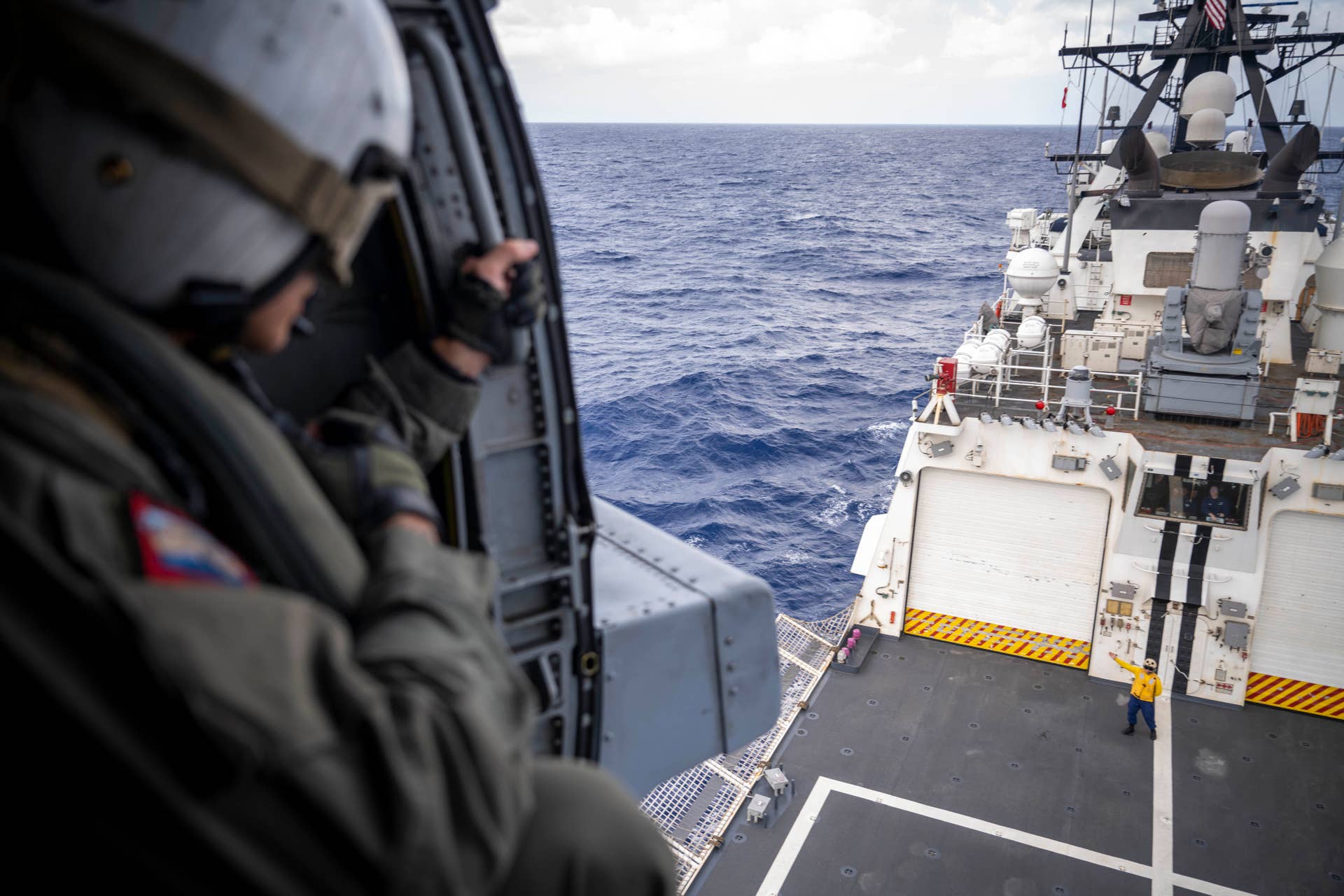
PACIFIC OCEAN (July 30, 2022) U.S. Navy Petty Officer 1st Class Humberto Alba, a naval aircrewman tactical-helicopter, attached to Helicopter Maritime Strike Squadron (HSM) 37, deployed on U.S. Coast Guard Legend-class cutter USCGC Midgett (WMSL 757), looks down at a USCGC crewmember after taking off during flight operations during Rim of the Pacific (RIMPAC) 2022. (U.S. Coast Guard photo by Petty Officer 3rd Class Taylor Bacon)

The War Zone reports,

The U.S. Coast Guard is in line to get a new version of the H-60 helicopter based on the MH-60R Seahawk, which is in service with the U.S. Navy and other armed forces globally. The additional helicopters will supplement, at least initially, the Coast Guard’s aging MH-60T Jayhawks. The Coast Guard also plans to boost its overall capabilities by replacing its fleet of smaller MH-65s with H-60 variants.

Earlier this week, Naval Air Systems Command (NAVAIR) put out a contracting notice announcing its intent to award Lockheed Martin Rotary and Mission Systems a sole-source deal to design and produce an unspecified number of “MH-60R variant aircraft for the United States Coast Guard.”

The Contracting notice makes no commitment as to the numbers involved. One thing is clear. The Coast Guard is still also adding MH-60Ts so we are going to have a mixed fleet.

So how many of the new type, and how much of the Navy’s mission equipment will be retained? Will they be used much as the MH-60T or will they replace only the H-65s that provide air borne use of force (I can’t remember ever seeing a MH-60T deployed on a cutter for a drug enforcement patrol).

They could just not install any of the ASW and ASuW equipment. That would reduce weight and provide more interior room. It has a highly regarded radar that would be very useful for drug interdiction.

I think it is interesting that they chose the “Romeo” version rather than the MH-60S. The closely related MH-60S is the Navy’s combat search and rescue aircraft, but he MH-60S does not have radar that the “Romeo” has.

Probably not, but could this be a step in bringing back an ASW mission for the Coast Guard? In addition to operating from cutters, there is probably a good case to be made for giving Coast Guard Air Stations an ASW capability to keep submarines from being able to concentrate near US ports. Then we might actually guard the coast. Sorry, I couldn’t help myself.

No Helicopters on Cutters in Alaska / More Helicopters Will Operate from Forward Bases

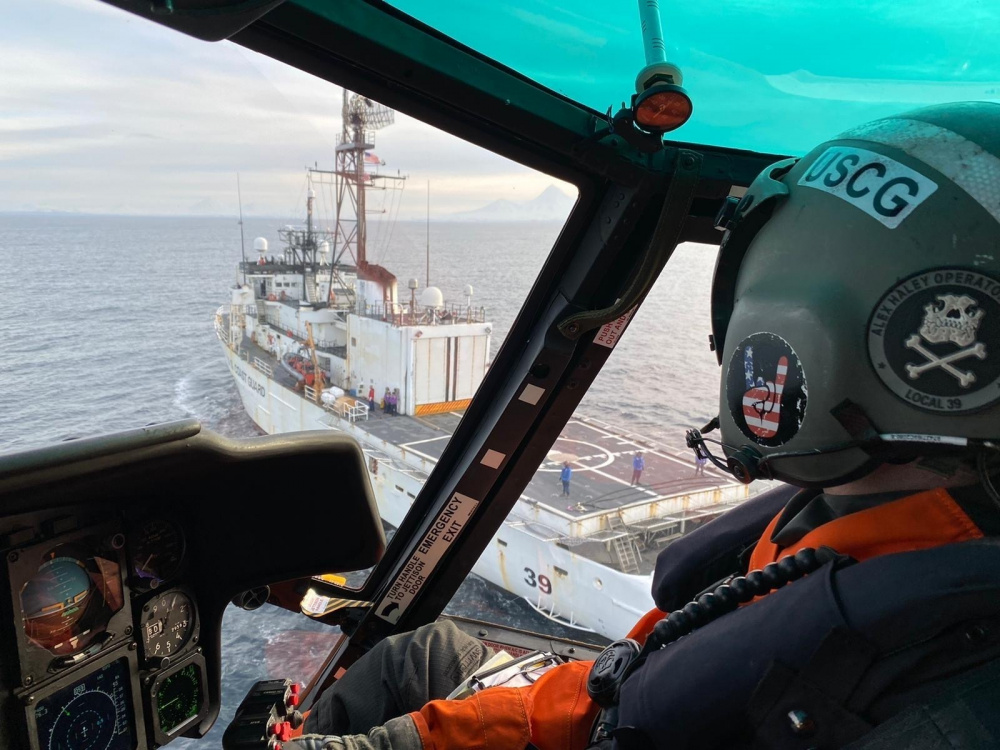
An MH-65 Dolphin helicopter crew based out of Air Station Kodiak and
deployed aboard Cutter Alex Haley, prepares for a helicopter in-flight refueling at sea evolution with the cutter crew during a search and rescue case near Dutch Harbor, Alaska, Wednesday, Dec. 30, 2020. The crew hoisted an injured fisherman from the vessel Magnus Martens and placed him in the care of awaiting Guardian Flight Alaska personnel for further transport to Anchorage. (U.S. Coast Guard photo by Lt. Benjamin DeGroot)

National Defense reports,

“With an aging aircraft fleet under scrutiny and the phase-out of an older airframe, the Coast Guard has stopped sending its cutters to sea in the Arctic with helicopters onboard.”

We are not just talking about icebreakers. When a US government entity says the “Arctic” they include the  Aleutians and Bering Sea, even though they are below the Arctic Circle so this really means no helicopters on any Coast Guard vessels in District 17 (Alaska).

http://www.state.gov/e/oes/ocns/opa/arc/uschair/258202.htm . This map of the Arctic was created by State Department geographers as part of the U.S. Chairmanship of the Arctic Council.

Cutters carried helicopters for two reasons, for reconnaissance and as a mobile SAR air station. All the National Security Cutters (NSC) now have unmanned air systems (drones) that are more effective search aircraft than helicopters. Hopefully USCGC Alex Haley (WMEC-39) (really a high endurance cutter) which is home-ported in Kodiak will also be so equipped if it is not already.

Rather than having helicopters on ships which are increasingly going North of the Bering Strait, far from most fishing vessels, the helicopters will be forward deployed.

“Coast Guard District 17 and Air Station Kodiak maximized aviation forward operating sites staffed by shipboard landing capable MH-60T crews in Kotzebue, Cold Bay and Prince William Sound, a model that streamlines search-and-rescue response and enables flexible movement of the helicopter crews in support of deployed Coast Guard cutters and seasonal mission demands,” officials said in a statement provided to National Defense.

This will keep the helicopters nearer the concentrations of population and fishing vessels. Because they are shipboard capable MH-60Ts, they will have longer range than the H-65s that had been deployed on ships, and will still be able to use cutters to extend their range by HIFR (Helicopter In Flight Refueling) or by transit on a cutter’s flight deck to get within range.

The announcement makes it sound like the Coast Guard will be less capable of responding than they were before, but really this seems to be a net improvement based on the incorporation of more capable assets–Unmanned Air Systems and more numerous longer ranged helicopters.

Officials with Coast Guard headquarters said the change was made in summer 2024 as Air Station Kodiak phased out four retiring MH-65 Dolphin helicopters and transitioned to the newer MH-60T Jayhawk. The base now operates six Jayhawks and will eventually have nine, officials said. (emphasis applied–Chuck)

The trade-off is that cutters will not have helicopters immediately available on board, but having a cutter with helicopter in the right place at the right time was always a matter of luck.

(I have to wonder why this information was not included in a Coast Guard news release. I looked for it as a CG news release and found nothing.)

Thanks to Peter for bringing this to my attention.

Airbus and U.S. Coast Guard sign support agreement for MH-65 fleet” –AIRBUS News Release

US Coast Guard photo, by PAC Dana Warr

Below is a news release from AIRBUS.

Looks like we expect the H-65 to continue serving in the Coast Guard until at least 2037. Cutters with flight decks but incapable of operating larger helicopters should all be gone by then.


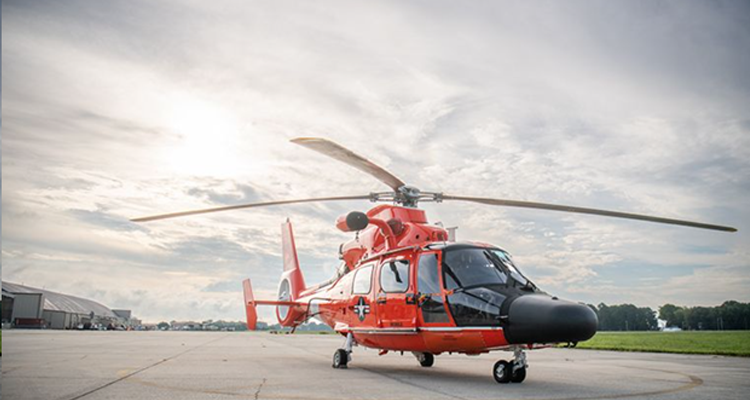
Grand Prairie, Texas  – Airbus Helicopters has signed a Memorandum of Understanding (MOU) with the United States Coast Guard (USCG) to continue providing support for the service’s fleet of MH-65 Dolphin helicopters through 2037. The agreement reaffirms Airbus Helicopters’ commitment to ensuring the mission readiness of the USCG’s fleet as it performs critical search and rescue, law enforcement, and disaster response missions.

Under the terms of the MOU, Airbus Helicopters will deliver enhanced maintenance, spare parts, and technical support to optimize the performance and availability of the MH-65 fleet. The agreement also includes provisions for fleet modernization and engineering services to extend the operational life of the aircraft.

“The U.S. Coast Guard’s MH-65 helicopters are at the forefront of safeguarding our nation’s coastlines and saving lives,” said Bart Reijnen, President of Airbus Helicopters in the U.S. and Head of the North America region. “We are honored to continue working with the Coast Guard to ensure their fleet remains mission-ready for years to come. This agreement demonstrates our shared commitment to safety, reliability, and operational excellence.”

The MH-65 Dolphin has been the backbone of the Coast Guard’s aviation fleet for more than four decades. With this new MOU, Airbus Helicopters and the USCG aim to maintain the fleet’s high level of operational capability, enabling continued support for critical missions across the country.

Airbus Helicopters has a long-standing partnership with the USCG, providing tailored solutions to meet the service’s dynamic operational demands. The extended collaboration will build on this history, leveraging Airbus’ global support network and industry-leading expertise.

@AirbusHeli #MH65

“Coast Guard celebrates 40 years of service with H-65 helicopter” –CG-9

Great article about the history of the H-65 in Coast Guard service by the Acquisitions Directorate, CG-9 reproduced below.

Don’t get the impression that the H-65 is going away anytime soon. Expect at least another decade of service. The last of the parent design AS365 Dauphin was manufactured in 2021. The closely related Eurocopter AS565 Panther is still being manufactured and has seen service in eleven countries.


Coast Guard celebrates 40 years of service with H-65 helicopter

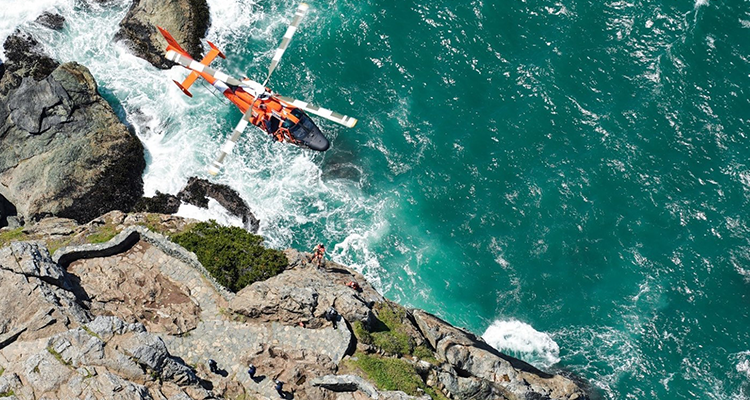
Upgrades throughout the 40-year history of the H-65 were strategically completed to allow for expanding missions and operations in the most challenging maritime conditions, such as cliff rescues. Here an MH-65 crew conducts vertical surface training off the coast of Humboldt Bay, California, to hone critical skills to ensure precise and efficient hoisting techniques in this rugged, coastal environment. U.S. Coast Guard photo.


It’s 2007. Coast Guard Air Station Port Angeles, Washington, receives a call about an injured mountain climber at the summit of The Brothers, a pair of prominent mountain peaks in Olympic National Park near Seattle. The elevation: 6,866 feet. And it’s snowing.

A search and rescue mission was deployed using the HH-65C short range recovery helicopter. “We were right up against that line where it was clear. If we had gone much further toward the peak, we would have been in blizzard conditions. We had to dump fuel at altitude to get light enough,” recalled Cmdr. Christian Polyak, co-pilot on the rescue mission and now commanding officer of Coast Guard Air Station Detroit. “We were able to reach the summit, pluck the injured mountain climber off the peak and get back to the airport in about 15 minutes.”

Unknown to the mountain climber, the Coast Guard H-65 Conversion/Sustainment Program had been working for years – and would continue working in subsequent years – to update the H-65 fleet and support missions like the one that brought the mountain climber to safety. “The rescue couldn’t have been done without the HH-65 and the engine upgrade from Bravo to Charlie,” Polyak explained.

In November 2024, the Coast Guard marked the 40th anniversary of the initial H-65 operation, but the tenure of this critical asset in supporting Coast Guard missions is slowly coming to an end. The service has completed the transition from the MH-65D to the MH-65E, the final upgrade of this airframe. Obsolescence challenges with the MH-65 will lead to the sundowning of aircraft as they reach the end of their service lives.
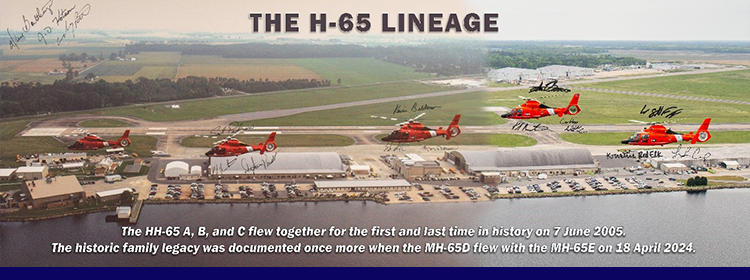
HH-65A HH-65B HH-65C/MH-65C  MH-65D MH-65E
Began operations: 1984 Began operations: 2001 Began operations: 2004 Began operations: 2009 Began operations: 2015
Original Coast Guard version. Avionics upgrade undertaken on a portion of the fleet, including a night vision goggle compatible integrated flight management avionics suite. Engines replaced with Turbomeca Arriel 2C2-CG engines, adding 40% more power. Airborne use of force capability added, including 7.62 mm general-purpose machine gun and a .50-caliber precision rifle. Obsolete subsystems replaced, such as replacing navigation systems and gyros with digital GPS and inertial navigation systems. Remaining obsolete subsystems modernized, including replacing analog automatic flight control with digital systems, installing digital weather radar systems and installing digital glass cockpit instruments.
Other program milestones included purchase of seven new MH-65 aircraft to identify and intercept non-compliant light aircraft operating within the Washington, D.C., Air Defense Identification Zone and execution of a service life extension program to extend the service life of the helicopters by an additional 10,000 flight hours.

Since their introduction more than 40 years ago, Coast Guard H-65s have been credited with rescuing approximately 26,000 people. For nearly two decades, the Coast Guard has planned and executed targeted improvements to enhance reliability and performance of the operational fleet. Across each iteration, starting with the initial designation of the HH-65A (Alpha) to the current MH-65E (Echo), every upgrade enhanced the airframe’s capabilities, enabling crews to complete lifesaving, law enforcement and national security missions more efficiently and effectively.

Retired Capt. Keith Overstreet has flown every model of the H-65, starting with the Alpha in 1995 at Air Station Savannah, Georgia. “I started flying the 65 when it was relatively new … when we purchased the H-65 it was really an advanced aircraft with advanced avionics. It allowed us to fly coupled approaches down to the water with a fairly precise position. It could control not only the lateral, the guiding left to right, but vertically down to the water as well.”

As modern as it was for its time, regular upgrades kept it relevant.

“The Alpha had a small navigation screen where you could create a flight plan. It had a forward-looking radar that would map out vessels and terrain,” said retired Cmdr. Kevin Barres, who flew 65s throughout his entire 25 years in the Coast Guard. “Then Bravo came up and you had a color display that differentiated some terrain,” which helped in developing flight plans.

“Charlie meant changes to the engine, and the engine control. It went from mechanical control using air and linkages to digital control. Echo replaced analog avionics components with a digital cockpit that has significant commonality with the H-60 fleet. There were enhancements to the automatic flight control system and there was a complete rewire of the aircraft. Its modern glass cockpit is standard across the board,” Overstreet said.
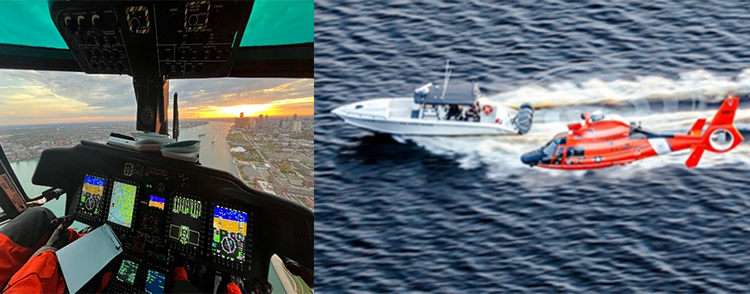
LEFT: A glass or digital cockpit replaced analog instruments in the MH-65E. RIGHT: The updates for missions requiring airborne use of force capability got underway in August 2006. The Helicopter Interdiction Tactical Squadron specializes in those missions, often used for drug-interdiction, and moved to the MH-65 from the Agusta MH-68A Stingray in 2008. U.S. Coast Guard photos.


“Every upgrade was significant and addressed a specific problem or modernization to accommodate how the mission, aviation and airspace were changing,” Barres said.

Cumulatively, these three pilots have flown nearly 16,000 hours in the H-65 and remember missions completed with fondness and pride.

Barres remembers when a bear-watching float plane split in half in the water, stranding six tourists, the bear guide and the pilot in Haro Bay, Alaska. It was 2006, and he was on his first deployment in Kodiak.

“It was a very windy day. The seas in the bay had built a little bit. When the aircraft tried to take off, the tube that goes across the front that connects the two floats failed and split. The aircraft did a nosedive into the wave and was swamped. They were all able to get out and were standing on the wing while it floated for a little while.”

The Coast Guard responded with an HC-130, an MH-60 and an MH-65. Barres was in the office and volunteered to pilot the MH-65.

“The C-130 got on scene and dropped two survival rafts to them. The bear guide was able to climb up on the capsized life raft and hang on. All the other people were hanging on to the float plane. The plane sunk, and they all ended up in the water for about 10 to 20 minutes.”

They were able to float due to their safety devices, but they all were hypothermic. The two helicopters were able to retrieve everyone, and all survived.

Another “miraculous” search and rescue mission Barres recalls was when he was stationed in Barbers Point, Hawaii. He was involved in rescuing a family that was stranded on a very small skiff in ocean waters for just short of two weeks, surviving on sea water and flying fish, after their small outboard motor malfunctioned. When the family was taken back to their home in Kiribati aboard an H-65, they were met with ecstatic school children and an elected official showered them with gifts of bananas and coconuts.

H-65 does more than search and rescue

“The H-65 has been heavily relied upon for all our aviation special missions,” said Polyak, who currently ranks as the most senior active-duty H-65 aviator.

During a deployment to Japan from Kodiak on a mission to enforce an international fisheries treaty, Polyak was grateful for the enhancements of the satellite communications on the MH-65C.

“Without that upgrade, we wouldn’t have been able to maintain radio communications with the cutter at the distances we were operating the helicopter,” he said. “As a pilot I always want to be able to talk to the ship if I’m 100 miles away from it. When you’re thousands of miles away from land and there’s nowhere else to go, you need to be able to talk to the ship so you can find out where they are and get back to them.”

The stories of the missions are endless. But without the behind-the-scenes mechanics that keep the aircraft operational, none of this would be possible.

“It takes 21 maintenance labor hours for every flight hour,” said Polyak, who served as the branch chief for the H-65 Echo conversion at the Aviation Logistics Center (ALC) in Elizabeth City, North Carolina, leading a team of 36 to deliver MH-65 Echoes to the fleet from 2017 to 2020. “There’s a lot of work happening on the hangar deck. Our enlisted mechanics work very hard to allow this aircraft to continue to operate and do lifesaving missions. There’s an equally important component at the ALC where the overhaul for the aircraft occurs. And there are hundreds of active-duty members, civilians and contractors that only support the H-65 fleet. These quiet professionals are supporting frontline operations. Along that same vein, the Aviation Training Center in Mobile, Alabama, has continued to provide excellent standardization and training support so that pilots and air crews can work together and execute these challenging missions.”

Looking forward, pilots are grateful they had the opportunity to fly the H-65s.

“It’s amazing the way we in the Coast Guard were able to bring it online,” Barres said. “Basically, going from 1960s helicopters to the most modern helicopters in the world at that time and then over 40 years keeping the aircraft upgraded and relevant.”

“At one point we had nearly 100 airframes in the fleet,” he continued. “The 65 never let me down on a mission or my crew or the folks that we were out there trying to help, whether it was law enforcement, or a fisheries patrol or a search and rescue case.”

All three pilots find immense career fulfillment in completing search and rescue missions made possible by the capabilities of the H-65.

“That day when you look somebody in the eye,” Overstreet said. “And you know, and they know that they would not be on this earth alive if you hadn’t been there. That makes it easy to put your all into your work every day.”
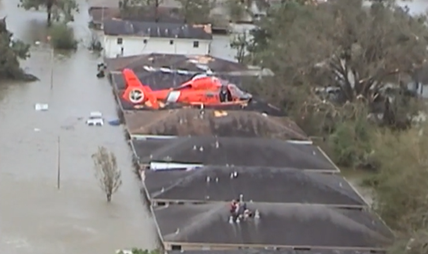
An airman from Air Station New Orleans, who was on the first helicopter that returned following the Hurricane Katrina, recounted, “The second that everyone heard us on Channel 16, Channel 16 just blew up with mayday calls.” Flying on waivers, he did rescues for five days and nights straight. At the time, this was considered the biggest search and rescue event in U.S. history. U.S. Coast Guard photo.


Related:

40 years in service!

Genesis of the Coast Guard HH-65 Helicopter

For more information: MH-65 Short Range Recovery Helicopter Program page


“Coast Guard to hold rescheduled commissioning and ribbon-cutting ceremony for newest air station in more than 25 years” –D11

The first MH-60T medium range recovery helicopter to operate out of new Air Station Ventura lands on the station’s ramp on June 8, 2024. U.S. Coast Guard photo.

Below is a District eleven (California) media advisory. More information about the air station and the MH-60T program in this earlier post. The ribbon cutting was originally to have been done June 18. I’ve seen no explanation for the delay. There has been an aviation detachment in the LA/Long Beach area for some time. With the addition of Ventura, there will be five CG air stations in District Eleven, San Diego (MH-60T), Ventura (MH-60T), San Francisco (MH-65), Sacramento (C-27J), and Humbolt Bay (MH-65).

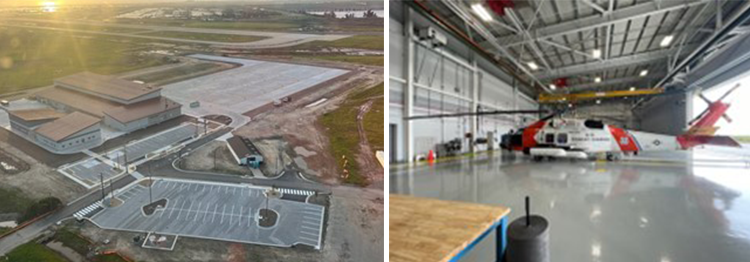
The new Coast Guard Air Station Ventura and its MH-60T hangar is located at Naval Base Ventura County in Point Mugu, California. U.S. Coast Guard photos.

Nov. 12, 2024

Editor’s Note: Media are asked to RSVP by 5 p.m., Tuesday, Nov. 12 by contacting District 11 public affairs at 206-815-6689 or PADETLA@USCG.MIL.

WHAT: Commissiong and ribbon-cutting ceremony for Coast Guard Air Station Ventura

WHO:

  • Vice Adm. Andrew J. Tiongson, commander, Coast Guard Pacific Area
  • Rear Admiral Joseph R. Buzzella, commander, Coast Guard District 11
  • Rear Adm. Mike E. Campbell, director, Coast Guard Acquisition Programs and Program Executive Officer
  • Cmdr. Amanda Sardone, commanding officer, Coast Guard Air Station Ventura

WHEN: Nov. 13, 2024 at 10 a.m. to 11 a.m.

WHERE: Naval Base Ventura County Point Mugu: 190 Third St., Point Mugu, CA 93042.

SAN PEDRO, Calif. — The Coast Guard is scheduled to hold a commissioning and ribbon-cutting ceremony for Coast Guard Air Station Ventura at Naval Base Ventura County in Point Mugu, Wednesday. The ceremony will mark the official establishment of the newest Coast Guard air station in more than 25 years.

Recently, the aircrew of Air Station Ventura conducted three rescues:

  • Oct. 13, 2024: Air Station Ventura medevac a 63-year-old woman suffering from abdominal pain from the Cruise Ship Grand Princess
  • Oct. 17, 2024: Air Station Ventura conducted hoist from vessel in 10-foot seas for a diver suffering decompression sickness near Anacapa Islands in Channel Islands.
  • Oct. 31, 2024: Air Station Ventura medevac a man suffering from seizures from Cruise Ship Celebrity Radiance 90-miles from Air Station Venture.

The air station serves a crucial role in protecting the maritime region from Orange County to San Luis Obispo County including the vital ports of Los Angeles and Long Beach. Its missions will include 24/7 emergency response; search and rescue; drug and migrant interdiction; law enforcement; and marine safety and environmental protection. The permanent presence of the Coast Guard in Ventura County provides enhanced security and quicker response times to emergencies, benefiting both the local community and maritime industries.

Air Station Ventura features:

  •  $70 million state-of-the-art, 43,000 square-foot hangar facility
  • 12,000 square-foot administration facility and berthing facility
  • One MH60-T Jayhawk helicopter and expected to receive two more
  •  Approximately 100 Coast Guard personnel

District 11 now consists of four active air stations ranging from Humboldt Bay down to San Diego.

“Coast Guard completes final delivery of MH-65E helicopter” –CG-9

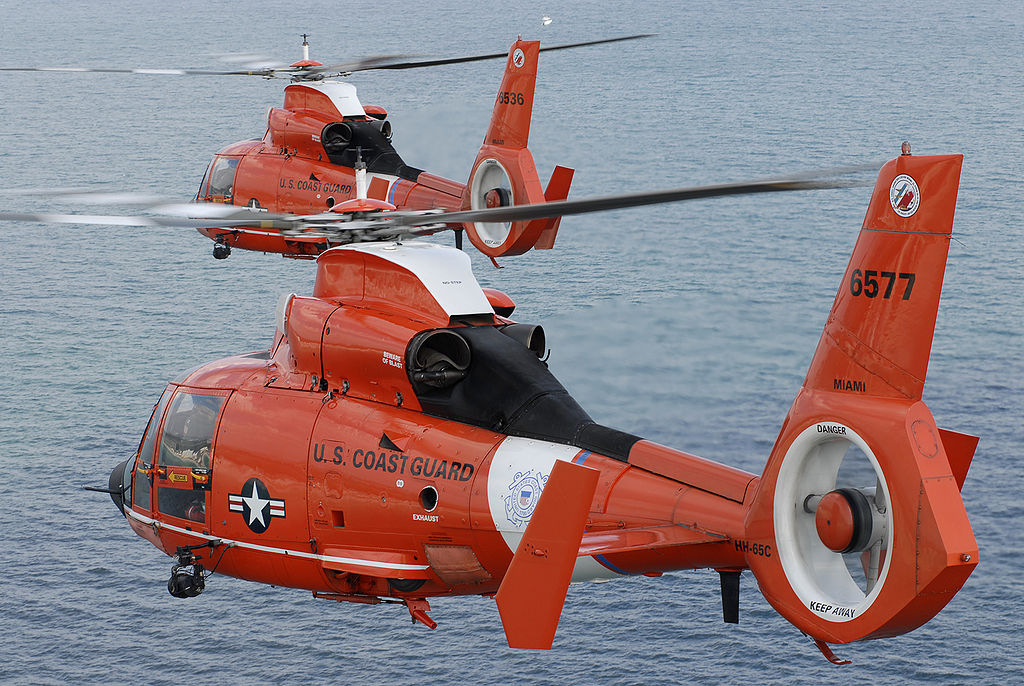
CGNR 6577 is readied for departure from the Aviation Logistics Center on Aug. 19. Its delivery to the Aviation Training Center in Mobile, Alabama, marks the 90th and final MH-65 helicopter to complete the service life extension program and upgrades resulting in the Echo configuration. U.S. Coast Guard photo

Below is a story from the Acquisitions Directorate (CG-9). This comes only days after they also reported that they had completed upgrades to the Fleet of 18 HC-144s.

Despite completion of these two programs, Aviation Logistics Center, Elizabeth City still has plenty of work to do. There is an on-going program to upgrade the C-27J fleet and newly acquired C-130Js with Minotaur Mission Systems and a Service Life Extension Program and additional procurement/remanufacture of MH-60Ts to ultimately allow conversion of eight air stations from MH-65 to MH-60T.


The H-65 Conversion/Sustainment Program reached an important milestone Aug. 19, sending off the 90th and final MH-65E to its operational unit at Aviation Training Center (ATC) in Mobile, Alabama. The transition from the MH-65D to the MH-65E (commonly referred to as the “Delta” and “Echo” configurations, respectively) has been in development for over a decade.

The Short Range Recovery (SRR) production line at the Aviation Logistics Center has been executing the Echo conversion since 2018 when the very first Echo was delivered to ATC Mobile to prepare for pilot training and course development in the new model. By happenstance, the final Echo was also delivered to ATC, an altogether fitting accomplishment as the program came full circle and achieved full operating capability.

A highlight of the program was SRR’s consistency and adherence to the delivery schedule as they produced an Echo aircraft every 22 days and achieved an 80% on-time delivery rate, a testament to the product line after factoring in the pace of early production activities and the negative impacts of COVID-19.

The avionics upgrade to the MH-65E configuration provides enhanced search and rescue capabilities including modern “glass cockpit” technology that increases pilot and aircrew situational awareness and provides commonality with the service’s MH-60T Jayhawk fleet. The upgrades also include reliability and capability improvements for the automatic flight control system, enhanced digital weather and surface radar, and multifunctional displays with more accurate fuel calculations.

The upgrades bring the fleet into compliance with the Federal Aviation Administration’s Next Generation Airspace Transportation System requirements and extend the aircraft service life through the Coast Guard’s transition to an all-MH-60T rotary wing fleet.

Since the first Echo delivery, the aircraft has surpassed 100,000 flight hours and has been involved in more than 8,000 search and rescue cases. The model is responsible for saving and assisting more than 1,200 lives, making a substantial contribution to the 26,000 lives rescued throughout the 40 years the Coast Guard has flown different variants of the H-65.

The MH-65E is a multi-mission helicopter, responsible for over 100 ship deployments across the world and participated in more than 15 hurricane response efforts. Air Station Atlantic City commenced its transition in October 2022 and has executed over 100 land-based deployments conducting rotary wing air intercept missions as part of national defense. The Helicopter Interdiction Squadron in Jacksonville, Florida, which commenced its transition to the MH-65E in July 2021, has conducted 62 deployments in the MH-65E, with 133 interdictions and seizing nearly 300,000 pounds of cocaine and over 60,000 pounds of marijuana totaling nearly $4 billion in illegal narcotics.

“NATO Selects Three Companies For Next-Generation Rotorcraft Concept Study” –The War Zone

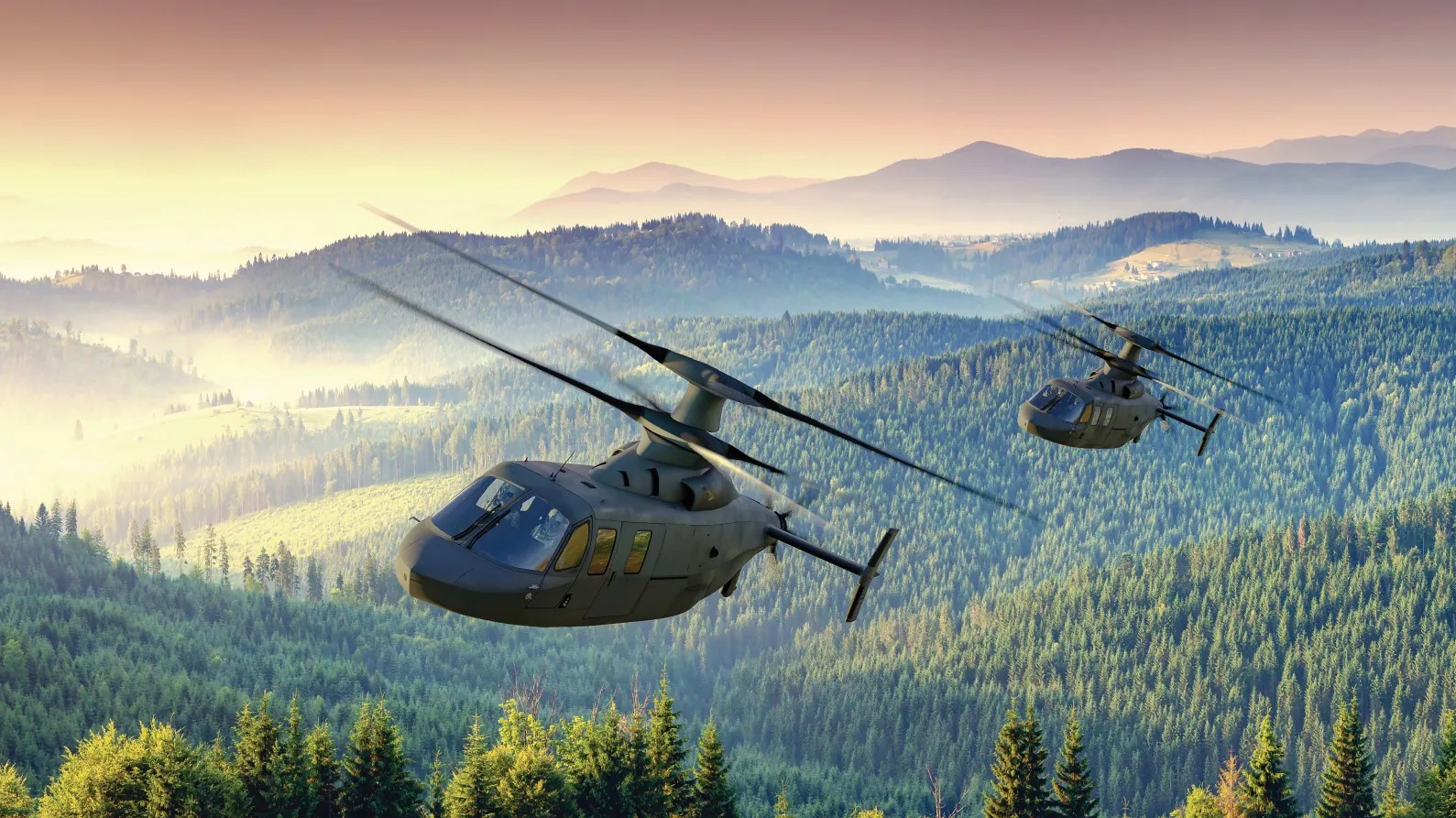
Lockheed Martin Sikorsky’s concept will be based on X2 technology. Lockheed Martin rendering

The War Zone Reports,

“NATO, seeking to replace its aging fleet of helicopters, awarded three contracts on Friday to provide parallel concept studies for a new medium-lift, multirole rotorcraft. The alliance hopes to field that aircraft beginning in 2035

“Dubbed “Concept Study #5, the goal is to “provide a broad range of potential concepts” to help participating nations choose what kind of vertical lift platform they want in the future. The NGRC program initiative began in 2022 and includes France, Germany, Greece, Italy, the Netherlands, the United Kingdom, and Canada. It was initially created with €26.7 million ($28.98 million) dedicated to defining the future of their helicopter fleets. The United States and Spain are currently acting as observers.”

Given that the Future Vertical Lift program is not producing an aircraft the Coast Guard can operate from cutters, this program may be of interest.

It is intended to replace AW101s, H-60s, Super Pumas, and NH90s.

The three contracts were awarded to Airbus Helicopters, Leonardo (partnered with Bell), and Lockheed Martin Sikorsky.

“At this stage in the process, NATO is agnostic when it comes to the choice of a traditional helicopter or non-traditional rotary aircraft. The alliance does, however, have many “required attributes” that the ultimate winning design must have, according to procurement documents.”

Among those attributes,

“Able to be deployed for medium-long periods (6-9 months) and fully operate from Frigate (FF)/Destroyer (DD) class of vessel, i.e. not larger than the footprint or dimension of either NH-90 (NFH), or AW-101, including the optional capability of folding main rotor/tail to be moved onto ship’s elevator/hangar for maritime operations.”

Change is Coming, “Coast Guard delivers first MH-60T to new Air Station Ventura” –News Release

The first MH-60T medium range recovery helicopter to operate out of new Air Station Ventura lands on the station’s ramp on June 8, 2024. U.S. Coast Guard photo.

Below is information from the Acquisitions Directorate (CG-9) website. The first new Coast Guard Air Station in 25 years, and a money saving approach that will organically produce 36 aircraft and transition eight air stations from MH-65 to MH-60T operations.

The new airstation replaces a Coast Guard Airstation San Francisco detachment that operated two H-65s out of a leased hangar at Point Mugu.


The Coast Guard on June 8 delivered an MH-60T medium range recovery helicopter to the service’s first new air station in 25 years, Air Station Ventura, located at Naval Base Ventura County in Point Mugu, California. CGNR 6055 is the first of three MH-60T Jayhawk helicopters that will be delivered to the air station; all will be derived from Navy hull conversions completed by the Aviation Logistics Center (ALC) in Elizabeth City, North Carolina.

This is the third delivery under the MH-60T Acquisition/Sustainment Program, which started as a service life extension program (SLEP) for the Coast Guard’s fleet of 45 Jayhawks. The program has since expanded to include increments for fleet growth as the service transitions to an all-MH-60T fleet.

Converted Navy hulls are one of the two hull sources being used in the program, along with newly manufactured hulls from the original equipment manufacturer, Sikorsky Aircraft Corp. Low-flight-hour Navy HH-60H and SH-60F Seahawk hulls are structurally converted into the MH-60T configuration. The program also includes replacement of critical dynamic components, such as main rotor blades, and new electrical wire harnesses. All aircraft production – the assembly and installation of dynamic components on the hulls – is completed at ALC.

The deliveries to Air Station Ventura are the first under Increment 2, the first fleet growth phase of the program, which will organically produce 36 aircraft and transition eight air stations from MH-65 to MH-60T operations. Converted Navy hulls will form the majority of the aircraft to be produced under Increment 2, according to Reid Adams, program manager for the MH-60T Acquisition/Sustainment Program. He noted that Navy conversion hulls are cost effective, saving the Coast Guard at least $5 million per aircraft compared to purchasing new hulls. ALC also has developed efficiencies that have shaved months off the Navy conversion process; each conversion can now be completed in under one year.

“We were able to utilize completed Navy hull conversions that were already in storage to facilitate the Ventura stand-up; this allowed the program to save one year on the ability to stand up Ventura,” Adams said.

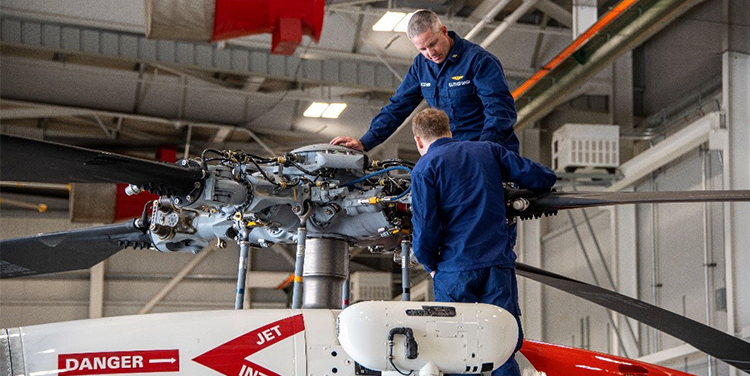
Crew members inspect the folding rotors on CGNR 6055 at Air Station Ventura. U.S. Coast Guard photo.


The MH-60T delivered to Air Station Ventura includes main and tail rotor fold-capability, enabling the helicopter to be deployed and hangared aboard the national security cutter, as well as future offshore patrol cutters and polar security cutters. This is the first Jayhawk with this feature since the 1990s, when the smaller MH-65s were deployed. With the move to an all-MH-60T fleet, this capability is essential for aircraft that will be used to support cutter operations.

This is the third Navy conversion hull delivered to the fleet under the MH-60T Acquisition/Sustainment Program; the first went to Aviation Training Center Mobile in 2021 and the second to Air Station Clearwater in 2022, both in support of SLEP activities on the legacy fleet of 45 MH-60Ts and now incorporated as Increment 1 of the expanded acquisition/sustainment program. Thirteen additional Navy hulls are in various stages of work from structural conversion to completed and in storage.

Each conversion of Navy HH-60H and SH-60F Seahawk hulls takes over 1,500 separate maintenance cards for mechanics to follow. U.S. Coast Guard photo.


“The next 13 hulls will be used to fulfill the SLEP or fleet growth demands, as required; with the new hulls now in the mix, the program anticipates the majority of the converted Navy hulls to be utilized for fleet growth purposes,” Adams said. Three new hulls have been delivered of the 45 currently on order with Sikorsky.

Ventura marks the Coast Guard’s first permanent air station in the region since 2016. Prior to breaking ground for Air Station Ventura in 2021, the service conducted aviation operations from a forward-operating base at Naval Base Ventura County supported by Coast Guard Air Station San Francisco.

Air Station Ventura features a $70 million state-of-the-art 43,000-square-foot hangar and a 12,000-square-foot administration and berthing facility. At full capacity it will house three MH-60T Jayhawk helicopters and approximately 100 personnel, significantly enhancing the Coast Guard’s capabilities in the region.

The new Coast Guard Air Station Ventura and its MH-60T hangar is located at Naval Base Ventura County in Point Mugu, California. U.S. Coast Guard photos.


For more information: MH-60T Acquisition/Sustainment Program page.

New Engine for the H-60?

Defense News has a new report, “US Army’s next-gen helicopter engine could fly in Black Hawk next year.

As we know, the Black Hawk is an H-60, and the Coast Guard will continue to have H-60s for a very long time. That means a new engine with improved performance and greater reliability is good news.

The T901 engine will replace the 1970s-era T700 and provide aircraft with a 50% power increase to restore performance. It’s 25% improved fuel consumption reduces energy usage and carbon emissions. The engine is also expected to have more durable components, which will lower life-cycle costs.

25% improved fuel consumption could mean another couple of hundred miles of range or another hour on station. It would also mean lower fuel costs. It might also mean the ability to maintain max speed rather than having to use a more economical cruise speed. Not that we are likely to see it soon, but the potential is there.

Japan Coast Guard H225 Helicopters

Japan CG Airbus H225 Helicopter

Below is an AirBus news release. The H225 is about the same size as the MH-60J despite the claims in the news release, Wikipedia reports that while the H225 has more power, the MH-60J has a higher speed and greater range.

Japan Coast Guard adds three H225s

Tokyo, 11 April 2024 – Japan Coast Guard (JCG) has placed an additional order for three H225 helicopters, taking its total H225 fleet up to 18. The largest Super Puma operator in Japan received three H225s in December 2023 and one in February 2024 for its growing fleet. The new helicopters will support territorial coastal activities, maritime law enforcement, as well as disaster relief missions in the country.

“The Japan Coast Guard has been an active operator of the Super Puma family helicopters for three decades. This follow-on order demonstrates the customer’s confidence in our products and the dedicated support to their fleet,” said Jean-Luc Alfonsi, Managing Director of Airbus Helicopters in Japan. “We believe the H225 is the perfect choice for JCG’s critical missions for law enforcement, as well as coastal and island protection, given its versatility in all weather conditions. We are committed to fully supporting its existing fleet, as well as its upcoming deliveries, ensuring high availability for its operations.”

JCG’s H225 fleet is covered by Airbus’ highly adaptive HCare Smart full-by-the-hour material support. This customised fleet availability programme allows the national coast guard agency to focus on its flight operations whilst Airbus manages its assets.

As the latest addition to the Super Puma family, the H225 is recognised for its high performance in challenging conditions as well as its outstanding range and payload capacity. The H225 has benefited from Airbus Helicopters’ continuous improvement policy. It is now equipped with new avionics including the largest screens available on the market and an innovative interface that, combined with its renowned autopilot, reduces pilot workload and enables them to focus on the mission at hand.

Offering the industry’s best range, speed, payload and reliability in the 11-ton-category twin-engine rotorcraft, the H225 offers outstanding endurance and fast cruise speed, and can be fitted with various equipment to suit a variety of roles.

24 H225s are currently flown in Japan by Japan’s Ministry of Defence or parapublic operators for various search and rescue missions, VIP, fire-fighting, as well as passenger and goods transportation.