This Day in Coast Guard History, October 13

Based on the Coast Guard Historian’s timeline, https://www.history.uscg.mil/research/chronology/
With inspiration from Mike Kelso

The U.S. Coast Guard Cutter Eagle (WIX 327) passes USS Constitution, one of the six frigates ordered in 1794, in Boston Harbor during the ship’s July Fourth turnaround cruise as part of Boston Navy Week. Boston Navy Week is one of 15 signature events planned across America in 2012. The eight-day event commemorates the bicentennial of the War of 1812, hosting service members from the U.S. Navy, Marine Corps and Coast Guard and coalition ships from around the world. (U.S. Navy photo by Sonar Technician (Submarine) 2nd Class Thomas Rooney/Released)

1775  This is the date that the Navy recognizes as it’s official birthday.  The United States Navy traces its origins to the Continental Navy, which the Continental Congress established on October 13, 1775, by authorizing the procurement, fitting out, manning, and dispatch of two armed vessels to cruise in search of munitions ships supplying the British Army in North America.  The legislation also established a Naval Committee to supervise the work.  Altogether, the Continental Navy numbered some fifty ships over the course of the war, with approximately twenty warships active at its maximum strength.  After the American War for Independence, Congress sold the surviving ships of the Continental Navy and released the seamen and officers.  The Constitution of the United States, ratified in 1789, empowered Congress “to provide and maintain a navy.” Acting on this authority, Congress ordered the construction and manning of six frigates in 1794, and the War Department administered naval affairs from that year until Congress established the Department of the Navy on April 30, 1798.  In 1972, however, Chief of Naval Operations (CNO) Admiral Elmo R. Zumwalt authorized recognition of October 13, 1775 as the Navy’s official birthday.  There is no official motto for the U.S. Navy.  However “Non sibi sed patriae” (Not Self But Country) is often cited as the Navy’s unofficial motto.
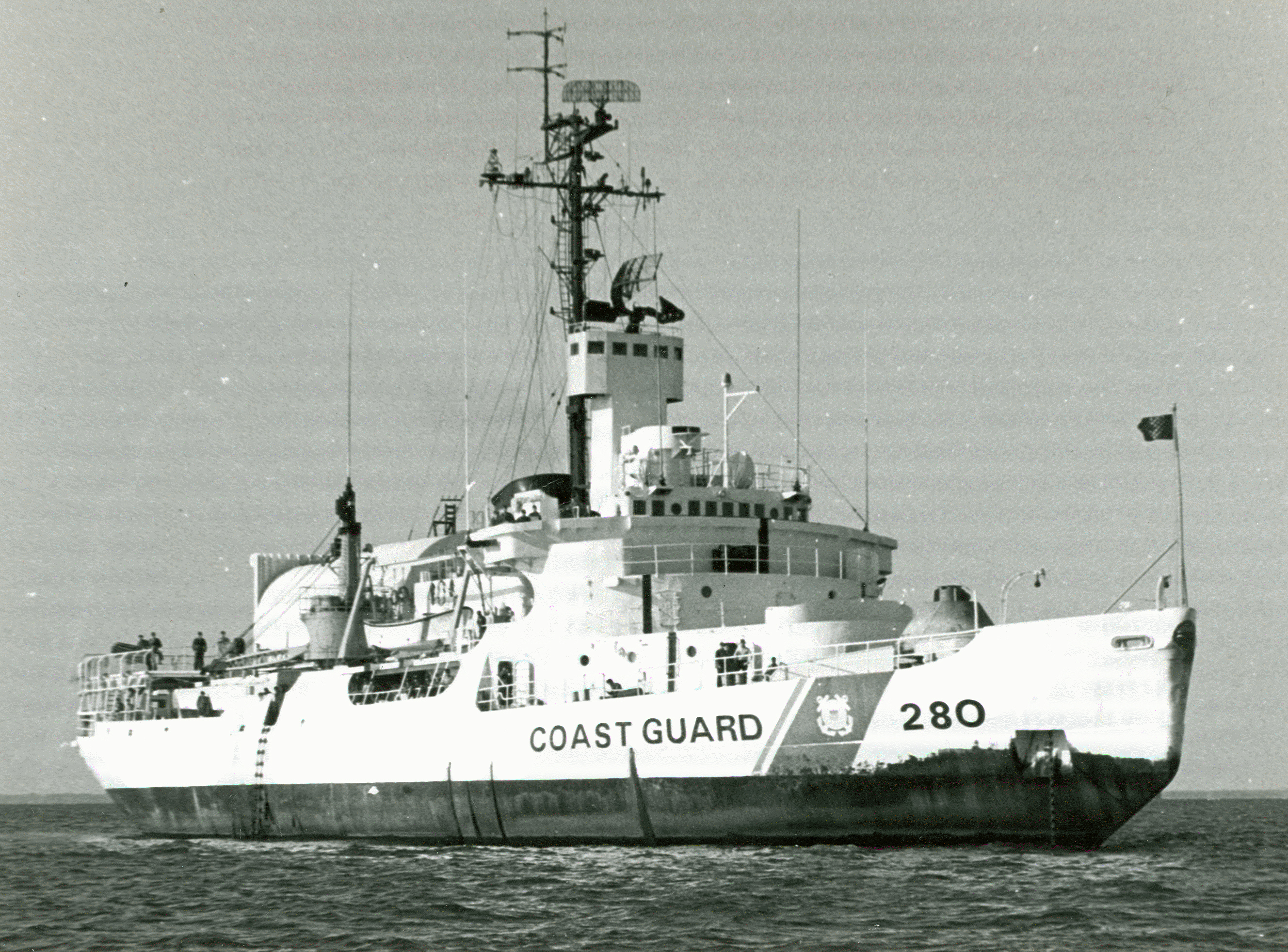
USCGC Southwind near port of USCG Base Berkley, after returning from a 27,000 mile tour of the Arctic.

1968  CGC Southwind departed Baltimore, Maryland for a seven-month deployment to Antarctica and other world-wide destinations.  By the time she returned to Baltimore on May 7, 1969 she had become only the second cutter in Coast Guard history to circumnavigate the globe.

Southwind had a varied carrier. From Wikipedia,

USCGC Southwind (WAGB-280) was a Wind-class icebreaker that served in the United States Coast Guard as USCGC Southwind (WAG-280), the Soviet Navy as the Admiral Makarov, the United States Navy as USS Atka (AGB-3) and again in the U.S. Coast Guard as USCGC Southwind (WAGB-280).

1988  The first U.S. merchant marine World War II veterans received their Coast Guard-issued discharge certificates.  Congress gave the merchant mariners veterans’ status and tasked the Coast Guard with administering the discharges.

USCGC IDA LEWIS

1995  CGC Ida Lewis was launched, the first of the new 175-foot Keeper class buoy tenders.

This Day in Coast Guard History, October 11

Based on the Coast Guard Historian’s timeline, https://www.history.uscg.mil/research/chronology/
With inspiration from Mike Kelso

Keeper Richard Etheridge (on left) and the Pea Island Life-Saving crew in front of their station, circa 1896.

1896  The crew of the Pea Island (North Carolina) Life-Saving Station, under the command of Keeper Richard Etheridge, performed one of their finest rescues when they saved the passengers and crew of the schooner E.S. Newman, after that ship ran aground during a hurricane.  Pushed before the storm, the ship lost all sails and drifted almost 100 miles before it ran aground about two miles south of the Pea Island Lifesaving Station.  Etheridge, a veteran of nearly twenty years, readied his crew.  They hitched mules to the beach cart and hurried toward the vessel. Arriving on the scene, they found Captain S. A. Gardiner and eight others clinging to the wreckage.  Unable to fire a line because the high water prevented the Lyle Gun’s deployment, Etheridge directed two surfmen to bind themselves together with a line.  Grasping another line, the pair moved into the breakers while the remaining surfmen secured the shore end. The two surfmen reached the wreck and tied a line around one of the crewmen. All three were then pulled back through the surf by the crew on the beach.  The remaining eight persons were carried to shore in this fashion. After each trip two different surfmen replaced those who had just returned.  For their efforts the crew of the Pea Island Life-Saving Station were awarded the Gold Lifesaving Medal in 1996.  (From Wikipedia: Five months after Etheridge had taken charge of Pea Island Station, arsonists burnt the station to the ground…“In the following days, the Newman’s captain searched for and found the piece of the side that held the vessel’s name and donated it to the crew as an offering of his thanks. For a century, this would be the only award the Pea Island crew received for their efforts. The 1896 Pea Island crew voted to give the wooden sideboard of the Newman to Theodore Meekins, the young surfman who first spotted the distress signal and who swam out to the wreck several times during the rescue. (Fifth from left in photo.)”)

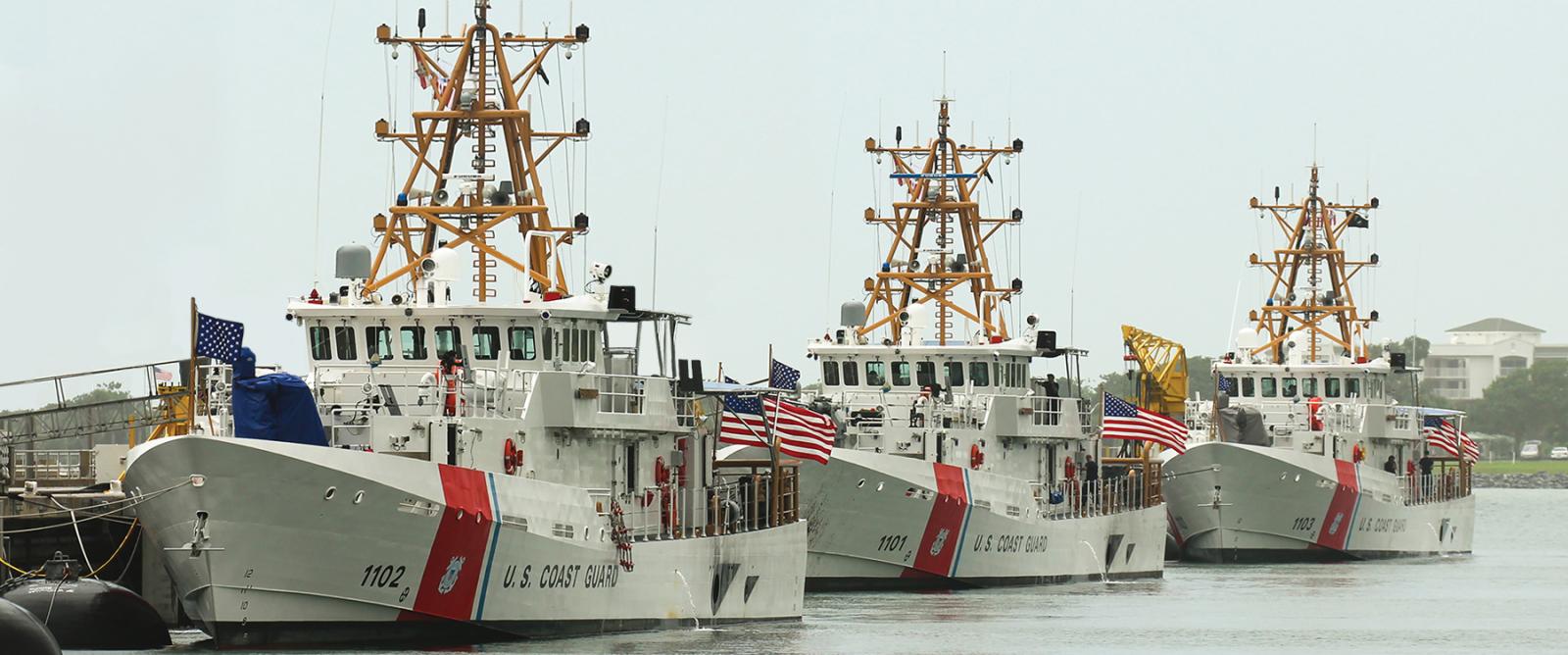
The first three fast response cutters—the USCGC Richard Etheridge (WPC-1102), Bernard C. Webber (WPC-1101), and William Flores (WPC-1103).
U.S. COAST GUARD

1897  Property saved at Cape Hatteras, North Carolina.  During a severe storm the surf threatened to wash away a fish house, with valuable nets and other gear.  Surfmen saved the property and took it to a place of safety.  They also assisted the Cape Hatteras lighthouse keeper to remove the lighthouse’s Fresnel lens to a secure place as the lighthouse was in danger of being knocked down by the sea.

141219-N-DX365-258
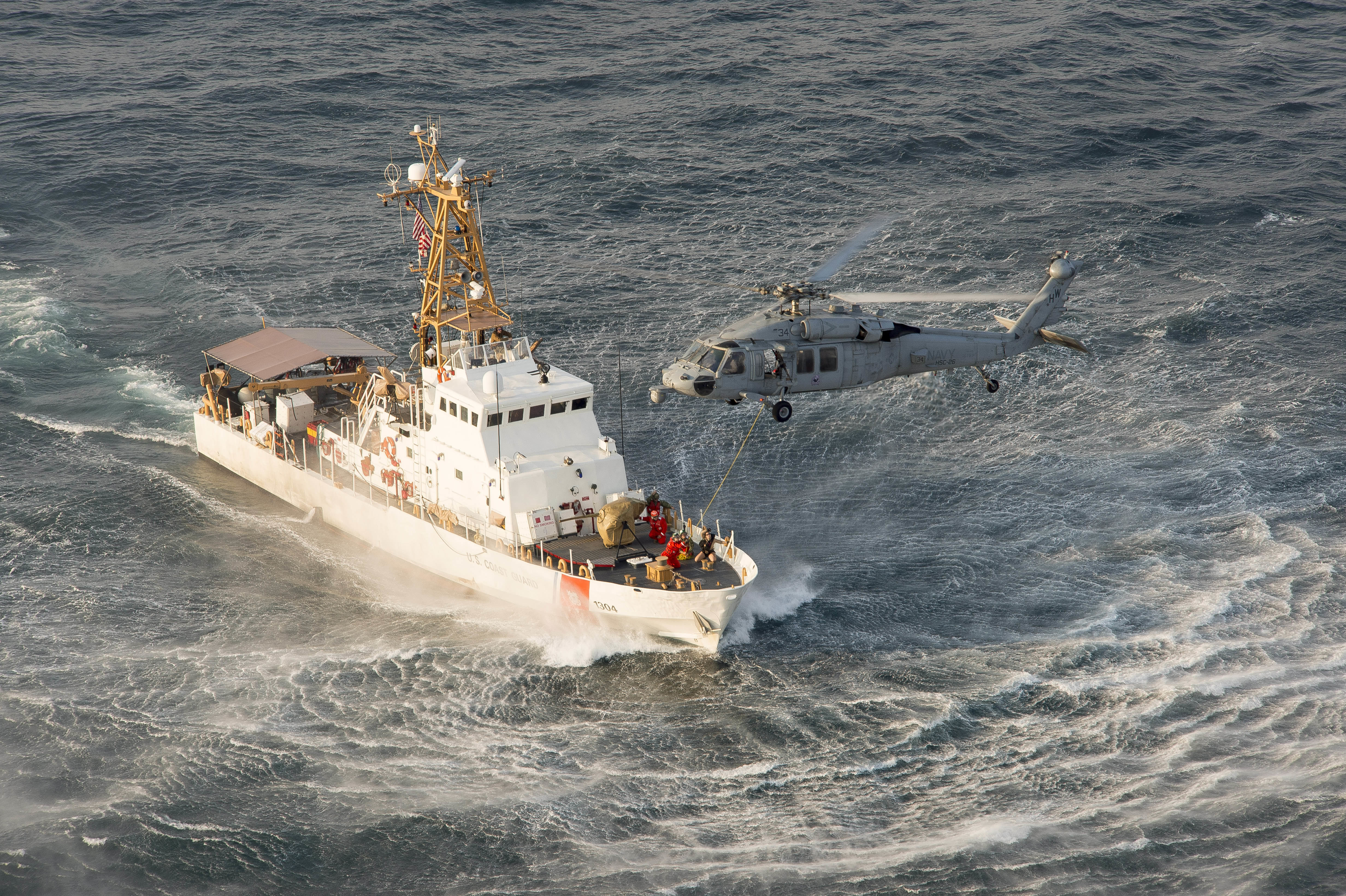
BAHRAIN (Dec. 19, 2014) Helicopter Sea Combat Squadron (HSC) 26, Det. 1, conducts a vertical onboard delivery with the U.S. Coast Guard Cutter Maui (WPB 1304). HSC-26 is a forward deployed naval force asset attached to Commander, Task Force 53 to provide combat logistics and search and rescue capability throughout the U.S. 5th Fleet area of responsibility. (U.S. Navy photo by Mass Communication Specialist 1st Class Joan E. Jennings/Released)

2013  CGC Maui, operating in the Persian Gulf as part of Patrol Forces Southwest Asia and assigned to Combined Task Force 152, rescued five Iranian mariners after they were fount adrift in a life raft in the northern waters of the Persian Gulf.  Maui’s crew later transferred the survivors to an Iranian Coast Guard vessel.

This Day in Coast Guard History, October 10

Based on the Coast Guard Historian’s timeline, https://www.history.uscg.mil/research/chronology/
With inspiration from Mike Kelso

1798  Secretary Benjamin Stoddert, first Secretary of the Navy, sent the first instructions to cutters acting in cooperation with the Navy in support of the Quasi-War with France, via the various collectors of customs.

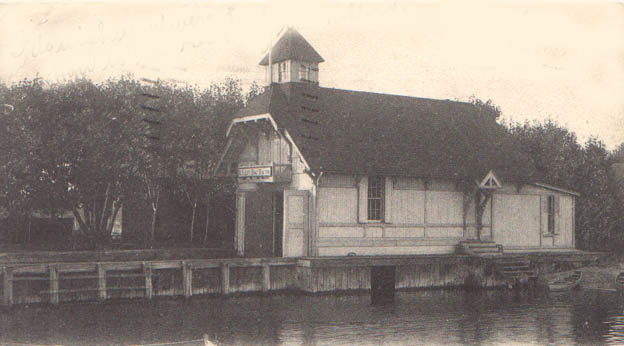
Original St Joseph boathouse, 1874 – station keepers like Napier were expected to sleep in their boathouses. Public Domain.

1877  Captain Joseph Napier, Keeper of Life-Boat Station No. 6 (St. Joseph, Michigan), commanded a rescue mission for which he was awarded a Gold Lifesaving Medal.  His citation reads: “for the daring gallantry he displayed in rescuing the crew of the schooner D. G. Williams, near the harbor of Saint Joseph, Michigan on the October 10, 1877.  The schooner lay stranded during a heavy gale on the outer bar, with the sea breaking over her, and her unfortunate crew of six men up in the rigging for safety. Captain Napier got together three volunteers, commandeered a boat, and pushed out for the wreck.  At the first attempt the boat was capsized in the breakers.  On the second try he reached the wreck and returned with two of the sailors.  The third trip the boat was completely filled with water, but was bailed and again reached the vessel, bearing off two men.  At the fourth attempt Captain Napier and his three assistants were thrown out of the boat by a furious surge and one of his legs was badly hurt.  One of the men swam ashore.  Another got a line flung to him from the wreck and was taken aboard.  Captain Napier and the other man, clinging to the boat, succeeded in righting and bringing it alongside the schooner.  They then took off the two remaining men of her crew, together with the man taken on board, and regained the shore in safety.  On other occasions Captain Napier was known to have shown equal heroism on desperate seas.  Most notable instance was his rescue of the crew of the schooner Merchant during a tempest in 1854.  For this feat he was presented with a gold watch suitably inscribed by citizens of Chicago.”  He was the first recorded Life-Saving Serviceman to be awarded the Gold Lifesaving Medal.

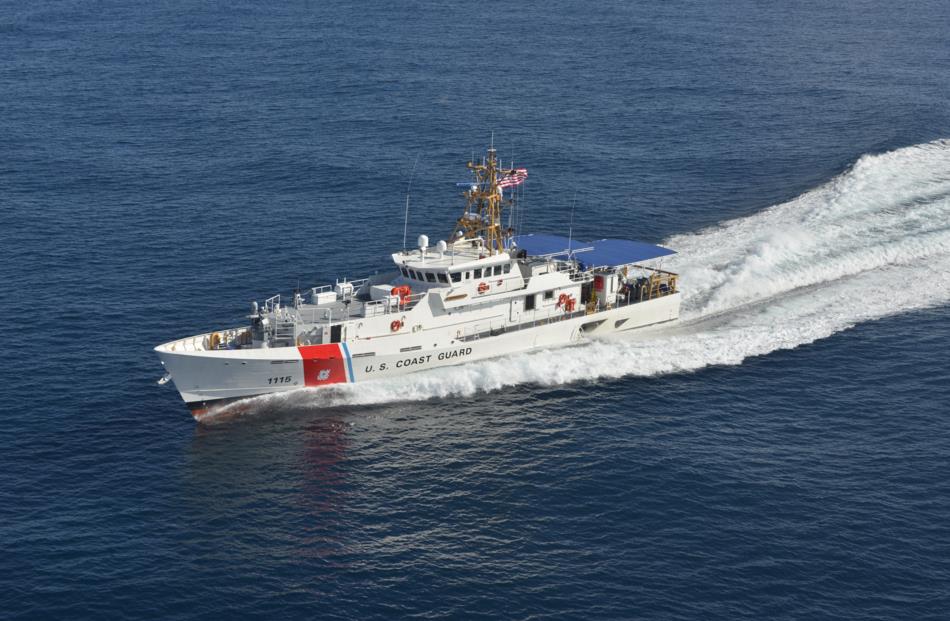
USCGC Joseph Napier (WPC 1115)

1929  Clarence Samuels, commanding CG Patrol Boat AB-15, was promoted to Chief Quartermaster, thereby becoming the Coast Guard’s first African-American chief petty officer.

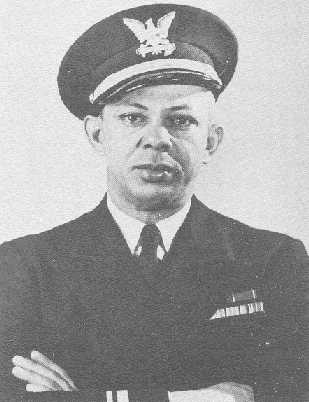
Lieutenant Junior Grade Clarence Samuels
First Hispanic of African descent commanding officer of a Coast Guard vessel during wartime


This Day in Coast Guard History, October 9

Based on the Coast Guard Historian’s timeline, https://www.history.uscg.mil/research/chronology/
With inspiration from Mike Kelso

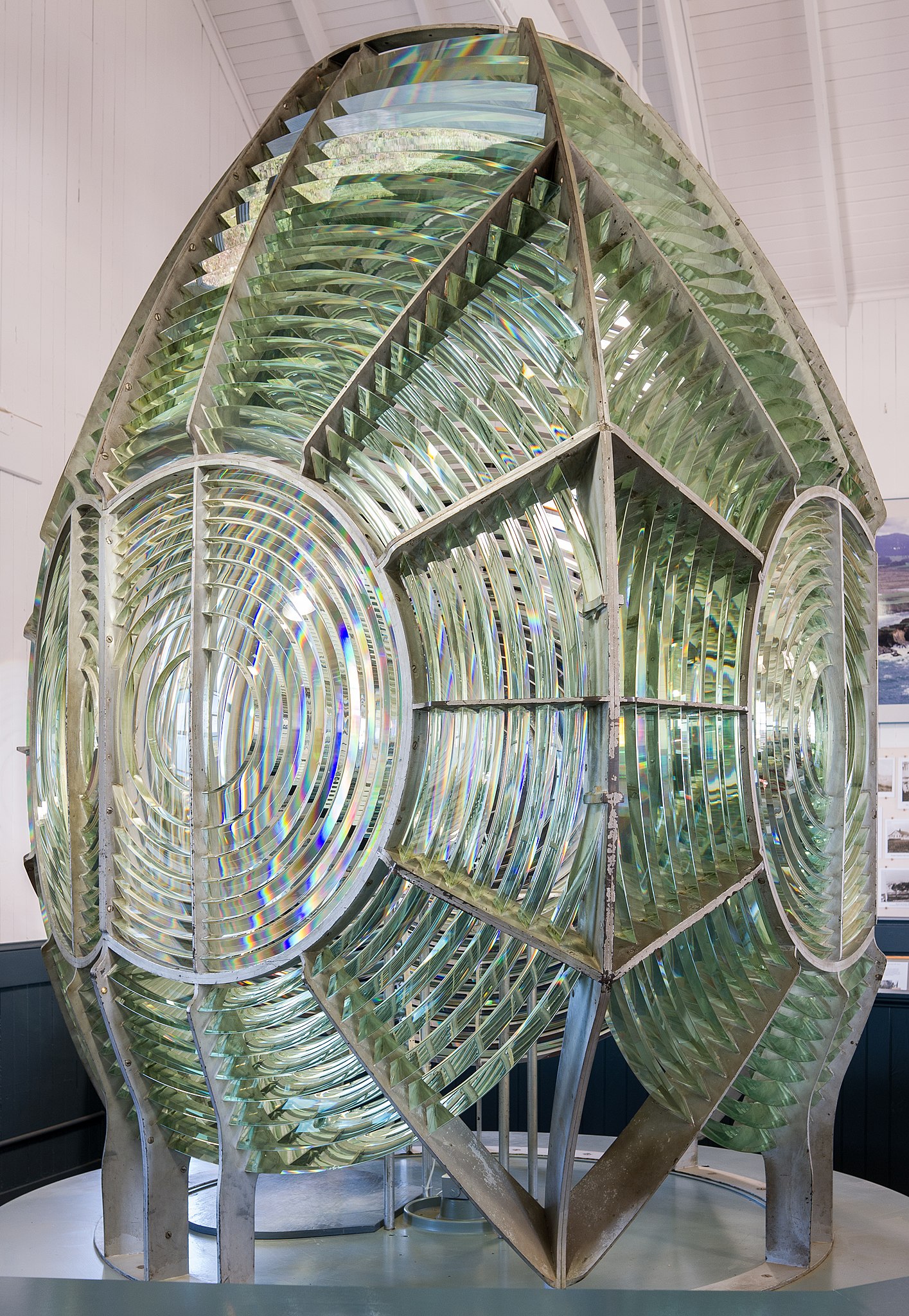
Fresnel Lens at Point Arena Lighthouse Museum, Point Arena Lighthouse, Mendocino County, California. Taken on 25 March 2012 by Frank Schulenburg

1852  The Lighthouse Board, which administered the lighthouse system until July 1, 1910, was organized. “This Board was composed of two officers of the Navy, two officers of the Engineer Corps, and two civilians of high scientific attainments whose services were at the disposal of the President, and an officer of the Navy and of the, Engineers as secretaries. It was empowered under the Secretary of the Treasury to “discharge all the administrative duties” relative to lighthouses and other aids to navigation. The Secretary of the Treasury was president of the Board, and it was authorized to elect a chairman and to divide the coast of the United States into twelve lighthouse districts, to each of which the President was to assign an army or navy officer as lighthouse inspector.” (The Lighthouse Board revolutionized coastal navigation.)

1858  The Secretary of the Treasury appointed a three-man board of U.S. Revenue Marine officers to consider a lifeboat design best adapted for life-saving work.

PC-590 Sea Trials. Source, Bob Daly/PC-1181/NavSource.

1945  Coast Guard manned patrol vessel USS PC-590 grounded and sank in typhoon off Okinawa.  All hands were rescued.

Okinawa, 9 October 1945. PC-590 breaking up in Typhoon Louise. Source: CDR John B. Payne, USNR, Ret. and NavSourcce.

1982  The first rescue using COSPAS/SARSAT occurred on this date when the trimaran Gonzo capsized 300 miles east of Cape Cod.  Gonzo’s ELT distress transmission was picked up by the Soviet COSPAS satellite and the sailing ship’s coordinates were transmitted to the U.S.  A Coast Guard HC-130 and a Canadian Air Force aircraft were directed to the scene and USCGC Vigorous safely rescued the three crewmen.  The new “space-age” satellite search-and-rescue system was a joint U.S., Canadian, French and Soviet project that at this time utilized a single Soviet satellite.

The components and operation of the Cospas-Sarsat system

1993  Crews from seven 8th District units and several civilian vessels joined forces in response to an explosion and fire aboard the 660-foot bulk-liquid carrier OMI Charger near the Houston Ship Channel.  She had no fuel aboard when the explosion occurred the night of October 9.  CGC Point Spencer served as the command platform and personnel and boats from ATON Team Galveston joined the response effort, which included fire-fighting, SAR, and pollution response assistance.  The fire was extinguished five hours after the initial explosion.  Two of the tanker’s crewmen were killed in the blast.  Personnel from the Gulf Strike Team arrive on scene on October 10 and determined that the vessel’s fuel was still all aboard.  It was removed prior to the vessel being towed to port where it was declared a total loss.  A joint Coast Guard and National Transportation Safety Board met to investigate the explosion.

OMI Charger. From Wikipedia: “On October 9, 1993, while the tanker was anchored at Boliver Roads near Galveston, Texas, work began on sealing a previously discovered leak in a cargo tank. When a crew member lit an arc welder inside a tank, it ignited gasoline vapors, causing a tremendous explosion which killed three crew members and injured seven. The subsequent fire burned for five hours, and the ship was a total loss.”

This Day in Coast Guard History, October 8

Based on the Coast Guard Historian’s timeline, https://www.history.uscg.mil/research/chronology/
With inspiration from Mike Kelso

1847  To reduce the expenditures of the Treasury Department, Secretary of the Treasury Robert J. Walker ordered a reduction of the complements on revenue cutters.

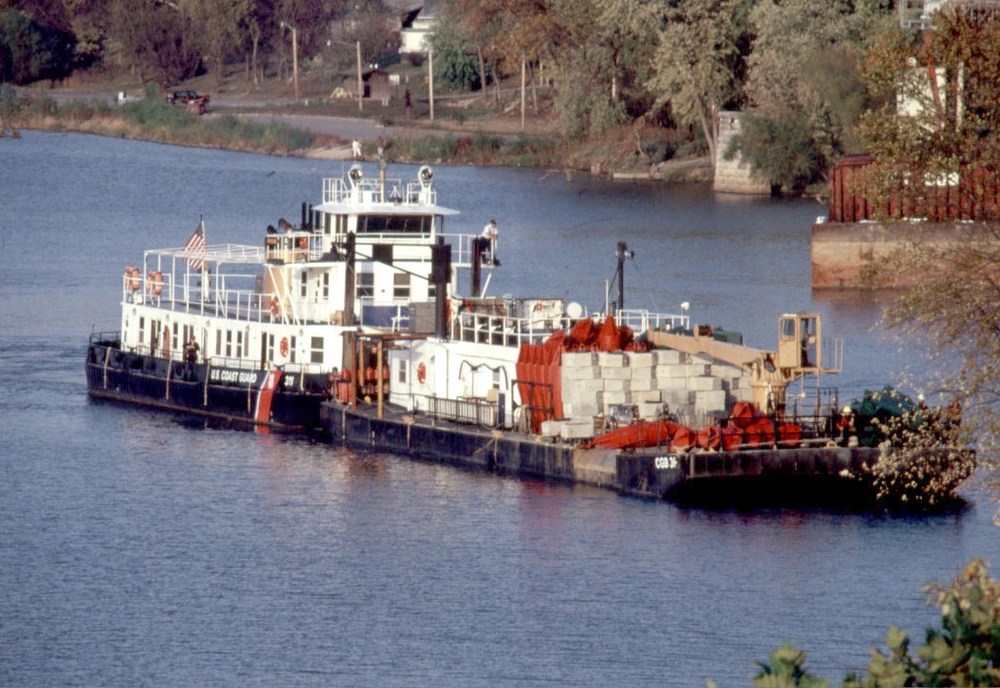
Kaskaskia River, IL (Oct. 10, 1990)–The Coast Guard Cutter Sumac (WLR-311) on Kaskaskia River in Illinois. Photo by PA2 Robin Ressler

1986  Coast Guard units evacuated flood victims from the St. Louis area using punts, helicopters and trucks after the Mississippi and Missouri rivers flooded.  In all, 150 Coast Guardsmen participated in the emergency flood relief efforts.  Coast Guard units that sent relief teams were: MSO St. Louis; Base St. Louis; CGCs Sumac, Cheyenne, and Cimarron; ATON Facility Leavenworth, Kansas; 2nd District office; and Air Stations New Orleans and Traverse City.

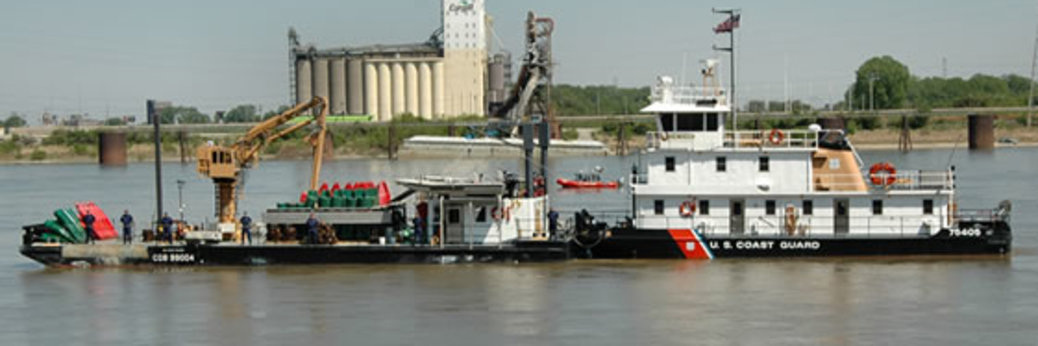
USCGC Cheyenne

USCGC Cimarron

This Day in Coast Guard History, October 7

Based on the Coast Guard Historian’s timeline, https://www.history.uscg.mil/research/chronology/
With inspiration from Mike Kelso

1986  An HC-130 from Air Station Elizabeth City located the disabled 44-foot Polish sailing vessel Gaudeamus with six Polish citizens aboard about 400 miles east of New York.  A motor vessel was on scene with Gaudeamus when it was found by the HC-130 and remained there until CGC Taney arrived the next day and took the boat in tow.  CGC Cape Henlopen rendezvoused with Taney and took over the tow to Newport, Rhode Island.  The Polish Embassy sent the Coast Guard a diplomatic note extending the thanks of the Polish government for the Coast Guard’s assistance in this case.

Former USCGC Taney now a Museum Ship in Baltimore

This Day in Coast Guard History, October 6

Based on the Coast Guard Historian’s timeline, https://www.history.uscg.mil/research/chronology/
With inspiration from Mike Kelso

October 6

1881  At daylight the crew of Station No. 1, First District (Carrying Point Cove, West Quoddy Head, Maine), sighted a schooner at anchor some four miles east-southeast of the station.  She did not appear to be in distress, and as no signal was made it was supposed she had simply anchored to await the abatement of the winds, which at the time was blowing strong from the northwest.  The keeper ordered a close watch on the schooner, in case she should signal for assistance.  At 11 a .m. the lookout observed a boat leave her side and attempt to reach land, but the gale was too much for it and the effort had to be abandoned.  The boat returned to the schooner.  Upon arriving alongside, the keeper found the schooner to be Eclipse, of Eastport, Maine and that she had encountered a heavy squall the afternoon previous. It had split her sails and started her leaking badly.  In this condition they had anchored her during the night, about two miles from the land, her crew, three in number, being almost exhausted by their efforts to keep her free.  The life-saving crew at once turned to and pumped her out and made temporary repairs on the sails, and then worked her up into a safe harbor.

Astronaut Commander Bruce E. Melnick, USCG

1990  NASA astronaut and Coast Guard CDR Bruce Melnick (Academy class of 1972) made his first space flight when he served as a Mission Specialist aboard the space shuttle Discovery on Space Shuttle Mission STS-41, which flew from CDR Bruce Melnick October 6-10, 1990.  Discovery deployed the Ulysses spacecraft for its five-year mission to explore the polar regions of the sun.  CDR Melnick was the first Coast Guardsman selected by NASA for astronaut training.

STS-41 Discovery — October 1990 — Mission Specialist 1 — Ulysses/Inertial Upper Stage solar probe deployment
STS-49 Endeavour — May 1992 — Mission Specialist 2 — Intelsat VI hand-retrieval and repair

This Day in Coast Guard History, October 5

Based on the Coast Guard Historian’s timeline, https://www.history.uscg.mil/research/chronology/
With inspiration from Mike Kelso

October 5


Members of the US Coast Guard Auxiliary anti-submarine forces, colloquially referred to as the “Corsair Fleet”

1938  The newly established “Coast Guard Reserve” (what would become the Coast Guard Auxiliary) enrolled its first members.

Consolidated PBY-5A Catalina. US Navy photo.

1943  Patrol Squadron 6 (VP-6 CG) was officially established.  This was an all Coast Guard unit.  Its home base was at Narsarssuak, Greenland, code name Bluie West-One.  It had nine PBY-5As assigned.  CDR Donald B. MacDiarmid, USCG, was the first commanding officer.  As additional PBYs became available, the unit’s area of operation expanded and detachments were established in Argentia, Newfoundland and Reykjavik, Iceland, furnishing air cover for Navy and Coast Guard vessels.   Hundreds of rescue operations and aerial combat patrols were carried out during the 27 months the squadron was in operation.

1969  For extreme and heroic daring on the morning of October 5, 1969, while on authorized leave, Coast Guardsman James P. Grier rescued two persons and attempted to rescue a third from drowning in the waters of the Atlantic Ocean at Rockport Harbor, MA.  For his actions the Coast Guard awarded Petty Officer Grier a Gold Life-Saving Medal.

This Day in Coast Guard History, October 4

Based on the Coast Guard Historian’s timeline, https://www.history.uscg.mil/research/chronology/
With inspiration from Mike Kelso

October 4

1918  There was an explosion at the T.A. Gillespie Company munitions yard in Morgan, New Jersey. Coast Guardsmen from Perth Amboy responded.  When fire threatened a trainload of TNT, these men repaired the track and moved the train to safety, thus preventing further disaster.  Two Coast Guardsmen were killed in this effort.

“Before retiring October 1, 1951, Rear Admiral Joseph E. Stika, USCG, nears the end of over 43 years service in the Coast Guard as he makes one of his last official military appearances at the re-commissioning of the world’s largest, strongest, and fastest battleship, the USS IOWA, in San Francisco, August 25. Admiral Stika (extreme left), who is both Commander Western Area and Commander Twelfth Coast Guard District, is shown here with (left to right) Fleet Admiral Chester W. Nimitz, USN; Mrs. William S. Beardsley (wife of and representing Governor Beardsley of Iowa); Mrs. William R. Smedberg III (wife of the USS IOWA’s captain); and Captain William R. Smedberg III, USN, Commanding Officer of the USS IOWA (BB-61).”; photo dated 28 August 1951.

From Wikipedia: Among many others involved in rescue operations were US Coast Guardsmen stationed across the Raritan River in Perth Amboy. Twelve received Navy Crosses for their heroic actions in the aftermath of the explosion, and two died in the effort. The award citations indicate that during the conflagration, they risked death when they moved a train loaded with TNT that was threatened by the fire. One Navy Cross recipient was Joseph Stika, who later became a vice admiral.

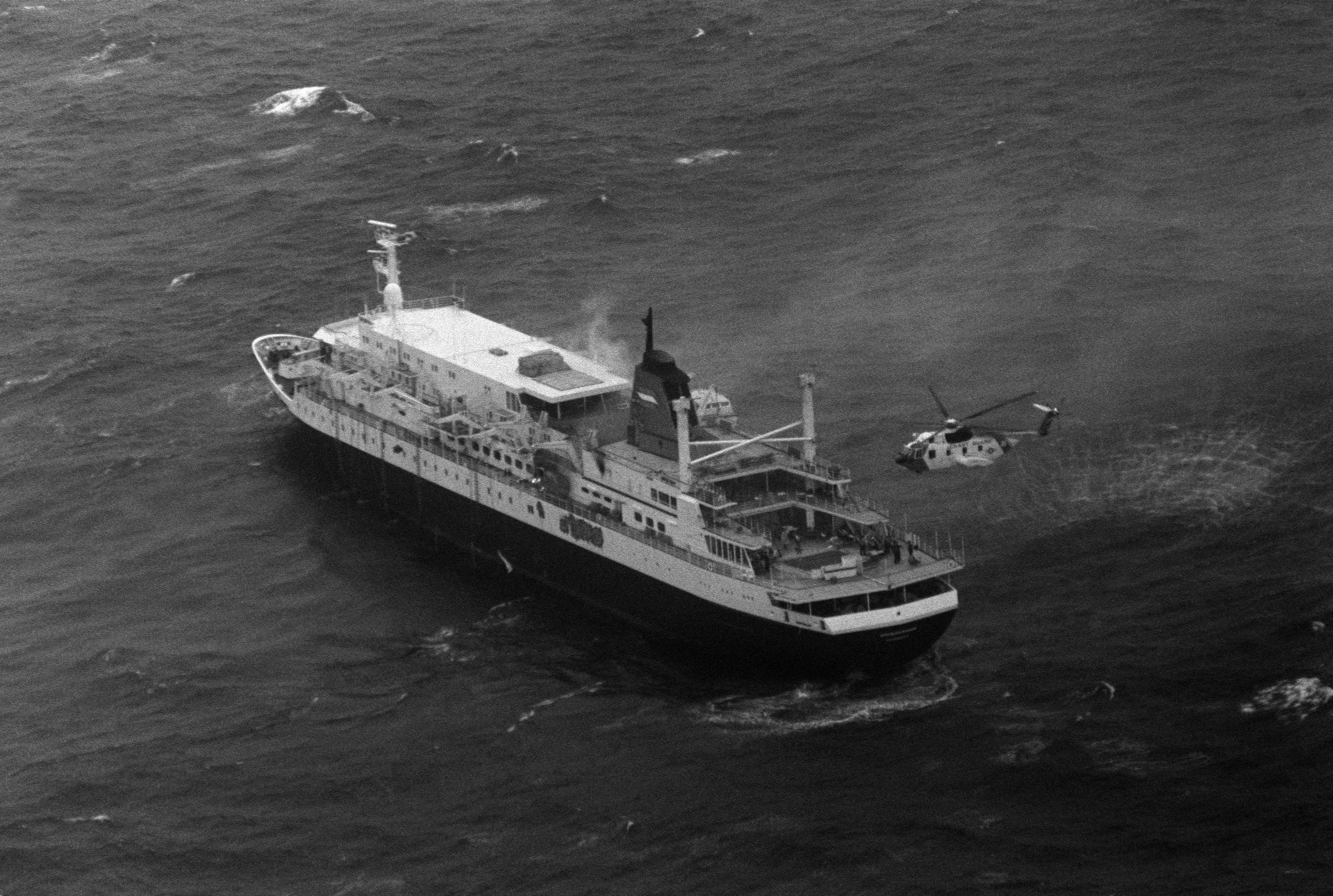
A US Coast Guard HH-3F Pelican helicopter hovers near the stern of the luxury liner PRINSENDAM in the Gulf of Alaska.

1980  A fire broke out on the Dutch cruise vessel Prinsendam off Ketchikan, Alaska.  Coast Guard helicopters and the cutters BoutwellMellon, and Woodrush responded in concert with other vessels in the area and rescued all of the passengers and crew without loss of life.

“The rescue is particularly noteworthy because of the distance traveled by the rescuers, the coordination of independent organizations, and the fact that all 520 passengers and crew were rescued without loss of life or serious injury.”

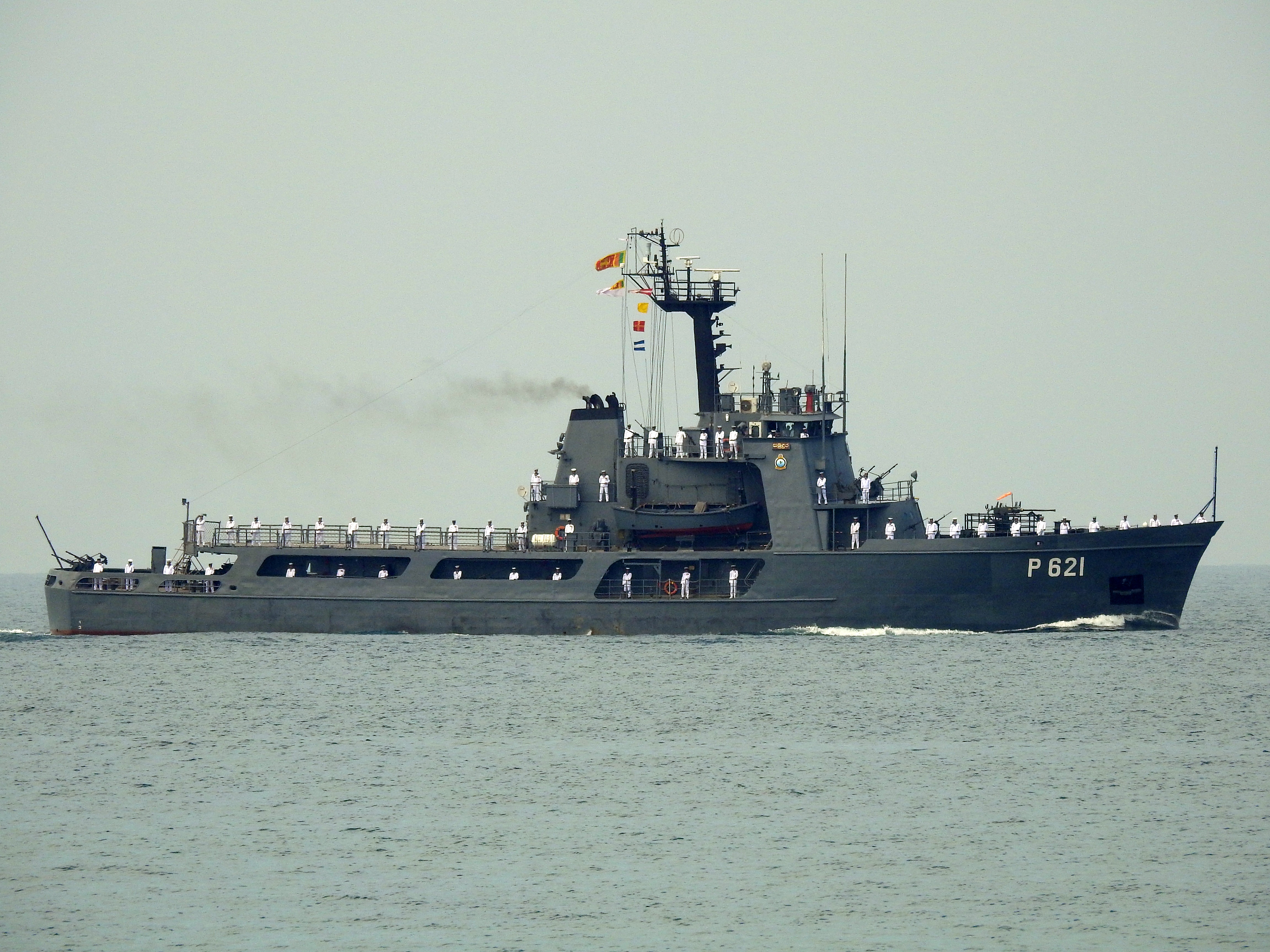
Former USCGC Courageous, now Sri Lanka Navy Ship Samudura P621. Photo by Rehman Abubakr

1995  Hurricane Opal swept through the Gulf of Mexico and made landfall in Destin, Florida.  Coast Guard units provided relief efforts, surveyed damage, and restored aids to navigation.  The CGC Kodiak Island (WPB1341) contacted the CGC Courgeous and requested assistance.  The Kodiak Island was battling 10 to 12-foot waves 100 miles west of Gasparilla, Florida, and experiencing flooding and a loss of steering control due to a hydraulic fluid leak.  A HC-130 from AIRSTA Clearwater flew to the scene to provide assistance and the Courageous went to escort the Kodiak Island to Group St. Petersburg.

2014  CG District Seven reported an individual in a self-propelled homemade hydro-pod bubble craft activated his Emergency Position Indicating Radio-beacon and SPOT device. An Air Station Clearwater HC-130 aircraft vectored in an MH-60 helicopter that hoisted the individual, and an Automated Mutual-Assistance Vessel Rescue System vessel recovered his craft. The individual was treated at Air Station Clearwater by Emergency Medical Services for extreme fatigue and released.

U.S. Coast Guard crews stopped Reza Baluchi (seen sticking his head out of his bubble craft) during his journey from Florida to Bermuda. 25 April 2016

This was not the last we would hear of this guy.