This Day in Coast Guard History, February 28

Based on the Coast Guard Historian’s timeline, https://www.history.uscg.mil/research/chronology/
With inspiration from Mike Kelso

February 28

1867  As ordered by the Treasury Department, each officer of Revenue Cutter Service, while on duty, was entitled to one Navy ration per day.

1871  Congress passed 16 Stat. 458 which addressed shortcomings in previous legislation regarding the inspection and certification of steamboats and their crews.  This Act established the Steamboat Inspection Service (SIS) within the Department of Treasury headed by a Supervisory Inspector General answerable to the Treasury Secretary.  The Act also provided SIS inspectors with greater authority over more aspects of the maritime field.

1942  Certain duties of the former Bureau of Marine Inspection and Navigation were transferred to the Coast Guard temporarily by Executive Order 9083.  The transfer was made permanent on July 16, 1946.  Also, the U.S. Maritime Service was transferred to the Coast Guard from the War Shipping Administration on this date.
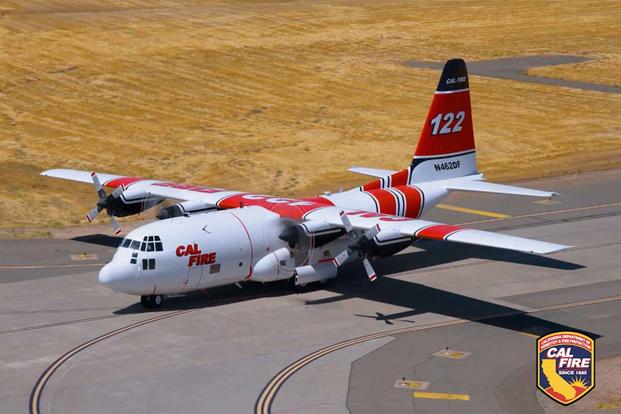
California officials have added a C-130 Hercules cargo plane to the firefighting fleet of the California Department of Forestry and Fire Protection, the state’s primary firefighting agency. (Courtesy Cal Fire/TNS)

1963  With the arrival of the ferry crew on this date to accept delivery of the HC-130B CGNR 1351 at Marietta, Georgia, the Coast Guard completed its program for the procurement of 12 long range, long endurance, four engine landplanes.  The aircraft were assigned to Air Station Elizabeth City and Air Detachments Argentia, San Francisco, and Barbers Point.

2004  Coast Guard units responded to an explosion aboard the 570-foot Singapore-flagged tanker Bow Mariner off the coast of Chincoteague, Virginia.  The Bow Mariner was carrying 6.5 million gallons of industrial ethanol when it exploded and sank.  The Coast Guard rescued six survivors.

USCGC Steadfast (WMEC 623)

2015  CGC Steadfast returned to its homeport of Astoria after a two-month Joint Interagency Task Force (JIATF) deployment.  Steadfast partook in multiple Coast Guard missions ranging from search and rescue, to counter-narcotics, to securing U.S. borders through enhancement of international relations, and coordination with other cutters and aircraft allowing the U.S. to stop drug trafficking before it reaches U.S. borders.  While returning from patrol off the coast of Central America, Steadfast offloaded approximately 725 kilograms of cocaine in San Diego.  The seized cocaine is worth an estimated wholesale value of more than $23 million.  The offload is a result of a successful drug interdiction in the Eastern Pacific Ocean on January 23, 2015.  While on a routine patrol, a maritime patrol aircraft working in conjunction with JIATF assets detected a suspicious go-fast vessel south of El Salvador.  Using information provided by the aircrew, Steadfast was able to vector the cutter’s Over-the-Horizon boat to intercept and conduct a law enforcement boarding of the suspect vessel.  Once aboard the go-fast vessel, the Coast Guard boarding team found 16 bales of contraband hidden throughout the 35-foot vessel that tested positive for cocaine.  The Coast Guard took three suspected smugglers into custody.  This seizure is one of many interdictions in the Eastern Pacific in recent months due to an increased presence of Coast Guard cutters in support of the Western Hemisphere Strategy.  The Western Hemisphere Strategy has been implemented by the Coast Guard and various other government agencies to protect U.S. borders by stopping illicit trafficking at the source.  Steadfast’s interdiction was part of Operation Martillo, which is one component in the United States government’s whole-of-government approach to countering the use of the Central American littorals as transshipment routes for illicit drugs, weapons, and cash.  Prior to the visit to San Diego, Steadfast participated in a North American Maritime Security Initiative (NAMSI) exercise off the coast of Ensenada, Mexico, February 21-22, 2015.

This Day in Coast Guard History, February 27

Based on the Coast Guard Historian’s timeline, https://www.history.uscg.mil/research/chronology/
With inspiration from Mike Kelso

February 27

1925  An Act of Congress repealed the law providing a ration allowance for keepers of lighthouses and increased their salaries correspondingly.  This change was not only advantageous to the light keepers, but also simplified office work.

iceberg patrol

PB-1G, CG-77249, on runway in Argentia, Newfoundland, running up engines, International Ice Patrol, 15 February 1954. Photo No. 021554-01. Original caption states: “U.S. Coast Guard plane, PB-1G (B-17), taking off on a 9-hour patrol.”

1949  Aerial ice observation flights by long-range aircraft operated from Argentia, Newfoundland.  An International Ice Patrol by vessels was neither required nor established during the 1949 season and it was the first time that aircraft alone conducted the ice observation service.

The U.S. Coast Guard Cutter USCGC Coos Bay (WAVP-376). Originally USS Coos Bay (AVP-25) was a Barnegat-class small seaplane tender commissioned by the U.S. Navy for use in the Second World War. From 1949 to 1966 she was loaned to the U.S. Coast Guard, first designated WAVP-376, later WHEC-376. After her return to the Navy, the Coos Bay was struck from the Naval Register and on 9 January 1968 she was expended as target by the guided missile destroyer USS Claude V. Ricketts (DDG-5), and 35 aircraft, 200 km (120 mi) off the coast of Virginia (USA).

1953  CGC Coos Bay, on Ocean Station Echo, about half-way between Bermuda and the Azores, rescued the crew of 10 from the U.S. Navy patrol plane that was forced to ditch in the Atlantic Ocean.

USCGC Dallas

2003  CGC Dallas was ordered to deploy overseas to support Operation Enduring Freedom and to prepare for future contingencies.  She was underway on patrol when she received the order from the Atlantic Area commander to sail overseas to the Mediterranean.  Dallas deployed with an HH-65B Dolphin helicopter and 7-member aircrew from Coast Guard Air Station Atlantic City, New Jersey.

2004  The Coast Guard repatriated 531 Haitian migrants to Port-au-Prince, Haiti, after they were rescued in the Windward Pass. The migrants were from 13 boats stopped since February 21, 2004.  The repatriations were completed by three cutters: CGC Valiant transported 290 migrants, CGC Vigilant delivered another 241, and CGC Nantucket escorted the cutters for safety and security. The migrants were turned over to the Haitian coast guard.

This Day in Coast Guard History, February 26

Based on the Coast Guard Historian’s timeline, https://www.history.uscg.mil/research/chronology/
With inspiration from Mike Kelso

February 26

Portrait of Hamilton authoring the first draft of the U.S. Constitution in 1787

1793  Alexander Hamilton, first Secretary of the Treasury, submitted to the Senate the first official list of cutters with stations, officers’ names, rank, and dates of commission.

1984  Five people died, three were injured, and 22 rescued when the tanker American Eagle exploded 180 miles southeast of New Orleans.  An AIRSTA New Orleans HH-3 took the three injured crewmen ashore while a British tanker watched over the crippled ship until a commercial tug could arrive.  The next day the American Eagle started to break up and sink.  The 24 remaining crewmen abandoned ship.  Oil rig supply boats and a Coast Guard helicopter recovered 22.  The other two became the subject of an HU-25 search, but the SAR case was suspended after three days.

This Day in Coast Guard History, February 25

Based on the Coast Guard Historian’s timeline, https://www.history.uscg.mil/research/chronology/
With inspiration from Mike Kelso

February 25

1799  Congress passed “An act respecting quarantines and health laws”, superseding the Act passed on May 27, 1796 (1 Stat. L., 619). The revenue cutters were again authorized to enforce quarantine laws.

USRC Eagle under full sail, in a painting by Patrick O’Brien. She was a topsail schooner, standard in revenue cutters of her period;

1799  Congress passed “An Act for the augmentation of the Navy” that authorized President John Adams to place the revenue cutters in the naval establishment.  This was done in response to the Quasi-War with France and it had the effect of “redefining the maritime character of the Revenue Cutter Service and making it a service with the dual character of a military establishment and of a maritime service” (Irving King, George Washington’s Coast Guard, p. 152).

1825  Congress empowered the Revenue Marine to enforce state quarantine laws.

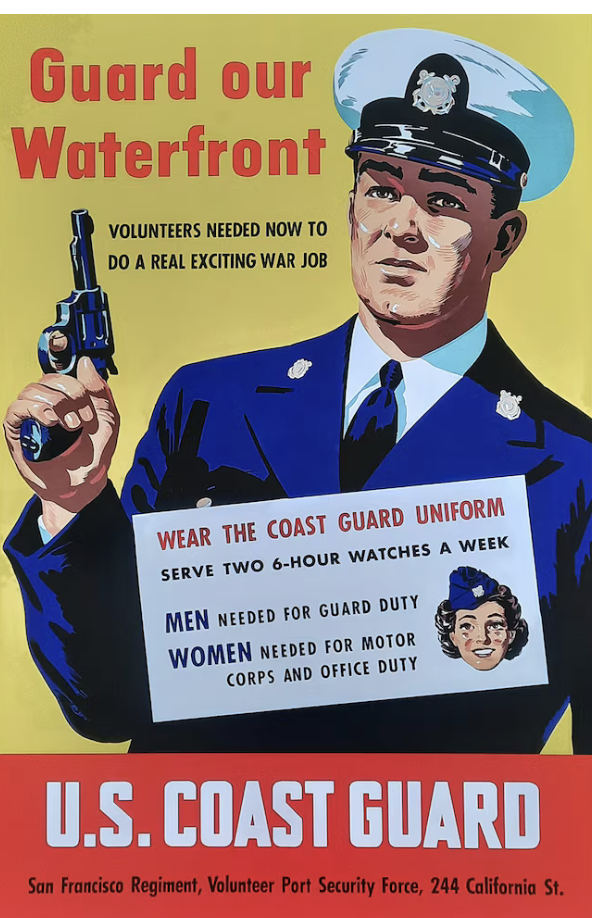
World War II-era Temporary Reserve Recruiting Poster. Photo by Capt. Bob Desh, U.S. Coast Guard retired.

1942  Wartime port security was delegated to the Coast Guard by Executive Order 9074.

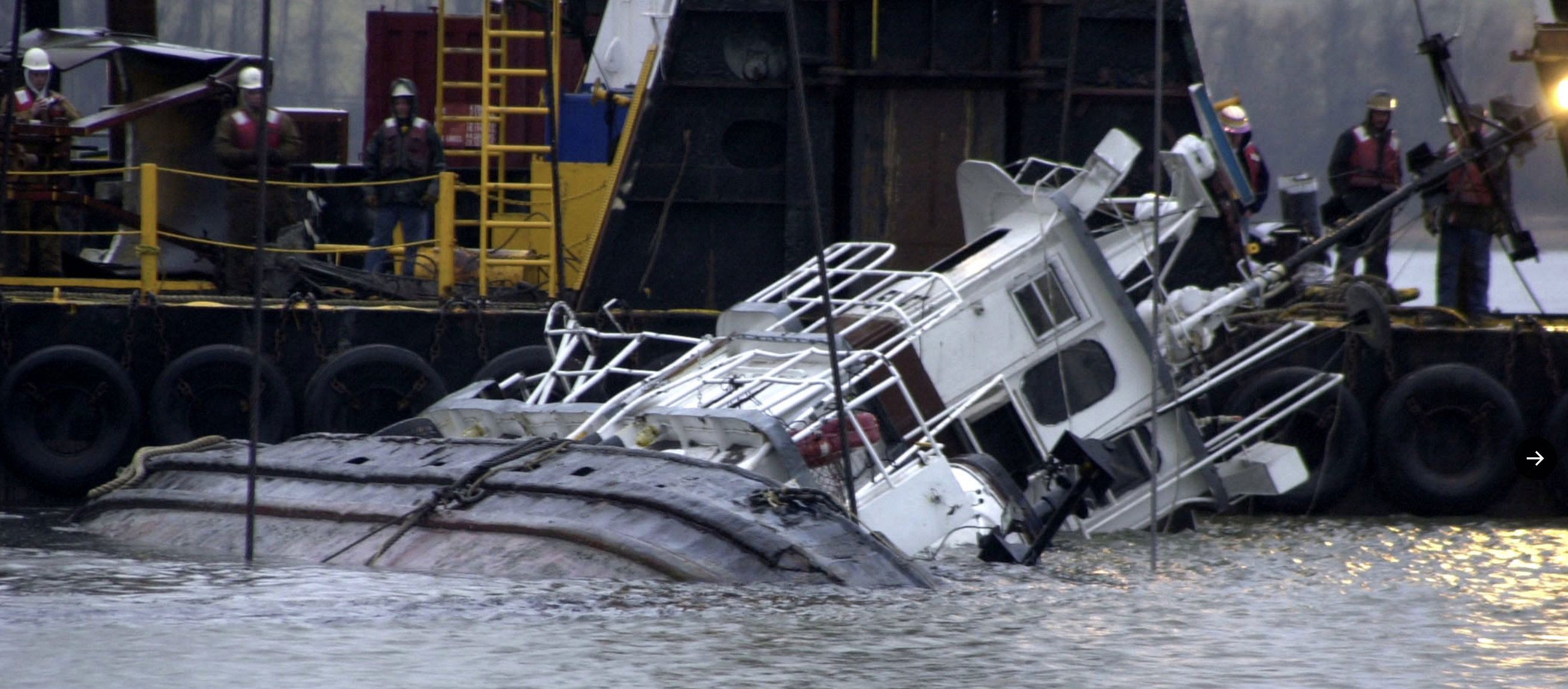
2001 The tugboat Swift sank after colliding with the freighter A.V. Kastner on the Elk River in the upper Chesapeake Bay. USCG units from New Jersey and Philadelphia worked with state police and local rescue agencies to rescue three survivors.

2001  The tugboat Swift sank after colliding with the freighter A.V. Kastner on the Elk River in the upper Chesapeake Bay.  Coast Guard units from New Jersey and Philadelphia worked with state police and local rescue agencies to rescue three survivors.  Four crewmen perished.  The Coast Guard also conducted the marine casualty investigation.

This Day in Coast Guard History, February 24

Based on the Coast Guard Historian’s timeline, https://www.history.uscg.mil/research/chronology/
With inspiration from Mike Kelso

February 24

1964  A U.S. Coast Guard ice skiff rescued 25 persons from an ice flow that had broken loose from the shore near Camp Perry, Ohio.  A similar rescue took place almost simultaneously at St. Clair Shores, Michigan when another Coast Guard ice skiff and a police helicopter removed five more from an ice flow.

1987  Coast Guard attorney LCDR Robert W. Bruce, Jr. became the first member of the armed forces to argue a case before the Supreme Court in uniform.  He represented the Coast Guard in Solorio vs. United States.

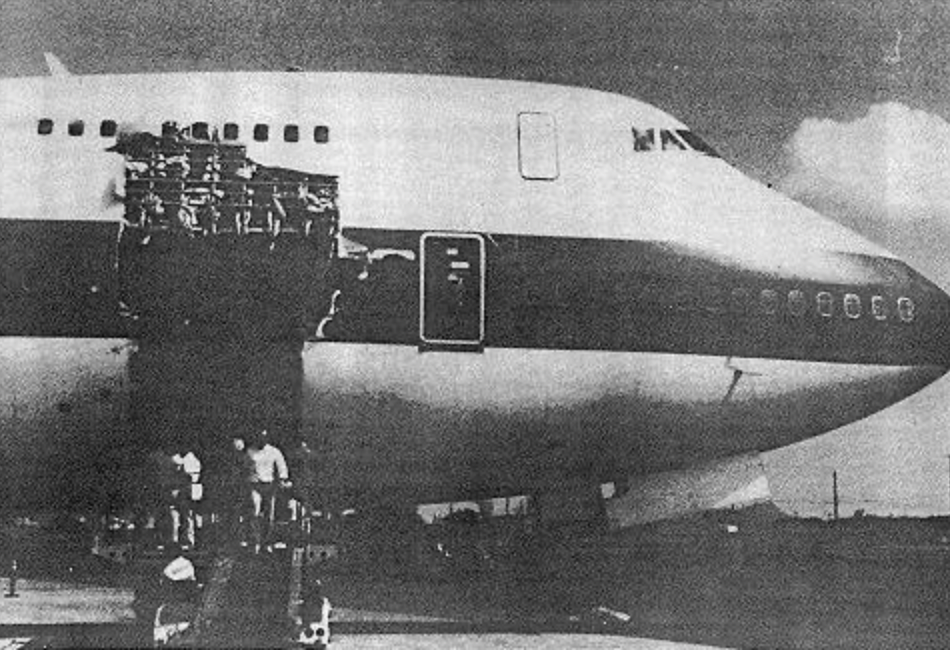
An NTSB photograph from the final report depicting the damage down to United 811

1989  United Airlines Flight 811, a Boeing 747 with 337 passengers aboard, suffered an explosive decompression resulting in the loss of nine passengers 17 minutes after departing Honolulu as it climbed between 22,000 and 23,000 feet. The aircraft subsequently landed having lost engines three and four. A Coast Guard HC-130, two helicopters, and CGCs Cape Corwin, Mallow and Sassafras searched for the lost passengers but found none. The units then assisted in the retrieval of debris.

This Day in Coast Guard History, February 23

Based on the Coast Guard Historian’s timeline, https://www.history.uscg.mil/research/chronology/
With inspiration from Mike Kelso

February 23

1822  Congress authorized the Revenue Cutter Service to protect the natural environment by preventing “scoundrels” from cutting down live oak on Florida public lands.  The oak was used for naval construction.

1837  Congress called for an inspection of the coast from Chesapeake Bay to the Sabine River “with regard to the location of additional light-houses, beacons, and buoys.”  Captain Napoleon L. Coste, commanding the Revenue cutter Campbell, was dispatched.  He reported that the first addition to aids to navigation on this entire coast should be at Egmont Key, Tampa Bay.  A lighthouse was authorized immediately and built the next year.

Dorr F. Tozier, USRCS

1877  First Lieutenant Dorr F. Tozier, USRCS assisted in saving the French bark Peabody, which had gone aground on February 23, 1877 off Horn Island in the Mississippi Sound.  Tozier was awarded a Gold Medal by the President of the French Republic “for gallant, courageous, and efficient services” in saving the French vessel.

A crewmember aboard a 26-foot over-the-horizon boat prepares to come alongside Coast Guard Cutter Alex Haley (WMEC 30) while underway in the Bering Sea in this 2019 photo. U.S. Coast Guard / Ensign Richard Zogby

2010  CGC Alex Haley returned to their homeport of Kodiak after an 80-day deployment to the South Pacific.  While on patrol in the South Pacific the crew of the cutter was involved in the rescue of 28 survivors of a shipboard fire and the subsequent sinking of the Taiwanese fishing vessel Hou Chun 11 900 miles southwest of Honolulu February 9th.  All 28 crew were rescued and delivered safely to Christmas Island, Kiribati.  The cutter’s expert medical team assisted two badly burned crewmen who were further medevaced by Coast Guard C-130 from Kiribati to Honolulu.


This Day in Coast Guard History, February 22

Based on the Coast Guard Historian’s timeline, https://www.history.uscg.mil/research/chronology/
With inspiration from Mike Kelso

February 22

USCGC Campbell (WPG-32) heading to port at Norfolk Navy Yard. 26 July 1943. US National Archives, photo 80-G-76569

1943  CGC Campbell under the command of CDR James A. Hirshfield and assigned to the international escort group A-3 that was escorting Convoy ON-166 through the North Atlantic, engaged numerous submarine contacts during a running battle across the sea.  Campbell’s attacks damaged at least two U-boats.  The cutter also rescued 50 survivors from a torpedoed Norwegian freighter.  Then, on February 22, 1943, as Campbell returned to the convoy after rescuing the Norwegians, it detected a radar contact closing the convoy.  Campbell raced toward the target and soon made visual contact.  It was the surfaced U-606, earlier disabled by a depth charge attack delivered by the Free Polish destroyer Burza.  Campbell closed to ram while its gunners opened fire.  The big cutter struck the U-boat with a glancing blow and one of the submarine’s hydroplanes sliced open Campbell’s hull, flooding the engine room.  The crew dropped two depth charges as the submarine slid past, and the explosions lifted the U-boat nearly five feet.  Hirshfield later noted, “I felt sure he was ours.”  Campbell illuminated the U-boat with a spotlight and the gunners continued to fire into the submarine’s conning tower and hull.  Hirshfield was hit by shell fragments but remained at his station.  When he realized the Germans had given up, he ordered his men to cease firing.  Campbell then rescued five of the U-606‘s crew.  Due to the collision, Campbell was towed to safety, repaired, and returned to service.  CDR Hirshfield was awarded the Navy Cross for this action.

1944  Coast Guardsmen participate in the invasion of Parry Island in the Marshall Islands.

1966  Division 13 of Coast Guard Squadron One (RONONE) arrived at Cat Lo for service with Operation Market Time in Vietnam.

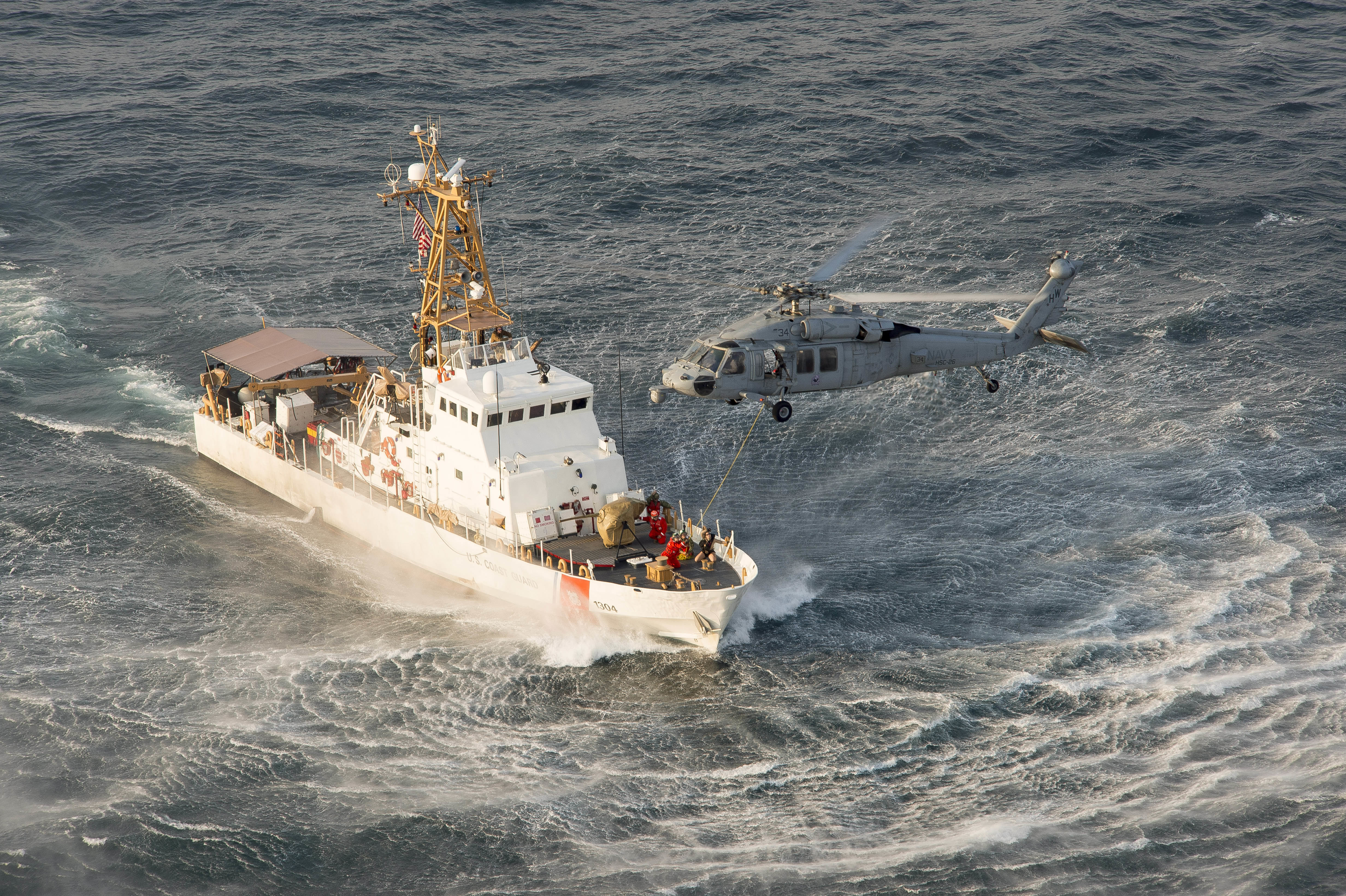
141219-N-DX365-258
BAHRAIN (Dec. 19, 2014) Helicopter Sea Combat Squadron (HSC) 26, Det. 1, conducts a vertical onboard delivery with the U.S. Coast Guard Cutter Maui (WPB 1304). HSC-26 is a forward deployed naval force asset attached to Commander, Task Force 53 to provide combat logistics and search and rescue capability throughout the U.S. 5th Fleet area of responsibility. (U.S. Navy photo by Mass Communication Specialist 1st Class Joan E. Jennings/Released)

2015  CGC Maui returned to her homeport in Bahrain after a prolonged period supporting the Combined Maritime Forces (CMF) counter-terrorism and maritime security task force, Combined Task Force 150 (CTF-150), patrolling the Gulf of Oman and the North Arabian Sea from December 2014 to February 2015. Maui was the first US Coast Guard Cutter to provide direct support of CTF-150 since 2011 and the first such ship to operate outside the Straits of Hormuz in nearly two years.  Despite the challenges of the small cutter’s company, with only 21 sailors onboard, Maui was called upon to do more than what is normally expected from a ship of her size, filling a major role in the mission.  The boarding team executed several boarding and approach and visit operations, and the ship’s executive team provided valuable data about the maritime traffic in and around the Gulf of Oman and North Arabian Sea, strengthening CTF-150’s understanding of the maritime picture in the area.  Throughout the patrol, Maui was able to coordinate with the patrol craft, destroyers, aircraft and oilers supporting CTF-150’s mission, ensuring maximum radar coverage, vectoring ships to boarding opportunities, and coordinating logistics.  At one point, Maui extended the normal endurance of a Coast Guard cutter, spending a total 13 days at sea.

This Day in Coast Guard History, February 21

Based on the Coast Guard Historian’s timeline, https://www.history.uscg.mil/research/chronology/
With inspiration from Mike Kelso

February 21

USCGC Spencer (WPG-36) in 1942 or 1943. Spencer sank U-175 with assistance of USCGC Duane, on April 17, 1943.

1943  CGC Spencer received credit from the U.S. Navy for attacking and sinking the U-225 in the North Atlantic.  The British Ministry of Defence has since recorded that the U-225 was actually destroyed by B-24 Liberator “S” of RAF No. 120 Squadron on February 15, 1943 and they have revised the official British records to reflect this change.  However, the renowned German naval historian, Professor-Dr. Jurgen Rohwer, stated that Spencer “probably” attacked and sank the U-529 instead, although the Spencer has not received official credit for that sinking.

2008  On February 20, 2008, two U.S. Air Force F-15C fighter jets from Eglin Air Force Base, Florida, collided over the Gulf of Mexico off Panama City.  Coast Guard HC-144A, No. 2303, and its crew, which were diverted to the scene from a routine training flight.  They located the first pilot and directed his recovery.  Both F-15C pilots were eventually recovered; regrettably only one was recovered alive.  This search & rescue (SAR) mission included two important “firsts” for the U.S. Coast Guard’s new HC-144A Ocean Sentry Maritime Patrol Aircraft.  For the HC-144A, the incident marked its first SAR mission, and its first use as an On-Scene Coordinator (OSC) platform.

This Day in Coast Guard History, February 20

Based on the Coast Guard Historian’s timeline, https://www.history.uscg.mil/research/chronology/
With inspiration from Mike Kelso

February 20

1845  President John Tyler vetoed a bill providing that no cutter be built nor purchased unless an appropriation was first made by law, on grounds that sanctity of contract of those already contracted for should not be overridden by Congress.  Congress overrode his veto on March 3, 1845.

The U.S. Coast Guard Cutter USCGC Coos Bay (WAVP-376). Originally USS Coos Bay (AVP-25) was a Barnegat-class small seaplane tender commissioned by the U.S. Navy for use in the Second World War. From 1949 to 1966 she was loaned to the U.S. Coast Guard, first designated WAVP-376, later WHEC-376. After her return to the Navy, the Coos Bay was struck from the Naval Register and on 9 January 1968 she was expended as target by the guided missile destroyer USS Claude V. Ricketts (DDG-5), and 35 aircraft, 200 km (120 mi) off the coast of Virginia (USA). (The 40mm and boats suggest this is early in Coos Bay’s Coast Guard service.–Chuck)

1964  CGC Coos Bay rescued 11 of the crew of the foundering British freighter Ambassador in heavy seas, 1,000 miles east of Boston.  Coast Guard aircraft from Air Station Argentia, Newfoundland, were first on the scene after the freighter issued an SOS on February 18th. The Coos Bay, on Ocean Station patrol 350 miles distant, steamed to the area and arrived there 24 hours later.  In concert with the Norwegian freighter Fruen, they managed to get lines aboard the wallowing Ambassador in what was called one of the most dramatic rescues of the year.  Demonstrating outstanding seamanship during the rescue, the cutter’s commanding officer, Commander Claude W. Bailey, was awarded the Legion of Merit.  Many of his crew had volunteered to enter the frigid water to assist in the rescue as well.  Two were awarded the Coast Guard Medal while seven others received the Coast Guard Commendation Medal.

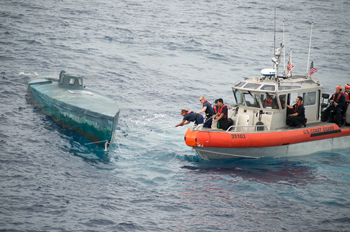
A team aboard Coast Guard Cutter Stratton’s long range interceptor-II cutter boat participates in the interdiction of a self-propelled semi-submersible vessel in the Eastern Pacific Ocean July 18, 2015. U.S. Coast Guard photo by Petty Officer 2nd Class LaNola Stone. 

2013  The first LRI-II was delivered by MetalCraft Marine U.S. to the Coast Guard on this date and commenced testing activities soon after. The LRI-II, which were built to be deployed on the National Security Cutter fleet, was 35 feet long with a range of over 220 nautical miles and was capable of achieving speeds in excess of 38 knots. “The stern-launched LRI-II’s high speed and extended range significantly enhanced its host cutter’s ability to execute missions while underway, particularly in migrant interdiction and law enforcement operations where teams need to be put on scene quickly. Its ability to extend the reach of its host cutter is also critical to search and rescue operations, enabling NSC cutter crews to patrol larger search areas. The LRI-II can carry up to 15 passengers, including crew, and safely operate in seas up to 13 feet.”


This Day in Coast Guard History, February 18

Based on the Coast Guard Historian’s timeline, https://www.history.uscg.mil/research/chronology/
With inspiration from Mike Kelso

February 18

1842  The House of Representatives passed a resolution requesting the Committee on Commerce make an inquiry into the expenditures of the Lighthouse Establishment since 1816. This was to explore the possibility of cutting down on expenses, to examine the question of reorganizing the establishment and administration, and also to ascertain whether the establishment should be placed under the Topographical Bureau of the War Department.

Douglas RD “Dolphin” (1932)

1935  Three newly acquired Douglas RD Dolphin amphibious aircraft, CG-131, CG-132, and CG-133, took off from Clover Field, Santa Monica, California on “the first every trans-continental flight ever undertaken by a unit of Coast Guard men and planes.”  CG-131 flew to Air Station Cape May, CG-132 flew to Air Station Biloxi, while CG-133 flew to its assigned duty station at Air Station Miami.  All aircraft arrived safely.  Total flight time for CG-133 totaled 25 hours and 50 minutes.

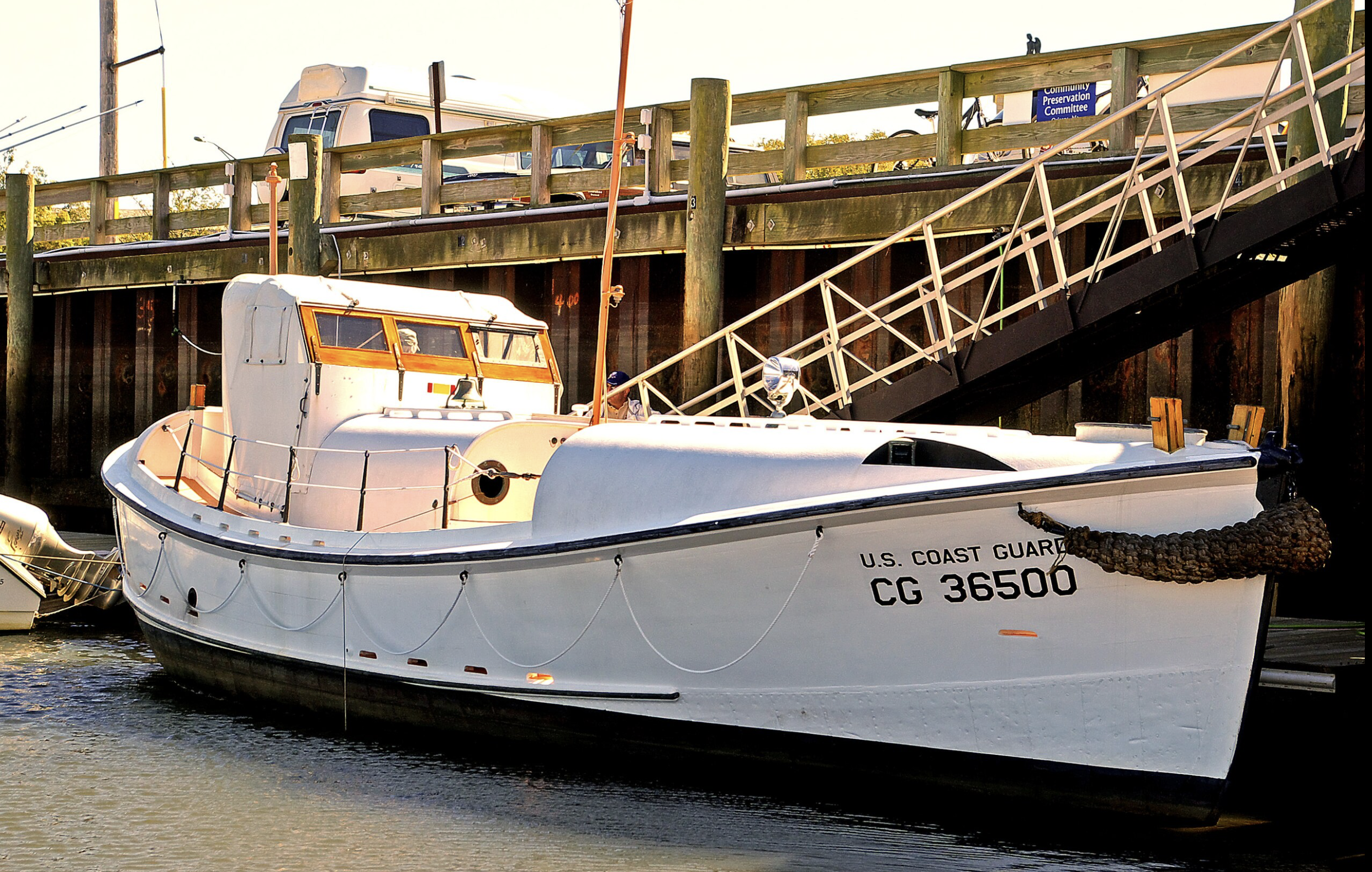
MLB CG 36500 used by coxswain Bernard C. Miller

1952  During a severe “nor’easter” off the New England coast, the T-2 tankers SS Fort Mercer and SS Pendleton each broke in half.  Coast Guard vessels, aircraft, and lifeboat stations, working under severe winter conditions, rescued 70 persons from the foundering ships.  Five Coast Guardsmen earned the Gold Lifesaving Medal, four earned the Silver Lifesaving Medal, and 15 earned the Coast Guard Commendation Medal.

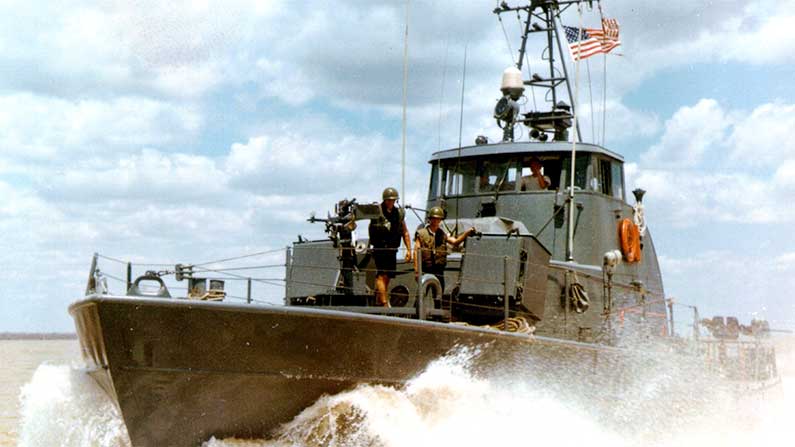
The 82-foot patrol boats of Squadron One (RONONE) deploying from Subic Bay in the Philippines to the theater of operations in Vietnam. (U.S. Coast Guard)

1966  Division 13 of Coast Guard Squadron One (RONONE) departed for Cat Lo.

1968  Engineman First Class Robert J. Yered was awarded the Silver Star for action on February 18, 1968 while attached to Explosive Loading Detachment #1, Cat Lai, Republic of Vietnam.  EN1 Yered was supervising the loading of explosives on board an ammunition ship when an enemy rocket struck a barge loaded with several tons of mortar ammunition moored alongside.  His citation noted that “without regard for his personal safety, [he] exposed himself to the enemy fusillade as he helped extinguish the fire on the burning barge…His courageous act averted destruction of the ammunition ship, and the Army Terminal.”  EN1 Yered also received the Purple Heart for injuries suffered during the incident.

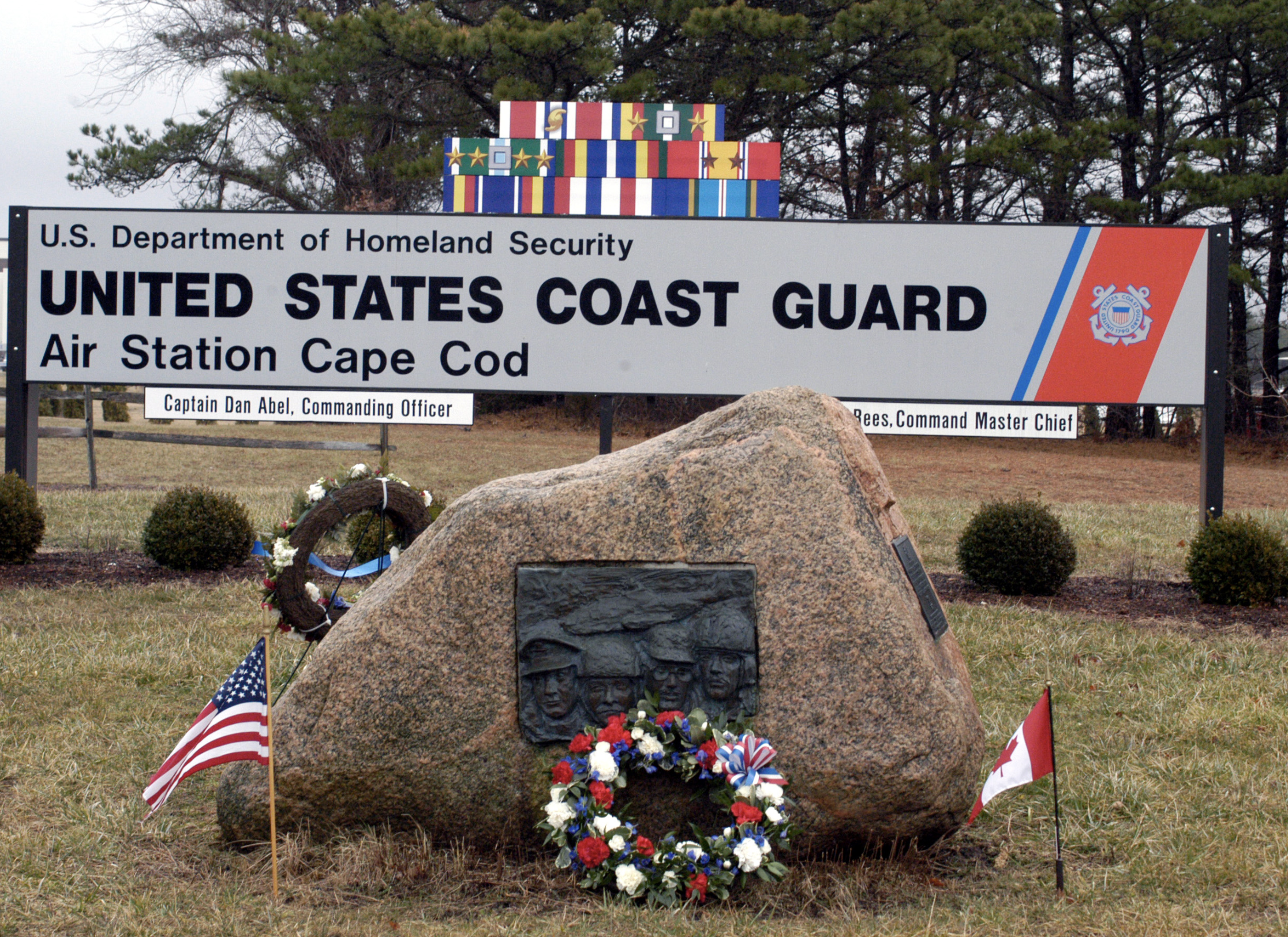
A memorial to the fallen sits at the entrance to CGAS Cape Cod

1979  Coast Guard HH-3F helicopter CG-1432 crashed 180 miles southeast of Cape Cod, killing four of its five occupants. The helicopter was preparing to airlift a 47 year old crewman from the Japanese fishing vessel Kaisei Maru #18.

Lost on the mission were:
LCDR James D. Stiles
CPT George R. Burge
AT2 John B. Tait
HM2 Bruce A. Kaehler