This Day in Coast Guard History, February 16/17

Based on the Coast Guard Historian’s timeline, https://www.history.uscg.mil/research/chronology/
With inspiration from Mike Kelso

February 16

US Coast Guard Academy, New London, CT

1926  Congress authorized the Secretary of the Treasury to “acquire a site at New London, Connecticut, without cost to United States, and construct thereon buildings for the United States Coast Guard Academy at a total cost not to exceed $1,750,000.”

February 17

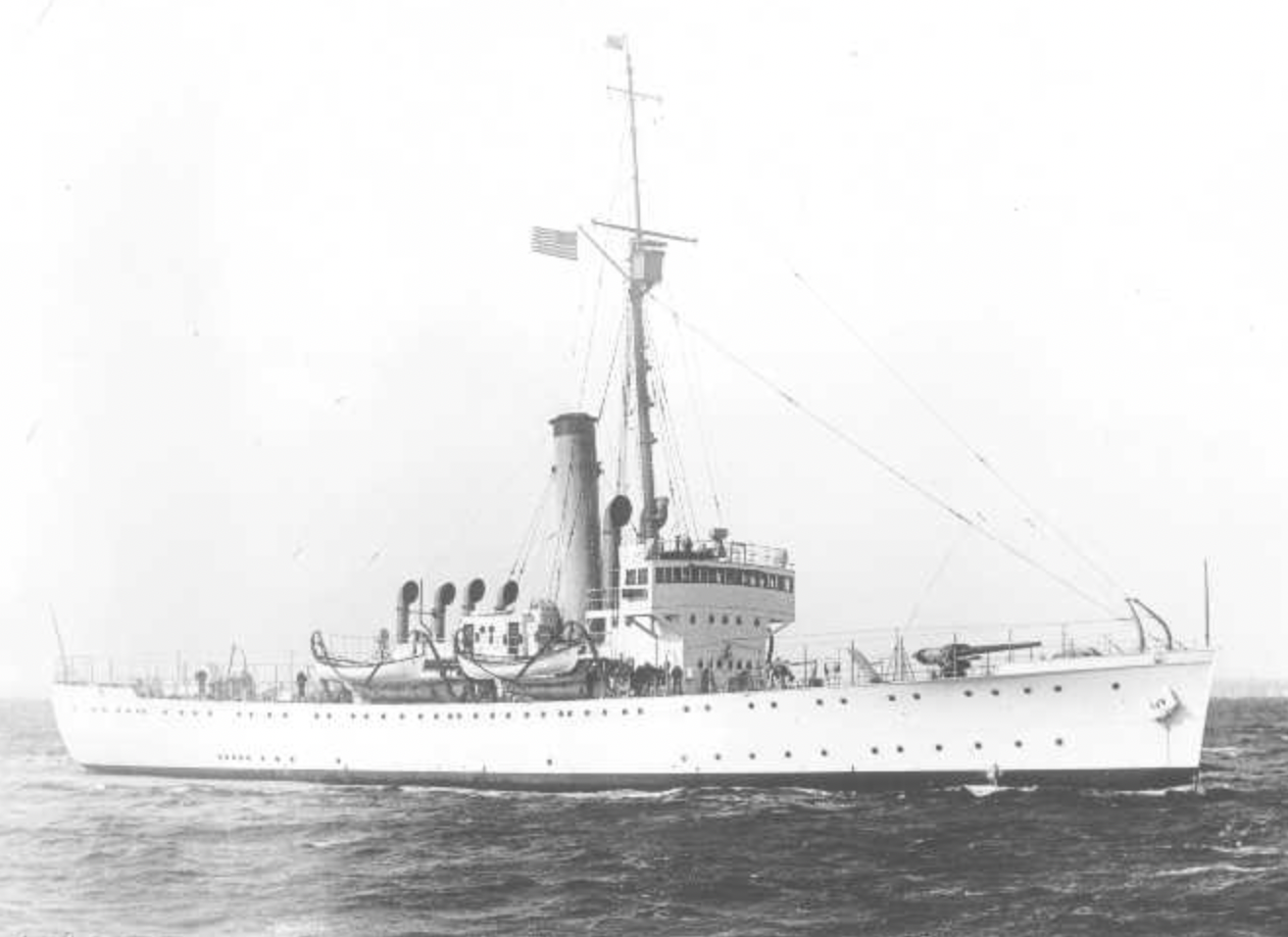
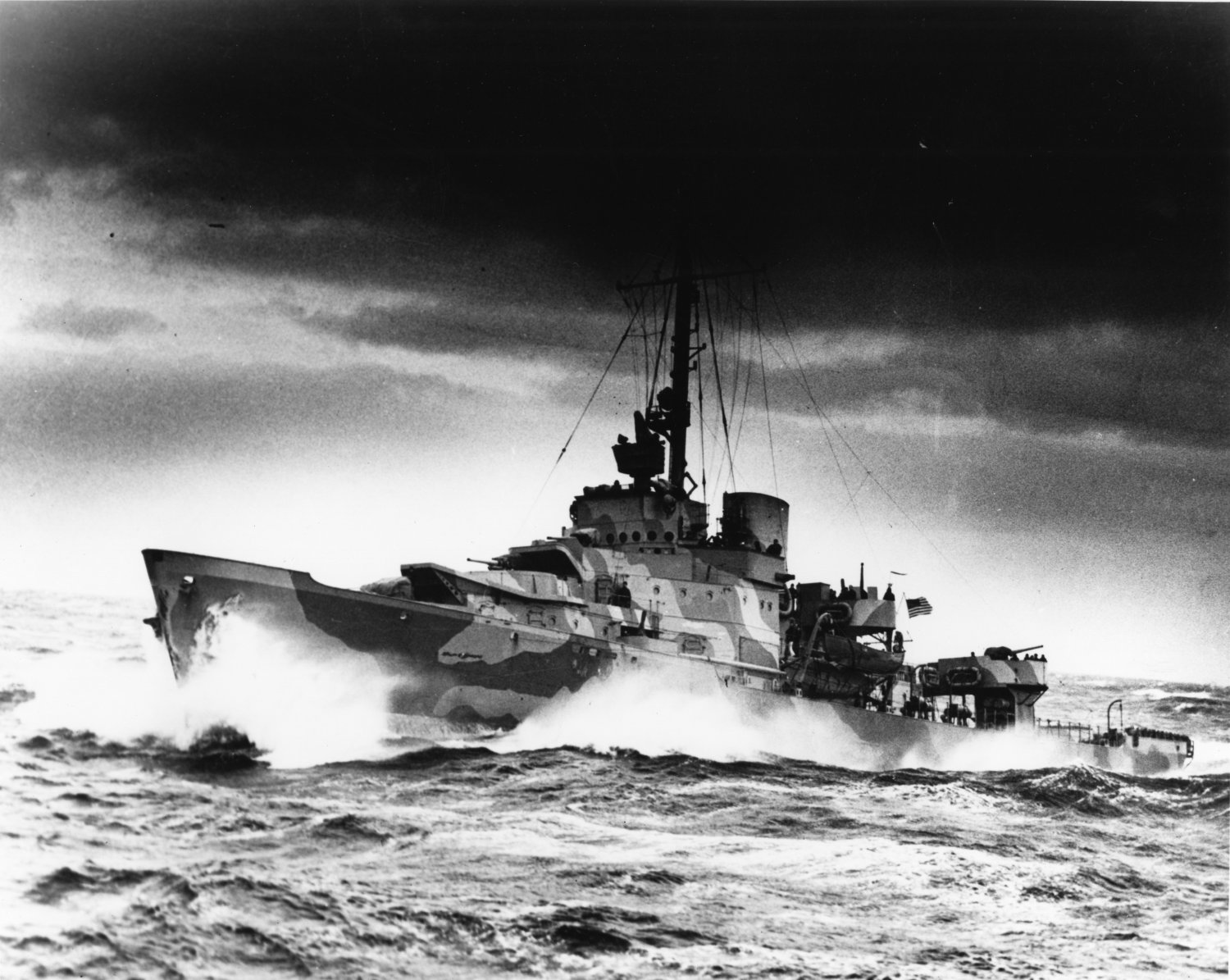
USCGC Nike, same class as the ships of the West Coast Squadron

1934  CGCs Daphne, Hermes, Perseus, Aurora, and Calypso stood out from New York harbor, bound for their new duty station on the West Coast.  They arrived safely in San Diego, California on March 21, 1934 after passing through the Panama Canal.  The cutters formed and were referred to as the “West Coast Squadron” of the Coast Guard.
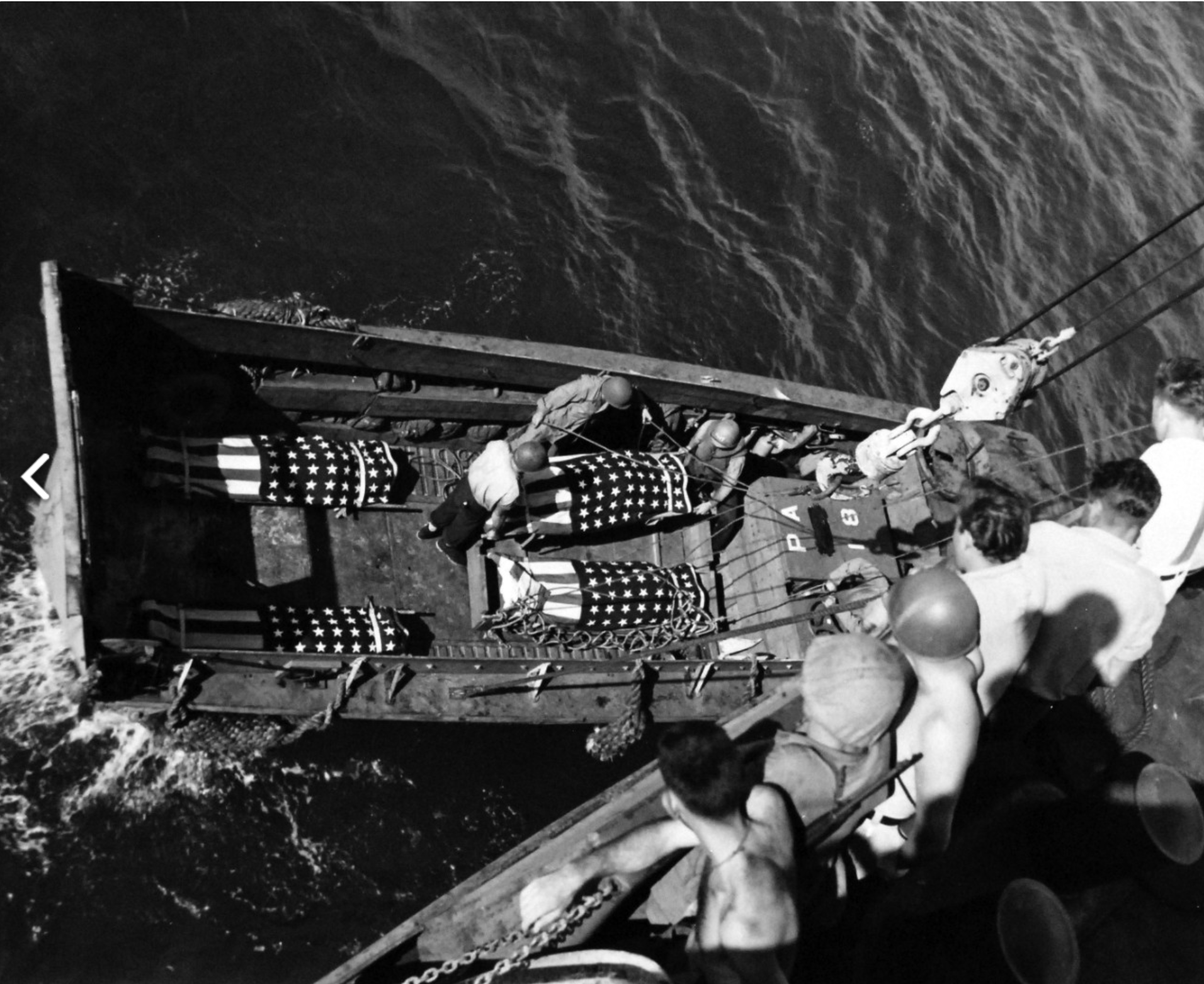
Operation Catchpole, February 1944. U.S. Marines who died from wounds received in the attack on Parry Island, Eniwetok Atoll, Marshall Islands, being transferred from transport to be carried to beach for burial. Photograph received February 22, 1944. Official U.S. Navy Photograph, now in the collections of the National Archives. (2016/11/25). Accession #: 80-G-216210

1944  Coast Guardsmen participated in the invasions of Eniwetok and Engebi, Marshall Island.

USCGC CASCO 1961

1956  CGC Casco saved 21 persons from a U.S. Navy seaplane that was forced to ditch 100 miles south of Bermuda. The cutter then took the disabled seaplane under tow and delivered both the survivors and the seaplane to the Naval Air Station at St. Georgia Harbor, Bermuda.
This Day in Coast Guard History, February 15

Based on the Coast Guard Historian’s timeline, https://www.history.uscg.mil/research/chronology/
With inspiration from Mike Kelso

February 15

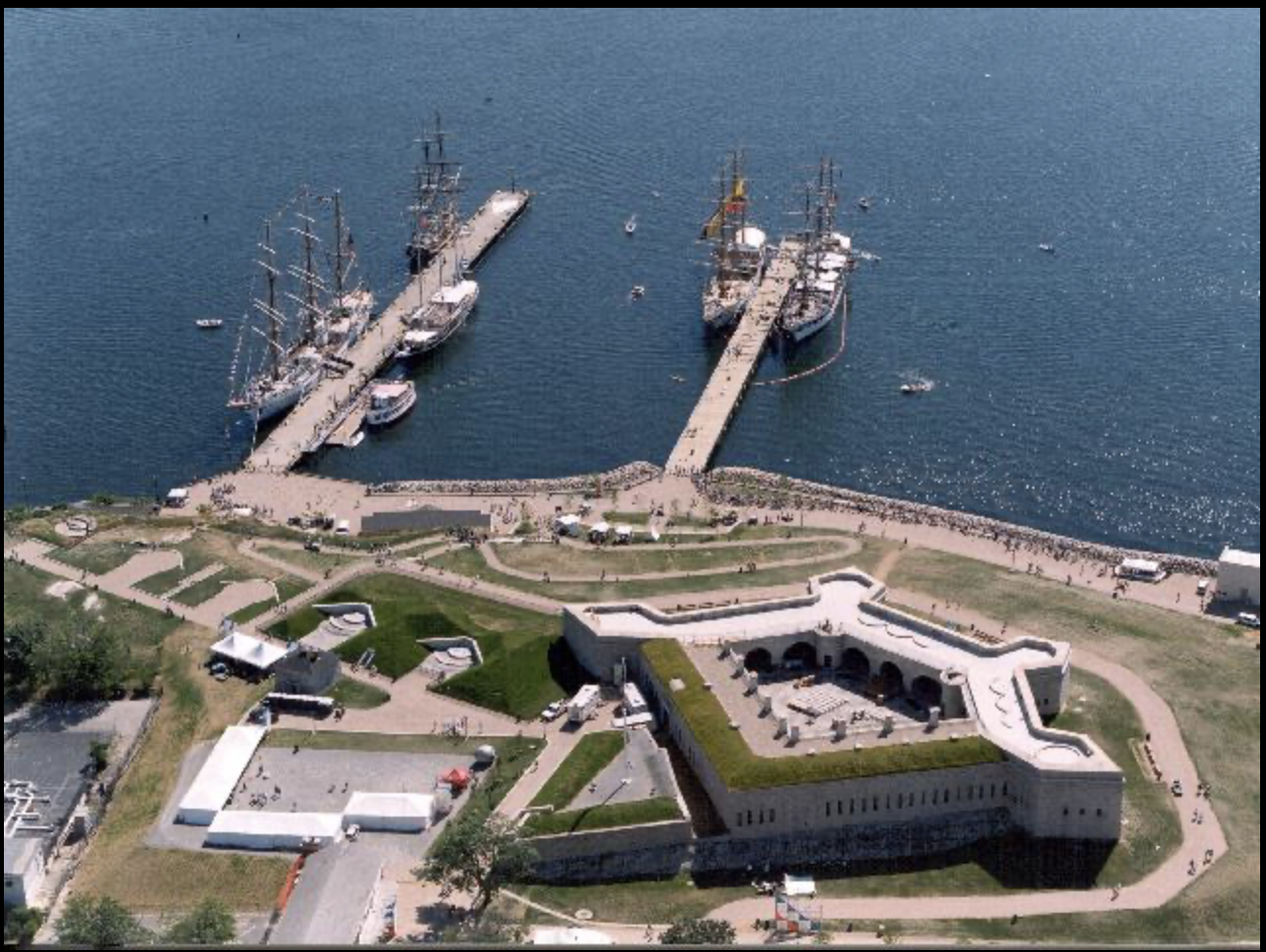
Fort Trumbull

1911  Congress transferred Fort Trumbull, New London, Connecticut from the War Department to the Treasury Department for the use of the Revenue Cutter Service as its cadet training school.

USCGC  Calypso’s sister ship USCGC Argo, World War II.

1943  CGC Calypso removed 42 persons from a lifeboat from the torpedoed vessel SS Buarque (Brazil) east of Cape Henry.

1980  The 70-foot fishing vessel Donna Catalina sank 40 miles south of Nantucket Island.  After pumps lowered to the four-man crew failed to keep up with the flooding, a Coast Guard helicopter lifted the fishing vessel’s crew to safety.

2015  CGC Polar Star successfully rescued the Australian-flagged F/V Antarctic Chieftain which had been trapped in Antarctic ice 900 miles northeast of McMurdo Sound, Antarctica, for nearly two weeks.  The rescue operation spanned more than 860 miles and required Polar Star to break through 150 miles of thick Antarctic ice and navigate around icebergs that were miles wide.  Antarctic Chieftain damaged three of its four propeller blades in the ice, which required Polar Star to tow the vessel through about 60 miles of ice into open water.  Towing the 207-foot fishing vessel through heavy ice placed varying strain on the tow line, which broke three times during the rescue mission.  Once in open water, Antarctic Chieftain was able to maneuver under its own power.  The crew of F/V Janas escorted Antarctic Chieftain to Nelson, New Zealand.  Polar Star reached the crew of the fishing vessel February 13 after traveling across more than 150 miles of ice.  The fishermen requested assistance from Rescue Coordination Centre New Zealand Tuesday evening after becoming trapped in the ice.  RCC New Zealand requested CGC Polar Star, homeported in Seattle, to respond to Antarctic Chieftain’s request for assistance.  Polar Star was deployed to McMurdo Station, Antarctica, as part of Operation Deep Freeze.  After the successful rescue, Polar Star then continued its journey home to Seattle.

This Day in Coast Guard History, February 14

Based on the Coast Guard Historian’s timeline, https://www.history.uscg.mil/research/chronology/
With inspiration from Mike Kelso

February 14

1903  An Act of Congress (31 Stat. L., 825, 826, 827) that created the Department of Commerce and Labor provided for the transfer of the Lighthouse Service and the Steamboat Inspection Service from the Treasury Department.  This allowed the Secretary of Commerce and Labor to succeed to the authority vested in the Secretary of the Treasury under the existing legislation.

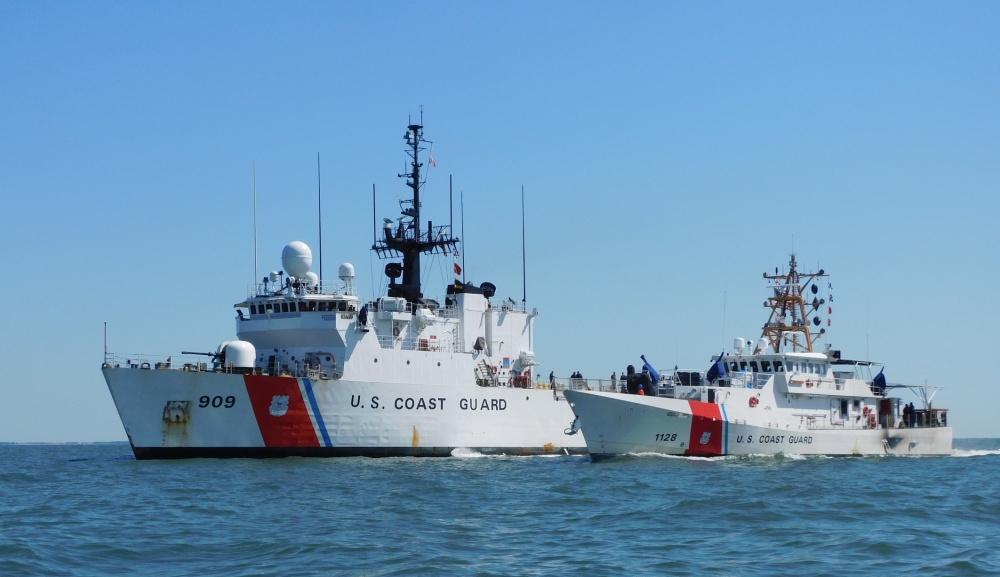
The crew of the Coast Guard Cutter Bruckenthal participates in a fueling exercise with the Coast Guard Cutter Campbell on the Chesapeake Bay, April 11, 2020. The Coast Guard acquired the first Sentinel Class cutter in 2012, with the namesake of each cutter being one of the service’s many enlisted heroes. (U.S. Coast Guard photo by Petty Officer 3rd Class Isaac Cross)

2016  CGC Campbell returned to its homeport at Portsmouth Naval Shipyard in Kittery, Maine, following a 61-day counter narcotics patrol of the Caribbean Sea and Eastern Pacific Ocean.  In the span of one month Campbell seized or disrupted a total of seven smuggling vessels carrying cocaine from South America bound for the United States.  The amount of cocaine seized was estimated to be 4,800 pounds and worth more than $80 million dollars.  In addition, Campbell’s crew rescued eight Cuban migrants attempting to sail from Cuba to the United States in an unseaworthy vessel.  Campbell deployed in support of the Joint-Interagency Task Force-South, which is in an international operation to disrupt the transportation of narcotics.  In doing so, Campbell worked with air, land, and naval assets from the U.S. Department of Defense and the Department of Homeland Security, as well as Western Hemisphere partner agencies, to counter drug trafficking.

This Day in Coast Guard History, February 11

Based on the Coast Guard Historian’s timeline, https://www.history.uscg.mil/research/chronology/
With inspiration from Mike Kelso

February 11

1973  Due to the draw-down of U.S. forces in South Vietnam the post of Senior Coast Guard Officer, Vietnam, was discontinued.

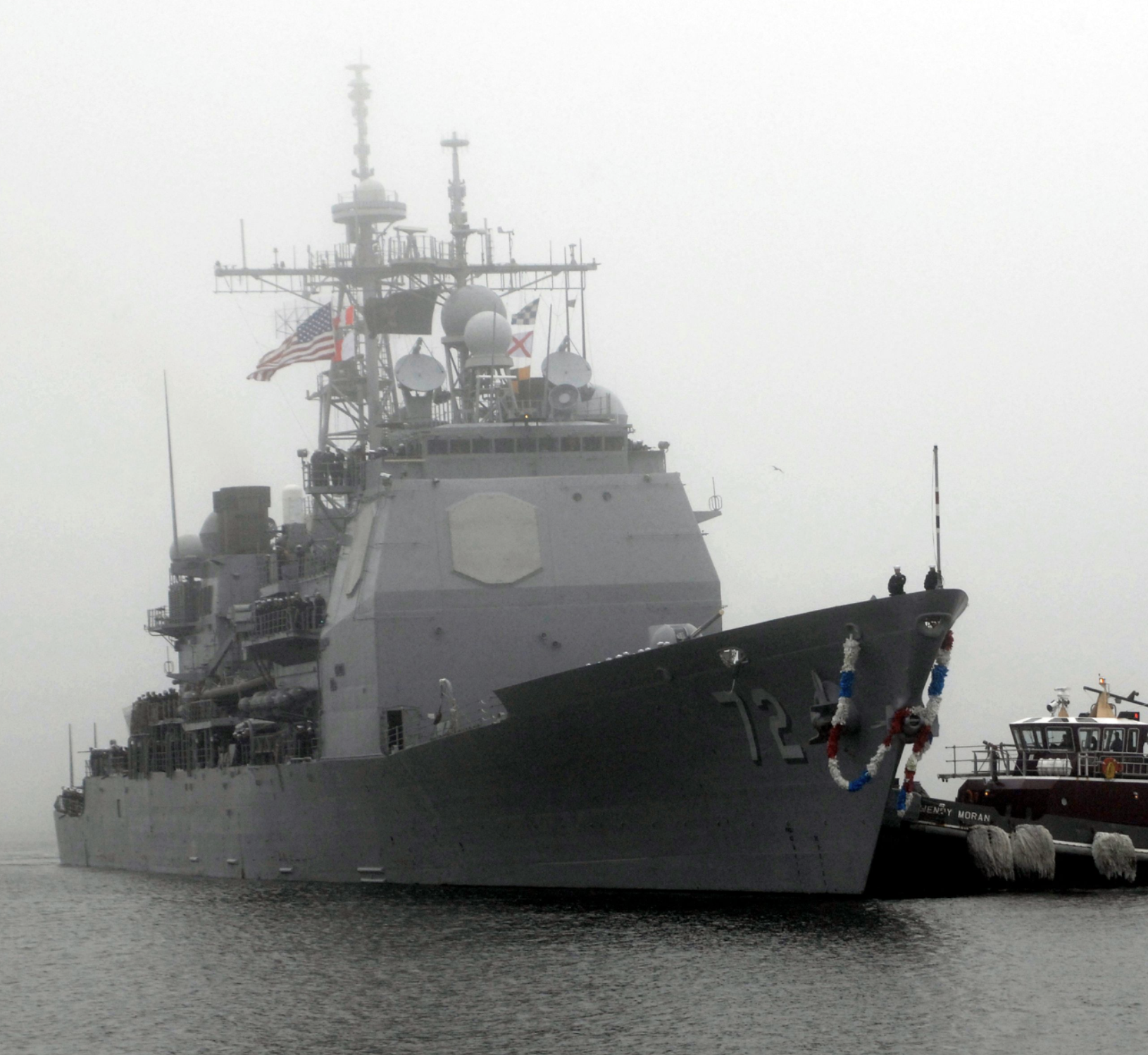
Norfolk, VA, 27 March 2009 – The guided-missile cruiser USS Vella Gulf (CG 72) returns to Naval Station Norfolk after a seven-month deployment. Vella Gulf deployed as part of the Iwo Jima Amphibious Ready Group supporting maritime security operations and theater security cooperation efforts in the U.S. 5th and 6th Fleet areas of responsibility.
U.S. Navy photo #090327-N-3595W-045 by Mass Communication Specialist 2nd Class Gina K. Wollman/Released

2009  Miami-based LEDET 405, operating as part of Combined Task Force (CTF) 151 and conducting counter-piracy operations aboard USS Vella Gulf (CG-72) and USS Mahan (DDG-72) in the Gulf of Aden, assisted in the apprehension of 16 suspected pirates in a 24-hour period.

Brigands attacked Marshall Islands-flagged motor vessel Polaris in the Gulf of Aden, and she issued a distress call at 1500 on 11 February 2009. Vella Gulf came about, made speed for the area, and captured seven pirates. At 1600 the following day, additional pirates in a skiff fired at Indian-flagged Prem Divya and attempted to board the merchantman. A Seahawk flying from Vella Gulf raced to the area and signaled for the skiff to stop. The pirates continued and the helo fired a warning shot, which the pirates also ignored. The Seahawk then fired a second warning shot and the skiff stopped. VBSS teams from Vella Gulf and Mason boarded the boat and apprehended nine more pirates, together with their weapons, including a rocket propelled grenade launcher. The cruiser transferred the 16 pirates to a temporary holding facility on board the dry cargo ship Lewis and Clark (T AKE 1).

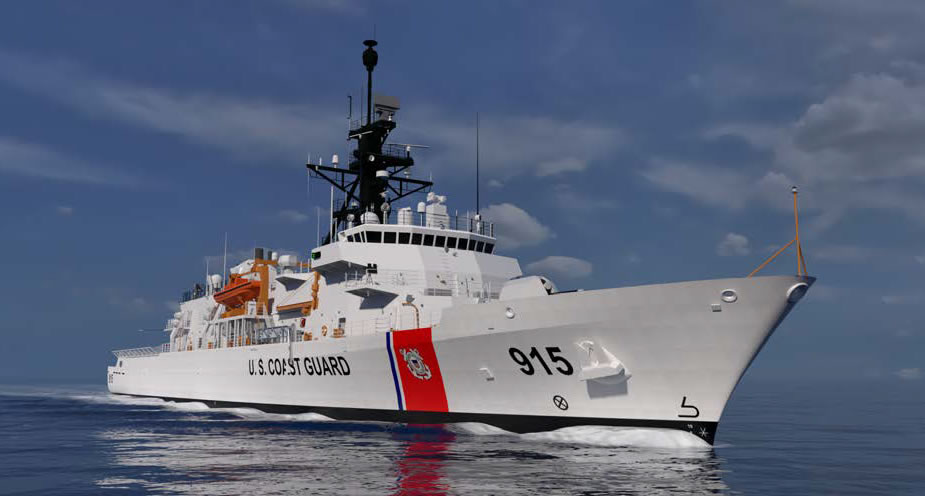
Artists rendering from Eastern Shipbuilding Group

2014  The Coast Guard awarded three firm fixed-price contracts for preliminary and contract design for the Offshore Patrol Cutter (OPC) acquisition project.  The contracts were awarded to Bollinger Shipyards Lockport LLC (Lockport, Louisiana), Eastern Shipbuilding Group Inc. (Panama City, Florida), and General Dynamics, Bath Iron Works (Bath, Maine).  The OPC would fill Coast Guard and DHS offshore mission requirements and provide capabilities between the Coast Guard’s Fast Response Cutter and National Security Cutter, while replacing the aging 210-foot and 270-foot medium endurance cutters. (And now, 11 years later, we still do not have our first OPC.)

The Reliance Class Cutter USCGC Valiant (WMEC-621) underway on a routine fisheries patrol in the Gulf of Mexico.

2015  CGC Valiant returned home to Naval Station Mayport Wednesday, after completing a six-week deployment in the Florida Straits and Eastern Caribbean Sea in support of operations Southeast Watch and Unified Resolve.  Valiant responded to a surge of illegal migration attempts in the Florida Straits following the U.S. government announcement to normalize relations with Cuba.  The cutter humanely processed and cared for 160 Cuban migrants in a one-week period.  Valiant also boarded and towed a coastal freighter following its failed attempt to deliver more than 1,000 kilograms of cocaine into Puerto Rico.  Valiant’s crewmembers conducted a search of the vessel, took custody of its crew, and towed the freighter over 120 miles to Ponce, Puerto Rico, where it was transferred to Homeland Security Investigations and Border Patrol authorities.  The freighter’s crew was turned over for prosecution in federal court.  During the cutter’s logistics stop in San Juan, Puerto Rico, the crew took time to visit two orphanages that care for infants and primary school children.  The crew distributed more than 200 new toys they brought with them from Mayport and spent two afternoons playing with the children.

Caleb Brewster, Revolutionary War Soldier, Spy and War of 1812 Revenue Cutter CO

Caleb Brewster was a secondary character in the TV series “Turn, Washington’s Spies,” but he was a main character in the formation of George Washington’s Culper spy ring and in Coast Guard history.

Brewster initiated the Culpepper spy ring,

“Again in the dark for critical intelligence, Washington, to his great relief, received an unsolicited letter written on August 7, 1778 – a day that could be considered the start of the Culper Spy Ring.  It was written by Caleb Brewster in Norwalk, offering to gather intelligence on Long Island Washington instructed Brewster to “not spare any reasonable expense to come at early and true information.” Brewster wrote his first intelligence report on August 27, 1778. He warned Washington that Sir Henry Clinton was planning to attack the Continental Army strong point in Newport, Rhode Island, allowing Washington to take precautions to avert an attack.”

He was wounded in a “spy boat fight”  the British in 1782.

Caleb Brewster was injured on December 7, 1782 during a naval exchange with British troops on Long Island Sound.  He was hit by a musket ball through his shoulder, or “breast,” as he described in his letter to President George Washington.

He commanded the Revenue Cutter Active 1812 to 1816.

During the War of 1812, the cutters Active and Eagle kept very busy escorting merchantmen between New England and the mid-Atlantic states.

Of the war’s revenue-cutter masters, Captain Caleb Brewster of the Active proved the most experienced intelligence-gatherer, having been part of an effective spy ring supplying information to General George Washington during the Revolutionary War. On 26 May 1813, a New York newspaper reported that the Active braved a “strong south gale” near Montauk Point, Long Island, to maintain surveillance of three British men-of-war about ten miles out to sea. Employing local small craft, Captain Brewster sped the information to U.S. Navy Commodore Stephen Decatur, whose squadron was trapped in Long Island Sound. Brewster continued providing military intelligence to New York officials regarding enemy naval operations until the war’s end.

During the summer of 1813, the cutter Active sailed through the British squadron blockading Commodore Decatur’s flotilla near New London, Connecticut. The Active provided force protection for Decatur’s warships and delivered reports, messages, and naval intelligence between the commoedore’s flotilla and authorities in New York.

22 January 1814 near Sandy Hook, New Jersey, when a boarding party from the Active inspected the merchant ship Fair American, which had special papers to sail for Liverpool, England. In what became a rather sensational story at the time, Caleb Brewster’s crew found 11 men without passports concealed in the ship’s hold and several men of wealth disguised as seamen. They caught others among the crew trying to destroy illegal documents. The Active’s boarding party found bills, orders, and drafts for supplying the Royal Navy and the British military in Canada and the West Indies and arrested a number of passengers, including two smuggled British prisoners of war. A New York newspaper described the incident as demonstrating “the development of a most nefarious and long continued system of smuggling, [and] victualing the British and contravening the most imperious laws and highest interests of the country.”

Why haven’t we named a cutter after this man?

This Day in Coast Guard History, February 10

Based on the Coast Guard Historian’s timeline, https://www.history.uscg.mil/research/chronology/
With inspiration from Mike Kelso

February 10

1840  A House resolution was introduced to inquire into transferring the Revenue Marine to the Navy.

USCGC Tahoe; underway, pre-World War II.

1938  CGC Tahoe departed New Bedford, Massachusetts, to inaugurate the 1938 “International Ice Observation Service” (now referred to as the International Ice Patrol).

As part of the Lend-Lease Act she was transferred to the Royal Navywhere she was renamed HMS Fishguard (Y59) and commissioned on 12 May 1941. In May 1944, the crew of Fishguard boarded U-852 and captured her crew after she was damaged by British aircraft.

USCGC Bibb relieving on Ocean Station. This was photo is post-World War II. 

1940  CGCs Bibb and Duane inaugurated the Coast Guard’s participation in the nation’s manned ocean station program when they took their positions on Ocean Stations No. 1 and 2 in the North Atlantic on this date.  They also became the first vessels to make radio transmissions as “weather stations.”

Alex Haley, USCG photo

1992  Retired Coast Guard Chief Journalist Alex Haley, internationally noted author, crossed the bar.

1995  The 689-foot tank ship Mormac Star, carrying more than 4.7 million gallons of Jet A fuel and nearly 5.7 million gallons of number 2 diesel fuel, ran aground in Sandy Hook Channel, two miles off the beaches of Sandy Hook, New Jersey, spilling 33,600 gallons.  COTP New York responded.  Other responding units included Stations New York and Sandy Hook, VTS New York, and the Atlantic Area Strike Team.  The spill was successfully contained and the vessel salvaged.

At approximately 1930 on February 10, 1995, the USCG Group New York received a call from the Vessel Traffic Service informing them that the inbound T/V Mormac Star was hard aground next to Sandy Hook Channel between buoys 4 and 6 with her port side extending into the channel. The vessel was carrying 112,000 barrels of Jet A fuel and 135,000 barrels of #2 fuel oil.
Weather on-scene was 35°F, 10 knot west-southwest winds, and three-foot seas.
USCG Marine Inspection Office (MIO) and COTP personnel responded on-scene. The FOSC requested assistance from the USCG Atlantic Strike Team (AST) and two AST members responded by aircraft that had FLIR capabilities. The vessel owner took immediate responsibility and contracted services for booming and open-water recovery. Tank #6 Center (C) (22,000-barrel capacity) was sounded and found to be leaking #2 fuel oil at a rate of approximately 100 barrels per hour. Skimmers operated in the immediate vicinity of the vessel to recover what little product there was on open water. A 90,000-barrel barge was deployed to lighter the tanker enough so that the vessel would refloat naturally. Once tanks #2C and #6C were sufficiently emptied, the vessel refloated and was towed to general anchorage about three miles off Sandy Hook to complete lightering before going to the harbor for repairs. Although hampered by strong currents, divers discovered a two-inch hole in the #6C tank that they patched temporarily. Weather postponed further lightering and the vessel was towed to its original destination in the Arthur Kill to complete lightering.
Federal trustees from the Department of Commerce (DOC), NOAA, and the Department of the Interior (DOI) were briefed on the situation but only the NOAA SSC responded on-scene. Boom was deployed as a precaution at some sensitive areas identified in the Area Contingency Plan, but no shoreline or wildlife impacts were reported.

This Day in Coast Guard History, February 9

Based on the Coast Guard Historian’s timeline, https://www.history.uscg.mil/research/chronology/
With inspiration from Mike Kelso

February 9

John Allen Midgett was recognized by the UK government for saving UK seamen in 1918. The Coast Guard later named the USCGC Midgett (WHEC-726) and USCGC Midgett (WMSL-757) after him.

1938  Chief Boatswain (L) John Allen Midgett, Commanding Officer of Station Chicamacomico, died in the U.S. Marine Hospital in Norfolk, VA, from injuries he sustained in an automobile accident on January 23, 1938.  Chief Midgett was the hero of the 1918 Mirlo rescue for which he was awarded a Gold Lifesaving Medal.

DC-7

1965  Eastern Air Lines, flight 663 DC-7B with 84 persons on board exploded in midair off Jones Beach, Long Island.  Despite an extensive search by seven Coast Guard cutters, six Coast Guard aircraft, and a U.S. Navy tug, no survivors were located.  Only nine bodies and various pieces of debris were located and recovered.

The 28-man crew from the abandoned fishing vessel Hou Chun 11 cling to life rafts 900 miles south of Honolulu, Feb. 9, 2010. Coast Guard crews from Hawaii and Alaska responded to the 28-member crew and provided medical assistance. U.S. Coast Guard video by Coast Guard Air Station Barbers Point.

2010  CGC Alex Haley rescued a 28-member crew from the disabled fishing vessel Hou Chun 11 900 miles southwest of Honolulu.  Corpsmen aboard the cutter treated two of the crewmembers who suffered severe burns.  The crew of the cutter Alex Haley sailed to Christmas Island, Kiribati, where the two burn victims were medevaced by a Coast Guard HC-130 Hercules based out of AIRSTA Barbers Point.  The remaining 26 were transported ashore for transport to a vessel that returned them to Taiwan.

This Day in Coast Guard History, February 8

Based on the Coast Guard Historian’s timeline, https://www.history.uscg.mil/research/chronology/
With inspiration from Mike Kelso

February 8

UF-1 Albatros

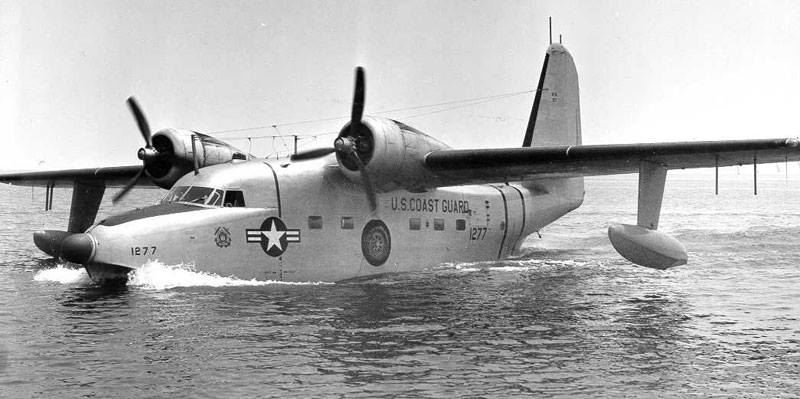
1958  A U.S. Navy P5M aircraft enroute from San Juan to Norfolk lost one engine and changed course to the island of San Salvador, British West Indies, to attempt a night ditching.  AIRSTA Miami sent up a Coast Guard UF amphibian plane, later reinforced by a second amphibian.  After contacting the disabled Navy plane, the pilot of the first amphibian talked the Navy pilot out of attempting to ditch without benefit of illumination and alerted the commanding officer of the Coast Guard LORAN station on San Salvador for assistance after ditching.  In true Coast Guard tradition, the LORAN station’s CO borrowed a truck and an 18-foot boat to assist.  The commanding officer managed to be on the scene 1-1/2 miles offshore, when the Navy P5M landed with two minutes of fuel remaining.  While one of the amphibians provided additional illumination, the Navy plane was guided through a dangerous reef to a mooring, using her operative port engine.  There were no casualties.

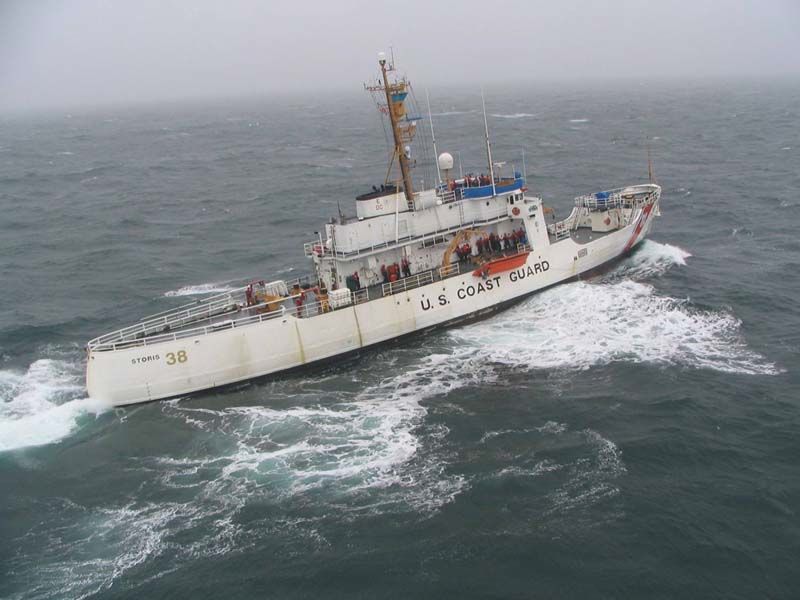
USCGC Storis, a Arctic Patrol Cutter.

2007  USCGC Storis was decommissioned after 64 years of service.

USCGC Alex Haley

2015  USCGC Alex Haley returned to Kodiak, Alaska, following a successful 70-day deployment patrolling more than 10,800 miles throughout the Bering Sea and Aleutian Islands.  Alex Haley, known as the “Bulldog of the Bering,” departed Kodiak on December 1, 2014 and spent 70 days conducting law enforcement and community outreach operations in the Bering Sea and Aleutian Islands.  During the deployment, Alex Haley’s crew performed 41 at sea domestic fisheries enforcement boardings and covered more than 5,000 square miles in search efforts for the sunken Korean fishing vessel 501 Oryong.

This Day in Coast Guard History, February 7

Based on the Coast Guard Historian’s timeline, https://www.history.uscg.mil/research/chronology/
With inspiration from Mike Kelso

February 7

The USCGC Champlain on the International Ice Patrol, circa mid-1930s. USCG photo.

1914  Pursuant to the Convention for Safety at Sea in London, President Woodrow Wilson directed that the Revenue Cutter Service undertake the task of manning the International Ice Patrol.  Henceforth, the Revenue Cutter Service and then the Coast Guard, with brief respites during both World Wars, served in this capacity, a traditional mission still undertaken to this day.

1942  Presidential order created the War Shipping Administration (WSA).  The WSA assumed control over all phases of merchant marine activities, including training, which the Coast Guard had been conducting since 1938.

USCGC Ingham (WPG-35) underway in heavy seas, circa 1941-1944, location unknown.
US Coast Guard photo # 2000225945

1943  During a fierce convoy battle near Greenland, CGC Ingham rescued 33 survivors from the torpedoed troopship SS Henry Mallory, while CGC Bibb rescued 202.  Bibb then rescued 33 from the torpedoed SS Kalliopi.

1969  CGC Tern, commissioned on this date and stationed in New York, embodied an advanced concept in servicing aids to navigation.  Her over-the-stern gantry system of handling buoys was unique.  The automation and modernization of over-age, isolated lighthouses and light stations showed significant progress this year.  A new, more effective version of the LAMP (Lighthouse Automation and Modernization Project) plan was promulgated in this year as well.

USCGC Cape Cross (WPB-95321), a sistership of Cape Horn

1980  CGC Cape Horn saved all six crewmen of the F/V Hattie Rose in a dramatic night-time rescue.  The Hattie Rose, a Gloucester-based 75-foot stern trawler, began taking on water in 25-foot seas and 45-knot winds, 15 miles east of Provincetown.  Sea and wind conditions prevented a rescue by air and so the Cape Horn, under the command of LTJG William L. Ross, and 11 crewmen, diverted from one SAR case to go to the Hattie Rose’s assistance.  The F/V Paul and Dominic, standing nearby the stricken vessel, helped direct the cutter to the area.  The Cape Horn’s crew got a line to the men, now standing on the bow which was still afloat, and pulled four of the crew to safety aboard the cutter.  The line parted, however, and the two remaining fishermen began drifting away, but two of the Cape Horn’s crew, Duncan Grant and Thomas Jennings, leaped into the 35-degree water and secured a line around the two.  They were all then hauled safely aboard.

This Day in Coast Guard History, February 6

Based on the Coast Guard Historian’s timeline, https://www.history.uscg.mil/research/chronology/
With inspiration from Mike Kelso

February 6

1893  Secretary of Treasury was authorized to define and establish anchorage grounds for vessels in harbor of Chicago and adjacent waters of Lake Michigan.

USCGC Nike

1942  CGC Nike rescued 38 persons from SS China Arrow which had been torpedoed off Ocean City, Maryland.

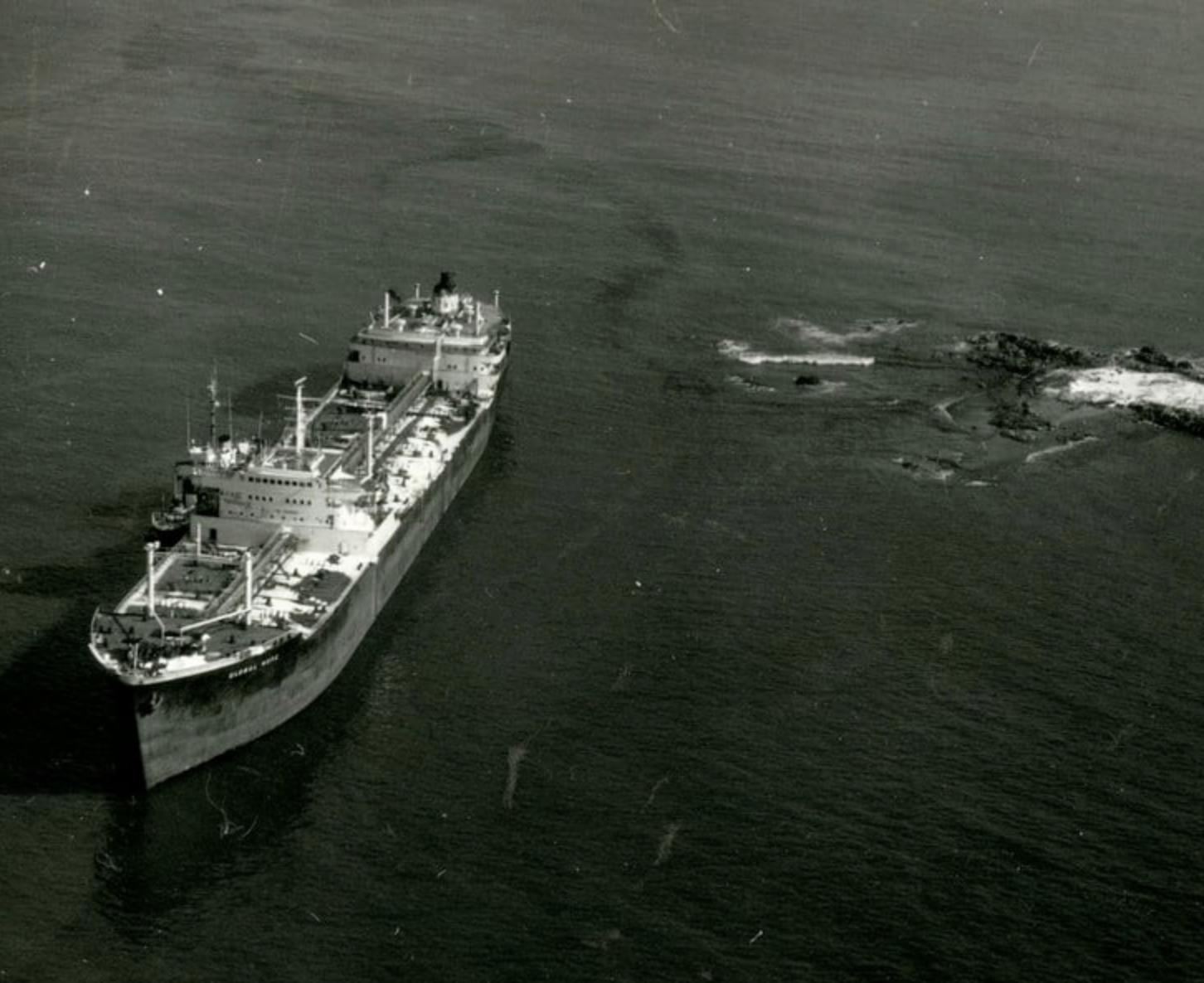
This photograph is looking easterly at the grounded tanker Global Hope near Salem Harbor. Coney Island is to the east of the entrance to the harbor. Marblehead lies to the south. There is an oil slick near the stern of the vessel. Historical Photographs

1978  Coast Guard units from the First and Third Districts responded to a severe winter storm in New England, including stations providing shelter to displaced families and Coast Guard four-wheel drive vehicles serving as ambulances while an amphibious vehicle was the only means of transportation from the mainland from Sandy Hook, New Jersey, transporting nine people to safety from flooded areas.  A 682-foot tanker Global Hope went aground in Salem Sound, Massachusetts, and an HH-3F from Air Station Cape Cod arrived on scene followed by CGC Decisive which removed 28 of the 32 persons on board, with four left aboard to assist in salvage and pollution control.

1990  Two Coast Guard Air Station Houston crews were the first to receive the Igor I. Sikorsky Award for Humanitarian Service.  The award was presented by the Helicopter Association International at their Dallas convention.  The crews were honored for their rescue of seven fishermen during Hurricane Chantal last year.  They flew through driving rain, winds in excess of 65 miles per hour, thunderstorms, and squalls to rescue the men from their capsized boat.

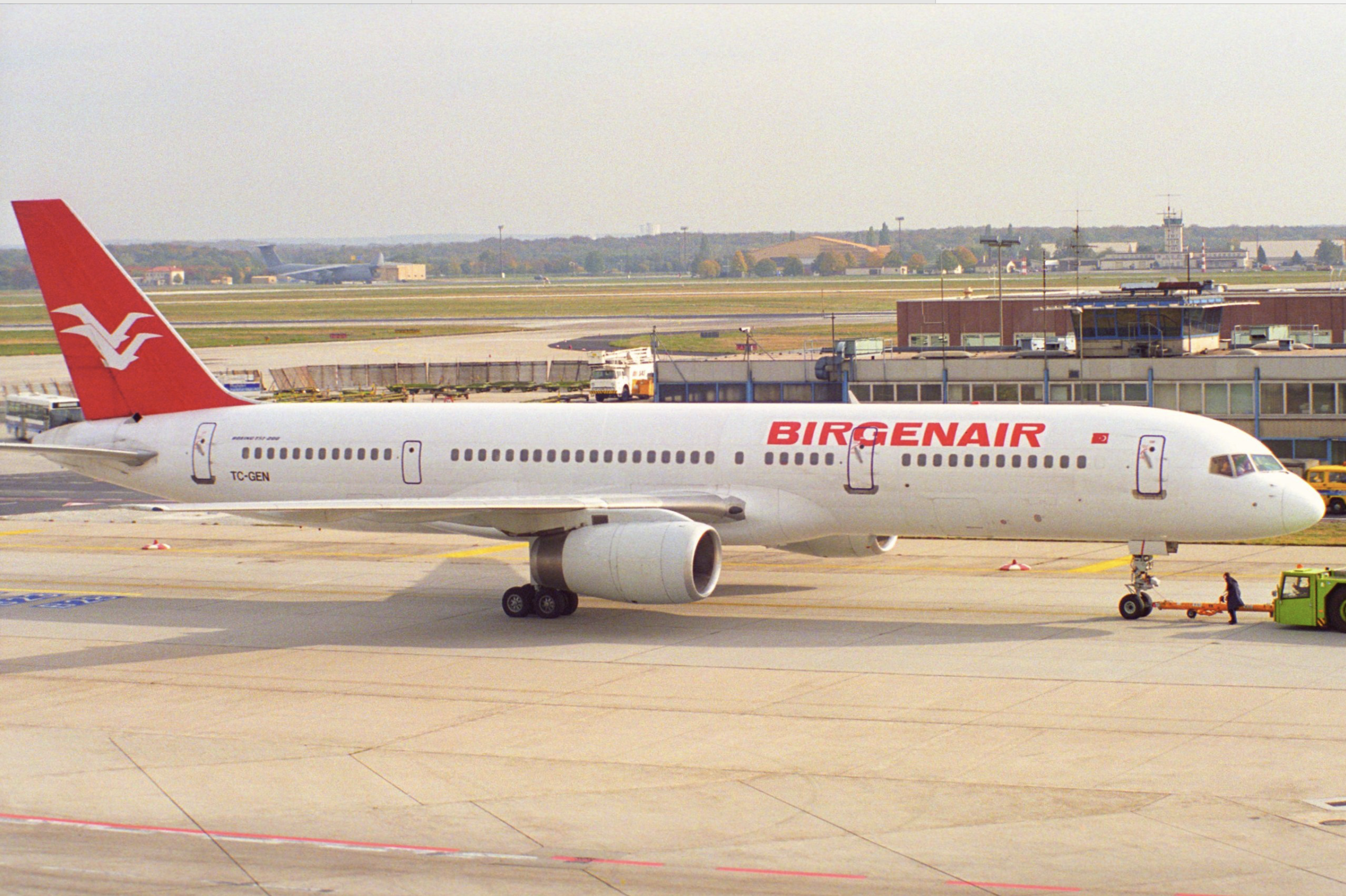
This is the ill-fated Boeing 757 that crashed after take off from Puerto Plata, Dominican Republic, on February 6, 1996… The Boeing 757 took its first flight on February 3, 1984… 26/02/1985 Eastern Airlines N516EA 20/05/1992 Nationair C-FNXN 01/05/1993 Aeronautics Leasing N7079S 14/07/1993 Birgenair TC-GEN 19/12/1994 International Caribbean Airways 8P-GUL 31/03/1995 Birgenair TC-GEN

1996  Alas Nacionales Airlines Flight 301 crashed off the Dominican Republic and Coast Guard units conducted search and rescue operations.

The Pacific Northwest was hit by an historic flood in February 1996. Corps dams were put to the test and held back as much of the flood waters as possible, but too much rain fell in the valley below the dam. As a result, many communities in western Oregon felt the impacts of the flood waters.

1996  Coast Guard units responded to calls of assistance due to severe flooding throughout the Pacific Northwest.