This Day in Coast Guard History, December 17

Based on the Coast Guard Historian’s timeline, https://www.history.uscg.mil/research/chronology/
With inspiration from Mike Kelso

December 17

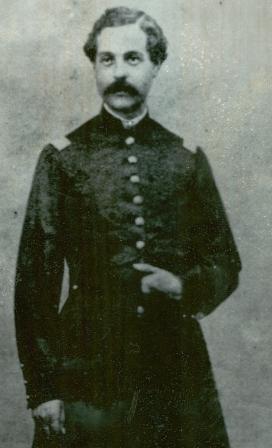
Members of the Overland Relief Expedition

1897  The Overland Expedition, consisting of three officers from the Revenue Cutter Service, departed from the cutter Bear off Nunivak Island to rescue 300 whalers trapped in the ice at Point Barrow, Alaska.  The rescuers were First Lieutenant D. H. Jarvis, Second Lieutenant E. P. Bertholf (later commandant), and Surgeon S. J. Call.  The rescuers had to travel over 1,000 miles overland to reach the whalers.

1903  Life-Saving Service personnel from Kill Devil Hills Life-Saving Station helped carry materials to the launch site for the first successful heavier-than-air aircraft flight by the Wright Brothers at Kitty Hawk, North Carolina and then assisted the brothers in their flights that day.  The life-savers were John T. Daniels, W.S. Dough, and A.D. Etheridge.

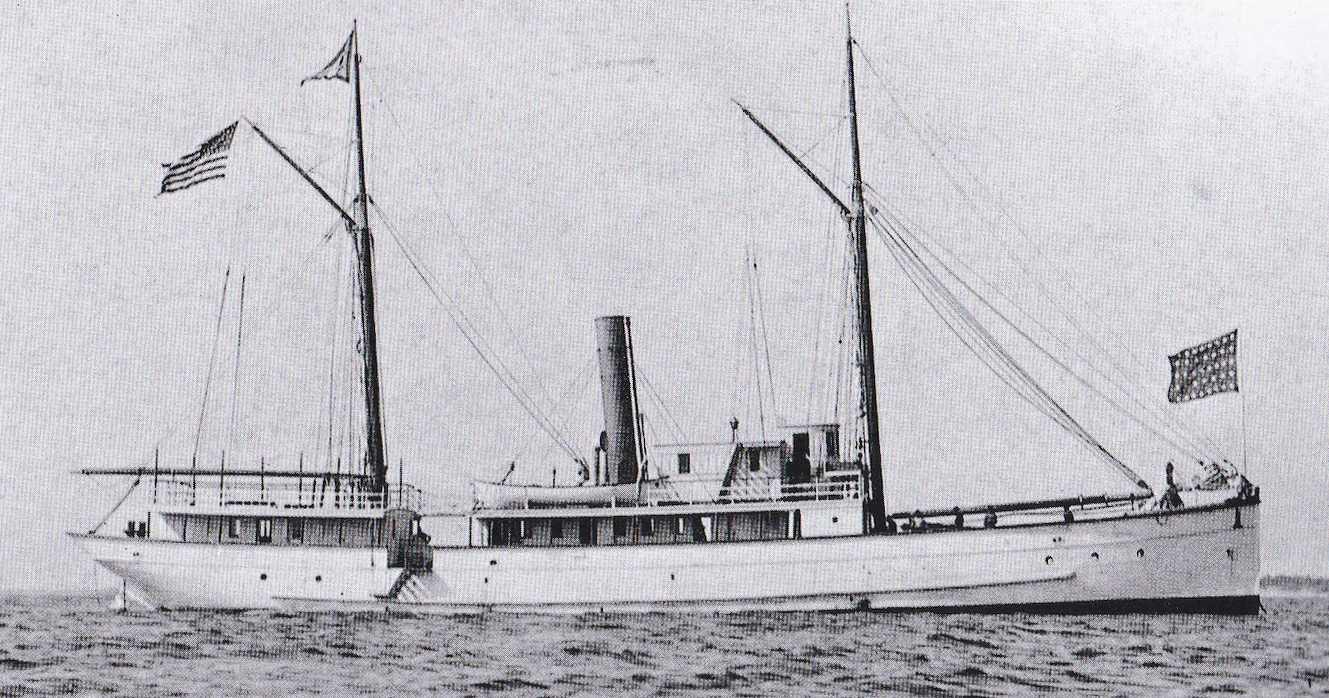
The wooden fishing trawler Belmont was acquired for service for a fee of $2,122 to serve under charter by the Navy “for Coast Guard use as a vessel of the Greenland Patrol.” After conversion, including the addition of two small depth charge tracks and minimal anti-aircraft armament, she was commissioned as a vessel of the Coast Guard on 19 June 1942 and renamed Natsek.

1942  USCGC Natsek, part of the Greenland Patrol, disappeared in Belle Isle Strait while on patrol.  There were no survivors among her 24-man crew.  It was thought that she capsized due to severe icing.

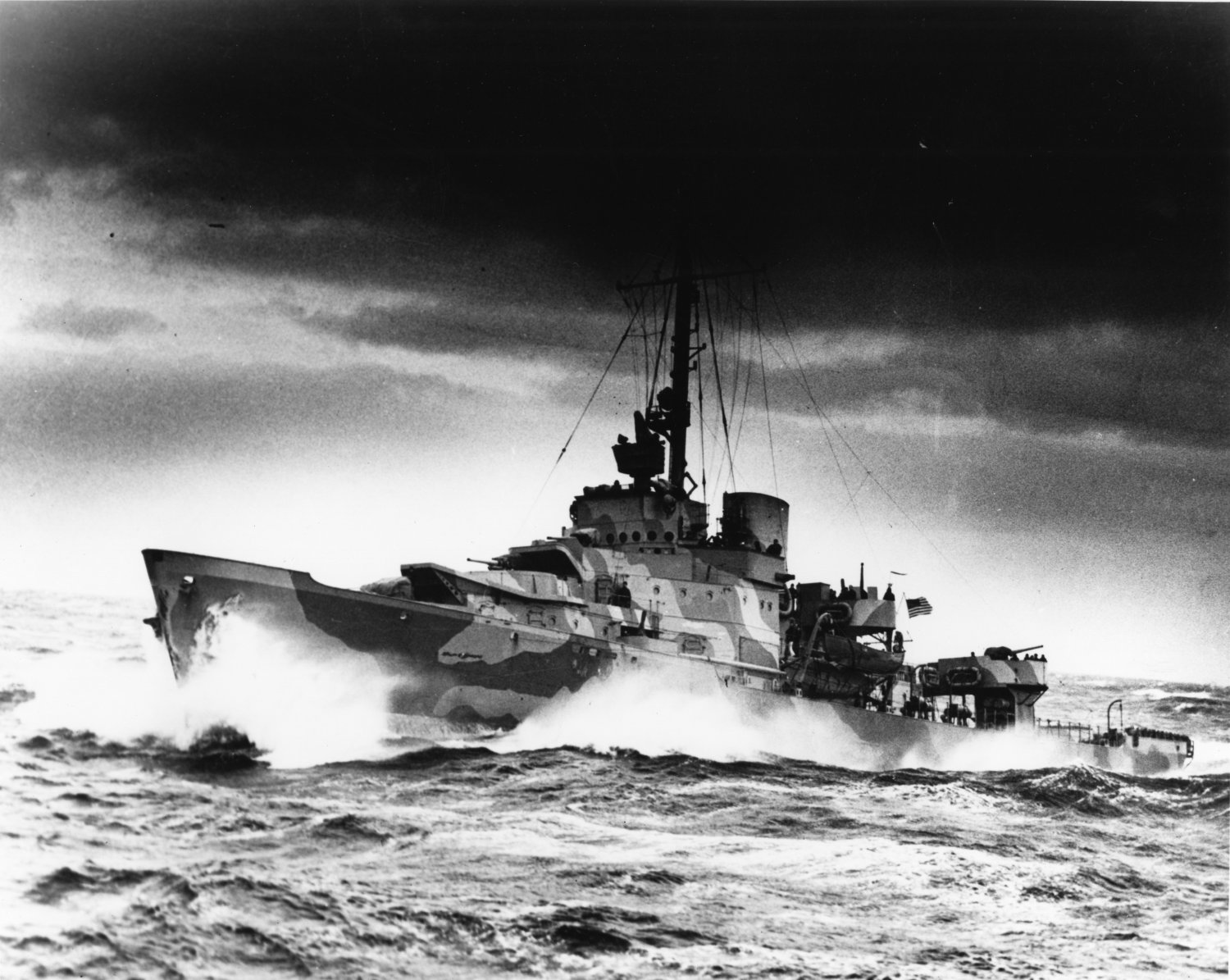
USCGC Ingham (WPG-35) underway in heavy seas, circa 1941-1944, location unknown.
US Coast Guard photo # 2000225945

1942  The Navy credited CGC Ingham with attacking and sinking the submerged U-626 south of Greenland.

U-626 was previously thought to have been sunk in the North Atlantic on 15 December 1942 by depth charges from US Coast Guard cutter USCGC Ingham. This attack was actually 200 nmi from U-626′s position and there is no evidence that the target was a U-boat.

1951  President Harry Truman presented the Collier Trophy to the Coast Guard, the Department of Defense and the “helicopter industry” in a joint award, citing “outstanding development and use of rotary-winged aircraft for air rescue operations.”  Coast Guard Commandant VADM Merlin O’Neill accepted the trophy for the Coast Guard.

2000  An HH-60 from AIRSTA Elizabeth City hoisted 26 survivors from the sinking cruise ship Sea Breeze I and flew them to safety, a record for a single helicopter rescue. Another HH-60 rescued the remaining eight survivors from the cruise ship while an HC-130 also participated in this historic rescue.

She (Sea Breeze 1–Chuck) was part of Dolphin when the line merged with Premier in the late ’90s. (Interesting, as SeaBreeze was Premier’s first ship when the line was founded in the ’80s.) Anyway, when Premier went out of business in September 2000, SeaBreeze was seized in Halifax, and remained there through December. Later that month, she ran into a storm off the coast of Virginia and sank. She was carrying about 40 crew members, all of whom were rescued via helicopter in a heroic feat by the US Coast Guard. There were no passengers aboard.

2014  President Barack Obama and Cuban President Raúl Castro announced the beginning of a process of normalizing relations between the two countries.  The Coast Guard announced its statement regarding the Cuba policy changes due to this change the following day, December 18, 2014.

This Day in Coast Guard History, December 15/16

Based on the Coast Guard Historian’s timeline, https://www.history.uscg.mil/research/chronology/
With inspiration from Mike Kelso

December 15

The Mobile Point Lighthouses prior to the American Civil War. They were destroyed during the Battle of Mobile Bay.

1835  The superintendent of the lighthouse system wrote to Winslow Lewis, “I perceive by a Mobile paper which I received this morning that the Mobile Point light has been fitted by you as a revolving light” similar to the nearby Pensacola lighthouse.  “I am very sorry that you have done so.” Lewis was a contractor who – almost by himself a virtually controlled the administration of the lighthouse system.  The incident helped cause a Congressional investigation that ultimately created a modern lighthouse system in this country.

1839  Near Gloucester, Massachusetts, a storm from the southeast caught and dragged ashore or drove to sea over fifty vessels.  An eyewitness wrote: “From one of the beach to the other, nothing could be seen but pieces of broken wrecks; planks and spars…ropes and sails…flour, fish, lumber…soaked and broken…”  The local fishermen manned two boats, the Custom House boat and the newly launched Revenue Cutter Van Buren (commissioned December 2, 1839) and “fearlessly risked their lives for the safety of their fellow creatures” and brought many safely to shore.

15 December 1943, New Britain. Landing craft approach the inhospitable shores near Arawe, where American troops forced a landing at dawn in one of the most daring amphibious assaults yet undertaken in this area. Completely overwhelming the Japanese defenders they seized the entire Arawe Peninsula within three hours. Note the number identifying the landing craft had been whited out by the censor. Photo credit: Harold George Dick

1943  Coast Guardsmen participated in the landings made on Arawe Peninsula, New Britain.

1944  Coast Guardsmen participated in the landings made on Mindoro, Philippine Islands.

Argo Merchant sinking

1976  The Liberian-flagged 644-foot tanker Argo Merchant, with 7.5 million gallons of oil on board, grounded on a shoal 28 miles southeast of Nantucket.  Coast Guard helicopters from AIRSTA Cape Cod rescued her 38-man crew.  CGCs Sherman and Vigilant responded, along with other vessels, but heavy weather prevented the containment of the spill.  The tanker broke in two on December 21.

December 16

USRC Gallatin; “U.S. Coast Guard survey schooner GALLATIN photographed in 1855
Gallatin was a 73-foot topsail schooner that displaced 112 tons. She was built by the New York Navy Yard and entered Revenue service in 1830. She was ordered to Charleston, SC, on 16 November 1832 to enforce federal tariff law and suppress the “nullification proceedings” adopted by the State of South Carolina. She was transferred to the Coast Survey in 1840 and returned to Revenue service between 1848 to 1849 and then returned to the Coast Survey. She was captured by Confederate forces early in the Civil War and served the South as a privateer. This is the earliest known photo of a Revenue cutter although by the time this photo was taken she had already transferred permanently to the Coast Survey.

1831  Secretary of the Treasury John McLane ordered Revenue cutters to conduct “winter cruises.”  The USRC Gallatin became the first cutter “directly authorized by the government to assist mariners in distress.”

The crash site of the United Airlines DC-8, United 826, in Park Slope, Brooklyn

1960  A United Airlines DC-8 with 84 passengers on board collided with a TWA Super Constellation carrying 44 in mid-air over the New York City area. There were 134 fatalities including all aboard the two aircraft and six on the ground. Coast Guard helicopters, working with the aircraft of the Army, Navy and New York Police Department, transported the injured to a nearby hospital.  Coast Guard vessels also searched the New York harbor area.  The debris they picked up was used by the Civil Aeronautics Board in its determination of the cause of the mishap.

The crash site of the TWA Super Constellation, TWA 266, in Miller Field, Staten Island.

This Day in Coast Guard History, December 13/14

Based on the Coast Guard Historian’s timeline, https://www.history.uscg.mil/research/chronology/
With inspiration from Mike Kelso

December 13

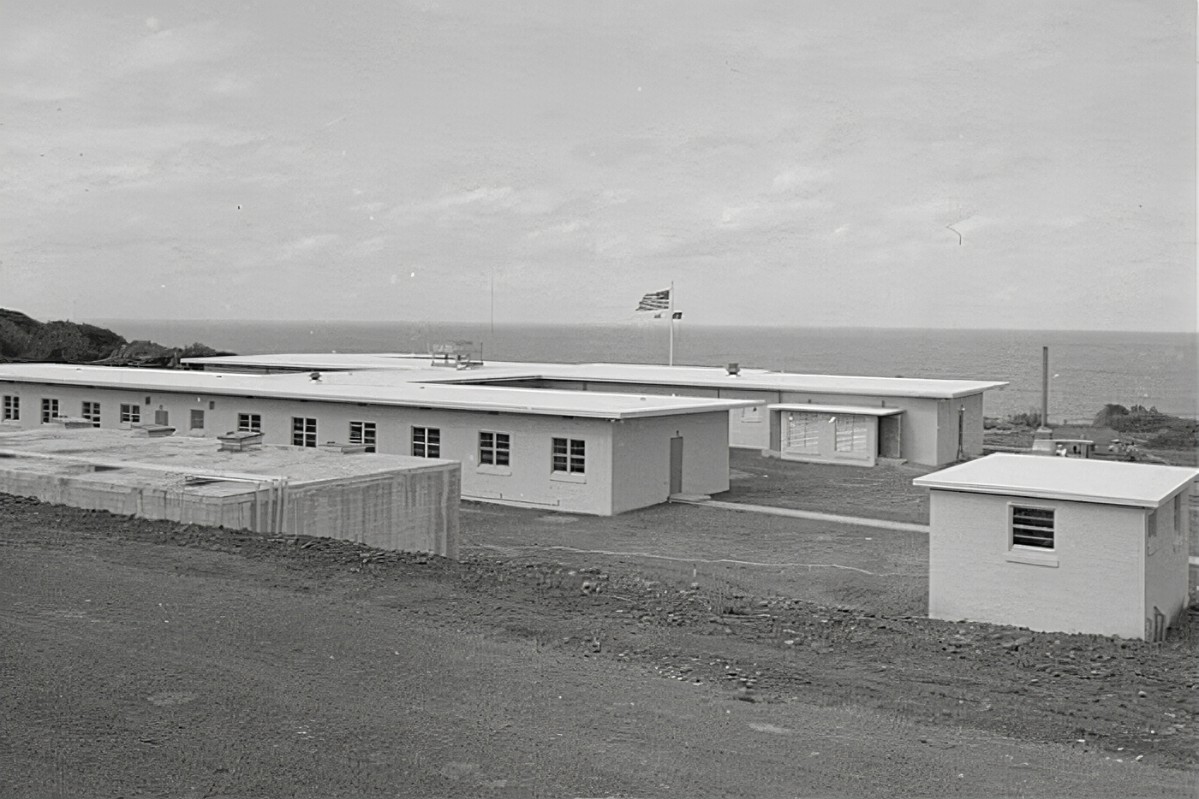
LORAN STATION IWO JIMA

1965  The Treasury Department received “official word” to commence a project to build a number of LORAN stations throughout Southeast Asia in support of the escalating U.S. efforts in the Vietnam War.  The LORAN project was code-named “Tight Reign.”

South Korean Navy P-3CK

2014  Coast Guard search and rescue crews were relieved by Republic of Korea assets in their search for 26 crewmembers from the fishing vessel 501 Oryong that capsized November 30, 2014, near Chukotka, Russia, in the Bering Sea. The Coast Guard completed more than 24 searches covering more than 4,576 square miles utilizing two cutters, two helicopters, and multiple airplanes.  Coast Guard crews will continue to partner with the Republic of Korea to provide search and rescue planning support.  Two Republic of Korea Navy P-3 Orion aircraft joined the search for survivors on December 6, 2014. The Republic of Korea vessel Sam-Bong arrived at the 501 Oryong’s last known position and began their investigation.  The Coast Guard offered to assist the Kamchatka Border Guard Directorate and the Republic of Korea with their search for survivors and deployed the following assets: CGCs MunroAlex Haley, HC-130s from Air Station Kodiak, and two SAR planners from Juneau deployed to Anchorage to work with South Korean Navy P-3 aircrews.  The Republic of Korea reported the 501 Oryong, with 60 crewmembers, was hauling in its catch when a wave hit and flooded the vessel’s storage chambers with seawater.  Good Samaritans rescued eight crewmembers, but one died of complications, 26 bodies were recovered, and 26 crewmembers were reported missing.

December 14

1846  Revenue Captain Alexander Fraser protested in a report to Congress against “unjust imputations” made against the Service for its involvement in the failure of the first steam cutters.  He also requested the authority to employ medical aid on cutters and to provide pensions for personnel disabled in service.

1854  Congress authorized the appointment of the first lifeboat station keepers at $200 per year each and superintendents for Long Island and New Jersey serving under Secretary of Treasury who “may also establish such stations at such lighthouses, as, in his judgment, he shall deem best.”

Sea otters. Photo taken under U.S. FWS permit #MA-043219. (Ryan Wolt)

1911  President William Howard Taft proclaimed the Convention entered into between the United States, Great Britain, Japan, and Russia for the preservation of the fur seal and the sea otter.  As this treaty prohibited entirely the killing of seals, and sea otters, on the part of the four nations concerned, in the North Pacific Ocean and Bering Sea, it was necessary that the movements of the Revenue Cutter fleet that enforced the agreement “correspond generally” to the progress of the seal herd in its annual northern migration.  During the 1912 season the following cutters were assigned: Rush, Manning, McCulloch and Tahoma.  This was the first regular patrol in enforcement of the regulations issued pursuant to the International Convention proclaimed on December 14, 1911.  Prior to that date Revenue Cutter vessels enforced the regulations of the Paris Tribunal of arbitration decreed August 15, 1893 for the preservation of the fur seal.  The patrol of the North Pacific Ocean and Bering Sea was first inaugurated in 1895 for the enforcement of the provisions of the Act of Congress approved April 6, 1894.  The cutters Rush, Bear, Corwin, Grant, and Perry were the first cutters assigned to carry out this patrol which commenced in 1895.

1996  The 735-foot M/V Bright Field collided with the New Orleans Riverwalk, causing substantial damage and injuring over 100 people.  Coast Guard forces responded.

This Day in Coast Guard History, December 11/12

Based on the Coast Guard Historian’s timeline, https://www.history.uscg.mil/research/chronology/
With inspiration from Mike Kelso

December 11

1881  Six men landed from a boat on Race Point, Cape Cod, and were soon after found, wet, chilled, and much exhausted, by the patrolman from Station No. 6, Second District.  He learned that they were the captain and crew of the Canadian schooner J .A. Hatfield that had been sunk in a collision with an unknown bark the previous night.  The patrolman conducted them to the light keeper’s dwelling nearby.

United States Coast Guard Cutter Mellon (WHEC-717) makes way through the Bering Sea while acting as search and rescue standby cutter for the Bering Sea Opilio Crab fishery. U.S. Coast Guard photograph 010209-C-6130A-500, PA1 Keith Alholm

2014  CGC Mellon returned to Seattle following a seven-week deployment in the Eastern Pacific Ocean after interdicting nearly 700 pounds of cocaine seized from seagoing drug smugglers.  The drugs, recovered during a single bust off the coast of Central America, were worth an estimated street value of $18.6 million.  Three suspects were detained during the operation. The more than 150-person crew of Mellon left Seattle on October 25 to conduct anti-narcotics and search and rescue missions along the coast of Mexico and Central America.  Their efforts resulted in six law enforcement boardings and the disruption of an additional 1,900 pounds of cocaine shipments headed for the U.S.  Just as Mellon began its journey homeward on November 24, 2014, the cutter was diverted to lead search and rescue operations in the case of a missing U.S. sailor.  The sailing vessel Seven Sisters was found capsized off the coast of Mexico with no crew present after the vessel was reported as overdue to the port of Acapulco.  Over the course of nearly a week, Mellon launched its attached MH-65 Dolphin helicopter and crew up to four times a day and covered more than 26,000 square miles of ocean while searching for the lost sailor.  Extra lookout watches were set aboard the cutter in hopes of finding him, but the case was suspended after the search efforts proved unsuccessful.  Another search and rescue operation involved a few unlikely survivors.  About 300 miles off the coast of Guatemala, Mellon’s crew spotted four sea turtles and a dolphin entangled in more than 100 feet of abandoned fishing line.  A small crew launched one of the small boats to rescue the animals and remove the debris from the water.  After nearly an hour of cutting the animals free, they were released and appeared to be uninjured.

December 12

1876  The first ever examination for Revenue Cutter cadets was held in Washington, D.C.

The 82-foot patrol boats of Squadron One (RONONE) deploying from Subic Bay in the Philippines to the theater of operations in Vietnam. (U.S. Coast Guard)

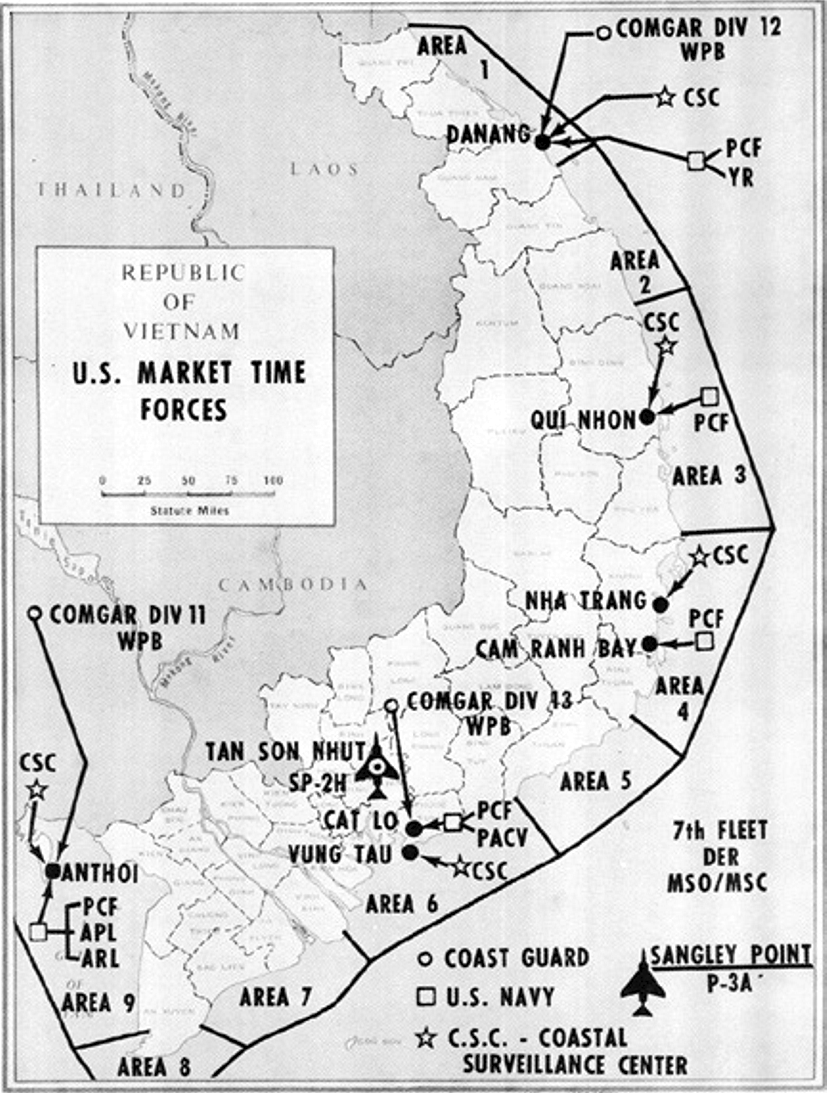
1965  Division 13, Coast Guard Squadron One (RONONE) was established for service in Vietnam. This third division of 9 WPBs, which would be based at Cat Lo, brought the squadron up to 26 WPBs with Division 11, 9 WPBs based at An Thoi Naval Base, Phu Quoc Island, and Division 12 based at Da Nang.

By U.S. Navy – United States Naval Operations Vietnam, Highlights; June 1966 – Map – U.S. MARKET TIME Forces, Public Domain, https://commons.wikimedia.org/w/index.php?curid=34475896

1994  CGC Munro responded to a mayday from the Greek-registered 798-foot container ship Hyundai Seattle approximately 550 nautical miles south of Adak, Alaska.  The freighter reported an engine room fire that left the ship dead in the water.  An HH-65 attached to the cutter hoisted 27 crewmen to safety.  The freighter was later towed safely into Seattle.

This Day in Coast Guard History, December 10

Based on the Coast Guard Historian’s timeline, https://www.history.uscg.mil/research/chronology/
With inspiration from Mike Kelso

USLHT Azalea, 31 December 1891, United States Lighthouse Service Tenders; National Archives photo

1905  “To evaluate its use in lighthouse work, radio equipment was installed experimentally on Nantucket Lightship in August of 1901.  On December 10, 1905, while riding out a severe gale, Lightship No. 58 on the Nantucket Shoals Station sprang a serious leak.  There being no recognized radio distress signal at that time, the operator could only repeatedly spell out the word “help”.  Although no reply was received Newport Navy station (radio) intercepted the call and passed it on to the proper authorities.  The lightship tender Azalea was dispatched to the assistance of Lightship No. 58, and upon arrival at the scene passed a towline.  The long tow to a safe harbor began, but after a few hours it was quite evident that Lightship No. 58 was sinking.  Azalea took off her crew of thirteen men only minutes before she sank.  This pioneer use of radio had indeed proved Its worth in rescue operations.”

1941  Germany and Italy declared war on the United States.

The Coast Guard Cutter Dependable sits moored to the pier during a Heritage Recognition Ceremony in Virginia Beach, Virginia, April 9, 2024. The Heritage Recognition Ceremony celebrated the Dependable, its current and past crew members, and its accomplishments, before it was placed in commission, special status. (U.S. Coast Guard photo by Senior Chief Petty Officer Nick Ameen)

1981  A Coast Guard HH-52A landed on CGC Dependable’s flight deck, marking the 5,000th helicopter landing on board the cutter.  According to Coast Guard aviation records, this was the most helicopter landings ever recorded on board a cutter.  The landing occurred off Dauphin Island in the Gulf of Mexico.

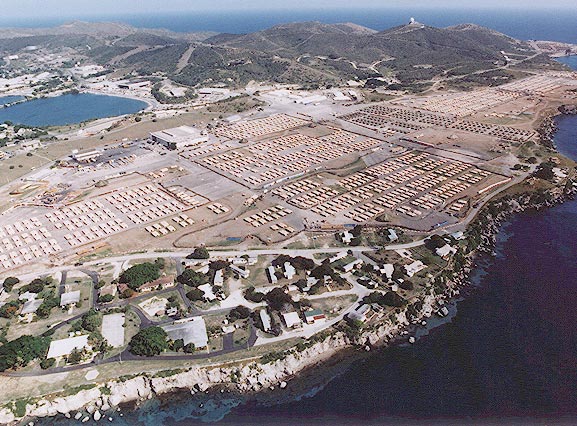
Original caption: “Gitmo airfield converted for 10,000 migrants”

1993  Secretary of Transportation Andrew H. Card, Jr., awarded the military members of the Coast Guard the Humanitarian Service Medal and the civilian employees the Coast Guard Public Service Commendation for their services during the Haitian migrant crisis from October 1991 through November 1992.  During that period, a flotilla of over 27 Coast Guard cutters rescued 35,000 Haitian migrants from hundreds of overcrowded and unseaworthy vessels.

This Day in Coast Guard History, December 9

Based on the Coast Guard Historian’s timeline, https://www.history.uscg.mil/research/chronology/
With inspiration from Mike Kelso

1899  A Treasury Order entrusted the Bureau of Navigation “with the duty of examining and disposing of petitions for the remission of fines, penalties, and forfeitures under the laws relating to navigation, vessels, steamboat-inspection, and passengers.”

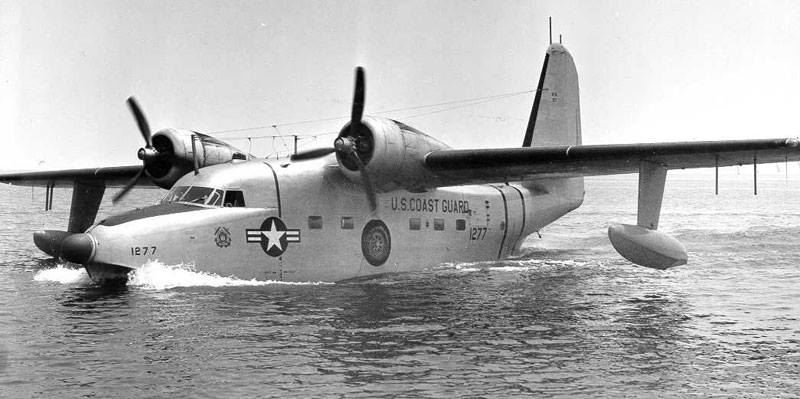
UF-1 Albatros

1959  At the request of the Russian Embassy, the crew of a US Coast Guard UF-1 amphibious aircraft removed an ill Russian seaman from the merchant ship Jana in the Bering Sea.  The plane, with an interpreter and a doctor aboard, landed in a blinding snow storm at Dutch Harbor, where the patient was transferred to a hospital.

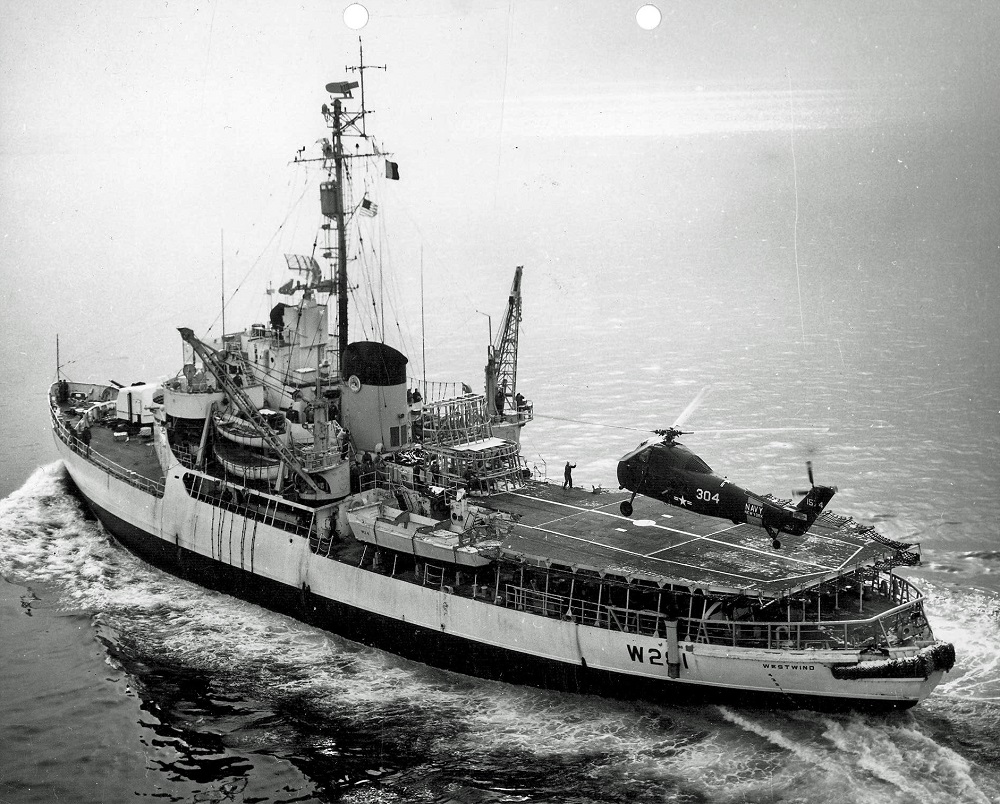
USCGC Westwind

1981  The icebreaker CGC Westwind departed her homeport of Milwaukee for the Caribbean.  She was assigned to relieve a high-endurance cutter on a counter-drug patrol.

1996  Two Coast Guard HH-60 helicopters with support from an HC-130, all from AIRSTA Elizabeth City, rescued the seven crewmembers of the 67-year old schooner Alexandria when she went down in a fierce storm 50 miles southwest of Cape Hatteras.

This Day in Coast Guard History December 8

Based on the Coast Guard Historian’s timeline, https://www.history.uscg.mil/research/chronology/
With inspiration from Mike Kelso

December 8

1904 An Executive Order extended the jurisdiction of the Lighthouse Service to the noncontiguous territory of the Midway Islands.

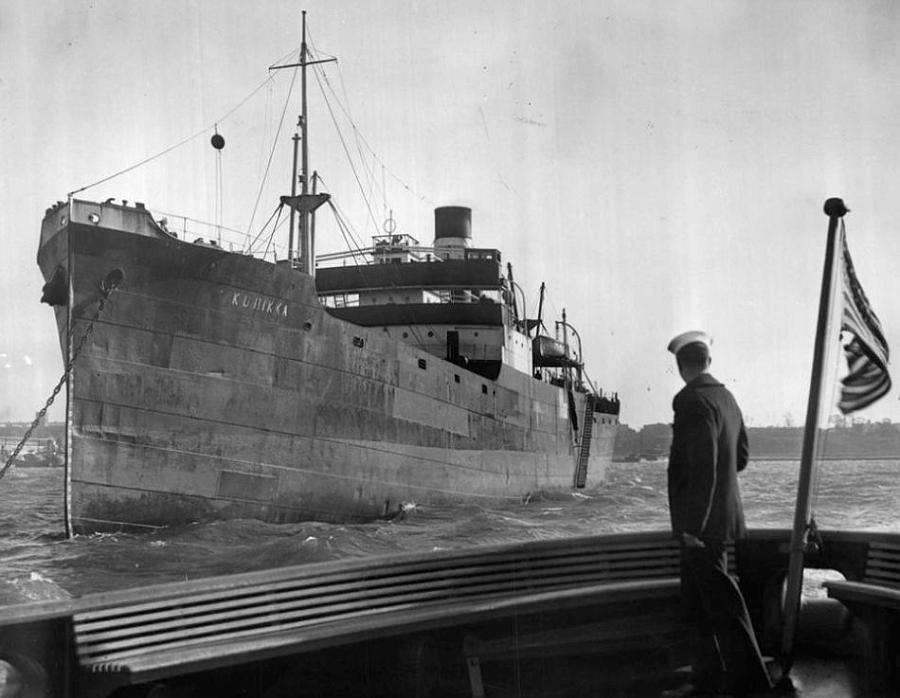
Finnish vessel SS Kurikka at anchor (CG photo)

1941 Coast Guardsmen seized all nine Finnish vessels that were in U.S. ports and placed them in “protective custody” to “prevent the commission of any acts of sabotage” on orders from the Navy Department.  Twenty-four hours later the Coast Guard removed the crews from each of the vessels. (The Finns were allied with Germany against the Soviets.) This action was ordered soon after the break in diplomatic relations between Great Britain and Finland.  The following Finish vessels were seized: SS Olivia, at Boston, Massachusetts; SS Kurikka, SS Jourtanes, and SS Saimaa at New York, New York; SS Advance, at Philadelphia, Pennsylvania; SS Aagot and SS Marisa Thorden at Baltimore; SS Aurora, at Newport News, Virginia; and SS Delaware, at Galveston, Texas.

1983 Four cutters arrived off of the island of Grenada to replace U.S. Navy surface forces conducting surveillance operations after the U.S. invaded the island earlier that year.  The cutters involved were Cape GullCape FoxCape Shoalwater, and the Sagebrush. (A USNI story about the mission here.)

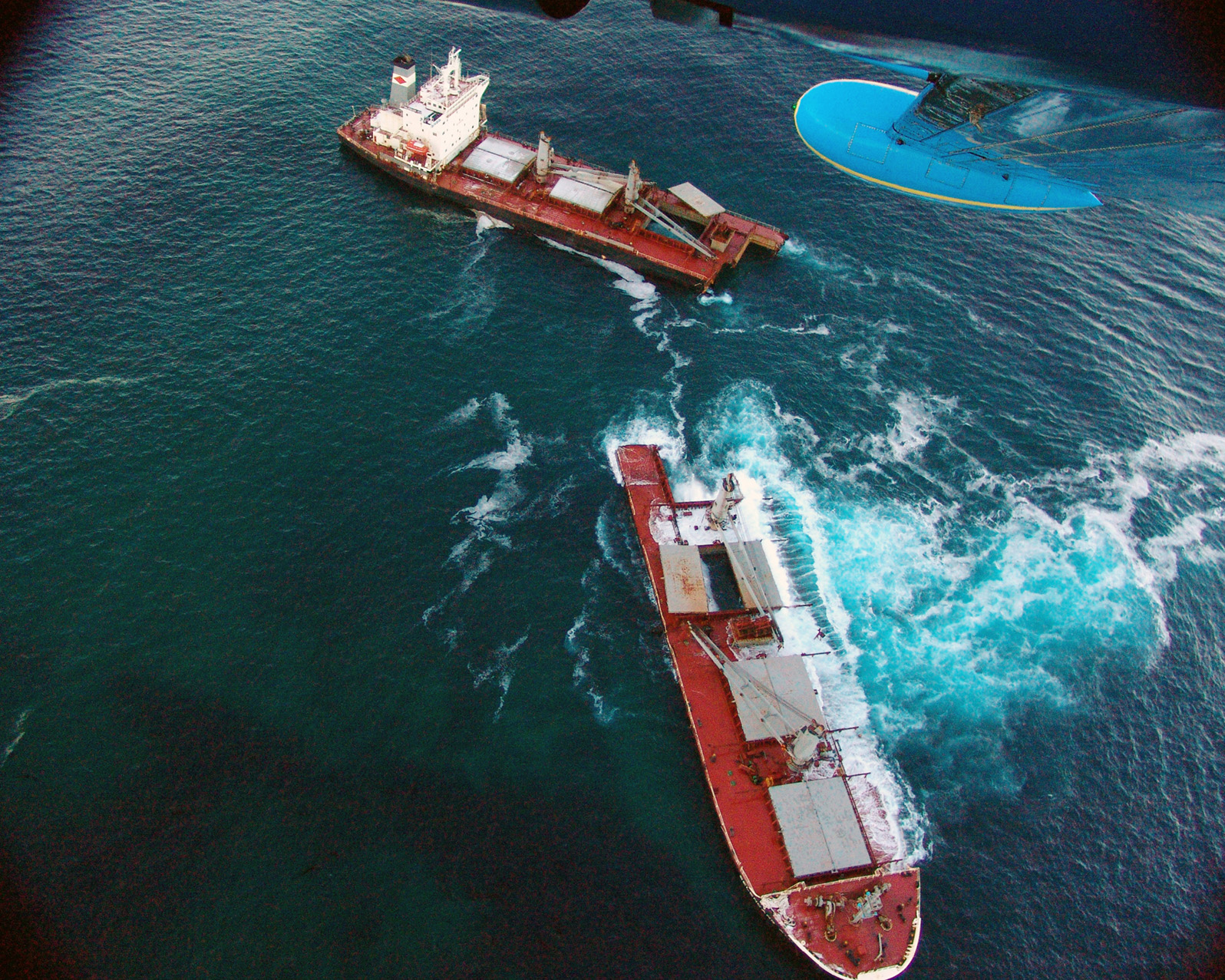
JUNEAU, Alaska (Dec. 19, 2004)–An over-flight photo taken Dec. 19 show the bow and stern sections of the 378-foot freighter Selendang Ayu near Skan Bay. Unified Command photo

2004 The 738-foot freighter Selendang Ayu grounded and broke in two December 8, 2004, offshore of Spray Cape, Unalaska.  Fighting extremely adverse conditions, helicopter crews from Kodiak and the CGC Alex Haley, working with the crew of Haley, rescued all but six of the sailors.  AST3 Aaron Bean earned the Meritorious Service Medal and AMT3 Gregory Gibbons the Distinguished Flying Cross.  During the rescue high waves caused the crash of a Coast Guard HH-60J. Six of MV Selendang Ayu’s crew died in the crash.

This Day in Coast Guard History, November 7

Based on the Coast Guard Historian’s timeline, https://www.history.uscg.mil/research/chronology/
With inspiration from Mike Kelso

December 7

Contemporary painting of a Revenue Marine cutter, which may be of either the Massachusetts (1791), or its replacement, the Massachusetts II. Description from the United States Coast Guard website: “This painting purports to illustrate the first cutter named Massachusetts but it incorrectly shows the cutter flying the Revenue ensign and commission pennant, which were not adopted until 1799, well after the first Massachusetts had left service. Nevertheless, the illustration does show those characteristics typical of most of the first few generations of Revenue cutters: a small sailing vessel steered by a tiller, with low freeboard, light draft, lightly armed, and usually rigged as a topsail schooner.”

1793  The first Revenue Cutter Service court martial occurred on this date aboard the cutter Massachusetts.  The offender, Third Mate Sylvanus Coleman of Nantucket, was summarily dismissed from the service for “speaking disrespectfully of his superior officers in public company…insulting Captain John Foster Williams [the commanding officer] on board, and before company…for keeping bad women on board the cutter in Boston and setting a bad example to the men by ordering them to bring the women on board at night and carrying them ashore in the morning…” and for writing an order in the name of the commanding officer.

1830  President Andrew Jackson announced an ambitious plan to add a large number of lighthouses to the federal system, with a total of 51 more lighthouse keepers.  In explanation, he supported the practice of offsetting the costs of keeping aids to navigation on the coasts, lakes and harbors “to render the navigation thereof safe and easy” since “whatever gives facility and security to navigation cheapens imports; and all who consume them are alike interested in whatever produces this effect.  The consumer in the most inland State derives the same advantage…that he does who lives in a maritime State.”
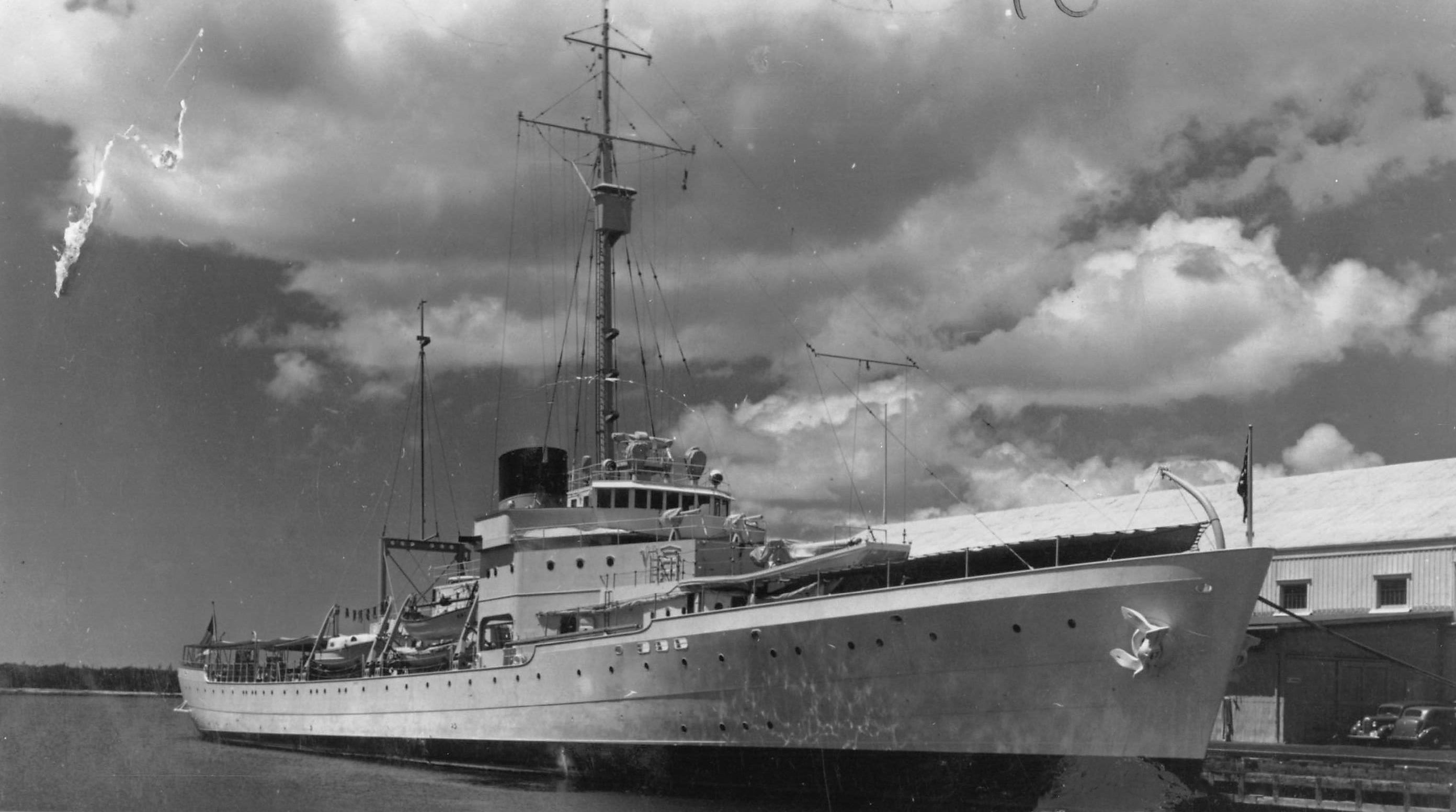
USCGC Taney at Honolulu tied up at Pier 4 in Honolulu Harbor, Hawaii, circa 1940
VIRIN: 220509-G-G0000-002.JPG Photo source: USCG Historian’s Office

1941  The Imperial Japanese Navy launched a surprise attack on Pearl Harbor and surrounding Army Air Force airfields in Hawaii.  Stationed in Honolulu were the Coast Guard’s 327-foot cutter Taney, the 190-foot buoy tender Kukui, two 125-foot patrol craft, Reliance and Tiger, two 78-foot patrol boats, and several smaller craft.  At the time of the attack, Taney lay at Pier Six in Honolulu Harbor, Reliance and the unarmed Kukui both lay at Pier Four and Tiger was on patrol along the western shore of Oahu.  All were performing normal duties for a peacetime Sunday.  After the attack commenced Tiger conducted anti-submarine sweeps outside of Pearl Harbor and Taney opened fire on Japanese aircraft that appeared over Honolulu Harbor.

USCGC White Alder, lost now 56 years ago

1968 CGC White Alder sank after colliding with M/V Helena near White Castle, Louisiana.  Seventeen Coast Guard personnel were killed.
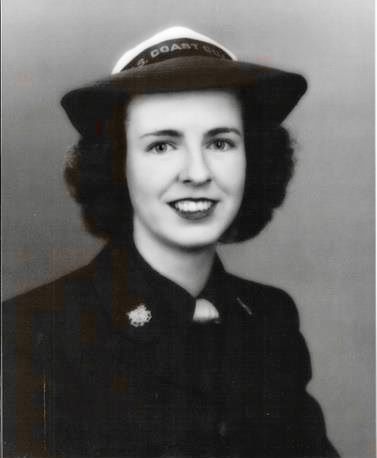
Alice Theresa Jefferson graduated from Stoneham High School in 1940. She then attended Regis College before entering the Coast Guard. In 1943, during World War II, she became a member of SPARs and eventually she was promoted to Commander, the highest rank for a female officer at the time. 

1973 The first female enlistees were sworn into the regular U.S. Coast Guard, Y1/c Wanda May Parr and Y2c Margaret A. Blackman, at a ceremony held in Yorktown, VA.  On that date as well CWO Alice T. Jefferson became the first woman commissioned officer to be sworn into the regular U.S. Coast Guard.  Jefferson was sworn in by Admiral Chester Bender, Commandant, at a ceremony held at Coast Guard Headquarters.
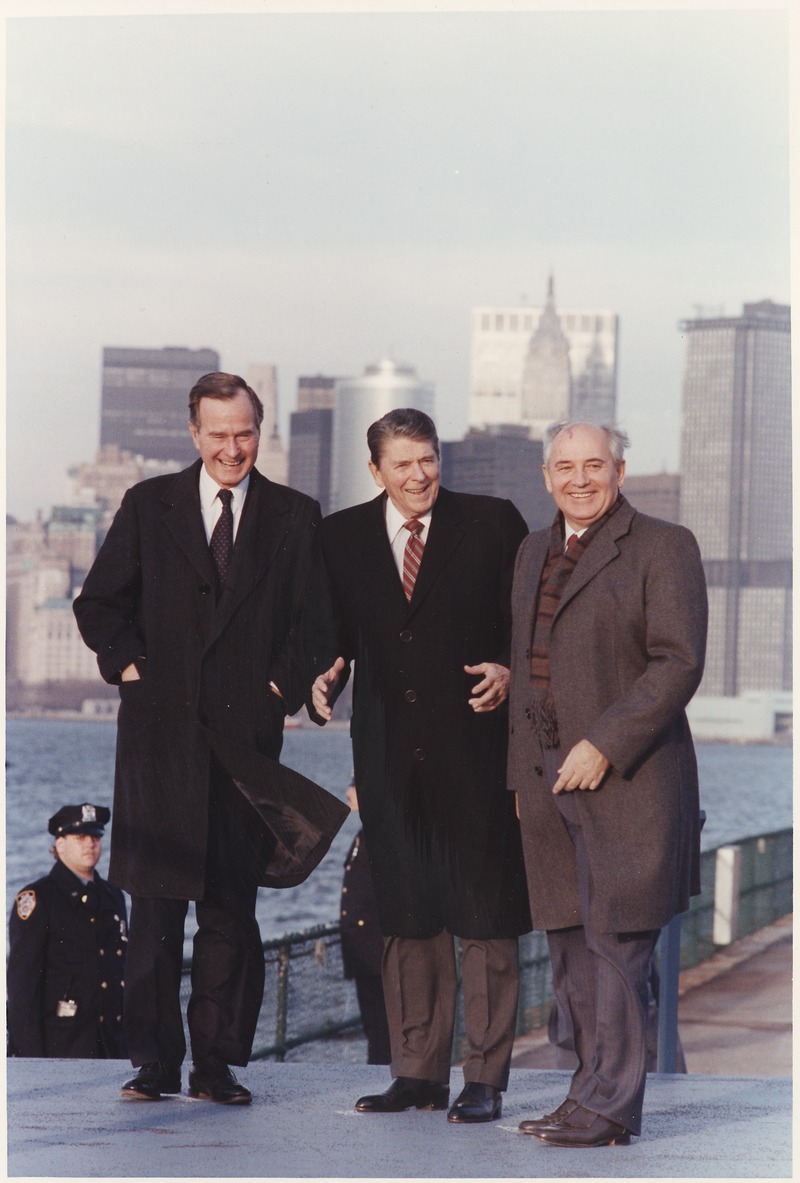
President Ronald Reagan and President-elect George Bush meet with Soviet leader Mikhail Gorbachev on Governor’s Island, December 1988

1988 The Coast Guard hosted an international summit between Soviet President Mikhail Gorbachev, President Ronald Reagan, and President-elect and then-Vice President George H. W. Bush on Governors Island.  The summit occurred after Gorbachev had addressed the United Nations.  In planning his trip to the UN, Gorbachev requested a meeting with Reagan and the White House selected the Coast Guard base at Governors Island as a meeting site since it was a secure military installation in the middle of New York harbor and just minutes away from the United Nations.  The leaders met for lunch at the LANTAREA commander’s [VADM James Irwin] home.  The summit was characterized as “just a luncheon” and the meeting was the last time President Reagan and Gorbachev would meet during Reagan’s remaining term.
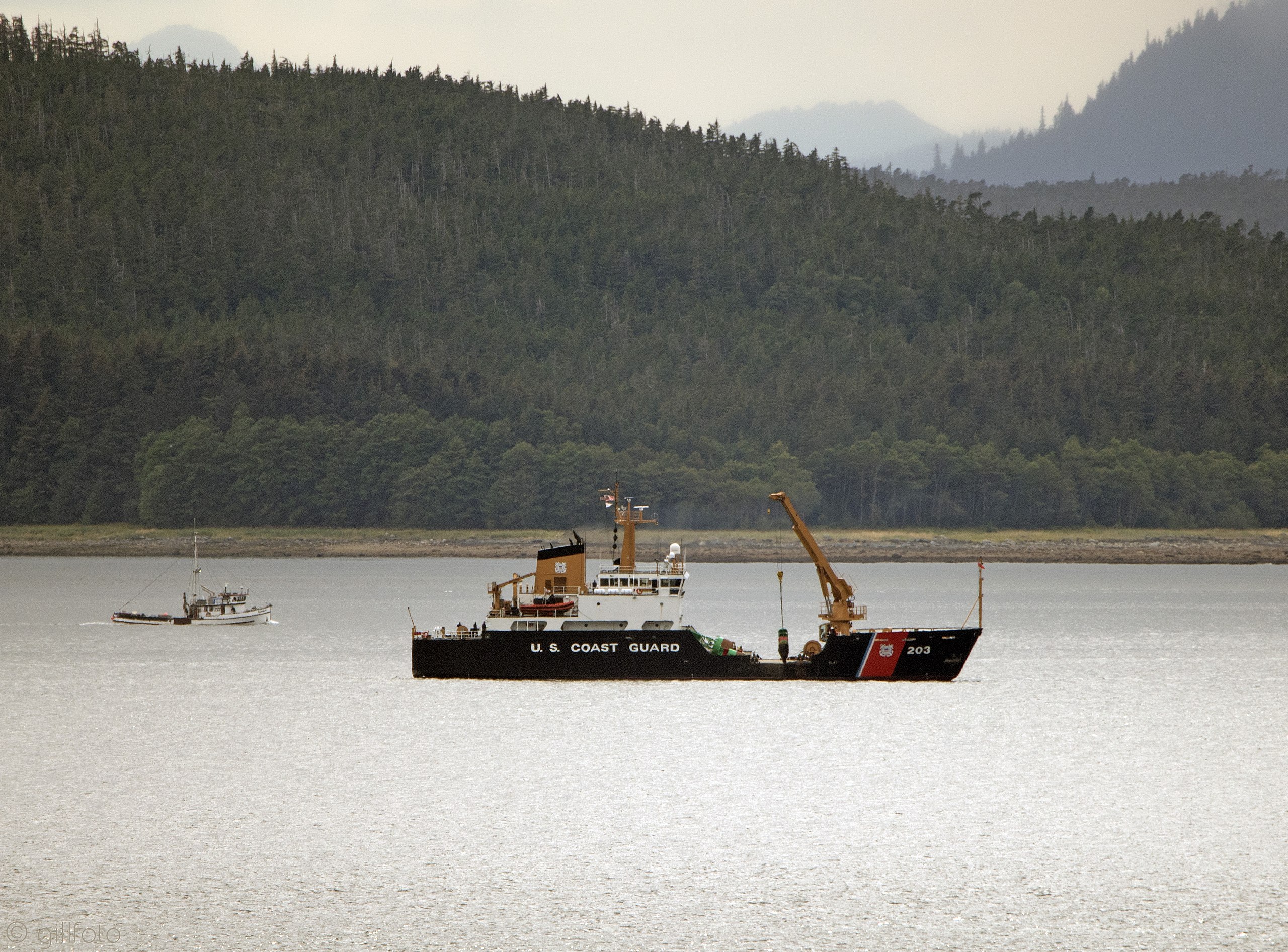
USCGC Kukui (WLB-203) raising the Strauss Rock Buoy, South Shelter Island, Southeast Alaska 24 August 2019. Photo by Gillfoto.

2014 CGC Kukui returned from a 46-day law enforcement patrol where they exercised bilateral agreements and enforced fisheries regulations across the Pacific.  The 50-person crew participated in several significant regional operations to further enhance U.S. and international efforts in the protection of the ecologically and economically valuable fish stocks of the Pacific Ocean and participated in a number of multi-national operations, including Operation Kuru Kuru, which was a multinational operation orchestrated by the Pacific Islands Forum Fisheries Agency.  Kukui exercised the Tongan bilateral agreement by embarking a Tongan ship rider to patrol that nation’s EEZ.  Kukui crewmembers spent patrol time searching for potential EEZ incursions by vessels not transmitting their location or status in accordance with applicable fisheries regulations.  Another leg of their patrol included domestic fisheries boardings in the American Samoa EEZ and high seas boardings under the authorities established by the Western Central Pacific Fisheries Commission.

The USCGC Oliver Henry (WPC 1140) crew arrives in Manus, Papua New Guinea, on Aug. 14, 2022, from Guam as part of a patrol headed south to assist partner nations in upholding and asserting their sovereignty while protecting U.S. national interests. The U.S. Coast Guard is participating with partners to support the Pacific Islands Forum Fisheries Agency-led Operation Island Chief and the larger Operation Blue Pacific through patrols in the Western Pacific in August and September 2022. (U.S. Coast Guard photo by USCGC Oliver Henry)

2022 CGC Oliver Henry (WPC 1140) completed a local patrol off Guam and the Commonwealth of the Northern Mariana Islands from 28 November to 7 December 2022, including the first-ever 154-foot Fast Response Cutter port visit to Tinian.  The objectives of the patrol included: supporting MSST Honolulu, validating Tinian as a port of free call for future USCG ship visits, and conducting community engagements in CNMI. During the patrol, Oliver Henry’s crew assisted MSST Honolulu’s boarding team in conducting law enforcement operations resulting in seven recreational safety boardings, four uninspected passenger vessel boardings, and two commercial passenger vessel boardings. The purpose of these boardings was to ensure the material condition of the vessels, the suitability and compliance of required equipment, and any required credentials. The team issued four warnings for safety infractions. The team went on to conduct interagency law enforcement operations with Tinian’s Department of Public Safety – Boating Safety Division for two additional recreational safety boardings. The cutter’s crew also teamed up with CNMI Customs & Biosecurity officers and Tinian DPS – BSD officers for two Subject Matter Expert Exchanges to share best practices and learn from each other. While in Saipan and Tinian, the crew held three community events, including hosting 68 students from the Tasi to Table Non-Profit Organization dedicated to engaging youth on fishing methodologies, boating safety, environmental stewardship, and supporting mental health and the Tinian Typhoon Sports Association.

This Day in Coast Guard History, December 6

Based on the Coast Guard Historian’s timeline, https://www.history.uscg.mil/research/chronology/
With inspiration from Mike Kelso


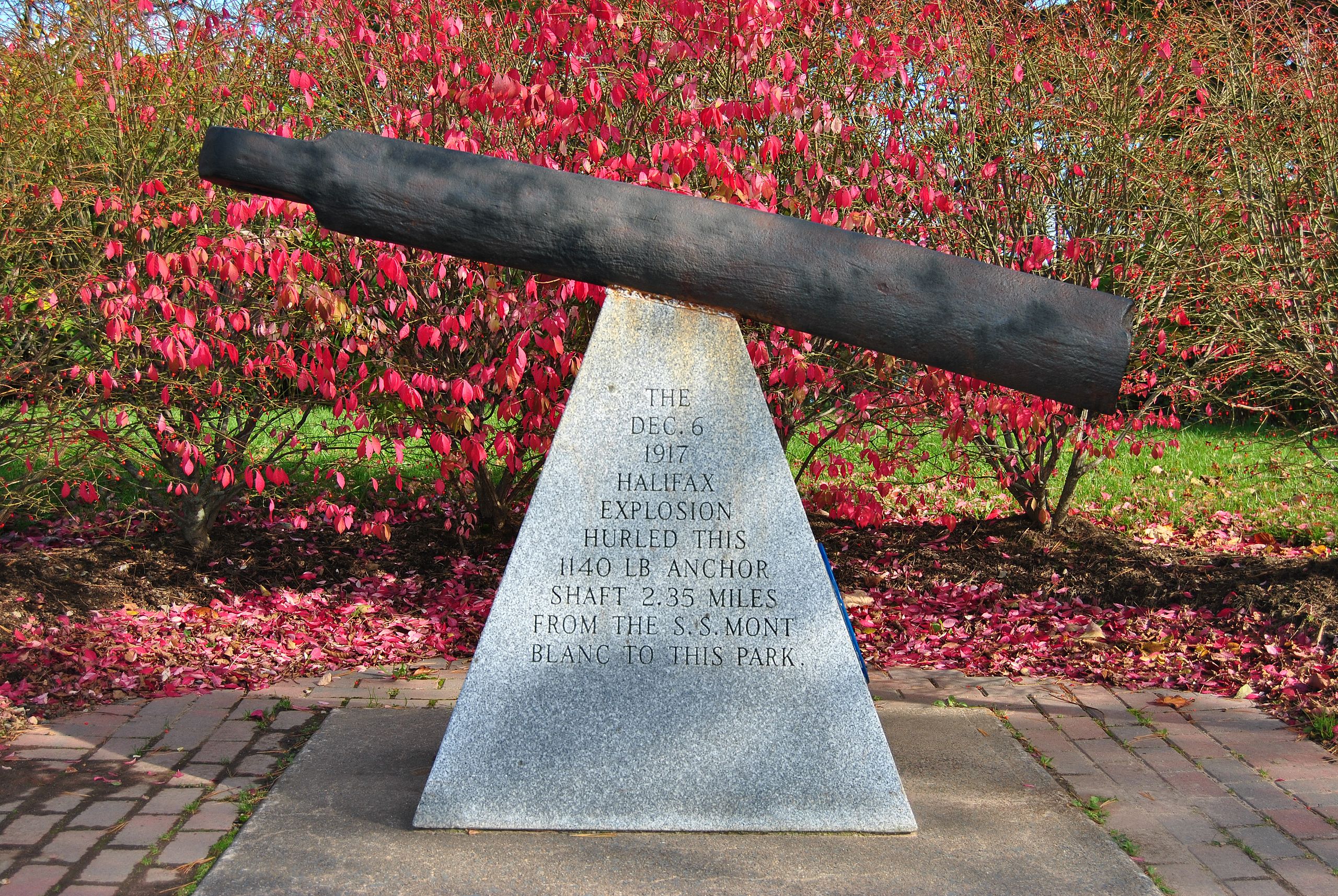
The engraving on the Mont Blanc monument reads: “The Dec. 6 1917 Halifax Explosion hurled this 1140 lb. anchor shaft 2.3 miles from the S.S. Mont Blanc to this park.” This photo is of a cultural heritage site in Canada, number 2582 in the Canadian Register of Historic Places. Photo credit: Vonkiegr8 via Wikipedia

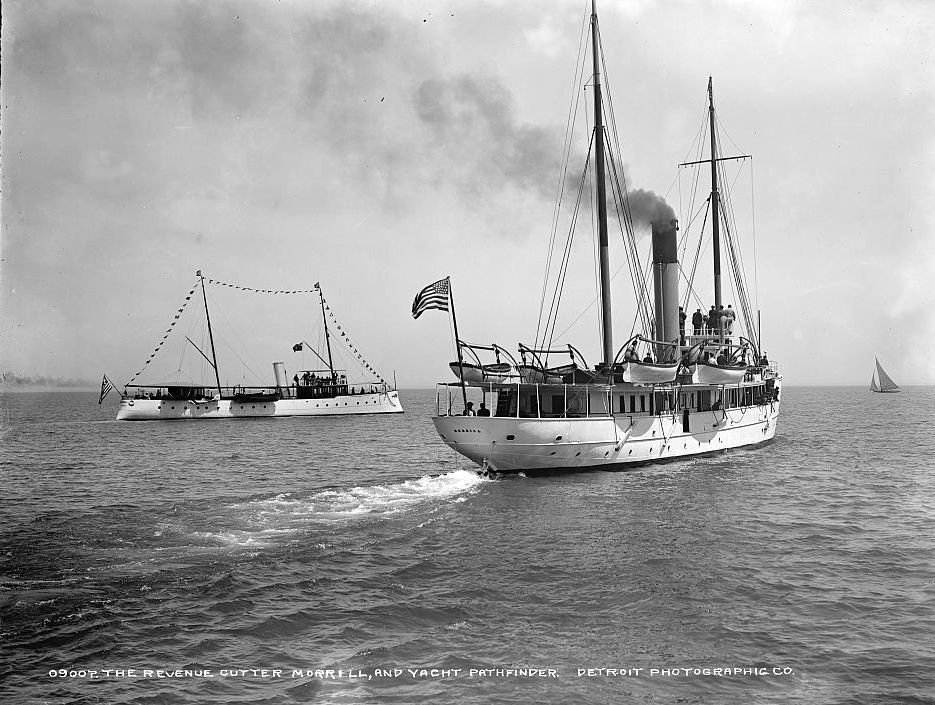
1917  The French freighter Mont Blanc, loaded with 5,000 tons of high explosives, collided with the Norwegian steamer Imo in the harbor of Halifax, Nova Scotia.  The resulting fire detonated the munitions, killing 1,635 people and leveling much of Halifax and its environs.  Coast Guardsmen from USCGC Morrill landed to provide assistance.  This disaster led to the creation of captains of the ports for the major U.S. ports.  The Coast Guard was tasked with the new duty.

USRC/USCGC Morrill (commissioned 1889, decommissioned 1928)

1918  Surfman L. E. Ashton of Station No. 305 in Nome, Alaska, departed his station with a dog sled and team loaded with medical supplies along with one other surfman on an expedition to assist natives who were suffering from influenza at Cape Prince of Wales, 160 miles from Nome and at villages between the two settlements.  He arrived at Cape Prince of Wales on 13 December, where he found 122 natives sick and 157 dead of the illness.  He converted the schoolhouse into a hospital and the post office into a dispensary and “otherwise perfected an organization by means of which he was able to care for all the sick.”  He began burying the dead January 11 and by February 20 when “the epidemic had spent its force” he returned to his station in Nome, arriving there on March 1, 1919.

Photo: skeezePixabayCC0 1.0

More from “The Most Epic Things the United States Coast Guard Has Ever Done,”

The worldwide flu pandemic of 1918 infected 500 million total, killing somewhere between 50 and 100 million people. Though it wasn’t understood why at the time, this particular strain of flu had proven especially deadly to those in Asian countries, and in isolated areas around the Pacific. We know today that this is because those of European descent have evolved a naturally greater resistance to certain diseases than those in areas that had not had much contact with the outside world.

So, when the flu hit the Inuit natives around Nome, Alaska, it was practically a death sentence. Surfman L. E. Ashton, of Station No. 305 couldn’t just sit back and watch his native neighbors die. So, on his own initiative, Ashton set out with little more than a dog sled, medical supplies and some food on a 150-mile journey to Cape Prince of Wales on the Bering Strait. His goal was to distribute supplies and care for people in the eight villages along his way. An ambitious task; especially when you realize he left on December 6th. In Alaska. When he arrived at Cape Prince a week later, he treated the 122 people who were fatally sick, and helped to bury the 150 dead.

But Ashton didn’t go straight home to warmth. He dog-sledded through the wilderness for the next three months, risking his life in some of the coldest and most brutal conditions on Earth. Ashton delivered much-needed medication to eight different far-flung settlements in Western Alaska, saving dozens, if not hundreds, of people.

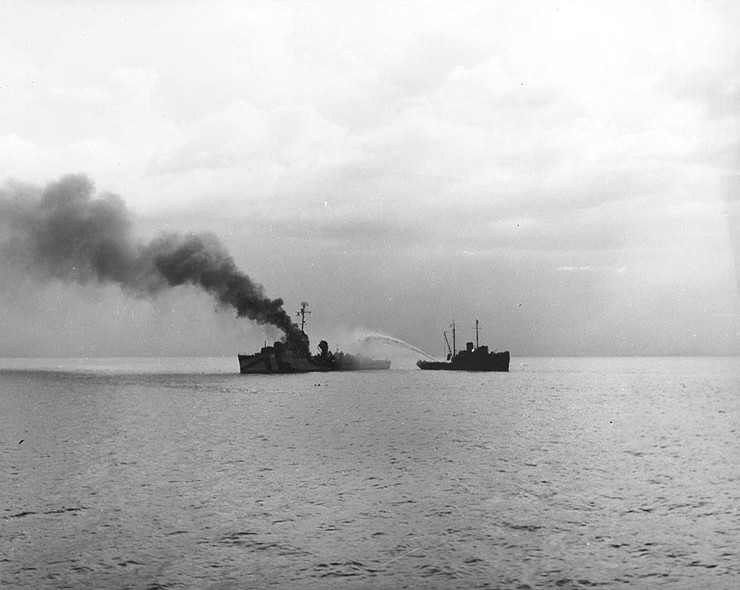
USS Lamson (DD 367) on fire in Ormoc Bay on 7 December 1944, after she was hit by a kamikaze. The tug assisting with firefighting is probably ATR-31.

1944  Coast Guardsmen participated in the landings at Ormoc, Philippine Islands.

1946  The number of Coast Guardsmen on active duty had been dropped to 22,156 in order to meet budgetary requirements.  Many lifeboat stations had to be placed in a limited caretaker or inactive status and some vessels tied up because they lacked complements .

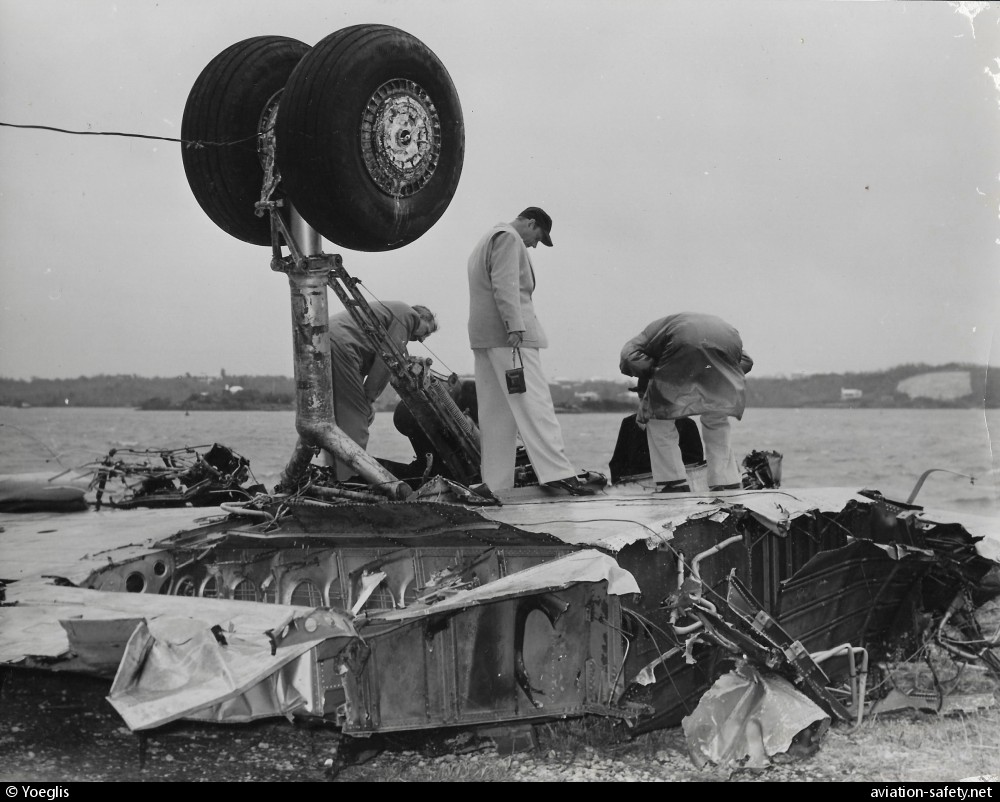
photo (c) Yoeglis; Bermuda-Kindley Field (BDA); 06 December 1952

1952  Coast Guard search and rescue facilities at the Naval Base in Bermuda were instrumental in rescuing four survivors and recovering 17 bodies from a Cubana Douglas DC-4, registered CU-T397, which crashed on take-off from the airport at Kindley Field, Bermuda.

The Coast Guard Cutter Douglas Munro (WHEC 724) is moored at the cutter’s homeport of Kodiak, Alaksa, April 24, 2021. The Douglas Munro was decommissioned during a ceremony following 49-years of service to our nation. U.S. Coast Guard photo by Chief Petty Officer Matt Masaschi
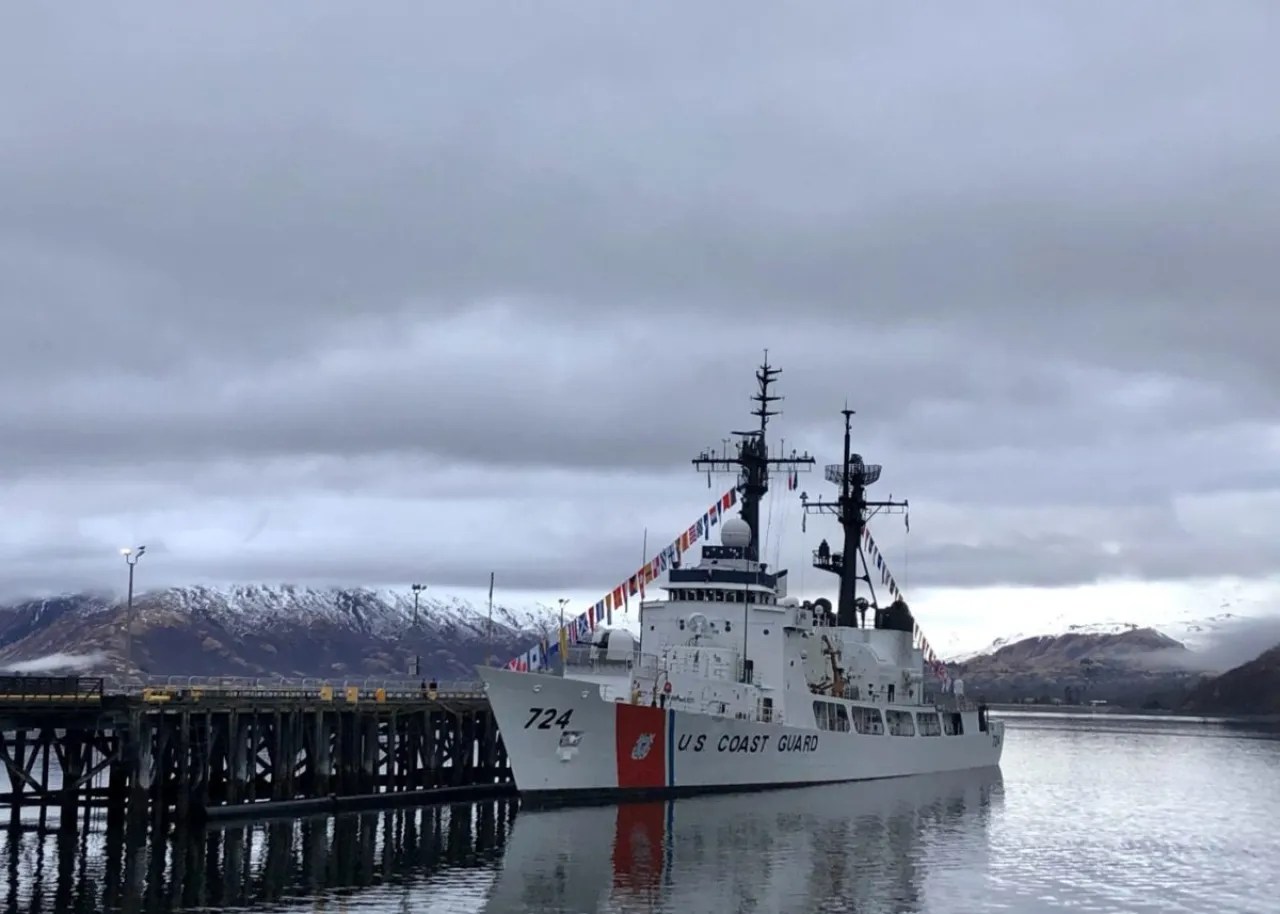
1999  CGC Munro intercepted the vessel Wing Fung Lung loaded with more than 250 Chinese migrants headed for the Guatemala/El Salvador border.  After refusing permission to board, Munro tracked the vessel for three days when lookouts spotted flares over the ship.  When the Munro’s small boat approached, panicked migrants began jumping into the water.  They were pulled to safety and returned to the Wing Fun Lung while boarding parties finally went aboard the crowded vessel.  Someone apparently tried to scuttle the vessel and the boarding teams were able to stop the flooding and dewater the engine room.  The threat to the Munro crewmen on the vessel was made worse because the migrants had not been fed or had water for more than a day.  They were at the point of total rebellion, according to the Munro’s boarding team members.  Other boarding teams from CGC Hamilton then arrived and helped to control the situation.  The vessel was finally taken into Puerto Quetzal, Guatemala, where the migrants were taken into custody by INS agents.  The master of the vessel was arrested.

2013  CGC Mackinaw, loaded with more than 1,200 Christmas trees as 2013’s “Christmas Ship,” arrived at Navy Pier for a two-day event re-enacting an annual Chicago tradition dating from the late 1800s and early 1900s.

2013  Coast Guard Sector Sault Ste. Marie, Michigan, commenced Operation Taconite for the winter season.  The annual operation was designed to prevent developing ice from hindering commercial navigation in the ports of Duluth, Minnesota; Superior, Wisconsin; and Thunder Bay, Ontario.  Operation Fall Retrieve, the annual operation to remove aids to navigation on the Great Lakes in preparation for the winter icing of the lakes, concluded soon after the start of 2013’s Operation Taconite.  Coast Guard Sector Detroit prepared to launch Operation Coal Shovel, the annual ice-breaking operation in the eastern Great Lakes region.
This Day in Coast Guard History, December 3/4

Based on the Coast Guard Historian’s timeline, https://www.history.uscg.mil/research/chronology/
With inspiration from Mike Kelso

December 3

Joseph Francis Life-Car. Image credit: Smithsonian National Museum of American History.
1852  The merchant ship Georgia grounded in a gale off Bonds, New Jersey with 290 persons on board.  The life car was used to affect their rescue and all survived.

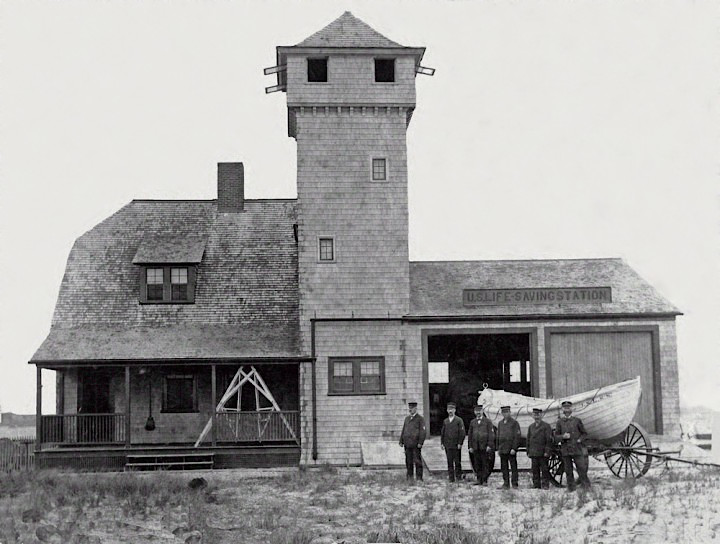
Old Harbor U.S. Life Saving Station is a historic maritime rescue station and museum, located at Race Point Beach in Provincetown, Massachusetts. It was originally located at Nauset Beach near the entrance to Chatham Harbor in Chatham, Massachusetts.

1883  The schooner Pallas with a crew of three men encountered strong head winds and heavy seas off Cape Cod, Massachusetts.  About half past 5 in the morning, abreast of Nausett lights, she sprung a leak and became unmanageable.  Being close to the breakers, the crew was fearful they would be washed overboard as soon as she struck and took to their boat.  Fortunately, they were discovered by the Nausett Station keeper, pulling vigorously to keep away from the surf.  The surfboat was launched and the three men rescued.  They were brought ashore by the life-saving crew, though not without a thorough drenching because the station boat was nearly swamped on the bar.  The schooner meanwhile drifted into the surf, three quarters of a mile north of the station and soon broke up.

1982  MSO St. Louis took charge of the response when the Mississippi, Missouri, and Illinois rivers flooded their banks.  In all over 100 Coast Guardsmen took part in the relief efforts that covered an eight-state area.

GULF OF MEXICO – Petty Officer 3rd Class Suren Chandrasena, a boatswain’s mate, watches as Coast Guard Cutter Bertholf’s Over-The-Horizon small boat departs to receive personnel from Coast Guard Cutter Chandeleur, June 18, 2008. U.S. Coast Guard photo by Petty Officer 3rd Class Michael Anderson

2001  Coast Guard forces, including the cutters Chandeleur (WPB-1319) and Farallon (WPB-1301), as well as aircraft from Air Station Miami and boat crews from Station Miami Beach rescued 185 Haitian migrants from the grossly overloaded 31-foot sailboat Simapvivsetz off Old Rhodes Key, Florida.

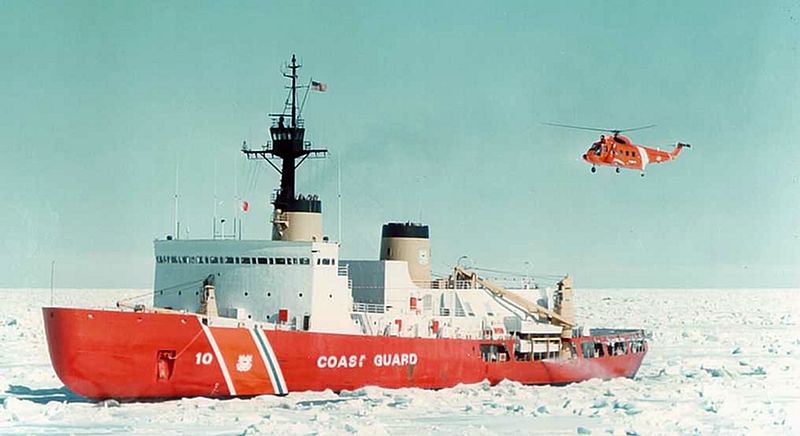
USCGC Polar Star. USCGC photo.

2013  CGC Polar Star departed Coast Guard Base Seattle for Antarctica in support of Operation Deep Freeze for the first time since 2006 with the task of resupplying the National Science Foundation Scientific Research Station in McMurdo, Antarctica.  During the summer of 2013, Polar Star conducted sea trials in the Arctic to test all of the ship’s equipment and train the crew prior to embarking to Antarctica.  During the summer trip, Polar Star spent weeks in the Beaufort Sea north of Barrow, Alaska, testing propulsion machinery, conducting emergency drills, and qualifying crewmembers in individual watch-stations.  The cutter was recently out of a three-year, $90 million overhaul, part of the Coast Guard’s plan to reactivate the heavy icebreaker.

December 4

Mesquite aground on her final voyage

1989  USCGC Mesquite ran aground near Keweenaw Point in Lake Superior.  She was deemed damaged beyond repair and was sunk as an artificial reef.  There was no loss of life.