“Guide To Iran’s Navy & IRGC’s Drone Carriers, Forward Base Ships, and Covert Intelligence Ships” –Covert Shores

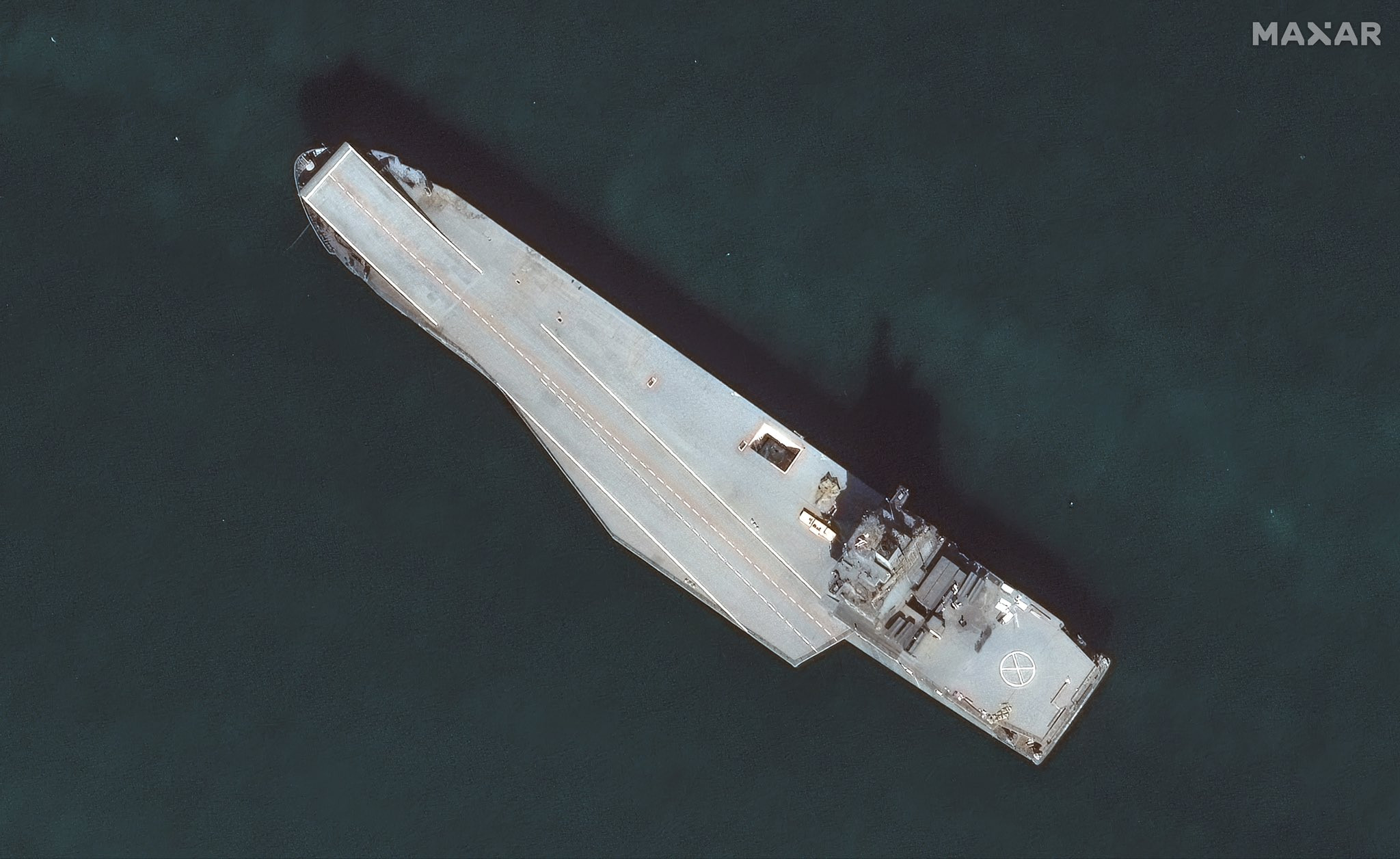
Satellite image of the drone carrier I.R.I.S. Shahid Bagheri (C-110-4) by Maxar Technologies. Note the open aircraft lift and boxed anti-ship missiles behind the superstructure. There appears to be a UAV under netting ahead of the superstructure. This may be a Gaza or similar type

Well, drones are in the news so why not. Drone carriers are becoming a type.

“Covert shores” has an excellent overview of how Iran is converting merchant ships to fulfill naval tasks.

Some are armed with ballistic or cruise missiles.

“Iran’s ‘Zulfikar’ Submersible Torpedo Boat” –Covert Shore

Covert Shores reports on Iran’s version of an unusual asymmetric threat that originated in North Korea. Used by the Islamic Revolutionary Guard Corps, PATFORSWA may encounter these.

“I originally interpreted these to be Special Operations assets intended as a form of swimmer delivery vehicle. This would be consistent with related types in North Korean and Vietnamese service. In that role the torpedoes would be for self-defense. However, I now view them more as submersible torpedo boats intended to sink ships with torpedoes.”

The torpedoes are 12.75 inch (324mm) light weight anti-surface homing torpedoes. (243mm noted in the diagram above is apparently a typo.) We can’t take too much comfort in the fact that these are not heavy weight torpedoes. Heavy weight torpedoes frequently break ships in half, but because water is not compressible, the 100 pound warhead of a typical light weight torpedo still has about one half the impact of the 600 pound warhead of a typical heavy weight torpedo. These smaller torpedoes can seriously hurt even a large ship, possibly including immobilizing it, and making it an easier target for follow on attacks. Used against a vessel the size of PATFORSWA’s Fast Response Cutters, they would be fatal. Assuming these are wake homers, it might be wise to learn the maneuvers used to defeat wake homing torpedoes.

It is unlikely these little submersibles can go very deep or that they have much mobility while submerged. Even so, much of the Persian Gulf is shallow, so there are certainly places where they could rest on the bottom, lying in wait.

“India Rescues Iranian Fishing Vessel Hijacked By Pirates Off Somalia” –gCaptain

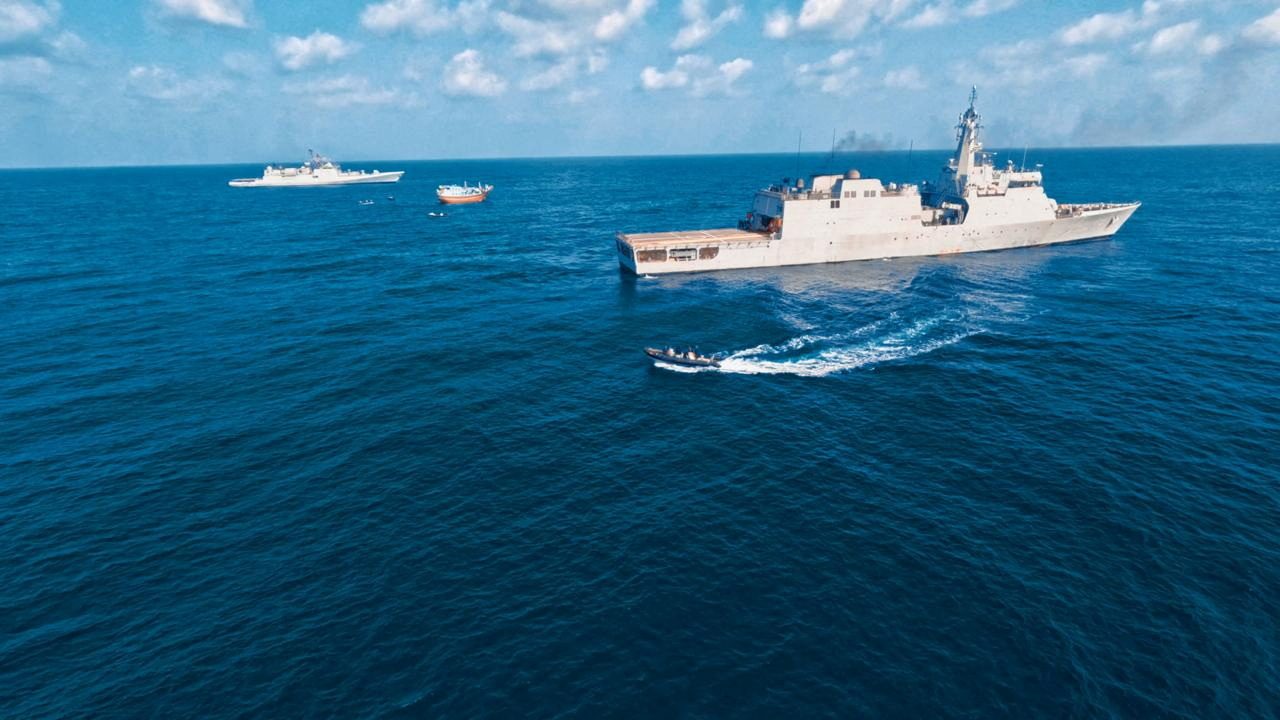
An Indian Navy carries out a rescue operation of an Iranian fishing vessel Al-Kambar 786 after it was seized by armed pirates off Somalia, in the Arabian Sea, according to a naval statement, in this handout photo released on March 30, 2024. SPOKESPERSONNAVY VIA X/Handout via REUTERS

gCaptain reports,

The Indian Navy said it had freed the 23-strong crew of an Iranian fishing vessel which was seized by armed pirates off Somalia….The vessel was intercepted by the navy’s INS Sumedha and INS Trishul, leading to “over 12 hours of intense coercive tactical measures” forcing the pirates to surrender…”

INS Sumedha (foreground in the photo above) is a Saryu-class 105 meter (344′) offshore patrol vessel, and was the first Indian vessel on scene.

Interestingly, the 23 member crew of this Iranian fishing vessel were all Pakistani nationals.

Very Interesting Questions: “Drone Warfare’s New Angle: Iran’s Shaheds Become Low-Cost Anti-Ship Missiles” –Covert Shores

Shahed-136One Way Attack Uncrewed Air Vehicle (), Source: Covert Shores

Covert Shores makes some interesting observations and asks pointed questions particularly in regard to the terminal homing phase of how the low-cost slow cruise missiles make their attacks on moving targets.

Hitting fixed target in Ukraine is very different from hitting a moving target hundreds of miles off the coast. Even an oil tanker is very small in the vastness of the ocean. The mission would need target location intelligence, and the drone would need targeting during its attack phase. The former is the same for any anti-ship weapon and can be achieved by patrol aircraft, fishing boats. Or, as possibly the case in the Chem Pluto attack, by the target broadcasting its position via AIS (automated information system).

The final phase targeting is more interesting. We do not know, at least in the public sphere, how the drones targeted the tankers. Whether it was a human-in-the-loop camera, or some form of automation.

Do they have satellite communications? Target recognition software? Home on AIS?

Presumably we have recovered at least one of the failed drones and can answer the question, but there is an even simpler solution.

Forward observers in one or more of the many Dhows that traffic the area, who call in a UAV when they have a target, and who can take over control of the drone when it arrives on scene, steering it into the target. This would be a continuation of what we saw with the Houthi remote control explosive motorboats, which unlike the USVs we are seeing in the Russo-Ukraine War, had no satellite link and were apparently steered by a second vessel within line of sight of the target and the attacking USV.  It is not unlikely the Iranians and Houthi have a network of such nondescript vessels. 

The slow speed of the UAVs does present something of a challenge in getting to the right place at the right time, but that is mitigated by the predictability of shipping lanes and the consistent speed of merchant vessels.

The Photo is Wrong but “US Naval Ship Fires Warning Shots at Iranian Boats: A Dangerous Encounter in the Strait of Hormuz” –BNN

US Naval Ship Fires Warning Shots at Iranian Boats: A Dangerous Encounter in the Strait of Hormuz

BNN reports,

“On Monday…According to reports, the Iranian boats approached the U.S. ship at a high speed, coming within 300 yards before the warning shots were fired. This incident was described by the former commander of the U.S. Navy’s Fifth Fleet as ‘startling’ and ‘incredibly dangerous.’”

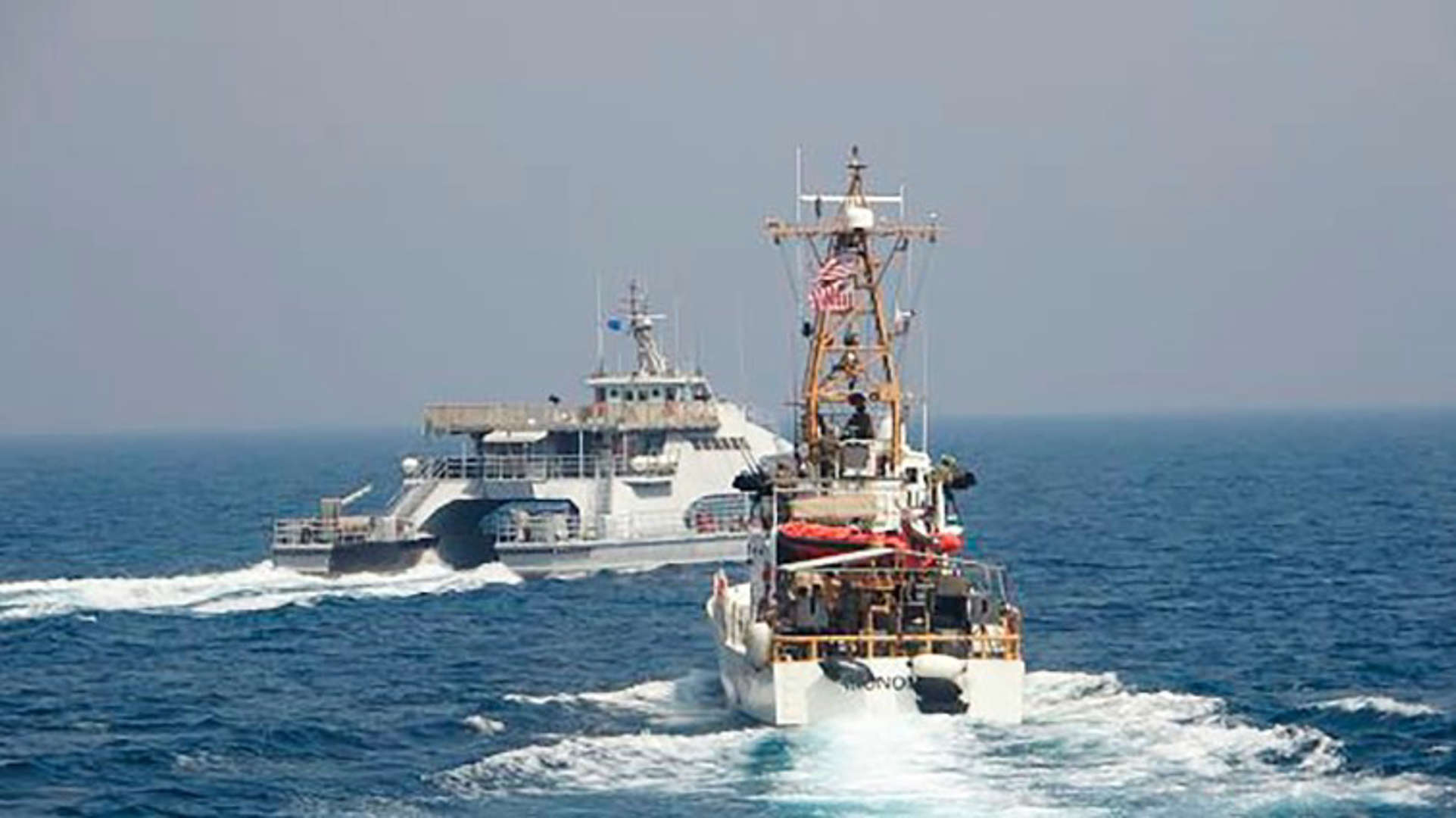
MSN passed the story along, but while I suspect the US ship may have been a Coast Guard cutter, since it is described as a “US naval ship” rather than a US Navy ship, the photo accompanying the story (above) is from an April 2, 2021, incident. The cutter in the photo is USCGC Monomoy (WPB-1326), decommissioned in March 2022. I looked for a news release from 5th Fleet but found none.

Similar incidents are not that unusual:

“VIDEO: Iranian Navy Warship Fires on Oil Tanker in the Strait of Hormuz” –USNI

The US Naval Institute reports that the Iranian Navy attempted to stop two tankers in the Gulf of Oman. In the second case, shots were fired. In both cases, the Iranian warships departed when US destroyer USS McFaul (DDG-74) arrived on scene.

The Iranian warship that fired on the tanker was armed with a 76mm gun and apparently anti-ship cruise missiles, but additional CNN coverage indicates the weapons fired were “small arms.” There was only minor damage to the tanker and no personnel casualties.

The Iranian vessel seen in the video is one of four Bayandor class corvettes (apparently Bayandor itself) built in Orange, Texas. Two of the class are believed to have been lost to Iraqi force 1982-83. The two remaining ships were commissioned into Iranian service in 1964. They have a full load displacement of 1,135 tons and are 275 feet (83.82 meters) in length with a speed of 20 knots.

Iranian Navy Bayandor (PF-103) class corvette. 29 December 2019. Photo credit: mehrnews via Wikipedia.

“Iran Reveals World’s First Air Defense Small Boat” –Covert Shores

Camera drone’s-eye view of IRGC boats on display, March 2023. A) The air defense boat. B) Light missile boat with Bladerunner hull. C) light missile boats on Interceptor hull. D) light missile boats on Interceptor hull (alternative design). E) Missile boat, with type of missile unclear. F) RIB, possibly explosive boat or uncrewed. G) RIB with lightweight anti-ship torpedoes, can be carried aboard a Shahid Soleimani-class missile corvette. H) Interceptor boat. I) Interceptor boat with new type of missile.

Covert Shore has a post about a new Iranian Revolutionary Guard Corps (IRGC) Navy boat armed with vertical launch anti-aircraft missile, believed to be the first such craft in the world, but I found the photo above and the accompanying caption particularly interesting.

These are far different from the familiar, prototypical IRGC boats armed with a single machine gun and a few unguided rockets.

“U.S. Forces Assist UK Seizure of Missiles Shipped from Iran” –NAVCENT

U.S. 5TH FLEET AREA OF OPERATIONS (Feb. 26, 2023) Anti-tank guided missiles and medium-range ballistic missile components seized by the United Kingdom Royal Navy sit pierside during inventory at a military facility in the U.S. 5th Fleet area of operations, Feb. 26, 2023.U.S. 5TH FLEET AREA OF OPERATIONS (Feb. 26, 2023) Anti-tank guided missiles and medium-range ballistic missile components seized by the United Kingdom Royal Navy sit pierside during inventory at a military facility in the U.S. 5th Fleet area of operations, Feb. 26, 2023. (Photo by Sgt. Brandon Murphy)

U.S. Forces Assist UK Seizure of Missiles Shipped from Iran

By U.S. Naval Forces Central Command Public Affairs | March 02, 2023

MANAMA, Bahrain —U.S. forces provided airborne intelligence, surveillance and reconnaissance support for an interdiction in the Gulf of Oman conducted by the United Kingdom Royal Navy, Feb. 23, that resulted in the discovery of an illegal weapons shipment from Iran.

Coordinated efforts among U.S. and UK maritime forces led to Royal Navy frigate HMS Lancaster (F229) confiscating anti-tank guided missiles and missile components from a small boat that originated from Iran. UK forces discovered packages that included Iranian versions of Russian 9M133 Kornet anti-tank guided missiles, known in Iran as “Dehlavieh,” and medium-range ballistic missile components.

“This is the seventh illegal weapon or drug interdiction in the last three months and yet another example of Iran’s increasing malign maritime activity across the region,” said Vice Adm. Brad Cooper, commander of U.S. Naval Forces Central Command, U.S. 5th Fleet and Combined Maritime Forces. “We will continue to work with our partners in pursuing any destabilizing activity that threatens regional maritime security and stability.”

The interdiction occurred along a route historically used to traffic weapons unlawfully to Yemen. The direct or indirect supply, sale or transfer of weapons to the Houthis in Yemen violates U.N. Security Council Resolution 2216 and international law.

U.S. and UK naval forces regularly conduct combined maritime security operations to disrupt the flow of illicit cargo in Middle East waters. Last year, U.S. Navy guided-missile destroyer USS Gridley (DDG 101), Royal Navy frigate HMS Montrose (F236) and combined air assets led to Royal Navy forces seizing surface-to-air missiles and land-attack cruise-missile engines.

In the past three months, seven major interdictions have resulted in U.S. and partner maritime forces seizing more than 5,000 weapons, 1.6 million rounds of ammunition, 7,000 proximity fuses for rockets, 2,100 kilograms of propellant used to launch rocket propelled grenades, 30 anti-tank guided missiles, medium-range ballistic missile components and $80 million worth of illegal drugs.

U.S. Naval Forces Central Command and United Kingdom Maritime Component Command are headquartered in Manama, Bahrain.

“US Navy seizes massive shipment of ammo, explosive material in Gulf of Oman” –Task and Purpose

The U.S. Navy released photos of a fishing trawler it says carried more than 50 tons of ammunition rounds, fuses and propellants for rockets when it was boarded Dec. 1., 2022 in the Gulf of Oman. (U.S. Navy 5th Fleet via Stars and Stripes)

Task and Purpose reports,

“For the second time in less than a month, the U.S. Navy intercepted a ship passing through the Gulf of Oman and seized a large shipment of illicit weapons bound for Yemen..The Navy made the interception on Thursday, Dec. 1. Sailors with the Navy’s 5th Fleet stopped a fishing trawler in the gulf. During a flag verification boarding, they found a large cargo of munitions and chemical propellant. The sailors seized 1.1 million rounds of 7.62mm ammo, as well as an additional 25,000 12.7mm rounds. The trawler also was carrying almost 7,000 rocket fuses and more than 2,000 kilograms of a propellant used in rocket propelled grenades. The cargo totaled more than 50 tonnes.”

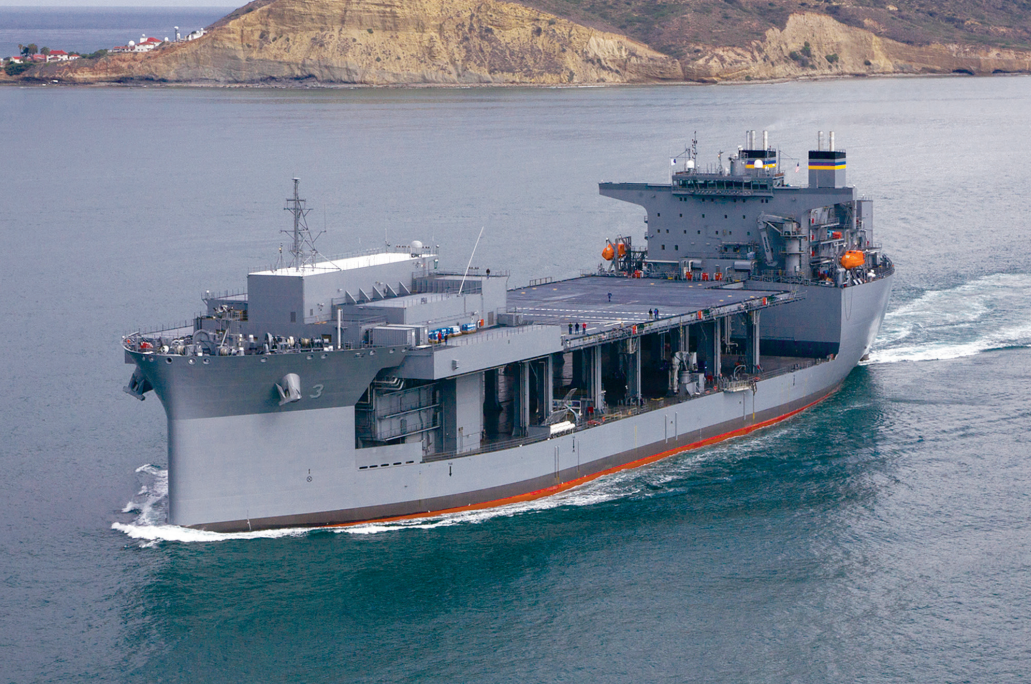
The boarding party came from the expeditionary sea base USS Lewis B. Puller, but I think it is a safe bet Coast Guard personnel were involved in the boarding.

USS Lewis B. Puller (ESB-3)


“U.S. 5th Fleet Reveals New Details on Iranian Drone Attack on Tanker” –USNI

Graphic illustration and images captured by a U.S. Navy explosive ordnance disposal team aboard M/T Pacific Zircon, Nov. 16, showing the location where an Iranian-made unmanned aerial vehicle (UAV) penetrated M/T Pacific Zircon’s outer hull during an attack Nov. 15. The one-way UAV attack tore a 30-inch-wide hole in the outer hull on the starboard side of the ship’s stern, just below the main deck. US Navy graphic

The US Naval Institute has a post providing addition detail about the November 15  drone attack on tanker Pacific Zircon.

The primary thrust of the post seems to be, to confirm that the drone was of Iranian origin, but then, that was almost assumed. They seem to have proven that, identifying it as a Shahed-136 design, a “loitering munition.”

For me the new information was where the tanker was targeted and the extent of the resulting damage.

When I first heard that this drone had hit the hull, I thought perhaps the Iranians had decided it was not to their advantage to kill crew members, as had happened in the July 30 attack on the tanker Mercer Street, but apparently that was not the case, since this strike was also on the stern where it is more likely to effect crewmembers.

As to the weapon’s effect, the Shahed–136 reportedly has a 30–50 kilograms (66–110 lb) warhead. referencing a 5th Fleet report, USNI notes,

On Nov. 15, a Shahed 136 explosive-tipped drone flew into the aft section of the merchant oil tanker M/T Pacific Zircon punching a hole through the hull, “while subsequently penetrating and damaging internal compartments. The UAV’s explosive impact also damaged a shipboard boiler, potable water tank and life raft,” reads the statement.

That they managed to damage engineroom equipment, which presumably required penetration of multiple internal bulkheads, after penetrating the hull, is more than I would have expected. The anti-armor, shaped charge version of the munition, which would result in a narrowly focused path of destruction, may have been used.

Another report from Business Insider vis Yahoo that includes more photos here.