Damage Resulting from Ukrainian USV Attacks –The Drive

The Drive provides information showing the results of Ukrainian Unmanned Surface Vessel (USV) attacks on a small Russian tanker and a Russian Navy LST. Reportedly the USVs were equipped with 450 kg of explosives (about 1000 pounds). The explosions occurred essentially at the waterline. Had the explosions occurred well below the waterline, or particularly below the keel, the effect would have been greater. Even in the photo above, it appears the explosion cause more damage below the waterline than above. Had it been well above the waterline, the effect on the ship would probably have been less, but similar sized bomb or missile hits on the superstructure would likely have caused more personnel casualties.

Our First Look At Hole Blasted Into Russian Tanker By Ukrainian Drone Boat

“Ukraine Situation Report: Photos Show Damage To Russian Tanker After Drone Boat Strike” –The Drive

The Drive has an excellent report on the sea drone attack on Russian Tanker Sig, including photos of the damage.

Looking at the video above, it is apparent that it starts with the unmanned surface vessel alongside ship or structure which might have been a point of reference. It makes a sharp high-speed turn until about time 0:19, when the target came clearly into view at a relatively short distance. This is a 37 second video, assuming 40 knots the UAS could go 4,000 yards in three minutes or only about 822 yards in the 37 seconds. The last 18 seconds when the UAS is pointed at the target would be a distance of about 400 yards.

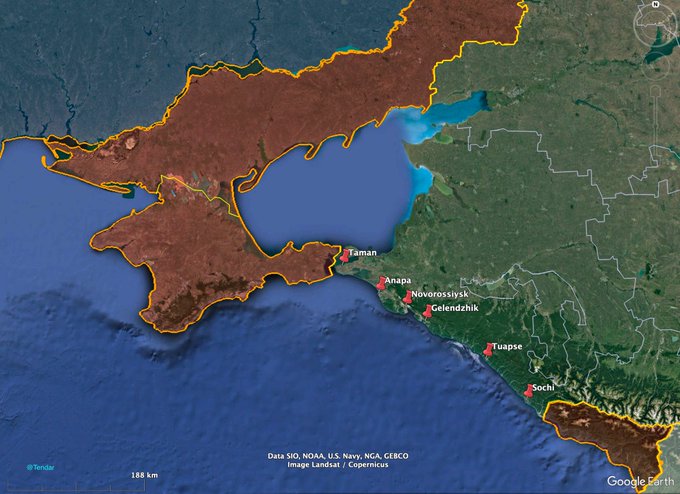
The post also notes that Ukraine has declared six Russian Black Sea ports subject to “War-Risk.”

“Ukraine’s New Maritime Drone Is A Jet Ski” –Covert Shores

Click to enlarge. Photo credit: hisutton.com

Covert Shores reports,

Both Ukraine and Russia have developed ‘maritime drones’ (USVs – uncrewed surface vessels) with explosive charges. These one-way attack USVs, aka ‘kamikaze’ drones, have been used to attack ships and bridges. The initial design, first seen in September 2022, already employed jet ski parts. However the hull was bespoke. This latest USV is a minimally modified commercial jet ski.

Based on the blurred imagery, the jet ski used appears to be a Kawasaki STX type. The seats, handlebars and some unnecessary casings have been stripped off. Then some communication and control devices have been added.

This seems to show how easy it would be for terrorists to field an offensive unmanned surface kamikaze drone.

“Our Best Look Yet at the Marines’ New Loitering Munition Toting Drone Boat” –MSN

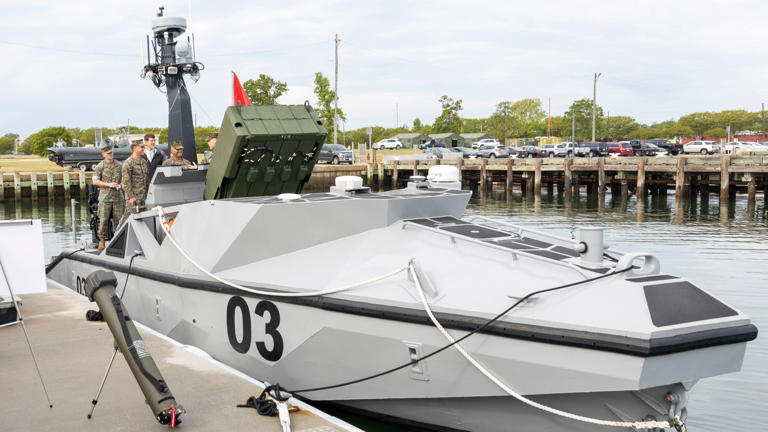
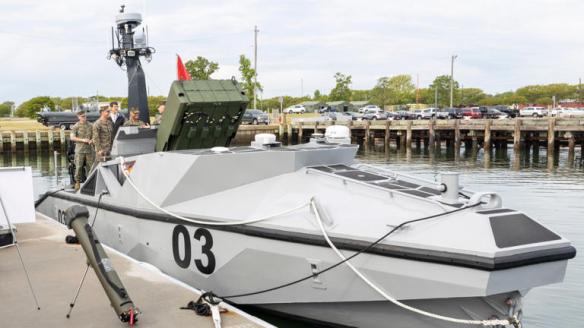
HERO 120 launcher on Long Range Unmanned Surface Vessel (LRUSV)

We talked about the HERO 120 loitering munition before. I noted it might be just what the Coast Guard needs to deal with the potential threat of small, fast, highly maneuverable craft.

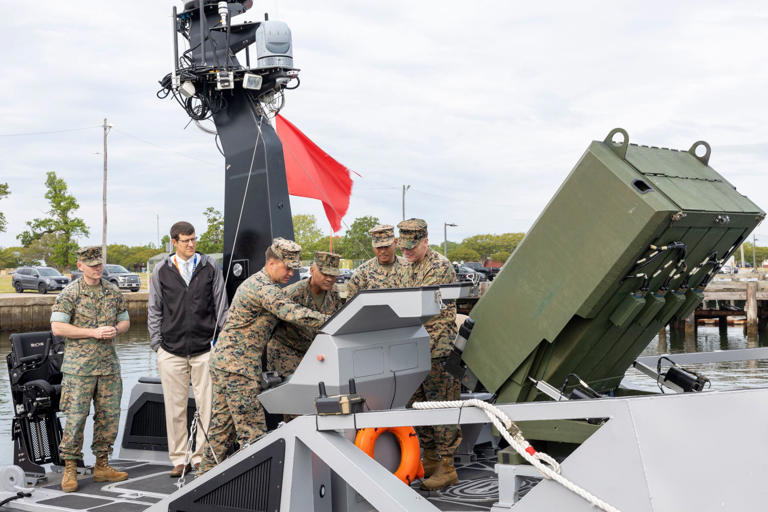
While man portable single round launchers are probably all Coast Guard units might need (other than perhaps Bahrain based PATFORSWA Webber class cutters), we now have photos of an eight-cell launcher mounted on a Metal Shark optionally manned 40-foot, Long Range Unmanned Surface Vessel (LRUSV).

The Hero 120 is the largest offering in UVision’s “tactical” line of loitering munitions, weighing around 27 and a half pounds, including a 10-pound warhead. It uses an electric motor to drive a propeller at the rear and has a maximum endurance of around 60 minutes.
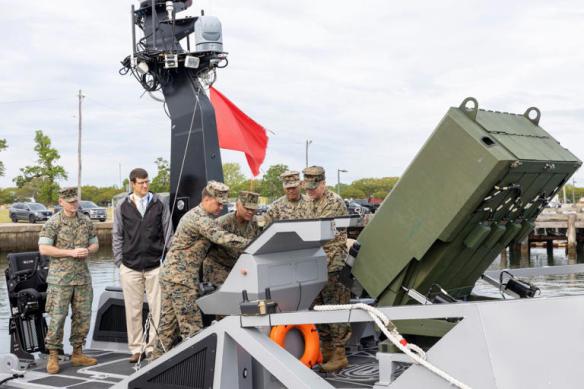
U.S. Marine Corps Lt. Gen. Brian W. Cavanaugh, the commanding general of Fleet Marine Force, Atlantic, Marine Forces Command, Marine Forces Northern Command, and Marines with 3d Marine Littoral Regiment, 3rd Marine Division, examine the manual controls to the Long Range Unmanned Surface Vessel, Joint Expeditionary Base Little Creek-Fort Story, Virginia, April 27, 2023. A LRUSV is an optionally manned vessel capable of extended travel and transporting loitering munitions that accurately track and destroy targets on sea or land. Metal Shark is designing, building, testing and implementing the LRUSV system under another transaction authority agreement with Marine Corps Systems Command to primarily serve as an intelligence, surveillance, and reconnaissance platform.
© Provided by The Drive

While it looks increasingly likely this system will become common in the Navy/Marine Corps inventory, it is perhaps important to remember that this eight-round launcher is not necessary to launch these. Loaded single round launchers are small enough to be man portable and would impose no heavy loads on the platform at launch. Certainly, some training would be required, but they could be stored in a group, station, or ship’s armory and be issued when needed.
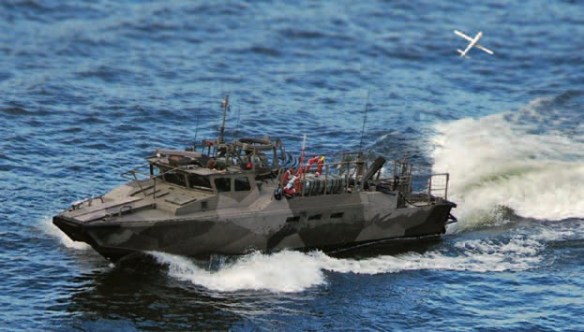
Hero 120 Loitering Munition

The Navy/Marine Corps has a new weapon in their inventory, and it may be just what the Coast Guard needs to deal with the potential threat of small, fast, highly maneuverable craft. It is a loitering munition, a drone with a warhead, making it a kind of slow cruise missile with an ability to abort.

Hero 120 will be going on the Marine Corps Long Range Unmanned Surface Vessel (LRUSV) as well as Marine manned ground vehicles.

Weight (with canister): 18 kg (40 pounds)
Warhead: 4.5 kg (10 pounds)
Range: 60+ km (32.4 nautical miles)
Endurance: 60 min
Engine: Electrical
Launch method: Single/Multi-Canister

Range is to some extent apparently limited by line of sight, but this could be used from land or from virtually any patrol boat.

Take a look.

“Ukraine Situation Report: This May Be Russia’s First Kamikaze Drone Boat Attack” –The Drive

The Drive comments on the report tweeted above.

I would note a couple of things.

This kind of attack, against a fixed structure, does not require any contact with the USV once it is launched because its guidance can be entirely preprogrammed. That may have some disadvantages, but it also means there are no emissions from the UAS that might be intercepted.

Second, the explosion was not close to one of the supports, and it did not explode under the lift bridge section which would have been the more vulnerable part of the bridge. I doubt it did much damage.