“Army Cancels High-Speed Armed Reconnaissance Helicopter Program” –The WarZone

Sikorsky’s Raider X, advanced compound helicopter design (FARA prototype)

The Warzone reports,

The U.S. Army says it is cancelling its Future Attack Recon Aircraft (FARA) program which had been centered on the acquisition of a new type of high-speed armed scout helicopter. This is part of a larger restructuring the Army plans for its future fleets of helicopters and other crewed and uncrewed aircraft.

This is essentially half of the Army’s Future Vertical Lift program. The Coast Guard has been following the program in anticipation of development of vertical takeoff and landing aircraft that would offer “twice the range and twice the speed” of existing helicopter types. We might still see that in a version of the Bell V-280 for land-based operations.

Note this video is four years old, so the prototype has been flying for a long time. I have heard concern about the downwash, but if you look at the windsock visible from time 2:20, downwash does not seem to be excessive. My back of the envelope calculations suggests the overpressure directly under the rotor discuses would be about 67% higher under the V-280’s props compared to the H-60J’s rotor. That might be mitigated at the hoist pickup point because, unlike in the H-60, the props are not rotating over the fuselage of the V-280.

It does appear that the H-60s may have a new engine option in the future.

The FARA cancellation is part of what the Army is currently calling the Aviation Investment Rebalance. The service says it will delay production of the General Electric T901 turboshaft engine developed under the Improved Turbine Engine Program (ITEP), which had been heavily tied to FARA, as part of this plan. The immediate focus will now be on integrating T901s onto existing AH-64 Apache attack helicopters and UH-60 Black Hawk utility helicopters.

GE Aerospace claims, “The T901 engine provides 50% more power 25% better specific fuel consumption, and reduced life cycle costs -with fewer parts, a simpler design, and proven, reliable technology.” 

Basically, the Army has decided that Unmanned aircraft and Satellites can do the job of scouting better and cheaper, as well as safer, than a helicopter. This means they will be putting more money into those areas.

The Coast Guard might still benefit in its maritime domain awareness and its search function. I have not put much thought into the possibility that UAS (and perhaps satellites) might supplement or replace fixed wing for the SAR search function or MEP detection, but those are real possibilities.

I am disappointed that we are not likely to see a ship-based helicopter with twice the range and twice the speed any time soon, but on the other hand, we are already using UAS for search that have many times the endurance of the H-65 or even the H-60. For that function, endurance is more important that speed.

“The Coast Guard is investing in underway connectivity…and it’s paying off!” –MyCG

Below is news from MyCG. I am publishing it in full for convenience. It is a great advertisement for Starlink which has played a significant role in Ukraine’s Maritime Drone offensive against Russia, but the most surprising thing for me was this,

“…soon all users will have Dial-In Phone System (DIPS), a new capability that assigns a unique telephone number to every member of the workforce to last for the duration of their career. With it, you will be able to make and receive phone calls, and have voicemail, within DoD365 Teams….even underway! (Watch out for another MyCG article next week for more information about DIPS!)”

WOW!!


Aug. 16, 2023

The Coast Guard is investing in underway connectivity…and it’s paying off!

By AJ Pulkkinen, MyCG staff writer

The Coast Guard is aggressively adding Starlink commercial satellite communications on most cutters. This next-generation upgrade provides a twenty-fold increase in the speed of shipboard networks.

The C5I team already installed Starlink on 17 cutters and targets all major cutters (WMSL, WMEC, Polars) for completion by the end of this calendar year (CY) WLB (225s) and FRC (154s) are targeted during CY24, along with the 17 WPBs (87s) that have installed legacy commercial satellite communications.

Starlink technology provides the bandwidth and latency for shipboard users that is on par with those working at a desk in an office ashore.

Bandwidth and latency are two different aspects of network performance. Bandwidth is the amount of data that can be transferred over a network for a definite period of time. Latency is the amount of time it takes for a bits of data to travel from one point on a network to another.

Underway users already equipped with Starlink are experiencing drastic increases in connection capability, such as connectivity to CG applications including Direct Access, FSMS, SharePoint, OneDrive and the full suite of DOD365 apps, and the ability to seamlessly upload and download large media files.

Starlink’s performance more easily allows underway users to access personal email, banking and social media. And soon all users will have Dial-In Phone System (DIPS), a new capability that assigns a unique telephone number to every member of the workforce to last for the duration of their career. With it, you will be able to make and receive phone calls, and have voicemail, within DoD365 Teams….even underway! (Watch out for another MyCG article next week for more information about DIPS!)

Starlink also provides global coverage, notably in the high latitudes. The cutter Eagle experienced minimal to no loss in coverage while crossing the North Atlantic to the Azores. Capt. Jessica Rozzi-Ochs says, “Starlink has seamless transition from satellite to satellite, unlike the legacy system, which drops service while it looks for and tracks a new satellite. This was particularly impressive when we experienced heavy weather (20+ foot seas, hard rain, 40-50 knots of wind) and Starlink didn’t go down once.”

Gone will be the days of having to come back to port only to spend hours or days at the computer because you lacked connectivity while underway.

The Eagle’s crew reported great success with their Starlink. By having consistent access to the Financial System Management Solution (FSMS), Eagle’s supply office reduced the number of offline requisitions, which minimized human error in tracking commitments and expenditures underway. They were able to better communicate with vendors and partners, streamlining the acquisition processes and coordinating port services for their port calls. With this enhance communication, they procured parts essential for maintaining the cutter fully mission capable even when short turnaround times were necessary.

The Eagle’s crew was able to frequently upload pictures and video to social media accounts in near-real time while underway. These timely posts reached a wide audience, with several posts reaching over 45,000 views.

Starlink will help alleviate one of the greatest burdens on our cutter community: intermittent connectivity. This capability will transform shipboard life, and serve as an invaluable tool for recruitment, retention, and the sea duty attractiveness.

“Coast Guard partners with Space Force to strengthen presence in space domain” –CG-9

The Coast Guard Research, Development, Test, and Evaluation Program, in partnership with the Department of Homeland Security Science and Technology Directorate, launched two 6U CubeSats from Vandenberg Air Force Base, California, as part of the Polar Scout project. Photo courtesy of SpaceX.

Below is from the Acquistions Directorate (CG-9). CG R&D seems to be reaching out quite a bit lately. The CG R&D budget is quite small, smaller than it should be, but they seem to be making the best of it.


Coast Guard partners with Space Force to strengthen presence in space domain

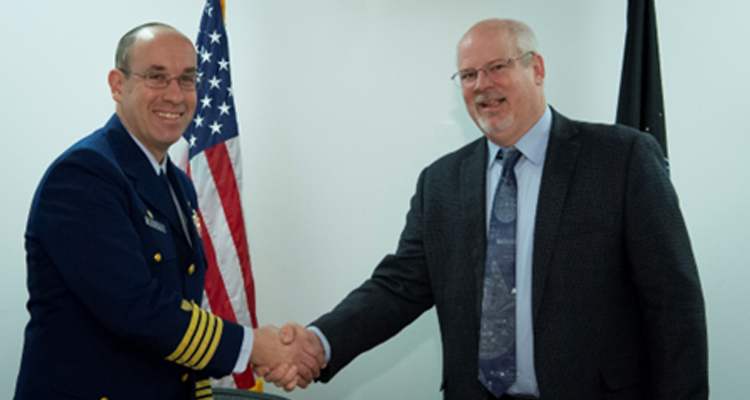
Capt. Dan Keane, commanding officer of the Coast Guard Research and Development Center (left), and Dr. Joel Mozer, director of science, technology and research for the U.S. Space Force, share a handshake following the Jan. 19, 2023, signing of a memorandum of understanding (MOU) to enhance space-related capabilities for the joint warfighter. This MOU aims to develop a partnership that focuses on coordination, collaboration and transparency to enhance capabilities and technologies. U.S. Air Force photo by Staff Sgt. Stuart Bright.


The Coast Guard Research and Development Center (RDC) and the U.S. Space Force (USSF) Science, Technology and Research Directorate solidified their commitment to collaborate and enhance space capabilities for the joint warfighter through a new memorandum of understanding (MOU) signed Jan. 19.

This significant occasion marks the first time the two organizations have worked together and the beginning of a partnership focused on coordination, sharing and exchange of information as well as identifying opportunities for applied research and advanced technology development.

Capt. Daniel Keane, RDC commanding officer, and Dr. Joel Mozer, USSF science, technology and research director, signed the MOU.

Mozer underscored the importance of the partnership. “The Coast Guard is more than 230 years old and the Space Force just three,” he said. “The nation’s newest service has a lot to learn from one of its oldest on how to provide national power and security in a burgeoning new domain full of new economic and geostrategic opportunity, but also representing unknown threats.”

The missions of the Coast Guard and Space Force are intertwined and have many goals that could be achieved more effectively and yield greater impact with coordinated planning. This MOU will enable and improve the Space Force’s access to unique RDC facilities, infrastructure and personnel to support their mission to protect the space interests of the U.S. and its allies by optimizing the development and transition of future space capabilities to the joint force.

“We are excited for the opportunity to partner with Space Force in potential future research, as well as share researchers and best practices,” Keane said. “We quickly realized the value that this relationship presented for both agencies soon after the Space Force participated in a Coast Guard strategic study that examined the Coast Guard’s future role in space governance, use of spaced-based technology and research areas.”

Due to the high dynamics of space and its rapidly evolving domain, the demand for space-based capabilities is significantly increasing, and the U.S. national security community is pursuing collaborative approaches to maintain its technological edge and strong foothold in space.

The Coast Guard has research activities adept at identifying, developing and operating emerging technologies to benefit national space-related capabilities, including space missions and operations. Through this MOU the organizations aim to develop a partnership that focuses on collaboration and transparency to enhance capabilities and technologies and to share best practices.

“The Coast Guard is a forward-leaning organization with an eye to the future,” Mozer said. “The Space Force wants to take advantage of their methods of strategic foresight and apply them to our own space problems; where technology developments overlap between the two services, we want to partner.”

For more information: Research, Development, Test & Evaluation and Innovation Program page and Research and Development Center page

“Coast Guard, DHS S&T Venture into Space with Polar Scout Launch” –CG-9

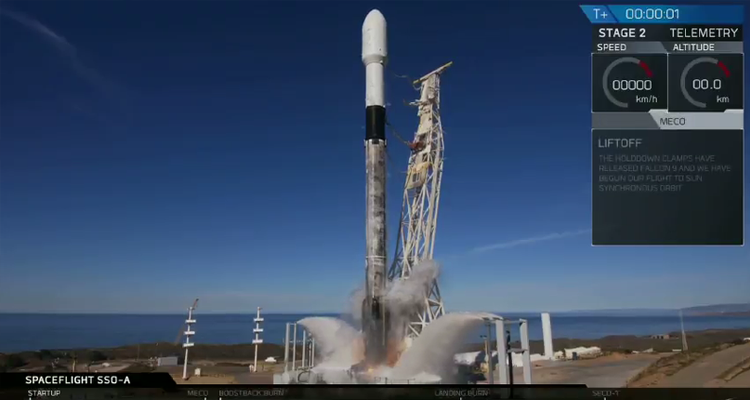
The Coast Guard Research, Development, Test, and Evaluation Program, in partnership with the Department of Homeland Security Science and Technology Directorate, launched two 6U CubeSats from Vandenberg Air Force Base, California, as part of the Polar Scout project. Photo courtesy of SpaceX.

The following is a release from the Acquisitions Directorate

Coast Guard Research, Development, Test, and Evaluation (RDT&E) Program, in partnership with the Department of Homeland Security (DHS) Science and Technology Directorate (S&T), today launched two 6U CubeSats from Vandenberg Air Force Base, California. The launch is part of the Polar Scout project to evaluate the effectiveness of space-based sensors in support of Arctic search and rescue missions. Knowledge gained from this demonstration will be used to inform satellite technology recommendations for many potential applications within the Coast Guard and across DHS.

Jim Knight, the Coast Guard deputy assistant commandant for acquisition, said in ceremonies leading up to the launch, “The Polar Scout project presents an opportunity to evaluate the most efficient way to ensure that the United States can project surface presence in the Arctic when and where it is needed while filling an immediate Search and Rescue capability gap in these remote areas.”

The CubeSats, dubbed Yukon and Kodiak, were launched into a low-earth polar orbit on a rideshare with other spacecraft from 17 different countries. This economical alternative to a costly single-mission launch ensured dozens of spacecraft from various organizations reached orbit. Success of the mission was due to public and private sector collaboration throughout the process, from developing the CubeSats to propelling them into space.

“In order to demonstrate, test and evaluate the viability and utility of CubeSats for Coast Guard missions, the Coast Guard RDT&E Program has partnered with DHS S&T to conduct on-orbit testing of CubeSats using the Mobile CubeSat Command and Control (MC3) ground network,” said Holly Wendelin, command, control, communications, computers, intelligence, surveillance and reconnaissance domain lead.

Developed as a potential capability bridge between the current 20-year-old international search-and-rescue architecture and its future successor, “CubeSats serve as a much smaller, more cost-efficient solution that can be easily implemented over a short period of time. Each are only about the size of a shoebox,” said John McEntee, director of Border Immigration and Maritime at S&T.

In the 18 months leading up to the launch, DHS S&T handled the fabrication of Yukon and Kodiak, which are tailored specifically to detect 406 MHz emergency distress beacons. At the same time, the Coast Guard Research and Development Center (RDC) deployed two ground stations – one at the Coast Guard Academy in New London, Connecticut, and one at University of Alaska Fairbanks – using the MC3 architecture and network. The ground stations will receive all of the signals from the CubeSats during the demonstration.

DHS will begin testing and demonstrations using emergency distress beacons in the Arctic beginning in early 2019 and continuing through the summer. “The demonstrations will include downlinking 406 MHz emergency distress beacon data from the CubeSats using the deployed MC3 ground stations,” Wendelin said. “We will set the beacons off, the satellite should detect it and send signals back to the ground station.” The testing period is expected to provide critical knowledge on how CubeSat technology can be used to enhance Coast Guard and DHS mission performance.

The Polar Scout project is providing valuable insight on the process, cost and feasibility of acquiring and using organic satellites. The Coast Guard and DHS will use the knowledge gained from Polar Scout and the MC3 installs, market research and space mission design and assessments to develop satellite technology recommendations.

As Coast Guard missions become more challenging and complex, the use of small and inexpensive satellites has the potential for great impact. Potential uses for satellites include improving communication in the arctic environment, monitoring large areas for illegal activity and helping to locate persons lost at sea. Additionally, the use of satellites has the potential to reduce the time and resources spent on intensive aircraft searches as well as the risks associated with placing personnel in hazardous situations that only need sensors and communications on scene.

“Undoubtedly, the results and knowledge gained by the Polar Scout Satellite Project will lead to force-multiplying solutions for the Department, which is a big priority in this age of complex threat cycles,” said Bill Bryan, senior official performing the duties of undersecretary for the Science and Technology Directorate.

Through Polar Scout’s robust search-and-rescue satellite solution, the Coast Guard may be empowered to respond to maritime disasters with unprecedented speed, preserving lives and even cargo, along trade routes in the Arctic Circle.