
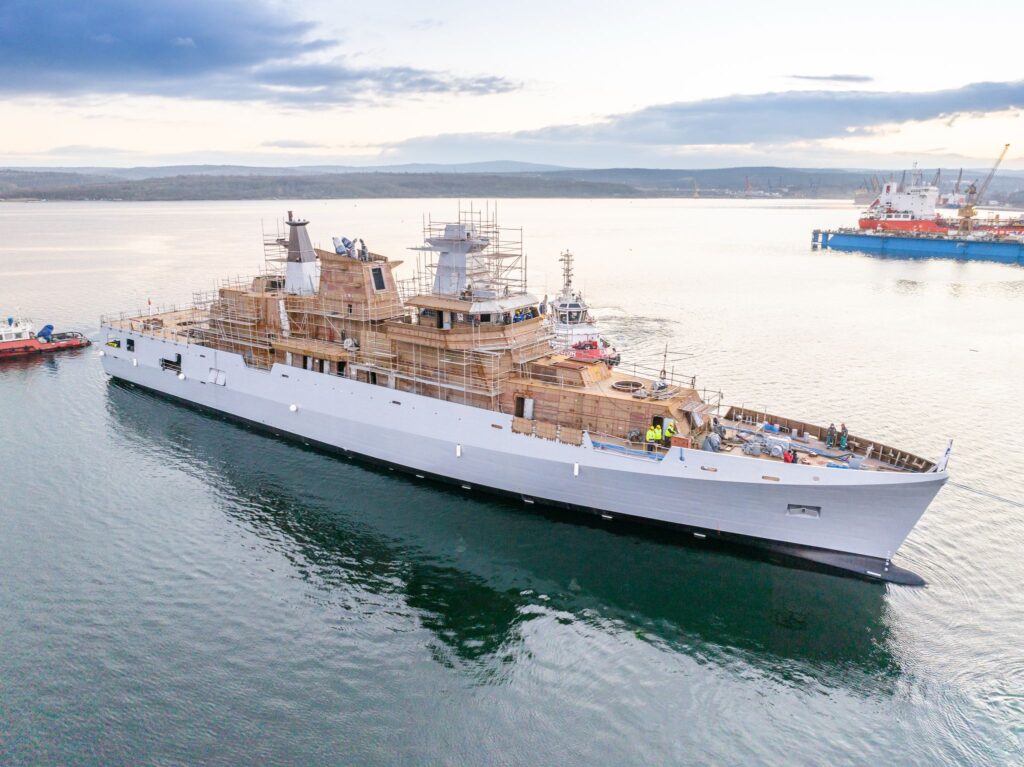
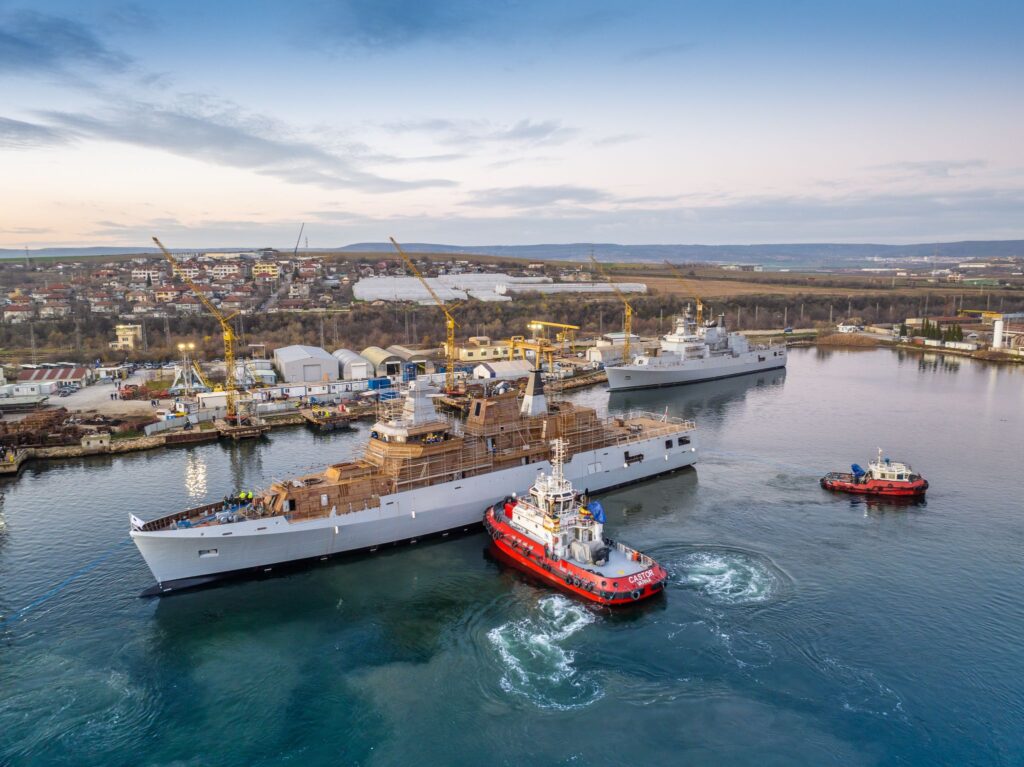
The second of two MMPVs (Multipurpose Modular Patrol Vessels–Chuck) was launched ahead of schedule. According to the contract, it was supposed to take place in April 2025. The two MMPVs are being built under a contract signed November 12, 2020 between the Bulgarian Ministry of Defence and the German shipbuilding group Fr. Lürssen Werft (now NVL – Naval Vessels Lürssen). The vessels will cost about BGN 984 million gross (about EUR 503 million).
These are a significant step up from the earlier Lürssen designed 80-meter Darussalam class built in Germany for the Royal Brunei Navy and the Arafura class building in Australia.
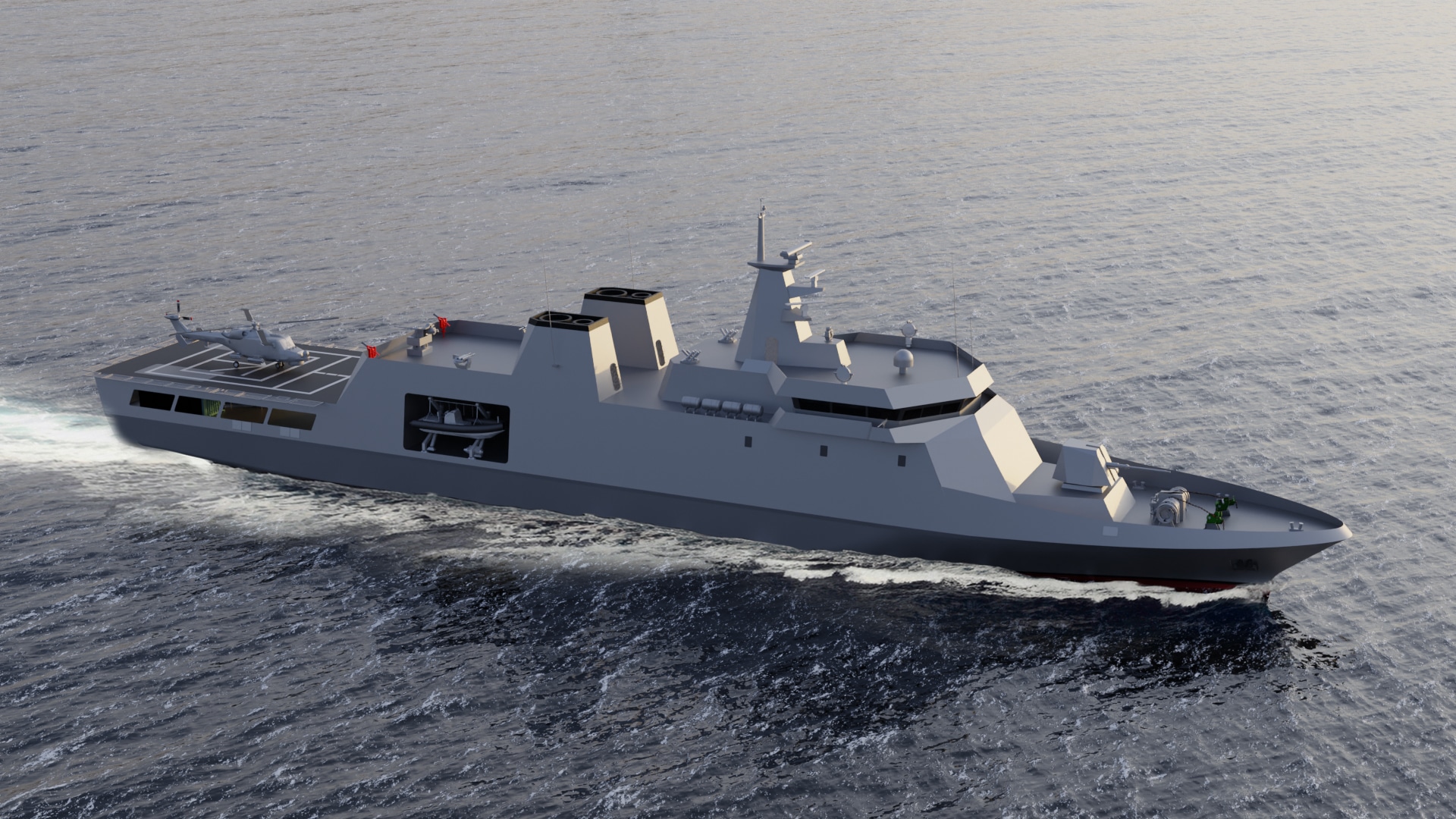
They are to be equipped with two twin launchers for RBS15 Mk3 anti-ship missiles, 8 cells for MBDA VL MICA surface to air missiles, Leonardo OTO Super Rapid 76mm gun, Rheinmetall Millennium 35mm CIWS, and 324mm light weight ASW torpedoes. They will have a SAAB combat management system and a hangar for a Eurocopter AS565MB Panther helicopter, an aircraft that is an evolution of the H-65 design.
Specifications indicate:
- Displacement: 2,300 tons
- Length: 90 meters (295′)
- Beam: 13.5 meters (44.3′)
- Max Speed: variously reported as 20 to 24 knots
- Range: 3000 nautical miles at 14 knots.
- Crew: 70
These ships remind me very much of the new Damen designed Pakistani 2,600 ton, 98 meter OPVs. The layout is much the same:
- Gun and VLS AAW system forward of the bridge elevated above the main deck
- Anti-ship cruise missiles behind the bridge
- Uptakes
- Hangar with a 35mm CIWS mounted on the roof
- Flight deck that extends all the way to the stern
- Reconfigurable space below the flight deck.
Reconfigurable space is becoming common but what really sets these two classes apart from other OPVs is the VLS launchers for small surface to air missiles. On the slightly larger Pakistani ships, which appear more capable, the missile is a bit larger and the gun smaller. The Pakistani ship also has a pair of 30mm guns similar to the Mk38 Mod4.
I think we are going to start seeing this general layout on more OPVs in the future.
Given the need for more than the currently planned 36 large cutters, and the increasingly hostile geopolitical environment, building something like these smaller, cheaper, but more combat capable ships, in greater numbers, rather than the last ten planned OPCs might be worth considering.
I would suggest we could build a cutter with configurable space sufficient to support a towed array, a flight deck, hangar, and magazines sufficient to support an MH-60R, eight Mk41 VLS (sufficient for16 ESSMs and four vertical launch ASROCs) forward of the bridge. Launchers for up to eight Naval Strike Missiles (we don’t need to carry the missiles themselves all the time), SeaRAM, and one or two 30mm Mk38 Mod4s. This should all be possible on a 25 knot ship of less than 3000 tons.

 Chuck Hill's CG Blog