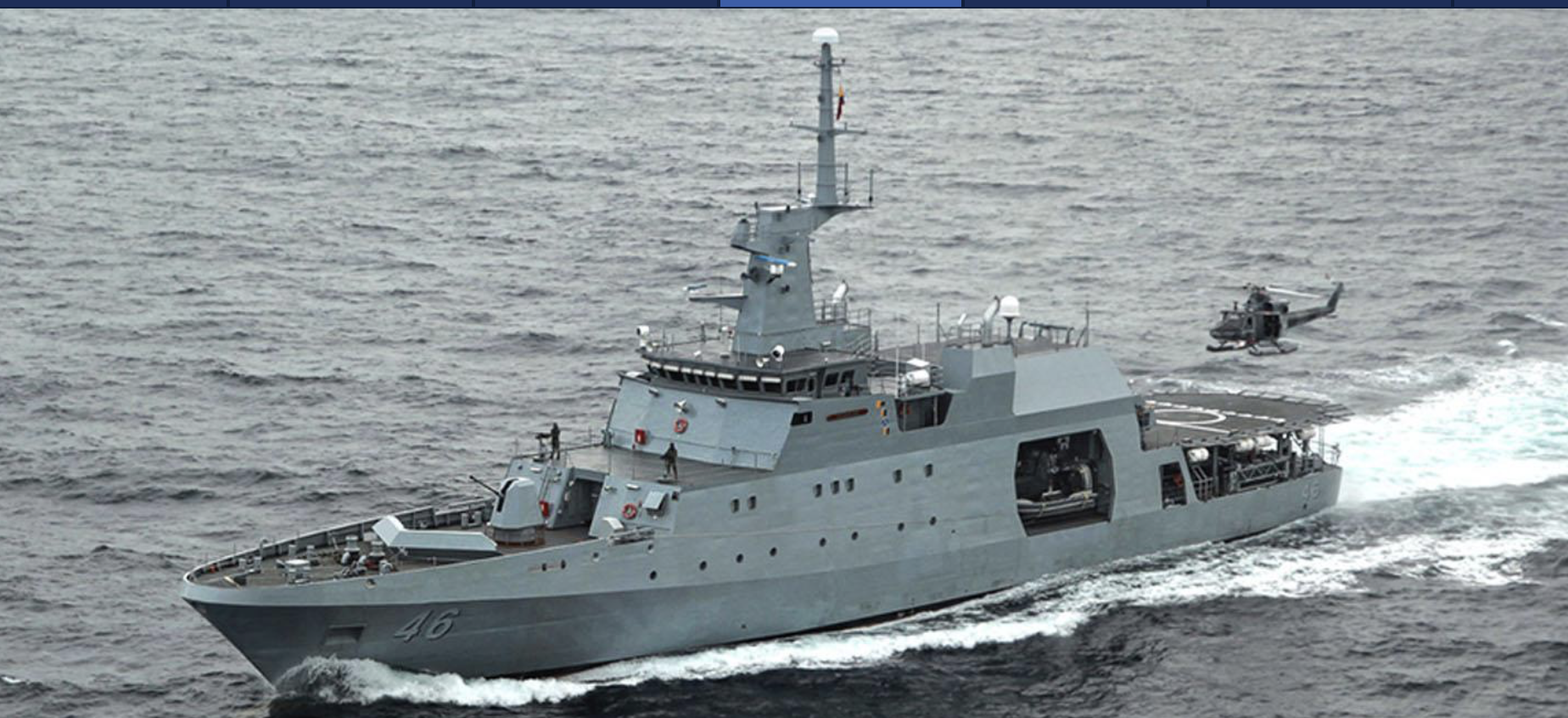
“Chinese ships slam into one another during a South China Sea chase, Philippine Coast Guard video shows”

Business Insider Reports,

  • Two Chinese ships collided in the South China Sea on Monday.

  • A China Coast Guard vessel was chasing a Philippine ship when it hit one of Beijing’s destroyers.

The smaller China CG cutters appears to have been one of 22 Type 056 corvettes passed from the Chinese Navy to the China CG.

Thanks to Paul for bringing this to my attention.

Waterways Commerce Cutters to be “Chief Petty Officer” Class

Notional vendor rendering of two Chief Petty Officer class waterways commerce cutter variants: a river buoy tender (left) and an inland construction tender. Image courtesy of Birdon America Inc.

Marine Log reports,

The U.S. Coast Guard is to designate its new fleet of Waterways Commerce Cutters (WCCs) as the “Chief Petty Officer Class.” Each cutter will be named in honor of a Coast Guard Chief Petty Officer, recognizing the profound impact and legacy of these leaders within the service.

Sounds like a good idea.

Thanks to Paul for bringing this to my attention. 


This Day in Coast Guard History, July 18

Based on the Coast Guard Historian’s timeline, https://www.history.uscg.mil/research/chronology/
With inspiration from Mike Kelso

July 18

1818  The Revenue Cutter Active captured the pirate vessel India Libre in the Chesapeake Bay.

1866  Congress authorized officers to search vessels and persons suspected of concealing contraband.

The Long Blue Line: Clarence Samuels—the U.S. military’s Afro-Latino color barrier buster!
A signed photo of Lt. Clarence Samuels commanding a Coast Guard vessel near the end of World War II. (U.S. Coast Guard Collection)

1928  Clarence Samuels assumed command of Coast Guard Patrol Boat AB-15, thereby becoming the second African-American to command a Coast Guard vessel, the first being Revenue Captain Michael Healy.

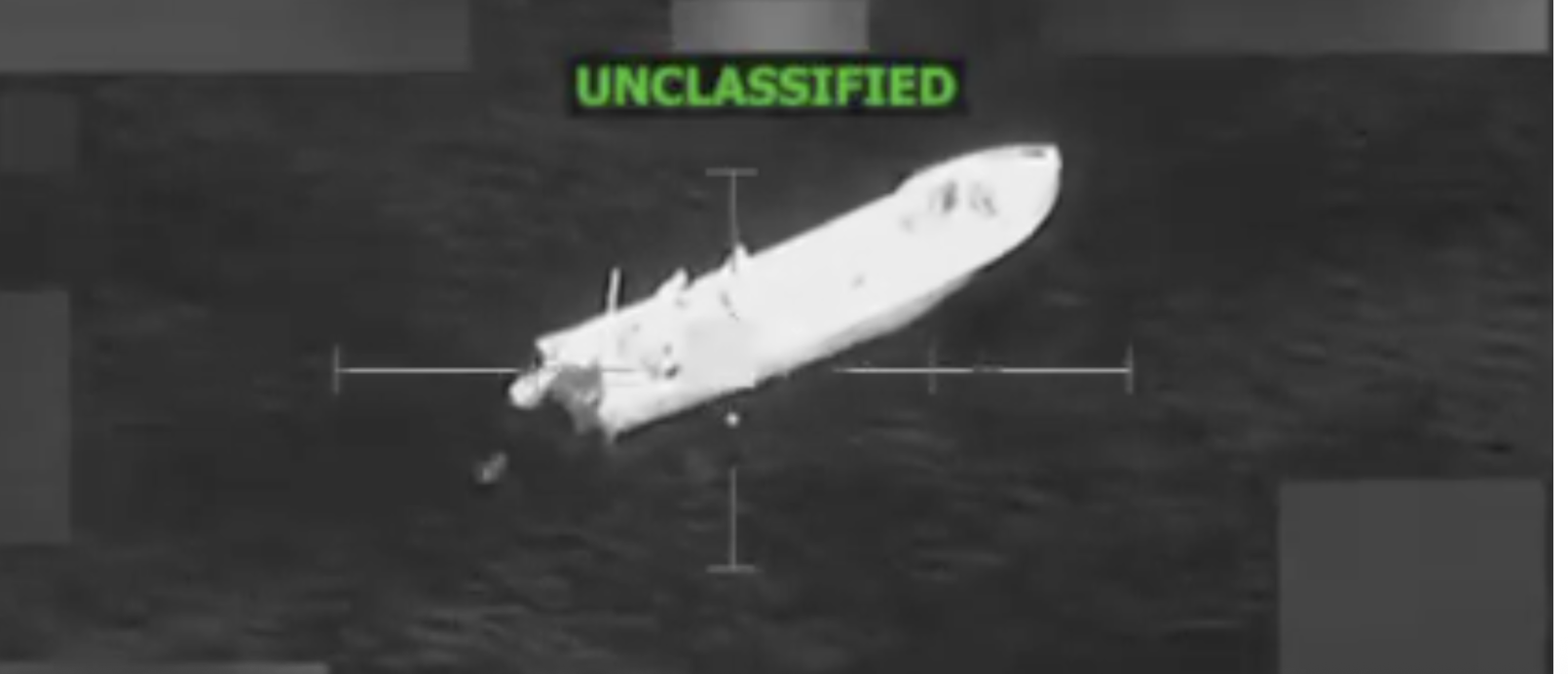
2015  CGC Stratton seized a self-propelled semi-submersible vessel carrying more than 16,000 pounds of cocaine in the Eastern Pacific Ocean.  Stratton‘s crew apprehended four suspected smugglers and seized 275 bales of cocaine worth more than $181 million wholesale from the self-propelled semi-submersible.  A U.S. Navy maritime patrol aircraft detected the 40-foot semi-submersible vessel more than 200-miles south of Mexico.  After removing 12,000 pounds of the narcotics aboard, Stratton attempted to tow the vessel to shore as evidence; however, the semi-submersible began taking on water and sank.  Approximately 4,000 pounds of cocaine left in the SPSS vessel to stabilize it during the towing evolution sank in over 13,000-feet of water and is unrecoverable.  Stratton interdicted or disrupted 15 different drug smuggling attempts since April 2015 including another self-propelled semi-submersible vessel carrying 5,460 pounds of cocaine June 16.  Stratton has seized more than 33,000 pounds of cocaine since May 2015. The July 18 semi-submersible seizure is the largest recorded semi-submersible interdiction in Coast Guard history.  Stratton’s semi-submersible busts are also the first and second by a Legend Class Cutter.  This is the first interdiction of two semi-submersibles in a single patrol at sea where Coast Guardsmen recovered both the narcotics and the vessels.  CGC Mohawk from Key West, Florida, interdicted two semisubmersibles in the Caribbean in 2011; however, both vessels sank during the course of the interdiction.  There have been 25 known semi-submersible interdictions in the Eastern Pacific Ocean since November 2006 when the first documented interdiction occurred.  A semi-submersible is a vessel constructed for illicit trafficking that is mostly submerged with just a cockpit and exhaust pipe visible above water.  These vessels are extremely difficult to detect and interdict because of their low-profile and ability to scuttle.  U.S. Customs and Border Protection Office of Air and Marine also assisted by monitoring the semi-submersible using a maritime patrol aircraft during the course of the interdiction July 18.

This Day in Coast Guard History, July 17

Based on the Coast Guard Historian’s timeline, https://www.history.uscg.mil/research/chronology/
With inspiration from Mike Kelso

July 17

1893  Life-saving Station Keeper H .E. Wilcox of Cape Arago Life-Saving Station rescued 55 of 56 passengers of SS Emily that was capsizing in a raging sea.  Persons were transported from the doomed vessel to the lifeboat via a life raft.

USCGC Polar Sea

1994  CGC Polar Sea departed from Victoria, British Columbia on operation Arctic Ocean Section 1994 and became the first U.S. surface vessel to reach the North Pole.  She then transited the Arctic Ocean back to her homeport in Seattle, Washington.

N93119, a Trans World Airlines Boeing 747-131, pictured at Charles de Gaulle airport in May 1995. On July 17th, 1996, a year after this photo was taken, N93119 was operating as TWA Flight 800 when it exploded in mid-air and crashed off the coast of East Moriches, New York, United States. All 230 people on board were killed in the crash, which remains the third-deadliest aviation accident in American history.

1996  TWA Flight 800 crashed off New York with no survivors.  Numerous Coast Guard units conducted search and rescue operations and then aided in recovery operations.

This Day in Coast Guard History, July 16

Based on the Coast Guard Historian’s timeline, https://www.history.uscg.mil/research/chronology/
With inspiration from Mike Kelso

July 16

1946  Pursuant to Executive Order 9083 and Reorganization Plan No. 3 the Bureau of Marine Inspection was abolished and became a permanent part of the Coast Guard.

The 82-foot patrol boats of Squadron One (RONONE) deploying from Subic Bay in the Philippines to the theater of operations in Vietnam. (U.S. Coast Guard)

1965  Coast Guard 82-foot patrol boats assigned to Division 12 of Coast Guard Squadron One (RONONE) departed Manila Bay on their own, bound for Vietnam and service with the Navy in Operation Market Time.  The cutters had been brought to the Philippines “piggy-backed” on board freighters.

This Day in Coast Guard History, July 15

Based on the Coast Guard Historian’s timeline, https://www.history.uscg.mil/research/chronology/
With inspiration from Mike Kelso

July 15

1870  Congress directed that the revenue cutters on the northern and northwestern lakes, when commissioned, shall be specially charged with aiding vessels in distress on the lakes.

1870  An Act of Congress (l6 Stat. L., 291, 309) directed the Lighthouse Board to mark all pierheads belonging to the United States situated on the northern and northwestern lakes, as soon as it was notified that the construction or repair of pierheads had been completed.

USCGC Point Orient in Vietnam

1967  USCGC Point Orient (WPB 82319) of Coast Guard Squadron One captured a communist trawler in Vietnam.

“…15 July 1967 after three days of tracking by patrol aircraft and the radar picket, USS Wilhoite. After playing a cat-and-mouse game for three days with TF115 units the trawler headed for the mouth of the Sa Ky Riveron the Batangan Peninsula late on 14 July. The trawler was directed by Point Orient to heave to, but the hail was answered with gunfire. The cutter returned fire along with Wilhoite and USS Gallup, USS Walker, and swift boat PCF-79. At 0200 15 July, the trawler was boxed in and ran aground 200 yards (180 m) from shore and the trawler was ablaze. Republic of Korea Marines directed artillery fire from the shore and at 0600 with the trawler apparently abandoned, a Navy demolitions expert from Walker boarded the trawler and defused 2,000 pounds of TNT charges that were designed to scuttle the craft. Found on board were several thousand rounds of rifle and machine gun ammunition, mortar and rocket rounds, anti-personnel mines, grenades, and several thousand pounds of C-4 plastic explosive and TNT. Weapons found included several hundred machine guns, AK-47 rifles, AK-56 rifles, and B-40 rocket launchers.”

USCGC Absecon, Chincoteague, and McCulloch SquadronThree

1972  CGC Absecon was decommissioned and transferred to the South Vietnamese Navy. This was the last of the seven 311-foot Casco-class cutters to be transferred to the South Vietnamese.  She was commissioned as the Tham Ngu Lao (HQ-15) on July 15, 1972.  She was seized by the North Vietnamese when the South fell in 1975.  The North Vietnamese gave her the hull number HQ-1, but did not apparently name her.  She was refitted with two or possibly four SS-N-2 launchers.  Her current status remains unknown.

A port bow view of Kidd (DDG-993) crossing Thimble Shoals, 1 February 1984. (U.S. Navy Photo by PH2 K. Bates, DIMOC #DN-SC-88-09212)

1983 For the first time in history a U.S. Navy warship with a Coast Guard LEDET on board fired on a suspected drug-smuggling vessel to force it to heave to.  On 15 July 1983, U.S. Navy destroyer USS Kidd fired on the “stateless” vessel Ranger with warning shots at first and when the vessel refused compliance the destroyer fired disabling shots, stopping Ranger without causing casualties.  About 35 tons of marijuana were discovered on board and Ranger’s nine crew were arrested and the vessel seized. From “COUNTER-NARCOTERRORISM OPERATIONS IN THE EASTERN PACIFIC AND CARRIBEAN OPERATIONS AREAS FROM 1970 THROUGH 1990.”

“Some smugglers preferred to try their luck and run from the anti-narcotics forces. The smugglers knew that it would take time for the forces to get the necessary permissions to board their vessels, and even if permission was granted there were maneuvers that the smugglers could use in order to prevent the forces from boarding their ships. The only way for the forces to get the smugglers to stop was to disable their engines. The first time that the Navy used this method was in 1983 when the USS Kidd (DDG-993) used her .50 caliber machine guns to stop the M/V Ranger after receiving permission from the Coast Guard Headquarters.

Ranger had refused to stop and allow the search teams onboard after receiving an order to do so from Kidd. Once the Ranger was stopped the LEDET proceeded to search her and after finding over 57,000 pounds of marijuana onboard, they arrested her crew.”

DHS Cancels Contract with Eastern for OPCs #3 and 4


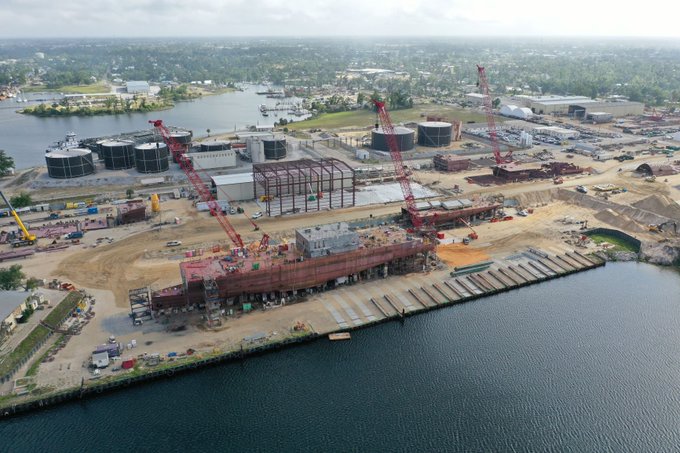
Future USCGC Argus at launch Eastern Shipyard, Oct 27, 2023. We have yet to see any reports of sea trial. 

Below is a news release from the Department of Homeland Security.

I can’t say I am surprised. A stop work order was issued on OPCs #3 and 4 on June 7, 2024. Progress on Eastern’s OPCs #1 and #2 has been painfully slow.

The question now is, what is the administration going to do to accelerate replacement of long overage WMECs?

Will they accelerate production at Austal or seek a contract with a third yard to build OPCs? The news release states,

“The Coast Guard’s goal is to procure 25 OPCs — and that has not changed. The Coast Guard remains intent on acquiring and delivering the full OPC class as fast as possible to address the Nation’s security and safety needs.”

I feel strongly that the Coast Guard needs a different design, hopefully a smaller, faster ship that would be built in greater numbers and one readily adaptable to one or more wartime missions, to either replace some of the Argo Class or be built in parallel.

You can still call it an Offshore Patrol Cutter, it is just a job description, it is not a class. You can even designate it a WMSM, though I would prefer WPF (Coast Guard Patrol Frigate) or even WMEC, but it does not have to be an Argo class.


Secretary Noem Protects American Taxpayers Against Wasteful Contracts While Revolutionizing Coast Guard for the 21st Century

Release Date: July 11, 2025

“This Administration is unwavering in its commitment to the American taxpayer”

WASHINGTON – Today, United States Department of Homeland Security Secretary Kristi Noem announced the partial termination of a wasteful shipbuilding contract to protect American taxpayer dollars while revolutionizing the United States Coast Guard for the 21st century.

“This Administration is unwavering in its commitment to the American taxpayer and to a strong, ready Coast Guard,” said a Senior Homeland Security official. “We cannot allow critical shipbuilding projects to languish over budget and behind schedule. Our Coast Guard needs modern, capable vessels to safeguard our national and economic security, and we will ensure every dollar is spent wisely to achieve that mission. This action redirects resources to where they are most needed, ensuring the Coast Guard remains the finest, most-capable maritime service in the world.”

As part of that commitment, the Coast Guard is reviewing contracts which are failing to meet delivery agreements. An existing Offshore Patrol Cutter (OPC) contract with Eastern Shipbuilding Group (ESG) has been slow to deliver four OPCs, harming the U.S.’s defense capabilities and wasting American’s hard-earned money. In light of that, Secretary Noem partially canceled ESG’s contract for two out of the four OPCs expected from ESG in Panama City, Florida because it was not an effective use of taxpayer money.

ESG’s delivery of OPC 1 was initially due in June 2023 but will now be completed by the end of 2026 at the earliest. ESG missed its April 2024 delivery for OPC 2. The Coast Guard stopped work on OPCs 3 and 4 after ESG notified the service earlier this year they could not fulfill their contractual duty to deliver all four OPCs without unabsorbable loss. The money saved will redirected to ensure it’s actually benefiting the Coast Guard.

Due to decades of neglect by previous Administrations and Congress, the Coast Guard has been underfunded, underequipped, and ignored for too long. President Donald Trump is ending that era of neglect with the passage of the One Big Beautiful Bill and Force Design 2028 – Homeland’s plan to transform the Coast Guard into a more agile, capable fighting force. Now, a massive injection of nearly $25 billion is coming to the Coast Guard.

The Coast Guard’s goal is to procure 25 OPCs — and that has not changed. The Coast Guard remains intent on acquiring and delivering the full OPC class as fast as possible to address the Nation’s security and safety needs.

The OPC fleet will complement the capabilities of the Service’s National Security Cutters, Fast Response Cutters and Polar Security Cutters as an essential element of the Nation’s layered maritime security strategy. They will be especially critical to the counter-drug and migrant interdiction missions along the southeast border.

This Day in Coast Guard History, July 14

Based on the Coast Guard Historian’s timeline, https://www.history.uscg.mil/research/chronology/
With inspiration from Mike Kelso

July 14

Cape Spencer Light, Alaska

1926  The first radio-beacon established in Alaska was placed in commission at Cape Spencer. Story of Cape Spencer light here.

Excursion steamer Nantasket grounding

1949  U.S. Coast Guardsmen from Point Allerton and Boston Lifeboat Stations figured prominently in one of the largest rescue operations in the history of Boston Harbor, Massachusetts when they helped in removing 690 persons from the excursion steamer Nantasket, which had gone aground in a thick fog off Peddock’s Island.

Northwest Orient DC-7C N284 in a March 1957 publicity photo shoot. From the James Borden Photography Collection.

1960  Following the loss of a propeller, which resulted in fuselage damage and an engine fire, a Northwest Airlines DC-7C airliner carrying 58 persons ditched in Philippine waters.  During the Coast Guard-coordinated air search in the vicinity of the Polillo Islands, a Coast Guard UF amphibian aircraft sighted four life rafts, landed, and rescued 23 survivors.  A U.S. Navy P5M seaplane, meanwhile, rescued 34 others and also recovered from the water the body of the only fatality, a woman killed when the engine no. 2 propeller slashed through the plane’s fuselage and struck her.

Point Glass in her original early 1960s configuration without the racing stripe.

1963  Pier 7 at Tacoma, Washington was engulfed in flames. CG-82336 (later designated USCGC Point Glass (WPB-82336)), based at Tacoma, proceeded immediately to the scene to assist the first department in fighting the blaze.  The cutter towed the M/V Sanyo Maru away from the pier and was relieved of the tow by a tug.  CG-82336 returned to the pier and towed the M/V Kikulo Maru to safe anchorage.  The Tacoma fire department then requested CG-82336 to coordinate firefighting efforts on the bay side of the pier, as the fire department was unable to cover the entire area because of the intensity of the fire.  Unable to fight the fire under the pier, CG-82336 proceeded to a local boat mooring and acquired seven rental boats to assist.  These boats, manned by local firemen and Coast Guard personnel, fought the fire under the pier.  The fire was brought under control the next morning and Coast Guard units were secured.  A fire Battalion Chief died and seven firemen were injured, but there were no Coast Guard casualties.

July 14, 1963 — Pier 7 at Tacoma, Washington was engulfed in flames.

1977  Ten Coast Guard women were selected and ordered to CGC Gallatin to report aboard on October 26, 1977.  “This action was in keeping with the Commandant’s most recent program of placing women in afloat assignments” on CGCs Morgenthau and Gallatin.  Each of the women chosen were volunteers.  They were: ET2 L. D. Canatore; RM2 J.K. Shawdah; SK2 R.G. Burright; BM3 D.K. Skinner; HM3 D.K. Cummings; RM3 V.L. Robillard; YN3 M.F. Kelly; SA A. Clark; SA D.A. Collins, and SA D.A. Hughes.

First 12 Coast Guard women assigned to sea duty.