“EIGHT BELLS – A SEA SERVICE CELEBRATION ON 18 OCTOBER 2019” –COMDTNOTE 1710

Below is a Commandant Note published in full. Normally I would not publish these, but there is a good summary of the status of the cutter recapitalization effort in paragraph 3. Have to say I am still a bit uncomfortable with “completely paperless navigation.” I have had too many computer problems for mind not to revolt over the idea of total dependency on electrons.

united states coast guard

R 191425 SEP 19
FM COMDT COGARD WASHINGTON DC//CG-7//
TO ALCOAST
UNCLAS //N01710// ;
ALCOAST 298/19
COMDTNOTE 1710
SUBJ:  EIGHT BELLS – A SEA SERVICE CELEBRATION ON 18 OCTOBER 2019
1. The Coast Guard Office of Cutter Forces (CG-751), the Heart of the Service, is
sponsoring a Sea Service Celebration centered around 18 October 2019 that honors
the sacrifices of the men and women serving aboard Coast Guard cutters, and
highlights the hard work of the thousands of shoreside administrative, training,
and engineering personnel who enable our fleet to operate. On 18 October 1974,
the Office of Personnel promulgated the Coast Guard Cutterman Insignia program,
to “recognize the contributions and qualifications of our personnel.”
2. This year, we celebrate more than 229 years of our sea-going traditions,
currently upheld by over 8,000 active duty personnel aboard our 255 cutters. The
theme of this year’s Celebration is “Cutter Art.” There are countless examples of
artistic creations by Cuttermen who take pride in their work and we want to
recognize their abilities and the time they dedicated to creating this wide array
of art.
3. These are exciting times to be a Cutterman – The 7th and 8th National Security
Cutters (NSC) were commissioned in August, NSC #9-11 are under construction and 25
Offshore Patrol Cutters (OPC) are planned. There are 33 commissioned Fast Response
Cutters (FRC) of the 56 planned for the domestic program of record. An additional
six are scheduled for commissioning in FY 2020 alone; we are also preparing to
transition FRCs to PATFORSWA, with the first two tentatively arriving in 2020.
The Waterways Commerce Cutter (WCC) received funding for expedited development of
plans for a replacement of the WLIC/WLI/WLR cutters. The Polar Security Cutter
(PSC) contract was awarded with funding approved for PSC #1 and long lead time
materials for PSC #2. To outfit our cutters, the new Cutter Boat Large 210/225
(CB-L) is in production and OTH-V and LRI-III are in initial acquisition stages.
All boats and cutters are scheduled to be furnished or retro-fitted with SINS-II
systems as we continue on our trackline to completely paperless navigation.
These substantial national investments are clear evidence of the great value
American leadership places in the hard work of our professional mariners and
support personnel fleetwide.
4. As part of this year’s Sea Service Celebration, COMDT (CG-751) is hosting a
Cutter Art contest and encourages participation by all current, past and aspiring
future professional mariners. Digital submissions of Cutter Art are due by 15
October 2019 and should follow the below guidelines:
    a. Potential artworks and examples of Cutter Art include, but are not limited
to; unofficial cutter seals or logos, pictures of artfully painted equipment, images
of fancy work, pictures of unit murals, and digital renderings of hand drawn images.
    b. Submissions will be judged on creativity, quality and ability to inspire
esprit de corps. Entries are limited to 5MB, formats that can be viewed and opened
on a standard CG workstation, and three submissions per unit. Photographers and
artists retain ownership and copyright of their submitted images. In consideration
of the contest, artists and photographers grant the use of their submissions to the
Coast Guard for use in various media starting from submission for a duration of one
year.
    c. All submissions should be of good taste, professional in nature, and with due
regard to what is considered acceptable in 2019 versus historic examples of
military art containing what is now widely held as inappropriate.
    d. Chain of command approved contest submissions should be sent via email to the
two POCs listed below. The top three winning entries will be posted on the COMDT
(CG-751) portal page and social media platforms, and shared with Surface Naval
Association Presidents, Rating Force Master Chiefs, and Operational Commanders
for distribution within the cutter community.
5. COMDT (CG-751) further encourages all Cuttermen and operational commanders to
participate in the following events:
    a. Cutter Public Affairs Officers (PAO) are encouraged to utilize their Official
Facebook pages to post CO/OIC-approved photos and media under the hashtag #CutterArt
throughout the year.
    b. Local events: All commands are encouraged to host appropriate functions that
celebrate sea service traditions during the month of October, particularly on 18 October.
Suggestions include: local Cuttermen’s Calls, Dining-Ins, or cutter round-ups with
friendly competitions (DC Olympics, shiphandling challenge, etc.).
    c. For a concurrent annual Surface Naval Association (SNA) competition, submit photos
and videos by 01 October 2019 at: http://navysna.org/awards/komorowski-photo/ and at:
http://navysna.org/awards/video-competition.html (Won by USCGC BAILEY BARCO in 2018).
6. POCs: LT Keith Blevins at Keith.A.Blevins@uscg.mil and LT Micah Howell at
Micah.D.Howell@uscg.mil.
7. RDML Matthew W. Sibley, Assistant Commandant for Capability, sends.
8. Internet release is authorized.

A Conversation With General John Kelly

Marine Corps Gen. John F. Kelly, commander of U.S. Southern Command, discusses the latest developments in his command’s efforts to stem the flow of drugs from South and Central America while briefing reporters at the Pentagon, March 13, 2014.

As part of The U.S. Coast Guard Academy 2019–2020 Leadership Lecture Series, General and former administration Chief of Staff John F. Kelly addressed an audience of future officers at the Academy with former Commandant Admiral Thad Allen moderating. You can watch it here, but skip ahead. It does not really start until time 31:30. The actual discussion is about an hour.

“Coast Guard Cutter Procurement: Background and Issues for Congress” CRS

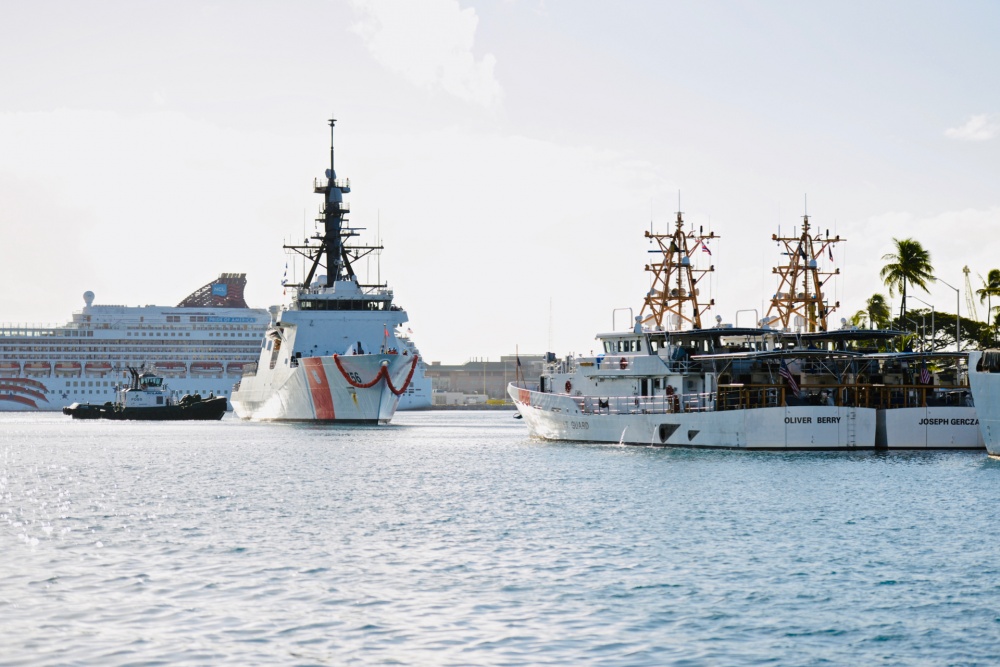
The crew of USCGC Kimball (WMSL 756) arrive in Honolulu for the first time Dec. 22, 2018. Known as the Legend-class, NSCs are designed to be the flagships of the Coast Guard’s fleet, capable of executing the most challenging national security missions, including support to U.S. combatant commanders. (U.S. Coast Guard photo by Chief Petty Officer Sara Muir/Released)

The Congressional Research Service issued an updated version of its “Coast Guard Cutter Procurement: Background and Issues for Congress” on August 7. I have reproduced the report’s summary below. 

Summary

The Coast Guard’s program of record (POR) calls for procuring 8 National Security Cutters (NSCs), 25 Offshore Patrol Cutters (OPCs), and 58 Fast Response Cutters (FRCs) as replacements for 90 aging Coast Guard high-endurance cutters, medium-endurance cutters, and patrol craft. The Coast Guard’s proposed FY2020 budget requests a total of $657 million in procurement funding for the NSC, OPC, and FRC programs.

NSCs are the Coast Guard’s largest and most capable general-purpose cutters; they are intended to replace the Coast Guard’s 12 aged Hamilton-class high-endurance cutters. NSCs have an estimated average procurement cost of about $670 million per ship. Although the Coast Guard’s POR calls for procuring a total of 8 NSCs to replace the 12 Hamilton-class cutters, Congress through FY2019 has funded 11 NSCs, including the 10th and 11th in FY2018. Six NSCs have been commissioned into service. The seventh and eighth were delivered to the Coast Guard on September 19, 2018, and April 30, 2019, respectively, and are scheduled to be commissioned into service in August 2019. The ninth through 11th are under construction; the ninth is scheduled for delivery in 2021. The Coast Guard’s proposed FY2020 budget requests $60 million in procurement funding for the NSC program; this request does not include funding for a 12th NSC.

OPCs are to be smaller, less expensive, and in some respects less capable than NSCs; they are intended to replace the Coast Guard’s 29 aged medium-endurance cutters. Coast Guard officials describe the OPC program as the service’s top acquisition priority. OPCs have an estimated average procurement cost of about $421 million per ship. On September 15, 2016, the Coast Guard awarded a contract with options for building up to nine OPCs to Eastern Shipbuilding Group of Panama City, FL. The first OPC was funded in FY2018 and is to be delivered in 2021. The second OPC and long leadtime materials (LLTM) for the third were funded in FY2019. The Coast Guard’s proposed FY2020 budget requests $457 million in procurement funding for the third OPC, LLTM for the fourth and fifth, and other program costs.

FRCs are considerably smaller and less expensive than OPCs; they are intended to replace the Coast Guard’s 49 aging Island-class patrol boats. FRCs have an estimated average procurement cost of about $58 million per boat. A total of 56 have been funded through FY2019, including six in FY2019. Four of the 56 are to be used by the Coast Guard in the Persian Gulf and are not counted against the Coast Guard’s 58-ship POR for the program, which relates to domestic operations. Excluding these four OPCs, a total of 52 FRCs for domestic operations have been funded through FY2019. The 32nd FRC was commissioned into service on May 1, 2019. The Coast Guard’s proposed FY2020 budget requests $140 million in acquisition funding for the procurement of two more FRCs for domestic operations.

The NSC, OPC, and FRC programs pose several issues for Congress, including the following: 

  • whether to provide funding in FY2020 for the procurement of a 12th NSC; 
  • whether to fund the procurement in FY2020 of two FRCs, as requested by the Coast Guard, or some higher number, such as four or six; 
  • whether to use annual or multiyear contracting for procuring OPCs; 
  • the annual procurement rate for the OPC program; 
  • the impact of Hurricane Michael on Eastern Shipbuilding of Panama City, FL, the shipyard that is to build the first nine OPCs; and 
  • the planned procurement quantities for NSCs, OPCs, and FRCs.

Recognition for the Coast Guard’s contributions to the Office of Strategic Services during World War II

Just passing this along. Always nice to be appreciated.

U.S. Coast Guard Headquarters
Contact: Headquarters Public Affairs
Office: (202) 372-4630
mediarelations@uscg.mil
Headquarters online newsroom

US Coast Guard event to recognize the service’s contributions to the Office of Strategic Services during World War II, presentation of medal to the Coast Guard 

WASHINGTON —  Media are invited to attend a ceremony Sept. 12, 2019, in Washington, D.C., when the Office of Strategic Services Society will recognize the U.S. Coast Guard’s contributions to the OSS — the precursor to the Central Intelligence Agency — during World War II.

President Franklin D. Roosevelt signed a directive in 1941 to stand up the office of the Coordinator of Information, which became the OSS in 1942. The Coast Guard’s support to the OSS on covert, counter-intelligence, espionage and sabotage operations in the maritime environment was a unique instrument for national security policy during World War II domestically and abroad, and it helped lay the foundation for future Coast Guard operations. Because the information was classified for so long, the public is not fully aware of the relationship between the OSS and the Coast Guard, including Coast Guardsmen attached to the OSS in Europe and the China-Burma-India Theatre.

The OSS Society was founded in 1947 by Gen. William Donovan. It honors the historic accomplishments of the OSS during World War II and educates the American public regarding the continuing importance of strategic intelligence and special operations to the preservation of freedom.

Event details:

What: Presentation of medal to the Coast Guard by the Office of Strategic Services Society

Who:

  • Commandant of the Coast Guard Adm. Karl Schultz
  • Vice Commandant of the Coast Guard Adm. Charles Ray
  • Master Chief Petty Officer of the Coast Guard Jason Vanderhaden
  • Mr. Charles Pinck, president of the Office of Strategic Services Society

When: Tuesday, Sept. 10, 2019, from 6 p.m. to 8 p.m. Eastern

Where: U.S. Coast Guard Headquarters, Douglas Munro Building, U.S. Department of Homeland Security St. Elizabeths Campus, Washington, D.C.

Advance registration is required for any media wishing to attend the event — there will be no same-day registration. Please reply to mediarelations@uscg.mil by Sept. 4, 2019, for instructions on registering.

“US Border Patrol boat damaged by gunfire in brief encounter on Rio Grande” –Baird Maritime

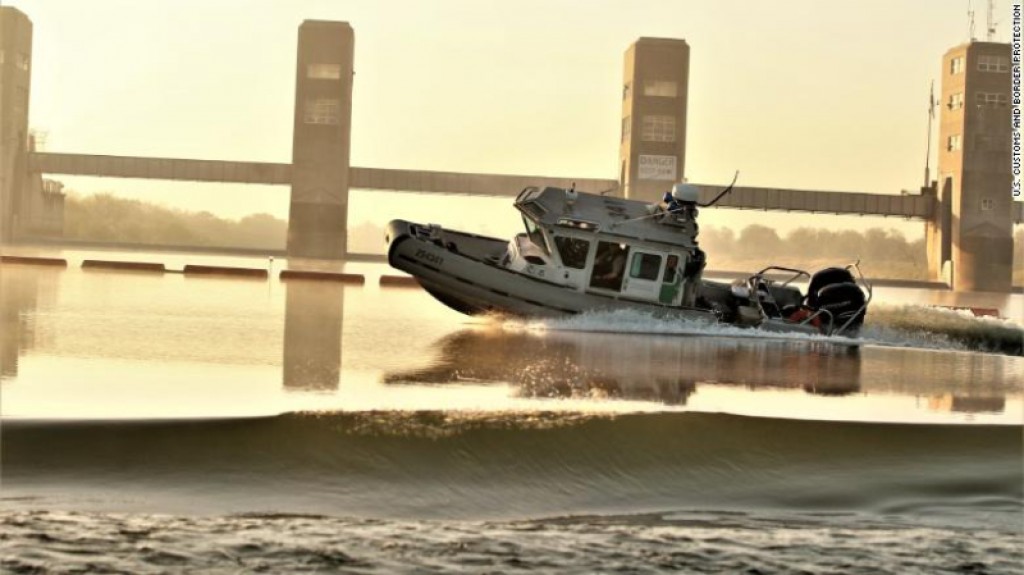
Baird Maritime is reporting that about 50 shots were fired at a Customs and Border Protection boat and its crew, operating on the Rio Grande near Fronton, Texas, on Friday, Aug. 9. The boat was hit several times, but there were no injuries.

This looks to be about ten miles below Falcon Lake. This recalls an incident in 2010. Blog discussion here.

“Lighthouse Act – 7 August 1789” –BRYMAR

A little late, but I am passing this little tidbit of Coast Guard history along from BRYMAR consulting.

Lighthouse Act – 7 August 1789

C:\Users\User\Pictures\01Blog pix\USLHS-a.jpg
The Lighthouse Act was the ninth statute adopted by the First Congress of the United States. It provided for the voluntary cession by the various states of all lighthouses, beacons, buoys, and public piers to the federal government and tasked the Secretary of the Treasury with building and maintaining the aids to maritime navigation. The Lighthouse Establishment (later named the United States Light House Service) is the oldest of the various components of the present-day United States Coast Guard, joining in 1939.

“sUAS Extend Coast Guard Capabilities in the Inland Rivers” –USNI

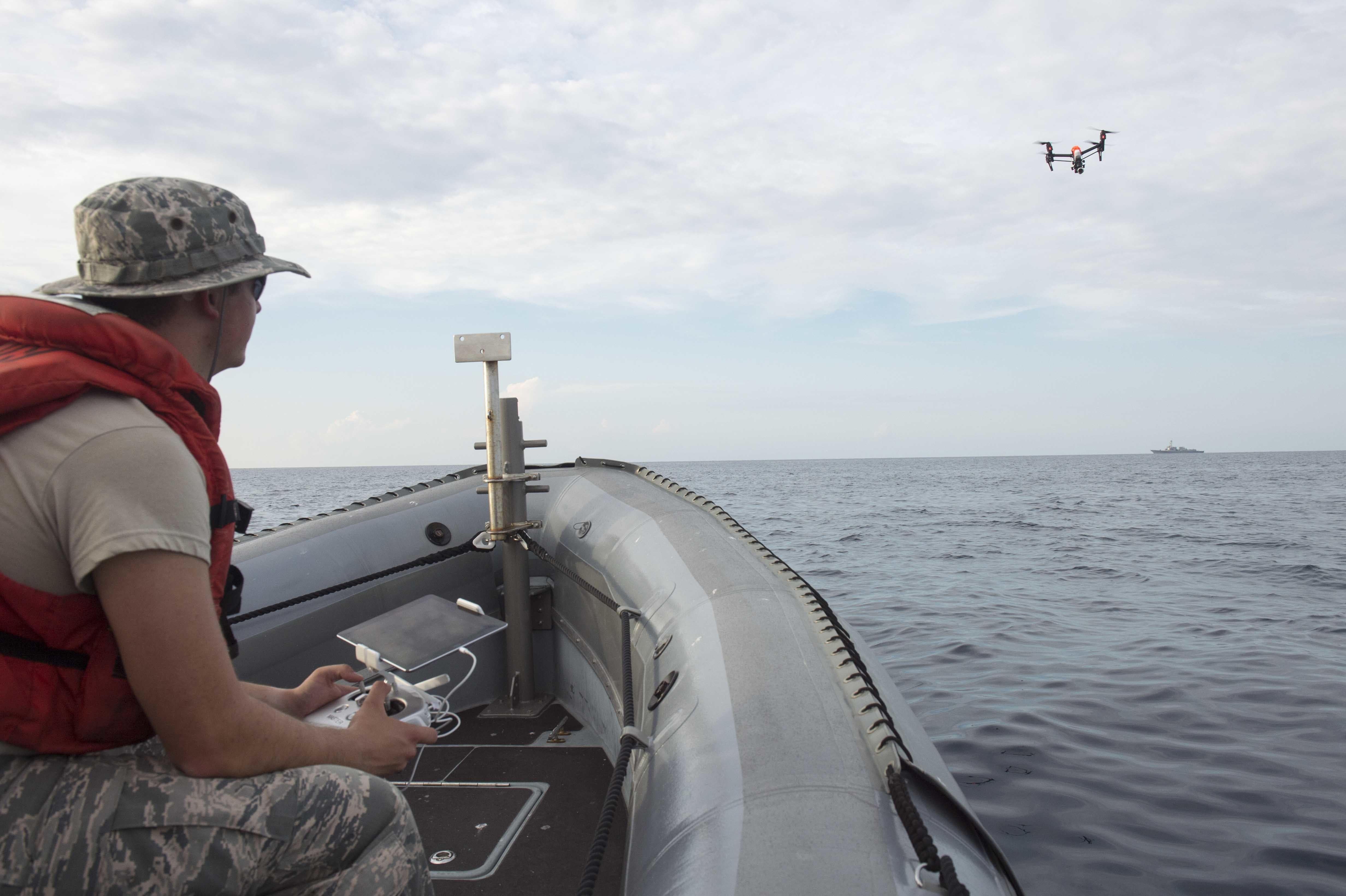
160919-N-AT101-177 GULF OF MEXICO (Sept. 19, 2016) Cadet 1st Class Hanson Oxford, a student at the U.S. Air Force Academy, operates an unmanned aerial system aboard a rigid hull inflatable boat during exercise Black Dart, Sept. 19. Black Dart is the largest Department of Defense (DoD) live-fly, live-fire, counter Unmanned Aerial Systems (UAS) technology demonstration. (U.S. Navy photo by Mass Communication Specialist 1st Class Maddelin Angebrand/Released)

A thought provoking article from the US Naval Institute looking at ways small unmanned air systems (sUAS) have been used, or might be used, in support of Coast Guard missions in inland areas.

The Coast Guard apparently includes systems as large as ScanEagle in the sUAS category. The USNI post notes,

“Individual Coast Guard units are currently prohibited from procuring and operating their own sUAS until the Coast Guard can establish a program to provide the appropriate systems and training to operators.”

The discussion here is not about systems as large as ScanEagle, but rather small, off the shelf systems, costing less than $5,000. The costs of these systems is so low, and the potential impact so great, perhaps the Coast Guard should have a program to procure a small number of these systems for units that can make a case for them, as prototypes for future deployment. Ground rules might specify a one year trial period and periodic feedback.

Marines are already starting to deploy these at the squad level. Presumably there must be a contract for them. Maybe they are already on GSA schedule.

Drugs Smuggling By Container

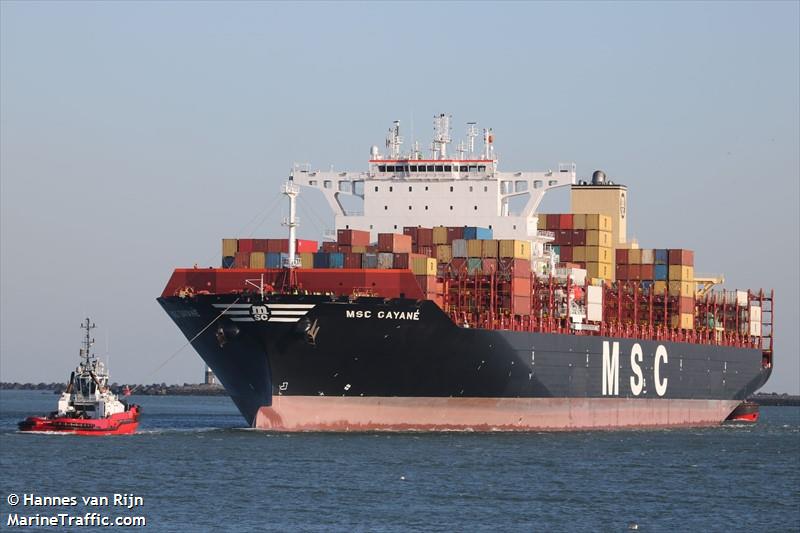
File photo shows the MSC Gayane. Photo: MarineTraffic.com

Three recent incidents of drugs being smuggled by containers aboard ship.

In the US:

June 18 (Reuters) – Federal authorities seized 16.5 tons of cocaine worth more than $1 billion from a ship in Philadelphia in one of the largest drug seizures in U.S. history, the U.S. Justice Department said on Tuesday.

Federal, state and local law enforcement agents on Monday boarded the MSC Gayane, a cargo ship docked in Philadelphia’s Packer Marine Terminal, and found cocaine in seven shipping containers, according to a criminal complaint filed in Philadelphia federal court.

Since then, four additional arrests have been made. The Customs and Border Protection news release is here. Crew members facilitated the loading of the drugs.

August 1, a vessel docked in Felixstowe, UK where the vessel was boarded and authorities found approximately 398 kilograms of heroin hidden among towels and bathrobes.

Germany seized 4.5 tonnes of cocaine from a container at the port of Hamburg, marking that nation’s biggest drugs haul to date. The shipping container in that case was loaded in Montevideo, Uruguay and bound for Antwerp.

“Coast Guard Awards Contract for 47-Foot Motor Lifeboat Service Life Extension Program” –CG-9

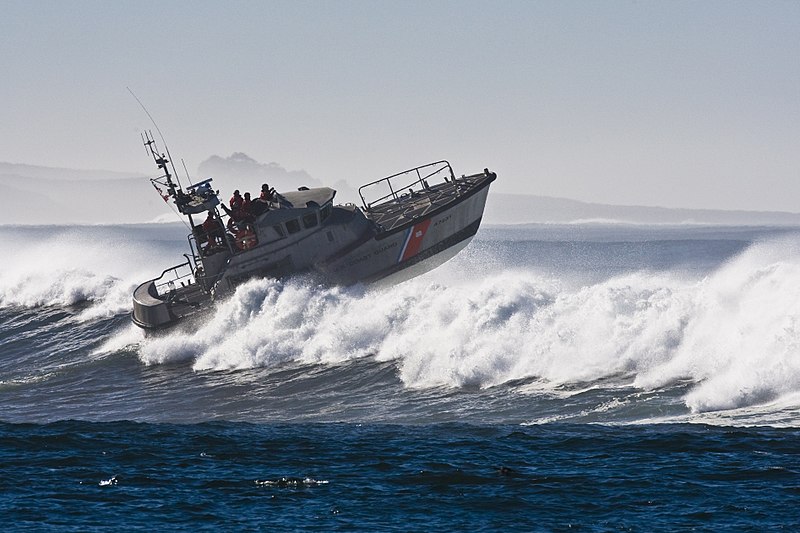
47-Foot Motor Life Boat (MLB) 47231 from Station Morrow Bay, 4 Dec 2007. Photo by Mike Baird

The Acquisitions Directorate (CG-9) reports award of a contract for service life extension work on its 47 foot motor lifeboats. 

—–

The Coast Guard on Aug. 5 awarded a firm fixed price indefinite delivery, indefinite quantity contract to Birdon America Inc. of Denver, Colorado, to perform work supporting the service’s 47-foot Motor Lifeboat (MLB) service life extension program (SLEP). The initial award to complete the detail design and service life extension work on the first vessel is valued near $6.5 million, with a total projected contract value of close to $190 million to complete the MLB SLEP over the 10-year contract period. The initial work for detail design and the first vessel will be performed at a subcontractor facility on the West Coast, Fred Wahl Marine Construction along the Umpqua River in Reedsport, Oregon. Once in full production, a second subcontracted work facility is planned to be opened on the East Coast.

The 47-foot MLB is the Coast Guard’s primary search-and-rescue platform operating in surf and heavy weather conditions. It has self-righting capability and the ability to operate in winds up to 50 knots, seas up to 30 feet, and surf up to 20 feet. The service’s fleet of more than 100 MLBs has been in service for 15 to 21 years and is approaching the end of its planned 25-year service life. The operational need for these unique capabilities in search-and-rescue, maritime law enforcement, and contingency response remains high.

The SLEP will extend the useful life of the MLB by 20 years; SLEP work will be performed on a minimum of 107 MLBs and a maximum of 117 MLBs. The main work will be on systems experiencing technical obsolescence: the main propulsion, electrical, steering, towing and navigation systems, as well as replacement of areas of the hull and structure that have demonstrated high failure rates. Additionally, efforts to enhance human system integration will be made where practical to do so. The original operational capabilities and characteristics of the 47-foot MLB will not change.