“U.S. Coast Guard National Security Cutter visits Fiji” –News Release

U.S. Coast Guard Cutter Stratton (WMSL 750) takes on fuel and supplies in Honolulu prior to departing on the cutter’s Western Pacific patrol, June 18, 2019. Operating under the tactical control of commander, U.S. 7th Fleet, Stratton and crew will engage in professional exchanges and capacity building exercises with partner nations and patrol and conduct operations as directed. U.S. Coast Guard photo by Petty Officer 2nd Class Jasmine Mieszala

Below is a Coast Guard press release. As you probably know Stratton is on the way to the Western Pacific, replacing the Bertholf in support of PACOM missions to build capacity and reinforce norms of international behavior. We have a long standing obligation to the island nations of the Micronesia. Good to see them getting more attention. Western Pacific also includes a very large chunk of the US EEZ, which has been underserved in the past. 

LAUTOKA, Fiji — Crew members aboard the U.S. Coast Guard Cutter Stratton (WMSL 752) moored Thursday in Lautoka, marking the cutter’s first international port call of their Western Pacific patrol.

Stratton, a 418-foot National Security Cutter, departed its homeport of Alameda, California, June 5 for a months-long deployment to the Western Pacific. Operating under the tactical control of commander, U.S. 7th Fleet, the cutter and crew are engaging in professional exchanges and capacity building exercises with partner nations and patrolling and conducting operations as directed.

While underway, Stratton’s crew exercised the recently signed Fiji-U.S. bilateral shiprider agreement, which allows enforcement authorities from the two nations to jointly counter illicit activity at sea. Together, Stratton’s crew and an embarked Fijian fisheries officer, Josaia Maiwai, patrolled the United States and Fijian Exclusive Economic Zones.

“The United States is firmly committed to building on our countries’ shared interest in governance and security in the maritime commons,” said Capt. Bob Little, commanding officer of the Stratton. “Fiji has proven to be a strong partner in our efforts to counter transnational criminal activity in the Pacific such as illegal, unreported and unregulated fishing. We are making great strides in our ability to jointly protect our sovereign resources from those who do not recognize international laws.”

While in port, the crew will have opportunities to explore Fiji and interact with local citizens through cultural and professional exchanges, community relations projects and island tours.

“House Committee Passes Two-Year Coast Guard Authorization Act” –USNI, Includes Provision for Government Shutdown Pay

US Capital West Side, by Martin Falbisoner

The US Naval Institute News Services reports the Coast Guard reauthorization bill out of committee. Significantly it includes language that would allow Coast Guard personnel to be continued to be paid, even if there is another government shutdown.

“The House committee authorizing Coast Guard activities approved a measure that would guarantee the service’s active duty and civilian personnel are paid in the event of a federal government shutdown, as part of a two-year spending authorization bill.”

This is only the action of a committee, but it is likely to pass since this two year authorization bill enjoys bipartisan support and is not nearly as contentious as a budget bill.

There was also language supporting a new Great Lakes icebreaker. That in turn was supported by some earlier criticism, that really reflects the shortage of operating funds the current Commandant has been talking about.

“The reliability [of Coast Guard icebreaking] was abysmal last year,” James Weakley, president of the Lake Carriers Association, said last week during a hearing before House Transportation subcommittee on the Coast Guard and maritime transportation. “Five of the nine icebreakers [assigned to the Great Lakes] were inoperable.”

Coast Guard Sea-Air-Space “Power Point” Presentations

USCGC Smilax (WLIC-315)

The Acquisitions Directorate (CG-9) Website has copies of Presentation graphics used at the Navy League’s Sea-Air-Space Exposition.

They cover six topics:


JMSDF Future Frigate to Feature Futuristic 360° Augmented Reality Wall” –Naval News

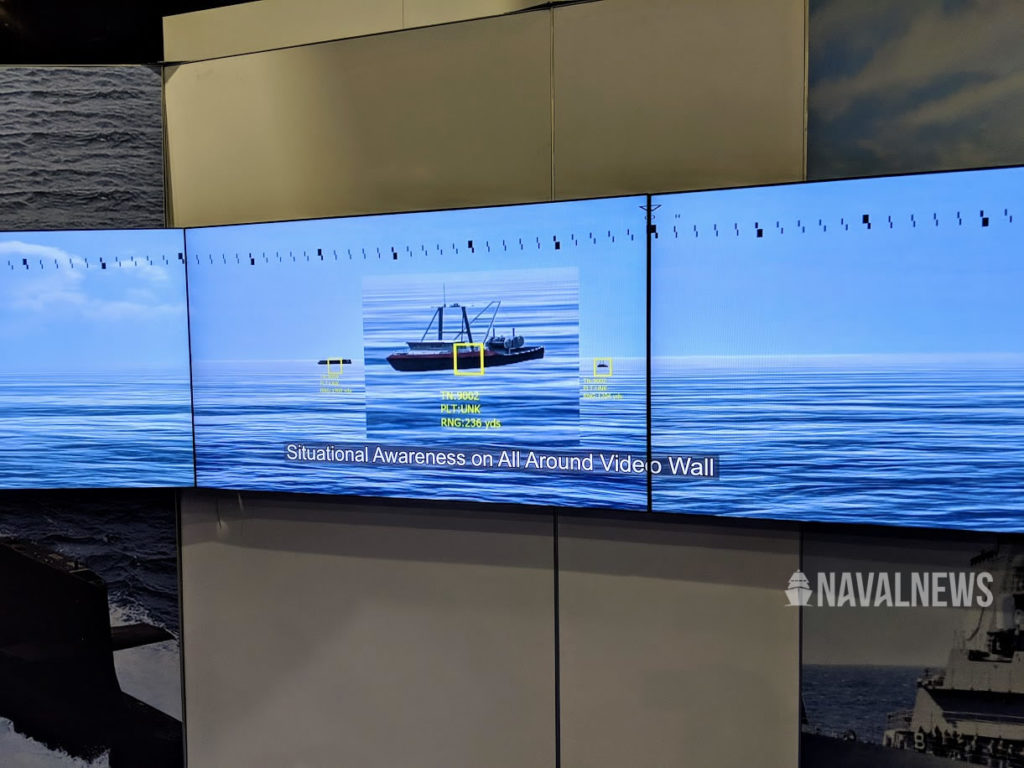
The CIC features the giant 360° wall and 14 + 4 multi function consoles + 2 large tactile tables.

Naval News reports that a new class off Japanese Maritime Self Defense Force frigate will feature a Combat Information Center (CIC) with a 360 degree augmented reality wall.

Situational awareness using the 360° augmented reality wall

Engineering control and damage control can be exercised from the CIC This is a further step in development of the CIC into data fusion center for the ship.

Notably this 5,500 ton ship is expected to have a crew of only 90.

“Coast Guard Cutter Procurement: Background and Issues for Congress” –Congressional Research Service

US Capital West Side, by Martin Falbisoner

The Congressional Research Service updated its “Coast Guard Cutter Procurement: Background and Issues for Congress” on 24 April, 2019. 

You can read it here. I have quoted the summary below.

The Coast Guard’s program of record (POR) calls for procuring 8 National Security Cutters (NSCs), 25 Offshore Patrol Cutters (OPCs), and 58 Fast Response Cutters (FRCs) as replacements for 90 aging Coast Guard high-endurance cutters, medium-endurance cutters, and patrol craft. The Coast Guard’s proposed FY2020 budget requests a total of $657 million in procurement funding for the NSC, OPC, and FRC programs.

NSCs are the Coast Guard’s largest and most capable general-purpose cutters; they are intended to replace the Coast Guard’s 12 aged Hamilton-class high-endurance cutters. NSCs have an estimated average procurement cost of about $670 million per ship. Although the Coast Guard’s POR calls for procuring a total of 8 NSCs to replace the 12 Hamilton-class cutters, Congress through FY2019 has funded 11 NSCs, including the 10th and 11th in FY2018. Six NSCs are now in service. The seventh was delivered to the Coast Guard in September 2018. The eighth through 11th are under construction. The Coast Guard’s proposed FY2020 budget requests $60 million in procurement funding for the NSC program; this request does not include funding for a 12th NSC.

OPCs are to be smaller, less expensive, and in some respects less capable than NSCs; they are intended to replace the Coast Guard’s 29 aged medium-endurance cutters. Coast Guard officials describe the OPC program as the service’s top acquisition priority. OPCs have an estimated average procurement cost of about $421 million per ship. On September 15, 2016, the Coast Guard awarded a contract with options for building up to nine OPCs to Eastern Shipbuilding Group of Panama City, FL. The first OPC was funded in FY2018 and is to be delivered in 2021. The second OPC and long leadtime materials (LLTM) for the third were funded in FY2019. The Coast Guard’s proposed FY2020 budget requests $457 million in procurement funding for the third OPC, LLTM for the fourth and fifth, and other program costs.

FRCs are considerably smaller and less expensive than OPCs; they are intended to replace the Coast Guard’s 49 aging Island-class patrol boats. FRCs have an estimated average procurement cost of about $58 million per boat. A total of 56 have been funded through FY2019, including six in FY2019. Four of the 56 are to be used by the Coast Guard in the Persian Gulf and are not counted against the Coast Guard’s 58-ship POR for the program, which relates to domestic operations. Excluding these four OPCs, a total of 52 FRCs for domestic operations have been funded through FY2019. The 31st FRC was commissioned into service on March 22, 2019. The Coast Guard’s proposed FY2020 budget requests $140 million in acquisition funding for the procurement of two more FRCs for domestic operations.

The NSC, OPC, and FRC programs pose several issues for Congress, including the following: 

  • whether to provide funding in FY2020 for the procurement of a 12th NSC; 
  • whether to fund the procurement in FY2020 of two FRCs, as requested by the Coast Guard, or some higher number, such as four or six; 
  • whether to use annual or multiyear contracting for procuring OPCs; 
  • the annual procurement rate for the OPC program; 
  • the impact of Hurricane Michael on Eastern Shipbuilding of Panama City, FL, the shipyard that is to build the first nine OPCs; and 
  • the planned procurement quantities for NSCs, OPCs, and FRCs.

“CIMSEC Call for Volunteers”

USS Sterett (DDG-104), front, participates in a photo exercise with Chilean Frigate Almirante Lynch (FF-07), second, Royal Canadian Navy Halifax-class frigate HMCS Ottawa (FFH-341), third, French Navy Floreal-class frigate FS Prairial (F-731), fourth, United States Coast Guard Cutter USCHC Bertholf (WMSL-750), fifth, the dry cargo and ammunition ship USNS Charles Drew (T-AKE 10), sixth, and Royal Canadian Navy commercial container ship Asterix. US Navy Photo

The Center for International Maritime Security (CIMSEC) is an organization I strongly support and they are asking for volunteers to help. I am providing a copy of their request below. 

By Michael Madrid

Want to get more involved with CIMSEC? We are welcoming volunteers to help out in areas from membership, social media, article editing, website technical support, podcast production, and more. Our organization is understanding enough to be flexible with geographic disparity and busy day jobs. So if you want to join as a volunteer and help grow this community, please email us at membership@CIMSEC.org by May 8.

Michael Madrid is CIMSEC’s Director of Membership. Contact him at Membership@cimsec.org.

“Why Does China Suddenly Want Nuclear Icebreakers?” –The National Interest

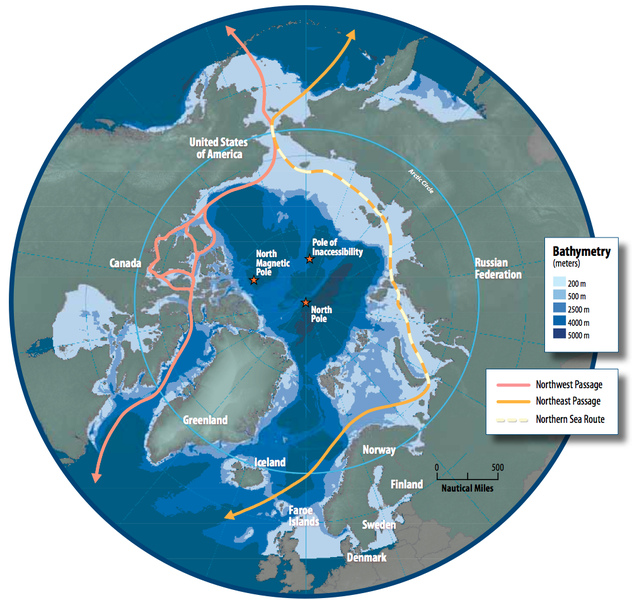
Map of the Arctic region showing shipping routes Northeast Passage, Northern Sea Route, and Northwest Passage, and bathymetry, Arctic Council, by Susie Harder

The National Interest looks at why the Chinese have decided to build nuclear powered icebreakers. There is an interesting quote from the People’s Liberation Army Navy magazine, “With respect to Arctic resources, whoever gets there first, will enjoy the most wealth.”

A couple of items I found interesting were:

  • They are building LNG tankers capable of operating year round in the Arctic.
  • They are also apparently considering the possibility of using a central Arctic Sea Route, allowing them to be free of dependence on the Russians.

New Tech for Tracking “Dark Ships”

An illustration of HawkEye 360’s first satellite constellation, called Pathfinder, orbiting Earth. HawkEye 360/UTIAS Space Flight Laboratory

Back in November, SpaceX fired off a Falcon 9 Rocket with 64 satellites aboard. Among the 64, along with two for the Coast Guard to improve Arctic communications, were a cluster of three called Pathfinder, intended to look for emissions from vessels that would rather not have their location known, including pirates, smugglers, and particularly vessels engaged in Illegal, Unreported, and Unregulated fishing. According to Business Insider,

“The trio of spacecraft belong to a startup called HawkEye 360, and they’re designed to “see” radio signals from space. The company’s software will take unique radio signals coming from ships to “fingerprint” vessels, track them over time, and even forecast future movements.”

Reportedly the satellites can detect and locate radio frequency signals of at least one watt, including satellite phones, push-to-talk radios, and marine radars.

“In addition to fingerprinting such vessels, HawkEye 360’s machine-learning algorithms will also be able to determine typical activity patterns for a ship and flag any unusual deviation. ”

“In the future, they aim to launch five more three-satellite clusters, which will create a constellation that can map Earth’s radio signals once every 30 to 40 minutes.”

There is more background in a gCaptain report here.

Supposedly, the results will be available commercially. Since the same software will also find military vessels I have to wonder if that data will be scrubbed before release?

Meanwhile MarineLink reports the US Coast Guard is teaming up with Global Fishing Watch to track illegal, Unregulated, and Unreported (IUU) fishing.

There is getting to be a lot of intelligence available, but are there platforms enough to exploit it all?


29 Knots, RFP Hull, Man-Overboard Scoop

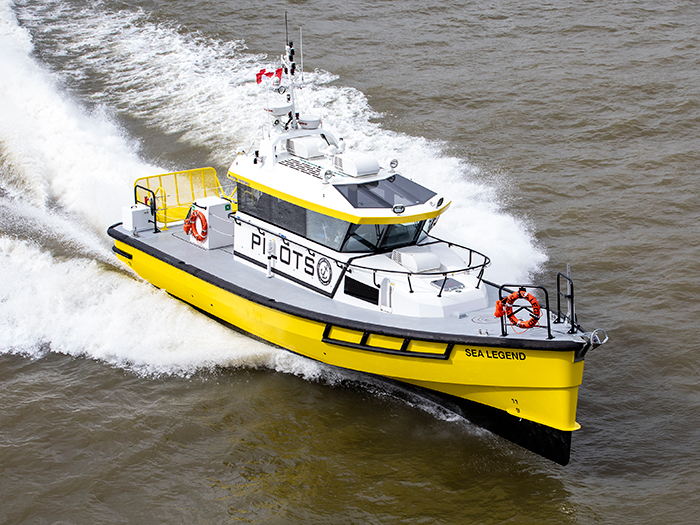
Canada’s Sea Legend Pilotage’s Damen composite FRP hulled Stan Pilot 1605

Another interesting, relatively fast heavy weather boat with an added feature, a man-overboard scoop, built for a Canadian pilot organization.

Plus it is built of composites.

After being built at Damen’s specialist in composite construction, Damen Shipyards Antalya, Turkey, the Stan Pilot 1605 FRP was outfitted at Damen Shipyards Gorinchem, the Netherlands, where Transport Canada was able to inspect the vessel.

According to Damen’s naming convention, the boat has a length of approximately 16 meters (52.5′) and a beam of approximately five meters (16.5′).

The man-overboard recovery system has got to be of interest to a SAR organization.

The scoop is a sophisticated piece of kit that retrieves people from the water and can be used even when the person has lost consciousness. The control for this function is located at the stern, from where the vessel can also be controlled during an emergency.

This reminded me of an earlier post that featured a man in the water recovery system.