This Day in Coast Guard History, 7July

Based on the Coast Guard Historian’s timeline, https://www.history.uscg.mil/research/chronology/
With inspiration from Mike Kelso

July 7

United States Revenue Cutter Service Ship Pickering, later renamed to USS Pickering U.S. Navy Historical Center Photograph- -Released

1798  Hostilities began in the Quasi-War with France.  The Revenue cutters Pickering, Virginia, Scammel, South Carolina, Governor, Jay, Eagle, General Greene, and Diligence were the first to be placed under Naval orders, comprising about one-third of the U .S. Fleet.

1801  In a cost saving measure, the Treasury Department sent circulars to the various Collectors looking toward reducing the size of the cutters and their crews.

1838  Under the authority of an Act of Congress passed this date, the President divided the Atlantic coast into six, and the Great Lakes coast into two, lighthouse districts.  A naval officer was detailed to each lighthouse district, a revenue cutter or a hired vessel was placed at his disposal, and he was instructed to inspect all aids to navigation, report on their conditions, and recommend future courses of action.

1838  Congress passed the first legislation “to provide better security of the lives of passengers on board of vessels propelled in whole or in part by steam.” (5 Stat.L., 304) The Act specified that the program would be administered by the Justice Department whereby U.S. District court judges were to appoint engineers to inspect merchant steamboats.  This Act laid the groundwork for what later became the Steamboat Inspection Service.

1884  Congress directed that cutters be used exclusively for public service and “in no way for private purposes.”

Distribution of the Northern Fur Seal (dark blue = breeding colonies; light blue = non-breeding individuals). Credit: Mirko Thiessen via Wikipedia.

1911  North Pacific Fur Seal Convention signed between United States, Great Britain, Japan, and Russia prohibiting taking of fur seals and sea otters in North Pacific Ocean and Bering Sea north of 30 degrees latitude, except for food and clothing.

1938  The Coast Guard began an operation to transport and guard each shipment of 77,000,000 pounds of silver bars from New York City to the silver depository at West Point, New York for the Bureau of the Mint.  The 1,101,320 bars of silver were moved by truck and the Coast Guard contingent responsible for its safe delivery were under the command of CDR Stephen S. Yeandle, who at the time served as the Intelligence Officer for the Coast Guard’s New York Division.

1939  On this date, “the Lighthouse Bureau went out of existence and its personnel moved themselves and their equipment to Coast Guard Headquarters from the Commerce Department building.  Thus, lighthouses returned to the Treasury Department from the Department of Commerce.

United States Coast Guard Cutter Mellon (WHEC-717) makes way through the Bering Sea while acting as search and rescue standby cutter for the Bering Sea Opilio Crab fishery. U.S. Coast Guard photograph 010209-C-6130A-500, PA1 Keith Alholm

2020  The crew of Coast Guard Cutter Mellon (WHEC 717) returned to their homeport of Seattle on July 7, 2020, after completing the final patrol for the 52-year-old ship.  The 150-person crew left Seattle April 17 to conduct missions throughout the Aleutian Islands and Bering Sea. During the patrol the crew conducted 38 law enforcement boardings, four search and rescue cases and enforced federal regulations governing Alaska’s $13.9 billion commercial fishing industry. In the midst of the COVID-19 pandemic, the Mellon crew instituted protective measures to ensure crew safety and the safety of the commercial fishing fleet and Alaskan public.  Mellon was one the last remaining 378-foot high endurance cutters built for extended offshore patrols. Its capabilities spanned from helicopter operations to pursuit boat operations and served as a key asset for the Department of Homeland Security and humanitarian missions at sea.

This Day in Coast Guard History, 6 July

Based on the Coast Guard Historian’s timeline, https://www.history.uscg.mil/research/chronology/
With inspiration from Mike Kelso

July 6

1809  Congress authorized the construction of twelve new cutters to enforce President Thomas Jefferson’s embargo.

Hall PH-2, V166

1942  Coast Guard Hall PH-2 amphibious aircraft V-166 landed in the open ocean and took aboard 21 survivors of a torpedoed tanker in Gulf of Mexico.

“July 4, 2025 U.S. Coast Guard receives historic investment to rebuild under President Trump’s One Big Beautiful Bill” –CG News

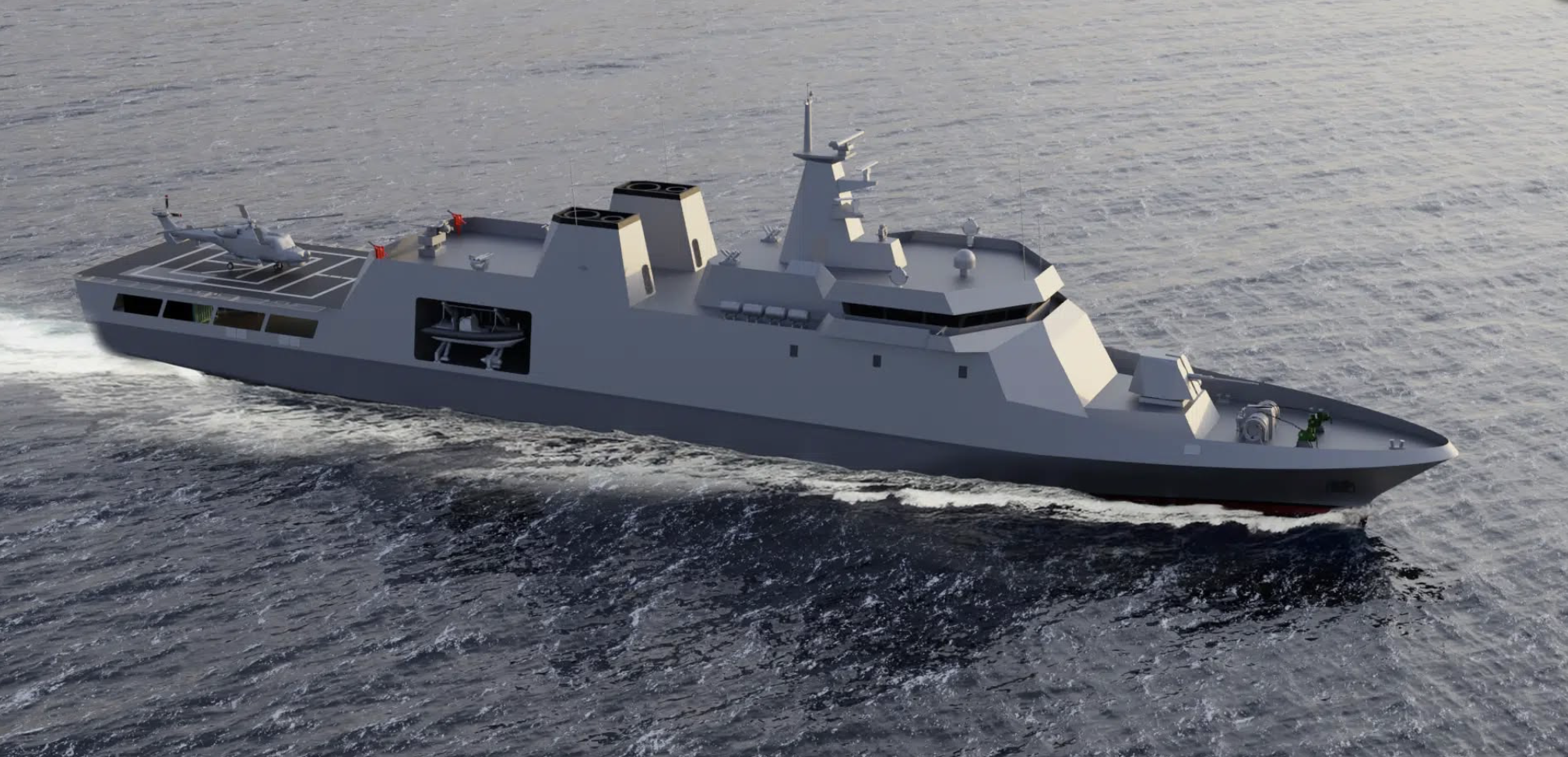
Future USCGC Pickering (Image: Austal USA)

Below is a CG News release.

Looks like good news. Don’t expect all of this money to be spent in FY2026. It will be spread over several years. Normally this might have been spread over several years of the normal budgetary process, but a long term commitment really is a good thing. Shipyards are hesitant to invest in improvements if future contracts are in doubt.

The releases refers to an “estimated 17 new icebreakers, 21 new cutters…” I will try to break that down.

Looks like two Polar Security Cutters ($4.3 billion) and three Arctic Security Cutters so perhaps 12 light and medium Icebreaking Cutters from $816M. These are not medium icebreakers by the usual CG definition (20,000 to 45,000 SHP). There has already been a Request for Information (RFI) that referred to “two types of interest “DOMICE-M” domestic icebreaker, medium and “DOMICE-L,” domestic icebreaker, light” to replace the icebreaking tugs both 140 foot (nine ships) and 65 foot. (The RFI seemed unnecessarily limiting.)

Since the funding for a specifically Great Lakes icebreaker has been removed while the FRI for the Arctic Security Cutter specified a ship capable of transiting the Saint Lawrence Seaway, I expect we may see one or more Arctic Security Cutters seasonally assigned to break ice in the Great Lakes.

As to the 21 new cutters, we know nine will be OPCs (“$4.3B), presumably fully funding all remaining options in the existing contract with Austal for OPCs 5-15. I doubt they included the three Waterways Commerce Cutters ($162M) in the 21, so that suggests probably twelve more Fast Response Cutters ($1B).


July 4, 2025

U.S. Coast Guard receives historic investment to rebuild under President Trump’s One Big Beautiful Bill

WASHINGTON – The U.S. Coast Guard welcomed the nearly $25 billion investment included in the One Big Beautiful Bill Act Friday — marking the largest single commitment of funding in Service history.

This investment strengthens every facet of Coast Guard operations and supports the Service’s role as the Nation’s leading drug interdiction and maritime border security force.

This funding will allow the Coast Guard to procure an estimated 17 new icebreakers, 21 new cutters, over 40 helicopters and six C-130J aircraft while modernizing shore infrastructure and maritime surveillance systems. The package also strengthens the Coast Guard’s ability to counter drug and human trafficking, conduct search and rescue, enhance navigational safety and enable maritime trade.

“This historic investment marks a new era for the Coast Guard,” said Coast Guard Acting Commandant Adm. Kevin Lunday. “It reflects the strong support of the American people and empowers us to restore our Service and prepare for the challenges of today and tomorrow. With this level of support, and the dedication of our Coast Guard men and women, there’s nothing we can’t accomplish. We are deeply grateful for this opportunity to build a stronger Coast Guard for the Nation.”

Investment highlights include:

  • $4.4 billion for shore infrastructure, training facilities and homeports
  • $4.3 billion for Polar Security Cutters, extending U.S. reach in the Arctic
  • $4.3 billion for nine new Offshore Patrol Cutters
  • $3.5 billion for three Arctic Security Cutters
  • $2.3 billion for more than 40 MH-60 helicopters
  • $2.2 billion for depot level maintenance to sustain readiness
  • $1.1 billion for six new HC-130J aircraft and simulators
  • $1 billion for Fast Response Cutters
  • $816 million for light and medium Icebreaking Cutters
  • $266 million for long-range unmanned aircraft systems
  • $170 million for maritime domain awareness, including next-generation sensors
  • $162 million for three Waterways Commerce Cutters

These investments support Force Design 2028 — the Secretary’s comprehensive effort to modernize operations and capabilities to ensure the Coast Guard remains the finest maritime fighting force ready to protect and defend the nation for decades to come.

The Coast Guard extends its appreciation for the leadership of the Administration, including President Trump and Secretary Noem, and leaders in Congress for recognizing the strategic importance of a ready, modern and resilient Coast Guard.

About the U.S. Coast Guard  
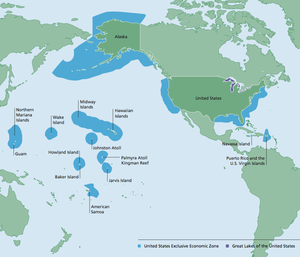
With more than 95,000 miles of shoreline, 25,000 miles of navigable rivers and 4.5 million square miles of U.S. exclusive economic zone, the U.S. Coast Guard defends the Nation, protects the maritime transportation system, regulates and safeguards ports and waterways, leads the Nation in drug interdiction and secures the maritime border. As a member of the joint force, a law enforcement organization, a regulatory agency and a member of the U.S. intelligence community, the Coast Guard employs a unique mix of authorities to ensure the safety and integrity of the maritime domain to protect the economic and national security of the nation. The more than 55,000 members of the Coast Guard operate a multi-mission, interoperable fleet of more than 250 cutters, 200 fixed and rotary-wing aircraft, 1,600 boats and its own dedicated cyber command to protect critical maritime infrastructure.

More information about the U.S. Coast Guard can be found at www.uscg.mil. Follow @USCG on X and Instagram, like us on Facebook, subscribe on YouTube and follow LinkedIn — connect with us.

This Day in Coast Guard History, 5 July

Based on the Coast Guard Historian’s timeline, https://www.history.uscg.mil/research/chronology/
With inspiration from Mike Kelso

July 5

1884  An Act of Congress (23 Stat. L., 118) created a special service known as the Bureau of Navigation, under the Treasury Department, with the duty of supervising the work having to do with the administration of American navigation laws.  “The act specifically allotted to the bureau the numbering of vessels and the preparation of the annual list of merchant vessels of the United States.”

USCGC Juniper

1996  The Coast Guard commissioned CGC Juniper (WLB 201) on this date in 1996.  The new 225-foot WLB was the lead ship in the Coast Guard’s Buoy Tender Replacement Project, a major acquisition to replace the service’s twenty-six 180-foot buoy tenders constructed during World War II.  A total of sixteen 225-foot WLBs were built by Marinette Marine Corporation for the Coast Guard.  Juniper was assigned to its homeport of Newport, Rhode Island.

CGNR 6539

2000  HH-65A CGNR 6539 rescued 51 persons from a burning oil rig in the Gulf of Mexico.  The aircrew responded to the fire and safely airlifted 15 people to a nearby platform nine miles from the fire.  They then evacuated another 36 people to awaiting boats.  One of the 6539’s crew, AST1 John Green, had landed on the platform to coordinate the rescue.  As the helicopter returned to retrieve him, the rig exploded and sent a fireball 100 feet into the air.  Unsure whether he survived, the 6539 flew into the thick, black column of smoke and safely rescued him.  All four aircrew were awarded the Distinguished Flying Cross. (read the linked story, it is fantastic–Chuck)

Lt. Troy Beshears, LCDR Brian Moore, AST1 John Green, AMT1 Mike Bouchard

Their accomplishments were entered into the Congressional Record by Louisiana Senator Mary Landrieu. The closing paragraph of her tribute is as follows:

“Today people say we live in a world without heroes, one in which cynicism and selfishness rule the day. I am proud to say this is not the case in our United States Coast Guard. Guardsmen and Guardswomen like Lieutenant Commander Moore, Lieutenant Beshears, Petty Officer Bouchard and Petty Officer Green put their lives on the line every day so that others may live. In this case, 51 men owe their lives to these four heroes who lived up to the Coast Guard’s motto of “Semper Paratus–Always Prepared.” On behalf of those 51 men, their families, the state of Louisiana and Americans everywhere, I am proud to stand here today and say “Thank you–job well done!” to these extraordinary heroes.”

This Day in Coast Guard History, 4 July

Based on the Coast Guard Historian’s timeline, https://www.history.uscg.mil/research/chronology/
With inspiration from Mike Kelso

July 4

1979  While on a 10-week cadet cruise CGC Ingham located the 75-foot Honduran fishing trawler Mary Ann about 500 miles southwest of San Juan, Puerto Rico.  A boarding team seized the trawler after they discovered 15-tons of marijuana aboard.  The Mary Ann first attempted to evade the boarding and actually rammed Ingham, causing some damage to the cutter.  The trawler finally hove to after Ingham fired a number of warning shots.

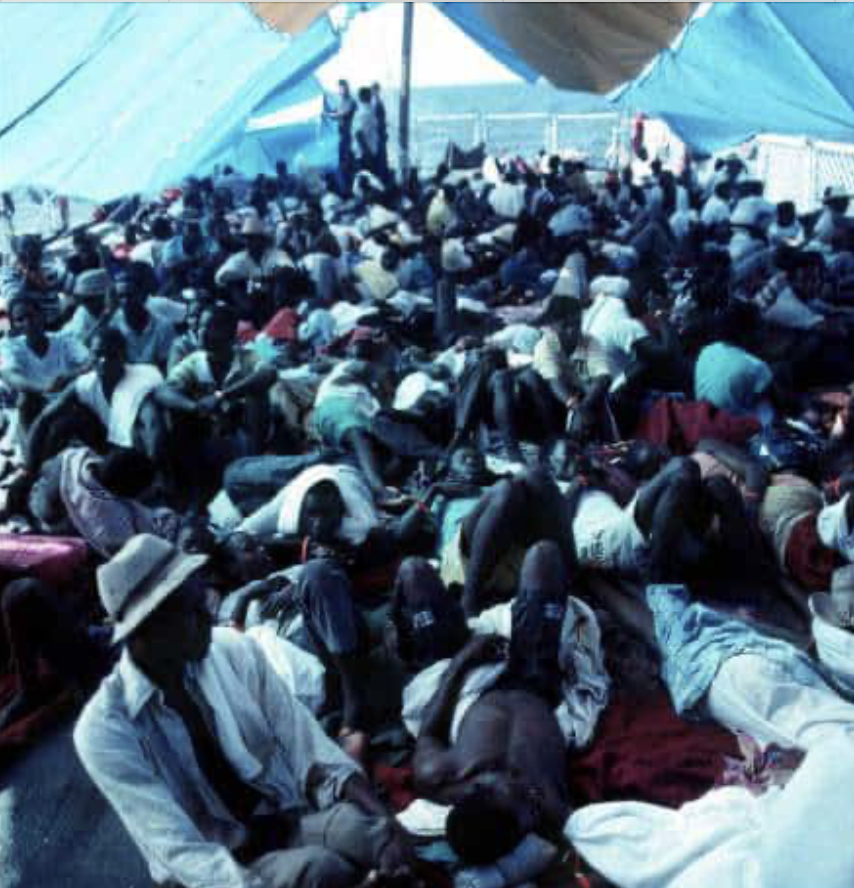
136 Haitian refugees on the flight deck of the US Coast Guard cutter Harriet Lane

1994  Cutters assigned to Operation Able Manner, which commenced under presidential order on January 15, 1994, rescued 3,247 Haitian migrants from 70 grossly overloaded sailboats in the Windward Passage.  They rescued a total of 15,955 during the month of July 1994.

“Coast Guard offloads more than $20 million in illicit drugs interdicted in Caribbean Sea” –District SE

Door gunner on a US Coast Guard HIRON helicopter operating from The Netherlands Navy Offshore Patrol Vessel HNLMS Friesland fires first warning shots and then disabling fire at a suspected drug smuggling vessel off the coast of Venezuela, June 15, 2025.

Below is a District Seven news release.

Note the four intercepts were done by CG teams on partner agencies, the Canadian and Netherlands Navies.

HMCS William Hall – AOPS 433
Port of St. John’s, NL 🇨🇦, 04 MAR 2024, Credit: Ships in Passing.

If I remember correctly, one was done by HMCS William Hall. Three were done by HNLMS Friesland. These were not the first interceptions by these two ships.

HNLMS Friesland (P842), a Holland-class offshore patrol vessel operated by the Royal Netherlands Navy, moors at Naval Air Station Key West’s Mole Pier.


July 2, 2025

Coast Guard offloads more than $20 million in illicit drugs interdicted in Caribbean Sea

Coast Guard Seventh District – 305-202-3735

Editor’s Note: Click here for additional case footage.

MIAMI – U.S. Coast Guard Cutter Northland’s crew offloaded approximately 2,220 pounds of cocaine and 3,320 pounds of marijuana worth an estimated $20.1 million, Wednesday, at Coast Guard Base Miami Beach.

The seized contraband was the result of four interdictions in the Caribbean Sea by the crews of HMCS William Hall and HNLMS Friesland with embarked Coast Guard law enforcement detachments.

“Stopping harmful and illicit narcotics from reaching our shores and entering our communities is a team effort,” said Cmdr. Brian Gismervik, Coast Guard Cutter Northland’s commanding officer. “In the dynamic maritime environment, it takes the combined efforts of our joint force DoD, DHS, and international partners to combat transnational criminal organizations.”

The following assets and crews were involved in the interdiction operations:

  • Royal Canadian Navy ship HMCS William Hall
  • Royal Netherlands Navy ship HNLMS Friesland
  • U.S. Navy ship USS Cole
  • U.S. Coast Guard Tactical Law Enforcement Team South, LEDET 404
  • U.S. Coast Guard Tactical Law Enforcement Team Pacific, LEDET 103
  • Helicopter Interdiction Tactical Squadron Jacksonville
  • Seventh Coast Guard District staff

Detecting and interdicting illicit drug traffickers on the high seas involves significant interagency and international coordination. Joint Interagency Task Force-South, in Key West, conducts the detection and monitoring of aerial and maritime transit of illegal drugs. Once an interdiction becomes imminent, the law enforcement phase of the operation begins, and control of the operation shifts to the U.S. Coast Guard for the interdiction and apprehension phases. Interdictions in the Caribbean Sea are performed by members of the U.S. Coast Guard under the authority and control of the Seventh Coast Guard District, headquartered in Miami.

USCGC Northland is a 270-foot Reliance-class medium endurance cutter homeported in Portsmouth under U.S. Coast Guard Atlantic Area Command.

For breaking news, follow us on X (formerly Twitter). For additional information, find us on Facebook and follow us on Instagram.

Make a difference on land, at sea or in the air with the Coast Guard. Visit GoCoastGuard.com to learn more about active duty and reserve, officer and enlisted opportunities. Information on how to apply to the U.S. Coast Guard Academy can be found here.


“Coast Guard renames geographic operational districts” –CG News

New U.S. Coast Guard District Map

Below is a Coast Guard news release. As a long time advocate of this change I think we ought to recognize the people who originated this idea, even if those making the change now may have never seen the original proposals or may have forgotten them. There may have been others but I know of at least two:

  • Commander Jim Hotchkiss, U.S. Coast Guard Reserve
  • Commander Leah Cole, U.S. Coast Guard

I passed along their suggestions with comments and suggestions of my own:

I brought it up again, “Rebrand the Coast Guard Districts” –USNI / This was too good an idea not to bring up again –24 May 2025

The change retains the District designation as I suggest. I see no significant problems with the new designations, but there might be a better designation for D17 than “Arctic” because most of the district and most of its activities are not in the Arctic. I also think “Mid-Atlantic” would be a more descriptive name for District 5 than simply “Eastern.”


July 3, 2025

Coast Guard renames geographic operational districts

WASHINGTON — The U.S. Coast Guard announced Thursday the renaming of its operational districts from numerical to geographic designations, a key initiative under Force Design 2028 (FD2028).

This strategic change, directed by Secretary of Homeland Security Kristi Noem on May 21, 2025, aims to indicate more accurately the regions they serve and represent. Renaming operational districts revises a numbered system established during World War II, when the Coast Guard operated as part of the Navy to ensure alignment between the services. In the 80 years since the Coast Guard separated from the Navy, the Service has maintained the numbered districts. However, the Navy stopped using numbered districts over 25 years ago.

Updating operational districts to regional names will more clearly align districts with their areas of responsibility, facilitate collaboration with interagency partners, and ensure the American public and maritime stakeholders can easily find and understand the districts in which they live, recreate and operate. This change is a direct action within FD2028’s organization campaign, which is focused on adapting the Coast Guard’s structure to remain effective and responsive.

The new geographic names, approved by the Department of Homeland Security, are as follows:

District 1: USCG Northeast District
District 5: USCG East District
District 7: USCG Southeast District
District 8: USCG Heartland District
District 9: USCG Great Lakes District
District 11: USCG Southwest District
District 13: USCG Northwest District
District 14: USCG Oceania District
District 17: USCG Arctic District

“This renaming is more than just a change in labels; it’s a critical step in our journey to become a more agile, capable, and responsive fighting force,” said Acting Commandant Kevin E. Lunday. “Under Force Design 2028, we are driving fundamental changes to speed decision-making, improve strategic alignment, and ultimately best serve the American people for decades to come. This initiative underscores our commitment to ensuring that change is lasting and has an enduring impact on the Service and the Nation.”

This change will not impact operations or change existing geographical district boundaries. To memorialize the updated names for operational districts, the Coast Guard is undertaking the process of formally changing district names in the Code of Federal Regulations. Through this process, the Coast Guard will continue to communicate with stakeholders and provide updated resources and information as appropriate.

For more information, please contact Coast Guard Media Relations at MediaRelations@uscg.mil.

Read more about the Coast Guard’s transformation through FD2028 here: USCG Force Design 2028.

An Observation on the “Big Beautiful Bill”

Can’t help but notice that while the Coast Guard budget is seeing a modest increase this year, I also see that the Immigration and Customs Service budget is suddenly going to be about 12 times larger than before, growing from $8B to $100B. That is about seven times larger than the Coast Guard budget and equal to more than a tenth of the entire DOD budget.

This Day in Coast Guard History, 3 July

Based on the Coast Guard Historian’s timeline, https://www.history.uscg.mil/research/chronology/
With inspiration from Mike Kelso

July 3

1905  An Executive Order extended the jurisdiction of the Lighthouse Service to the noncontiguous territory of the American Samoan Island.

1918  Congress passed the Migratory Bird Act and the Coast Guard became responsible for the Act’s enforcement after the 1936 passage of the “Act to Define Jurisdiction of Coast Guard.”

1927  Ensign Charles L. Duke, in command of CG-2327, boarded the rumrunner Greypoint in New York harbor and single-handedly captured the vessel, its 22-man crew, and its cargo of illegal liquor.

1986  The Statue of Liberty Centennial Celebration took place in New York harbor.  The Coast Guard was in the “forefront” of the celebration due in part to the Coast Guard’s base on Governor’s Island.

A boat crew assigned to U.S. Coast Guard Maritime Safety and Security Team Honolulu gets underway alongside an American Samoa Department of Homeland Security boat crew to conduct search and rescue training offshore Pago Pago, American Samoa, Feb. 24, 2025. MSST Honolulu and Coast Guard Sector Honolulu personnel deployed to American Samoa to train alongside agency partners, patrol the U.S. maritime border, and enforce U.S. laws and regulations. (U.S. Coast Guard photo, courtesy Maritime Safety and Security Team Honolulu)

2002  The first of the Coast Guard’s Maritime Safety and Security Teams (MSSTs), MSST-91101, was commissioned in Seattle, Washington.  MSSTs were created in response to the terrorist attacks on the U.S. on September 11, 2001.  A total of 12 MSST units were planned for deployment around the nation.

This Day in Coast Guard History, July 2

Based on the Coast Guard Historian’s timeline, https://www.history.uscg.mil/research/chronology/
With inspiration from Mike Kelso

July 2

1836  Congress authorized pay increases for the officers in the Revenue Cutter Service.  Captain’s pay increased to $1200 per annum, First Lieutenant’s to $960, Second Lieutenant’s to $860, and Third Lieutenant’s to $790.

USCGC Itasca as HMS Gorlsston

1937  CGC Itasca, while conducting re-supply operations in the Central Pacific, made the last-known radio contact with the famed aviatrix Amelia Earhart and her co-pilot Fred Noonan.  Itasca later joined the Navy-directed search for the aircraft.  The search was finally called off on July 17 with no trace of the aircraft or its occupants having been found.

USCGC Bertholf and Russian Coast Guard ship Vorovski, May 2016

2005  The CGC Jarvis and the Russian Northeast Border Directorate vessel Vorovsky rendezvoused about 450 miles southwest of Alaska’s Aleutian Island chain and 250 miles east of Russia’s Kamchatka Peninsula to perform the first joint security exercise of the “North Pacific Heads of Coast Guard Agencies.”