Flexrotor UAS operating from FRC

I wanted to pass along this video which includes some scenes of a Flexrotor VTOL UAS operating from USCGC Emlen Tunnell (WPC 1145) times 1:10 and 2:40. Unfortunately, no video of it landing back aboard. Reportedly it requires only a 20×20 foot area for take-off and landing.

Screen grab, time 1:15. Flexrotor launching from USCGC Emlen Tunnell (WPC 1145). Also note the sight on the M2 .50 caliber machine gun mounted starboard.

FRCs are at a disadvantage compared to WMECs, in that they had no possibility of putting eyes in the sky. In some respects, because of their long endurance, having a UAS may be better than having a helicopter, at least for the search function. Giving FRCs a VTOL UAS would definitely be a game changer, particularly when they are operating without the support of land based fixed wing aircraft.

221207-N-NO146-1001 ARABIAN GULF (Dec. 7, 2022) An Aerovel Flexrotor unmanned aerial vehicle (UAV) takes off from U.S. Coast Guard fast response cutter USCGC Emlen Tunnell (WPC 1145) transiting the Arabian Gulf, Dec. 7. U.S. 5th Fleet’s Task Force 59 launched the UAV during Digital Horizon, a three-week event focused on integrating new unmanned and artificial intelligence platforms, including 10 that are in the region for the first time. (U.S. Navy photo)


“Coast Guard Cutter Vigorous returns home after 51-day counter-migration patrol in the Windward Passage”

Coast Guard Cutter Vigorous (WMEC 627) patrols off coastal Haiti, June 24, 2025. The crew of Vigorous conducted a 51-day counter-migration patrol in the Windward Passage. (U.S. Coast Guard photo)

Above is a nice photo of USCGC Vigorous. Note the shelter on her flight deck ready to house dozens of migrants. Didn’t happen.

Below is a Coast Guard News release reporting yet another fruitless counter migration patrol in the Windward Passage. This is only the latest.

The Windward Passage lies between Cuba and Haiti.

One might assume they are deterring migration, but, though there is no great surge, migration is happening, but apparently very little in the Windward Passage.

If there were no patrols in the Windward Passage, the Coast Guard would still have lots of places to intercept migrants between the Haiti and the US and lots of Webber class WPCs to do the intercepting.

This just does not look like a good use for WMECs. As I have pointed out, Maybe Some of the Resources in the Caribbean Should be Going to the Eastern Pacific / Realign AREA AORs


July 1, 2025

Coast Guard Cutter Vigorous returns home after 51-day counter-migration patrol in the Windward Passage

PORTSMOUTH, Va. — The crew of Coast Guard Cutter Vigorous (WMEC 627) returned to their home port in Portsmouth, Tuesday, following a 51-day patrol in the Windward Passage.

Vigorous deployed in support of Operation Vigilant Sentry to advance the primary missions of safety of life at sea and deterrence of illegal alien ventures in known transit zones. Vigorous’ crew conducted maritime safety and security missions while protecting America’s maritime borders from unlawful entry.

Vigorous conducted several consent-based interview boardings in the Canal de la Tortue, Haiti, a key transit zone between Haiti and points north. Vigorous also patrolled for Coast Guard Sector Key West and Sector Miami, which are crucial to deterring illegal activities and maintaining maritime domain awareness. Working with Department of Defense and Department of Homeland Security entities, Vigorous contributed to the disposition of 17 suspected smugglers and nearly 1,400 pounds of cocaine with an estimated street value of 10 million dollars.

Vigorous also honed its tactical proficiency through advanced boat tactics training alongside Coast Guard Cutter Campbell (WMEC 909). The crews conducted pursuit training, enhancing their interoperability and response capabilities in high-speed maneuvering situations. Additionally, they completed a towing exercise, further strengthening their collaborative efforts in maritime assistance and rescue operations.

In a demonstration of international partnership, the Vigorous worked with the Department of State to deliver critical boat supplies to the Haitian Coast Guard, bolstering their capabilities and strengthening maritime security cooperation in the region.

“The crew performed exceptionally well throughout this demanding patrol,” said Cmdr. Charles Bare, commanding officer of Vigorous. “Their dedication and professionalism enabled us to achieve significant operational successes, contributing directly to regional stability and interagency and international partnerships.”

DHS Operation Vigilant Sentry is a DHS-led operation comprised of federal, state and local partners responsible for preventing and responding to maritime migration. OVS, previously known as Homeland Security Task Force – Southeast, was established in 2003 and is comprised of more than 50 federal, state, and local agencies.

Vigorous is a 210-foot, Reliance-class medium endurance cutter homeported in Portsmouth, Virginia. Its missions include search and rescue, maritime law enforcement, marine environmental protection, and homeland security operations in the Atlantic Ocean. The cutter falls under the command of U.S. Coast Guard Atlantic Area, which is based in Portsmouth, Viginia.

For more information on how to join the U.S. Coast Guard, visit GoCoastGuard.com to learn about active duty, reserve, officer and enlisted opportunities. Information on how to apply to the U.S. Coast Guard Academy can be found here.

For more, follow U.S. Coast Guard Atlantic Area on Facebook, Instagram and X.

This Day in Coast Guard History, July 1

Based on the Coast Guard Historian’s timeline, https://www.history.uscg.mil/research/chronology/
With inspiration from Mike Kelso

July 1

1797  Congress passed “An Act providing a Naval Armament,” empowering the President to “cause the said revenue cutters to be employed to defend the seacoast and to repel any hostility to their vessels and commerce, within their jurisdiction, having due regard to the duty of said cutters in the protection of the revenue.”  The act also increased the complements of the cutters from ten men to a number “not exceeding 30 marines and seamen.”

1885  The Bureau of Navigation was permanently organized in accordance with the provisions of the Act of Congress of 3 March 1885.

1903  The Lighthouse Service, along with other activities having to do with navigation, was transferred from the Treasury Department to the newly created Department of Commerce and Labor.

1910  Under the Organic Act of 1910, Mr. George R. Putnam and Mr. John S. Conway took office as the first Commissioner of Lighthouses and first Deputy Commissioner of Lighthouses, respectively.

1910  The Lighthouse Board was terminated; its place being taken by the newly organized Bureau of Lighthouses.

1918  Congress directed that retired officer personnel may be recalled to active duty during war or national emergency.

1921  A system of longevity increase of pay, after six months service for the un-appointed members of the crews of Light-house Service vessels, was introduced for the first time as a means of maintaining “a more efficient personnel on these vessels.”

1921  The Coast Guard’s first air station, located at Morehead City, North Carolina, was closed due to a lack of funding.

1924  An adjustment of the compensation of vessel officers in the Lighthouse Service was made effective in order to bring the pay of these positions more nearly on a level with that of similar Positions in the U .S. Shipping Board, the Lake Carriers Association, and other shipping interests.

1939  Lighthouse Service of Department of Commerce transferred to Coast Guard under President Franklin Roosevelt’s Reorganization Plan No. 11.  Under the President’s Reorganization Plan No. 11, made effective this date by Public Resolution No. 20, approved June 7, 1939, it was provided “that the Bureau of Lighthouses in the Department of Commerce and its functions be transferred to and consolidated with and administered as a part of the Coast Guard.  This consolidation made in the interest of efficiency and economy, will result in the transfer to and consolidation with the Coast Guard of the system of approximately 30,000 aids to navigation (including light vessels and lighthouses) maintained by the Lighthouse Service on the sea and lake coasts of the United States, on the rivers of the United States, and on the coasts of all other territory under the jurisdiction of the United States with the exception of the Philippine Island and Panama Canal proper.”  Plans were put into effect, “Providing for a complete integration with the Coast Guard of the personnel of the Lighthouse Service numbering about 5,200, together with the auxiliary organization of 64 buoy tenders, 30 depots, and 17 district offices.”

The wooden fishing trawler Belmont was acquired for service for a fee of $2,122 to serve under charter by the Navy “for Coast Guard use as a vessel of the Greenland Patrol.” After conversion, including the addition of two small depth charge tracks and minimal anti-aircraft armament, she was commissioned as a vessel of the Coast Guard on 19 June 1942 and renamed Natsek.

1941  The “Northeast Greenland Patrol” was organized in Boston.

1946  As a final step in the return of the Coast Guard to the Treasury Department from wartime operation under the Navy Department, the Navy’s direct control of the following Coast Guard functions was terminated: search and rescue, maintenance and operation of ocean weather stations, and air-sea navigational aids in the Atlantic, continental United States, Alaska, and Pacific east of Pearl Harbor.

1949  The Seventeenth Coast Guard District, eliminated in 1947, was reestablished with its headquarters in Juneau, Alaska.

USCGC Storis in July 1957, during the transit of the Northwest Passage, prepares to send a helicopter aloft on ice reconnaissance before proceeding eastward through Amundsen Gulf to Dolphin and Union Straits, Canadian Northwest Territory. The Storis, along with Coast Guard ships Spar and Bramble, on Sept. 6, 1957, became the first deep-draft vessels to complete transit of Ballot Strait from west to east. USCG photo

1957  CGC Storis, Bramble, and Spar departed Seattle for their traversal of the Northwest Passage.  The three arrived in Boston after the successful completion of the mission on September 19, 1957.

1958  The new Atlantic merchant vessel position reporting program (known by the acronym AMVER) was established.  It was aimed at encouraging domestic and foreign merchant vessels to send voluntary position reports and navigational data to U.S. Coast Guard shore based radio stations and ocean station vessels.  Relayed to a ships’ plot center in New York and processed by machine, these data provided updated position information for U.S. Coast Guard rescue coordination centers.  The centers could then direct only those vessels which would be of effective aid to craft or persons in distress.  This diversion of all merchant ships in a large area became unnecessary.

1968  The Coast Guard’s Merchant Marine Detachment-Saigon was formally established at the U.S. Embassy in Saigon, Republic of Vietnam.

A port bow view of the Spruance Class destroyer USS Ingersoll (DD-990) underway.

1991  A 14th Coast Guard District LEDET, all crewmen from CGC Rush, deployed on board the U.S. Navy’s USS Ingersoll, made history when they seized the St. Vincent-registered M/V Lucky Star for carrying 70 tons of hashish, the largest hashish bust in Coast Guard history to date.  The team, led by LTJG Mark Eyler, made the bust 600 miles west of Midway Island.

Admiral John William Kime, USCG

1991  A high personnel retention level led the Commandant, ADM J. William Kime, to begin implementing a high-year tenure program, otherwise known as an “up or out” policy to “improve personnel flow and opportunities for advancement.”  Two significant points of the program were that they limited enlisted careers to 30 years of active service and established “professional growth points” for paygrades E-4 through E-9, which had to be attained in order to remain on active duty.  Up until this time, enlisted members could remain on active duty until age 62 – the only U.S. military work force with that option.

1995  The 750-foot Greek-flagged freighter Alexia collided with the 514-foot Singapore-flagged Enif near the mouth of the Mississippi River, 70 miles south of New Orleans.  The two ships were joined at the point of collision and drifted through the maze of oil and gas platforms scattered across the area, narrowly missing one by a mere 25 yards.  CGC Courageous served as the on-scene commander to coordinate the response.  AIRSTA New Orleans launched three helicopters to provide SAR coverage and to evaluate the damage suffered by the foundering vessels.  Personnel from MSO New Orleans and the Gulf Strike Team were sent on-scene to deal with the 80,000 gallon fuel-oil spill.  CGC White Holly and M/V Secore Osprey provided skimming resources.  The freighters were separated successfully, their remaining fuel was lightered off and they made it to Mobile escorted by CGC Point Lobos.

“Cyber Command creates task force with Coast Guard for port defense exercise” –DefenseScoop

U.S. Cyber Command operators participate in Cyber Guard 25-2 exercise on June 3, 2025, at Fort George G. Meade, MD. The exercise, in coordination with the Joint Staff, simulates scenarios that test response protocols and defensive and offensive techniques across geographic areas of responsibility (Photo credit: U.S. Cyber Command).

DefenseScoop reports,

“During its most recent capstone exercise, U.S. Cyber Command created a joint task force with the Coast Guard to defend ports against cyberattacks…

“Using its memorandum of agreement with the Coast Guard, DCDC created Task Force Port for the exercise and charged a Coast Guard official with leading it.

“That MOA gives Cybercom the ability to quickly provide capabilities and forces to the Coast Guard for emergent needs…”

Looks like Coast Guard expertise in the Cyber field is being recognized.

“U.S. in Talks to Buy 15 Icebreakers from Finland, Trump Says at NATO Summit” –gCaptain

Finnish icebreaker Polaris leaving for sea trials on 16 June 2016. Photo credit: Tuomas Romu, via Wikipedia.

gCaptain reports,

“At the NATO summit in The Hague President Trump confirmed that the U.S. was in negotiations with Finland to buy up to 15 icebreakers from the country, including acquiring a used vessel currently available.”

The article suggests that the only readily available used icebreaker is the Polaris, pictured above, but questions its utility for the Coast Guard.

“Polaris, like most Finnish icebreakers, was designed for service in the Baltic Sea to escort commercial shipping at high average speeds. They use minimal crews, operating on 10-day port visit cycles. Very different from the USCG mission in the Arctic.”

Polaris is a dual fuel icebreaker, it has a capacity to run on LNG for up to ten days and up to 20 days on Marine Diesel. The crew is small at 16, with accommodations for up to 24, but this is a relative large ship. I suspect accommodations could be increased.

This looks looks like it might be usable in the Great Lakes if it can make its way through the Saint Lawrence Seaway. It is much more powerful than USCGC Mackinaw. But it may be just a bit too wide. Beam is reportedly 24 meters while the Seaway maximum is 23.8 meters, the difference is about 8 inches, but this may just be a matter of the actually beam having been rounded up to the nearest meter.

Since the endurance is actually closer to 30 days than 10, this ship still might be useful in the American Arctic, but accommodating space for communications, weapons, laboratories, and scientific personnel might be challenging. Notably it does not have a helicopter deck or hangar.

This Day in Coast Guard History, June 30

Based on the Coast Guard Historian’s timeline, https://www.history.uscg.mil/research/chronology/
With inspiration from Mike Kelso

June 30

1932  The Steamboat Inspection Service and Bureau of Navigation were combined to form the Bureau of Navigation and Steamboat Inspection (47 Stat. L., 415).  The new agency remained under the control of the Commerce Department.

1933  The airways division, which had been conducted as a division of the Lighthouse Service, but under the administrative supervision of the Assistant Secretary for Aeronautics, Department of Commerce, was separated from the Lighthouse Service. (USLHS AR 1933, p. 97).

1933  The Coast Guard reported that during its existence, from January 28, 1915 through the end of the Fiscal Year (June 30) of 1933 the service had either  “rescued from peril” or “saved” the lives of 60,982 persons and the value of vessels and cargoes the Coast Guard saved or assisted was $659,632,287 (CGM, April, 1934, p. 28).

1939  “The total personnel of the Service as of June 30, 1939, was 5,355, consisting of 4,119 full-time and 1,156 part-time employees, the former including 1, 170 light keepers and assistants; 56 light attendants; 1,995 officers and crews of lightships and tenders; 113 Bureau officers, engineers and draftsmen, and district superintendents and technical assistants; 226 clerks, messengers, janitors, and office laborers; 157 depot keepers and assistants, including watchmen and laborers; and 482 field-force employees engaged in construction and repair work.”

1939  “At the end of the year, the total number of lighthouse tenders was 65, of which 64 were in commission and 1 was out of commission and advertised for sale.  Of the vessels in commission, 42 were steam-propelled, 18 had diesel engines, and 4 had diesel-electric drive.  The average age of the fleet of tenders is 19.52 years.  There are 10 tenders, aggregating 8,535 tons, 35 years of age and over. Thirty lighthouse tenders are equipped with radiotelegraph; 38 with radio direction finders; and 55 with radiotelephones.”

1939  “Lightships were maintained on 30 stations during the year.  At the close of the year, the total number of lightships was 43, which included 9 relief ships and 4 ships out of commission.”

1939  “The total number of aids to navigation maintained by the Lighthouse Service at the close of the fiscal year was 29,606, a net increase of 849 over the previous year.”

Coast Guardsmen and war horses stand shoreside inspection. USCG Historian’s Office

1942  The Coast Guard’s Beach Patrol Division was established at Coast Guard Headquarters under the command of Captain Raymond J. Mauerman, USCG.

1946  The general World War II demobilization task was completed with all Separation Centers decommissioned, resulting in a reduced number of Coast Guard personnel to 23,000 officers and enlisted personnel from a wartime peak of about 171,000 on June 30, 1945.

1946  By this date, all lightships removed from their stations as a war measure had been restored, except Fire Island Lightship which had been replaced by a large-type whistle buoy offshore and a radio-beacon on shore at Fire Island Light Station, New York.

1946  The U .S. Navy returned the Coast Guard’s eleven air stations to the operational control of the Coast Guard.

1947  The Fourth Coast Guard District, which comprised parts of New Jersey, Pennsylvania, and Delaware and was based out of Philadelphia, was abolished and the functions, responsibilities, and facilities in this area were transferred to the Third Coast Guard District, based at New York, New York.  Additionally the Seventeenth Coast Guard District was abolished, and the Territory of Alaska, which it comprised, was added to the Thirteenth Coast Guard District, which included Washington, Oregon, Idaho, Montana, and Wyoming.

1987  As part of a major reorganization and consolidation effort the Coast Guard disestablished the Third and Twelfth Coast Guard districts.

“Department of Homeland Security U.S. Coast Guard Budget Overview Fiscal Year 2026 Congressional Justification”

US Capital West Side, by Martin Falbisoner

You can find this rather long document here.

Overall the budget provides a modest increase over FY2024 and the year long continuing resolution of FY2025 for both the overall budget and Procurement Construction and Improvement (PC&I). There is a very large increase over the small amount previously provided for Research and Development (R&D).

Bottom Line (Dollars in Thousands):

  • Total: FY2025: $13,526,238 FY2026: $14,494,727 Change: +7.16%
  • Operations and Support: FY2025: $10,415,271 FY2026: $11,066,223 Change: +6.25%
  • PC&I: FY2025: $1,413,950 FY2026: $1,744,040 change: +23.3%
  • R&D: FY2025: $7,476 FY2026: $67,701 change: +1,512.53%

Included within PC&I is “Shore Facilities and Aids to Navigation (ATON).” This particular line item saw a huge cut without apparent explanation. FY2025: $187,500 FY2026: $21,300 change: -88.64%

Here are some of the things I learned (assuming it all goes as planned) :

NSC: A Major Maintenance Availability (MMA) program for the National Security Cutters will begin.

Icebreaker: SLEP for USCGC Healy will begin.

OPC: FY2026 will be the first time two OPCs will be funded in the same year. Includes long lead time items for OPCs #10 and #11. Construction is expected to continue on the Eastern OPCs. The Crew for OPC#5 will form.

WMEC: Three more WMEC 210s will be decommissioned in FY2026. One WMEC270 (#3) will complete SLEP and two more (#4&5) will enter the program.

FRC: Two more Webber class WPCs will be funded and four more  will be commissioned in FY2026. This will include more cutters for Guam and San Juan.

WLM: There will be an MMA program for WLM175s.

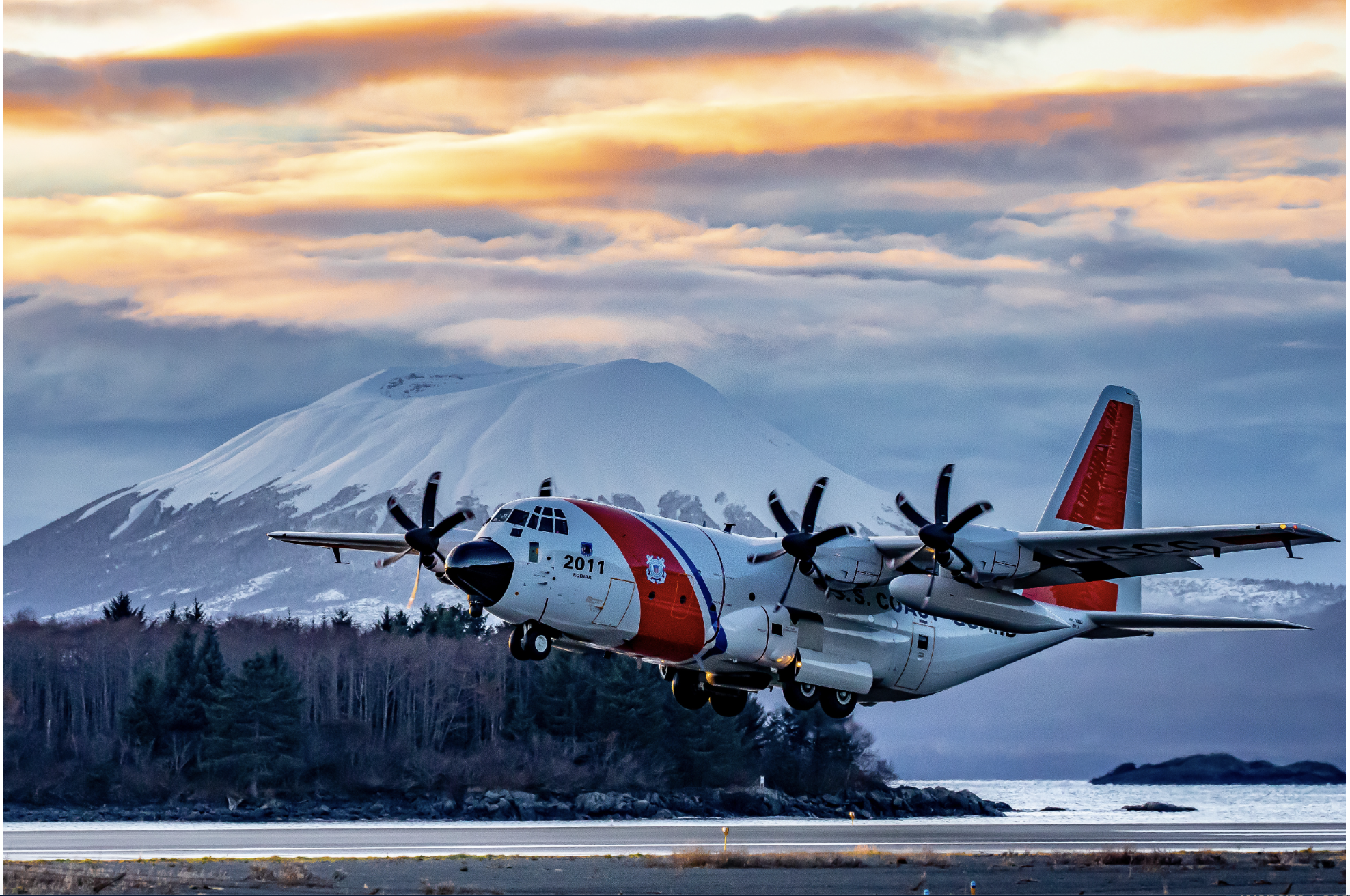
Aircraft: There will be a big jump in funding for the MH-60T program: FY2025: $58,250 FY2026: $164,600. The first C-130J will be assigned to CGAS Sacramento. SLEP program for C-144s will begin.

New station will be built in the US Virgin Islands.

R&D: The R&D justification includes new programs, some you might find surprising.

Transformational Research and Development, $39,460.

Funding for this project will enable the development of innovative new detection and identification technologies, connectivity technologies, and data analytic efforts focused on artificial intelligence and machine learning related to advanced algorithms for the purpose of strengthening DHS and U.S. Government agencies’ detection programs. This investment is intended to enable new technologies to be fielded or to directly spur commercial development that strengthens the Homeland Security Enterprise.

Technical Forensics Research and Development Technology Readiness Level Exhibit, $6,530.

This project advances the U.S. Government’s technical capability to assess pre- and post-detonation material. The National Nuclear Forensics Expertise Development Program (NNFEDP) is crucial for maintaining a robust U.S. nuclear forensics capability by addressing the declining pipeline of qualified experts in this critical field. The NNFEDP supports research awards, fellowships, and specialized training to develop the next generation of nuclear forensic scientists. This investment ensures the U.S. can effectively analyze and attribute nuclear materials, informing critical national security decisions.

Detection Capability Development Research and Development Technology Readiness Level Exhibit, $14,948.

 This project supports acquisition and deployment of counter weapons of mass destruction (WMD) devices that will partially or wholly address capability gaps and provide DHS operational users and Federal, State, Local, Tribal, and Territorial stakeholders with commercially available or next-generation counter WMD devices.

“Fassmer Unveils New OPV90 Mk II” –Naval News

Naval News reports on a new Offshore Patrol Vessel design by German firm Fassmer.

We have seen FASSMER OPVs before:

I suspect (as does the Naval News article) the OPV in the video above may be for Singapore. As you can see above, Singapore has ordered four FASSM designed OPVs. But also look at the similarity of the reinforcements (fenders) along the side of the hull in the video compared to those on the Singapore patrol boats Singapore’s OPVs will replace.

MSRV Protector (57) and MSRV Bastion (58) during their recommissioning in January 2022 (Republic of Singapore Navy)

These patrol craft were converted from missile boats.

Singapore’s Maritime Security and Response flotilla

The new FASSMER design includes space for containers, including in the area that would normally be a helicopter hangar. All of Singapore’s EEZ is within relatively easy range of land based aircraft, so I can understand why they might forgo the hangar. Their  Littoral Mission Ships are also equipped with helicopter decks but without hangars.

“US Coast Guard Academy Censors ‘Climate Change’ From Its Curriculum” –Inside Climate News

Inside Climate News reports,

Amy Donahue, the provost and chief academic officer of the academy, confirmed the moves in a statement posted last week on the Coast Guard Academy alumni association’s website. The association said in an online post that it had reached out to her office after receiving “several letters of concern” on how climate policy was playing out at the New London, Connecticut, institution.

Donahue wrote that the academy was required to make the changes because of the president’s executive order withdrawing past climate change policies as well as a Feb. 14 directive from Homeland Security Secretary Kristi Noem. Noem had ordered department officials to “eliminate all climate change activities and the use of climate change terminology in DHS policies and programs.”

This is old news (over three months old) and because I don’t want the blog to become politicized I ask that you hold your comments.

Some would say this is good. Some will say this is bad. In a way, I think it will make little difference because the topic is very public. Sometimes withholding information just awakens curiosity. Hopefully the faculty will fill the time made available with something useful.

Just wanted you to know.

“USCG HQ is reorganizing to better serve the nation’s finest fighting force” –News Release

Below is a post from MyCG. It’s probably important. I have been away from the Puzzle Palace so long I really don’t know how much of a change this is, so comments are welcome.

I do find the phase “…the nation’s finest fighting force” a bit over the top. I am sure the Marines would question this. The Coast Guard may provide the best return on investment in the Federal government, but it is not because of our prowess as a fighting force. I welcome the recent reemphasis on the Coast Guard’s role as an armed naval force, but this is unrealistic. If we want to be taken seriously as an armed force, we need to be a lot more specific about what the Coast Guard needs and what the service can and will be able to do.

The Coast Guard needs a frank and honest exchange with Navy and JCS. We need a mobilization plan. There may be one in a vault somewhere but unless we test, practice, and train for the missions, it is useless. There are opportunities for synergy with the Navy Reserve where they can reinforce CG units to provide expertise and even equipment the Coast Guard lacks.

Hopefully, we will see what Elvis asked for, “A little less conversation, a little more action, please.”


June 25, 2025

USCG HQ is reorganizing to better serve the nation’s finest fighting force, By Christie St. Clair, MyCG Staff

As part of Force Design 2028, we’re reorganizing Coast Guard headquarters to support you and ensure your unit’s mission success.

Effective July 1, we will establish a Chief of Staff to help headquarters work more effectively. And we’ll restructure Mission Support into two new directorates: a Deputy Commandant for Personnel (DCP) and a Deputy Commandant for Systems (DCS).

Chief of Staff (CoS) 
The new Coast Guard Chief of Staff will improve coordination across headquarters, streamline decision-making, foster a culture of accountability and agility, and ensure headquarters focuses on big-picture strategy rather than individual operational decisions. The Assistant Commandant for Resources (CG-8), Director of Governmental and Public Affairs (CG-092), and Force Design 28 Implementation Team will report to the CoS.

Deputy Commandant for Personnel (DCP)  
DCP will recruit, access, and provide training, professional development, and career opportunities for military members, civilians, and auxiliarists. We will also provide our military members and families the housing, childcare, and medical care they deserve.

DCP will include:

  • Assistant Commandant for Total Workforce Management (CG-TWM) will unite both military and civilian personnel management and add a Civilian Personnel Management (CPM) division under the Personnel Service Center (PSC).
  • Assistant Commandant for Workforce and Family Services (CG-WFS) will focus on programs that support your well-being and family life, including Anti-Hate and Harassment, Wellness, and Support Services. A new Workforce and Family Services Center (WFCS) will execute the activities associated with these programs.
  • Force Readiness Command (CG-FC) will combine recruiting, training, and leadership development activities to provide a more seamless experience throughout your career.
  • Office of the Chief Medical Officer (CG-CMO) will focus on medical policy and healthcare delivery.

Deputy Commandant for Systems (DCS) 
DCS will get and maintain better equipment and technology, at the speed our 24/7 global operations demand, and ensure it is ready for you to conduct critical missions. We will cancel programs that fall short of expectation and build capabilities that maximize your unit’s operational impact.

Separate Program Executive Offices (PEOs) will manage our assets through the full acquisition to sustainment lifecycle to ensure we have the right assets, in the right place, at the right time.

DCS will include:

  • PEO – Surface will manage surface vessel acquisition and maintenance and oversee Surface Acquisitions Logistics Center (SALC), Project Resident Offices (PROs), and the Surface Forces Logistics Center (SFLC).
  • PEO – Air will manage aviation acquisition and maintenance and oversee Aviation Logistics Center (ALC) and the Aviation Projects Acquisition Center (APAC).
  • PEO – C5I will manage command, control, communications, computers, and information technology systems and the functions of the Chief Information Officer and oversee the C5I Service Center (C5ISC).
  • PEO – Shore will manage shore infrastructure and facilities and oversee the Shore Infrastructure Logistics Center (SILC) and the Facilities Design and Construction Center (FDCC).
  • PEO – Robotics and Autonomous Systems (RAS) will manage the integration of robotics and unmanned systems into each of our 11 statutory missions.
  • Director of Integration and Chief Acquisitions Office (CG-SI) will unify, oversee, and synchronize all Coast Guard acquisitions.
  • Director of Contracting and Procurement/Head of Contracting Activity (CG-HCA)will provide Coast Guard leaders strategy, counsel, and visibility of contracting and procurement activities, and will embed contracting offices in each PEO to increase effectiveness.

Why are we doing this? 
These are just the first steps toward making the Coast Guard more efficient and effective. Force Design is the service’s biggest overhaul since World War 2, and will ensure the Coast Guard continues its legacy as the nation’s finest military service – both now and long into the future.

Learn more at USCG Force Design 2028.

-USCG-

Resources: 

In the News: