This Day in Coast Guard History, June 28 / 29

Based on the Coast Guard Historian’s timeline, https://www.history.uscg.mil/research/chronology/
With inspiration from Mike Kelso

June 28

1946  Peacetime cruises for the cadets of the U.S. Coast Guard Academy at New London Connecticut, were revived.

June 29

Revenue Cutter Dallas 1815

1820  The Revenue cutter Dallas captured the 12-gun brig-of-war General Ramirez, which was loaded with 280 slaves, off St. Augustine.  The July 8, 1820 issue of the Savannah Republican noted:

“On the 28th ultimo, while the Cutter DALLAS was lying in the St. Mary’s River, Captain Jackson received information that the Brig of war GENERAL RAMIREZ, supposed to be a piratical vessel was hovering off St. Augustine.  The Cutter forthwith got under way in pursuit of the Brig having first obtained 12 United States soldiers from Fernandina to strengthen the Cutter’s force.  At half past three the next day, she hailed the Brig and received for answer, “This is the Patriot Brig GENERAL RAMIREZ—-.” Captain Jackson finding a number of blacks on board took possession of the vessel and brought her into St. Mary’s, arriving on the 1st instant.  Captain Jackson found on the Brig about 280 African slaves.  The Captain and crew, 28 in number, acknowledged themselves Americans.”

CDR Frank Erickson, USCG, the first US Naval Aviation helicopter pilot.

1944  CDR Frank A. Erickson landed a helicopter on the flight deck of CGC Cobb. This was the first rotary-wing aircraft-shipboard landing by Coast Guard personnel.

A U.S. Coast Guard Sikorsky HNS-1 helicopter (right) and a Sikorsky HOS-1 (left) conducting experimental flight operations on USCGC Cobb (WPG-181), 15 June 1944.

1950  The Coast Guard adopted a Navy directive relative to security measures, including precautions against possible sabotage at installations and aboard ships.

The components and operation of the Cospas-Sarsat system

1982  The Soviet Union launched COSPAS I, the first search and rescue satellite ever launched.  In combination with later SARSAT satellites, a new multi-agency, international, search and rescue service was made operational.

USS Stockdale (DDG 106). U.S. Navy File Photo

2013  A Coast Guard Advanced Interdiction Team (AIT) returned home from a four-month counter piracy deployment to the Middle East.  The team was comprised of three units: Maritime Safety and Security Team (MSST) Los Angeles-Long Beach, MSST San Diego, and the Pacific Tactical Law Enforcement Team (PACTACLET) out of San Diego.  Under the direction of the U. S. Navy’s 5th Fleet, the team served aboard the U.S. Naval guided missile destroyer USS Stockdale, working side by side with the ship’s Visit, Board, Search and Seizure (VBSS) team assigned to Combined Task Force 151.  While on board the Stockdale, the team’s primary mission was to fight maritime terrorism and counter piracy.  The AIT and VBSS conducted joint training for counter piracy, illegal activity interdictions, and boardings.  The training also included space accountability for hidden compartments, mock medical emergencies, and planning and executing mission contingencies.  CTF-151 was a multi-national task force working under Combined Maritime Forces to conduct counter-piracy operations in the Southern Red Sea, Gulf of Aden, Somali Basin, Arabian Sea and Indian Ocean.  Augmented by members from the Coast Guard, the joint-unit team was engaged in stemming illegal piracy and armed robbery at sea.

This Day in Coast Guard History, June 27

Based on the Coast Guard Historian’s timeline, https://www.history.uscg.mil/research/chronology/
With inspiration from Mike Kelso

June 27

1851  The British bark Henry stranded off Bridgehampton Beach, Long Island with 204 persons on board. All were safely landed with government surf boat.

1935  Coast Guard aviator LT Richard L. Burke set a world record for altitude in an amphibious aircraft when he reached 5449 meters (17877.2) feet with a 500 kilogram load on this date in 1935.  He piloted Coast Guard Grumman JF-2 (V-167).

A U.S. Coast Guard Grumman JF-2 Duck (serial V148) in the mid to late 1930s.

The Coast Guard Cutter Walnut, homeported in Honolulu, Hi., off the coast of Iraq in the North Arabian Gulf April 19, 2003. The Walnut is replacing buoys in the Khawr Abd Allah waterway to ensure safe transit for vessels sailing to the port of Umm Kusr including vessels bringing humanatarian aid to the people of Iraq.

2003  CGC Walnut, homeported in Honolulu, returned home after being deployed in support of Operation Iraqi Freedom.  She deployed to the North Arabian Gulf in January with an oil spill recovery system in the event the regime of Saddam Hussein committed any acts of environmental terrorism.  When those threats did not materialize, the cutter conducted maritime interception operations enforcing U.N. Security Council resolutions, participated in the search for two downed United Kingdom helicopters, and patrolled and provided assistance to captured Iraqi offshore oil terminals being secured by Coast Guard port security personnel. The cutter’s crew completely replaced 30 buoys and repaired an additional five along the 41-mile Khawr Abd Allah Waterway.  This ATON mission vastly improved the navigational safety of the waterway for humanitarian aid, commercial, and military vessels sailing to the port and was a critical step to economic recovery for the people of Iraq.

USCGC Assateague

2014  CGC Assateague returned to home port in Apra Harbor, Guam following a six-day exclusive economic zone enforcement patrol.  While underway the cutter patrolled the western-most area of the exclusive economic zone extending 200 nautical miles west of Commonwealth of the Northern Mariana’s Island chain, ensuring no foreign fishing vessels were fishing within waters of the United States and that all U.S. fishing vessels were doing so in accordance with the United States’ applicable maritime laws.  Additionally, during its transit north, the cutter transported supplies to the Pagan Installation Project, which consists of a joint partnership with the Army Corps of Engineers, U.S. Geological Survey, NOAA, and the Commonwealth of the Northern Mariana Islands government.  The project, which is being done on the remote island of Pagan in the northern part of the CNMI chain, is being done to install seismic sensors, monitoring stations, and seismic cables in an effort to monitor volcanic activity.  To facilitate their efforts, Assateague crewmembers met with project managers in Saipan to pick up 700 pounds of five gallon water jugs, 1,200 pounds of cement bags, tents and camping supplies, and various sized batteries, which were all then transported to Pagan.  These items were greatly needed due to the sheer isolation and remoteness of Pagan, which houses only seven permanent residents and is 170 miles north of Saipan, the closest inhabited island with modern amenities.

USCGC EAGLE, San Francisco Bay, 25 June 2025

The U.S. Coast Guard Cutter Barque Eagle (WIX-327) sails under the Golden Gate Bridge into San Francisco Bay, June 25, 2025. The Barque Eagle last visited the San Francisco Bay in 2008. (U.S. Coast Guard photo by Petty Officer 3rd Class Hunter Schnabel)

USCGC Eagle (WIX-327) San Francisco Bay, June 25, 2025. (U.S. Coast Guard photo by Petty Officer 3rd Class Hunter Schnabel)

This Day in Coast Guard History, June 26

Based on the Coast Guard Historian’s timeline, https://www.history.uscg.mil/research/chronology/
With inspiration from Mike Kelso

June 26

1944  LCDR Quentin R. Walsh and his commando unit forced the surrender of Fort du Homet, a Nazi stronghold at Cherbourg, France, captured 300 German soldiers and liberated 50 U.S. paratroopers who had been captured on D-Day.  For his heroic actions, Walsh was awarded the Navy Cross.

Walsh’s 53-man unit (of whom three were killed and ten wounded –Chuck)  landed and contacted elements of the US Army’s 79th Infantry Division, which was engaging the Germans in fierce house-to-house fighting. Allied forces quickly captured the eastern part of the port, while most of the Germans retreated to the western section of the city. Knowing the port was essentially unusable with pockets of resistance remaining, Walsh personally led a 16-member unit of his special task force on a raid to an arsenal area and adjacent waterfront on the western side of the port city. Armed with bazookas, hand grenades, rifles, and submachine guns, he and his party overcame sniper fire and blew open steel doors of underground bunkers, capturing 400 Germans. Walsh and one other officer then approached the German command post at Fort Du Homet under a flag of truce and bluffed its commander into surrendering, capturing a further 350 Germans and liberating 52 American paratroopers being held as prisoners of war. Only then did Walsh begin restoring vital port operations as Port Director.

German prisoners march out of surrendered Cherbourg under U.S. Army guard. U.S. Navy photo.

The US Navy is building a flight III Burke class destroyer in Bath to be named for Walsh.

190606-N-DM308-001 Cherbourg, France(June 6, 2019) A graphic illustration of the future Arleigh-Burke class guided-missile destroyer USS Quentin Walsh (DDG 132). (U.S. Navy photo illustration by Mass Communication Specialist 1st Class Paul L. Archer/Released)

1948  In order to implement the expanded postwar activities of the Coast Guard in the field of aids to navigation, Congress approved Public Law 786, which provided legislative authority for the Coast Guard to establish and operate maritime aids for the armed forces and LORAN stations essential for the armed forces and maritime and air commerce of the United States.

1978  The first U.S. ocean-monitoring satellite, SEASAT-A, was launched into earth orbit from Vandenberg AFB.

“Vietnam Christens ex-USCGC Mellon as CSB 8022” –SeaWaves

SeaWaves Magazine reports that the former USCGC Mellon has been officially transferred to the Vietnam Coast Guard. This is the last of the twelve to be transferred to a foreign navy or coast guard and the third for the Vietnam Coast Guard which also has former USCGC Morgenthau and Midgett.

The Philippine Navy also has three 378s, former USCGC Hamilton, Dallas, and Boutwell.

The Nigerian Navy has former USCGC Chase and Gallatin.

The Bangladesh Navy has former USCGC Rush and Jarvis.

Sri Lanka has former USCGC Sherman and Munro.

This Day in Coast Guard History, June 24

Based on the Coast Guard Historian’s timeline, https://www.history.uscg.mil/research/chronology/
With inspiration from Mike Kelso

June 24

1914  Congress authorized the Secretary of Treasury to “detail for duty on revenue cutters such surgeons and other persons of the Public Health Service as…necessary” and for cutters with such medical personnel aboard to extend medical and surgical aid to crews of American vessels engaged in deep sea fisheries.  This Act of Congress (38 Stat. L., 387) regularized procurement and assignment procedures of Public Health Service personnel to revenue cutters, launching a partnership between the two services that continues to this day.

1930  An Act of Congress provided “that light keepers and vessel officers and crews, who during their active service were entitled to medical relief at hospitals and other stations of the Public Health Service, may be given such relief after retirement as is now applicable to retired officers and men in other branches of the Government service, under joint regulations to be prescribed by the Secretary of the Treasury and the Secretary of Commerce.”

1938  Under an Executive Order of this date, “about 35 positions of steward on lighthouse tenders were brought under the classified civil service.”

USCGC Juniper (WLB-201)

1995  CGC Juniper was launched, the first of the new 225-foot Juniper Class buoy tenders.

USCGC Juniper (WLB-201) and USCGC Joseph Gerczak (WPC 1126) patrol the waters of American Samoa

This Day in Coast Guard History, June 23

Based on the Coast Guard Historian’s timeline, https://www.history.uscg.mil/research/chronology/
With inspiration from Mike Kelso

June 23

View of Boston Light, 1729, Boston Public Library

1716  The Province of Massachusetts authorized the erection of the first lighthouse in America. “This bill named the location for the light as the southern part of Great Brewster Island, then called Beacon Island, and today known as Little Brewster Island.

Boston Light at sunset
NPS Photo/G. Sager

1817  The cutter Active forced a South American privateer posing as an armed merchantman to leave the Chesapeake Bay and American waters.

USCGC Comanche former USRC Windom

1895  USRC Windom was launched.  She was the service’s first attempt at “modern” ship construction and was designed by the Coast Guard’s Engineering Division, complete with in-house staff naval architects and engineers.  Windom was the first cutter to have a modern powerplant, in this case a triple-expansion steam engine, and a fully watertight hull with transverse and longitudinal bulkheads.  She was capable of making a top speed of 15 knots.

USCGC Nike (WPC-112); late WWII outfit. no caption/number; photographer/date unknown.

1934  CGC Nike departed on a thousand-mile trip to the sea after it became the Coast Guard’s first patrol boat built on an inland waterway.  It was built at Point Pleasant, West Virginia and was launched into the Ohio River after being christened by Mrs. Charles O. Weisenberger, wife of the president of the Marietta Manufacturing Company which built Nike.  The cutter was bound for Pascagoula, Mississippi to replace the recently decommissioned cutter Tuscarora, which itself had been in service for over 35 years.

1939  Congress created the Coast Guard Reserve which later became what is today the Coast Guard Auxiliary.

This Day in Coast Guard History, June 20

Based on the Coast Guard Historian’s timeline, https://www.history.uscg.mil/research/chronology/
With inspiration from Mike Kelso

June 20

1874  An Act of Congress provided for lifesaving stations on the coasts of Delaware, Maryland, Virginia, and Florida, as well as on the Great Lakes and the Pacific Coast.

1874  The first Life Saving Medal enactment was passed, which was updated in 1878 and 1882.  Ship masters were also required to report accidents and death in order to gather data to aid in evaluating sites for search and rescue stations.

1906  Congress passed the Sponge Fishing Act and directed that the Revenue Cutter Service enforce it.

1918  An Act of Congress (40 Stat. L., 607, 608) changed the designation of Lighthouse Inspectors, who were in charge of the 19 lighthouse districts, to that of Superintendents of Lighthouses.

25 May 1963 — The first of the new class of 210-foot cutters, USCGC Reliance (WPC-615, later WMEC-615), was christened at Todd Shipyard, Houston, Texas. The wife of the Commandant at the time, Mrs. Edwin J. Roland, was the sponsor for the cutter. A news report published at the time noted: “The CGC RELIANCE, to be stationed at Corpus Christi, Texas, marks a significant milestone in the building program of the Coast Guard as it is the first cruising cutter of any size built for Coast Guard service in almost twenty years.”

1964  CGC Reliance, the first of the Coast Guard’s new 210-foot medium endurance cutter class, was commissioned.

North Vietnamese 100′ Trawler burns on a South Vietnamese beach after being forced ashore by USCGC POINT LEAGUE, on 20 June 1966. It was carrying an estimated 250 tons of supplies for the Viet Cong. USN 1116663

1966  CGC Point League attacked and crippled a North Vietnamese junk attempting to run the Navy’s Market Time blockade.  The action continued into the next day as the junk stranded itself on the shore and its crew fired a demolition charge, destroying their ship.

USCGC Point League (WPB-823304) forces North Vietnamese trawler aground near Ba Song, RVN, 20 June 1966.

This Day in Coast Guard History, June 19

Based on the Coast Guard Historian’s timeline, https://www.history.uscg.mil/research/chronology/
With inspiration from Mike Kelso

June 19

1845  The Secretary of the Treasury had Lieutenants Thornton A. Jenkins and Richard Bache detailed from the Navy and sent abroad to procure information that might tend to the improvement of the lighthouse system of the United States.  Subsequently, when the Secretary submitted the report of these two naval officers and asked that a board be appointed to consider thoroughly the matter of lighthouse improvements.  No legislative action resulted.

1876  The first Gold Life Saving Medals ever awarded were presented to private citizens Lucien M. Clemens and his brothers Hubbard M. Clemons and Al J. Clemons.  On May 1, 1875 the Clemens’ brothers “displayed the most signal gallantry in saving two men from the wreck of the schooner Consuelo” in an open rowboat.  Five others on board the schooner perished when the schooner capsized in the heavy seas “with the wind blowing a gale from the northeast” before the brothers arrived on scene.  The medals were awarded by the Treasury Department.

1992  In a joint operation with INS, the Coast Guard assisted in the seizure of the 167-foot Belize-registered freighter Lucky No. 1, her 15-man crew, and 117 illegal Chinese migrants that were aboard.  The seizure took place off Oahu.

2008  The U.S. Coast Guard announced the launch of an ORBCOMM concept demonstration satellite, equipped with Automatic Identification System (AIS) capability, from Kapustin Yar, Russia. The satellite attained a proper orbit was expected to start transmitting operational data within the next three months. The U.S. Coast Guard Nationwide Automatic Identification System (NAIS) Project sponsored equipment on the satellite to test the feasibility and effectiveness of AIS message reception and reporting from space for ship tracking and other navigational activities. The NAIS project improved maritime domain awareness for the U.S. Coast Guard and Department of Homeland Security by using the integrated network of AIS equipment and user interface services that display and exchange AIS-equipped vessel information for maritime safety and security.  Data collected by the NAIS supports the nation’s maritime interests by promoting vessel and port safety through collision avoidance, and through detection, traffic identification, and classification of vessels out to 2,000 nautical miles from shore.

October 4, 2022, Rochelle Park, NJ – ORBCOMM Inc., a global provider of Internet of Things (IoT) solutions, today announced that it has been awarded a multi-year contract by a U.S. Government Agency for a competitive renewal of its global Automatic Identification System (AIS) data services used for ship tracking and other maritime navigational and safety efforts. In addition, ORBCOMM was awarded a separate competitive contract to deliver AIS services to multiple other U.S. Government users.

USCGC TAHOMA

2014  CGC Tahoma returned to its homeport in Portsmouth, New Hampshire after a 64-day deployment in the Caribbean Sea.  During the deployment, the 100-member crew of Tahoma worked under tactical control of Coast Guard Sector San Juan, Puerto Rico, conducted flight operations, patrolled drug and migration, conducted sea boarding, and assisted in the transfer or repatriation of 26 Haitian migrants.  The crew also participated in training and law enforcement operations, migrant interdiction and counterdrug operations in support of Operation Unified Resolve, and conducted Tailored Ship’s Training Availability (TSTA).  The crewmembers completed a total of 148 drills and exercises, earning the prestigious Battle “E” for excellence in five areas of professional expertise.

USCGC Valiant / Another WMEC210 Bits the Dust

Coast Guard Cutter Valiant (WMEC 621) is moored to the pier at Naval Station Mayport in Jacksonville, Florida, June 17, 2024. The cutter was honored after more than 57 years of service during a heritage recognition ceremony held in front of Coast Guard and cutter leadership, the assembled crew and former crew members, family and friends. (U.S. Coast Guard photo by Petty Officer 2nd Class Brandon Hillard)

Below is a Coast Guard news release.

If my count is right, we are now down to 21 WMECs: 7 WMEC 210s, 13 WMEC 270s, and USCGC Alex Haley. Along with the ten Bertholf class national security cutters, that only 31  large patrol cutters (over 1,000 tons). This is the lowest number we have had since before WWII. In addition, at any time two of the WMEC270s will be out of operation for SLEP.

To some extent the FRCs are filling the gaps left in our larger cutter fleet. The Coast Guard  currently has 58 delivered and serviceable. Looks like we are headed toward a total of 70.

The nation certainly got their money’s worth out of USCGC Valiant and the other 210s, These little ships were originally expected to operate within 50 miles off shore and to provide a lily pad for helicopters. Turns out they were a lot more capable than expected.

Certainly we need the larger ships like the NSCs to operate in the most challenging environments, but for other missions I think its a fair question to ask, where the 210s’ seakeeping was adequate, how much more effective were the larger cutters compared to this class?

With growing demand for Coast Guard assets, we need more larger platforms, but I don’t think they all need to be 4,500 tons or larger.


June 17, 2025

Coast Guard Cutter Valiant celebrated for over 57 years of service during heritage recognition ceremony

To view b-roll of the ceremony, click here.

NAVAL STATION MAYPORT, Fla. — The Coast Guard held a heritage recognition ceremony, Tuesday, in Jacksonville to honor the U.S. Coast Guard Cutter Valiant (WMEC 621) and recognize its more than 57 years of exemplary service.

The ceremony was presided over by Rear Adm. Adam Chamie, assistant commandant for operations integration and response policy, Coast Guard Headquarters in Washington, D.C., and served to celebrate Valiant’s contributions to the Coast Guard and nation in the presence of cutter leadership, current and former crew members, families and friends.

In addition to Chamie, a former commanding officer of Valiant, 2014-2016, the official party included: Cmdr. Matthew Press, commanding officer of Valiant, retired Capt. Timothy Cronin, former commanding officer of Valiant, 2016-2018, Senior Chief Petty Officer Clark Lauer, command senior enlisted leader of Valiant, Lt. Cmdr. Merrill Gutowski, executive officer of Valiant and master of ceremonies, and Chaplain Duke Leon Ann’El, Fraternal Order of Police, former Valiant crew member, 2006-2007.

The event also marked the ship’s exit from active-duty service for an indeterminate time, placing it in commission, special status. The 210-foot Valiant operated as a Coast Guard Atlantic Area Command asset, based in Portsmouth, Virginia, and was most recently homeported in Mayport.

Valiant, a multi-mission cutter, was built in Lorain, Ohio by the American Shipbuilding Company and was commissioned, Nov. 3, 1967. The cutter is the 7th of 16 vessels built in the Reliance-class of medium endurance cutters that have operated in the Coast Guard’s fleet. These cutters were designed for search and rescue, law enforcement missions such as counter-drug and alien interdiction, as well as national defense and international engagement.

Valiant was named after the inspirational trait, which means to act with courage and determination. It is the first Coast Guard cutter to bear its name.

The cutter has been helmed by several notable commanding officers to include, Adm. James Loy, former commandant of the Coast Guard, 1998-2002, and Capt. John G. Witherspoon, the first African American officer to command a medium endurance cutter and for whom the annual John G. Witherspoon Inspirational Leadership Award, which recognizes the Coast Guard officer, active duty and reserve, who best exemplifies the Coast Guard’s Core Values of Honor, Respect and Devotion to Duty, is named.

Valiant spent its first 24 years in the Coast Guard Eighth District area of responsibility while being homeported in Galveston, Texas. While there, it earned its nickname, “Guardian of the Gulf,” after crews assisted in several high-profile search and rescue cases.

In 1971, Valiant provided assistance after two Venezuelan freighters collided.

In 1972, the crew of Valiant supported the International Ice Patrol and identified icebergs off the coast of Newfoundland, Canada, locating hazards to navigation in the North Atlantic Ocean.

Later in the decade, the cutter responded to a collision between a tanker and a freighter in 1979.

Valiant played a crucial role in the mass Cuban exodus of 1980 known as the Mariel Boatlift, while working alongside numerous Coast Guard cutters, small boats, aircraft, and U.S. Navy vessels.

In June of 1990, Valiant and other Coast Guard cutters responded to the 853-foot Norwegian tanker Mega Borg after a deadly explosion in the engine room led to the release of oil approximately 60 miles off the coast of Texas. Valiant’s crew persevered through complex logistical problems, mounting an effective firefighting, salvage and pollution cleanup campaign.

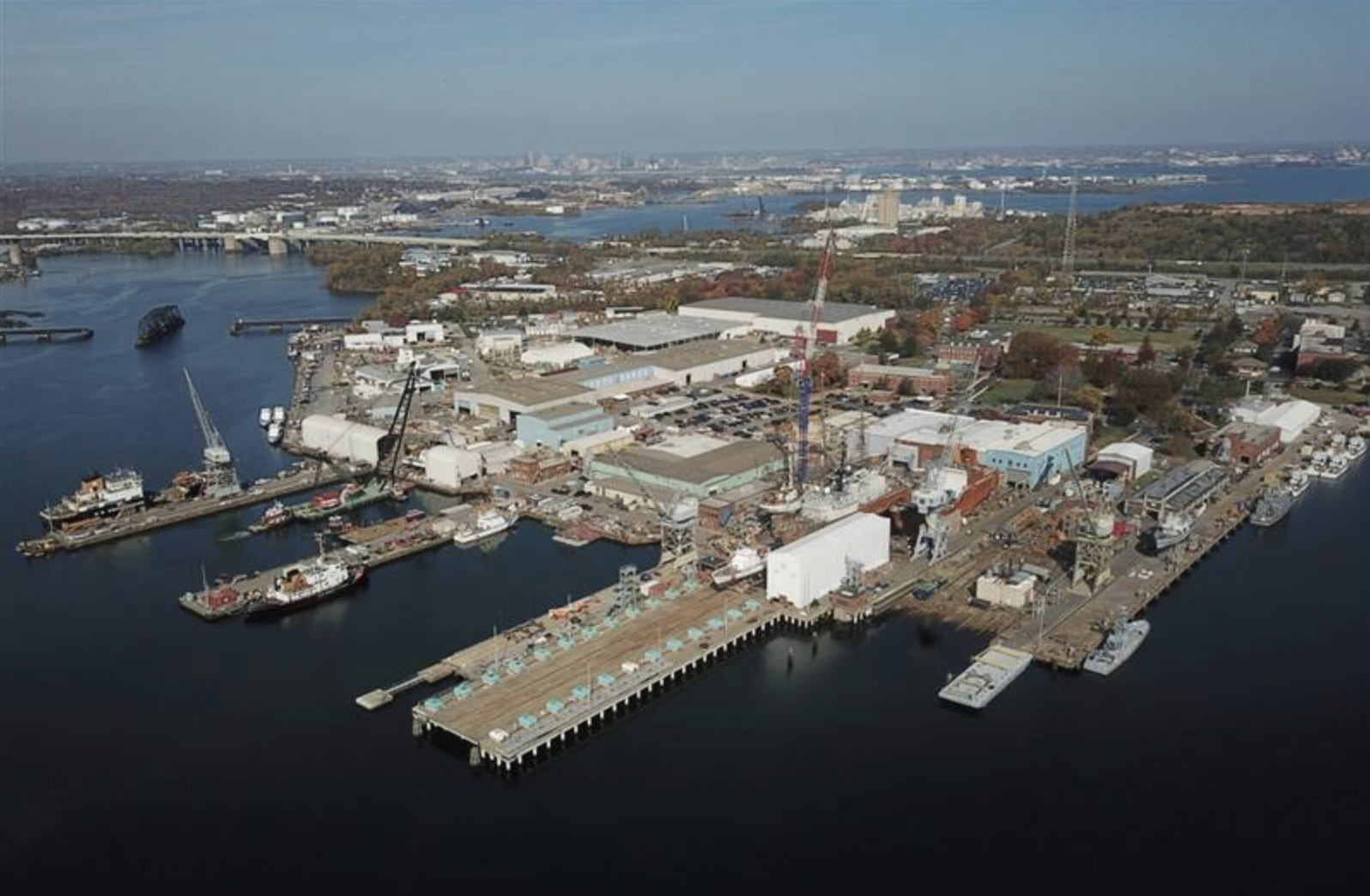
Between 1991 and 1994, the cutter was decommissioned for the purpose of undergoing a major maintenance availability at the Coast Guad Yard in Baltimore, Maryland, extending its service operational life through modifications and modernizations.

After Valiant was recommissioned in January of 1994, it was transferred to the Seventh Coast Guard District area of responsibility and relocated to its second home port of Miami Beach for the next 18 years.

During Operations Able Manner and Able Vigil in 1994, the crew of Valiant interdicted over 500 Haitian and Cuban migrants. And the cutter repatriated over 1,900 Haitian migrants from Guantánamo Bay, Cuba to Port-au-Prince, Haiti over the course of 11 passages during this time.

Valiant served as patrol commander during the 1996 Summer Olympics sailing events in Savannah, Georgia, where the cutter directed over 29 Coast Guard assets to help ensure security for 800 athletes representing 98 different countries.

In 1997, the cutter’s crew helped train over 500 Caribbean Coast Guard members during Operation Tradewinds. Valiant taught personnel from 12 countries in fields such as damage control, engineering and seamanship fundamentals.

In January 1999, a Valiant and Coast Guard law enforcement detachment (LEDET) 406 boarding team interdicted over 10,000 pounds of cocaine from the merchant ship Cannes.

On Nov. 7, 1999, the crew of Valiant discovered a person in the water and another on the sinking hull of a partially submerged vessel. The two were enroute to Antigua and spent over 30 hours before they were rescued.

A few days later, Valiant’s crew rendezvoused with the HMS Northumberland and an embarked U.S. Coast Guard LEDET aboard the British naval vessel to intercept over 2.5 tons of cocaine aboard the the motor vessel Adriatik. After three days of lifting 110-pound bags of sugar, the crew of Valiant uncovered the illicit narcotics.

Later in the same month, Valiant served as on-scene commander while attempting to locate two missing sailing vessels near Saba Island, Netherlands Antilles in the wake of Hurricane Lenny. Their efforts located several capsized vessels adrift in the region, but unfortunately only one survivor was found.

In 2003, the first official Department of Homeland Security secretary’s speech was given by Secretary Thomas Ridge aboard Valiant at the Port of Miami.

In 2004, Valiant conducted alien migration interdiction operations during the Haiti rebellion, repatriating 531 Haitians intercepted on boats as they fled growing violence and turmoil fueled by rebel forces.

While deployed in 2006 to the Caribbean Basin and Florida Straits, Valiant’s crew interdicted 270 aliens attempting to enter the U.S. illegally and assisted the government of the Bahamas, seizing a Dominic Republic-flagged vessel illegally fishing in Bahamian territorial seas. The 65 crew members aboard the fishing vessel Barlovento were later transferred to Bahamain officials. During the same patrol, the crew made a port of call in Miami to host a presidential visit by President George W. Bush.

The cutter interdicted nearly five tons of cocaine from four separate smuggling vessels during a 2009 patrol. The narcotics, worth over $125 million, were seized as a result of coordinated efforts between Valiant’s crew, other Coast Guard assets and U.S. Customs and Border Patrol aircraft.

The crew of Valiant responded to the Haiti Earthquake of 2010, both supporting relief efforts while countering mass migration at sea. Valiant crew members assisted the Haitian Coast Guard to repair their damaged assets and coordinated with the Haitian government and the United Nations to open Cap-Haitien as a resupply and repatriation port during the earthquake’s aftermath.

On Aug. 8, 2012, Valiant transferred to its current home port of Mayport.

In 2017, Valiant conducted a counter-drug patrol in support of Joint Interagency Task Force – South. While deployed to the coast of Central and South America, the crew seized $47 million worth of cocaine and rescued several seas turtles entangled in garbage.

In October 2019, during an Eastern Pacific patrol, the cutter interdicted a self-propelled semi-submersible, a fishing vessel and a go-fast vessel. These actions resulted in Valiant seizing 16,000 pounds of cocaine worth over $218 million.

In September 2023, Valiant’s crew encountered a man in a giant hamster wheel, known as a hydro-pod, well off the Georgia coast. The man was warned about the approaching hurricanes and urged to abandon his unsafe vessel. Despite threats of self-harm and violence, the case was eventually handed over to another Coast Guard vessel, and after three days, he was arrested.

Most recently, Valiant completed a 33-day patrol in the Caribbean Sea earlier this year where the crew conducted counter-drug operations and seized 10,000 pounds of cocaine. The crew was transferred additional contraband from interdictions made by foreign naval partners with embarked Coast Guard law enforcement detachments on board. On June 6, the crew offloaded a combined total of 17,450 pounds of cocaine and 2,585 pounds of marijuana worth $132 million at Port Everglades.

The Valiant now transitions into an inactive shipyard status as part of the Coast Guard’s efforts to modernize its cutter fleet to combat the evolving security threats in the maritime domain. Force Design 2028 is an accelerated effort to transform the Coast Guard into a more agile, capable, and responsive fighting force. By optimizing resources, enhancing workforce readiness and integrating advanced technology to ensure mission readiness, Force Design 2028 provides a bold blueprint to renew the service to be better prepared to meet the mission readiness demanded by the American public.

Once back at the Coast Guard Yard, Valiant’s current crew will transition to different units both ashore and afloat, a step taken to help ensure the Coast Guard’s ability to prioritize lifesaving missions, national security, and protection of the Maritime Transportation System with no degradation to these critical services.

“I am grateful and thankful for our team. The crew makes the cutter, and I am honored to be part of this extraordinary team,” said Cmdr. Matthew Press, commanding officer of Valiant. “I am honored to be part of Valiant’s prestigious legacy.”

Valiant is a 210-foot, Reliance-class medium endurance cutter with a crew of 64 and 12 officers. Since commissioning in 1967, Valiant has conducted search and rescue missions, counter-drug and alien interdiction operations, supported national defense, marine environmental protection and homeland security missions and participated in the International Ice Patrol.

For information on how to join the U.S. Coast Guard, visit GoCoastGuard.com to learn about active duty, reserve, officer and enlisted opportunities.

Information on how to apply to the U.S. Coast Guard Academy can be found here.