“Top Ten Navies by Aggregate Displacement, 1 January 2026” –Phoenix_jz

Top Ten Navies by Aggregate Displacement, 1 January 2026

(You will need to click on the chart to make it large enough to be readable)

I have been looking forward to this. Once again has published his “Top Ten Navies by Aggregate Displacement.” I have duplicated his chart above and his comments below. Even so, it is worth while going to the original post for the very insightful comments.

Observations:

The US Navy is still far larger than the Chinese Navy despite having fewer units, larger in fact than the Chinese and Russian navies combined, and larger in every category other than submarines where the Russian Navy holds a slight edge over the USN. Even so, reportedly, the USN has more nuclear powered submarines than Russia and China combined.

Looking at the changes in displacement between 2022 and 2026, I was surprised to see that the absolute change in displacement of the US Navy was actually greater than the change in displacement of the Chinese Navy, 386,574 tons to 372,122 for China. We can’t take too much comfort in that, the Chinese are likely to enjoy local superiority in any likely conflict, but it does mean in a prolonged conflict, we have a great deal of bench strength.

If there is a surprise here, it is the Indian Navy, having grown 20.5% in four years. The basis of Naval power is of course the economy. If naval power is important to a nation, its naval power should rank at as high as its rank in Gross Domestic Product. We see this in that the two largest economies have the two largest navies. Thing is, there are two common measures of GDP, nominal and purchasing power parity (PPP). Nominal reflects how much you spend while PPP reflects how much you can buy. Russia is the poster child to illustrate the difference. Russia is ninth in nominal GDP just ahead of Canada and slightly behind Italy, but they are fourth in PPP. For India it its a little closer. India is fifth in nominal GDP behind Germany and Japan, but slightly ahead of the UK, but in PPP, they are #3, behind only China and the US, but with a GDP more than twice that of #4, Russia, 17.71 to 7.14 TUS$.

The Indian Navy is already a member of an exclusive club, nations that operate both aircraft carriers and nuclear powered ballistic missile submarines (although their SSBNs don’t seem to be as advanced as the first generation US Polaris missile subs). India has recently begun making an effort to increase shipbuilding and they are likely to follow in the foot steps of Japan, S, Korea, and China. It is going to take some time, but don’t be surprised to see India surpass the UK, Japan, and finally Russia in aggregate tonnage.

You would think the Europeans (UK, France, and Italy) would be doing a little better. Notably missing from the top ten is Germany, the leading economy in Europe.

I’ll add this note from last year because it still applies,

Coast Guards are not included in this analysis. This leads to some distortion since navy operated Offshore Patrol Vessels (OPVs) and patrol craft are counted as combatants, but coast guard operated OPVs and patrol craft are not counted at all. The US, China, Russia, Japan, India and South Korea all have substantial sea-going coast guards, notably the UK and France do not. The Indian Navy in particular has a large number of Navy operated OPVs and patrol craft.

Addendum:  In the comments of the original post, the author provided the following list of the next ten navies.

11: Turkey – 335,032t
12: Taiwan – 271,286t
13: Spain – 241,133t
14: Egypt – 229,650t
15: Germany – 228,472t
16: Australia – 218,224t
17: Greece – 182,303t
18: Chile – 171,592t
19: Brazil – 156,048t
20: Canada – 134,297t


Hello all!

The fourth edition of my top ten navy list arrives with 2026! For those unfamiliar, here are links to 20222023, 2024, and 2025 with a general explainer for the whole concept in that first 2022 edition.

The long and short of it is that this graph reflects a personal tracker I keep of almost every large and moderately sized navy, and calculates the aggregate displacement of these navies. It’s not a perfect way to display the size of navies – far from it in fact – but it is at least more representative than counting numbers of hulls alone, in my opinion.

To break down what each of these categories mean;

  • Surface Warships is an aggregate of all above-water warships and major aviation and amphibious assault platforms. This category includes CVNs, CVs, CVLs, LHDs, LHAs, LPDs, CGs, DDGs, FFGs, corvettes, OPVs, CPVs, lighter patrol craft, and MCM vessels.
  • Submarines is what it says on the tin – SSBNs, SSGNs, SSNs, SSKs, and for select nations where applicable (and where information is available), special purpose submarines. Please note dedicated training submarines are counted separately.
  • AORs includes all major fleet replenishment vessels (coastal vessels do not count, however).
  • Other Auxiliaries is a very wide net that essentially captures everything else. Special mission ships, support vessels, minor amphibious assault vessels (LSDs, LSTs, LCAC’s, LCM’s, LCU’s), training vessels, tugs, coastal support vessels, hydrography ships – all essential parts of navies, but generally often paid less attention to as they’re not as flashy as the warships proper.

Interesting trends in data that I thought I would share for various navies, and thoughts and observations otherwise;

The USN maintains its commanding position – though the increase in displacement seen here (+124,303t, or +1.7%) is deceptive, as this is primarily thanks to high-displacement auxiliaries and AORs that were delivered in 2024 – primarily two John Lewis-class AORs that for lack of crew did not become truly operational until 2025. Additionally, through my own error I missed that the fourth Expeditionary Mobile Base, USS John L. Canley, had been not just delivered but also commission in 2024, and that also counts significantly towards the upwards correction this year. Without the latter, the uptick would have only been about 17,639t.

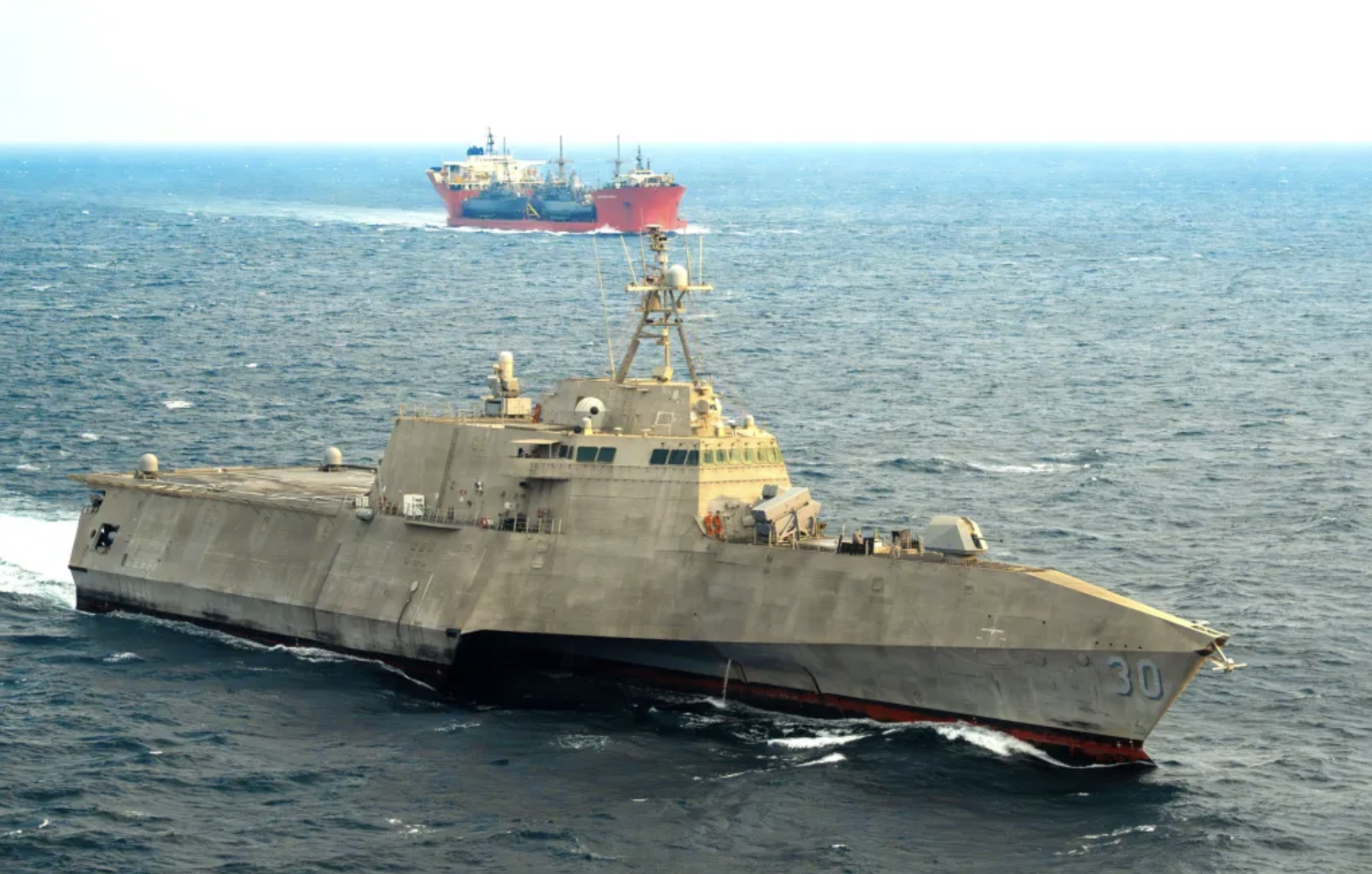
Combatant forces fared poorly this year – 2025 was the first year since 2015 that the USN did not commission a single guided missile destroyer. A single surface combatant – the final Independence-class LCS – was commissioned this year, along with the twenty-fourth Virgina-class SSN. Decommissioned this year were two Ticonderoga-class CGs, a Los Angeles-class SSN, and four Avenger-class MCMV’s. Despite this, the year is less abysmal than it appears, as the USN did actually accept delivery of two DDGs, two SSNs, and two LCS – but most of these will only commission in 2026. For at least one ship (the final Freedom-class LCS), this delay was solely due to the government shutdown late in 2025. Still, the long-term view of U.S. shipbuilding is less than positive, given LCS production has ended and the successor frigate program has been cut down. The new frigate program (FFX) apparently will be no better armed than the LCS. Likewise, the future DDG design (DDG(X)) appears likely to be delayed by the diversion towards the new ‘BBG(X)’ program unveiled this past December.

The PLAN recorded a year of strong growth (+198,473t, or +6.7%), well above average and predictably breaking three million tonnes. In 2025 the PLAN commissioned its third aircraft carrier, Fujian, along with a fourth Type 075 LHD, seven Type 052DL-class destroyers, four Type 054AG-class frigates, and the remaining Type 054B-class frigate (both may have actually commissioned this year, though only one counted towards their tonnage growth as I included the first ship in last year’s count). No tonnage increases were recorded for submarines this year – I do not yet positively assess that any of the Type 093B have yet entered service, and Type 039C production remains something of a mystery. I no longer have any confidence in being able to render even a ±2 boat margin of error on the number in service.

PLAN shipbuilding continues to move ahead at pace. A hull that may be the Type 004 – China’s first nuclear-powered aircraft carrier – is currently under assembly at Dalian. The amphibious assault ship Sichuan (Type 076) is finishing her fitting out and has begun sea trials, though at present no additional hulls of either it or the Type 075 LHD have appeared. The same is true of the Type 071 LPD, which raises questions about what the PLAN intends for the force structure of its amphibious elements going forward. In the realm of destroyers, two Type 055 and two Type 052DL are presently running trials and will likely commission this year. Four and three ships of each respective class were launched in 2025, but no further hulls have been spotted under construction as of yet. There are two further Type 054AG hulls fitting out, but presently no additional hulls – and most notably, still no additional Type 054B hulls – have been identified. Type 054AG’s tend to come together rapidly so it’s possible there are still more in the works, but it may also be indicative of a pause in frigate production while the PLAN assesses what the future of its frigate force should be. It is also interesting to note that many of the remaining Type 053H3 frigates were reduced to training or test ships this year, leaving only three in frontline roles.

The VMF once again sees a slight uptick (+6,313t, or +0.29%), helped in no small part by 2025 being the first time in three years they have not suffered any notable losses to Ukrainian forces. The VMF commissioned an eighth Borei-class SSBN, as well two conventional attack submarines – one Kilo and one Lada – while definitively striking an Oscar II-class SSGN. It appears that the last pair of Sovremenny DDGs have definitively been retired or given up on, further reducing Russian blue water naval power. Two new corvettes, an OPV, an icebreaker, and an MCMV were commissioned this year, against the retirement of three older corvettes and two MCMV’s.

In this year’s first ‘upset’, the Japanese Maritime Self Defense Force recorded another solid year of growth (+14,414t, or +1.9%) and now claims the rank of fourth largest navy on this list, due more so to the misfortunes of the navy they leapfrogged. The JMSDF commissioned two Mogami-class frigates, a fourth Taigei-class SSK, and a fourth Awaji-class MCMV. At the same time, one older destroyer (DD), two Oyashio-class SSKs, and four Sugashima-class MCMV’s were decommissioned. Submarine construction in Japan continues at a regular pace, while surface combatant production looks like it will accelerate. All four of the remaining Mogami-class frigates have been launched as of the end of 2025, and will be followed by the two large ASEV ballistic missile defense ships and the twelve 06FFM type frigates, which will include at least additional three vessels built in Japan for the Royal Australian Navy. It is not clear yet whether any of these surface combatants have started construction yet.

The British Royal Navy had a rough 2025, and has fallen to fifth place for two reasons (-208,979t, or -23.9%). The first is organizational – this year I have decided to strike chartered ships from all navies, as previously only some navies (such as the Royal Navy and Marine Nationale) had chartered ships counted towards them, while others that had them (such as the JMSDF) did not. I decided to err on the side of simplification and struck all of them down, which reduced the size of the Royal Fleet Auxiliary in this list (by 127,000t). On the other hand, the RN and RFA both hemorrhaged a considerable number of assets. From the Royal Navy, both Albion-class LPDs and two Type 23-class frigates were decommissioned, along with the last Trafalgar-class SSN. The Royal Fleet Auxiliary lost both Wave-class AOR’s. These seven vessels totaled 117,220t. In exchange, the sixth Astute-class SSN, and the MCM mothership Stirling Castle, were both commissioned, somewhat taking the sting off of the losses (+13,240t). Additionally, the RN’s displacement is slightly buoyed as I have corrected the displacement of the Queen Elizabeth-class carriers from 70,000t to 80,500t, which is more reflective of their operational full load displacement and in line with other aircraft carriers. All in all, the real net change is more in the region of -103,980t (-13.5%).

With that said, it appears the Royal Navy is close to reaching the nadir of its fortunes in 2025, provided no additional frigates bow out of service early. The RN is benefitting from a robust albeit significantly delayed frigate construction program, and with the launch of the HMS Venturer, the first Type 31 frigate, there are now three surface combatants fitting out for the Royal Navy with another five under construction, and a further five awarded. Likewise, first steel was cut on the first of three Resurgent-class Fleet Solid Support ships for the Royal Fleet Auxiliary in December 2025. Additionally, SSN availability should improve in the next few years as the major constraint on servicing these vessels – the unavailability of drydocks – has abated significantly this year, with only one remaining out of service (the No.10 Dock at HMNB Devonport) until refurbishment is completed in 2027.

The Indian Navy, on the other hand, had a very good year – the best since 2022 (+44,359t, or +7.2%). In 2025 India commissioned the fourth and final Visakhapatnam-class (P15B) destroyer along with the first three Nilgiri-class (P17A) frigates, an eighth Talwar-class frigate (Russian built, Project 11356) and three ASW-SWC type corvettes. They also commissioned the sixth and final Kalvari-class (a Scorpène class) SSK. 2026 will likely also be a bumper year, with the Indian Navy expecting to commission its third SSBN and at least two more Nilgiri-class frigates, along with a swathe of ASW-SWC. If the final pair of Nilgiri do not commission in 2026, they will likely commission in 2027.

The Marine Nationale had a somewhat deceptive year with a slight contraction (-6,208t, or -1.4%), though most of this was due to removed chartered vessels (5,240t) from this list. The ‘real’ contraction was only 968t, due to turnover in patrol and MCM forces, and the retirement of the third Rubis-class SSN (technically in December 2024, but it seems to have escaped my tally for that year). Despite this, the MN’s immediate future is fairly positive – they accepted delivery of the second Jacques Chevalier-class BRF in 2025, as well as the first Amiral Ronarc’h-class frigate. Both will commission in 2026, and should be joined by the fourth Suffren-class SSN.

The Marina Militare had another robust growth year (+25,874t, or 6.8%), once again propelling it ahead of the ROKN. This was driven by the commissioning of two Carlo Bergamini-class frigates (FREMM) and Atlante, the second Vulcano-class logistical support ship (+40,980t). This was tempered by the withdrawal of the last Cold War major surface combatants, destroyer Francesco Mimbelli and frigate Grecale. Further reductions included the transfer of one of the Cassiopea-class OPVs to the Albanian navy, and the decommissioning of a Lerici-class MCMV along with a coastal research vessel and two floating drydocks. As in 2024, in 2025 the MMI was ‘down’ one PPA, as the sixth vessel ‘should’ have commissioned this year but instead was delivered to the Indonesian Navy. Contrary to expectations, construction on these ships did not start in 2025, but they were contracted in June and should start construction in 2026, along with the second FREMM-EVO. They may also be joined by the first DDX, as the mechanisms to start the contracting process started recently and it seems likely that contract will be signed in the first half of 2026. The seventh PPA, Domenico Millelire, should be delivered to the Marina Militare this coming year, along with the hydrographic ship Quirinale.

The Republic of Korea Navy slightly contracted in 2025 (-2,510t, or -0.6%), as it decommissioned one of the three remaining Pohang-class corvettes and the submarine Jang Bogo – its first domestically produced submarine, a variant of the German Type 209/1200. In contrast to 2024, no new vessels were inducted into the ROKN in 2025. An ongoing program to modernize the surface and submarine fleet is ongoing, with one destroyer, two frigates, and one submarine fitting out and another destroyer and two submarines under construction, but it is not clear if any of these vessels will commission in 2026.

Finally, the Indonesian Navy has staged an upset and reclaimed tenth place from their Turkish counterparts, achieving significant growth this year (+21,889t, or +6.6%) thanks to both domestic production, and the rapid delivery of two Paolo Thaon di Revel-class ‘OPVs’ (or frigates) in the Light+ configuration from Italy, bought as they were fitting out for the Marina Militare. The most significant domestic this year was a second Bung Karno-class corvette, with most other additional craft being smaller patrol craft – some of which were commissioned at the tail end of 2024, and did not make it into my final tally for 2025. Notable for Indonesian shipbuilding, this year they launched the first of the ‘Red-White’ frigates, known know as the Balaputradewa-class – derivatives of the Danish Iver Huitfeldt-class air warfare frigates.

Though they did not make the cut this year, I will include a brief mention of the Turkish Navy given they are still a close eleventh, and the gap between them and the next largest navy (the ROCN) is quite considerable. The Türk Deniz Kuvvetleri, in my tracker, has lost some tonnage, though this is the result of a vessel being previously erroneously double-counted in the data set, which has since been corrected. The TDK overall had a quieter year of deliveries than 2024, commissioning the second Reis-class SSK and the first of a new class of LCT, the Ç-159. However, in construction programs things have been more active, with three Istanbul-class frigates launched in 2025, along with the third Reis-class submarine.

“Coast Guard Cutter Kimball returns to Honolulu after 120-day Arctic patrol” –Ocean

A Landing Signals Officer aboard USCGC Kimball (WMSL 756) directs a Cold Bay-based MH-60 helicopter during helicopter in-flight refueling operations in the Bering Sea, Oct. 31, 2025. The hook-up crew stood by to attach the fuel hose, a capability that allows the aircraft to remain airborne during refueling to support a sustained operational tempo and mission readiness. (U.S. Coast Guard photo by Petty Officer 2nd Class Peter Holtzhausen)

Just wanted to pass this along. Cutter still doing the unglamorous work. Away from home over the holidays. A third of a year in a hostile environment. Away for lots of birthdays and anniversaries and other special days.

“Civilian contractors aboard USCGC Kimball (WMSL 756) from Shield A.I. demonstrate the capabilities of the Vertical Takeoff and Landing Battery (V-BAT) unmanned aerial vehicle to Air Station Kodiak leadership on the flight deck, Sep. 12, 2025, in Kodiak, Alaska. Kimball utilized the V-BAT for several fisheries law enforcement boardings throughout the Alaska Patrol. (U.S. Coast Guard photo by Petty Officer 3rd Class Elizabeth Collins)”

There are references in the release to the V-BAT as “Vertical Takeoff and Landing Battery (V-BAT).” V-BAT is not a battery powered UAS. It has a heavy fuel engine that runs on JP-5.

The U.S. Coast Guard awarded Shield AI a $198 million contract to provide maritime unmanned aircraft system services with the V-BAT.

“The Coast Guard awarded a contract on June 26, 2024, to Shield AI Inc. of San Diego for unmanned aircraft system (UAS) capability that can be deployed from Coast Guard cutters. The indefinite-delivery, indefinite-quantity firm fixed-price contract runs through 2029 and is structured as five one-year ordering periods.”


Jan. 9, 2026

Coast Guard Cutter Kimball returns to Honolulu after 120-day Arctic patrol

HONOLULU — The crew of the Coast Guard Cutter Kimball (WMSL 756) returned to Honolulu, Jan. 1, after a 120-day, 16,500-nautical-mile deployment to the Bering Sea and Gulf of Alaska reinforcing maritime safety, security, and national sovereignty in the region.

As the Arctic region continues to become more accessible and consequential, the demand for U.S. Coast Guard statutory mission services, leadership, and presence continues to grow. Kimball’s crew exemplified these efforts.

Throughout the deployment, Kimball’s crew conducted law enforcement operations, provided critical emergency response, and participated in joint exercises with the Department of War, showcasing the versatility and capability of the national security cutter platform.

Kimball’s law enforcement teams conducted 13 inspections of fishing vessels and conducted joint boardings with the National Oceanic and Atmospheric Administration Office of Law Enforcement. Three citations were issued for violations that included two cases of illegally retained catches.

The crew also conducted extensive training with MH-60 helicopters from Air Station Kodiak to enhance proficiency between cutters and air crews. In addition, Kimball tested the new Vertical Takeoff and Landing Battery (V-BAT) unmanned aerial system while patrolling the Bering Sea, conducting several operations to evaluate and enhance the cutter’s surveillance capabilities.

Following the aftermath of Typhoon Halong, Kimball’s crew provided critical support to the area by positioning as a ready fueling platform for responding air assets. The crew also served as the on-scene coordinator and rendered assistance to a disabled and adrift bulk carrier that lost propulsion near a heavily trafficked pass through the Aleutian Islands.

Kimball participated in two joint operations with United States Alaskan Command under Operation TUNDRA MERLIN. These activities involved Kimball and multiple U.S. Air Force aircraft in simulated joint maritime strikes, providing valuable insight into the national security cutter’s capabilities and demonstrates integration of Department of Homeland Security and Department of War assets in support of homeland defense.

“I am immensely proud of this crew for standing the watch over one of the harshest maritime operational areas in the world,” said Capt. Craig Allen, Kimball’s commanding officer. “This crew demonstrated remarkable skill, tenacity, and teamwork across a wide spectrum of Coast Guard missions. Their professionalism made a direct positive impact to the safety and security of the Alaskan community.”

While on patrol, Kimball’s crew crossed the Arctic Circle, earning the designation as “Blue Nose Polar Bears.” The crew also engaged with the Dutch Harbor, Alaksa, community by volunteering for a beach clean-up and hosting a holiday-themed tour of the cutter for nearly 250 local residents.

Commissioned in 2019, Kimball is one of two 418-foot, Legend-class national security cutters homeported in Honolulu. The cutter’s primary missions are counter-drug operations and defense readiness. The namesake of U.S. Coast Guard Cutter Kimball is Sumner Increase Kimball, the organizer of the United States Life-Saving Service and its general superintendent from 1878–1915.

“Mare Island Dry Dock closes” –Marine Log / Maybe an Opportunity

The rudder of the USCGC Polar Star (WAGB 10) is being removed while in a Vallejo, Calif., dry dock, April 1, 2025. The maintenance work completed over the past five years recapitalized integral systems, including propulsion, communication, and machinery control systems. (U.S. Coast Guard photo by Seaman Nestor Molina)

Marine Log reports,

“On Dec. 30, 2025, California ship repairer Mare Island Dry Dock LLC (MIDD) informed the City of Vallejo that it would permanently close its Mare Island facility, resulting in the termination of all employees over the coming days.

The plan had been for USCGC Healy to go through a phased Service Life Extension program at this yard in much the same way as USCGC Polar Star had done. Apparently that plan has changed.

Having a yard with the potential of Mare Island close when the country is waking up to the fact that it needs more shipyards, particularly on the West Coast, seems unwise. This may be an opportunity for the Federal Government to recover all the Mare Island yard for future development. Government owned shipyards are an advantage, particularly for emergency repairs. No need to send out for bids. No need to wait for a court decision if loosing bidder objects.

This could be Coast Guard Yard West. It could also be a homeport.

The Polar Security Cutters and most of the Arctic Security Cutters will be coming to the West Coast.

Its true that the cost of living and consequently wages would be higher than most East Coast Yards, but by West Coast standards, Vallejo is a relative bargain with cost of living far lower than Seattle, Alameda, Long Beach, San Diego, or Honolulu.

“Even as U.S. Blows Up Boats, Coast Guard Captures Others at Sea” Who Are Then Released –NY Times

251118-G-G0107-1008
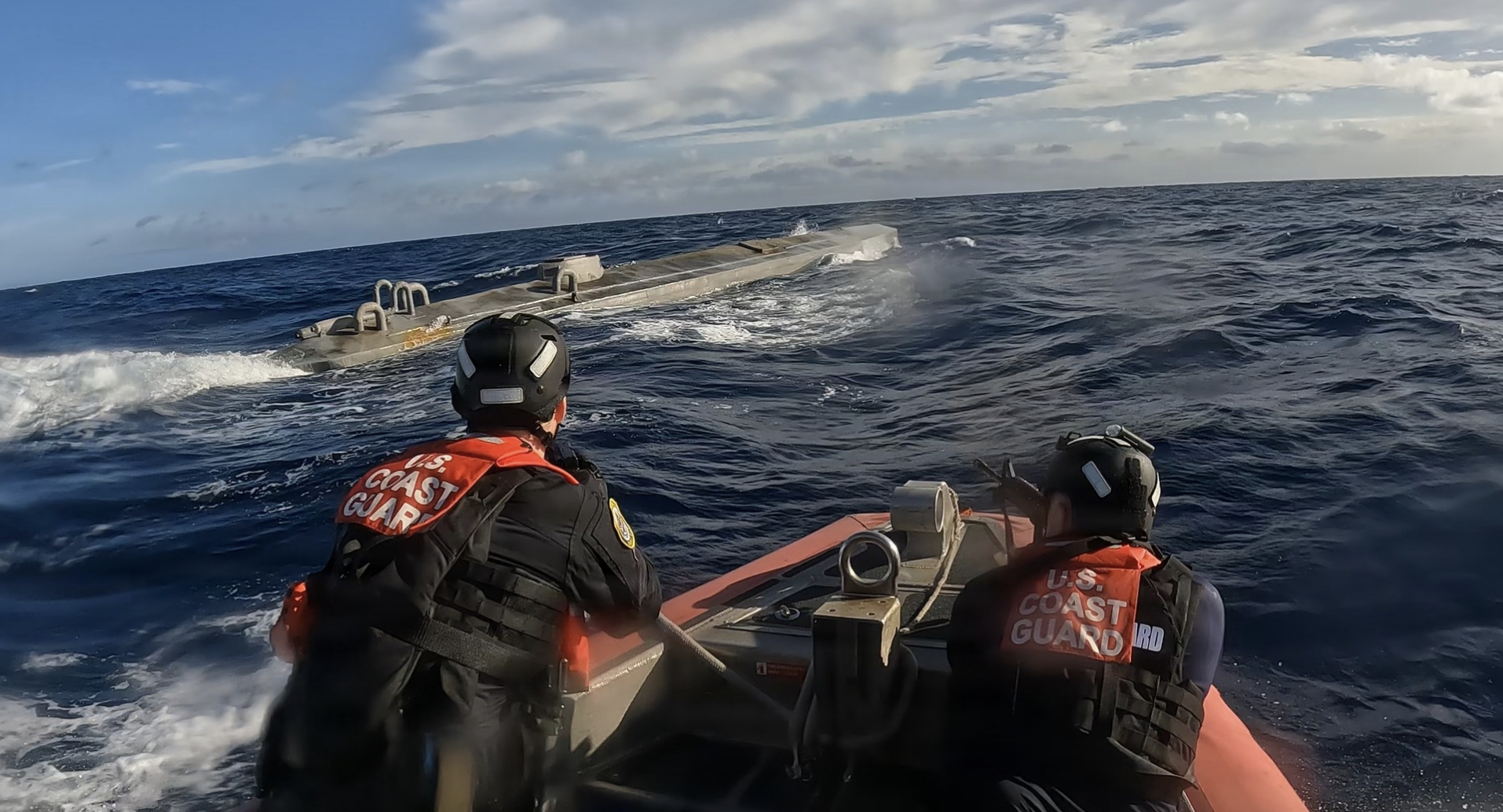
Coast Guard Cutter Stone’s crew poses for a group photo on the flight deck of the ship, Nov. 18, 2025, Port Everglades, Florida. Coast Guard Cutter Stone’s crew offloaded approximately 49,010 pounds of illicit narcotics worth more than $362 million. (U.S. Coast Guard photo by Cutter Stone’s crew) “The cutter took custody of 36 smuggling suspects during the mission, repatriated 29 to Ecuador for prosecution and referred the others to the Justice Department, the Coast Guard said in a statement.”

New York Times reports the Justice Department has in many cases chosen not to be  bothered to prosecute the crews of boats seized by the Coast Guard.

“…for the most part, people captured by the Coast Guard in the same smuggling routes the U.S. military is bombing are being repatriated — either directly, before reaching the United States, or through deportation after briefly being questioned near U.S. ports.

“Some people who have been involved in the process caution that the strategy could erode the intelligence gathering operation that tracks the drug smuggling routes. It has helped the Coast Guard, by its own count, interdict 3,588 vessels and seize 3.26 million kilograms, or 7.19 million pounds, of cocaine and lesser amounts of marijuana since 2003.

This has resulted in closing off a source of intelligence that can result from plea bargaining in exchange for a reduction in the ten year mandatory sentence.

“…after Attorney General Pam Bondi directed prosecutors in February to mostly stop bringing charges against low-level offenders in favor of bigger investigations, the once steady stream of federal trafficking cases is drying up.”

Apparently the Coast Guard is still stopping more product than the Navy/Marine task force, and the threat of bombing does not seem to have discouraged others from making the attempt.

“Between Sept. 1 and Nov. 30, when the U.S. military blew up 22 vessels, killing 83 people in the Caribbean and Pacific Ocean, the Coast Guard interdicted 38 vessels suspected of smuggling drugs — three more than it had intercepted during the same period in 2024.”

The crews of the drug smuggling boats do not appear to be career cartel members. They are impoverished and cannot afford a legal defense. They are also not generally violent.

“But in the past five years, the Coast Guard says, there has been just one instance of a smuggling suspect being shot and killed during an interdiction. Lt. Cmdr. Steven Roth, the Coast Guard’s chief of media relations, described that instance as a ramming episode during a boarding operation that put members of the Guard at risk.”

As a result of the change of policy,

“The Coast Guard statement described the process this way: When the Justice Department “declines prosecution, the Coast Guard coordinates either the direct repatriation to the detainee’s country of nationality or transfer ashore to Department of Homeland Security custody for additional investigation and expedited removal.”

On the one hand, the people are deemed “so dangerous and so horrible” that the government has resorted to killing them, the agent said. On the other, capturing them would lead to their deportation because they are considered “so minor.”

A major question that has surfaced as a result of the decision to destroy rather than capture is could any of these boats be innocent?

A letter from the head of the Coast Guard released in December by Senator Rand Paul, Republican of Kentucky, reported that more than one-fifth of suspicious boats that were stopped by Guard forces from Sept. 1, 2024 to Oct. 7 of this year had no drugs.

A portion of that letter is quoted below.

  1. From September 1, 2024, to October 7, 2025, Coast Guard surface assets, operating under Coast Guard law enforcement authority, interdicted 212 suspected drug-smuggling vessels at sea headed toward the United States. Of the 212 interdictions, 41 vessels had no illicit contraband on board when interdicted: 24 of those 41 vessels without contraband did not appear to commit any federal criminal offense.
  2. Of the 212 total vessels interdicted during this period, 69 vessels were interdicted in the Caribbean Sea by Coast Guard surface assets, operating under Coast Guard law enforcement authority. Of these 69 interdictions, 14 had no illicit contraband on board when interdicted: 11 of those 14 vessels without contraband did not appear to commit any federal criminal offense. Of the 69 Caribbean interdictions, 14 vessels were interdicted off the coast of Venezuela. Three of the 14 vessels interdicted near Venezuela had no illicit contraband on board when interdicted, but one of the three violated other U.S. federal criminal statutes.
  3. The Coast Guard did not use lethal force against any of the 212 vessels interdicted at sea during this period. The Coast Guard used non-lethal force to warn and/or disable non-compliant vessels suspected of smuggling on 105 occasions during this period

The report also found no basis for linking the attacks on boats to overdose deaths from Fentanyl.

“Fentanyl, which comes from China, appears in only three years of Caribbean and Eastern Pacific Ocean seizures since 2003, and insignificantly so: about 38 pounds in the fiscal year 2021, 12 pounds the year before and a quarter-pound in 2023.”

“Chinese and Russian Icebreaking News” –Sixty Degrees North

Location of China’s five Antarctic Research Stations and a proposed sixth station. The U.S. operates three Antarctic Research Stations. (Image: ABC News: Maggie Khameneh)

Sixty Degrees North has an interesting report on what is happening with regard to Chinese and Russian icebreakers.

China’s actions in the Arctic have been getting a lot of Press, but their actions in Antarctic deserve more attention.

The Russian section notes for the first time, Russia had eight nuclear powered icebreakers underway. Sanctions and the War in Ukraine have made exports from the Russian Arctic essential. The coverage reveals why Russia has so many icebreakers, that the Russian icebreaker fleet is getting old, and sanctions are making building replacements difficult.


“China Coast Guard may have deployed Wing Loong II drone for first time near Taiwan” –Army Recognition Navy News

Manufactured by AVIC (Aviation Industry Corporation of China), the Wing Loong II is an advanced iteration of the earlier Wing Loong I. It features a wingspan of 20.5 meters, a length of 11 meters, a height of 4.1 meters, a maximum takeoff weight of 4.2 tons, and a payload capacity of up to 480 kilograms. It is powered by a rear-mounted turbocharged engine with a three-bladed propeller, allowing for a top speed of 370 km/h, a service ceiling of 9,900 meters, and a flight endurance exceeding 20 hours. Its satellite communications system enables long-range control over distances of more than 2,000 kilometers, covering the full expanse of the South China Sea and the Taiwan Strait.

Army Recognition Group’s Navy News reports,

“Illustrative images released by the China Coast Guard on December 30, 2025, suggest the operational use of the Wing Loong II unmanned aerial vehicle during the Justice Mission-2025 exercise. If confirmed, this would mark the first publicly documented appearance of the MALE drone in a coast guard mission, highlighting a potential shift in China’s maritime law enforcement capabilities.”

This only illustrates that China is following a world wide trend of employing land based medium altitude long endurance (MALE) UAS for Maritime Domain Awareness. The US Coast Guard is planning on getting some MQ-9s, but if anything, we may be behind the curve. Current MQ-9 maritime users include Canada, India, Italy, Japan, the UK, and the US Navy.

Wing Loong II appears to be similar to the MQ-9, perhaps a bit smaller. There is no indication if it has detect and avoid capability that would allow it to be certifiable in civil airspace like the MQ-9B. The Wing Loong II’s operational history is interesting and perhaps even a bit surprising. It has been used against Iran, Boko Haram, and the Houthi.

The exercise mentioned, Justice Mission 2025, simulated a blockade of Taiwan. Not surprisingly China Coast Guard seemed to have a significant role to play. This series of exercises might be used to normalize occasional movement of significant forces to surround Taiwan. Ultimately this apparent routine may be used to delay response prior to an attempt to forcibly unify Taiwan with the PRC.


“Coast Guard awards contracts to build Arctic Security Cutters” –CG News Release

Source: Seaspan. Canadian Coast Guard Multi-Purpose Icebreaker (MPI). Source: Seaspan. This is the ship to be built by the Bollinger/Seaspan/Rauma Marine Constructions (Rauma)/Aker Arctic Team. Two will be built in Finland while four are be built in the US.
Note: The MPI image does not show the right propulsors; it will use Steerprop’s contra-rotating propulsors (CRP). Additionally according to Seaspan, the design could easily be upgraded to PC3. Confirmation from Seaspan and Aker Arctic.

Below are two news releases, first from the Coast Guard and second from Bollinger. This is one of two programs that are ultimately expected to provide eleven Arctic Security Cutters.


Dec. 29, 2025

Coast Guard awards contracts to build Arctic Security Cutters

WASHINGTON — The U.S. Coast Guard announced the award of two contracts to build up to six Arctic Security Cutter (ASC) icebreakers — ships designed to break through and navigate ice-covered waters — between the United States and Finland in a major step forward for America’s national security.

Contracts were awarded Friday to Rauma Marine Constructions Oy of Rauma, Finland, and Bollinger Shipyards Lockport, L.L.C. of Lockport, Louisiana, and are the result of President Donald Trump and Secretary of Homeland Security Kristi Noem’s visionary international agreements with Finland and the historic investments authorized in the President’s One Big Beautiful Bill Act.

The Arctic Security Cutters will defend U.S. sovereignty, secure critical shipping lanes, protect energy and mineral resources, and counter our adversaries’ presence in the Arctic region. They will enable the Coast Guard to control, secure and defend U.S. Alaskan borders, facilitate maritime commerce vital to economic prosperity and strategic mobility, and respond to crises and contingencies in the region.

“America has been an Arctic nation for over 150 years, and we’re finally acting like it under President Trump. Our adversaries continue to look to grow their presence in the Arctic, equipping the Coast Guard with Arctic Security Cutters will help reassert American maritime dominance there,” said Secretary Kristi Noem. “Revitalizing the U.S. Coast Guard’s icebreaking capabilities is crucial for our security and prosperity, and today’s announcement is an important step in that direction.”

“These awards represent decisive action to guarantee American security in the Arctic,” said Adm. Kevin E. Lunday, acting commandant of the Coast Guard. “The Arctic Security Cutters will deliver the essential capability to uphold U.S. sovereignty against adversaries’ aggressive economic and military actions in the Arctic. These cutters will ensure the Coast Guard’s ability to control, secure, and defend our northern border and maritime approaches – without question.”

The contract with Rauma Marine Constructions Oy includes up to two ASCs to be built in Finland, with delivery of the first vessel expected in 2028. The contract with Bollinger Shipyards Lockport, L.L.C. includes up to four ASCs to be built in the United States, with delivery of the first domestically built cutter expected in 2029. This plan is designed to take immediate advantage of our Finnish partners’ icebreaker expertise while coordinating the on-shoring of that expertise in the United States in the long run.

Acquisition of ASCs continues Service’s modernization through Force Design 2028, an initiative introduced by Secretary Noem to transform the Coast Guard into a more agile, capable and responsive fighting force.


BOLLINGER SHIPYARDS SIGNS CONTRACT TO BUILD FOUR U.S. COAST GUARD ARCTIC SECURITY CUTTERS

Construction of ASCs at Bollinger’s Gulf Coast shipbuilding facilities promotes the rapid onshoring of icebreaking technology and swift deployment of these new critical vessels to the fleet. 

LOCKPORT, La. — (December 29, 2025) – Bollinger Shipyards (“Bollinger”) today announced it has signed a contract with the U.S. Coast Guard for the construction of four Arctic Security Cutters (ASCs), a new class of medium polar icebreakers that will expand America’s operational presence in the Arctic.

The contract formalizes Bollinger’s leading role in the historic U.S.–Finland collaboration announced earlier this fall by the White House.   Bollinger will construct ASCs based on the Multi-Purpose Icebreaker design by Seaspan Shipyards of Vancouver, Canada, developed with Aker Arctic Technology Inc of Helsinki, Finland. To support the objectives of the White House, Bollinger has worked in close partnership with Rauma Marine Construction Oy, a Finnish shipyard, to ensure that the US receives these icebreaking capabilities as rapidly as possible.

Work on the four Bollinger-built ASCs will be based at its shipyard in Houma, Louisiana. Construction of the ASCs will be supported by the company’s workforce at multiple facilities across America’s Gulf Coast to meet the aggressive schedule set forth by President Trump.

“The Arctic Security Cutter is one of the most consequential and time-sensitive shipbuilding programs in U.S. Coast Guard history, and today’s contract award is a clear vote of confidence in the men and women of Bollinger,” said Ben Bordelon, President and CEO of Bollinger Shipyards. “The program will be Bollinger’s fifth class of cutters built for the Coast Guard, building on our current Sentinel and Polar Security Cutter programs and more than 40 years of experience in delivering over 187 cutters for the service. With clear direction from President Trump and an aggressive delivery timeline, our mission is straightforward: leverage the full strength of our shipbuilding facilities across the Gulf Coast, along with our proven partners, to deliver these cutters on schedule and mission ready on day one.”

“By centering ASC construction in Houma, Louisiana, while drawing on our broader footprint, we gain the flexibility and capacity to move fast without compromising safety or quality,” Bordelon added. “These ships will operate in some of the harshest conditions on Earth. Our responsibility is to deliver a stable, reliable platform that Coast Guard crews can trust from their first mission underway and for decades to come.”

The contract for four Bollinger-built ASCs is part of a broader program that will ultimately field up to eleven Arctic Security Cutters under the trilateral ICE Pact framework. Together with the ongoing Polar Security Cutter program, ASC will provide the Coast Guard with a modern, layered icebreaking fleet capable of enforcing U.S. sovereignty, protecting American interests against global threats and enabling year-round operations as commercial activity and strategic competition accelerate in the Arctic.

About the Arctic Security Cutter Program

The Arctic Security Cutter is a new class of medium polar icebreakers designed to conduct missions of the U.S. Coast Guard in the world’s most challenging maritime environments.  The ASC will be capable of breaking thick sea ice, sailing thousands of nautical miles without resupply and remaining on-station for extended periods. Along with the future Polar Security Cutter class, ASCs will provide the Coast Guard with the endurance and capability needed to protect U.S. interests in the rapidly evolving Arctic domain.

About Bollinger Shipyards

Bollinger Shipyards is a leading U.S. designer and builder of high-performance military and commercial vessels, including Coast Guard cutters, research vessels, double-hull barges, offshore energy support vessels, tugs, lift boats and other specialized steel and aluminum craft. With more than 80 years of continuous operation, Bollinger today operates 13 facilities strategically located across Louisiana and Mississippi with direct access to the Gulf of America, the Mississippi River and the Intracoastal Waterway, and is the largest vessel repair company in the Gulf region.

Size and Survivability

The choice of the NSC as the basis for the FF(X) has prompted a lot of discussion about their survivability. Ten years ago, I did a post, “Small Warship Survivability,” I think it is still relevant. Basically I found that while it is certainly true that a major hit is more likely to sink a small ship than a large ship, the probability of actually being sunk is, based on US WWII experience, less likely for smaller ships. Looking at the video above, it seems that is the British experience as well.

In addition, it is far more likely that large ships will be taken out of service for a period due to damage that does not sink the ship. The current lack of tenders, repair ships, and floating dry docks makes these periods likely to be relatively long.

Considering the possibility of a war with China, it seems little thought has gone into how the effort will be supplied. In 2018 the Navy frankly told Military Sealift Command that they would probably not be able to escort the logistics ships that supply the US military. Additionally we have so few merchant mariners, we cannot afford to loose any of them.

The head of the Chinese Navy is a submariner. The Chinese have studied the naval war in the Pacific during WWII and they found the Japanese’s primary mistake was not attacking US logistics. We can be pretty sure, if we go to war, Chinese nuclear submarines, supported by their constellation of satellites, will be positioned to ambush our logistics when hostilities start. (I think there may be a possibility of armed merchant ships as well early in the conflict. MSC ships are essentially unarmed making them easy prey.)

Our situation is not unlike that of the Royal Navy in WWII. We do not have enough ships to escort the logistics ships. If we try to make each new ship capable of dealing with every threat, we will be unable to build enough. We need to build enough that are just good enough to handle escorting in areas where the threats are limited to submarines and their limited number of weapons. In areas where the threats more diverse, they will have to be teamed with more capable ships.

We will also need to be able to take out their satellites, but that is a job for Space Force.

It might be possible to escort some ships with Maritime Patrol Aircraft like the P-8. To make that possible we probably need to reopen NAS Adak, but if the vessels are sunk, the aircraft cannot rescue the crew.

An aspect of the Battle of the Atlantic that is frequently overlooked, is how many merchant mariners were rescued by escorts and specialist rescue vessels. If the crews know that there will be no rescue if their ships are sunk, they might not even choose to start.

Check out the video. The success of the corvettes was remarkable.

“Navy’s New Frigate Will Not Have A Vertical Launch System For Missiles” –The War Zone / Maybe a Revolution in Coast Guard Military Readiness

The War Zone reports what seemed obvious from the artists’ renderings, that the FF(x) derived from the National Security Cutter will not have any permanently installed vertical launch missile tubes,

“The initial flight of FF(X) will have a 57mm gun, 2 x 30mm guns, a Mk 49 Rolling Airframe Missile [launcher], various countermeasures, and a flight deck from which to launch helicopters and unmanned systems. Aft of the flight deck, there will be a flexible weapons system, which can accommodate containerized payloads (Counter-UAS, other missiles),” a Navy spokesperson told TWZ today. “Much like the successful DDG-51 [Arleigh Burke class destroyer] program, we are building this in flights. The frigate will be upgraded over successive flights to evolve and has the space reservations needed to improve capability over time.”

Members of the aircraft carrier USS Gerald R. Ford’s crew remove a RIM-116 missile from a Mk 49 launcher during qualification trials.

I must admit, I missed the two 30mm guns, presumably Mk38 Mod4s.

A Revolution in Coast Guard Readiness:

There is reference to containerized, modular, or off-board unmanned systems operating from or in conjunction with the FF(X).

That sounds like the promises that accompanied the LCS, but if the Navy delivers on these systems, it could revolutionize the way the Coast Guard meets its military readiness mission. There are already mine counter measures and missile launching systems.

The Navy could maintain the mission modules and identify those who would operate and maintain them and simply assign them to Coast Guard units upon mobilization. The Coast Guard maintains and operates the platform while the Navy maintains and operates the payload.

Towed Arrays and helicopters is what I think about first, but it might include mine clearance if a US port may have been mined–don’t have to wait for a mine countermeasures ship to get there, just fly in the equipment and the crew, have them operate from a CG station or perhaps a buoy tender.

“USS Savannah (LCS 28) conducts a live-fire demonstration in the Eastern Pacific Ocean utilizing a containerized launching system that fired an SM-6 missile from the ship at a designated target. The exercise demonstrated the modularity and lethality of Littoral Combat Ships and the ability to successfully integrate a containerized weapons system to engage a surface target. The exercise will inform continued testing, evaluation and integration of containerized weapons systems on afloat platforms.”

Mk70 missile launchers could be flown to Alaska and mated to a cutter already in the area.