
Coast Guard offloads more than $14 million in illicit drugs interdicted in Caribbean Sea
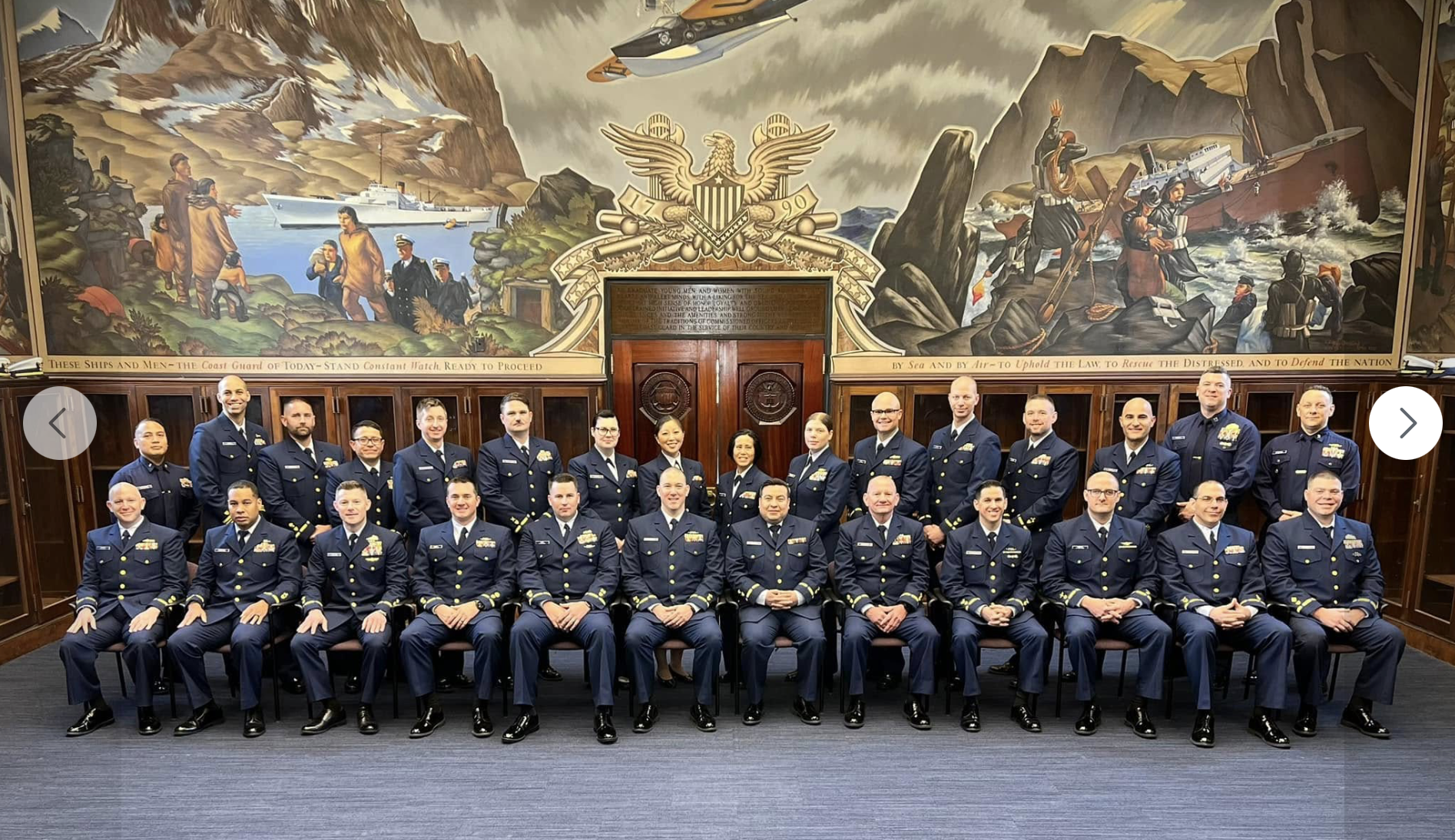
The crew members from Coast Guard Cutter Venturous pose before preparing to offload a pallet of illegal narcotics at Coast Guard Base Miami Beach, May 2, 2025. The seized contraband was the result of four interdictions in the Caribbean Sea by the crews of USCGC Diligence (WMEC-616) and HNLMS Groningen (P843) with an embarked Coast Guard law enforcement detachment. (U.S. Coast Guard photo by Petty Officer 3rd Class Jessica Walker)
For a number of reasons the boundaries between Atlantic and Pacific Areas should be realigned so that the entire 4th Fleet / SOUTHCOM AOR is included in the Atlantic Area AOR, making Atlantic Area responsible for drug interdiction operations conducted in the entire SOUTHCOM AOR.
Ideally SOUTHCOM should only have to talk to one Coast Guard Area Command. It would also allow Atlantic Area to make better decisions about where to allocate resources.
As it is, Atlantic Area must see the Eastern Pacific as a Pacific Area responsibility. They are a supporting command. First they have to look after their own area of responsibility before supporting Pacific Area. In consequence it is likely the assignment of Atlantic Area assets may be being sub-optimized.
The Eastern Pacific is a “target rich environment.” We have been told there are not enough ships to intercept all the known targets. More assets are required. Those assets can come only from Atlantic Area in the form of WMECs.
The Evidence:
I looked back over three months of US Coast Guard News drug offload and NSC / WMEC end of patrol reports to compare drug interdiction statistics from the Eastern Pacific with those from the Caribbean, Gulf, and Northwestern Atlantic waters (that I will refer to as Western Atlantic areas). Also included were750 pounds of cocaine worth $18.8M seized by a Canadian Navy vessel in the Caribbean. These figures do not include drugs interdicted by FRCs or sector units.
The differences were dramatic.
The street value of drugs interdicted in the Easter Pacific was 715% greater ($1,516.8M vs $186.1M).
The weight of drugs interdicted in the Eastern Pacific was 557% greater (146,304 pounds vs 22,270, some of the Atlantic Area contraband was marijuana rather than cocaine).
The number of individual interdictions in the Eastern Pacific was 223% greater (42 vs 13).
The weight of contraband of each interdiction in the Eastern Pacific is twice as large as those in the Western Atlantic areas, (3,483 pounds vs 1713).
During the period looked at, reports suggested that only three WMECs completed drug interdiction missions in the Western Atlantic areas while four WMECs completed Atlantic Area alien migrant interdiction operations.
Perhaps surprisingly, cutters in the Western Atlantic areas looking for drugs don’t intercept many migrants and cutters looking for migrants don’t find much in the way of drugs or even migrants. There were four WMEC patrols identified as looking for migrants. None of the four found any drugs. One intercepted no migrants. The three remaining patrols intercepted a total of 184.
While all the interceptions in the Eastern Pacific were made by Coast Guard vessels that was not the case on the Atlantic side. Six of the 13 interceptions were made by other agencies, three by a Netherlands Navy Offshore Patrol Vessel, two by a Navy Littoral Combat Ship, and one by a small Canadian Navy vessel.
The press releases reported the results of patrols by four NSCs and two WMECs in the Eastern Pacific. Of those six ships four were home-ported in Atlantic Area.
Notably the most successful Western Atlantic drug interdiction patrol, which accounted for six interceptions and 12,470 pounds, valued at $141M was made by USCGC Valiant, a small 210 foot cutter.
Given the greater endurance of the NSCs, their patrols would be longer than patrols by WMECs in the Western Atlantic areas, so we are looking at considerably more NSC/MEC drug interdiction ship days in the Eastern Pacific than in the Western Atlantic areas, but not enough to account for the differences.
Even if no Atlantic Area NSC/WMECs were assigned to conduct drug and alien interdiction in the Western Atlantic, those operations would continue using the large number of FRCs in the Atlantic Area (42) including 20 in D7 (Florida and Puerto Rico) alone and with the participation of partner agencies and allies in the drug interdiction effort. (There are only 15 FRCs in the Pacific Area; only four in California, and we have seen increased migrant activity on the West Coast.)
Geography:
Looking at competing demands for allocation of resources broadly, about 85 percent of the US EEZ is in the Pacific Area, almost half is in the 14th District. In addition, the Coast Guard has obligations to support the three Compact of Free Association States, all in the Western Pacific, each of which has large areas of EEZ.
It may be counter intuitive, but thanks to the Panama Canal, US East Coast port in the are Closer to the Eastern Pacific drug transit zones than West Coast US ports.
For example, Portsmouth VA is about 650 miles closer than San Diego. Charleston, SC is more than 1200 miles closer than Alameda, CA.
Probably for this reason, the US Navy includes all of South America in the Atlantic Fleet Area of Operations. Fourth Fleet, a component of Atlantic Fleet is SOUTHCOM’s Naval component.
The Coast Guard Area boundaries split 4th Fleet and SOUTHCOM AORs.
Assets available:
Atlantic Area has four NSCs and is expecting a fifth in Charleston. They are used primarily in the Eastern Pacific Drug transit zones.
Pacific Area has four NSCs in Alameda and two in Honolulu. These are employed for Alaskan fisheries patrols, countering Illegal, Unreported, Unreported fishing, and presence and capacity building in the Western Pacific.
Pacific Area has only three WMECs, one in the Pacific NW, one in Alaska, and one in Honolulu. None are likely to be used off Central and South America.
By contrast, even assuming two WMEC270s in the Coast Guard Yard for Service Life Extension Programs (SLEP) Atlantic area has 17 WMECs, 10 WMEC270s and seven WMEC 210s.
Conclusions:
The Atlantic Area AOR should include the entire SOUTHCOM/4TH FLEET AOR.
Atlantic Area should be the single point of contact with SOUTHCOM/4TH FLEET for drug interdiction operations.
Generally all cutters conducting drug interdiction in the Eastern Pacific should come from Atlantic Area including most if not all NSC and WMEC270 patrol time. WMEC 210s should be able to handle all Western Atlantic drug and migrant interdiction requirements for larger cutters.
All WMEC270s should patrol with helicopter and UAS detachments.
The news releases I looked at are linked and summarized below. The dates you will see in bold are the dates of the press releases. Not included was USCGC Calhoun (WMSL 759) seizure of approximately 10,000 pounds of cocaine, worth an estimated $74 million in the Atlantic Ocean, April 12-13, 2025, much closer to Africa than to the continental US.
May 2, 2025, The top photo is of an offload reported here: “Coast Guard offloads more than $14 million in illicit drugs interdicted in Caribbean Sea.”,
The seized contraband was the result of four interdictions in the Caribbean Sea by the crews of USCGC Diligence and HNLMS Groningen with an embarked Coast Guard law enforcement detachment.
Note this does not include any contraband interdicted by USCGC Venturous.
May 2, 2025, We also have this report, “Coast Guard Cutter Alert returns home after 55-day patrol to counter illegal fishing in Gulf of America.” I think some people might be surprised that a cutter completed a 55 day patrol in the Gulf and did not intercept any illicit drug trafficking.
April 30 2025, “Coast Guard offloads over $12 million in illicit drugs interdicted in Caribbean Sea.”
“U.S. Coast Guard Cutter Tampa’s crew ended Fleet Week Fort Lauderdale with the offload of approximately 3,750 pounds of cocaine and marijuana worth an estimated $12.3 million, Wednesday, at Port Everglades…The seized contraband was the result of two interdictions in the Caribbean Sea by the crew of USS Minneapolis-Saint Paul and their embarked Navy helicopter and Coast Guard law enforcement detachments.
Again the WMEC, USCGC Tampa, was offloading contraband seized by a partner rather than by the ship off loading the contraband.
April 24, 2025, “Coast Guard offloads more than $214 million worth of illegal cocaine in San Diego.”
The crew of the U.S. Coast Guard Cutter Kimball (WMSL 756) offloaded approximately 18,898 pounds of cocaine, with an estimated value of more than $214.3 million, on Thursday in San Diego…The offload is a result of six separate suspected drug smuggling vessel interdictions or events off the coasts of Mexico and Central and South America by the Coast Guard Cutter Kimball and Coast Guard Cutter Forward during the months of February through April.
April 22, 2025, “Coast Guard Cutter Seneca returns home after 54-day maritime border security patrol in the Windward Passage.”
While underway in the Windward Passage, Seneca’s crew interdicted an unsafe and illegal voyage with 99 aliens on board. A U.S. Customs and Border Protection – Air and Marine Operations aircrew initially detected the vessel. Seneca crew members launched a small boat, interdicting the voyage and transferring the aliens aboard Seneca before their repatriation to Haiti.
Apparently Seneca made no drug interdictions.
April 14, 2025, “Coast Guard Cutter Spencer returns home after Operation Vigilant Sentry patrol, service life extension upgrades.”
USCGC Spencer made neither drug nor alien interdictions.

USCGC James (WMSL 754) contraband interdicted during their 112-day deployment, April 8, 2025.
April 9, 2025, “Coast Guard Cutter James returns home after multi-month patrol, seizing $510M in narcotics and participating in advanced US Navy exercises.”
“The crew of U.S. Coast Guard Cutter James offloaded more than 44,550 pounds of cocaine and 3,880 pounds of marijuana valued at approximately $509.9 million in Port Everglades, Wednesday…This patrol resulted in 11 interdictions in the Eastern Pacific Ocean and the detainment of 34 suspected drug traffickers who were transferred ashore to face federal prosecution…’Over a remarkable 72-hour period, our crews interdicted six go-fast vessels and one low-profile vessel across the vast ocean, culminating in the extraordinary seizure of over 24,000 pounds of cocaine and 15 suspected narco-traffickers.'”
March 24, 2025, “Coast Guard Cutter Mohawk returns home after 70-day, counter-drug patrol in the Eastern Pacific Ocean.”
The three cocaine intercepts by Mohawk were included in the photo and Stone’s offload report immediately below.

Coast Guard offloads over $517.5 million in illicit drugs interdicted in Eastern Pacific Ocean
Crew members from USCGC Stone (WMSL-758) stand at parade rest in front of interdicted narcotics at Port Everglades, Florida, Mar. 20, 2025. The Stone’s crew secured the illegal drugs from 14 interdictions in the international waters of the Eastern Pacific. (U.S. Coast Guard photo by Petty Officer 2nd Class James Hague)
March 20, 2025, “Coast Guard offloads over $517.5 million in illicit drugs interdicted in Eastern Pacific Ocean.”
“The crew of U.S. Coast Guard Cutter Stone offloaded approximately 45,600 pounds of illicit narcotics worth more than $517.5 million at Port Everglades, Thursday.
The seized contraband was the result of 14 interdictions…” (by USCGC Stone and USCGC Mohawk–Chuck)
March 14, 2025, “Coast Guard Cutter Reliance returns home after 60-day maritime border security patrol.”
While underway, the crew assisted in the interdiction of 12 aliens attempting to reach the United States unlawfully by sea, including several young children. Crew members provided humanitarian aid and care until the aliens were repatriated to their country of origin.
No drug interdictions were reported.
March 6, 2025, “Coast Guard offloads over $141 million in illicit drugs interdicted in Caribbean Sea.”
U.S. Coast Guard Cutter Valiant’s crew offloaded approximately 12,470 pounds of cocaine, Thursday, worth an estimated $141.4 million at Coast Guard Base Miami Beach…The seized contraband was the result of six interdictions in the Caribbean Sea, and 17 suspected smugglers were transferred ashore to face federal prosecution in U.S. courts.
March 5, 2025, “Coast Guard Cutter Vigorous returns home after 46-day alien interdiction operations, maritime border security patrol.”
“The crew of the Coast Guard Cutter Vigorous (WMEC 627) returned to their homeport in Portsmouth, Wednesday, following a 46-day maritime border security patrol in the Florida Straits…Throughout the patrol, Vigorous’ crew interdicted, processed and repatriated more than 67 aliens attempting to enter the United States illegally, and transferred six suspected smugglers ashore to HSI custody to support further investigation for potential federal prosecution.”
The crew of the U.S. Coast Guard Cutter Waesche (WMSL 751) offloaded approximately 37,256 pounds of cocaine, with an estimated value of more than $275 million, on Thursday in San Diego…The offload is a result of 11 separate suspected drug smuggling vessel interdictions or events off the coasts of Mexico and Central and South America by the Coast Guard Cutter Waesche in December through February.
I also got this report from Marine Link.
On March 1, 2025, His Majesty’s Canadian Ship (HMCS) Harry DeWolf successfully assisted a United States Coast Guard (USCG) Law Enforcement Detachment (LEDET) in conducting a seizure of 750 kilograms of cocaine in the Caribbean Sea. This seizure, supported by Colombian air and maritime assets, has an estimated street value $18.8 million.
Where or when this contraband was landed is not clear.












 Chuck Hill's CG Blog