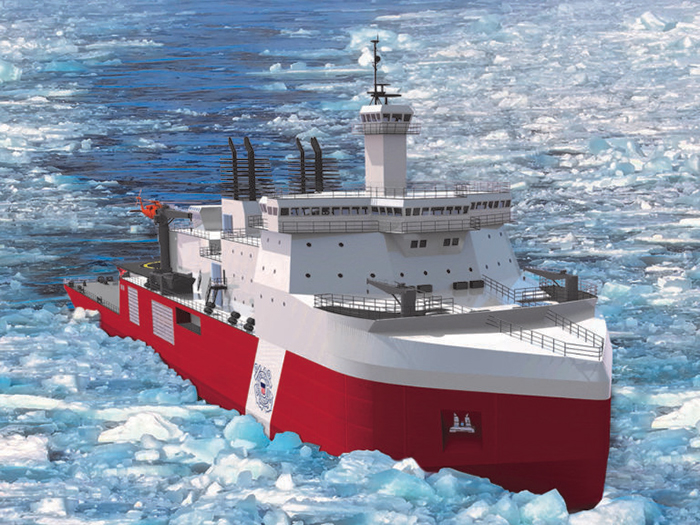
“Coast Guard Polar Security Cutter (Polar Icebreaker) Program: Background and Issues for Congress, Updated October 2, 2024” –CRS

USCG Polar Security Cutter [Image courtesy Halter Marine / Technology Associates, Inc.]

The Congressional Research Service has once again updated their look at the Polar Security Cutter (heavy icebreaker) program. Also included are looks at the Great Lakes and Commercial Icebreaker procurement efforts. (See the latest version here.)

I have reproduced the summary below.

The news here is that there is so little news.

  • Polar Security Cutter, “The Coast Guard’s proposed FY2025 budget requests no procurement funding for the PSC program.”
  • Commercially available Polar Icebreaker, “The Coast Guard’s proposed FY2025 budget requests no procurement funding for the CAPI program.”
  • Great Lakes Icebreaker, “The Coast Guard’s proposed FY2025 budget requests no procurement funding for the program.”
  • Arctic Security Cutter (the Medium Icebreaker), the PSC is “to be followed at some later point (emphasis applied–Chuck) by the acquisition of new Arctic Security Cutters (ASCs)…

GAO has been saying the Coast Guard cannot possibly build the Polar Security Cutters for the price currently contracted. The shipyard has been building some sample sections. I suspect that part of the reason is to find a more realistic estimate of how much they will cost. “If substantial cost growth occurs in the PSC program, it could raise a question regarding whether to grant some form of contract relief to the PSC shipbuilder.”

Note, there is still no publicly available information from the 2023 Fleet Mix study, other than the required number of icebreakers. Why not?


SUMMARY

Required number of polar icebreakers. A 2023 Coast Guard fleet mix analysis concluded that the service will require a total of eight to nine polar icebreakers, including four to five heavy polar icebreakers and four to five medium polar icebreakers, to perform its polar (i.e., Arctic and Antarctic) missions in coming years.

Current operational polar icebreaker fleet. The operational U.S. polar icebreaking fleet currently consists of one heavy polar icebreaker, Polar Star, and one medium polar icebreaker, Healy. A second Coast Guard heavy polar icebreaker, Polar Sea, suffered an engine casualty in June 2010 and has been nonoperational since then. Polar Star and Polar Sea entered service in 1976 and 1977, respectively, and are now well beyond their originally intended 30-year service lives. The Coast Guard plans to extend Polar Star’s service life until the delivery of at least the second Polar Security Cutter (PSC; see next paragraph).

Polar Security Cutter (PSC). The Coast Guard Polar Security Cutter (PSC) program aims to acquire four or five new PSCs (i.e., heavy polar icebreakers), to be followed at some later point by the acquisition of new Arctic Security Cutters (ASCs) (i.e., medium polar icebreakers). The Coast Guard in 2021 estimated PSC procurement costs in then-year dollars as $1,297 million (i.e., about $1.3 billion) for the first ship, $921 million for the second ship, and $1,017 million (i.e., about $1.0 billion) for the third ship, for a combined estimated cost of $3,235 million (i.e., about $3.2 billion). The PSC program has received a total of about $1,731.8 million in procurement funding through FY2024. The Coast Guard’s proposed FY2025 budget requests no procurement funding for the PSC program. One oversight issue concerns the accuracy of the PSC’s estimated procurement cost, given the PSC’s size and internal complexity as well as cost growth in other Navy and Coast Guard shipbuilding programs. If substantial cost growth occurs in the PSC program, it could raise a question regarding whether to grant some form of contract relief to the PSC shipbuilder. Another oversight issue concerns the delivery date for the first PSC: the Coast Guard originally aimed to have the first PSC delivered in 2024, but the ship’s estimated delivery date has been delayed repeatedly and may now occur no earlier than 2029.

Commercially available polar icebreaker (CAPI). The Coast Guard’s proposed FY2024 budget requested, and the FY2024 Department of Homeland Security (DHS) Appropriations Act (Division C of H.R. 2882/P.L. 118-47 of March 23, 2024) provided, $125.0 million in procurement funding for the purchase of an existing commercially available polar icebreaker (CAPI) that would be modified to become a Coast Guard medium polar icebreaker. The ship the Coast Guard intends to purchase and modify is Aiviq, a U.S.-registered ship that was originally built to serve as an Arctic oil-exploration support ship, and which has an icebreaking capability sufficient for the ship to serve following modification as a Coast Guard medium polar icebreaker. The Coast Guard’s proposed FY2025 budget requests no procurement funding for the CAPI program. The Coast Guard’s FY2025 Unfunded Priorities List (UPL) includes an item for $25.0 million in procurement funding for the ship.

Great Lakes icebreaker (GLIB). The Coast Guard’s FY2024 budget initiated a program for procuring a new Great Lakes icebreaker (GLIB) that would have capabilities similar to those of Mackinaw, the Coast Guard’s existing heavy GLIB. The FY2024 DHS Appropriations Act (Division C of H.R. 2882/P.L. 118-47 of March 23, 2024) provided $20.0 million in procurement funding for the GLIB program. The Coast Guard’s proposed FY2025 budget requests no procurement funding for the program. The Coast Guard’s FY2025 UPL includes an item for $25.0 million in procurement funding for the program.

This Day in Coast Guard History, October 6

Based on the Coast Guard Historian’s timeline, https://www.history.uscg.mil/research/chronology/
With inspiration from Mike Kelso

October 6

1881  At daylight the crew of Station No. 1, First District (Carrying Point Cove, West Quoddy Head, Maine), sighted a schooner at anchor some four miles east-southeast of the station.  She did not appear to be in distress, and as no signal was made it was supposed she had simply anchored to await the abatement of the winds, which at the time was blowing strong from the northwest.  The keeper ordered a close watch on the schooner, in case she should signal for assistance.  At 11 a .m. the lookout observed a boat leave her side and attempt to reach land, but the gale was too much for it and the effort had to be abandoned.  The boat returned to the schooner.  Upon arriving alongside, the keeper found the schooner to be Eclipse, of Eastport, Maine and that she had encountered a heavy squall the afternoon previous. It had split her sails and started her leaking badly.  In this condition they had anchored her during the night, about two miles from the land, her crew, three in number, being almost exhausted by their efforts to keep her free.  The life-saving crew at once turned to and pumped her out and made temporary repairs on the sails, and then worked her up into a safe harbor.

Astronaut Commander Bruce E. Melnick, USCG

1990  NASA astronaut and Coast Guard CDR Bruce Melnick (Academy class of 1972) made his first space flight when he served as a Mission Specialist aboard the space shuttle Discovery on Space Shuttle Mission STS-41, which flew from CDR Bruce Melnick October 6-10, 1990.  Discovery deployed the Ulysses spacecraft for its five-year mission to explore the polar regions of the sun.  CDR Melnick was the first Coast Guardsman selected by NASA for astronaut training.

STS-41 Discovery — October 1990 — Mission Specialist 1 — Ulysses/Inertial Upper Stage solar probe deployment
STS-49 Endeavour — May 1992 — Mission Specialist 2 — Intelsat VI hand-retrieval and repair

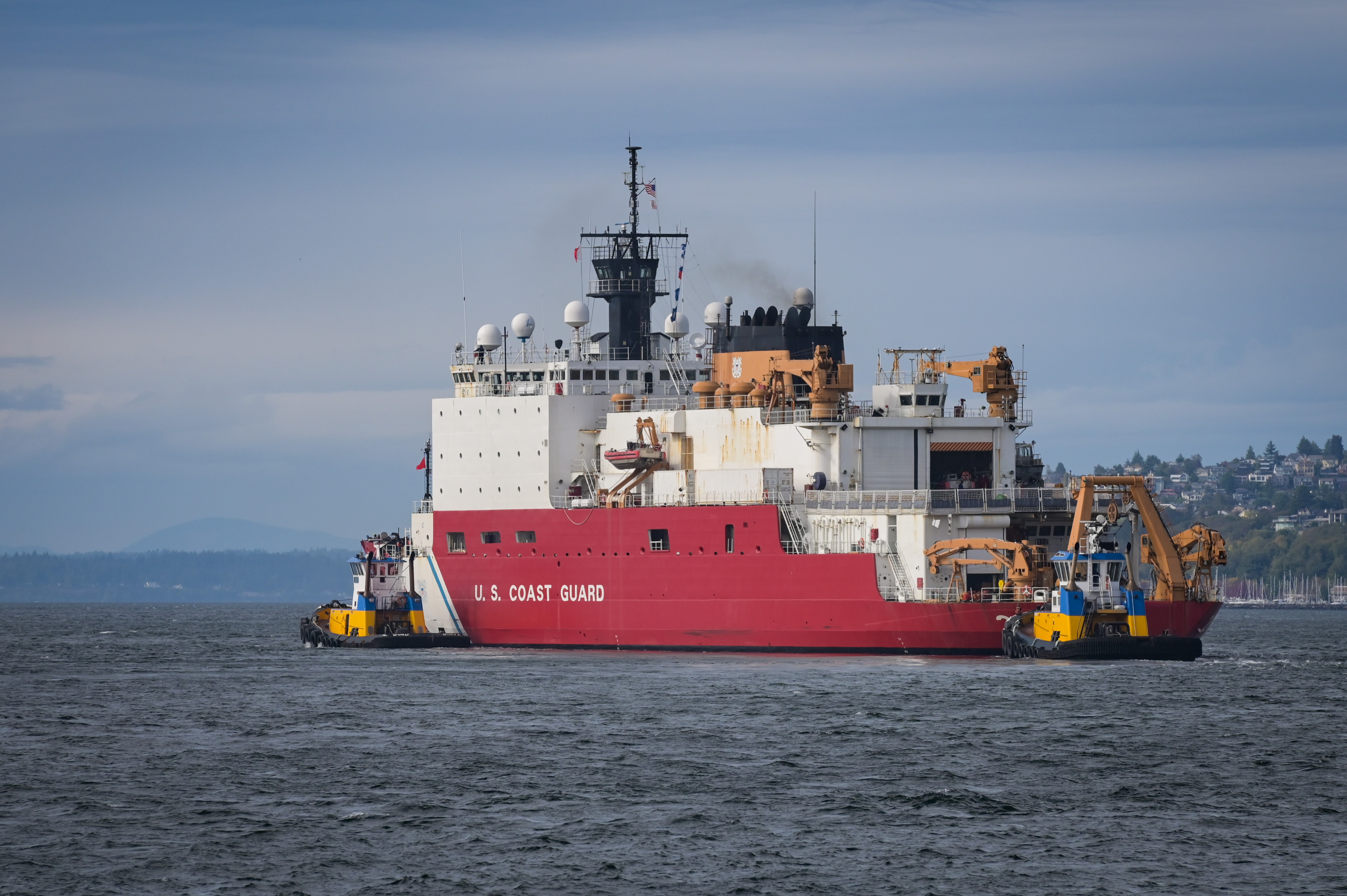
“U.S. Coast Guard Cutter Healy departs Seattle for fall 2024 Arctic deployment” –CG News

U.S. Coast Guard Cutter Healy (WAGB 20) transits with assist tugs through Elliott Bay near Seattle following its departure from Base Seattle, Oct. 1, 2024. The crew of the Healy are scheduled to resume their scientific mission that was cut short due to an onboard fire in late July. (U.S. Coast Guard photo by Petty Officer 1st Class Steve Strohmaier)

Below is a Coast Guard New release. (More photos at the link.)

Oct. 2, 2024

SEATTLE — U.S. Coast Guard Cutter Healy (WAGB 20) departed Seattle Tuesday, beginning their months-long Arctic deployment. Healy’s earlier science mission was cut short due to an onboard electrical fire. The Healy returned to Seattle for a thorough inspection and repairs.

The crew will support scientists conducting three distinct science missions during Healy’s fall 2024 Arctic deployment. Other science of opportunity across a broad spectrum of disciplines will also be supported as time and weather allow.

The first mission supports the Arctic Port Access Route Study (PARS). During this mission, the cutter will perform bathymetric mapping in the Chukchi and Beaufort Seas. The Coast Guard has initiated an Arctic PARS to analyze current vessel patterns, predict future vessel needs, and balance the needs of all waterway users by developing and recommending vessel routing measures for the Arctic. The Arctic PARS may lead to future rulemaking or international agreements that consider coastal communities, fishing, commercial traffic, military needs, resource development, wildlife presence and habit, tribal activities, and recreational uses.

For the second mission, Healy will embark 20 early career polar scientists and their mentors on an Arctic Chief Scientists Training Cruise sponsored by the National Science Foundation and University-National Oceanographic Laboratory System. These early career scientists will conduct multidisciplinary research, including mapping to fill critical bathymetric gaps and scientific sampling across various disciplines, in addition to developing skills in shipboard leadership, coordination, and execution.

The final mission of the deployment will support other science of opportunity to include sea floor mapping for the National Oceanic and Atmospheric Administration Office of Coast Survey.

“We are thrilled to support numerous diverse research objectives in the northern polar region this fall. In an era of increasing vessel traffic, our work will contribute to navigation safety in a region where existing soundings are sparse,” said Capt. Michele Schallip, Healy’s commanding officer. “We are elated to have been able to reschedule our opportunity to help inspire future principal investigators in the Early Career Scientist mission. Healy’s crew, port engineering staff, and General Electric Verona worked diligently during our inport to ensure the cutter is ready to safely operate in the remote, unforgiving Arctic environment.”

Healy is the United States’ largest polar icebreaker and the Coast Guard’s only icebreaker explicitly designed to support Arctic research. The platform is ideally specialized for scientific missions, providing access to the most remote reaches of the Arctic Ocean. Healy is designed to break 4.5 feet of ice continuously at three knots and can operate in temperatures as low as -50 degrees Fahrenheit.

New Offshore Patrol Vessels for Italy

Below is a Fincantieri news release reporting steel has been cut for the first of a new class of Offshore Patrol Vessels for the Italian Navy.

Unlike the US, France, and the UK, Italy has no overseas territories. Their Exclusive Economic Zone is less than 1/22 the size of that of that of the US or France. Even so, they have 13 ships they classify as Offshore Patrol Vessels. Three of them are large at over 5,800 tons full load. (Seven more of these are planned.) In most navies they would be classified as frigates. The other ten are very different, about 1500 tons full load, and 80 (262′) to 89 meters (291′) in length, displacing about 300 tons less than a WMEC270.

Global data reports, “These four new OPVs will replace numerous warships still in service; some, such as the Lerici-class minehunters, have been in use for nearly 40 years…” There are twelve Lerici class, divided into two groups. The first four were commissioned in 1985, about seven years earlier than the remaining eight. Two of the first four were placed in reserve in 2012. Are the minehunters being used as patrol vessels or will the new ships have a minehunting capability? It is not clear if the new OPVs have provision for a stern ramp or for containerized mission modules.

The new ships are 2,400 tons full load and about 95 meters (312′), in length overall, so about 60% larger than what we might see as their existing medium endurance OPVs. Army Recognition’s Navy News reports that the new class is “equipped with a CODLAD (Combined Diesel-electric and Diesel) propulsion system, enabling speeds over 24 knots, with a range of 3,500 nautical miles at 14 knots.

The range is short by US Coast Guard standards, but Italian vessels don’t have the long transits US Coast Guard cutters have going to Alaska, the Eastern Pacific drug transit zone, or to the Western Pacific, and it might not be that bad after all. The Coast Guard gets a lot of long distance work out of the 154 foot fast response cutters that have a range of only 2,500 miles. 3500 miles at 14 knots suggests a 5,000 mile range at ten knots. A CODLAD power plant means these ships are likely to be very fuel efficient at slow speeds.

These ships, like the much larger Thaon di Revel class will have an “Integrated Naval Cockpit” in which the pilot and copilot (I think that means Officer of the Decky and Quartermaster of the Watch) have seated positions from which to control helm, throttles, and other systems including some forms of radar, navigation, communications and combat system functions. The captain will have a similar position behind the pilot and copilot.

Naval Cockpit, Commander sits behind the Pilot and Copilot. Source: Leonardo.

Notably, this class is being built by Fincantieri, owner of Fincantieri Marinette Marine which is currently building the new Constellation class FFGs for the Navy. They also built the Freedom class LCSs, the Juniper class WLBs, the Keeper class WLMs, and USCGC Mackinaw.


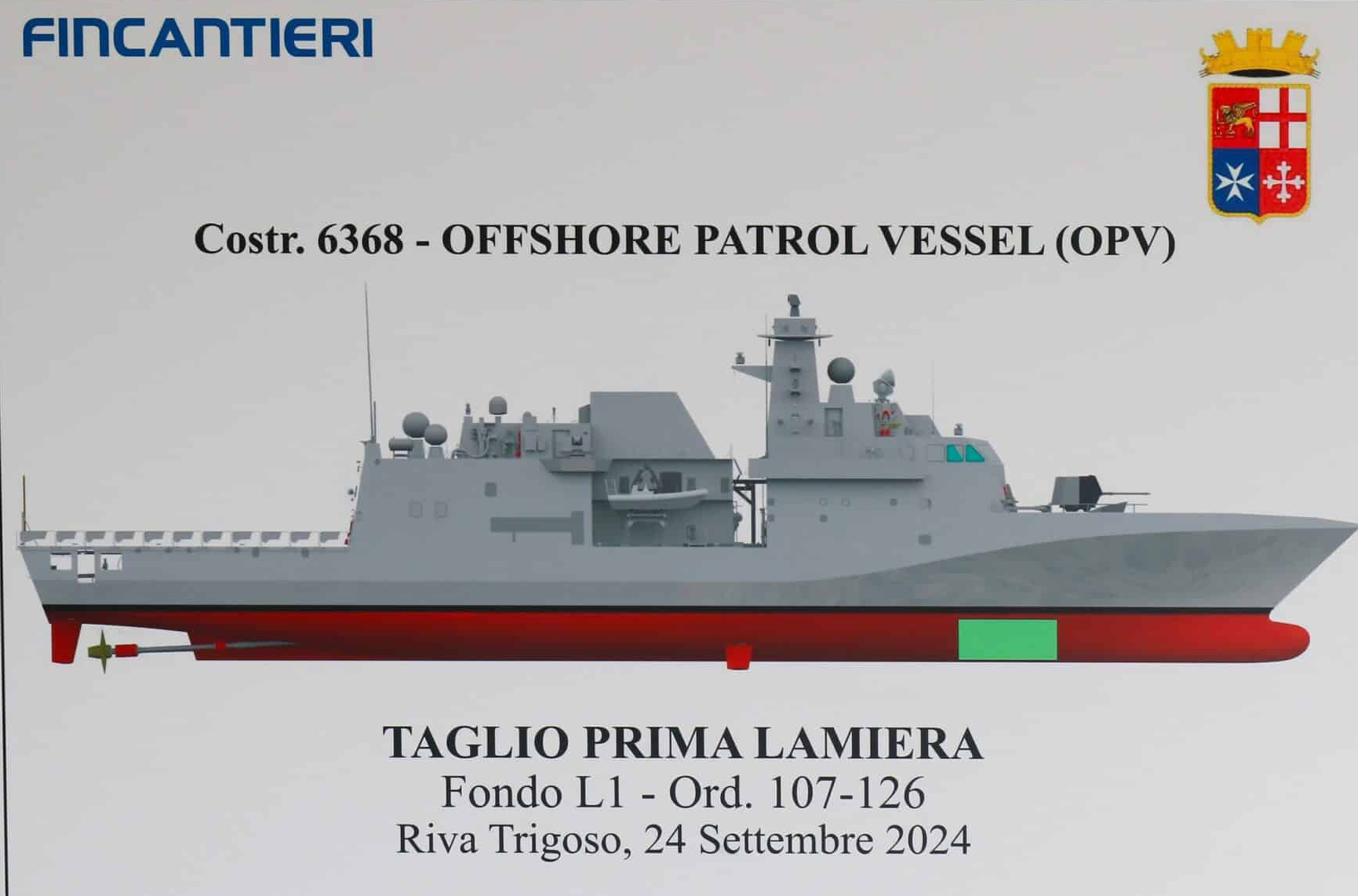
Fincantieri: works start on the first next-generation Offshore Patrol Vessel for the Italian Navy

24 September 2024

The steel cutting ceremony for the first of four next-generation Offshore Patrol Vessels (OPVs) that Fincantieri will build for the Italian Navy took place today at the Riva Trigoso shipyard (Genoa).

The ceremony was attended, among others, by the General Manager of Fincantieri’s Naval Vessels DivisionDario Deste, the Director of the Naval Armaments Directorate – NAVARMAdmiral Chief Inspector Giuseppe Abbamonte, and the CEO of Orizzonte Sistemi NavaliGiovanni Sorrentino.

This program, put in place to contribute to the modernization and renewal of the Italian Navy’s units, envisages the construction of four vessels, with an option for additional two, with the first delivery scheduled for 2027. The overall value of the first four ships, contracted by Orizzonte Sistemi Navali (OSN), a joint venture owned by Fincantieri (51%) and Leonardo (49%), is approximately 1.2 billion euros, including the related logistical support.

The OPV program responds to the need to ensure adequate capabilities for presence and surveillance, maritime patrolling, merchant traffic control, protection of lines of communication and the exclusive economic zone, as well as operations to protect against threats derived from marine pollution, such as toxic liquid spills.

With a length of about 95 meters long, a displacement of 2,400 tons and the capacity to accommodate 97 crew members on board, these new patrol vessels will be marked by a package of technological solutions, as well as standards of excellence in automation and maneuverability, that will make them suitable for operating in a wide range of tactical scenarios and weather conditions.

Among the most innovative features is the integrated naval cockpit, developed for the Italian Navy’s Multipurpose Offshore Patrol Vessels (PPAs), co-produced by Fincantieri NexTech and Leonardo. This represents a generational leap, allowing the control of engines, rudders, and platform systems, as well as some combat system functions, by just two operators – pilot and co-pilot – thus optimizing efficiency and safety.

The OPV program marks a major achievement for Fincantieri, further strengthening its position as a global leader in naval defense with its FCX product range, which includes these new patrol vessels. This project not only reinforces the company’s strategic role as a partner of the Italian Navy, but also deepens its collaboration with Leonardo through Orizzonte Sistemi Navali, showcasing Italy’s expertise in defense and in advanced naval integration.

“European navies chase the white whale of torpedo-busting torpedoes” –Defense News

Defense News reports on the progress, or lack of progress, on the European SeaSpider anti-torpedo torpedo.

I think my post “What Does It Take to Sink a Ship” may have been quoted,

“Torpedoes have historically been one of the main threats to surface vessels, with the weapon involved in more than half of sinkings of U.S. Navy ships during World War II, according to U.S. Coast Guard data cited by Dutch researchers at TNO, a government-linked research organization.”

My summary data on 92 sinkings of major US Navy surface warships during WWII was,

  • 38 by torpedoes alone (41.3%)
  • 16 by suicide planes (17.4%)
  • 12 Bombs alone (13%)
  • 11 by gunfire alone (12%)
  • 6 by torpedoes and gunfire (6.5%)
  • 5 by mines (5.4%)
  • 4 by torpedoes and bombs (4.3%)
  • 1 by bombs finished off by gunfire (1.1%)

As can be seen, torpedoes were involved in 48 of the 92 sinkings (52%).

With so little apparent progress on the European system I wonder if they are waiting to see if the Very Light Weight Torpedo, also called the Compact Rapid Attack Weapon (CRAW), will be successful as an anti-torpedo torpedo.

Unfortunately, I have not heard anything about the CRAW since early 2023 when Raytheon was awarded a contract to build 18 prototypes for use on submarines.

“Indonesia Launches Two Domestically Built 98-metre OPV” –Naval News

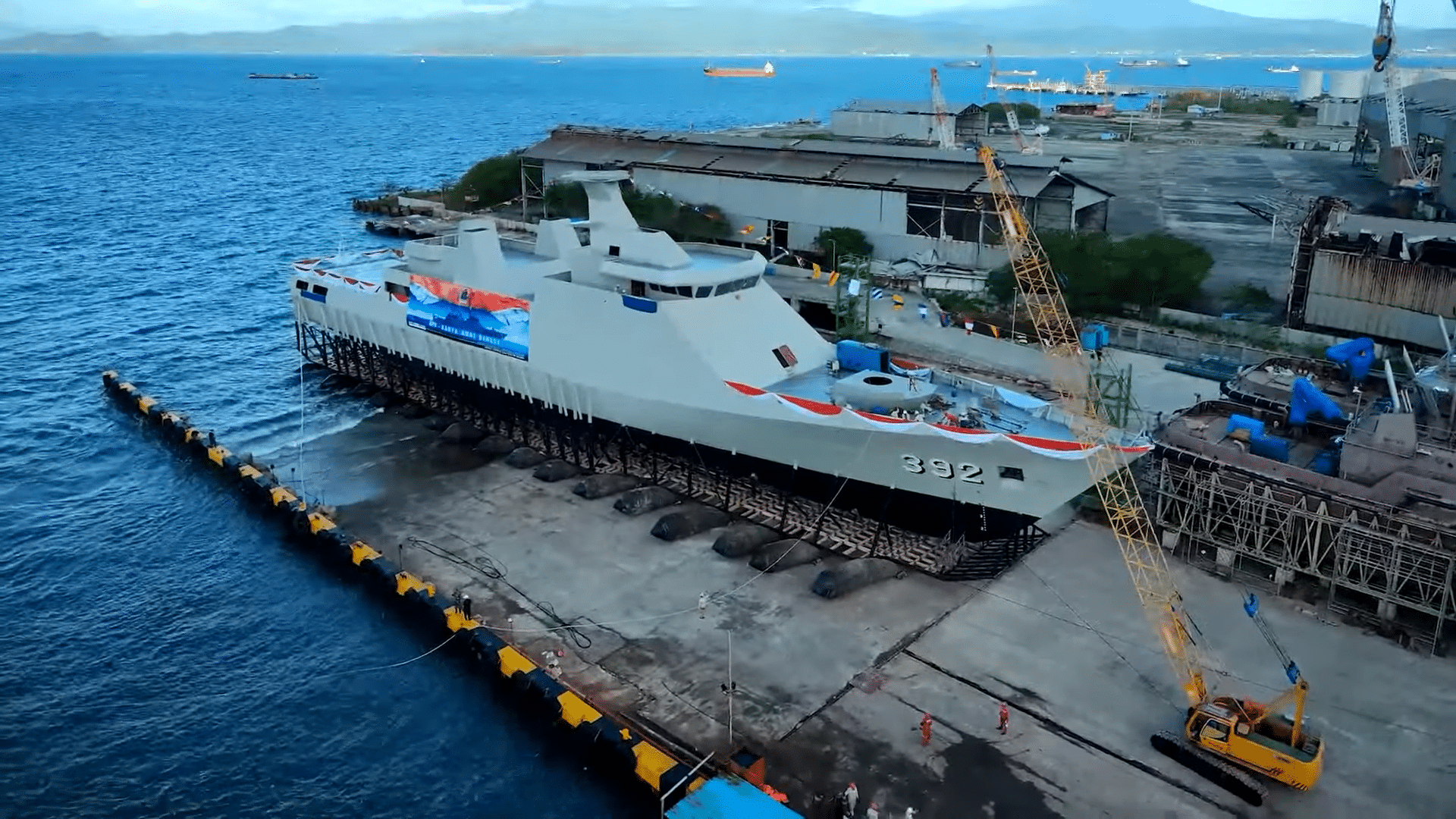
Indonesian Navy 98-metre OPV, KRI Lukas Rumkorem (392). Indonesian MoD picture.

Naval News reports Indonesia is completing two new 321 foot Offshore Patrol Vessels that are equipped like light frigates,

The Indonesian Navy (TNI AL) witnessed the launch of two of its future offshore patrol vessels (OPVs)…The first vessel, KRI Raja Haji Fisabilillah (391), was launched on September 18, while the second ship, KRI Lukas Rumkorem (392), followed on September 20….the two identical OPVs have a length of 98 metres and a width of 13.5 metres. The ships are capable of reaching a maximum speed of 28 knots, with a cruising speed of 20 knots.

“TNI AL revealed that both OPVs would be armed with Leonardo 76mm and 40mm guns, Escribano 20mm guns, Roketsan 2×4 Surface to Surface Missile Launcher System, and torpedo launchers.” (I added link found in this quote–Chuck)

These ships look like a Damen design, but there is no indication that is the case, and it doesn’t correspond to any of Damen’s designs. Indonesia has two classes of Damen designed warships, four corvettes and two light frigates, that may have influenced the design.

Wikipedia reports the ships are powered by four diesel engines. These are the same type of 7,280 kW (9,760 hp) MTU/Fairbanks Morse 16V28/33D STC diesel engines used in the Offshore Patrol Cutter (OPC). The Indonesian OPVs use four engines while the OPC uses only two.

Significantly the anti-ship cruise missiles are from Turkey rather than China, a previous supplier.

Indonesian 45.5 meter Patrol Vessels KRI Butana and KRI Selar. TNI AL picture.

The Naval News report also indicates that Indonesia has also recently acquired two 149 foot vessels similar to the Fast Response Cutters (pictured above).

“…on September 5, the service welcomed two new PC-40-class patrol boats, KRI Butana (878) and KRI Selar (879) …Armed with MSI-DS Seahawk LW30M guns (the 30mm Mk38 Mod4 in US service–Chuck), the two PC-40 vessels…are 45.5 metres long and 7.9 metres wide. They can achieve a maximum speed of 24 knots and a cruising speed of 17 knots…each with a crew of 35…”

“2024 Military Pay Charts” –Military.com

Photo By Petty Officer 3rd Class Kate Kilroy | U.S. Coast Guard Chief Petty Officer Jenarius St. Louis, a crew member assigned to USCGC Legare (WMEC 912), holds his son at the unit’s return to home port, July 13, 2023, at Coast Guard Base Portsmouth. While underway, Legare’s crew conducted maritime safety and security missions while working to detect, deter and intercept unsafe and illegal maritime migration ventures bound for the United States. (U.S. Coast Guard photo by Petty Officer 3rd Class Kate Kilroy)

Military.com has published a post that includes pay charts along with supplemental information. You can find it here.

Japan is to Build World’s Largest Coast Guard Vessel

Conceptual rendering of an MMPV in JCG colors. Japan Coast Guard image.

Naval News reports, “Japan Coast Guard will build the biggest patrol vessel in its history.”

To call this ship a “patrol ship” is misleading. It is unarmed. I don’t expect it to do much patrolling. At 199 meters (673′) in length and displacing 30,000 gross tons, it would be very uneconomical.

It will be more like a mobile base for response to high profile incidents including war, natural disaster, or major public events.

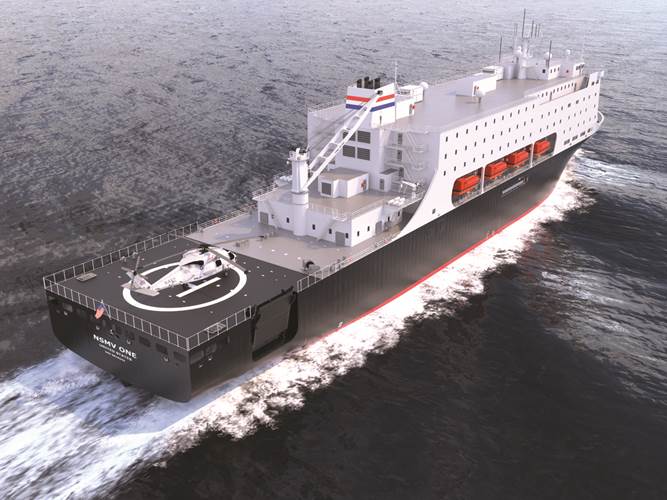
National Security Multi-Mission Vessel (NSMMV)

The US has no direct counterpart, but there are parallels in the National Security Multi-Mission Vessels (NSMMV) which will serve as training ships for the five State Maritime Academies (SMA) but are also expected to be available to respond to Natural Disasters. There are also similarities to the Expeditionary Sea Base program.

Does the US Coast Guard need a comparable capability? If so, we might look at adapting the NSMMV, small crew, part time training ship for the CG academy, part time mother ship for distant operations, ready for disaster response.

60 Minutes Report From the South China Sea

Reporters from CBS’s 60 Minutes got to see up close what the Philippines is dealing with in the South China Sea.

This is at least the second time a Philippine Coast Guard cutter has been intentionally rammed by the China Coast Guard.

The story also includes discussion with Philippine Military leaders and discussion of potential US involvement.