“Coast Guard starts fourth phase of work to extend Polar Star’s service life” –CG-9

Below is a news release from the Acquisitions Directorate (CG-9).


Coast Guard starts fourth phase of work to extend Polar Star’s service life
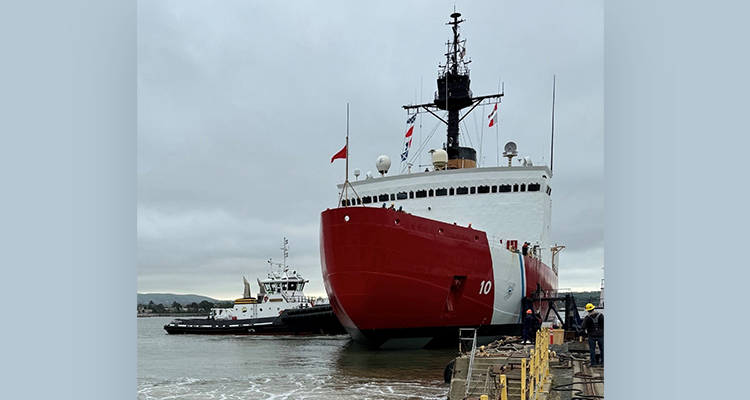
Coast Guard Cutter Polar Star docks at Mare Island Dry Dock in Vallejo, California, on April 3, 2024, for the fourth phase of its service life extension program. U.S. Coast Guard photo.


The Coast Guard has initiated the fourth of five planned phases of Coast Guard Cutter Polar Star’s service life extension program (SLEP). The work is part of the In-Service Vessel Sustainment Program and is being completed at Mare Island Dry Dock in Vallejo, California.

The SLEP is being conducted in phases to take advantage of the planned maintenance availabilities that follow the cutter’s annual deployment to the polar regions. Polar Star completed a 138-day deployment to Antarctica, including operating for 51 days below the Antarctic Circle, in support of Operation Deep Freeze 2024, the annual joint military logistics mission to support the National Science Foundation, the lead federal agency with responsibility for management of scientific research that comprises the U.S. Antarctic Program. Polar Star and crew contribute to this yearly effort through icebreaking to clear the channel for supply vessels.

Phase 4 work began on April 1, 2024, and targets three systems:

  • The heating, ventilation and air conditioning system is undergoing a refurbishment/overhaul of the ventilation trunks, fans and heaters that supply berthing areas of the ship.
  • All of the boiler support systems will be recapitalized/redesigned, including the electrical control station that is used to operate them.

A complete recapitalization/redesign of the flooding alarm system will occur from bow to stern to monitor machinery spaces for flooding.
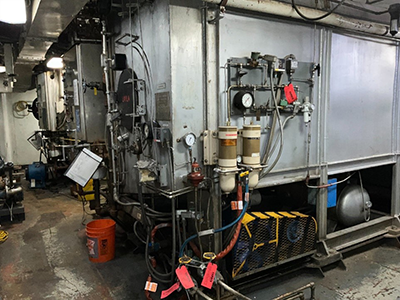
The boiler system of Coast Guard Cutter Polar Star, which will receive a recapitalization/redesign. U.S. Coast Guard photo.
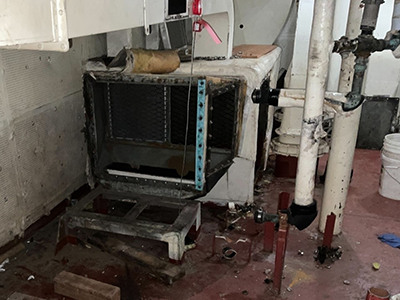

A section of the heating, ventilation and air conditioning system, which is undergoing a refurbishment/overhaul of the ventilation trunks, fans and heaters that supply berthing areas of the ship. U.S. Coast Guard photo.


This phase of the SLEP is scheduled to be completed by August 2024 to enable Polar Star to meet its commitment to Operation Deep Freeze 2025.

The Polar Star SLEP addresses targeted systems such as propulsion, communication and machinery control systems for recapitalization. Major maintenance extends the service life of Polar Star beyond that of its original design. By replacing obsolete, unsupportable or maintenance-intensive equipment, the Coast Guard is mitigating the risk of lost operational days due to unplanned maintenance or system failures. The contracted SLEP work items and recurring maintenance is taking place within a five-year, annually phased production schedule running from 2021 through 2025.

Polar Star is the Coast Guard’s only active heavy polar icebreaker. The Coast Guard is investing in a new fleet of polar security cutters that will sustain the service’s capabilities to meet mission needs in both the Arctic and Antarctic regions.

For more information: In-Service Vessel Sustainment Program page and Polar Security Cutter Program page.
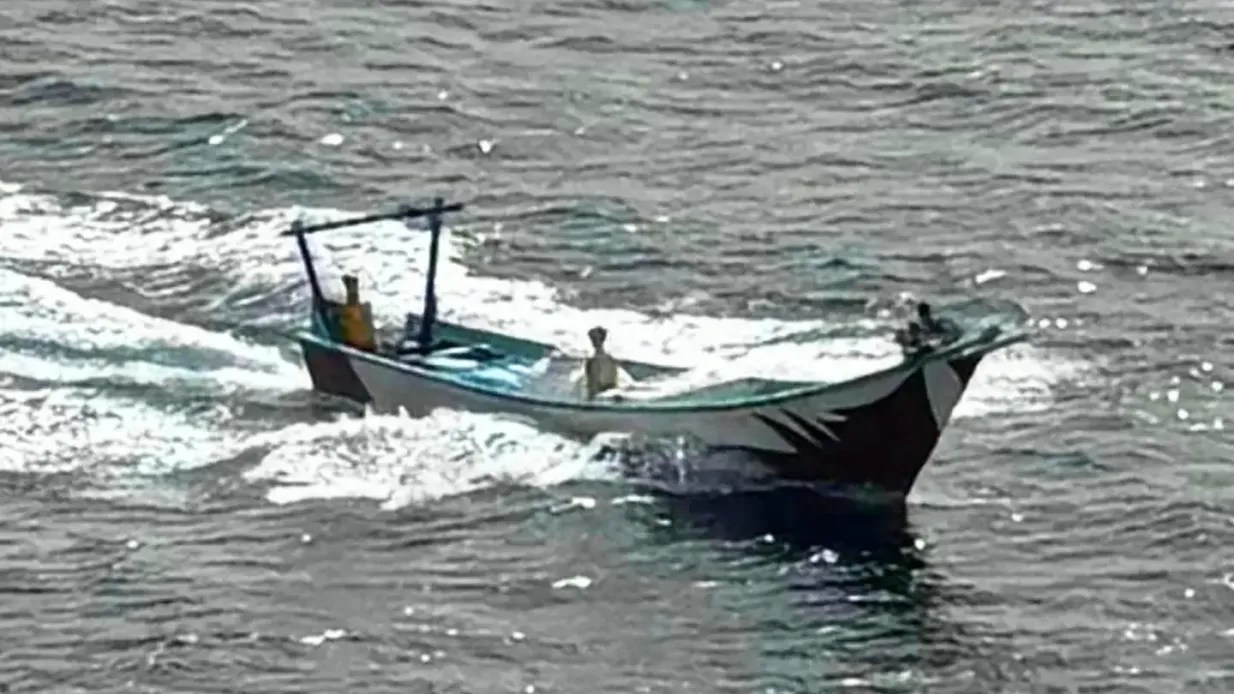
“First Look At Houthi Kamikaze Drone Boat That Struck Cargo Ship In Red Sea” –The War Zone

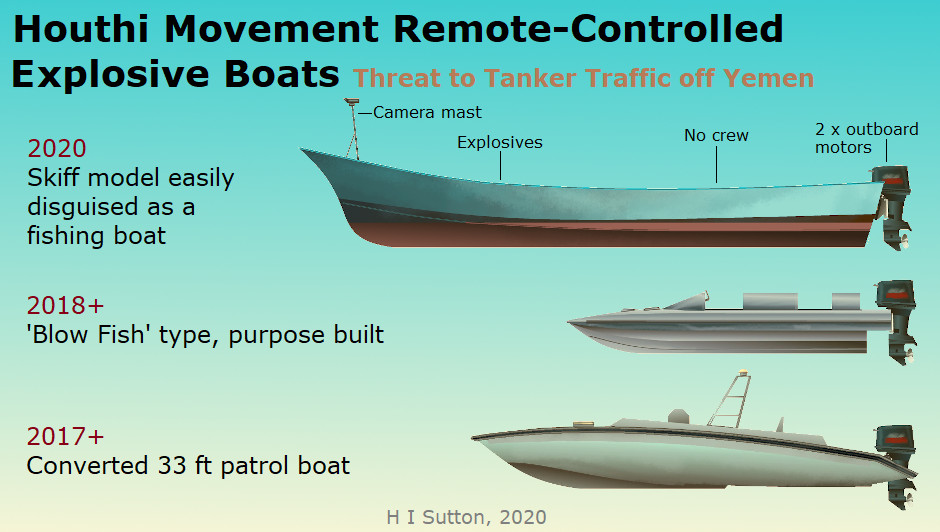
Houthi Kamikaze Drone Boat That Struck Cargo Ship in Red Sea, peopled with dummies. 

The War Zone reports,

“The Houthi’s crude uncrewed surface vessel…featured human dummies and approached the ship while security took no defensive action.”

While the Houthi have made several attempts to use kamikaze Unmanned Surface Vessels, this is their first successful in a long time. Deception was the key to success. The attack craft was not small, fast, or highly maneuverable. The attack was not made under cover of darkness. It just looked like all the other local traffic. There is probably a lesson here.

“Coast Guard accepts 57th fast response cutter, Florence Finch–This Women Really Deserved to Have a Cutter Named After Her

Coast Guard Cutter Florence Finch, the service’s 57th fast response cutter, was accepted in Key West, Florida, on June 13, 2024. After the cutter is commissioned into service, it will be homeported in Astoria, Oregon. U.S. Coast Guard photo by Petty Officer 1st Class Brandon Giles

Below is a news release.


The Coast Guard accepted delivery of the 57th fast response cutter (FRC), Florence Finch, June 13 in Key West, Florida. Florence Finch will be the second FRC to be homeported in Astoria, Oregon.

Florence Finch was one of the first Asian-American women to don a Coast Guard uniform, joining the Coast Guard’s Women’s Reserve (SPARs) in 1945. Finch was born in Santiago, Philippines, in 1915 to an American father and Filipino mother. After completing school, Finch worked at the Army/Navy YMCA and later in the office of the assistant chief of staff (Intelligence) for the U.S. Army in Manila, where she assisted Lt. Col. Edward Engelhart. Finch married U.S. Navy Chief Petty Officer Charles Smith in 1941, just prior to the start of World War II. Smith, a crew member on a Navy PT boat, was killed in action in 1942.

Finch was in Manila when the Japanese military invasion and subsequent occupation of the Philippines began in 1941. Though Finch’s father was a U.S. veteran of the Spanish-American War, she concealed her American connections to avoid imprisonment. Finch was eventually given a job managing fuel distribution vouchers from a Japanese-controlled fuel company. Finch used this position to secretly supply Philippine resistance forces with fuel and assist them in sabotaging Japanese military supplies. Finch also managed to remain in contact with Engelhart, her former U.S. Army supervisor who was by that time a Japanese prisoner of war. Engelhart described to Finch the dire conditions to which prisoners of the occupation were subjected. Finch became instrumental in smuggling food and medicine into the prison camps. In 1944, Finch was caught and arrested for her activities; she endured torture and received a sentence of three years of hard labor.

When Allied forces liberated the Philippines in 1945, Finch moved to New York to be closer to her American family members. Motivated by her experience in the Philippines and the wartime death of her husband, Finch enlisted as a SPAR soon after her arrival in the United States. When Finch’s Coast Guard leadership learned of her resistance activities in the Philippines, she was awarded the Asiatic-Pacific Campaign Ribbon, the first woman to be so decorated. Engelhart also testified to Finch’s actions, resulting in her being awarded the Medal of Freedom in 1947. Finch passed away in 2016 at the age of 101.

FRCs perform a multitude of missions that include drug and immigrant interdictions, joint international operations and national defense of ports, waterways and coastal areas. These cutters possess 21st century command, control, communications, computers, intelligence, surveillance and reconnaissance equipment, with improved habitability and seakeeping. Each FRC is named after an enlisted Coast Guard hero who performed extraordinary service in the line of duty.

The Coast Guard has ordered 67 FRCs to date. Fifty-five are in service: 13 in Florida; seven in Puerto Rico; six each in Bahrain and Massachusetts; four in California; three each in Alaska, Guam, Hawaii, Texas and New Jersey; and two each in Mississippi and North Carolina. In addition to Astoria, future FRC homeports include Kodiak and Seward, Alaska.

For more information: Fast Response Cutter Program page

“First female and first Latino to take the helm of Key West Joint military command” –Joint Interagency Task Force South

Below is a news release by Public Affairs Officer, Antonia Varner Joint Interagency Task Force South


 June 6, 2024

Change of Command

First female and first Latino to take the helm of Key West Joint military command

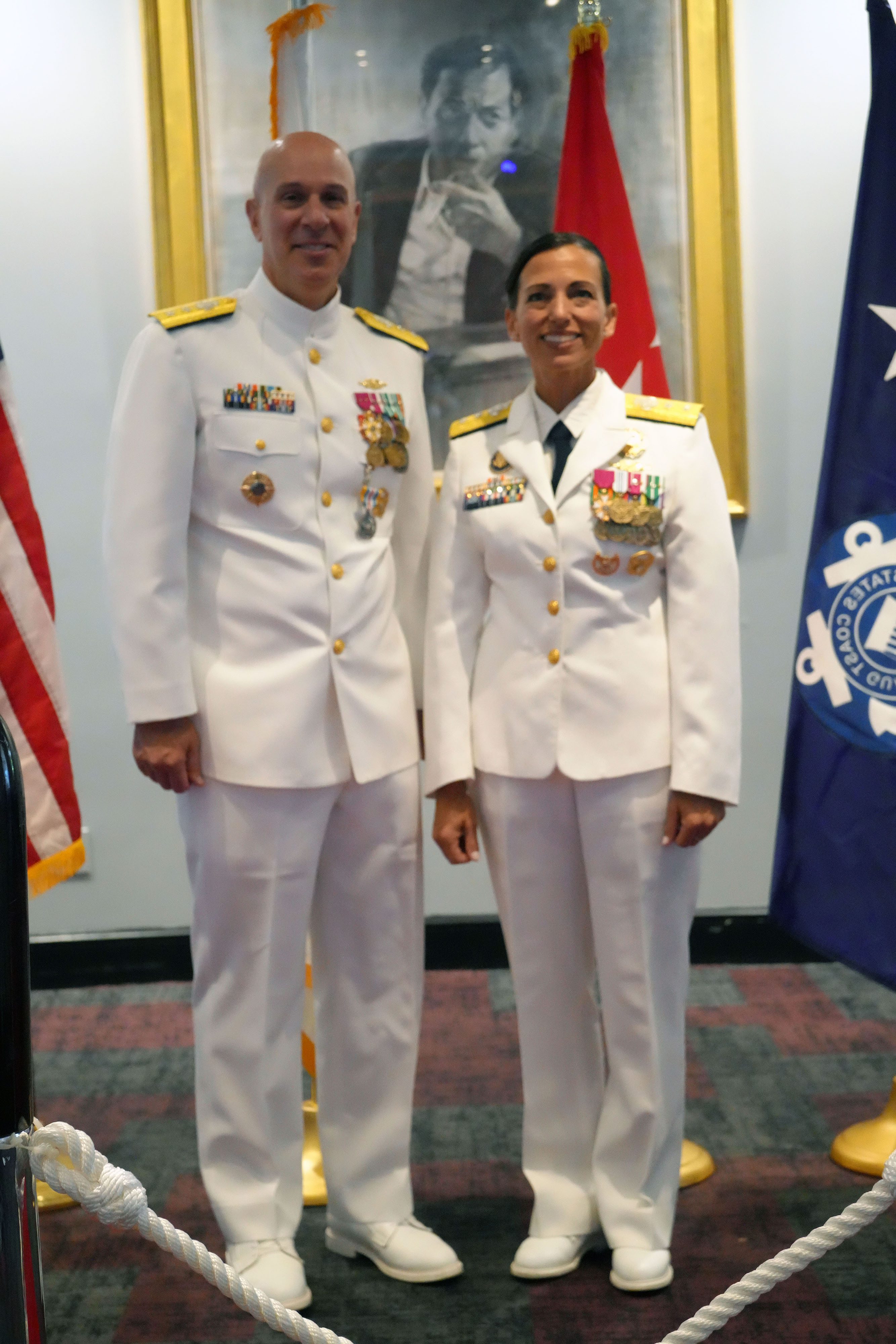
Coast Guard Rear Admiral Jo-Ann F. Burdian assumed command of Joint Interagency Task Force South (JIATFS) today, in a change of command ceremony at the Tennessee Williams Theater in Key West, FL. JIATFS is a U.S. Department of Defense entity that detects and monitors illegal drug trafficking in international waters and air within the Western hemisphere, in support of regional security.

Rear Admiral Burdian is the eighteenth director of the 35-year-old task force, the first female, and first latino assuming command from the previous JIATFS director, Coast Guard Rear Admiral Mark J. Fedor.

A native of Queens NY, Rear Admiral Burdian is a 1997 graduate of the U.S. Coast Guard Academy where she earned a Bachelor of Science in Government. She also holds a Masters in Public Administration from Florida State University. She has been awarded numerous personal, unit, campaign, and service awards.

The Change of Command ceremony was presided over by General Laura J. Richardson, Commander of U.S. Southern Command.

Joint Interagency Task Force South (JIATFS), organized under U.S. Southern Command (SOUTHCOM), conducts detection and monitoring operations throughout its joint operations area to facilitate the interdiction of illicit trafficking in support of national and partner nation security. For more information about JIATFS, visit http://www.jiatfs.southcom.mil. For more information about SOUTHCOM, visit: http://www.southcom.mil.

“From the Coast Guard to NASA: How Andre Douglas Became a Rarity Among Astronauts” –Military.com

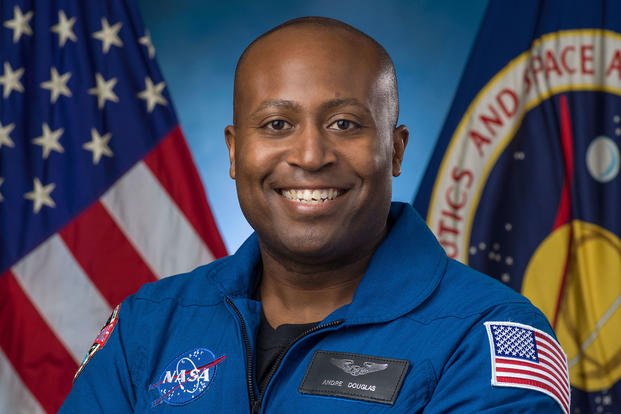
Coast Guard Academy graduate Andre Douglas, shown in a portrait taken on Dec. 3, 2021, was among 10 selected for NASA’s 2021 Astronaut Candidate Program. (Robert Markowitz/NASA photo)

Military.com reports on the life of the third US Coast Guard Academy graduate to complete NASA astronaut training.

“Stationed at Johnson Space Center in Houston, Douglas is currently working on a pressurized lunar rover and a lunar terrain vehicle, as well as designing spacesuits, He is also involved in a project to develop a new lunar space station, Gateway, to support the Artemis missions, which aim to return astronauts to the moon this decade with an eye on eventually traveling to Mars.”

“Houthi Drone Boat Strikes Ship For First Time Since Red Sea Crisis Erupted” –The War Zone

The War Zone reports,

“A Liberian-flagged bulk carrier is taking on water and not under the command of its crew after being hit by a Houthi drone boat…The Liberian bulk carrier Tutor was struck by a Houthi uncrewed surface vessel (USV) while transiting the Red Sea, the first such successful strike since the Yemen-based rebel group began attacking shipping in the region…”

The Houthi ballistic missiles and Unmanned Air Systems (UAS) have gotten a lot of press, but if you really want to hurt a ship, nothing works as well as placing large amounts of explosive next to the hull at or below the waterline.

Not impossible we will see something like this used in a terrorist attack.

“Coast Guard transfers 109 migrants to Bahamas, repatriates 196 migrants to Haiti” –D7 News Release

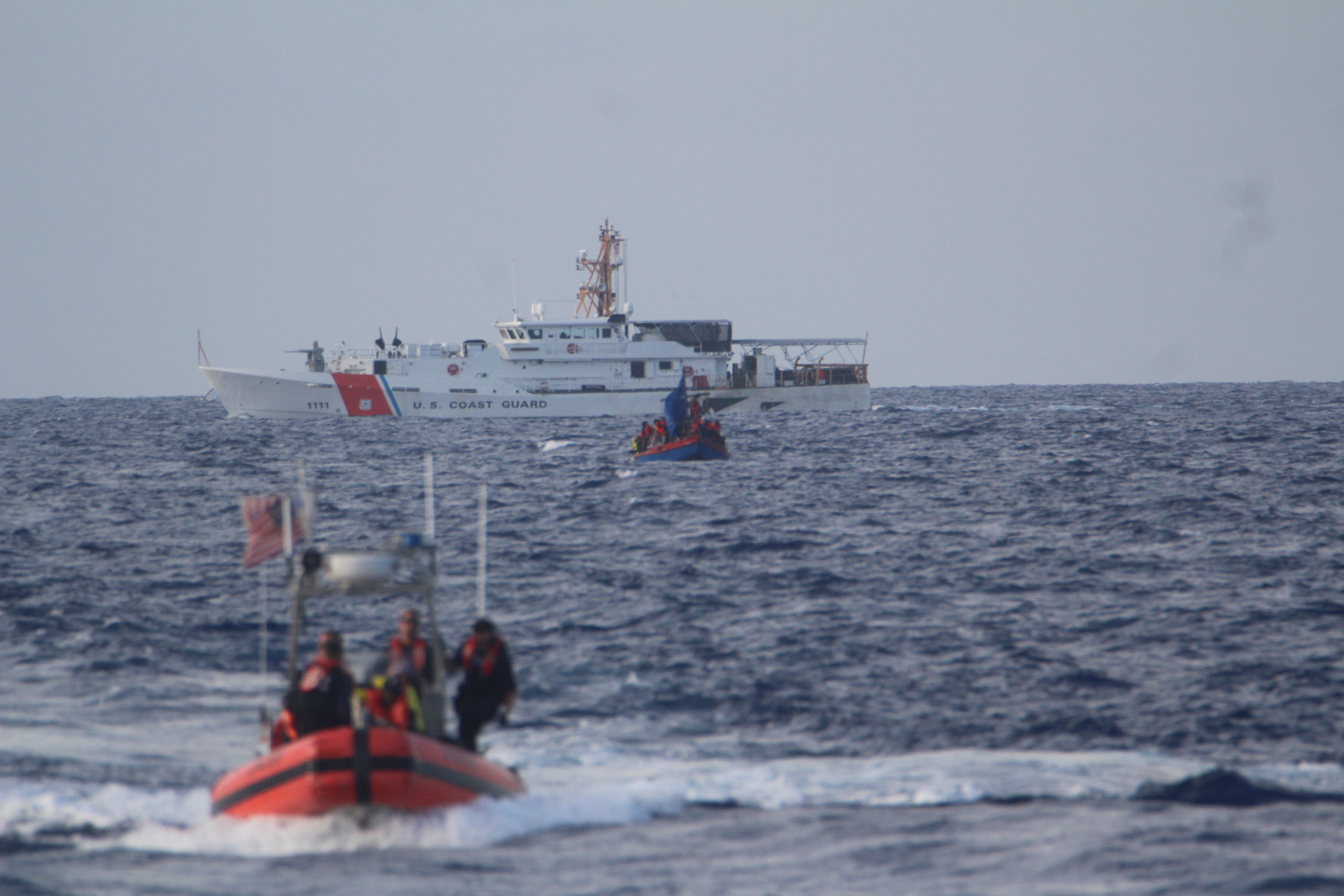
U.S. Coast Guard Cutter William Trump’s crew intercepts a migrant vessel 34 miles north of Île de la Tortue, Haiti, June 6, 2024. A U.S. Customs and Border Protection aircrew notified Coast Guard District 7 watchstanders who diverted a Coast Guard assets to interdict the migrants for repatriation at a later date. (U.S. Coast Guard photo by Petty Officer 2nd Class Eric Briganty)

Below is a District 7 news release. This follows a couple of reports that WMECs that had patrolled the area for almost two months each without picking up any migrants, here and here. The post includes link to documentation of steps being taken to discourage immigrant smuggling.

In the three interdictions, it appears, they were stopped close to their point of origin. I would really like to see some measures of effectiveness for this program, but it seems we are being very successful in detecting and interdicting these dangerous attempts.


June 10, 2024

Coast Guard transfers 109 migrants to Bahamas, repatriates 196 migrants to Haiti

MIAMI – U.S. Coast Guard crews returned a combined 305 migrants to the Bahamas and Haiti, Sunday and Monday, following multiple interdictions of unlawful maritime migration attempts over the last week in support of Operation Vigilant Sentry.  

The Coast Guard and its Homeland Security Task Force – Southeast federal, state, local, and international partners will continue to patrol by land, air and sea to rescue and repatriate anyone attempting to enter the U.S. unlawfully by sea.

The crews of Coast Guard Cutter Raymond Evans and Cutter Richard Etheridge transferred 109 people to the Royal Bahamas Defence Force, Sunday, following an interdiction near Anguilla Cay, Bahamas. U.S. Customs and Border Protection Air and Marine Operations (CBP-AMO) aircrews notified Coast Guard Sector Key West watchstanders of a migrant venture near Anguilla Cay and crews diverted to interdict them.

The crew of Coast Guard Cutter Thetis repatriated 196 people to Haiti, Monday, following two migrant voyage interdictions on June 5 and June 6. A CBP-AMO aircrew notified Coast Guard District Seven watchstanders, Wednesday, of a migrant venture north of Cap-Haitien, Haiti. Another CBP-AMO aircrew notified Coast Guard District Seven watchstanders, Thursday, of a migrant venture north of Île de la Tortue, Haiti. Crews diverted to interdict both vessels.

“Irregular maritime migration is unlawful and extremely dangerous. The OVS maritime border security mission is often equal parts law enforcement and humanitarian response, especially as we enter hurricane season and marine weather becomes more severe and unpredictable,” said Lt. Nick Fujimoto, Coast Guard District Seven enforcement officer. “The Coast Guard urges any potential migrants considering the journey: don’t take to the sea and risk your life just to be sent back. Use the safe, orderly and lawful pathways available like the CHNV process.”

Once aboard a Coast Guard cutter, migrants are processed to determine their identity and are provided food, water, shelter, and basic medical attention before repatriation to their country of origin or return to the country from which they departed.

For more information about Operation Vigilant Sentry including imagery, visit these links:

On June 5, the Department of Homeland Security announced that U.S. immigration enforcement and asylum procedures across the southern border are more strict. Last Tuesday, the Secretary of Homeland Security and the Attorney General jointly issued an interim final rule that generally restricts asylum eligibility for those who irregularly enter across the southern border – including the southwest land border and the southern coastal borders. These new measures are designed to increase the processing and consequences for those who cross our borders irregularly or who attempt to present themselves at Ports of Entry without authorization, allowing DHS to more quickly remove individuals who do not establish a legal basis to remain in the United States.

For more information, follow these links to Department of Homeland Security fact sheets:

For breaking news, follow us on X (formerly Twitter). For Task Force updates, follow @HSTF_Southeast on X. For additional information, find us on Facebook and Instagram.

“U.S., Japan, and Korea Coast Guards Conduct Trilateral Operations” –News Release

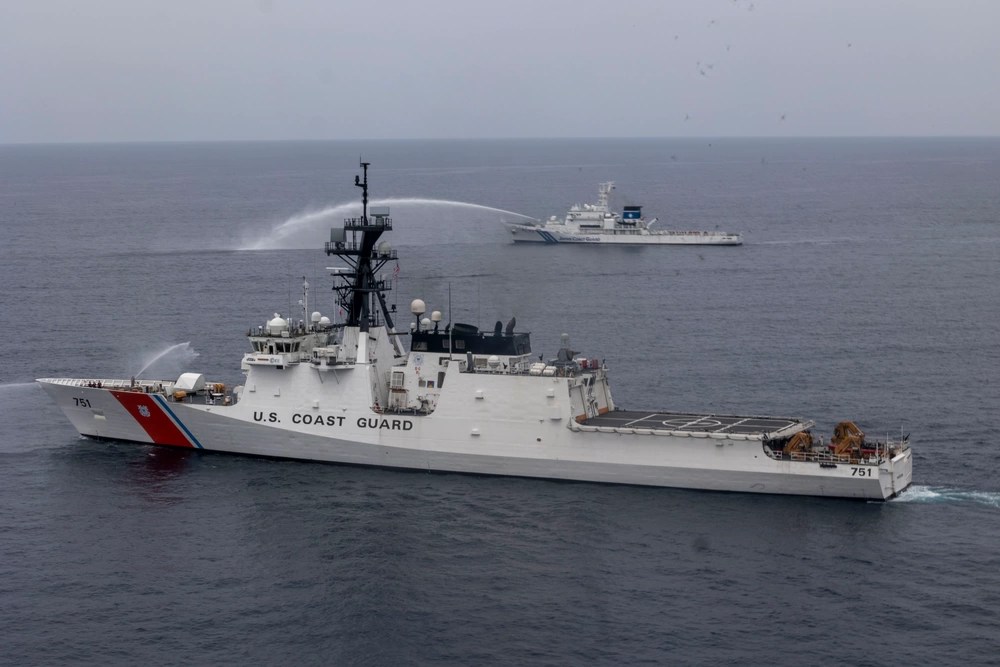
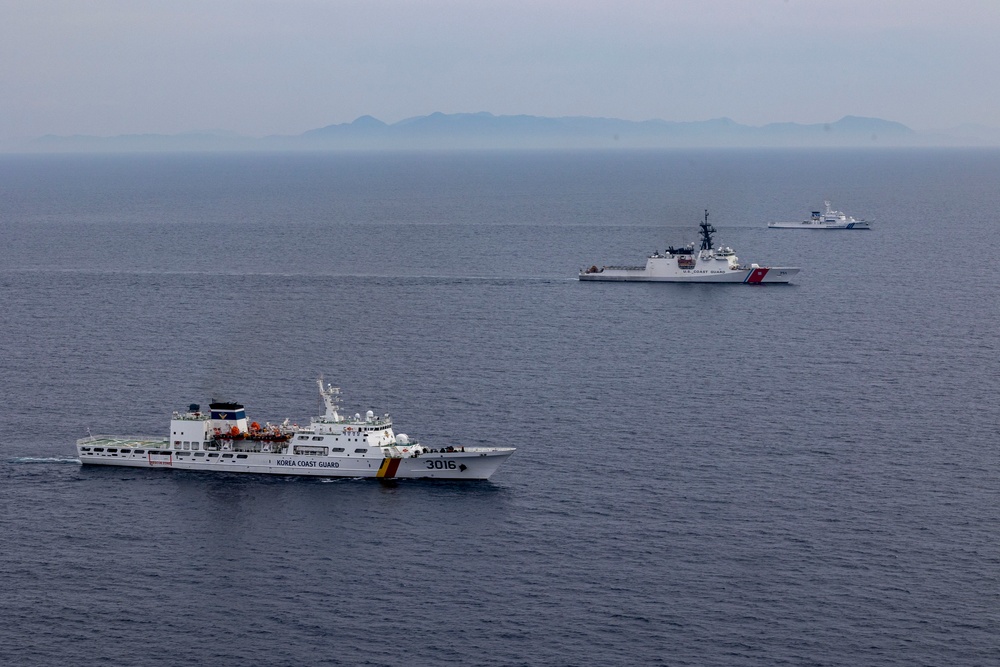
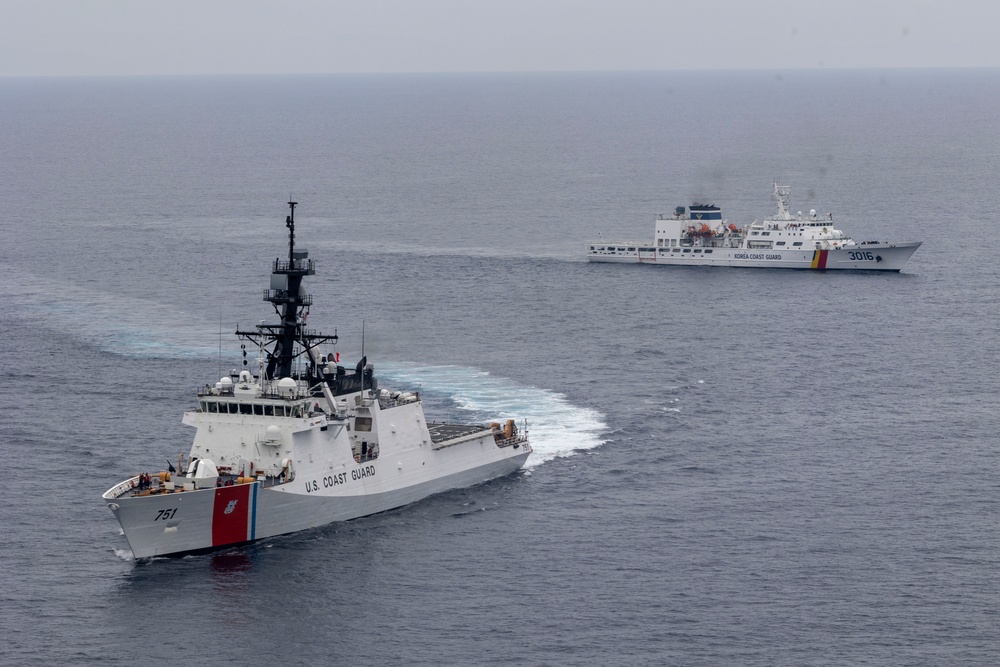
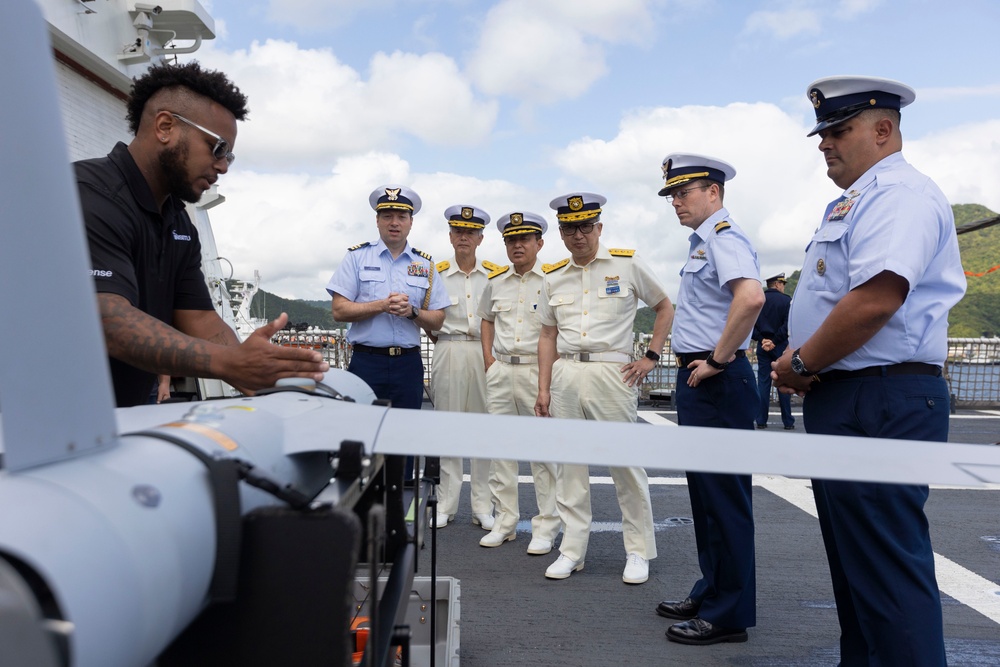
Republic of Korea Coast Guard vessel KCG Taepyongyang (KCG-3016), U.S. Coast Guard Cutter Waesche (WMSL-751) and Japan Coast Guard vessel JCGC Wakasa (PL-93) patrol in formation during a trilateral exercise in the East Sea, June 6, 2024. U.S. Coast Guard missions in the Indo-Pacific focus on issues directly supporting and advancing our regional partners’ efforts to protect fish stocks, ensure safety of life at sea, support environmental response, and provide disaster relief. (U.S. Marine Corps photo by Cpl. Elijah Murphy)

Below is a release from Coast Guard News. Once again, we have a National Security Cutter in the far Western Pacific (here, here, here, and here). A couple of things worth noting.

The Cutter is operating under a 7th Fleet Destroyer Squadron (DESRON 15) rather than US Coast Guard Operational Control.

While S. Korea has an EEZ 2.65% that of the US, the South Korean Coast Guard with about a quarter the number of personnel as the US Coast Guard, operates about the same number of large patrol cutters (>1,000 tons, 36 vs 34) as its US counterpart.

Japan has an EEZ about 39.5% that of the US. The Japan Coast Guard with about a third the personnel of the USCG, operates about twice as many large patrol cutters (70+).

Both the S. Korean and Japan Coast Guards have far fewer aircraft than the USCG.

U.S. Coast Guard Cutter Waesche and Japan Coast Guard vessel JCGC Wakasa (PL-93) test their water cannons during a trilateral search and rescue exercise in the East Sea, June 6, 2024. (U.S. Marine Corps photo by Cpl. Elijah Murphy)


June 9, 2024

U.S., Japan, and Korea Coast Guards Conduct Trilateral Operations

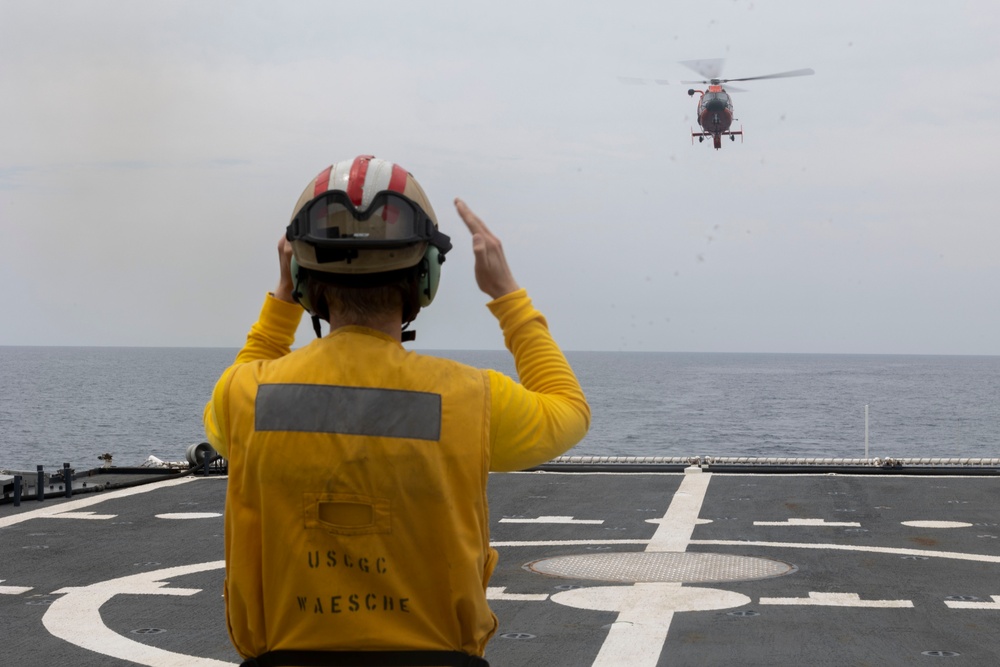
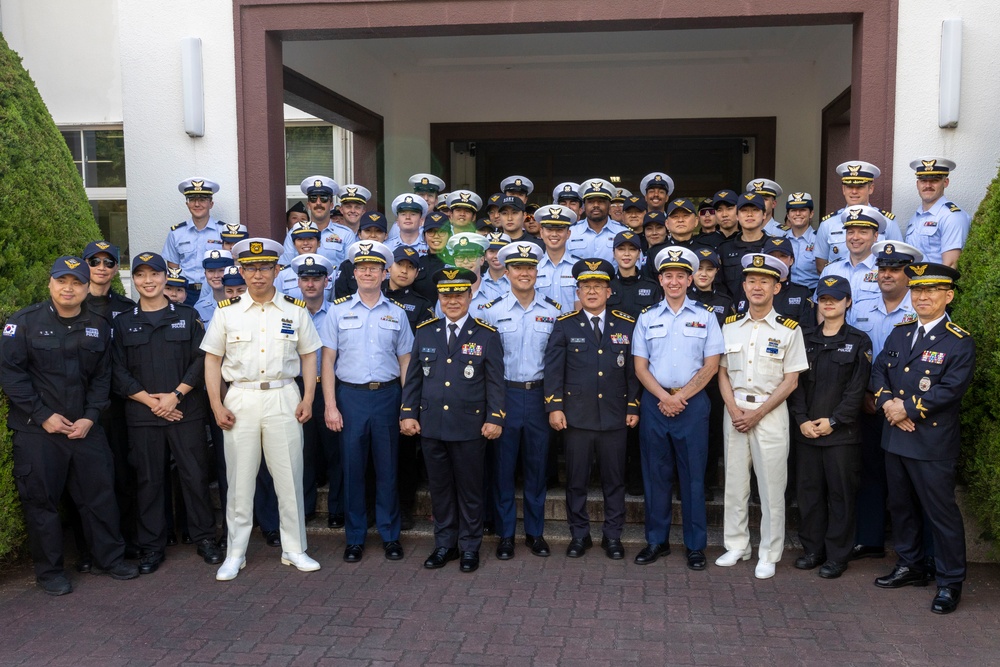
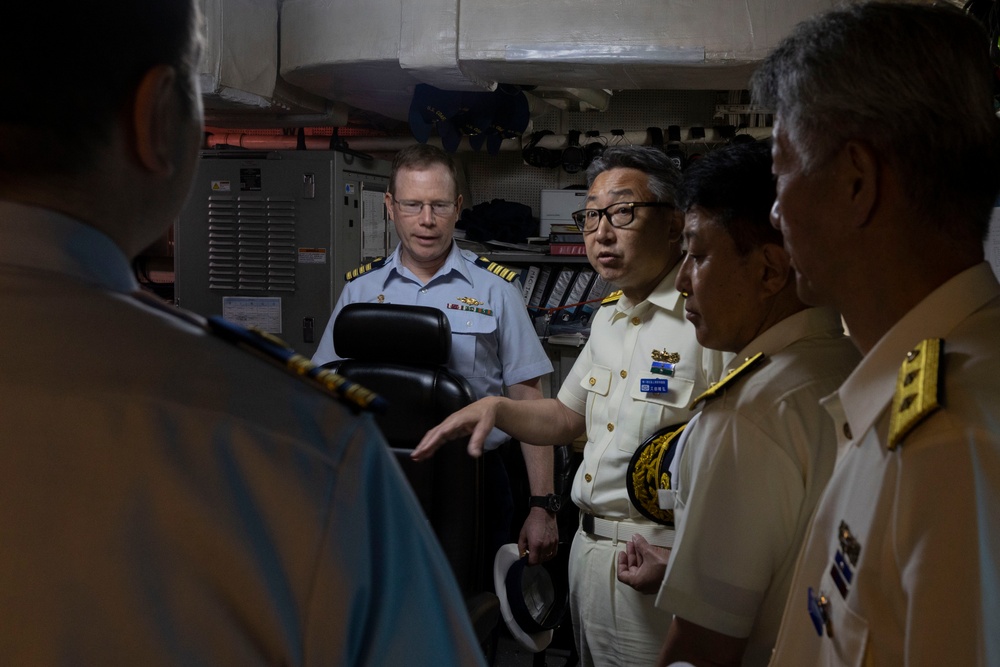
MAIZURU, Japan – U.S. Coast Guard Cutter Waesche (WMSL 751) departed Maizuru, Japan, June 6, following several engagements with the Japan Coast Guard, Republic of Korea Coast Guard and multiple Japanese dignitaries. Once underway, the Waesche, the Japan Coast Guard vessel Wakasa (PL 93), and the Republic of Korea Coast Guard patrol vessel Taepyongyang (KCG 3016) conducted a joint search and rescue exercise at sea.

Waesche arrived on June 3 and is the first U.S. Coast Guard cutter to pull into Maizuru.

While moored in Maizuru, the Waesche crew attended a reception to commemorate the first joint search and rescue exercise between the three coast guards. Capt. Tyson Scofield, U.S. Coast Guard Cutter Waesche commanding officer, met with Rear Adm. Hisada Takahiro, Japan Coast Guard 8th Regional commander and Maizuru Mayor Akitsu Kamota to discuss the continued cooperation between the three nations, specifically recognizing the importance search and rescue response efforts.

“This joint search and rescue exercise with the Japan Coast Guard, Republic of Korea Coast Guard and U.S. Coast Guard highlights the strong bond between our maritime nations,” said Tyson. “Increasing interoperability to assist mariners at sea, highlights the strength of our maritime cooperation. Together, we continue to build strong relationships with like-minded nations throughout the Indo-Pacific.”

During the search and rescue exercise, officers from the three coast guards joined as observers on each nation’s ship to share best practices and learn from each other. This provided each coast guard an opportunity to work together with each other’s crews during the exercise.

Waesche is proud to support the United States’ continued efforts to facilitate force-multiplying partnerships in the region to bolster interoperability across the Indo-Pacific.

Waesche is assigned to Destroyer Squadron (DESRON) 15, the Navy’s largest DESRON and the U.S. 7th Fleet’s principal surface force. DESRON 15 regularly assumes tactical control of surface units operating in the area.

Commissioned in 2010, Waesche is the second legend-class national security cutter and is homeported in Alameda, California. National security cutters are 418-feet long, 54-feet wide, and have a 4,600 long-ton displacement. They have a top speed in excess of 28 knots, a range of 12,000 nautical miles, and can hold a crew of up to 170. The advanced technologies of the national security cutter class ships are designed to support global operations and missions.

FY2025 Budget Request and the FY2024 Coast Guard Authorization

US Capital West Side, by Martin Falbisoner

Ran across a couple of documents you might be interested in.

The Authorization is just a bill right now and even if enacted, it does not really provide any funds. I have a hard time understanding why Congress works this way, both and authorization and a budget. I think the authorization is supposed to come first as a sort of way to work toward consensus, establishing an upper limit on the budget, but for FY2024, the budget has already passed (long after the FY began) but the Authorization has only cleared the House and is in the Senate now. I don’t think it will take long in the Senate, but the FY is already two thirds over.

Even so, the Authorization has some interesting stuff regarding the out years. Historically the enacted budget has been larger than the Administrations budget request so this may happen. Just remember, while this suggests intention, it can not be taken for granted.

SEC. 103. AVAILABILITY OF AMOUNTS FOR ACQUISITION OF ADDITIONAL VESSELS AND AIRCRAFT.
SEC. 104. AUTHORIZATION FOR CERTAIN PROGRAMS AND SERVICES.