Chuck Hill's CG Blog

Chuck Hill's CG Blog

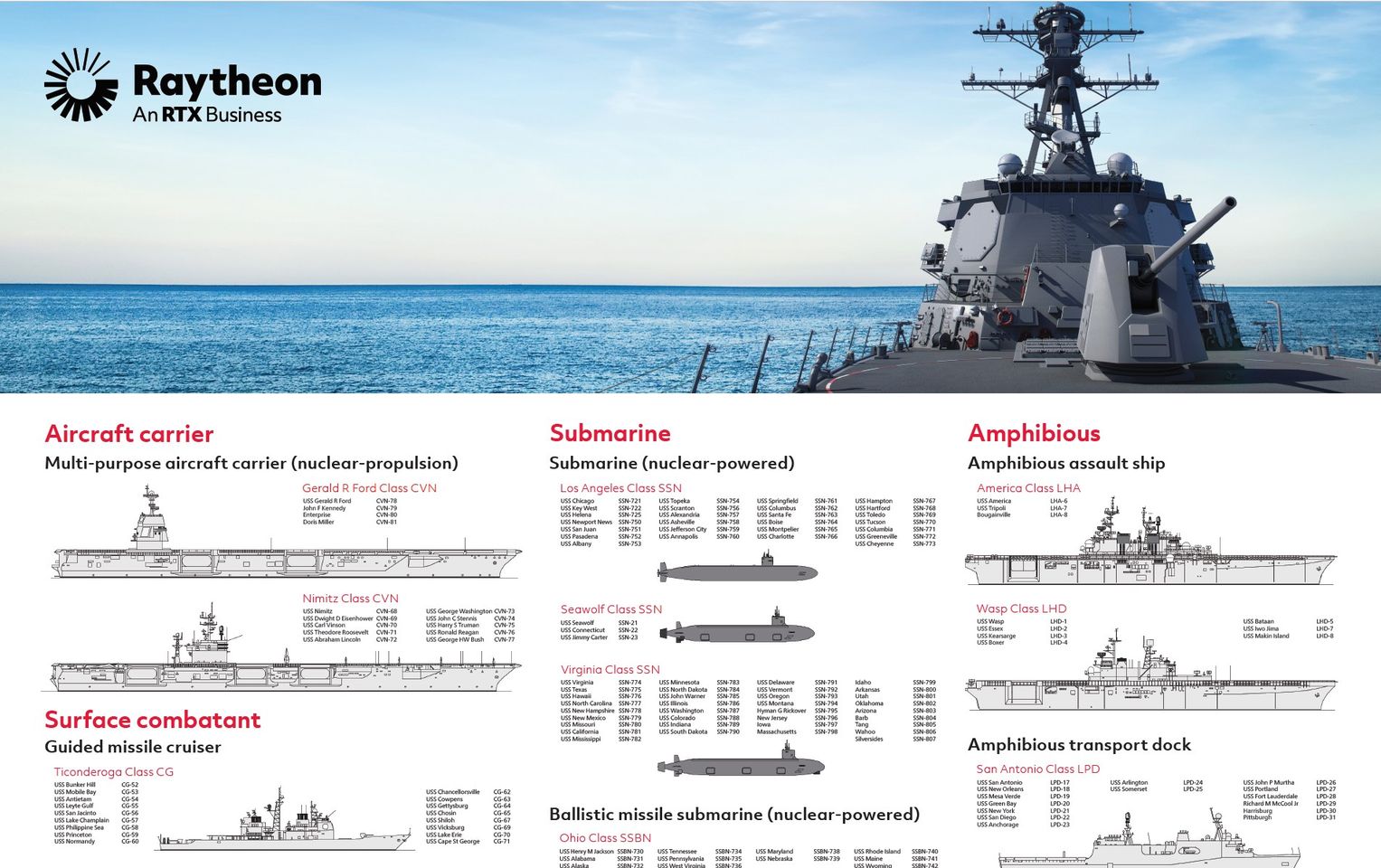
2023 Ships and Submarines of the US Navy –Infographic

Raytheon gives us an infographic of ships and submarines of the US Navy. You can load the full pdf. It is available at the bottom of this linked page that talks about the SPY-6 radars.

It may be somewhat misleading in that it includes ships that are not finished yet, like the Constellation class FFGs and vessels that have been decommissioned like the Cyclone class PCs.

Still, it may be useful.

Thanks to Tom for bringing this to my attention.

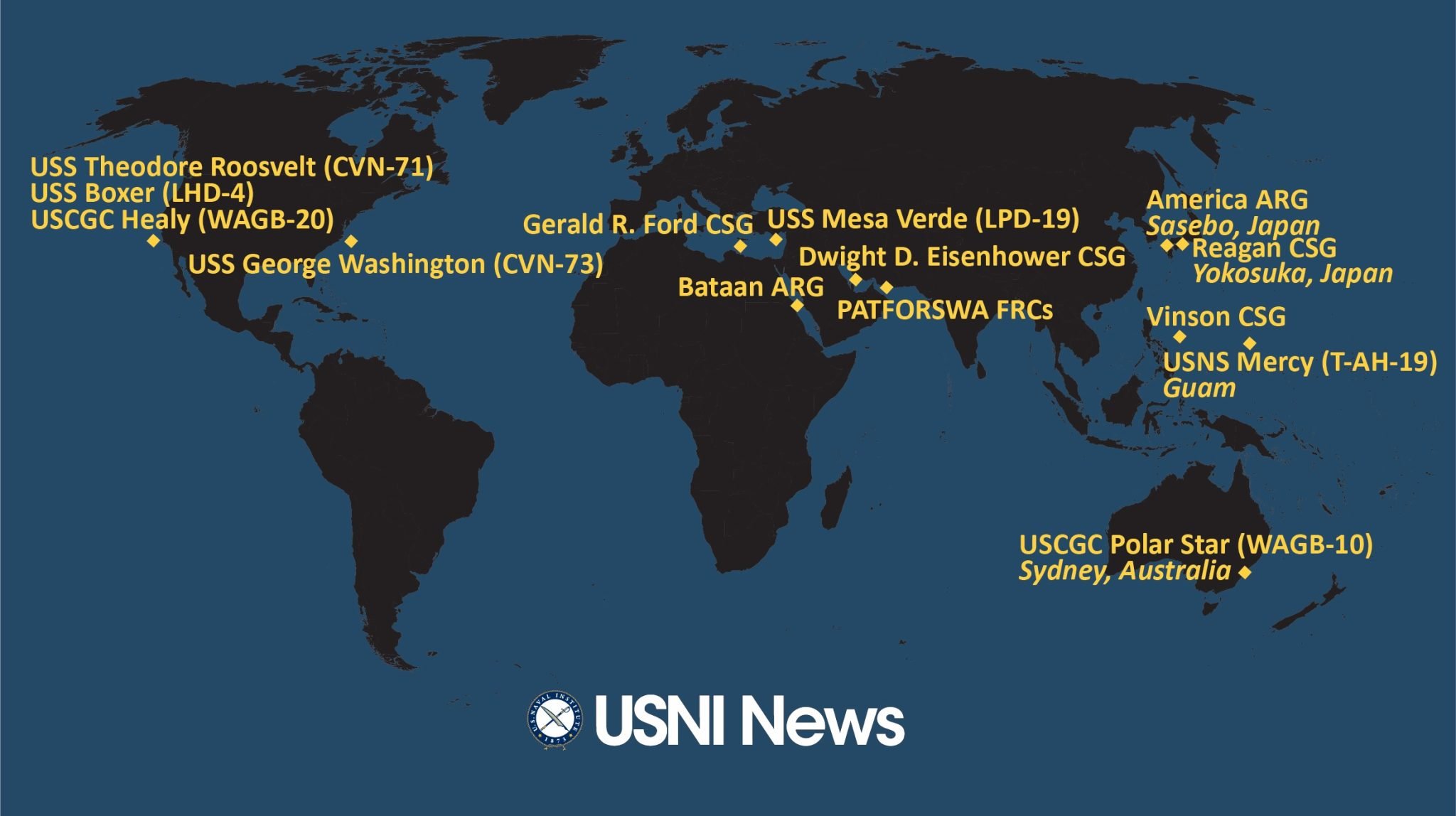
“USNI News Fleet and Marine Tracker: Dec. 11, 2023”

The latest USNI Fleet and Marine Tracker still does not include any indication of how many Navy ships are deployed to which fleets, but it does indicate that the Fleet is more active than usual with more than a third of the fleet deployed 109 out of 291 (37.5%) and more than the normal number of ships underway. Normally about a quarter are underway, but now 81 or 28% of the “battle force.” Not a huge jump but a noticeable increase.

Looks like USCGC Healey will be home for the holidays. Polar Star is down under.

“USCGC Healy (WAGB-20) is on its way to Seattle, Wash., expected to arrive on Dec. 18.”

“USCGC Polar Star (WAGB-10) arrived in Sydney, Australia on Dec. 9, 2023.” 

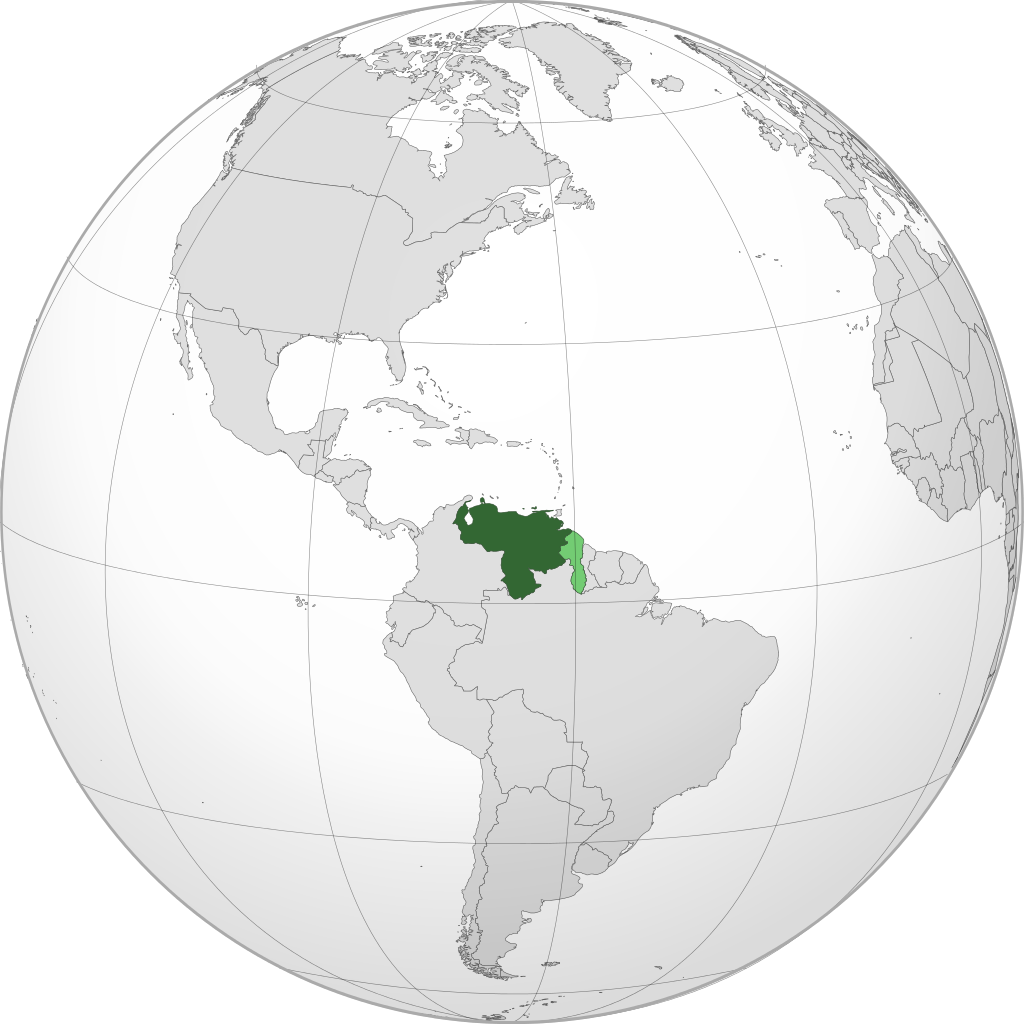
“Venezuela’s Border Dispute with Guyana Explained” –gCaptain

Orthographic map of Venezuela centered on Caracas Controlled territory in dark green. Claimed territory in light green.
From Wikipedia, author: Addicted04

gCaptain reports,

Tensions between neighbors Venezuela and Guyana have ratcheted up in recent weeks over a long-running territorial dispute.

At issue is a 160,000-square-km (62,000-square-mile) border territory around the Esequibo river, which is mostly jungle, and an offshore area where massive discoveries of oil and gas have been made.

The area in question has been recognized as part of Guyana since 1899, but Venezuela is making threatening noises. “A consortium by Exxon Mobil, China’s CNOOC and U.S. Hess began oil production in Guyana in 2019,” so the US has both economic and political interests in maintaining the status quo.

Since Coast Guard units routinely operate in the area and constitute the bulk of immediately available 4th Fleet assets, the Coast Guard may want to follow events there.

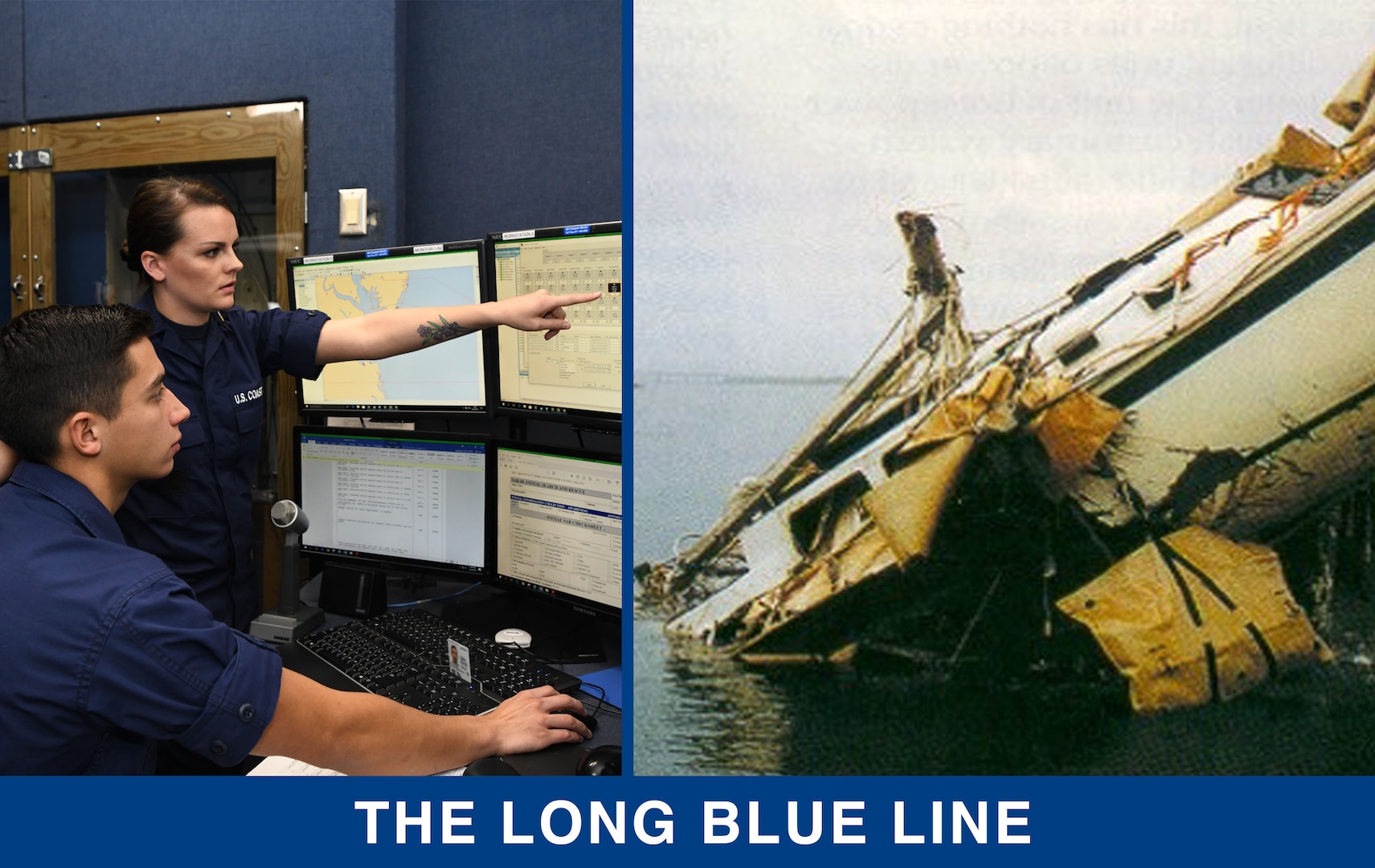
“The Long Blue Line: The loss of Morning Dew and genesis of Rescue 21” –MyCG

This is from MyCG. I am very proud that the Coast Guard did not simply say, “With as many calls as we get, it is inevitable that we will miss few.” Yes, we are human, but we can recognize and account for that. No call should go unanswered.

Dec. 8, 2023

The Long Blue Line: The loss of Morning Dew and genesis of Rescue 21

By Capt. W. Russell Webster (Ret.), United States Coast Guard

The Long Blue Line blog series has been publishing Coast Guard history essays for over 15 years. To access hundreds of these service stories, visit the Coast Guard Historian’s Office’s Long Blue Line online archives, located here: THE LONG BLUE LINE (uscg.mil) 

It was low tide in Charleston Harbor at 1:55 a.m. on Dec. 29, 1997 when 13-year-old Daniel Cornett’s anguished voice slashed the quietude of Coast Guard Group Charleston’s Watch Center:

“May … Mayday, U.S. Coast Guard, come in,” on Channel 16 (the distress channel) on VHF-FM marine radio.

The Sailing Vessel Morning Dew had just crashed into Charleston’s North Jetty. Daniel, his brother and cousin were jolted from a sound sleep. Daniel’s father, 49-year-old Michael Cornett, who had been steering the boat under engine power for the last eight hours, was ejected from the vessel, according to government reports.

At Coast Guard Group Charleston (later Sector Charleston), the regional maritime rescue headquarters, this particular four-second mayday radio call by the youngest Cornett family member was heard and automatically recorded by Stancil technology, a device designed to preserve critical radio messages. Unfortunately, the Coast Guard’s sole radio watchstander, a twenty-three-year-old petty officer, was 17-feet away from the radio console refilling his coffee mug as an otherwise quiet late-night shift drew on.

In his later testimony with the National Transportation Safety Board (NTSB), the petty officer said he heard only the tail end of the heavily garbled distress message, “U.S. Coast Guard, come in.” The radio watchstander had completed telecommunications school just a few months prior and only recently been qualified to stand watches without supervision. Despite what the NTSB would later call an extraordinary training program, he was unprepared for the circumstances that were about to unfold.

Following standard radiotelephone protocol, the watchstander responded fourteen seconds later: “Vessel calling Coast Guard, this is Coast Guard Group Charleston, over.” He then repeated his call using multiple radio transmission towers in different locations along the South Carolina shore. He also invited conversation on VHF-FM channel 16. But there would be no two-way interactive radio calls from the 34-foot sailboat Morning Dew on this fateful night.

Despite the odd time of night and prevailing weather conditions, the group’s radio watchstander quickly returned to the normal humdrum of off-season and late-night routine. This included monitoring as many as ten different frequencies that, during busy times, sometimes blared from an equal number of speakers mounted throughout the communications center. In the summer, radio watchstanders were constantly managing their time and involved in various conversations, often near simultaneously.

 Four minutes later, at 2:21 a.m., the crackle of an unintelligible burst of static was recorded on Group Charleston’s Stancil recorder. The watchstander, believing the earlier call and this one might be from the same source, again tried the radio without success. “Vessel calling Coast Guard, this is Coast Guard Group Charleston, over.” There was no response, and no log entries were made of the calls.

Given the state of the Coast Guard’s National Distress System network of VHF-FM near-shore system in late 1997, the Morning Dew’s only chance at this point in the distress would have been if the watchstander had been looking directly at the Direction-Finding equipment at the exact moment when the first distress call and the second follow-up static burst were heard. Even so, rewinding the tape and determining the word Mayday had been used would have only elevated awareness and mandated a call to his supervisor, the group duty officer (GDO) who was seeking authorized rest. Not hearing the initial word Mayday and theorizing a mariner was just testing his radio or the call had “skipped” from many miles away, and not following procedure to rewind the tape to conduct further investigation, the watchstander returned to other duties.

The radio watchstander would soon become involved with the Morning Dew again when he took a call from the local harbor pilot’s organization about four hours later, relaying a report from an inbound vessel of shouts being heard from the vicinity of Charleston Channel Buoy #22. He quickly relayed the information to his 17-year experienced GDO, who asked a pilot boat to investigate on behalf of the Coast Guard. Tragically, no additional assets were dispatched, and the GDO suspended further efforts before sunrise.

Around 11 a.m., tourists visiting from Atlanta would find bodies from the sailing vessel Morning Dew as two of the teenage boys washed ashore on a nearby beach. The Coast Guard then responded in full force, only to find a third body. Weeks later, the body of Morning Dew’s operator would wash ashore on a nearby island.

Within weeks, amid the growing hue and cry of the grieving family members, a major 18-month-long search and rescue analysis would be undertaken and begin to address difficult shortcomings in human behavior, procedures, and technology. Key gaps were the failings of the VHF-FM National Distress System (NDS) radio system, the backbone of the Coast Guard’s near-shore (20 miles) rescue communications system. Coast Guard Commandant James Loy would later go on to publicly speak about the Morning Dew case at a search and rescue conference entitled The Value of a Life. He would later say that, “there are two capstone issues that must be addressed by our service. There are issues of leadership and communications systems.”

 The original NDS in use for the Morning Dew case was built in the 1970’s, and was designed to provide Very High Frequency–Frequency Modulated (VHF-FM) radio coverage of 95,000 miles of coastline and connect mariners in distress to each other, point-to-point, and Coast Guard rescue services. After 25 years, the NDS’s problems were well known and documented in a Mission Needs Statement that, “formally acknowledged that a materiel solution is required to address the capability gaps.”

At the time of the Morning Dew case, there were as many as 68 known coverage areas where service was either poor quality or non-existent. The NDS was also supported by an antiquated tape-recording system that was both manually intensive and cumbersome. Additionally, the direction-finding system at the time had no recording capability. This meant that if a watchstander was not looking at the direction indicating compass rose at the time of the distress call and a different call came in, only the new call’s direction would be displayed.

According to Coast Guard sources, the Morning Dew case, “validated the need for a new VHF-FM system for the Coast Guard.”

The Morning Dew case was a collection of human and technological errors. Despite the original early morning call not having enough information to launch a rescue, the relatively junior Telecommunications Specialist failed to rewind the audio tape, make required log entries, or notify his supervisor. He also could not note the bearing of the call because he was recharging his coffee cup. Even if he had done all of that, the quality of the recording and in the insufficiency of locating information still might not have made a difference at that moment.

It would have, however, put rescuers on alert that they were dealing with an unresolved Mayday call, perhaps altering their response to the later cries heard from the Charleston channel area. The Coast Guard would eventually develop a new procedure in 2005 called, “range ring analysis” based on signal strength that could have provided a rough estimate of the caller’s position and a start point for a searchable area. But the Morning Dew case was in 1997.

Significant procedural changes would later be made. Among them, adding new watchstanders, always providing for at least three personnel on watch, on average. Additionally, experienced, permanent civilian search and rescue personnel would be provided in every sector for continuity and training purposes. Today’s watch centers still, however, feature a single communications operational specialist in a booth, but there are always more senior people around to discuss issues if there is any doubts about what to do.

The single most significant technological change the Coast Guard would make is the replacement of the NDS with the Rescue 21 (R21) near shore communication system. The system, an advanced command, control, and direction-finding communications system, was created to better locate mariners in distress and save lives and property at sea and on navigable rivers.

By harnessing state-of-the-market technology, Rescue 21 enables the Coast Guard to execute its search and rescue missions with greater agility and efficiency. Rescue 21 helps identify the location of callers in distress via towers which generate lines of bearing to the source of VHF radio transmissions reducing search time. It extends coverage to a minimum of 20 nautical miles from the coastline, improves information sharing and coordination with the Department of Homeland Security and other federal, state, and local first responders, and can also help watchstanders recognize potential hoax calls by identifying discrepancies between what a caller is reporting in distress and the actual transmission site, thus conserving, and reducing risk to valuable response resources.

 Relative to its predecessor systems, R21 can provide reliable and redundant capabilities to determine where some calls originate, rapid retrieval and position fixing, and ruling out the need for searches for obvious hoax callers. It also facilitates near shore distress cases in areas where the Coast Guard performs 90% of its rescues.

According to the Coast Guard’s Joe Ayd from the Office of C5I Capabilities, today’s Rescue 21 system implements, “the Coast Guard’s ability to receive VHF-DSC [Digital Selective Calling], which allows a vessel like the Morning Dew to simply press a button on their radio to [digitally] transmit a distress call and provide a position [if connected to the boat’s GPS] to the Coast Guard command center.” VHF-FM DSC took coastal rescue communications from a point-to-point system (distressed mariner – Coast Guard) to a virtual paging system where any boat receiving the DSC distress call is duty bound to digitally relay it to a Coast Guard shore rescue facility on behalf of the troubled mariner.

Ayd added that, “R21 made significant improvements to the ability of the watchstander to not only retrieve the audio of a call, but to also conduct some basic cleanup of the call to better understand what is being said through all the noise or garble.”

This means that an already busy Coast Guard watchstanders can economize on the effort to scan the recording within the confines of an already busy environment with the best chance of understanding the content of the call.

It took an 18-month exhaustive search and rescue system investigation, a 20/20 television expose and a $19.5 million-dollar civil judgment and more than two decades to complete R21 along U.S. coastlines and in Alaska’s remote and rugged areas. “The final tower in the Rescue 21 system was accepted in October 2017, completing a design and installation process spanning more than 20 years.”

The Coast Guard has made significant progress with the R21 VHF-FM system since the 1997 Morning Dew case. However, the venerable service faces new challenges and opportunities to improve near shore rescue communications. For example, over the last two years (Fiscal years 22 and 23), the Coast Guard has annually responded to between 15,000 and 16,000 calls for assistance with just over half being received by phone. During that same time, only between 1,200 and 1,500 rescues were initiated each year with radio notifications. Over the last decade, the number of rescue calls initiated by radio has declined while phone and other smart technology notifications have increased.

Captain Webster writes about contemporary Coast Guard rescues. Readers may contact him and access or order his published works, including Lost in Charleston’s Waves, detailing the Morning Dew tragedy, at https://www.wrussellwebster.com

“Personnel Shortage At U.S. Coast Guard Sinks 10 Cutters & 29 Stations” –What is Going on With Shipping?

Above is one of a series of “What is Going on With Shipping?” videos done by Salvatore Mercogliano. Most are not directly Coast Guard related, but this one is spot-on.

Additional Comment

We did talk about this earlier, “Coast Guard adjusts operations plan to mitigate 2024 workforce shortage” –MyCG 

It should be noted that this is not because we have reduced the number of afloat billets, it is because the workforce has not grown as rapidly as the number of billets.

Also, we are not greatly reducing the number of ships compared to historic numbers or the “Program of Record,” The program of record was to provide 8 NSCs, 25 OPCs and 58 FRCs for a total of 91. With these changes we will have 10 NSCs, 23 WMECs, and 55 to 57 FRCs for a total of 88-90 and up to 98 or more as all 65 FRCs currently funded are delivered.

The problems are that the 210s should have been replaced decades ago and demand for Coast Guard assets has increased. The Missions we are doing with the FRCs in the Western Pacific should really be being done by a ship with better seakeeping and endurance and facilities for a helo and UAS, something like “Cutter X.”

“All survive Coast Guard helicopter crash on island near Sitka” –Must Read Alaska

Must Read Alaska reports,

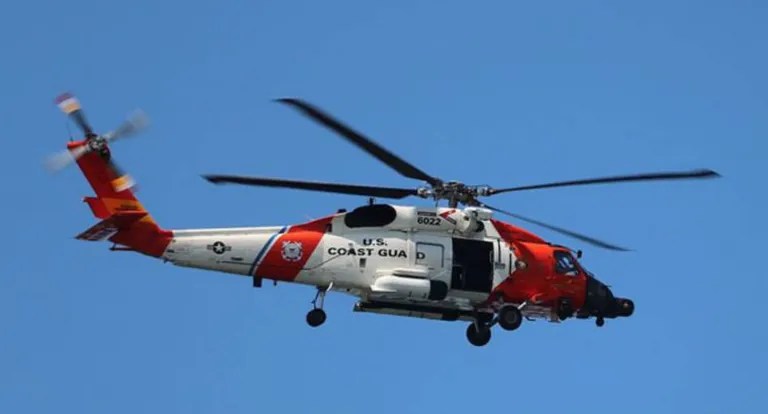
“A Coast Guard MH-60 Jayhawk helicopter air crew from Air Station Sitka crashed with four people aboard on Read Island during a search and rescue mission late Monday night. The crash took place while the helicopter crew was assisting a vessel that had taken on water.”

Thanks to David for bringing this to my attention.


Addition: Below is the a D17 News Release.


Nov. 14, 2023

Coast Guard helicopter crashes in Alaska during search and rescue response

D17 Public Affairs

JUNEAU, Alaska — A Coast Guard MH-60 Jayhawk helicopter air crew from Air Station Sitka crashed with four people aboard on Read Island during a search and rescue mission late Monday night.

Rescue crews from Alaska Wildlife Troopers and Petersburg Fire and Rescue arrived on scene at approximately 12:50 a.m., and a second MH-60 Jayhawk air crew from Air Station Sitka arrived at approximately 1:39 a.m. Together, they provided preliminary medical care to two crew members who were reported to have sustained serious injuries.

The four crew members were hoisted aboard the second Coast Guard helicopter and were transported to Petersburg for medical care. They were then transferred to Seattle via a C-130 Hercules aircraft from Coast Guard Air Station Kodiak for a higher level of care.

The watchstanders received notification of the crash at approximately 11:05 p.m. from the fishing vessel Lydia Marie, who was initially receiving search and rescue assistance from the aircrew due to flooding on their vessel.

“Our priority is to provide the highest level of care possible for our injured members and their families,” said Rear Adm. Megan Dean, commander of the Coast Guard’s 17th District. “We are grateful for the swift response and professional skill shown by the Alaska Wildlife Troopers and Petersburg Fire and Rescue members who answered our call for assistance during this critical time. We have opened an investigation into the cause of this event and will be forthcoming with the results as they become available.”

The U.S. Coast Guard Cutters Elderberry (WLI-65401) and Douglas Denman (WPC 1149) crews assumed responsibility for providing search and rescue assistance to the Lydia Marie and have established a security zone around the crash site.

The cause of the crash is currently under investigation.


An Update.


Nov. 14, 2023

Update 01: Coast Guard continues response to helicopter crash in Alaska during search and rescue case

D17 Public Affairs

JUNEAU, Alaska — Coast Guard crew members injured in the MH-60 Jayhawk helicopter crash Monday night on Read Island continue to receive medical care, and the search and rescue case for fishing vessel Lydia Marie is complete.

As of Tuesday afternoon, the four service members from Coast Guard Air Station Sitka involved in the crash were transported to the Harborview Medical Center in Seattle for a higher level of care via a C-130 Hercules aircraft from Coast Guard Air Station Kodiak.

The two Coast Guard members reported to have serious injuries were listed in serious condition, while the other two members were listed in good condition with minor injuries.

The crew of the U.S. Coast Guard Cutter Elderberry (WLI 65401) oversaw the de-watering of the fishing vessel Lydia Marie and escorted the vessel back to Petersburg. There, the crew of the U.S. Coast Guard Cutter Pike (WPB 87365) conducted a post-search and rescue boarding with no violations, closing the original search and rescue case.

On-scene weather at the beginning of the search and rescue evolution with the Lydia Marie was reported with wind speeds at 28-34 miles per hour and seas at four to five feet. Upon arrival at the scene of the crash, a second Coast Guard MH-60 rescue helicopter reported wind speeds of 46 miles per hour, visibility at one-quarter of a mile, and seas at one to two feet.

Four people were confirmed aboard the Lydia Marie, and their initial call for assistance was transmitted on VHF-FM channel 16 Monday night at approximately 8:06 p.m.

The investigation into the cause of the helicopter crash is ongoing.

Further requests for information by members of the media can be made by contacting the Public Affairs duty watchstander at D17-DG-PublicAffairs@uscg.mil.


Nov. 15, 2023

Update 02: Coast Guard continues investigation of helicopter crash, two released from hospital

D17 Public Affairs

JUNEAU, Alaska — Two Coast Guard crew members have been released from the hospital, and the investigation into the cause of an MH-60 Jayhawk helicopter air crew crash on Read Island continues, Wednesday morning. 

The remaining two crew members who were previously listed in serious condition have improved and are now listed in fair condition.

The investigation into the crash is still ongoing. 

“FarSounder joins Seabed 2030 in Mapping the World’s Oceans” –FarSounder News Release

Below is a news release from FarSounder. Sure, it’s a PR piece, but this is an interesting and potentially important project. For decades, Coast Guard cutters passed their depth sounding to the Hydrographic service. We have talked about FarSounder products before.

November 7, 2023
Warwick, RI USA

FarSounder joins Seabed 2030 in Mapping the World’s Oceans

FarSounder is partnering with The Nippon Foundation-GEBCO Seabed 2030 Project to work together to advance the collective understanding of the ocean floor in pursuit of the complete map of the entire seabed.

This partnership coincides with FarSounder’s recent Small Business Innovation Research (SBIR) Phase I grant awarded by the National Oceanic and Atmospheric Administration (NOAA). This award is providing funding for the research and development of a new project that will develop a cloud-based service to shareFarSounder/NSSL Global survey data collected by FarSounder customers.
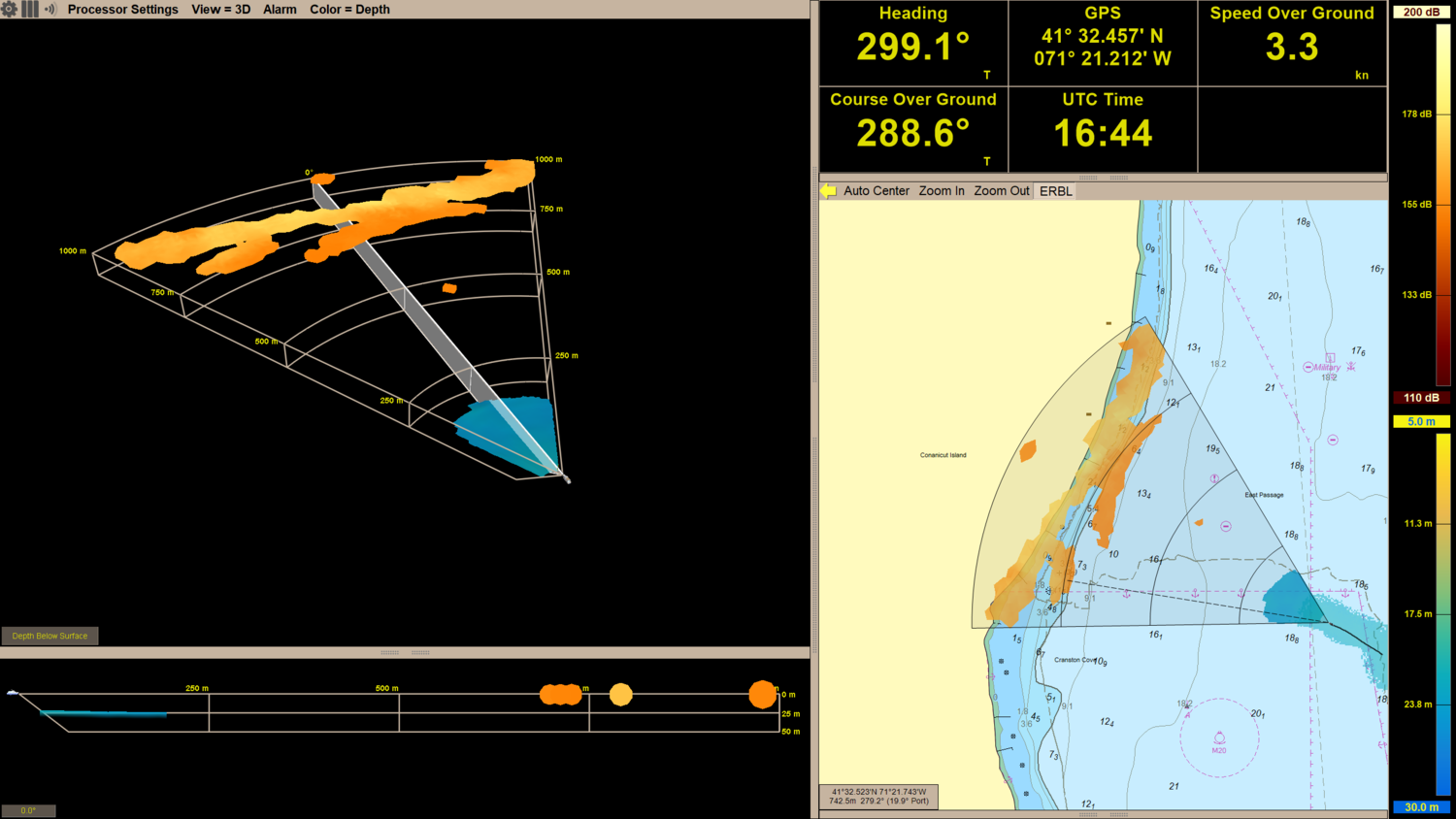
The project – Enabling Expanded Crowdsourced Bathymetry Contributions With High-Quality Metadata via Commercially Sustainable Incentives to Contributors – will allow for data sharing with others across the FarSounder customer fleet and with Seabed 2030 via the International Hydrographic Organization’s (IHO) Data Centre for Digital Bathymetry (DCDB), which archives over 30 terabytes of oceanic depth soundings and serves as the long-term archive for Seabed 2030.

Seabed 2030 is a collaborative project between The Nippon Foundation and the General Bathymetric Chart of the Oceans (GEBCO), which seeks to inspire the complete mapping of the world’s ocean by 2030, and to compile all the data into the freely available GEBCO Ocean Map. The Project is formally endorsed as a Decade Action of the UN Ocean Decade. GEBCO is a joint programme of the IHO and the Intergovernmental Oceanographic Commission (IOC), and is the only organisation with a mandate to map the entire ocean floor.

“Our commitment to contributing high-resolution data to the IHO’s DCDB aligns seamlessly with Seabed 2030’s mission of achieving a complete map of the entire ocean floor,” commented FarSounder CEO Matthew Zimmerman. “By streamlining the transfer of data from customers to the DCDB we hope to encourage broader participation, inviting more individuals to actively contribute to bridging the gaps in our understanding of the ocean.”

“It’s a pleasure to welcome FarSounder on board as an official partner,” said Seabed 2030 Project Director Jamie McMichael-Phillips. “FarSounder plays a central role in championing crowdsourced bathymetry – which is essential to Seabed 2030. We look forward to working together, and look forward to following the company’s journey as it embarks upon its exciting new project.”

All data collected and shared with the Seabed 2030 project is included in the free and publicly available GEBCO global grid.

About FarSounder

At FarSounder, we believe in pushing the boundaries of what is possible in the exploration of the world’s oceans and waterways. We do this by developing innovative products that do more than just help vessels get safely from point A to point B. We make a difference by being environmentally conscious by creating products that reduce the impact on the ecosystem.

For over 20 years, we have dedicated ourselves to tackling new ideas and developing 3D Forward Looking Navigation Sonar technology (3D FLS). Our unique patented technology paints a clear picture of what lies ahead underwater and along the bottom, reducing the likelihood of collisions, which in turn prevents costly damage to property, the environment, and marine and human lives alike.

Our navigation systems are globally recognized. The Argos 1000, Argos 500, and Argos 350 are able to provide customers with a whole suite of sophisticated navigation capabilities of interest to many types of vessels. Wherever you decide to go, FarSounder will help get you there safely.

For more information, visit http://www.farsounder.com

About The Nippon Foundation-GEBCO Seabed 2030 Project

The Nippon Foundation-GEBCO Seabed 2030 Project is a collaborative project between The Nippon Foundation and GEBCO. The Seabed 2030 Project, launched at the United Nations Ocean Conference in 2017 by Chairman Sasakawa of The Nippon Foundation, coordinates and oversees the sourcing and compilation of bathymetric data from different parts of the world’s ocean through its five centres into the freely-available GEBCO Grid. Four Regional Centres cover the Southern Ocean, the Arctic and North Pacific Ocean, the Atlantic and Indian Oceans, and the South and West Pacific Ocean. These feed data products into the Global Data Centre. The IHO Data Center for Digital Bathymetry (DCDB) serves as the
long-term archive for Seabed 2030.
Find out more about the project and how to get involved.

For more detailed information on The Nippon Foundation-GEBCO Seabed 2030 Project, please visit our website, seabed2030.org, like our Facebook page, follow us on Twitter @Seabed2030, or contact enquiries@seabed2030.org.

For media inquiries, contact:
Pegah Souri
pegah.souri@shearwater.global
+44 (0)7951 581707

Media Contact:

Cassie Stetkiewicz
Director of Operations
Cassie.stetkiewicz@farsounder.com
+1 401 784 6700 6002

“Coast Guard adjusts operations plan to mitigate 2024 workforce shortage” –MyCG

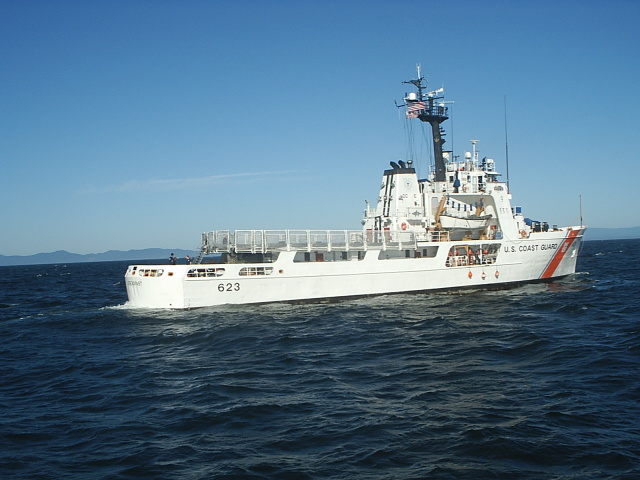
USCGC Steadfast is the next WMEC to be decommissioned. The 55 year old cutter is homported in Astoria, Ore.

The Coast Guard is acting decisively to deal with the current personnel shortage. I have reproduced the announcement below. The result will significantly affect the cutter fleet. Three 210s will be placed in layup pending decommissioning and seven 87 foot WPBs will be placed in layup pending reactivation.

The choice to decommission Steadfast rather than another 210 may have been influenced by the fact that the first two OPCs are to be homeport on the West Coast (San Pedro) and two Webber class cutters (WPC-1156 and 1157) are expected to be based in Astoria. Both WPCs will probably arrive in the next six to eight months.

Not surprisingly cutters are being decommissioned before their replacements come on line. This situation is likely to get worse before the last OPC is delivered (planned for 2038).

Of the sixteen 210 foot Reliance class cutters, three are no longer in Coast Guard service. USCGC Decisive was decommissioned on 2 March 2023. USCGC Courageous was donated to Sri Lanka in 2004, and USCGC Durable was decommissioned in 2001 and commissioned into the Colombian Navy in 2003.


Oct. 31, 2023

Coast Guard adjusts operations plan to mitigate 2024 workforce shortage

By AJ Pulkkinen, MyCG writer

Coast Guard mission demands are growing while our Service faces a significant workforce shortage. The Coast Guard is short nearly 10% of the entire enlisted workforce and cannot continue to operate as we have historically with fewer people.

To mitigate the workforce challenge risk in a deliberative and strategic fashion, the Vice Commandant, Adm. Steven Poulin, has provided specific temporary operational guidance to adapt our operations while prioritizing lifesaving missions, national security and protection of the marine transportation system.

There will be no loss of search and rescue (SAR) capabilities. However, we will temporarily adjust operations to prioritize our lifesaving missions, national security and protection of the Marine transportation System.

The Commandant and Master Chief Petty Officer of the Coast Guard (MCPOCG) today e-mailed the workforce to outline the service’s mitigation strategy.

“The Coast Guard cannot maintain the same level of operations with our current shortfall – we cannot do the same with less. Conducting our missions is often inherently dangerous, and doing so without enough crew puts our members and the American public at increased risk,” wrote Adm. Linda Fagan and MCPOCG Heath Jones.

What does this mean for you? 

The Commandant has given Assignment Officers unprecedented flexibility this assignment season to work with members impacted by these force alignment changes.

Enlisted Personnel Management (EPM) and Officer Personnel Management (OPM) staff will start visiting the impacted units this week. They’ll answer questions and address members’ individual concerns. Some visits will be in person, others virtual.

“We understand the extra stress and anxiety these unforeseen changes create for our members and their families,” said Rear Adm. Rusty Dash, Commander of Personnel Service Center. “EPM and OPM will directly engage with each affected command to discuss individual situations and concerns.”

EPM’s priority is to assign affected members to the same geographic area (if possible and if that is what the member desires) while keeping their original tour completion dates. If that’s not possible, EPM will increase the member’s assignment priority and reassign the member based on their desire and service needs.

OPM will offer officers one-on-one counseling prior to eResume submission. OPM will work to tailor assignments to best meet officers’ professional and personal needs.

With your CAC, you can access the AY 2024 Force Alignment Initiative SharePoint site for full details.

Detailed Changes 

As cutter crews are not scalable, the only way to reduce the workforce of the cutter fleet is to reduce the number of operating cutters.

Previously planned cutter decommissionings will continue, including the Coast Guard Cutter Steadfast.

Some cutters will be placed in a special status awaiting either decommissioning or future reactivation. In some cases, the crews will do a hull swap to layup the cutter with the largest pending maintenance requirement.

  • Three 210′ Medium Endurance Cutters (WMEC) will be placed in layup, pending decommissioning.
  • ​Seven 87′ Patrol Boats (WPB) will be placed in layup, pending reactivation.
  • Five 65′ Harbor Tugs (WYTL) will temporarily not be continuously manned but will be kept in a ready status in case icebreaking is needed.
  • Two 154′ Patrol Crafts (WPC) will commence uncrewed Recurring Depot Availability Program (RDAP) at the Coast Guard Yard in Baltimore, Maryland. The next 154′ Patrol Craft (WPC) scheduled for RDAP will deliver the hull to the Coast Guard Yard and swap hulls with a cutter that has completed drydock.

Shoreside changes are also necessary. There are 44 stations and 36 aids to navigation teams (ANTs) that currently have more billets than their staffing standards allow in the activity-based staffing model (ABSM). The stations will be reduced to their staffing standards and the ANTs to one billet below their staffing standards. Other shoreside changes include, but are not limited to:

  • Crews at all 23 seasonal station smalls will transfer to their parent command.
  • The six non-response units (boat forces units without SAR responsibilities) will suspend operations and their crews will be reassigned in assignment year (AY) 2024.
  • The identified 19 stations whose SAR response capabilities are redundant will be deemed Scheduled Mission Units. Three of these 19 stations will be ports, waterways and coastal security (PWCS) level one-Scheduled Mission Units.

Mission support units will also be part of the solution.

  • In AY 2023, the Deputy Commandant for Mission Support (DCMS) identified positions to go unfilled with minimum disruption in providing customer service. In AY 2024, EPM will continue to not assign members to vacancies identified in AY 2023 at bases and training centers.
  • DCMS and EPM will identify additional positions to be left vacant for AY 2024.

What’s Next? 

These risk-based adjustments for AY 2024 will mitigate our shortage, but we will still have some gapped positions. More mitigation efforts may be needed as we continue to evaluate Service readiness. This strategic approach to temporarily adjust operations will best position the Coast Guard for future operational capabilities.

And the future is coming quickly. The first offshore patrol cutter, CGC Argus (WMSM-915) was launched just last week.

“The ‘Trackline to 10,000,’ to have ten thousand members assigned to afloat units, is still the goal for our future fleet and we will get there,” said Capt. John Driscoll, the Chief of the Office of Cutter Forces. “We need to adjust our operating capacity now so we can prepare for the future. We will gradually grow fleet capacity back through continued construction of ships with the latest technology and the best crew habitability. Our cutter fleet is in demand globally, and I can see our cuttermen continuing to explore new locations as our ship operations are dedicated to the highest priority missions.”

The Coast Guard has always answered the call when faced with incredible challenges. We will take this challenge head-on and use it as an opportunity to prepare for the future.

Resources

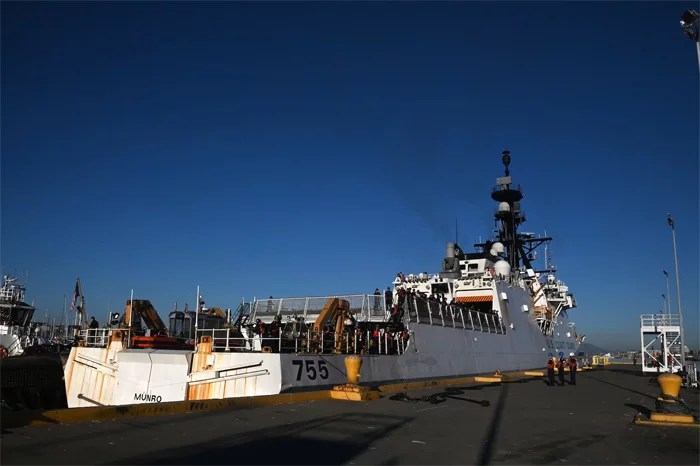
“Coast Guard Cutter Munro returns home following 118-day, 23,000-mile Western Pacific patrol” –CG News

USCGC Munro returns to Alameda after Western Pacific deployment in support of the Seventh Fleet. USCG photo. 

Below is a Coast Guard News release. Notably this is the third National Security Cutter WestPac deployment this year. It provides a good summary of the cutter’s activities and touches on some interesting things happening in the Western Pacific including the Information Fusion Center in Singapore and the growing cooperation with the Japanese and S. Korean Coast Guards.

The link above includes lots more photos but I think the ones above and immediately below give a good view of the revised boat handling arrangement on the stern.

USCGC Munro, October 2023. USCG photo.

The photos below are from earlier reports linked in the news release.

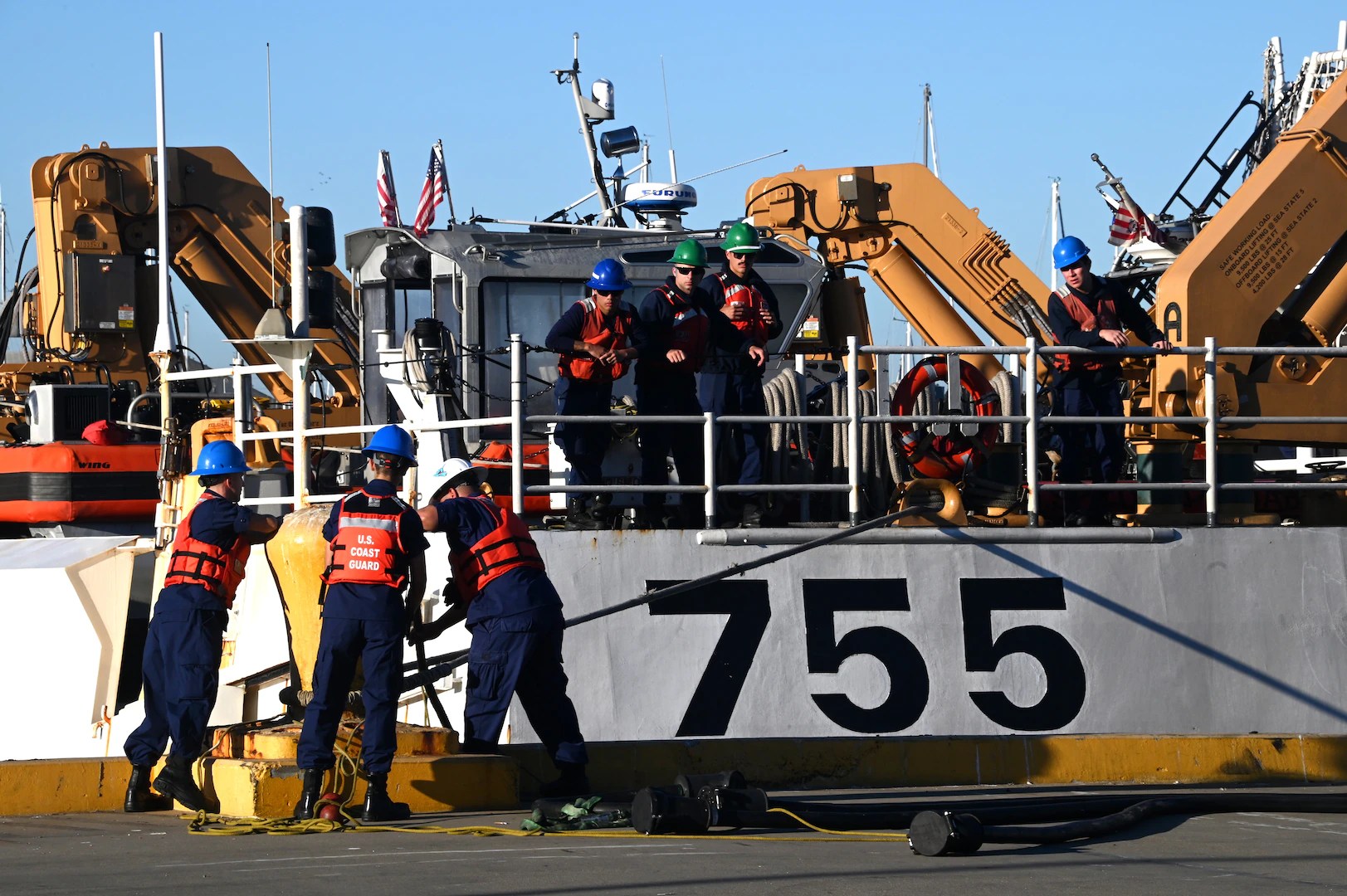
Royal Navy vessel HMS Spey (P234) (foreground) conducts coordinated ship maneuvers with U.S. Coast Guard Cutter Munro (WMSL 755) Sept. 17, 2023, in the South China Sea. Munro is deployed to the Indo-Pacific to advance relationships with ally and partner nations to build a more stable, free, open and resilient region with unrestricted, lawful access to the maritime commons. (U.S. Navy photo by Chief Petty Officer Brett Cote)

(From left) U.S. Coast Guard Cutter Munro (WMSL 755), Royal Thai Navy ship HTMS Pattani (511), and Royal Thai Navy ship HTMS Klongyai (522) steam in formation during an at-sea engagement Sept. 1, 2023, in the South China Sea. Munro is deployed to the Indo-Pacific to advance relationships with ally and partner nations to build a more stable, free, open and resilient region with unrestricted, lawful access to the maritime commons. (U.S. Navy photo by Chief Petty Officer Brett Cote)


Oct. 18, 2023

Coast Guard Cutter Munro returns home following 118-day, 23,000-mile Western Pacific patrol

ALAMEDA, Calif. — The crew of U.S. Coast Guard Cutter Munro (WMSL 755) returned to their Alameda homeport Wednesday following a 23,000-mile, multi-month Western Pacific patrol operating in support of U.S. Navy’s Seventh Fleet by conducting multiple engagements with partner nations promoting a free and open Indo-Pacific.

Munro departed Alameda in June and was the Coast Guard’s third national security cutter deployed to the Indo-Pacific region this year.

The Indo-Pacific region stretches from the United States Pacific coastline to the Indian Ocean; it is home to over half of the world’s population and accounts for two-thirds of the global economy.

Throughout the 118-day patrol, Munro participated in international engagements in Japan, Republic of Korea, Malaysia, Singapore, and Brunei, and with ships at sea from the Royal Thai Navy and United Kingdom Royal Navy.

“This opportunity to work with our allies and partners throughout the Indo-Pacific increased our regional interoperability and sharpened our seamanship,” said Capt. Rula Deisher, Munro’s commanding officer. “We thoroughly enjoyed conducting professional exchanges, improving maritime capabilities, and strengthening maritime governance in the region by fostering global connectivity, facilitating cohesion and steps taken towards ensuring a free and open Indo-Pacific.”

While in Yokosuka, Japan, Munro hosted a luncheon aboard with several key members of the Japan Coast Guard to discuss Operation Solid Alliance for Peace and Prosperity with Humanity and Integrity on the Rule of law-based Engagement (SAPPHIRE). SAPPHIRE is a joint agreement between the U.S. and Japan Coast Guards signed in 2022 to enhance cooperation between the two sea services.

Munro’s crew had the opportunity to engage with members of the Korea Coast Guard (KCG) and tour the KCG’s Academy and training ship while in Gwangyang, Republic of Korea. At sea, Munro and the Korea Coast Guard vessel KCG 3011 (Badaro) conducted a joint harbor sail, including ship maneuvers and small boat operations.

Munro conducted a port call in Malaysia, the U.S. Coast Guard’s first cutter to visit the country since 2020. While there, crewmembers interacted with the Malaysian Maritime Enforcement Agency (MMEA) and conducted several subject matter expert exchanges at the MMEA’s training academy. Additionally, Munro hosted key leaders aboard for a luncheon and tour aboard the cutter.

At sea, Munro participated in the Southeast Asia Maritime Law Enforcement Initiative (SEAMLEI) in the Gulf of Thailand with Royal Thai and Malaysian Navies. SEAMLEI included mock boardings, flight operations, and formation steaming.

In Singapore, crewmembers engaged with members from the Information Fusion Center, U.S. Navy League, and Singapore Maritime & Port Authority personnel, as well as serving in a community relations event where the crew constructed desks and other furniture for a local school.

Munro’s last port call in the region was in Brunei, where the crew participated in Cooperation Afloat Readiness and Training (CARAT), the first U.S. Coast Guard asset to do so in 23 years. Munro worked with the Royal Brunei Navy, Royal Brunei Air Force, Brunei Department of Fisheries, Brunei Military Police, U.S. Marine Corps, and U.S. Navy, conducting subject matter expert exchanges and exercises. During the at-sea portion of CARAT, Munro trained with a Royal Brunei Navy Patrol Vessel, Royal Brunei Air Force S-70 helicopter, and U.S. Navy P-8, conducting shipboard maneuvers and search and rescue exercises.

Named after Signalman First Class Douglas Munro, Munro is one of four Coast Guard national security cutters homeported in Alameda. The cutter’s namesake is the Coast Guard’s only Medal of Honor recipient. He was awarded for his actions and sacrifice in the defense, rescue, and evacuation of a U.S. Marine battalion from Point Cruz at Guadalcanal in the Solomon Islands in 1942.

National security cutters are the largest and most technologically sophisticated cutters in the Coast Guard’s white-hull fleet. National security cutters can operate in the most demanding open ocean environments, including the North Pacific’s hazardous fisheries and the Southern Pacific’s vast approaches, where much of the American narcotics trafficking occurs. With robust command, control, communication, computers, intelligence, surveillance, and reconnaissance equipment, stern boat launch and aviation facilities, as well as long-endurance station keeping, national security cutters are an afloat operational-level headquarters for complex law enforcement and national security missions involving multiple Coast Guard and partner agency participation.