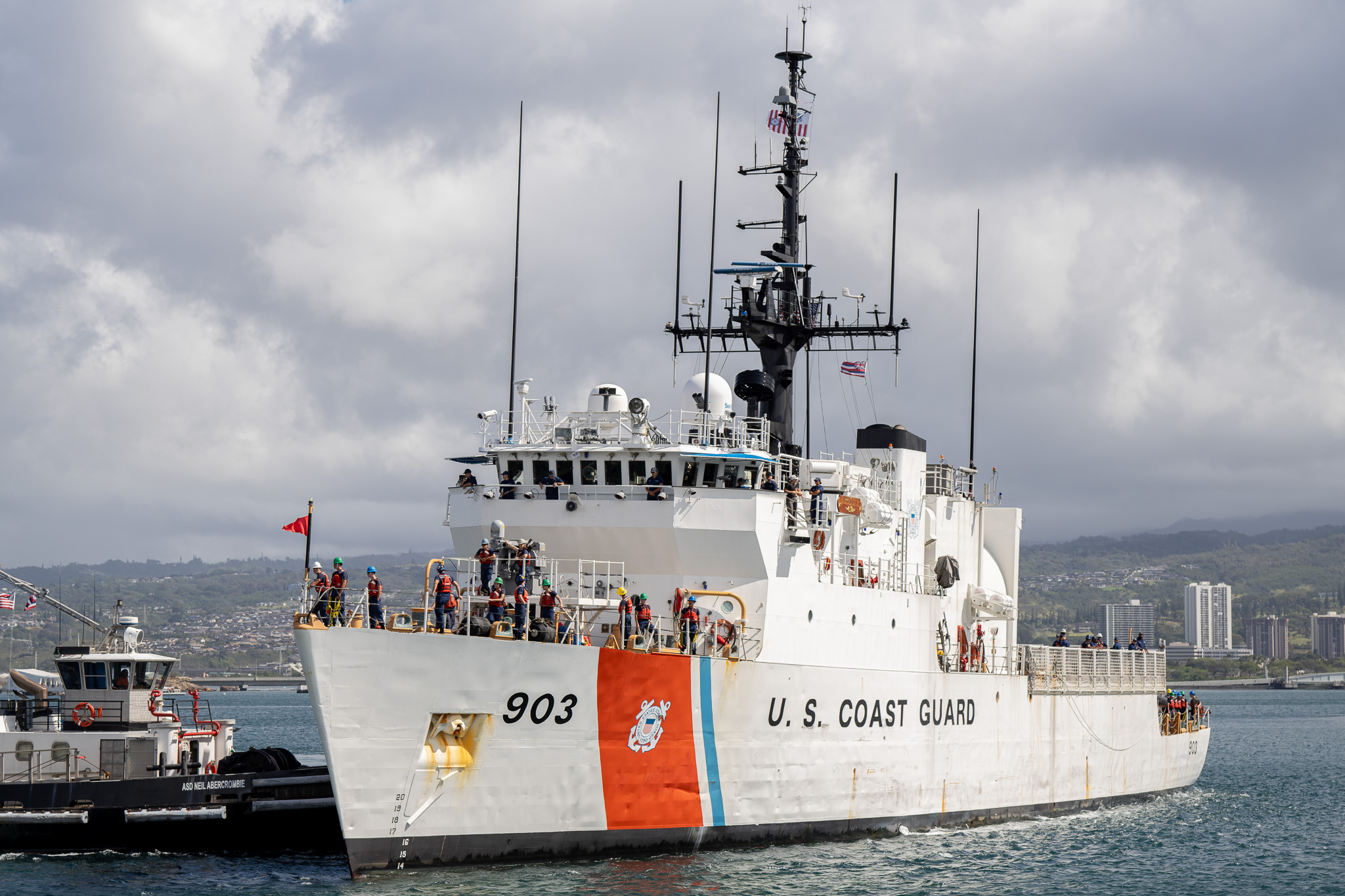
“Personnel Shortage At U.S. Coast Guard Sinks 10 Cutters & 29 Stations” –What is Going on With Shipping?

Above is one of a series of “What is Going on With Shipping?” videos done by Salvatore Mercogliano. Most are not directly Coast Guard related, but this one is spot-on.

Additional Comment

We did talk about this earlier, “Coast Guard adjusts operations plan to mitigate 2024 workforce shortage” –MyCG 

It should be noted that this is not because we have reduced the number of afloat billets, it is because the workforce has not grown as rapidly as the number of billets.

Also, we are not greatly reducing the number of ships compared to historic numbers or the “Program of Record,” The program of record was to provide 8 NSCs, 25 OPCs and 58 FRCs for a total of 91. With these changes we will have 10 NSCs, 23 WMECs, and 55 to 57 FRCs for a total of 88-90 and up to 98 or more as all 65 FRCs currently funded are delivered.

The problems are that the 210s should have been replaced decades ago and demand for Coast Guard assets has increased. The Missions we are doing with the FRCs in the Western Pacific should really be being done by a ship with better seakeeping and endurance and facilities for a helo and UAS, something like “Cutter X.”

“All survive Coast Guard helicopter crash on island near Sitka” –Must Read Alaska

Must Read Alaska reports,

“A Coast Guard MH-60 Jayhawk helicopter air crew from Air Station Sitka crashed with four people aboard on Read Island during a search and rescue mission late Monday night. The crash took place while the helicopter crew was assisting a vessel that had taken on water.”

Thanks to David for bringing this to my attention.


Addition: Below is the a D17 News Release.


Nov. 14, 2023

Coast Guard helicopter crashes in Alaska during search and rescue response

D17 Public Affairs

JUNEAU, Alaska — A Coast Guard MH-60 Jayhawk helicopter air crew from Air Station Sitka crashed with four people aboard on Read Island during a search and rescue mission late Monday night.

Rescue crews from Alaska Wildlife Troopers and Petersburg Fire and Rescue arrived on scene at approximately 12:50 a.m., and a second MH-60 Jayhawk air crew from Air Station Sitka arrived at approximately 1:39 a.m. Together, they provided preliminary medical care to two crew members who were reported to have sustained serious injuries.

The four crew members were hoisted aboard the second Coast Guard helicopter and were transported to Petersburg for medical care. They were then transferred to Seattle via a C-130 Hercules aircraft from Coast Guard Air Station Kodiak for a higher level of care.

The watchstanders received notification of the crash at approximately 11:05 p.m. from the fishing vessel Lydia Marie, who was initially receiving search and rescue assistance from the aircrew due to flooding on their vessel.

“Our priority is to provide the highest level of care possible for our injured members and their families,” said Rear Adm. Megan Dean, commander of the Coast Guard’s 17th District. “We are grateful for the swift response and professional skill shown by the Alaska Wildlife Troopers and Petersburg Fire and Rescue members who answered our call for assistance during this critical time. We have opened an investigation into the cause of this event and will be forthcoming with the results as they become available.”

The U.S. Coast Guard Cutters Elderberry (WLI-65401) and Douglas Denman (WPC 1149) crews assumed responsibility for providing search and rescue assistance to the Lydia Marie and have established a security zone around the crash site.

The cause of the crash is currently under investigation.


An Update.


Nov. 14, 2023

Update 01: Coast Guard continues response to helicopter crash in Alaska during search and rescue case

D17 Public Affairs

JUNEAU, Alaska — Coast Guard crew members injured in the MH-60 Jayhawk helicopter crash Monday night on Read Island continue to receive medical care, and the search and rescue case for fishing vessel Lydia Marie is complete.

As of Tuesday afternoon, the four service members from Coast Guard Air Station Sitka involved in the crash were transported to the Harborview Medical Center in Seattle for a higher level of care via a C-130 Hercules aircraft from Coast Guard Air Station Kodiak.

The two Coast Guard members reported to have serious injuries were listed in serious condition, while the other two members were listed in good condition with minor injuries.

The crew of the U.S. Coast Guard Cutter Elderberry (WLI 65401) oversaw the de-watering of the fishing vessel Lydia Marie and escorted the vessel back to Petersburg. There, the crew of the U.S. Coast Guard Cutter Pike (WPB 87365) conducted a post-search and rescue boarding with no violations, closing the original search and rescue case.

On-scene weather at the beginning of the search and rescue evolution with the Lydia Marie was reported with wind speeds at 28-34 miles per hour and seas at four to five feet. Upon arrival at the scene of the crash, a second Coast Guard MH-60 rescue helicopter reported wind speeds of 46 miles per hour, visibility at one-quarter of a mile, and seas at one to two feet.

Four people were confirmed aboard the Lydia Marie, and their initial call for assistance was transmitted on VHF-FM channel 16 Monday night at approximately 8:06 p.m.

The investigation into the cause of the helicopter crash is ongoing.

Further requests for information by members of the media can be made by contacting the Public Affairs duty watchstander at D17-DG-PublicAffairs@uscg.mil.


Nov. 15, 2023

Update 02: Coast Guard continues investigation of helicopter crash, two released from hospital

D17 Public Affairs

JUNEAU, Alaska — Two Coast Guard crew members have been released from the hospital, and the investigation into the cause of an MH-60 Jayhawk helicopter air crew crash on Read Island continues, Wednesday morning. 

The remaining two crew members who were previously listed in serious condition have improved and are now listed in fair condition.

The investigation into the crash is still ongoing. 

“FarSounder joins Seabed 2030 in Mapping the World’s Oceans” –FarSounder News Release

Below is a news release from FarSounder. Sure, it’s a PR piece, but this is an interesting and potentially important project. For decades, Coast Guard cutters passed their depth sounding to the Hydrographic service. We have talked about FarSounder products before.

November 7, 2023
Warwick, RI USA

FarSounder joins Seabed 2030 in Mapping the World’s Oceans

FarSounder is partnering with The Nippon Foundation-GEBCO Seabed 2030 Project to work together to advance the collective understanding of the ocean floor in pursuit of the complete map of the entire seabed.

This partnership coincides with FarSounder’s recent Small Business Innovation Research (SBIR) Phase I grant awarded by the National Oceanic and Atmospheric Administration (NOAA). This award is providing funding for the research and development of a new project that will develop a cloud-based service to shareFarSounder/NSSL Global survey data collected by FarSounder customers.

The project – Enabling Expanded Crowdsourced Bathymetry Contributions With High-Quality Metadata via Commercially Sustainable Incentives to Contributors – will allow for data sharing with others across the FarSounder customer fleet and with Seabed 2030 via the International Hydrographic Organization’s (IHO) Data Centre for Digital Bathymetry (DCDB), which archives over 30 terabytes of oceanic depth soundings and serves as the long-term archive for Seabed 2030.

Seabed 2030 is a collaborative project between The Nippon Foundation and the General Bathymetric Chart of the Oceans (GEBCO), which seeks to inspire the complete mapping of the world’s ocean by 2030, and to compile all the data into the freely available GEBCO Ocean Map. The Project is formally endorsed as a Decade Action of the UN Ocean Decade. GEBCO is a joint programme of the IHO and the Intergovernmental Oceanographic Commission (IOC), and is the only organisation with a mandate to map the entire ocean floor.

“Our commitment to contributing high-resolution data to the IHO’s DCDB aligns seamlessly with Seabed 2030’s mission of achieving a complete map of the entire ocean floor,” commented FarSounder CEO Matthew Zimmerman. “By streamlining the transfer of data from customers to the DCDB we hope to encourage broader participation, inviting more individuals to actively contribute to bridging the gaps in our understanding of the ocean.”

“It’s a pleasure to welcome FarSounder on board as an official partner,” said Seabed 2030 Project Director Jamie McMichael-Phillips. “FarSounder plays a central role in championing crowdsourced bathymetry – which is essential to Seabed 2030. We look forward to working together, and look forward to following the company’s journey as it embarks upon its exciting new project.”

All data collected and shared with the Seabed 2030 project is included in the free and publicly available GEBCO global grid.

About FarSounder

At FarSounder, we believe in pushing the boundaries of what is possible in the exploration of the world’s oceans and waterways. We do this by developing innovative products that do more than just help vessels get safely from point A to point B. We make a difference by being environmentally conscious by creating products that reduce the impact on the ecosystem.

For over 20 years, we have dedicated ourselves to tackling new ideas and developing 3D Forward Looking Navigation Sonar technology (3D FLS). Our unique patented technology paints a clear picture of what lies ahead underwater and along the bottom, reducing the likelihood of collisions, which in turn prevents costly damage to property, the environment, and marine and human lives alike.

Our navigation systems are globally recognized. The Argos 1000, Argos 500, and Argos 350 are able to provide customers with a whole suite of sophisticated navigation capabilities of interest to many types of vessels. Wherever you decide to go, FarSounder will help get you there safely.

For more information, visit http://www.farsounder.com

About The Nippon Foundation-GEBCO Seabed 2030 Project

The Nippon Foundation-GEBCO Seabed 2030 Project is a collaborative project between The Nippon Foundation and GEBCO. The Seabed 2030 Project, launched at the United Nations Ocean Conference in 2017 by Chairman Sasakawa of The Nippon Foundation, coordinates and oversees the sourcing and compilation of bathymetric data from different parts of the world’s ocean through its five centres into the freely-available GEBCO Grid. Four Regional Centres cover the Southern Ocean, the Arctic and North Pacific Ocean, the Atlantic and Indian Oceans, and the South and West Pacific Ocean. These feed data products into the Global Data Centre. The IHO Data Center for Digital Bathymetry (DCDB) serves as the
long-term archive for Seabed 2030.
Find out more about the project and how to get involved.

For more detailed information on The Nippon Foundation-GEBCO Seabed 2030 Project, please visit our website, seabed2030.org, like our Facebook page, follow us on Twitter @Seabed2030, or contact enquiries@seabed2030.org.

For media inquiries, contact:
Pegah Souri
pegah.souri@shearwater.global
+44 (0)7951 581707

Media Contact:

Cassie Stetkiewicz
Director of Operations
Cassie.stetkiewicz@farsounder.com
+1 401 784 6700 6002

“Coast Guard adjusts operations plan to mitigate 2024 workforce shortage” –MyCG

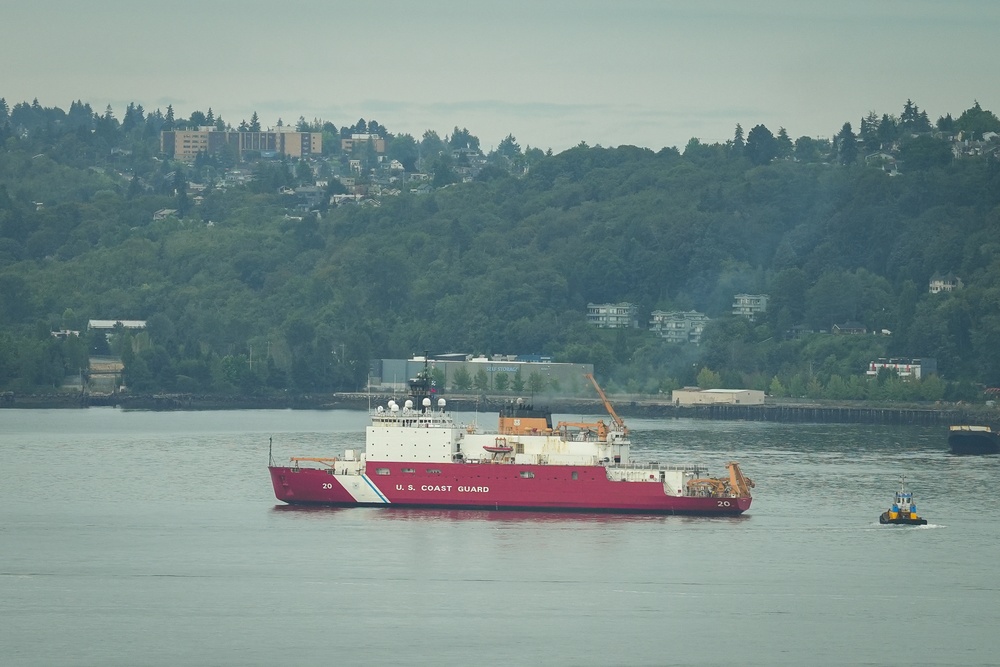
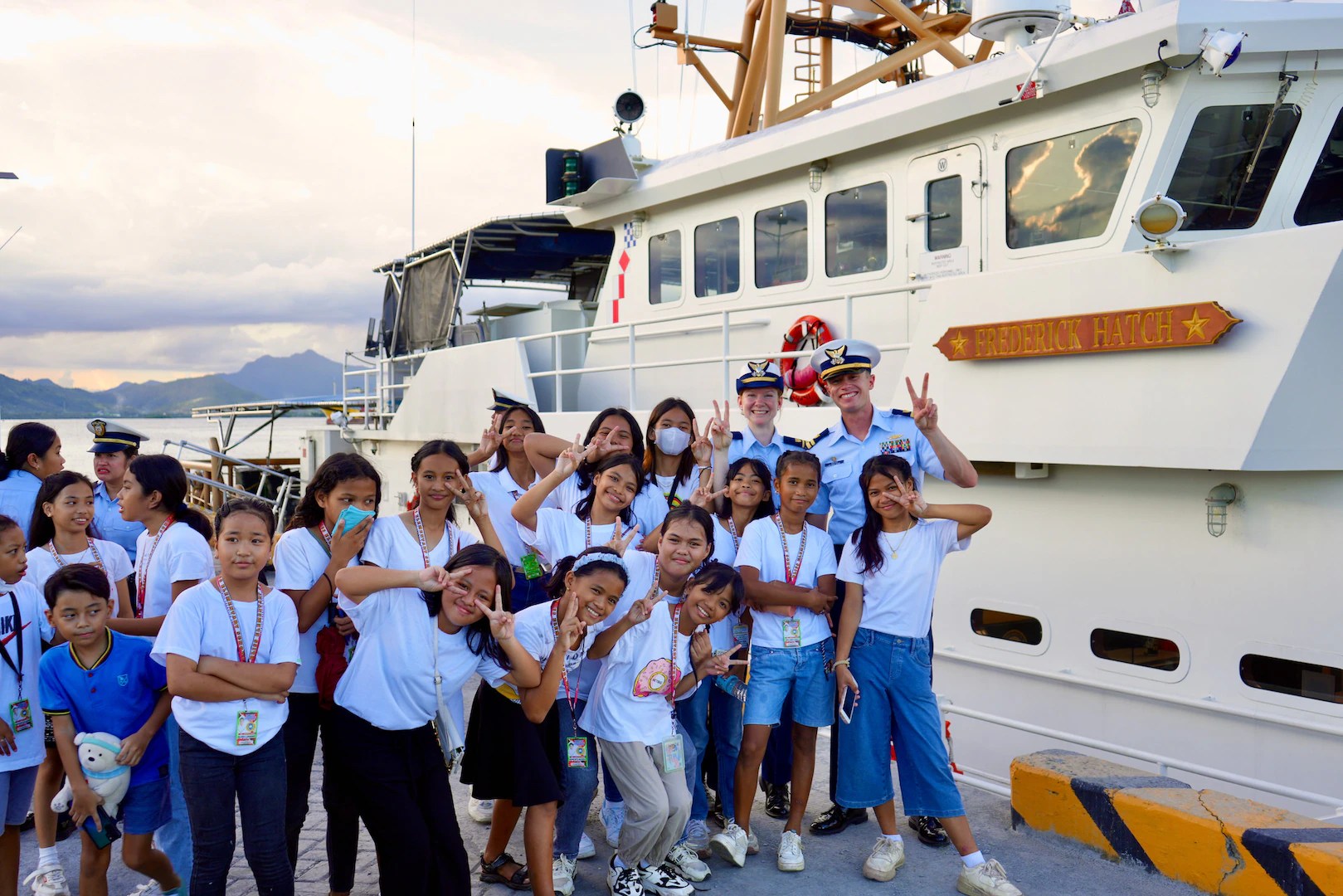
USCGC Steadfast is the next WMEC to be decommissioned. The 55 year old cutter is homported in Astoria, Ore.

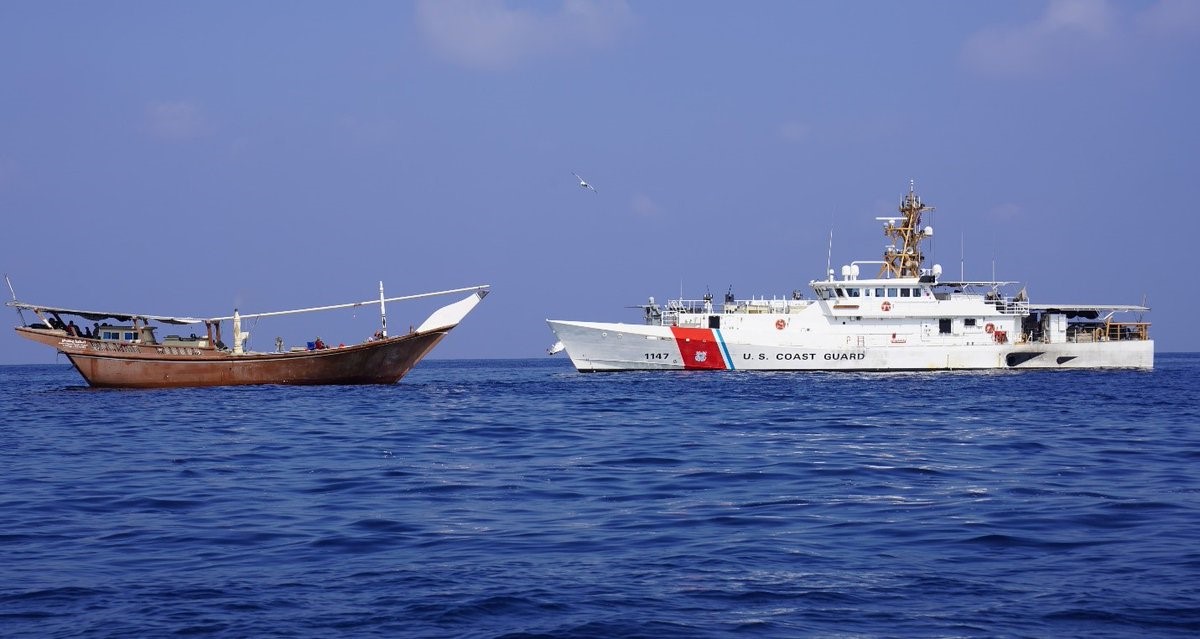
The Coast Guard is acting decisively to deal with the current personnel shortage. I have reproduced the announcement below. The result will significantly affect the cutter fleet. Three 210s will be placed in layup pending decommissioning and seven 87 foot WPBs will be placed in layup pending reactivation.

The choice to decommission Steadfast rather than another 210 may have been influenced by the fact that the first two OPCs are to be homeport on the West Coast (San Pedro) and two Webber class cutters (WPC-1156 and 1157) are expected to be based in Astoria. Both WPCs will probably arrive in the next six to eight months.

Not surprisingly cutters are being decommissioned before their replacements come on line. This situation is likely to get worse before the last OPC is delivered (planned for 2038).

Of the sixteen 210 foot Reliance class cutters, three are no longer in Coast Guard service. USCGC Decisive was decommissioned on 2 March 2023. USCGC Courageous was donated to Sri Lanka in 2004, and USCGC Durable was decommissioned in 2001 and commissioned into the Colombian Navy in 2003.


Oct. 31, 2023

Coast Guard adjusts operations plan to mitigate 2024 workforce shortage

By AJ Pulkkinen, MyCG writer

Coast Guard mission demands are growing while our Service faces a significant workforce shortage. The Coast Guard is short nearly 10% of the entire enlisted workforce and cannot continue to operate as we have historically with fewer people.

To mitigate the workforce challenge risk in a deliberative and strategic fashion, the Vice Commandant, Adm. Steven Poulin, has provided specific temporary operational guidance to adapt our operations while prioritizing lifesaving missions, national security and protection of the marine transportation system.

There will be no loss of search and rescue (SAR) capabilities. However, we will temporarily adjust operations to prioritize our lifesaving missions, national security and protection of the Marine transportation System.

The Commandant and Master Chief Petty Officer of the Coast Guard (MCPOCG) today e-mailed the workforce to outline the service’s mitigation strategy.

“The Coast Guard cannot maintain the same level of operations with our current shortfall – we cannot do the same with less. Conducting our missions is often inherently dangerous, and doing so without enough crew puts our members and the American public at increased risk,” wrote Adm. Linda Fagan and MCPOCG Heath Jones.

What does this mean for you? 

The Commandant has given Assignment Officers unprecedented flexibility this assignment season to work with members impacted by these force alignment changes.

Enlisted Personnel Management (EPM) and Officer Personnel Management (OPM) staff will start visiting the impacted units this week. They’ll answer questions and address members’ individual concerns. Some visits will be in person, others virtual.

“We understand the extra stress and anxiety these unforeseen changes create for our members and their families,” said Rear Adm. Rusty Dash, Commander of Personnel Service Center. “EPM and OPM will directly engage with each affected command to discuss individual situations and concerns.”

EPM’s priority is to assign affected members to the same geographic area (if possible and if that is what the member desires) while keeping their original tour completion dates. If that’s not possible, EPM will increase the member’s assignment priority and reassign the member based on their desire and service needs.

OPM will offer officers one-on-one counseling prior to eResume submission. OPM will work to tailor assignments to best meet officers’ professional and personal needs.

With your CAC, you can access the AY 2024 Force Alignment Initiative SharePoint site for full details.

Detailed Changes 

As cutter crews are not scalable, the only way to reduce the workforce of the cutter fleet is to reduce the number of operating cutters.

Previously planned cutter decommissionings will continue, including the Coast Guard Cutter Steadfast.

Some cutters will be placed in a special status awaiting either decommissioning or future reactivation. In some cases, the crews will do a hull swap to layup the cutter with the largest pending maintenance requirement.

  • Three 210′ Medium Endurance Cutters (WMEC) will be placed in layup, pending decommissioning.
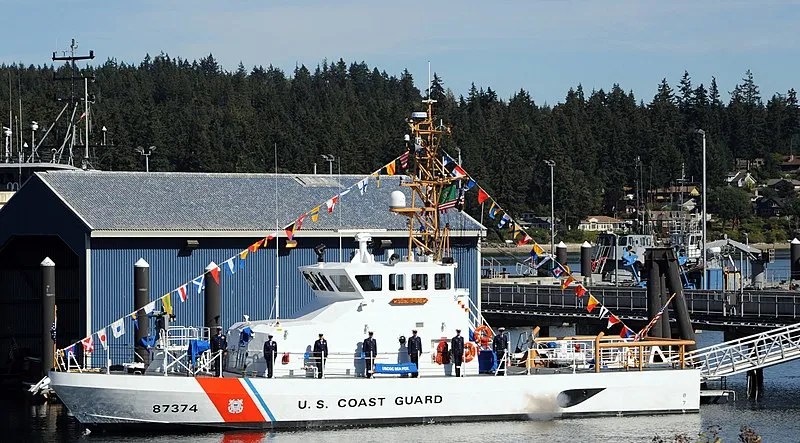
  • ​Seven 87′ Patrol Boats (WPB) will be placed in layup, pending reactivation.
  • Five 65′ Harbor Tugs (WYTL) will temporarily not be continuously manned but will be kept in a ready status in case icebreaking is needed.
  • Two 154′ Patrol Crafts (WPC) will commence uncrewed Recurring Depot Availability Program (RDAP) at the Coast Guard Yard in Baltimore, Maryland. The next 154′ Patrol Craft (WPC) scheduled for RDAP will deliver the hull to the Coast Guard Yard and swap hulls with a cutter that has completed drydock.

Shoreside changes are also necessary. There are 44 stations and 36 aids to navigation teams (ANTs) that currently have more billets than their staffing standards allow in the activity-based staffing model (ABSM). The stations will be reduced to their staffing standards and the ANTs to one billet below their staffing standards. Other shoreside changes include, but are not limited to:

  • Crews at all 23 seasonal station smalls will transfer to their parent command.
  • The six non-response units (boat forces units without SAR responsibilities) will suspend operations and their crews will be reassigned in assignment year (AY) 2024.
  • The identified 19 stations whose SAR response capabilities are redundant will be deemed Scheduled Mission Units. Three of these 19 stations will be ports, waterways and coastal security (PWCS) level one-Scheduled Mission Units.

Mission support units will also be part of the solution.

  • In AY 2023, the Deputy Commandant for Mission Support (DCMS) identified positions to go unfilled with minimum disruption in providing customer service. In AY 2024, EPM will continue to not assign members to vacancies identified in AY 2023 at bases and training centers.
  • DCMS and EPM will identify additional positions to be left vacant for AY 2024.

What’s Next? 

These risk-based adjustments for AY 2024 will mitigate our shortage, but we will still have some gapped positions. More mitigation efforts may be needed as we continue to evaluate Service readiness. This strategic approach to temporarily adjust operations will best position the Coast Guard for future operational capabilities.

And the future is coming quickly. The first offshore patrol cutter, CGC Argus (WMSM-915) was launched just last week.

“The ‘Trackline to 10,000,’ to have ten thousand members assigned to afloat units, is still the goal for our future fleet and we will get there,” said Capt. John Driscoll, the Chief of the Office of Cutter Forces. “We need to adjust our operating capacity now so we can prepare for the future. We will gradually grow fleet capacity back through continued construction of ships with the latest technology and the best crew habitability. Our cutter fleet is in demand globally, and I can see our cuttermen continuing to explore new locations as our ship operations are dedicated to the highest priority missions.”

The Coast Guard has always answered the call when faced with incredible challenges. We will take this challenge head-on and use it as an opportunity to prepare for the future.

Resources

“Coast Guard Cutter Munro returns home following 118-day, 23,000-mile Western Pacific patrol” –CG News

USCGC Munro returns to Alameda after Western Pacific deployment in support of the Seventh Fleet. USCG photo. 

Below is a Coast Guard News release. Notably this is the third National Security Cutter WestPac deployment this year. It provides a good summary of the cutter’s activities and touches on some interesting things happening in the Western Pacific including the Information Fusion Center in Singapore and the growing cooperation with the Japanese and S. Korean Coast Guards.

The link above includes lots more photos but I think the ones above and immediately below give a good view of the revised boat handling arrangement on the stern.

USCGC Munro, October 2023. USCG photo.

The photos below are from earlier reports linked in the news release.

Royal Navy vessel HMS Spey (P234) (foreground) conducts coordinated ship maneuvers with U.S. Coast Guard Cutter Munro (WMSL 755) Sept. 17, 2023, in the South China Sea. Munro is deployed to the Indo-Pacific to advance relationships with ally and partner nations to build a more stable, free, open and resilient region with unrestricted, lawful access to the maritime commons. (U.S. Navy photo by Chief Petty Officer Brett Cote)

(From left) U.S. Coast Guard Cutter Munro (WMSL 755), Royal Thai Navy ship HTMS Pattani (511), and Royal Thai Navy ship HTMS Klongyai (522) steam in formation during an at-sea engagement Sept. 1, 2023, in the South China Sea. Munro is deployed to the Indo-Pacific to advance relationships with ally and partner nations to build a more stable, free, open and resilient region with unrestricted, lawful access to the maritime commons. (U.S. Navy photo by Chief Petty Officer Brett Cote)


Oct. 18, 2023

Coast Guard Cutter Munro returns home following 118-day, 23,000-mile Western Pacific patrol

ALAMEDA, Calif. — The crew of U.S. Coast Guard Cutter Munro (WMSL 755) returned to their Alameda homeport Wednesday following a 23,000-mile, multi-month Western Pacific patrol operating in support of U.S. Navy’s Seventh Fleet by conducting multiple engagements with partner nations promoting a free and open Indo-Pacific.

Munro departed Alameda in June and was the Coast Guard’s third national security cutter deployed to the Indo-Pacific region this year.

The Indo-Pacific region stretches from the United States Pacific coastline to the Indian Ocean; it is home to over half of the world’s population and accounts for two-thirds of the global economy.

Throughout the 118-day patrol, Munro participated in international engagements in Japan, Republic of Korea, Malaysia, Singapore, and Brunei, and with ships at sea from the Royal Thai Navy and United Kingdom Royal Navy.

“This opportunity to work with our allies and partners throughout the Indo-Pacific increased our regional interoperability and sharpened our seamanship,” said Capt. Rula Deisher, Munro’s commanding officer. “We thoroughly enjoyed conducting professional exchanges, improving maritime capabilities, and strengthening maritime governance in the region by fostering global connectivity, facilitating cohesion and steps taken towards ensuring a free and open Indo-Pacific.”

While in Yokosuka, Japan, Munro hosted a luncheon aboard with several key members of the Japan Coast Guard to discuss Operation Solid Alliance for Peace and Prosperity with Humanity and Integrity on the Rule of law-based Engagement (SAPPHIRE). SAPPHIRE is a joint agreement between the U.S. and Japan Coast Guards signed in 2022 to enhance cooperation between the two sea services.

Munro’s crew had the opportunity to engage with members of the Korea Coast Guard (KCG) and tour the KCG’s Academy and training ship while in Gwangyang, Republic of Korea. At sea, Munro and the Korea Coast Guard vessel KCG 3011 (Badaro) conducted a joint harbor sail, including ship maneuvers and small boat operations.

Munro conducted a port call in Malaysia, the U.S. Coast Guard’s first cutter to visit the country since 2020. While there, crewmembers interacted with the Malaysian Maritime Enforcement Agency (MMEA) and conducted several subject matter expert exchanges at the MMEA’s training academy. Additionally, Munro hosted key leaders aboard for a luncheon and tour aboard the cutter.

At sea, Munro participated in the Southeast Asia Maritime Law Enforcement Initiative (SEAMLEI) in the Gulf of Thailand with Royal Thai and Malaysian Navies. SEAMLEI included mock boardings, flight operations, and formation steaming.

In Singapore, crewmembers engaged with members from the Information Fusion Center, U.S. Navy League, and Singapore Maritime & Port Authority personnel, as well as serving in a community relations event where the crew constructed desks and other furniture for a local school.

Munro’s last port call in the region was in Brunei, where the crew participated in Cooperation Afloat Readiness and Training (CARAT), the first U.S. Coast Guard asset to do so in 23 years. Munro worked with the Royal Brunei Navy, Royal Brunei Air Force, Brunei Department of Fisheries, Brunei Military Police, U.S. Marine Corps, and U.S. Navy, conducting subject matter expert exchanges and exercises. During the at-sea portion of CARAT, Munro trained with a Royal Brunei Navy Patrol Vessel, Royal Brunei Air Force S-70 helicopter, and U.S. Navy P-8, conducting shipboard maneuvers and search and rescue exercises.

Named after Signalman First Class Douglas Munro, Munro is one of four Coast Guard national security cutters homeported in Alameda. The cutter’s namesake is the Coast Guard’s only Medal of Honor recipient. He was awarded for his actions and sacrifice in the defense, rescue, and evacuation of a U.S. Marine battalion from Point Cruz at Guadalcanal in the Solomon Islands in 1942.

National security cutters are the largest and most technologically sophisticated cutters in the Coast Guard’s white-hull fleet. National security cutters can operate in the most demanding open ocean environments, including the North Pacific’s hazardous fisheries and the Southern Pacific’s vast approaches, where much of the American narcotics trafficking occurs. With robust command, control, communication, computers, intelligence, surveillance, and reconnaissance equipment, stern boat launch and aviation facilities, as well as long-endurance station keeping, national security cutters are an afloat operational-level headquarters for complex law enforcement and national security missions involving multiple Coast Guard and partner agency participation.

Survivable? “U.S. Navy Turns Away From Small Warships Despite Growing Demand, Tactical Relevance” –Forbes

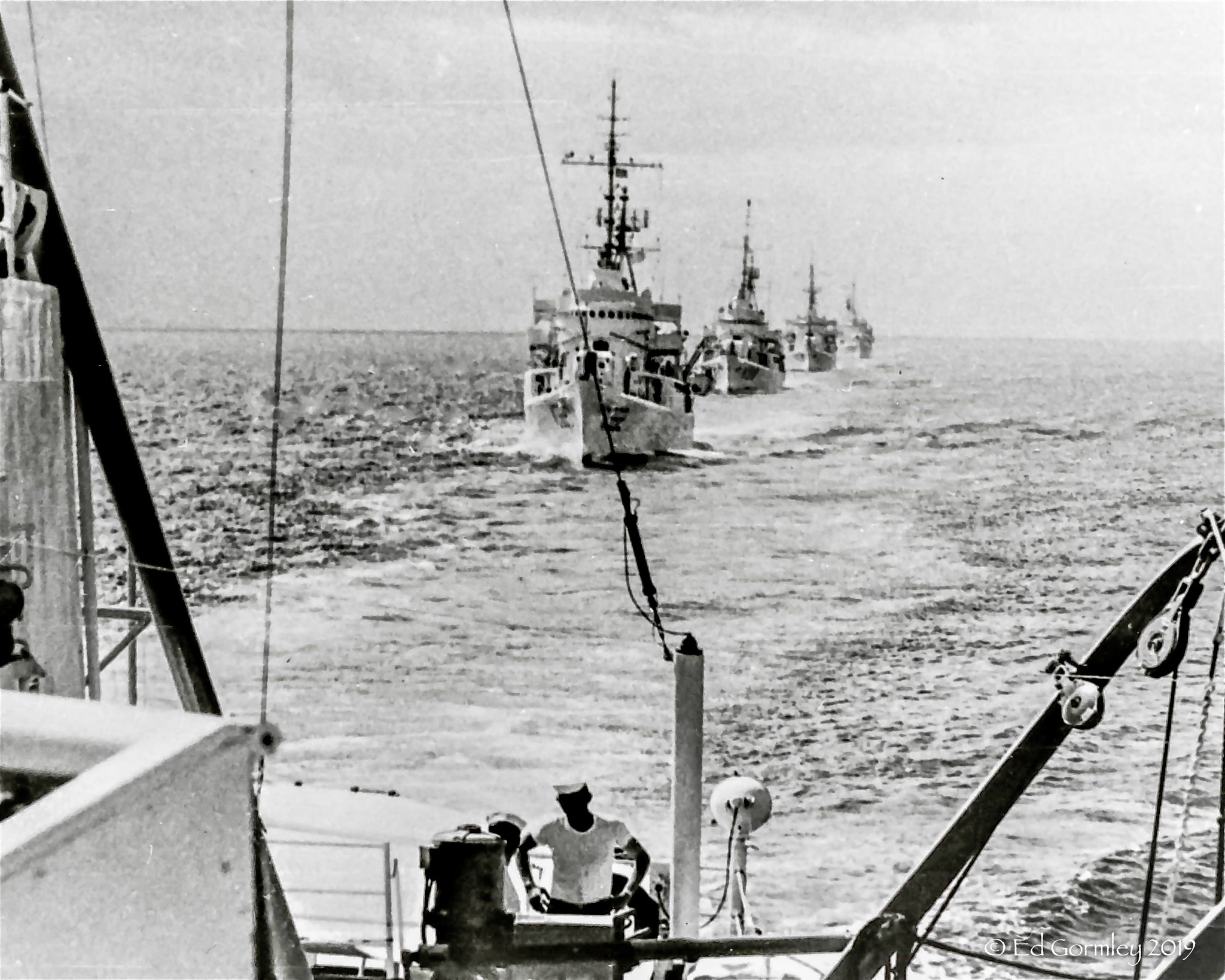
USS Newcomb (DD-586), named after Revenue Cutter Service officer Frank H. Newcomb, who captained the cutter Hudson during the Spanish American War, was awarded eight battlestars, was struck by five Kamikazes off Okinawa, but survived.

Forbes has a recent post by Craig Hooper, about a topic close to my heart,

While small ships jostle in the South China Sea, the U.S. Navy is celebrating their departure from the messy business of managing small combatants. After shedding fourteen long-unloved Cyclone class (PC-1) coastal patrol ships, the Navy has effectively handed the responsibility for managing small ship operations, engagement and training to the already overtasked and poorly-funded U.S. Coast Guard.

I will interject here that while the Cyclone class were largely seen by “Big Navy,” which tends to be run by aviators (mostly fighter and attack aircraft types) and submariners, to be irrelevant, they were not unloved by those that sailed them. I have communicated with several former PC sailors, and they all loved them. They were also the busiest ships in the US Navy, being underway more than larger Navy ships, so apparently the fleet commanders found them useful.

Hooper says the Navy sees small ships as Unsurvivable. The US Navy has no surface combatants between the 44 foot patrol boats and the 3500 ton Littoral Combat Ships, and they are not really happy with the survivability of the LCS. I think the Navy knows they need a lot more ships and that some of them can be small. Not every ship needs to be able to do everything. They are talking about building more small ships, but mostly they will be unmanned.

A 2015 post addressed small warship survivability, but it appears we need to look at this again.

If the Navy thinks all small ships need to be unmanned because they are not survivable, I will point out that that reasoning is not supported by history. In fact, they have been misled by looking at only part of the survivability question, passive survivability.

Why was this?

Because the enemy gets a vote. They will expend much more effort looking for and attacking the major units. Yes, big combatants can take more hits, but they are also more likely to be hit, and can also expect to be hit more often.

No ship, no matter how large, is unsinkable, especially when the enemy sees it as their primary threat. Carriers in particular have a huge bullseye painted on their flight decks. Given the opportunity, every weapon will be pointed at them until they are all eliminated.

Whether a unit will survive depends on in part on its passive survivability, but also on its self-defense capability, the area defense capability of assets with them, where and how the asset is used, and particularly on how the enemy sees the asset. Is it an immediate threat? Is destroying it key to success?

Historic Context:

Looking at the figures I found researching for my earlier post.

The US fleet at the beginning of the war (WWII), it included 233 major surface combatants of which 46 or 19.7% were sunk by enemy action during the course of the war. If we break it down by type it looks like this:

  • Type: Number in Commission, Dec. 7, 1941 / Number sunk / % lost to enemy action
  • Aircraft Carriers (CV): 7 / 4 / 57.1%
  • Escort Carrier (CVE): 1 / 0 / 0%
  • Battleships (BB): 17 / 5 / 29.4% (of the 5 sunk, all were at Pearl Harbor, 3 were salvaged)
  • Cruisers (CA/CL): 37 / 8 / 21.6%
  • Destroyers (DD): 171 / 29 / 17%

Notably, Carriers had the highest loss rate. Battleships, surface combatants that should have been the most “survivable,” were the second most likely type to be sunk.

I don’t have similar figures across all major types like this for the Royal Navy and the Japanese Navy but a look at only their largest ships shows similar or higher loss rates.

Of the ships that the Royal Navy had in commission when they declared war on Germany in September 1939, four of 15 battleships and battlecruisers were sunk (26.7%), five of seven aircraft carriers were sunk (71.4%).

Of the ships that the Imperial Japanese Navy had in commission at the time of the Attack on Pearl Harbor in December 1941, 8 of 10 Battleships were sunk by enemy action (80%) (one was destroyed by a non-combat related magazine explosion) and nine of ten aircraft carriers (90%) were sunk. Their only surviving aircraft carrier was their oldest and smallest (probably least “survivable”) that had been used only as a training carrier.

Certainly, the British and Japanese experience offers nothing to suggest that larger, supposedly, more “survivable” ships are more likely to survive.

Small ships may not be priority targets.

As I noted in the earlier post, I will add a bit of anecdotal evidence. As part of Operation Overlord, the Normandy Invasion, 60 US Coast Guard 83 foot patrol boats were assigned to rescue those unlucky enough to find themselves in the water or sinking. 30 went to the American beachheads and 30 went to the British and Canadian beachheads. Being wooden hulled and gasoline powered, they certainly would not have been considered “survivable.” Apparently, they were in the thick of it, because they rescued 1438 men from the water and sinking craft. In spite of all the fire from shore, not a single boat was sunk and not a single crewman was killed. Apparently, the German gunners were too busy with the landing craft hitting the beach and the warships that were shelling them. They simply were not a priority target.

Some of the USN’s least survivable ships, 450 and 850 ton subchasers also suffered few losses. Combat losses for the PC-461 class built 1941-44 were miniscule (8 of 343, 2.3%here). For the PCE-842 class, all commissioned between 1943 and the end of the war, losses were non-existent (none of the 68 completed was lost, 0%here). 

Generally small ships don’t confront major of enemy forces alone. They are part of a fleet. Before the LCS got the Mine Counter Measures (MCM) mission, the US Navy’s MCM ships were the Avenger class. Some are still in commission. They had a wood and fiberglass hull and were armed with four .50 caliber machine guns. There was no great cry that they were not survivable. Fleet commanders are not stupid. If ships that are needed to do a job cannot defend themselves, then, crewed or uncrewed, they will be escorted and defended.

Not sunk but damaged:

Damage gets much less attention than sinkings, but many of the “more survivable” ships suffered serious but survivable damage that reduced their capabilities or took them out of the fight.

The two pre-war built fleet carriers that spent the War in the Pacific and survived were both seriously damaged more than once. Saratoga was torpedoed on two occasions and took four kamikaze hits and two bombs on another. Enterprise was hit by bombs four different times and by kamikazes on two others.

Because they are more likely to survive the many hits they are likely to take, the larger, “more survivable” ships are more likely to be out of the fight having their damage repaired, even if they do not sink.

Looking at the Essex class carriers, none of which were lost, only Essex was in commission by the end of 1942, but even she did not reach the Pacific until May 1943. Only seven were commissioned before 1944. Only 14 before 1945. In spite of this, ten ships of the class (CVs 9,10,11,13,14,15,16, 17,18, and 19) were hit on a total of 22 different occasions, CV-11 and CV-13 each five times. In most cases the damage was minor, but it does demonstrate the high priority the enemy placed on neutralizing them. At least in some cases the ships had to terminate combat to address the damage. USS Franklin (CV-13) and USS Bunkerhill (CV-17) had to return to the states to address extensive damage. It is a tribute to the mobile support provided at advanced bases that more time was not lost. 

All four USN fleet aircraft carriers that were sunk were hit by multiple torpedoes. Only two torpedoes hit Essex class carriers, only a single torpedo in each case, USS Lexington, in Dec 1943, that kept her out of action for three months, and USS Intrepid, in Feb 1944, that kept her out of action for seven months.

It appears that the difference between the loss rate of aircraft carriers sunk in the first year of the war (57.1%) and the Essex class during the last two years of the war (0%) had much more to do with improved defensive capabilities (radar, CICs, fighter direction, anti-aircraft guns and firecontrol, proximity fuses, etc.) than improvements in passive survivability.

All the Essex class carriers survived the war, but so did most of the less survivable ships, particularly if they did not see action until the last two years of the war as the Essex class did.

How about now?

In WWII the Navy had an extensive mobile repair and support team that allowed most damage to be corrected close to the scene of action without the long transits to and from yards in the continental US. They could drydock carriers and battleships in advanced bases like Ulithi.

Ulithi Atoll north anchorage and Sorlen Island, late 1944.

Given our current shortage of major ship repair facilities in the US and the near total lack of the capability to quickly establish advanced bases, it is unlikely we would be able to return damaged ships, particularly large ones, to service as quickly as we did during WWII.

In short, smaller, less “survivable” ships that are less likely to be targeted and sunk or damaged and are more easily supported, are more likely to be available for combat operations than larger ships.

“Irish Forces Raid Bulk Carrier and Find ‘Significant Quantity’ of Drugs” –gCaptain

“Irish Forces Raid Bulk Carrier and Find ‘Significant Quantity’ of Drugs”

gCaptain reports, Irish forces forcibly boarded M/V Matthew and found drugs.

Found it interesting how little detail there is in this story. Did the boarding party fast rope down? Did the helo land? The accompanying video only shows the helicopter hovering nearby. No indication of the type of quantity of drugs.

Offshore Patrol Vessel LÉ William Butler Yeats reportedly fired warning shots.

(Much more information in the comments below.)

LÉ William Butler Yeats in Cobh harbour. 24 July 2016. Photo credit Debbiesw

“USCGC Myrtle Hazard crew concludes 46-day patrol in the Pacific, strengthening ties and security with regional partners” –U.S. Coast Guard Forces Micronesia/Sector Guam

Mk38 on USCGC Myrtle Hazard during joint patrol with Papua New Guinea.

Below is a news release from U.S. Coast Guard Forces Micronesia/Sector Guam. Photos of the homecoming and underway operations available on the link.

Sept. 25, 2023

USCGC Myrtle Hazard crew concludes 46-day patrol in the Pacific, strengthening ties and security with regional partners

SANTA RITA, Guam — Marking the culmination of a 46-day patrol, the USCGC Myrtle Hazard (WPC 1139) crew completed a series of operations in partnership with Papua New Guinea and other regional allies, bolstering maritime security and resource management in exclusive economic zones (EEZs) and on the high seas, returning to Guam on Sept. 24, 2023.

The recent patrol operation specifically supported the Pacific Islands Forum Fisheries Agency’s annual Operation Island Chief at the outset of the patrol and the broader U.S. Coast Guard’s Operation Blue Pacific, further solidifying the U.S. commitment to resource security and regional stability.

Expanded Partnerships and Engagements

Illegal, Unreported, and Unregulated (IUU) fishing fundamentally erodes national security and exacerbates existing maritime governance gaps. This patrol significantly contributed to closing those gaps. By navigating the EEZs of the United States, the Federated States of Micronesia, and Papua New Guinea, Myrtle Hazard’s crew strengthened the rule of law at sea, which the U.S. Coast Guard is uniquely positioned to enforce.

They also made port calls in Manus Island, Rabaul, Port Moresby, Lae in Papua New Guinea, and Cairns, Australia. This visit was the first by a U.S. Coast Guard vessel to Lae, laying the foundation for future visits. These stops also facilitated engagement with agency representatives throughout Papua New Guinea, including the government of Papua New Guinea, their National Fisheries Authority and Customs Service, and the U.S. Embassy in Port Moresby. In multiple locations, the crew worked with the PNG Defence Force, and in Manus, they also hosted the deployed U.S. Navy Seabees Naval Mobile Construction Battalion THREE. The team was fortunate to observe PNG Independence Day in Lae, deepening cultural bonds.

The recent joint maritime patrol between the U.S. Coast Guard and multiple Papua New Guinea agencies was a historic step forward in U.S.-PNG relations. The collaborative operation led to advancements in maritime domain awareness and law enforcement expertise and successfully countered illegal activities like unregulated fishing. With the Western and Central Pacific Oceans being a significant source of the world’s tuna, the joint effort emphasized the mutual commitment to protect valuable marine resources. The patrol yielded six contact and observation reports, one of which led to immediate action by the PNG Fisheries Authority against a foreign fishing vessel crew for a Vessel Monitoring System violation. Additionally, four boardings of foreign fishing vessels took place to enforce regulations and deter illegal activity in PNG’s EEZ. These outcomes highlight the operation’s regional impact and set a strong foundation for future cooperation.
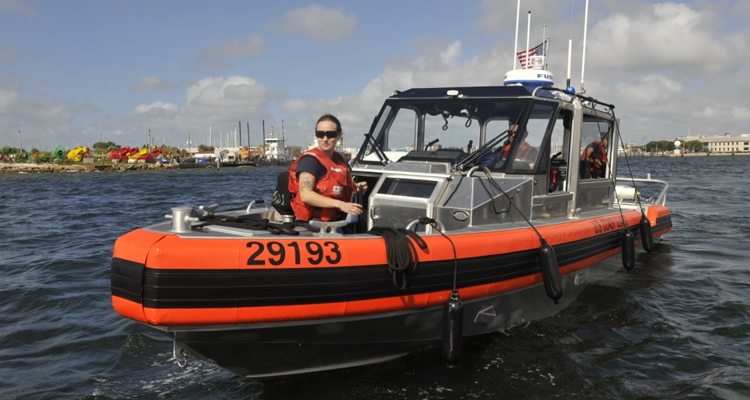
In Cairns, Australia, the Myrtle Hazard team engaged in memorable interactions with the Australian Royal Navy and Border Force. Notably, an all-out, full-court, officiated basketball game took place, with members from both services participating—highlighting the ever-growing camaraderie. They also spent time at the Great Barrier Reef International Marine College.

Milestone Achievements and Experiences

“Our 46-day patrol has been an exceptional journey. The sheer dedication and grit exhibited by my crew have been nothing short of remarkable,” said Lt. Jalle Merritt, commanding officer of the USCGC Myrtle Hazard. “From once-in-a-lifetime experiences like observing PNG Independence Day to earning new qualifications, this patrol signifies the hard work, joy of human connection, and increased competence we’ve gained.”

During the patrol, a line-crossing ceremony at the equator en route to Guam marked a significant rite of passage for the crew, symbolizing their transformation into more seasoned mariners.

“I had the honor of serving aboard a 110-foot Island-class patrol boat based out of Guam early in my career. Due to the platform’s capabilities, we were limited in our operational reach to Palau and portions of the Federated States of Micronesia. Today, the FRCs based here are redefining the dynamic for our Service and our regional partners,” said Capt. Nick Simmons, commander of U.S. Coast Guard Forces Micronesia/Sector Guam. “From Guam, we’ve expanded our area of operations to areas that include our partners in the Republic of Palau and the Federated States of Micronesia, but also the Republic of Marshall Islands, Papua New Guinea, Australia, and Nauru. And we have plans to reach the Philippines soon. Most FRCs are engaged in near-coastal operations, but ours are venturing farther, more frequently, substantiating the U.S. Coast Guard’s role as a significant maritime security actor across the Indo-Pacific.”

Strategic Impact

Building upon last year’s visit by a Guam-based fast response cutter crew and the recently ratified bilateral agreement with PNG, the Myrtle Hazard’s team patrolled 7,484 nautical miles, significantly bolstering maritime security and resource protection in multiple EEZs. The patrol enhanced interoperability with regional allies like PNG and Australia and advanced U.S. national priorities through targeted operations and cultural diplomacy. The patrol also contributed to the broader objectives of the PIF Forum Fisheries Agency’s annual Operation Island Chief and the U.S. Coast Guard’s Operation Blue Pacific, strengthening both bilateral and multilateral relationships in the region.

The Long View

The U.S. Coast Guard 14th District, based out of Honolulu, Hawaii, and U.S. Coast Guard Forces Micronesia/Sector Guam, continue to foster enduring partnerships with regional allies. With humanitarian Service at its core, the U.S. Coast Guard remains committed to maritime safety, security, and stewardship, solidifying its longstanding reputation in the Pacific as a trusted partner. Plans and additional patrols are already underway for further engagement with regional partners.

— USCG —

The Myrtle Hazard is the 39th 154-foot Sentinel-class FRC, named in honor of the first enlisted woman in the U.S. Coast Guard who served as an electrician and radio operator. The Guam-based cutters serve as a cornerstone for the U.S. Coast Guard’s ongoing commitment to the people of Oceania, focusing on maritime safety, security, and stewardship.

Guns as Counter-UAS Weapons

A couple of videos from a The Drive post, “Gepard’s 35mm Cannons Blast Russian Drones Out Of The Sky In First-Person Video.”

TheFlakpanzer Gepard was not designed specifically for UAS. It was designed in the ’60s and fielded in the ’70s to protect against low flying aircraft like attack helicopters and the Soviet counterpart of the A-10 attack aircraft, the SU-25 Frogfoot.

The twin 35 mm guns are much more powerful weapons than the 25 and 30 mm weapons mounted on the Mk38 gun systems. Presumably in the counter UAS role they are using the “AHEAD” anti-missile rounds, rounds that might have been designed specifically to take out UAS, that fire 152, 3.3 gram tungsten metal sub-projectiles. The guns have a very high muzzle velocity (3,400 ft/sec for the AHEAD round) and a much higher rate of fire (550 rounds per minute per gun).

With the AHEAD round, the projectile weight is 1.65 lbs. (0.750 kg) compared with 0.406 lbs. (0.184 kg) for the 25mm HEI and HEI-T rounds, and 0.79 lbs. (0.362 kg) 30mm HEI-T round so the potential radius of destruction is substantially greater.

Still the 30mm with airburst ammunition should be effective, but it will probably require more rounds to get the job done and will have shorter effective range. Unless the 25mm has an airburst round it is unlikely to be effective.

It might be worth considering that while the Gepard’s firecontrol is radar, the Mk38 firecontrol is electrooptic. I can’t say unequivocally that that is a disadvantage, but it might be. Surely the drone builders will attempt to include countermeasures against both types of firecontrol.