You have probably heard of Project 2025, a controversial product of an influential conservative think tank. You can find it here.
I wanted to see what they had to say about the Coast Guard.
We are not going to talk about other parts of the document. I don’t want to get into a political discussion. The Coast Guard enjoys strong bipartisan support in Congress, so these are not necessarily exclusively the views of conservatives. Some of these proposals may be favored by more liberal members of Congress as well.
Even with only these few samples, you will also see that the document is not always definitive or internally consistent, particularly in regard to the Coast Guard’s proper place in the government bureaucracy. This is prompted in large part by a proposal to dismantle the Department of Homeland Security (p. 133), but continuance of DHS is still seen as a possibility and many changes to the Department are proposed.
There are suggestions that the Coast Guard should remain in DHS or be moved to DOD, DOJ, or Treasury.
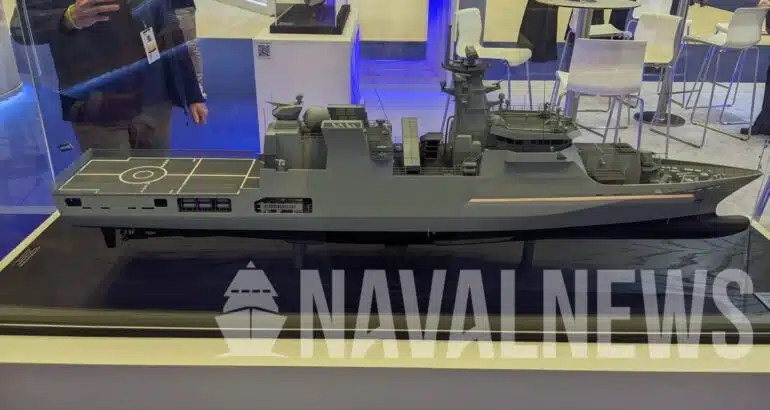
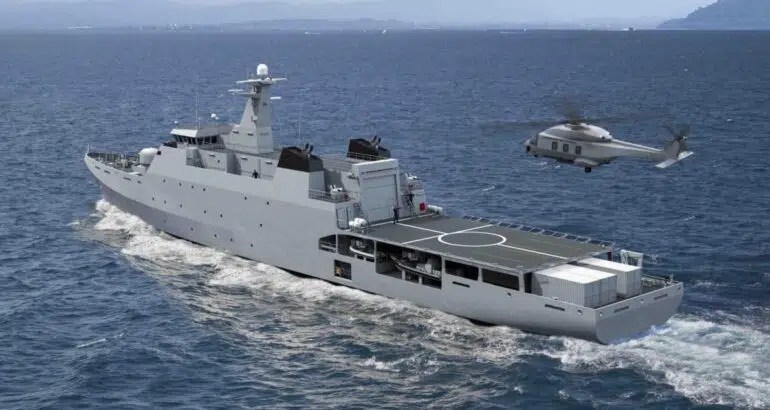
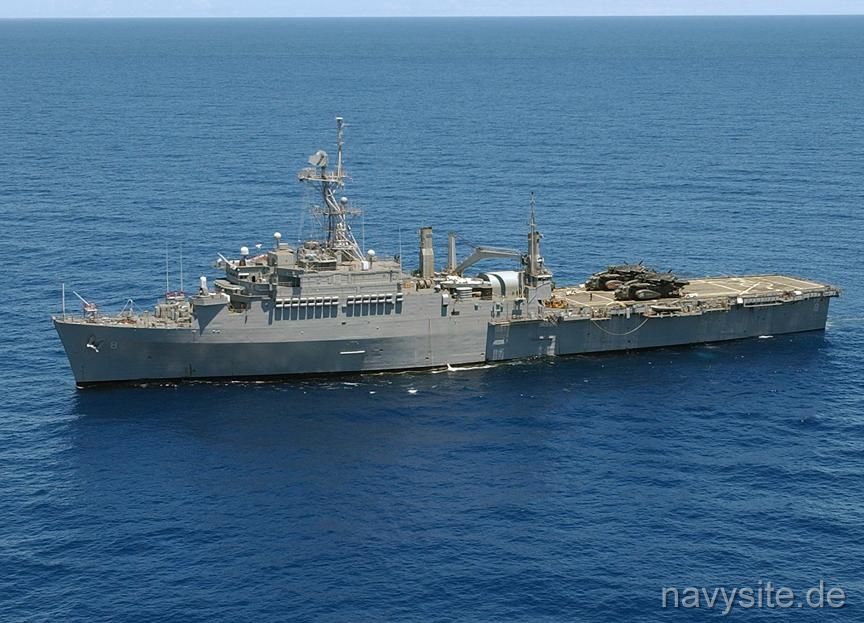
I would certainly agree that the Coast Guard needs a long-term ship building plan and combining it with the Navy’s 30 year ship building plan would increase the Coast Guard’s visibility. I would also agree that we are not building enough large cutters (but they don’t have to be NSCs or OPCs) and we could use a base in American Samoa.
It suggests scaling back our mission set but offers no specific suggestions of which missions other than perhaps shifting the Arctic mission to the Navy, as if they could do it cheaper. We will probably just continue to try to do all eleven missions to the degree that offers the best return on investment within our budget.
I would like to see more coordination with the Navy in the determination of the characteristics required for Coast Guard assets, so that they are useful in wartime. I also see opportunities for synergies with the Navy Reserve.
I used “control F” to find everywhere the Coast Guard is mentioned and have reproduced each paragraph below.
The U.S. Coast Guard (USCG) be moved to DOJ and, in time of full-scale
war (i.e., threatening the homeland), to the Department of Defense (DOD).
Alternatively, USCG should be moved to DOD for all purposes. (p.134)
U.S. COAST GUARD (USCG)
Needed Reforms
The U.S. Coast Guard fleet should be sized to the needs of great-power competition, specifically focusing efforts and investment on protecting U.S. waters, all while seeking to find (where feasible) more economical ways to perform USCG missions. The scope of the Coast Guard’s mission needs to be focused on protecting U.S. resources and interests in its home waters, specifically its Exclusive Economic Zone (200 miles from shore). USCG’s budget should address the growing demand for it to address the increasing threat from the Chinese fishing fleet in home waters as well as narcotics and migrant flows in the Caribbean and Eastern Pacific. Doing this will require reversing years of shortfalls in shipbuilding, maintenance, and upgrades of shore facilities as well as seeking more cost-effective ship and facility designs. In wartime, the USCG supports the Navy, but it has limited capability and capacity to support wartime missions outside home waters.
New Policies
The Coast Guard’s mission set should be scaled down to match congressional budgeting in the long term, with any increased funding going to acquisitions based on an updated Fleet Mix Analysis. The current shipbuilding plan is insufficient based on USCG analysis, and the necessary numbers of planned Offshore Patrol Cutters and National Security Cutters are not supported by congressional budgets. The Coast Guard should be required to submit to Congress a long-range shipbuilding plan modeled on the Navy’s 30-Year Shipbuilding Plan. Ideally this should become part of the Navy plan in a new comprehensive naval long-range shipbuilding plan to ensure better coherency in the services’ requirements.
Outside of home waters, and following the Caribbean and Eastern Pacific, the
Coast Guard should prioritize limited resources to the nation’s expansive Pacific
waters to counter growing Chinese influence and encroachment. Expansion of
facilities in American Samoa and basing of cutters there is one clear step in this
direction and should be accelerated; looking to free association states (Palau, the
Federated States of Micronesia, and the Republic of the Marshall Islands) for
enhanced and persistent presence, assuming adequate congressional funding, is
another such step.
The Secretary of the Navy should convene a naval board to review and reset
requirements for Coast Guard wartime mission support. To inform and validate
these updated requirements, the Chief of Naval Operations and the Coast Guard
Commandant should execute dedicated annual joint wartime drills focused on
USCG’s wartime missions in the Pacific (the money for these activities should be
allocated from DOD). An interagency maritime coordination office focused on
developing and overseeing comprehensive efforts to advance the nation’s maritime interests and increase its military and commercial competitiveness should be established.
Given the USCG’s history of underfunded missions, if the Coast Guard is to continue to maintain the Arctic mission, money to do so adequately will be required over and above current funding levels. Consideration should be given to shifting the Arctic mission to the Navy. Either way, the Arctic mission should be closely coordinated with our Canadian, Danish, and other allies.
Personnel
USCG is facing recruitment challenges similar to those faced by the military
services. The Administration should stop the messaging on wokeness and diversity
and focus instead on attracting the best talent for USCG. Simultaneously, consistent with the Department of Defense, USCG should also make a serious effort to re-vet any promotions and hiring that occurred on the Biden Administration’s watch while also re-onboarding any USCG personnel who were dismissed from service for refusing to take the COVID-19 “vaccine,” with time in service credited to such returnees. These two steps could be foundational for any improvements in the recruiting process. (p.155-157)
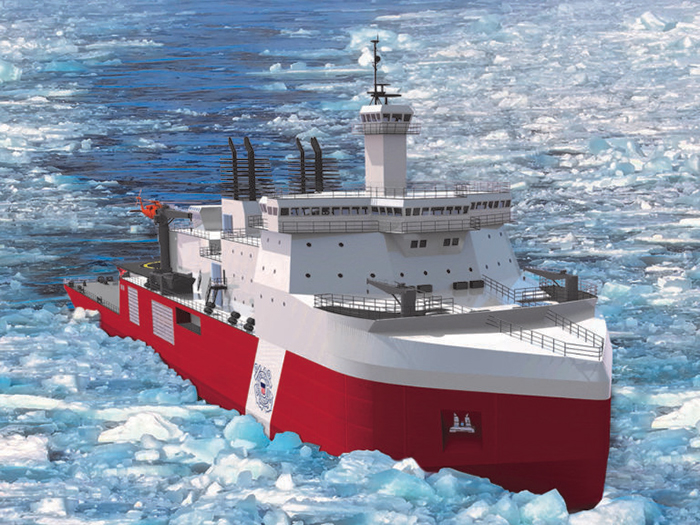
Both the U.S. Coast Guard and the U.S. Navy are vital tools to ensure an unmonopolized Arctic. It is imperative that the Navy and Coast Guard continue to
expand their fleets, including planned icebreaker acquisitions, to assure Arctic
access for the United States and other friendly actors. The remote and harsh conditions of the Arctic also make unmanned system investment and use particularly
appealing for providing additional situational awareness, intelligence, surveillance,
and reconnaissance. The Coast Guard should also consider upgrading facilities,
such as its Barrow station, to reinforce its Arctic capabilities and demonstrate a
greater commitment to the region. (p.190)
MARAD would be better served by being transferred from DOT to the Department of Homeland Security (DHS). MARAD is the only DOT modal administration
that does not regulate the industry that it represents: The maritime industry is
regulated by the U.S. Coast Guard (ships and personnel) and by the Federal Maritime Commission (cargo rates and competitive practices). (p. 637)
MARAD, including its subordinate Service Academy (the U.S. Merchant Marine
Academy) should be transferred to the Department of Defense (if the Coast Guard
is located there because DHS has been eliminated) or to the Department of Home
land Security. In this way, the two agencies charged with oversight and regulation
of the Maritime sector—MARAD and the United States Coast Guard—would be
aligned under the same department where operational efficiencies could be realized more easily. (p. 638)
Finally, DHS as a department is experienced in administering and budgeting for
the operation of an existing federal service academy, the U.S. Coast Guard Academy,
which is similar to the U.S. Merchant Marine Academy in size. There would be
increased efficiencies and better alignment of the missions of these two institutions
if they were under one single department that has equity in the industries served
by these academies. (p. 638)
Transfer NOS (National Ocean Service–Chuck) Survey Functions to the U.S. Coast Guard and the U.S. Geological Survey. Survey operations have historically accounted for almost half the NOS budget. These functions could be transferred to the U.S. Coast Guard and U.S. Geological Survey to increase efficiency. NOS’ expansion of the National Marine Sanctuaries System should also be reviewed, as discussed below. (p. 676)
U.S. Coast Guard and the Bureau of Alcohol, Tobacco, Firearms, and Explosives. Congress should examine whether to return the Treasury’s former in-house law enforcement capabilities via the return of the United States Coast Guard and the Bureau of Alcohol, Tobacco, Firearms, and Explosives. Bringing these agencies back from the Department of Homeland Security and the Department of Justice, respectively, would allow Treasury, in the case of U.S. Coast Guard, to increase border security via a vigilance with respect to economic crimes (for example, drug smuggling and tax evasion). (p. 709/710)