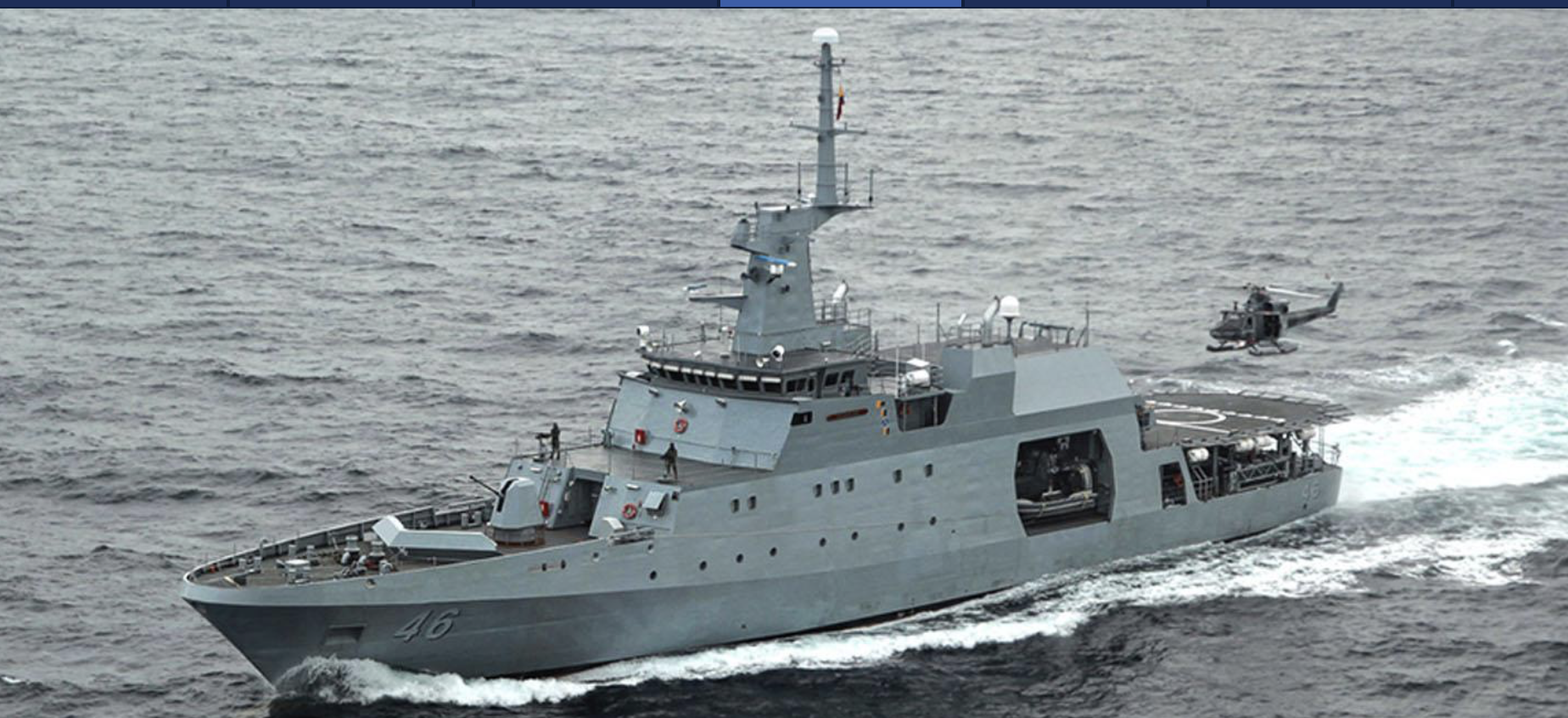
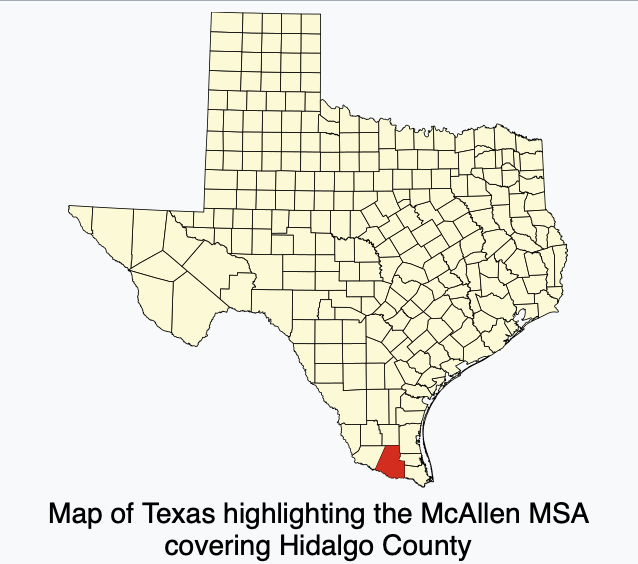
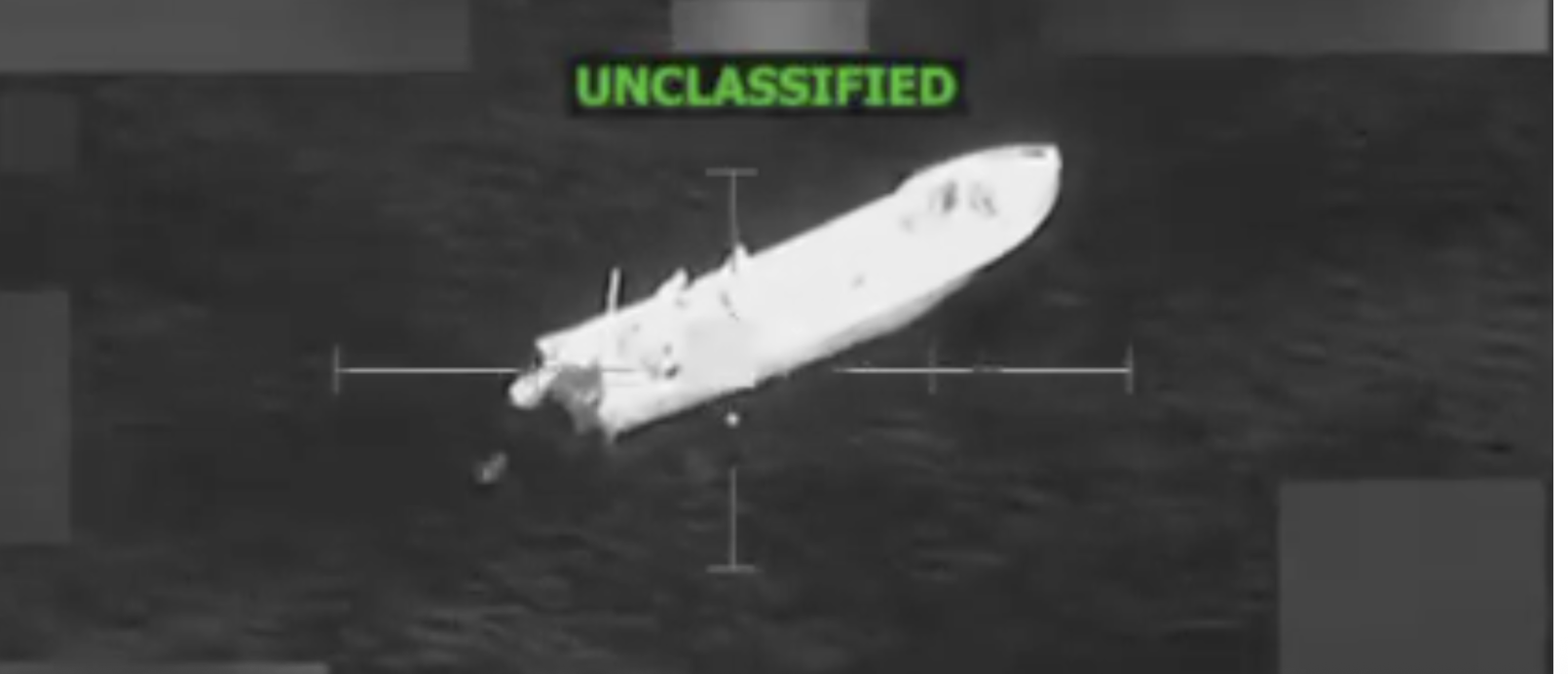
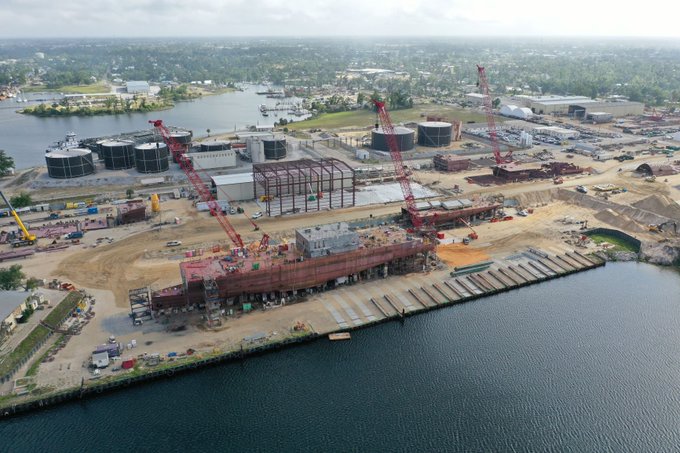
“Trump declares drug cartels operating in Caribbean unlawful combatants” –Defense News / “U.S. Military Conducts Latest Deadly Strike on Drug Boat Near Venezuela as Trump Declares ‘Armed Conflict’ with Cartels” –gCaptain

Defense News reports,

“President Donald Trump has declared drug cartels to be unlawful combatants and says the United States is now in a “non-international armed conflict,” according to a Trump administration memo obtained Thursday by The Associated Press, after recent U.S. strikes on boats in the Caribbean.”

gCaptain reports there has been a fourth attack.

Many questions have been raised about the legality of these attacks, but I will not address them here. I do question their effectiveness.

Admittedly can’t say that law enforcement efforts, including those of the Coast Guard, despite many successes, has kept drugs out of the country. The financial rewards of a successful shipment have made even very risky voyages too profitable. Probably few if any of the smugglers we catch are high in the cartel organizations so the kingpins are not directly at risk in either of capture or death. The long used capture method does at least provide a potential source of intelligence. The new (take no prisoners) approach may have the advantage of frightening aways potential boat crews for the smugglers but there are reasons to suggest the attacks in the Caribbean will also fail to stop the importation of large quantities of drug and fail to stop the large number of deaths by drug overdose that pointed to as justification for these extreme measures

Most drug overdoses were by the use of synthetic opioids that are not generally transported in the go fast boats we have seen destroyed.

“Overall, drug overdose deaths rose from 2019 to 2022 with 107,941 drug overdose deaths reported in 2022. Overdose deaths declined to 105,007 in 2023. Deaths involving synthetic opioids other than methadone (primarily illicitly manufactured fentanyl or IMF) decreased from 73,838 overdose deaths reported in 2022, to 72,776 in 2023. Those involving cocaine continued to increase with 29,449 deaths in 2023.”

Because fentanyl is so compact it usually crosses the borders over land at regular ports of entry.

Most Seizures Occur At Ports of Entry Where U.S. Citizens Are The Primary Smugglers...This fact sheet uses two separate datasets to confirm what has long been reported by law enforcement sources and other researchers: that the majority of fentanyl smuggled across the southern border enters not on the backs of migrants crossing the border on foot, but in the vehicles and on the bodies of U.S. citizens and other lawful entrants seeking admission at land ports of entry. Using two separate datasets described below, we confirm roughly four in five people apprehended for smuggling fentanyl into the United States at the southern border between October 2018 and June 2024 were U.S. citizens—the rest were largely individuals with visas, border crossing cards, or other permission to enter the United States lawfully at a port of entry.

Currently the kinetic attacks are limited to the Caribbean while far more drugs are intercepted in the Eastern Pacific. Even if drug shipments are closed off entirely it is likely shipments through other routes will increase to meet demand.

Apparently the attacks are also having unintended consequences.

President Trump “Speaking to military leaders in Quantico, Virginia, he suggested the operations are already proving effective: ‘Now we have a problem. General Caine says, sir, there are no boats out there, not even fishing boats. They don’t want to go fishing.’”

Apparently many local mariners have less confidence in our ability to identify and attack only the smugglers.

“Coast Guard issues request for proposal to inform future boat recapitalization efforts” –CG-9

Response Boat, Small

The Acquisition Directorate (CG-9) reports they are looking for proposals for new Response Boat, Small (RB-S). You can find the specs and other information here.


The Coast Guard issued a request for proposal (RFP) today as a first step to assess the options in the marketplace for response boats that can meet Coast Guard mission requirements. The deadline for responses is Nov. 21. The RFP can be viewed here.

Based on responses to the RFP, the Coast Guard may award up to four separate contracts. Each awardee will deliver one “demonstration boat” featuring design and performance characteristics closely aligned with Coast Guard mission needs and requirements. The Coast Guard will conduct testing with each demonstration boat to develop and validate performance requirements, assess industrial capabilities and gather data about the marketplace to inform acquisition strategies for future boat recapitalization activities.

For more information: Boat Acquisition Program

“Coast Guard awards contract for new heavy weather surf boats” –Coast Guard News

Second-generation special-purpose craft – heavy weather (SPC-HWX II) boat. Artistic rendering courtesy of Rozema Boat Works Inc.

Below is a Coast Guard news release.

I think these could replace 87 foot WPBs in some places and do so with lower operating costs.

It is time to replace the older 87 foot WPBs. The oldest are already 28 years old.  In some cases they are being replaced by Webber Class WPCs, but other than the RB-M there is no smaller replacement is in sight. There is certainly no way the Webber class will replace both the 49 Island class and the 70 or so Marine Protector class.

These large surf boats could be very useful in areas around small ports that occasionally experience heavy weather.


Sept. 30, 2025

Coast Guard awards contract for new heavy weather surf boats

SEATTLE — The Coast Guard awarded an indefinite delivery, indefinite quantity (IDIQ) contract on Sept. 29 to Rozema Boat Works, Inc. of Mount Vernon, Washington to acquire up to six second-generation special-purpose craft – heavy weather (SPC-HWX II) boats.

The total potential value of the contract is $70.9 million and the first SPC-HWX II is anticipated to be completed in fiscal year 2027. The SPC-HWX II will replace the 52-foot first generation of special-purpose craft – heavy weather boats, which entered service in the 1950s and 1960s.

These vessels were retired in 2021 due to increasing maintenance challenges. Like their predecessors, the SPC-HWX IIs will serve in the Pacific Northwest.

These next-generation vessels are designed to perform a wide range of Coast Guard missions in extreme weather and challenging surf conditions that exceed the capabilities of other boats, such as search and rescue; disabled vessel towing; and law enforcement and ports, waterways and coastal security missions.

Measuring 64 feet in length, the SPC-HWX II will feature self-righting capability and be capable of operating in 35-foot seas, 25-foot surf, and winds up to 60 knots. Powered by twin 1,200-horsepower diesel engines, it will reach speeds of 20 knots, tow up to 300 tons, and operate up to 150 miles offshore. With accommodation for a relief crew, the SPC-HWX II will have an endurance up to 48 hours, a critical feature for long-range heavy-weather operations.

“Coast Guard to invest $350 million in robotics and autonomous systems” –CG News

Below the line is a Coast Guard News release. I have found some illustrations of what these systems look like.

Qinetiq mini-SPUR robots


Sept. 24, 2025

Coast Guard to invest $350 million in robotics and autonomous systems

WASHINGTON — The Coast Guard announced Wednesday it will invest nearly $350 million to expand robotics and autonomous systems, strengthening mission execution and operational capabilities.

The funding, provided under the One Big Beautiful Bill Act (OBBBA), includes $11 million in fiscal year 2025 for immediate upgrades to critical autonomous systems.

Initial investments include:

  • $4.8 million to procure 16 VideoRay Defender remotely operated vehicles (ROVs) to replace Deployable Specialized Forces’ aging fleet.
  • $2 million to procure six Qinetiq Squad Packable Utility Robot (SPUR) and 12 mini-SPUR robots to replace outdated unmanned ground vehicles (UGVs) at Strike Teams.
  • $4.3 million to purchase 125 SkyDio X10D short-range unmanned aircraft systems (SR-UAS).

These investments are the first in a series of robotics and autonomous systems projects the Coast Guard will pursue using OBBBA funding. The technologies will meet immediate mission needs, improve personnel safety and strengthen the Coast Guard’s capabilities to control, secure, and defend U.S. borders and maritime approaches.

“These unmanned systems provide increased domain awareness, mitigating risk and enhancing mission success as the Coast Guard continues to operate in hazardous environments,” said Anthony Antognoli, the Coast Guard’s first RAS program executive officer. “The Coast Guard’s mission demands agility, awareness and adaptability. Robotics and autonomous systems deliver all three, enabling us to respond faster, operate smarter and extend our reach where it matters most. We are not waiting for the future to arrive. We are delivering it to the fleet today.”

The Coast Guard’s Deployable Specialized Forces will use the new ROVs for waterfront and pier inspections, hull assessments, subsurface infrastructure surveys, disaster response and search and rescue missions. Their use will reduce reliance on Coast Guard divers, improving efficiency and safety.

Coast Guard Strike Teams, which respond to hazardous materials spills, major marine casualties, groundings, natural disasters, chemical, biological, radiological or nuclear (CBRN) incidents and national special security events, will use the new UGVs to access and sample air in confined spaces aboard commercial vessels.

The SR-UAS will support operations including infrastructure inspections, environmental observation, pollution response, post-storm surveys, ice surveys and communications.

The Program Executive Office for Robotics and Autonomous Systems is part of the Coast Guard’s Force Design 2028 plan, which aims to fully integrate capabilities across the service. Focused on four campaigns – people, organization, contracting and acquisition and technology – Force Design 2028 is an accelerated effort to establish a blueprint for change and transform the Coast Guard into a more agile, capable, and responsive force.

“Coast Guard prepares for aircraft fleet expansions with awards for engines, radar” –Coast Guard News Release

201116-G-G0217-1002
A Coast Guard Air Station Kodiak HC-130 Hercules aircrew takes off from an airstrip in Sitka, Alaska, Nov. 16, 2020. The Kodiak aircrew delivered aircraft parts. Courtesy photo by Don Kluting.

Below is a USCG news release.


Sept. 23, 2025

Coast Guard prepares for aircraft fleet expansions with awards for engines, radar

WASHINGTON — The Coast Guard recently completed contract actions aimed at accelerating delivery of new MH-60 medium-range recovery helicopters and HC-130J long-range surveillance aircraft and expanding mission capabilities of the expanded aviation fleet.

On Sept. 8, the Coast Guard placed a $14.3 million order for delivery of 13 General Electric T700 engines for its MH-60 helicopter fleet. On Sept. 18, the Service contracted with L3 Harris Technologies Inc. for delivery of three AN/APY-11 multi-mode radar systems, valued at $13.9 million, to be installed on future HC-130Js during the Minotaur missionization process.

Both orders were made possible due to investments in the Coast Guard fleet made by the One Big Beautiful Bill Act (OBBBA).

The T700 engines are among the long lead-time components needed to grow the Coast Guard’s MH-60 fleet and expedite transition of several air stations from the MH-65E to the MH-60. The MH-60’s range, speed, payload and avionics and sensors suite make it a capable platform for all 11 Coast Guard missions. The aircraft’s ability to locate, identify and track surface targets day or night makes it a valuable search and rescue and law enforcement asset. Transition of air stations is necessary to sustain rotary wing capability as the MH-65E continues to face supportability issues driven by a diminishing supply base for an out-of-production aircraft.

The AN/APY-11 radar system was chosen as the optimal multi-mode radar to enhance operational effectiveness as part of the Minotaur Mission System Suite. The Minotaur Mission System enables the collection and correlation of sensor and track data, which is used to conduct drug and alien interdictions, search and rescue, and other statutory missions.

The Coast Guard’s long-range surveillance fleet is a proven asset vital to control, secure and defend the U.S. border and maritime approaches, facilitate commerce vital to economic prosperity, and respond to crises and contingencies. The Coast Guard HC-130J fleet is the Department of Homeland Security’s airlift asset and can provide critical support to DHS partners in response to national events as well as logistical support during routine operations.

The OBBBA includes more than $3.3 billion to expand the Coast Guard’s HC-130J and MH-60 fleets. Nearly $2.3 billion is for the production and fielding of new MH-60 aircraft and delivery of multiple simulators. Approximately $1.1 billion is for production and missionization of six additional HC-130J aircraft, along with associated spare parts and the service’s first HC-130J simulator.


“DIU wants nonlethal weapons to disable small boats, amid US crackdown on drug cartels” –Defense Scoop

A Coast Guard Cutter Vigilant (WMEC 617) small boat crew interdicts two suspected drug traffickers in the Caribbean Sea, July 25, 2025. (U.S. Coast Guard photo courtesy of Vigilant/DVIDS)

Defense Scoop reports.

“As the Trump administration unleashes a new strategy targeting Latin American drug cartels determined to be “narcoterrorists” with direct military action, the Pentagon is moving to buy nonkinetic weapons that can disrupt, disable, or prevent the operation of small watercraft with minimal collateral damage or potential harm to nearby civilians and boat operators.”

It does sound like they may also be talking about more than just getting a go-fast to stop, like maybe stop a swarm of USVs using micro waves.

Also looks like they do not want to spend the time the Coast Guard spends training their air borne use of force marksmen.

Years ago, I saw the Coast Guard was also looking for weapon/device that can stop a boat without the possibility of collateral damage. We would probably still like to have something like that.

“Coast Guard seizes 75,000 pounds of cocaine through Operation Pacific Viper, averages over 1,800 pounds interdicted per day” –CG News Release

Left to right, LANT Area WMEC270 and WMEC210, and (I believe) USS Sampson (DDG-102) and USCGC Midgett . Coast Guard seizes 75,000 pounds of cocaine through Operation Pacific Viper, Aug. 8 to Sept. 18, 2025.

While kinetic attacks in the Caribbean have gotten headlines, the Coast Guard and partners have been removing far more product the old fashion way–20 interdictions in less than six weeks, in just the Eastern Pacific.

Below is a Pacific Area News release.


Sept. 18, 2025

Coast Guard seizes 75,000 pounds of cocaine through Operation Pacific Viper, averages over 1,800 pounds interdicted per day

WASHINGTON — The U.S. Coast Guard announced Thursday it has seized more than 75,000 pounds of cocaine in the Eastern Pacific Ocean since launching Operation Pacific Viper in early August, averaging over 1,800 pounds interdicted daily.

These drug seizures, and the apprehension of 59 individuals suspected of narco-trafficking, were the result of more than 20 interdictions since Aug. 8.

Through Operation Pacific Viper, the Coast Guard is accelerating counter-drug operations in the Eastern Pacific Ocean, where significant transport of illicit narcotics continues from South America. In coordination with international and interagency partners, the Coast Guard is surging additional assets—cutters, aircraft and tactical teams—to interdict, seize and disrupt transshipments of cocaine and other bulk illicit drugs. Operation Pacific Viper continues the Coast Guard’s efforts to protect the Homeland, counter narco-terrorism and disrupt Foreign Terrorist Organizations and Transnational Criminal Organizations and cartels seeking to produce and traffic illicit drugs into the United States.

“The Coast Guard’s maritime fighting force is relentless in our ongoing operations to counter narco-terrorism,” said Rear Adm. Jeffrey Novak, deputy commander Pacific Area. “Our latest milestone through Operation Pacific Viper – over 75,000 pounds of cocaine seized – underscores our commitment to dismantling Foreign Terrorist Organizations and Transnational Criminal Organizations engaged in narco-trafficking. The Coast Guard is bringing every authority and every capability at our disposal to disrupt cartels and criminal organizations, stop the flow of deadly drugs into the U.S., and secure U.S. borders and maritime approaches. While we continue our crucial work to defend America, I could not be prouder of the men and women of the Coast Guard in celebrating this milestone.”

Detecting and interdicting narco-terrorism on the high seas involves significant interagency and international coordination. U.S. Southern Command’s Joint Interagency Task Force-South, based in Key West, Florida, detects and monitors both aerial and maritime transit of illegal drugs. Once interdiction becomes imminent, the law enforcement phase of the operation begins, and control of the operation shifts to the U.S. Coast Guard throughout the interdiction and apprehension. Interdictions in the Eastern Pacific Ocean are performed by members of the U.S. Coast Guard under the authority and control of the Coast Guard’s Southwest District, headquartered in Alameda, California.

The Coast Guard is the United States’ lead federal agency for maritime drug interdiction. We are part of the Department of Homeland Security team protecting our nation and are at all times a military service and part of the joint force defending it.

“Major Acquisition Systems Infrastructure (MASI) Program” –CG-9

250917-G-G1790-1891 Aerial view of Coast Guard Yard in Baltimore. The Coast Guard awarded a contract for the reconstruction of Pier 1 (first from the left) on Sept. 9, 2025, to support future depot-level maintenance of the offshore patrol cutter class. (U.S. Coast Guard photo)

CG-9, the Acquisitions Directorate, has published an unusually comprehensive report on what they are doing to provide the infrastructure required to support the new assets coming on line.

It includes both a list of previous reports on infrastructure upgrades including seven in 2025, and a link to a one page briefing that includes a listing of projects completed:

  • Fast response cutter (FRC) homeports in San Juan, Puerto Rico; Miami and Key West, Florida; Cape May, New Jersey; Ketchikan, Alaska; Pascagoula, Mississippi; Atlantic Beach, North Carolina, San Pedro, California; Galveston, Texas; Apra Harbor, Guam; Honolulu; and Boston
  • National security cutter (NSC) homeports in Alameda, California; Honolulu; and expansion at Charleston, South Carolina
  • Hull, mechanical and engine training building for FRCs and NSCs in Yorktown, Virginia
  • C4ISR training building for FRCs and NSCs in Petaluma, California
  • Depot level maintenance hangar for medium range surveillance (MRS) aircraft in Elizabeth City, North Carolina
  • MRS aircraft maintenance training building in Elizabeth City
  • MRS aircraft hangar at Air Station Cape Cod in Bourne, Massachusetts
  • HC-130J support facilities including liquid oxygen (LOX) storage and servicing areas at Air Station Kodiak, Alaska
  • HC-130J LOX and propeller/mission shop facilities at Air Station Barbers Point, Hawaii
  • C-27J facility upgrades and LOX facilities at Air Station Clearwater, Florida

and a list of key projects in process:

  • Fast response cutter homeports/expansions in Astoria, Oregon; Kodiak, Seward and Sitka, Alaska; St. Petersburg, Florida; and a recurring depot availability facility at Coast Guard Yard in Baltimore
  • Offshore patrol cutter homeports in San Pedro, California; Kodiak, Alaska; and Newport, Rhode Island
  • Polar security cutter homeport in Seattle, Washington
  • Waterways commerce cutter homeports
  • National security cutter homeport expansion in Charleston, South Carolina
  • Second seagoing buoy tender berth in Honolulu
  • Engineering and weapons training building in Yorktown, Virginia
  • C-27J simulator building at Aviation Training Center in Mobile, Alabama


“Coast Guard’s Helicopter Interdiction Tactical Squadron completes 1,000th interdiction” –Atlantic Area

250831-G-G0100-1001
Crew members from Coast Guard Cutter Midgett (WMSL 757), the Coast Guard Helicopter Interdiction Tactical Squadron (HITRON), Coast Guard Tactical Law Enforcement Team – South and unmanned aerial vehicle personnel pose for a group photo aboard Midgett while underway in the Eastern Pacific Ocean, Aug. 28, 2025. On Aug. 25, HITRON used airborne use of force to stop the non-compliant vessel, marking the unit’s 1,000th drug interdiction since the unit’s inception in 1999, which resulted in Midgett crew members seizing approximately 3,606 pounds of suspected cocaine worth an estimated $46 million and apprehending six suspected narco-traffickers. (U.S. Coast Guard photo) In the front is a V-Bat Vertical Take Off UAS.

Below is an Atlantic Area news release.

Recognizing this milestone is important because it shows how successful the program has been. The Coast Guard is shooting every nine days.

The Unmanned aircraft, first ScanEagle and then V-Bat have made the Coast Guard even more successful.


Sept. 10, 2025

Coast Guard’s Helicopter Interdiction Tactical Squadron completes 1,000th interdiction

JACKSONVILLE, Fla. — The U.S. Coast Guard’s Helicopter Interdiction Tactical Squadron (HITRON) achieved a significant milestone in its counter-drug mission, completing its 1,000th interdiction of suspected narco-trafficking vessels Aug. 25.

Since October 1, 2024, HITRON has interdicted $3.3 billion in illicit narcotics destined for the United States via maritime routes, a three-fold increase over its historic annual average of $1 billion.

“HITRON embodies the Coast Guard’s spirit of innovation and adaptability,” said Vice Adm. Nathan Moore, commander, U.S. Coast Guard Atlantic Area. “From its humble beginnings as a prototype program, it has evolved into a vital force in our counter-narcotics efforts. This milestone is a powerful reminder of the strategic value of this specialized unit in addressing the evolving complex maritime security challenges.”

On Aug. 25, a HITRON aviation detachment deployed aboard Coast Guard Cutter Midgett (WMSL 757) observed a suspected narco-trafficking vessel approximately 372 nautical miles southwest of Acapulco, Mexico in the early evening. The helicopter directed the vessel to heave to over the radio and with warning shots. When the vessel failed to comply, the crew used precision rifle fire from the helicopter to disable the vessel’s engine, in accordance with airborne use of force policy. A Coast Guard law enforcement boarding team from Midgett seized more than 3,600 pounds of suspected cocaine that was found aboard and jettisoned in the waters around the vessel, estimated to have a street value of $49 million.

HITRON is based in Jacksonville, Florida and a component of U.S. Coast Guard Atlantic Area Command. It was founded in 1999 as a classified prototype program to test the ability of Coast Guard aircraft to employ precision fire to disable narcotics smuggling vessels. With impressive early results, this team grew from the initial ten personnel to its current size of over 200 Active Duty, Reservists, and civilian members, including an exchange pilot from the United Kingdom’s Royal Navy. Since its founding, HITRON has interdicted $33.2 billion in illicit drugs during operations in the Eastern Pacific Ocean and Caribbean Sea, and over the past 26 years has averaged one interdiction every nine days.

Through Operation Pacific Viper, the Coast Guard is accelerating counter-drug operations in the Eastern Pacific Ocean, where significant transport of illicit narcotics continues from South America. In coordination with international and interagency partners, the Coast Guard is surging additional assets—cutters, aircraft and tactical teams—to interdict, seize and disrupt transshipments of cocaine and other bulk illicit drugs. These operations continue the Coast Guard’s efforts to protect the Homeland, project maritime law enforcement presence and disrupt transnational criminal organizations and cartels seeking to produce and traffic illicit drugs into the United States.

“National Defence Welcomes the Canadian Coast Guard to the Defence Team” –Canadian Government

Canadian CG MPV. Credit Aker Arctic. I expect vessels like these are seen as essential to protect national sovereignty.

The Canadian Government has announced that,

“The Department of National Defence (DND) today announced the integration of the Canadian Coast Guard (CCG) into the Defence Team, marking an important step forward in strengthening Canada’s maritime security…This transition also includes key personnel from Fisheries and Oceans Canada, bringing greater collaboration across departments in support of Canada’s maritime priorities…The CCG will remain a civilian Special Operating Agency, with no change to its status…the Government of Canada has also proposed expanding the CCG’s services to include maritime security activities under Bill C-2, which is currently before Parliament.

It appears this is aimed at facilitating law enforcement in the Arctic, making the Canadian Coast Guard more of a law enforcement agency, and enhancing their ability to deal with human trafficking and fentanyl precursors.

It may be surprising that the Canadian vessels that cooperate with the US Coast Guard in conducting drug enforcement are Canadian Navy rather than Coast Guard. The Canadian Coast Guard vessels, unlike USCG vessels are not armed.