Increased Sea Pay

The following is from MyCG. The only amount listed is $55/month but then it references a tiered system, apparently with five levels.

There was a bit of a surprise in the announcement.

“The studies found that the 270-foot medium endurance cutters had more days away from homeport than any other class of cutter for the period reviewed.”

Apparently the Bear class is still pulling its weight.


Pay increase for members assigned to cutters

By Shana Brouder, MyCG Writer

Coast Guard members assigned to cutters received a pay increase in October 2020. For the first time in 20 years, sea pay increased by $55 per month for afloat assignments. In addition to this pay increase, the Office of Cutter Forces updated the tiered sea pay table to reflect the nature of duty aboard cutters.

“It took a full court press to make this happen,” said Lt. Cmdr. Keith Blevins, the Afloat Workforce Recruitment and Retention Manager in the Office of Cutter Forces. “We used a multitude of sources including a RAND study, a junior afloat officer survey…, and a follow-on analysis in partnership with a cohort at Boise State University…to get the quantitative data needed to make this change an organizational priority.”

This strategic, multi-year effort analyzed many factors that make up life aboard cutters to include: time underway, maintenance requirements, living quarters arrangements, and nature of missions.

Prior to this change, the sea pay budget was approximately $22 million annually for 8,900 members who are assigned to cutters. This increase provides an additional $6 million, which is more than a 25% increase to the sea duty pay account.

“We understand that an extra $55 dollars per month certainly isn’t life-changing, but the significant budgetary commitment it is a testament to how the service values its cuttermen,” said Lt. Cmdr. Paul Ledbetter with the Office of Cutter Forces.
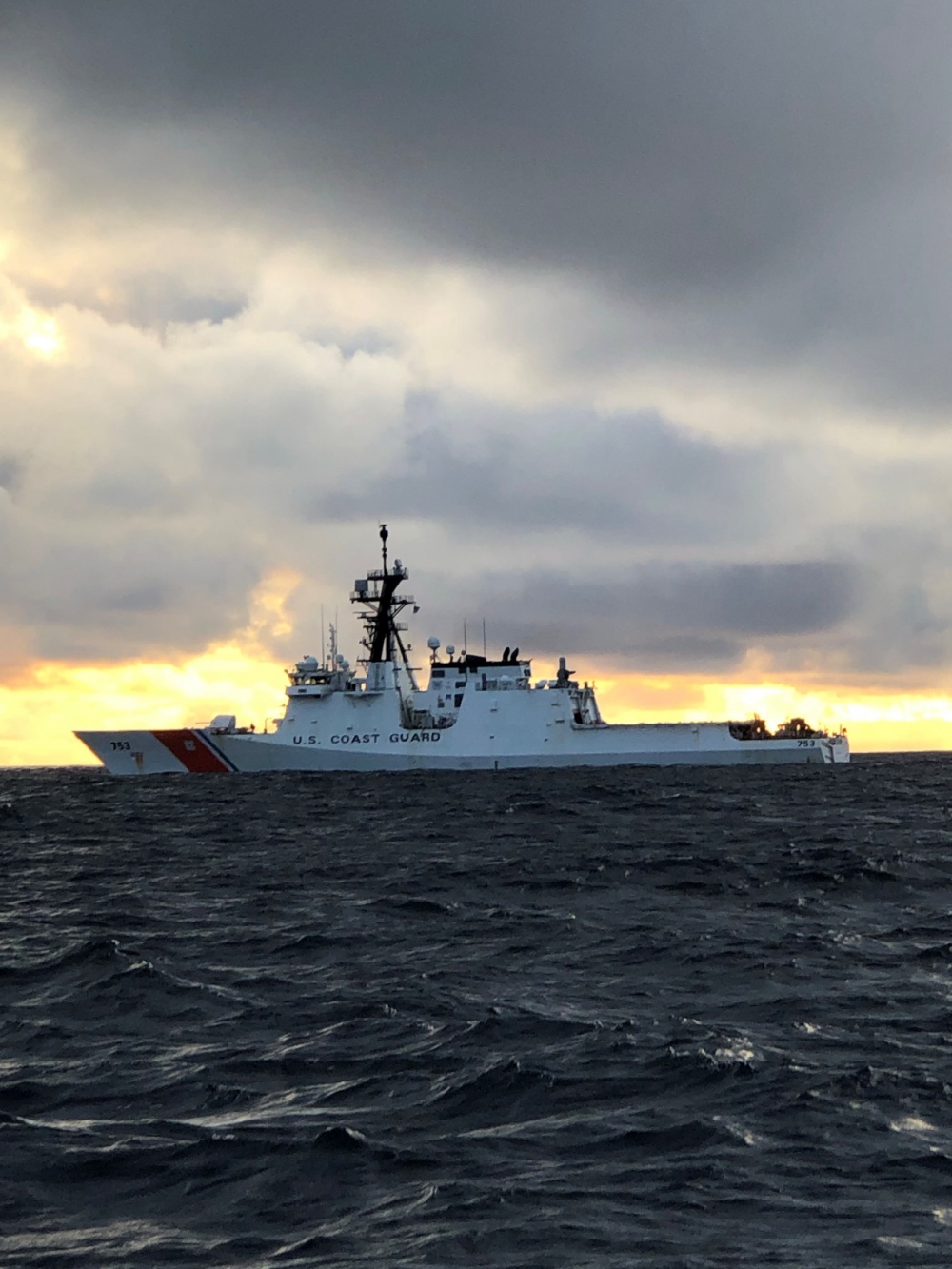
The U.S. Coast Guard Cutter Hamilton (WMSL-753) underway in the Eastern Pacific Ocean, August 19, 2020. The Coast Guard Cutter Hamilton is one of two 418-foot National Security Cutters homeported in Charleston. (U.S. Coast Guard Photo)

The Coast Guard sea pay model differs from other sea-going military service branches. “Other services have a rate for sea pay that increases with sea time, but it does not vary between platforms or mission areas,” explained Blevins. “Our tiered approach takes into consideration a variety of factors designed to reward those who go to sea and incentivize them to come back.”

The analyses on sea-going missions provided insight into these three factors. The studies found that the 270-foot medium endurance cutters had more days away from homeport than any other class of cutter for the period reviewed. Further, most 270-foot cutters are over 30 years old. While the work may be similar to the National Security Cutters (NSC), the living quarters and maintenance requirements are vastly different on the 270-foot cutters.
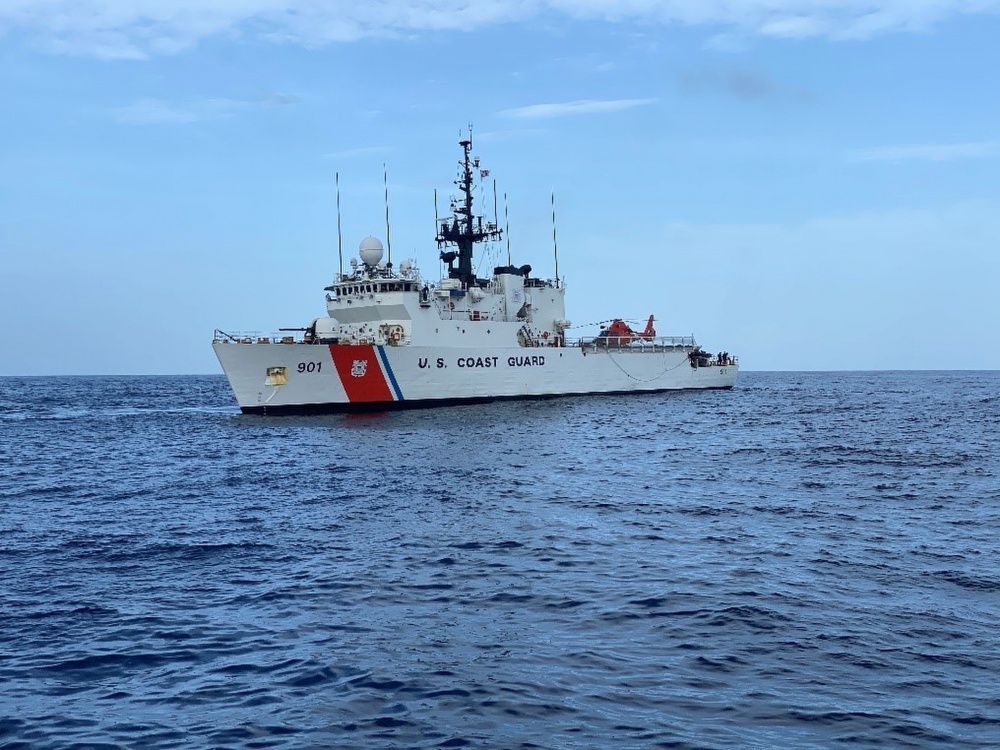
The U.S. Coast Guard Cutter Bear, a 270-foot medium endurance cutter, transits the Atlantic Ocean off the west coast of Africa. During its deployment, Bear’s teams strengthened the Coast Guard’s partnership with Cabo Verde and trained in countering illicit maritime activity, including counter-narcotics and illegal, unregulated, and unreported fishing. (U.S. Coast Guard Photo by Ensign Connor Brown)As a result, the 270-foot medium endurance cutters were assigned to a tier five on the sea pay table which is the highest tier. This change was made to ensure those members working aboard the 270-foot medium endurance cutters are appropriately compensated.

During patrols in the eastern pacific, cutters are conducting law enforcement missions, drug seizures, and migrant interdiction on a variety of vessels. The increase in sea pay is important because all members assigned to cutters receive the increase. The updated considerations ensure that all members aboard ships receive additional compensation.

“Cutter Forces will continue to advocate for future increases to adjust for inflation,” said Blevins. “However, we are pleased to see this $55 increase and hope the members feel their time at sea is valued.”


White Alder Sinking, 52 Years Later

The caption above is two years out of date. Below is a news release from D8.

united states coast guard


News Release

U.S. Coast Guard 8th District Heartland
Contact: 8th District Public Affairs
Office: 504-671-2020
After Hours: 618-225-9008
Eighth District online newsroom

PHOTOS: Coast Guard holds 52nd annual White Alder ceremony

Memorial ceremony for Coast Guard Cutter White Alder Memorial ceremony for Coast Guard Cutter White Alder

Memorial ceremony for Coast Guard Cutter White Alder Memorial ceremony for Coast Guard Cutter White Alder Memorial ceremony for Coast Guard Cutter White Alder

Editors’ Note: Click on images to download high-resolution version.

NEW ORLEANS – Members of Marine Safety Unit Baton Rouge held a memorial and wreath laying ceremony Monday for the 52nd anniversary of the sinking of the Coast Guard Cutter White Alder at USS Kidd Veterans Museum in Baton Rouge.

The White Alder and the Motor Vessel Helena, a 455-foot Taiwanese flagged freighter, collided in the Mississippi River near Bayou Goula Bend Dec. 7, 1968. The cutter sank in 75 feet of water. Three of its 20-person crew were rescued, while the other 17 perished. The remaining crew members are entombed in the sunken cutter at the bottom of the Mississippi to this day.

White Alder was homeported in New Orleans from 1947 until 1968. The cutter’s primary responsibility was to tend river aids to navigation and to conduct search and rescue and law enforcement duties, when required.

A special aids to navigation structure was built in honor of the crew and marks the location of the sunken vessel near White Castle, Louisiana. December 7 every year, Coast Guardsmen and surviving family members gather at the site in remembrance of those who lost their lives.

For more information follow us on Facebook and Twitter.

EU’s Maritime Domain Awareness Information Exchange

Below is a post by a friend I have never actually met, Przemyslaw Krajewski. We worked on a CIMSEC project in 2013. As you might have guest he is Polish and in fact lives in Poland. He is an avid skier. We had a short discussion about MARSUR after I published this very short post about its existence. I told him I felt we needed to know more about the system and asked if he could help. He very quickly came back with the post below. 

Actually I see a need for international exchange of Maritime Domain Awareness data in several parts of the world. Europe is well along in developing the protocols and mechanisms for such a system. It is badly needed in West Africa, in Central and South America. the South China Sea, and probably numerous other locations. If the US Coast Guard could join this effort, an international standard might result. 

Przemyslaw apologized for his English, but I think he did a fine job.


This post intention is to elaborate a bit more on what MARSUR is and how it works. Maritime Surveillance project is initiative of European Defense Agency, established in 2006 and aiming at

“Technical solution that allows dialog between European maritime information systems. Containing 19 Member States plus Norway, the project aims to improve the common “Recognized Maritime Picture” by facilitating exchange of operational maritime information and services such as ship positions, tracks, identification data, chat or images.” [1]

Beyond member states actually participate also EDA itself and EU Satellite Centre (EU SATCEN).

Twenty members sounds scary and indeed it intuitively shows level of complexity. Just to give broader picture or background. Europe consists of 46 states plus 2 de facto independent but as eastern border of geographical Europe are a bit fuzzy, some sources counts 50 countries. 26 of them are members of European Union (as 27th by some is counted in Asia) and 27 are NATO members…but these are not the same countries.

If we quote Carl von Clausewitz the most famous statement that war is the continuation of politics by other means, so how EU could have one army without common political goal?

As a consequence most of military cooperation in European Union focuses on procurement efficiency. Obvious obstacles to overcome are differing political objectives, technical standards, organizational solutions within national security establishemnts, legal issues individual to participating states, semantics and many others. All of this is nicely and elegantly hidden in two words „facilitating exchange”. On the other hand there is comparatively little controversies around the project as overwhelming need to act upon reliable information is common for all states and institution involved.

Using more technical language MARSUR is decentralized network linking national systems via VPN using common semantics applied in software called Marsure Exchange System or MEXS. MEXS represents local national hub fed with information voluntarily shared by governments or more specifically by governmental agencies. In theory it could fuse data from military and civilian institutions/agencies and make it public or limit to specific user community like naval, border control, fisheries and so on. As infromation provides ranges in sensitivity from public to secret, both distribution and level of commitment could differ from country to country. Common mechanism would be multilateral or bilateral agreement on government level.

System entered demonstration phase in October 2011 followed by MARSUR Live Phase using prototype software. While Basic Level obligatory for all participant relied on manual exchange of information, Advanced Level is automated and set in 2016 as a goal to pursue as fast as possible.

MARSUR doesn’t exist in vacuum and represent military layer for broader initiative called EU Common Information Sharing Environment (CISE) integrating member states systems related to customs, fisheries control, marine pollution, border control, law enforcement, maritime safety & security and finally defense. MEXS 3.0 which represent the latest upgrade aims exactly at linking as much as possible of security and defense related systems to general framework of CISE. In parallel exist also geographically focused and similar systems – SUCBAS [3] and SUCFIS, effect of cooperation of Baltic Sea states (except Russia) and between Finland and Sweden.

MARSUR begins to show some practical results. In May 2017 was used in support of Italian Navy and EUNAVFOR operation Sophia in Mediterranean.[2] System has been installed both in Rome headquarter as well as a mobile component afloat. This year it was used in live demonstration of Ocean 2020 consortium of european technology businesses nad navies conducted in Mediterranean Sea with next exercise planned in Baltic Sea [4].

[1] https://www.eda.europa.eu/what-we-do/activities/activities-search/maritime-surveillance-(marsur)

[2] https://www.eda.europa.eu/docs/default-source/eda-factsheets/2020-09-11-factsheet-support-to-csdp-operations.pdf

[3] https://sucbas.now.sh

[4] https://ocean2020.eu/sea-trials/

Other useful links:

EDA_ESI_BSSAR.pdf

https://www.hsdl.org/?view&did=710109

Webber Class in Guam Making an Impact

The crew of the Coast Guard Cutter Myrtle Hazard (WPC 1139) rescued two fishermen aboard a 21-foot fishing vessel 128-miles west of Tinian, Dec. 1, 2020. The crew of the Myrtle Hazard successfully transferred the two fishermen from their boat, verified their health, and gave them food and water. (U.S. Coast Guard photo courtesy of the Navy/Released)

Guam’s newly arrived Webber class WPCs are already making an impact.

“Coast Guard rescues 2 fishermen off Northern Mariana Islands”

“Coast Guard college student pre-commissioning program offers opportunities for future leaders” –News Release

Just passing this along for any who might be interested or who know someone who might be:


united states coast guard

News Release

U.S. Coast Guard 14th District Hawaii and the Pacific
Contact: 14th District Public Affairs
Office: (808) 535-3230
After Hours: HawaiiPacific@uscg.mil
14th District online newsroom

Coast Guard college student pre-commissioning program offers opportunities for future leaders

CSPI 

Editors’ Note: Click on images to download a high-resolution version.

In today’s modern world, it’s not enough to just have a college degree; every year, the number of formally educated workers is growing.

Students all over the country are looking for ways to beef up their resumes and set themselves apart from their peers. The college student pre-commissioning program (CSPI) combines military work experience with education opportunities provided through the United States Coast Guard for students attending college.

The CSPI scholarship is designed for college juniors and seniors who demonstrate superior academic and leadership capabilities. Students who are accepted into the program are enlisted into the U.S. Coast Guard, complete basic training during the summer, and receive full funding to include payment of tuition, fees, books, a full-time Coast Guard salary as an E-3, housing allowance, and medical benefits.

“I discovered the CSPI program by researching the different military opportunities that pay for college,” said Heather Slaninka, a former marine science technician in the Coast Guard and a senior at the University of Hawaii enrolled in the CSPI program. “I was drawn to the Coast Guard over any other branch because it is the only branch that deals with environmental response, a field I have always wanted to work in since I was a little girl.”

To take part in the program, students must be enrolled in a full-time bachelor’s degree program at a minority serving accredited college or university; a historically Black college or university, a Hispanic serving institute, a tribal college or university. Locally, the University of Hawaii at Manoa, Hilo, and West Oahu have CSPI opportunities.

While in school, officer trainees report to their local recruiting office where they complete a minimum of 16 hours per month of Coast Guard duty. After finishing their junior year of school, CSPI students attend a three-week leadership training course in New London, Connecticut, followed by a full-time summer as active duty training at a new unit.

“The CSPI Program is beneficial to students’ academic and professional careers,” said Chief Petty Officer Alvan Welch, Recruiting Office Honolulu Recruiter in Charge. “In particular, it allows students to excel academically by not worrying about college’s financial burden and guarantees a job upon graduation.”

After graduating college, officer trainees attend officer candidate school, a 17-week long course in New London. Upon completion, graduates commission as a Coast Guard ensign, and an initial assignment in one of the officer operational specialties: aviation, afloat, prevention or response.

“I’m most looking forward to earning my commission and returning to the fleet as an ensign,” said Jesse Sceppe, a former operations specialist in the Coast Guard and officer trainee currently enrolled in the CSPI program at the University of Hawaii. “Hopefully I’ll be conducting intelligence or prevention missions throughout the Coast Guard.

Both active duty Coast Guard members and civilians are able to apply for the program if they meet the requirements.

The next CSPI application deadline is Dec. 28, 2020, and applicants are encouraged to meet with their recruiter two months prior to the application due date.

To learn more about the CSPI program and other Coast Guard opportunities, contact your local Coast Guard recruiting office or visit gocoastguard.com.

“2020 Naval & Maritime Photo Contest” –USNI, a Coast Guard Sweep

The Eagle and the Alidade, by LCDR Ian Starr, USCG, A bald eagle catches its breath on the bridge wing of the USCGC Alex Haley (WMEC-39) during operations off the Aleutian Islands on 19 March 2020.

The US Naval Institute reports the results of their annual photo contest. This year, Coast Guard photographers and/or subjects took first, second, and third place and were also well represented among the “Honorable Mentions.”

UNITAS LXI Concludes

USCGC Legare in the foreground. Directly behind her is the Peruvian Italian built Lupo class frigate BAP Bolognesi (FM-57). To the right is a Colombian Fassmer designed 80 meter OPV (see links on photo below). To the left is an Italian built Ecuadorian Esmeraldas class corvette. US Navy photo by Naval Aircrewman 2nd Class Joseph Aubrey

We noted USCGC Legare’s participation in the 61st UNITAS exercise earlier. The exercise concluded Nov. 11. Below is a news release.

I am really surprised that I have not seen any Coast Guard public affairs information about this.

The exercise included a SINKEX. Would really like to know how that went. Did the Legare shot? Visible damage?

There is no specific mention of submarines in the news release, but it did say there were ASW exercises. Several of the participating nations have subs. Bet, somewhere there is a photo of Legare in the cross hairs of a periscope.


UNITAS LXI, the world’s longest running multinational maritime exercise concluded with a closing ceremony in Manta, Ecuador, Nov. 11.

For this year’s iteration of UNITAS, Ecuador served as the host nation, joined by forces from Argentina, Brazil, Chile, Colombia, Dominican Republic, Peru, Uruguay, and the United States.

Partner nations used 13 warships and 12 aircraft to conduct scenario-driven joint and combined operations and training to enhance interoperability, flexibility, and increase maritime, air, and ground-domain awareness in the Western Hemisphere.

Events included: surface tactical maneuvers, a sinking exercise (SINKEX), a live-fire exercise, a replenishment-at-sea, search and rescue exercises, anti-submarine warfare exercises, air defense exercises, amphibious landing, reconnaissance, assault, security, and humanitarian assistance/disaster relief response training.

The at-sea phase culminated in a multi-threat, multi-day scenario that allowed participants to work together, further increasing preparedness for real-world crises that would require a multi-national force response effort.

Additionally, U.S. Marine Corps Forces South hosted partner-nations at Marine Corps Base Camp Lejeune, North Carolina, to integrate with Special Purpose Marine Air-Ground Task Force – Southern Command and conducted further interoperability training for humanitarian assistance and disaster relief situations.

“Congratulations to all participants on the successful execution of UNITAS LXI,” said Brig. Gen. Phillip Frietze, commander, U.S. Marine Corps Forces, South. “Your efforts and performance have contributed to building the capacity and strength of our nations to rise together and achieve common goals.”

Peru will host UNITAS LXII next year to celebrate the bicentennial of the country and the Peruvian navy.

For 61 years, the United States has built upon commonalities and increased capabilities within the Western Hemisphere through exercise UNITAS. Different countries host the exercise each year, facilitating the opportunity to gain experience leading a multinational force through complex joint and combined maritime warfare scenarios and exercises.

UNITAS, Latin for “unity,” was conceived in 1959, first executed in 1960 and has been held every year since. This year marks the 61st iteration of UNITAS. The exercise continues to develop and sustain relationships that improve the capacity of our emerging and enduring partners’ joint and combined maritime forces to achieve common desired effects and fosters friendly cooperation and understanding between participating military forces.

U.S. Naval Forces Southern Command/U.S. 4th Fleet is responsible for U.S. Naval forces in the U.S. Southern Command area of responsibility, including the Caribbean, Central and South America.

For more information and news from U.S. Naval Forces Southern Command & U.S. 4th Fleet, visit http://www.navy.mil/local/cusns/, https://www.facebook.com/NAVSOUS4THFLT, and https://twitter.com/NAVSOUS4THFLT.

201104-N-N3674-011 MANTA, Ecuador (November 4, 2020) Naval ships from Ecuador, Colombia, Peru and the United States conduct naval formations during a training exercise for UNITAS LXI (U.S. Navy photo by Damage Controlman Fireman Isaiah Libunao/Released) The two ships leading are Columbian. The ship in the foreground right is a FASSMER designed 80 meter OPV ARC 7 de Agosto (PZE-47)

Japan Coast Guard and JMSDF Planning to Use UAVs for Ocean Surveillance” –Naval News

Naval News reports on the Japan CG’s test the MQ-9B and background on the decision to pursue an unmanned solution to Maritime Domain Awareness.

“The JCG’s decision to consider the introduction of UAVs was prompted by the Japanese government’s decision in December 2016 to adopt a new policy for maritime security. The policy is designed to strengthen the functioning of the JCG in response to the recent activity of Chinese fishing and government vessels in the waters around Japan. Therefore, it was decided to consider the introduction of UAVs for the purpose of continuous monitoring of these foreign vessels, especially those operating within Japan’s vast Exclusive Economic Zone (EEZ).In fact, Japan’s territorial waters, plus its EEZ, are the sixth largest in the world, and it would be difficult to keep watch of such a vast area with manned aircraft and patrol vessels alone.”

Significantly, the Japan Coast Guard will be sharing information from their UAS with the Japanese Maritime Defense Force (their navy).

Seems the Japanese started much later on this than the USCG, but is now moving much faster.

Perhaps significantly the MQ-9B has a submarine detection capability using sono-buoys.


COVID strikes USCGC Stratton

USCGC Stratton moored in San Diego, California. Photo by BryanGoff

Below is a PacArea news release. 


united states coast guard

News Release

Nov. 18, 2020
U.S. Coast Guard Pacific Area
Contact: Coast Guard Pacific Area Public Affairs
D11-DG-M-PACAREA-PA@uscg.mil
Pacific Area online newsroom

Coast Guard cutter returns home after crewmembers test positive for COVID

ALAMEDA, Calif — The U.S. Coast Guard Cutter Stratton (WMSL-752) returned to its homeport Wednesday at Coast Guard Island in Alameda after 11 crew members tested positive for COVID-19 during the deployment. 

The affected crew members reported mild symptoms and are receiving medical care. 

The cutter was met by Coast Guard medical staff, who conducted testing of the entire crew.  Following testing, the crew went into quarantine.  The cutter will continue to meet all inport watchstanding requirements while at homeport. 

“The crew’s health and safety is my highest priority,” said Capt. Bob Little, Stratton’s commanding officer.  “Stratton has a highly resilient crew, always dedicated to the mission.  Our mission today is to get healthy so we can continue our service to the nation.”  

The Stratton departed Alameda Oct. 28 to begin a counter-narcotics patrol in the Eastern Pacific.  Prior to getting underway, the crew underwent a restriction-of-movement period where members were required to self-quarantine and pass two COVID tests.  

On Nov. 11 and Nov. 12, several crew members began to develop COVID symptoms and were administered rapid testing kits.  All affected personnel and close contacts were identified and quarantined.  

“The safety of our people and the public remain my top priority,” said Vice Adm. Linda Fagan, U.S. Coast Guard Pacific Area commander.  “We continue to perform all statutory missions while taking the necessary precautions to protect our members and the public. We are committed to maintaining our operational readiness and will continue to perform critical missions that protect our national interests, promote economic prosperity and ensure public safety.”

CRS, “Coast Guard Cutter Procurement: Background and Issues for Congress Updated November 11, 2020”

It has been only four days since we last looked at this document, but Congressional Research Service’s Ronald O’Rourke has come out with another revision. (You can always find the latest edition in full here.) The latest revision added Senate action on the DHS Appropriations Act (H.R. 7669/S. XXXX). Unlike the House Appropriations Committee, the Senate Appropriations Committee would fund two rather than four Webber class FRCs (Providing $160M rather than $260M) and seems to close the door on the possibility of a twelfth Bertholf class NSC.

Table 2 (page 23) provides a Summary of Appropriations Action on FY2021 Procurement Funding Request. Figures are in millions of dollars, rounded to nearest tenth. HAC=House Appropriations Committee. SAC=Senate Appropriations Committee. No final action has been take as of publication. The table is reproduced below.

______________Request__HAC__SAC___Final
NSC program         31            31        31
OPC program      546           546      546
FRC program        20           260      160
TOTAL                 597           837      737

We are now eleven weeks into FY2021. The continuing resolution ran out 11 November. Hopefully we will see this move to final action soon.

I have reproduced the section regarding Senate Appropriations Committee action below. (From pages 23/24, there are some minor format changes.)


Senate

The Senate Appropriations Committee, in the explanatory statement for S. XXXX that the committee released on November 10, 2020, recommended the funding levels shown in the SAC column of Table 2.

The explanatory statement states (emphasis added):

Full-Funding Policy.—The Committee again directs an exception to the administration’s current acquisition policy that requires the Coast Guard to attain the total acquisition cost for a vessel, including long lead time materials [LLTM], production costs, and postproduction costs, before a production contract can be awarded. This policy has the potential to make shipbuilding less efficient, to force delayed obligation of production funds, and to require post-production funds far in advance of when they will be used. The Department should position itself to acquire vessels in the most efficient manner within the guidelines of strict governance measures. The Committee expects the administration to adopt a similar policy for the acquisition of the Offshore Patrol Cutter [OPC] and heavy polar icebreaker.

Domestic Content.—To the maximum extent practicable, the Coast Guard is directed to utilize components that are manufactured in the United States when contracting for new vessels. Such components include: auxiliary equipment, such as pumps for shipboard services; propulsion equipment, including engines, reduction gears, and propellers; shipboard cranes; and spreaders for shipboard cranes. (Pages 71-72)

The explanatory statement also states:

National Security Cutter [NSC].—The Committee is disappointed that the Coast Guard has not officially conveyed to the Committee a determination on whether a twelfth NSC is required; based on the lack of direct communication and the inclusion of a proposed rescission of funds provided in fiscal year 2020 in the budget request, the Committee infers that an additional vessel is not required at this time. While funding a twelfth NSC would undoubtedly allow the Coast Guard to better conduct its mission operations and likely result in the prevention of thousands of tons of contraband from reaching the United States, the Committee is not positioned to recommend funding for another vessel when faced with budgetary constraints and additional requests for vessel classes well short of the Coast Guard’s program of record. The Committee directs that the remainder of funding provided above the request in 2020 for this program shall support the NSC fleet.

Offshore Patrol Cutter [OPC].—The Committee notes that the Coast Guard has declared the OPC as its highest recapitalization priority and provides the requested amount of $546,000,000 to continue construction, procurement of LLTM, and related program management costs. While the Committee supports OPC procurements, the Committee remains concerned about costs for the program and continues the requirement directing the Coast Guard to brief the Committee within 1 week prior to taking any procurement actions impacting estimated costs for the OPC program.

Fast Response Cutter [FRC] Program.—In accordance with the Coast Guard’s  recapitalization plan, the Committee has supported the replacement of legacy 110-foot
Island Class patrol boats with FRCs that will operate similarly in the coastal zone. The
Committee is aware of the need for four additional FRCs to sustain the Coast Guard’s
critical mission in support of the Department of Defense in Patrol Forces Southwest Asia; however, the budget request did not include any funding for new FRCs. The Committee recommends an additional $140,000,000 for two additional FRCs and directs the Coast Guard to negotiate favorable pricing for each vessel. (Pages 72-73)