This Day in Coast Guard History, July 9

Based on the Coast Guard Historian’s timeline, https://www.history.uscg.mil/research/chronology/
With inspiration from Mike Kelso

July 9

The USCGC McLane, docked at the USS Silversides Submarine Museum in Muskegon, Michigan. Photo from JJonahJackalope via Wikipedia.

1942  USCGC McLane and the Coast Guard-manned patrol craft USS YP-251 reportedly sank the Japanese submarine RO-32 off Sitka, Alaska.   However, the Navy Department did not officially credit either vessel with the sinking.  The RO-32 was stricken from the Japanese Navy rolls in April, 1942 as obsolete and Japanese records indicated that no Japanese submarine was lost or damaged in Alaskan waters on that date.

1943  Operation Husky, the invasion of Sicily, commenced on this date.  Coast Guard-manned ships landed the first Allied troops in the assault, including 24 LCI(L)s of Flotilla 4 under the command of CAPT Miles Imlay and LSTs 326 and 381.  Coast Guard-manned attack transports USS Joseph T. Dickman, Leonard Wood, and Samuel Chase also participated.

USS Joseph T. Dickman (APA-13) underway in April 1942. Her camouflage is Measure 32R.
US Navy photo #: NH 99278 from the collections of the Naval Historand Heritage Command, courtesy Shipscribe.com.

US Coast Guard manned Attack Transport USS Leonard Wood (APA-12) underway 28 April 1944. Source Robert Hurst

U.S. Navy attack transport USS Samuel Chase (APA-26) at anchor, circa in 1943. USCG photo.

1946  Sixteen Coast Guardsmen were killed when the B-17 aircraft they were flying as passengers in crashed into Mount Tom, Massachusetts.  These Coast Guardsmen were all returning from duty in Greenland.

1986  A fire broke out at the Bayonne, New Jersey gasoline mixing faciility.  Coast Guard units responded to fight the fire.

Another Containerized Weapon System

The War Zone has identified,

“An unknown containerized launcher able to fire the same suite of artillery rockets and ballistic missiles as the M270 Multiple Launch Rocket System(MLRS) and M142 High Mobility Artillery Rocket System (HIMARS) seen at the U.S. Army’s Fort Bragg earlier this year has been identified. This comes as the Army’s top general in the Indo-Pacific region has highlighted the value of “boxes of rockets” hiding in plain sight as part of a broader strategy that “gives our adversary pause.”

Just wanted to note that this and similar types of containerized weapons could be mounted on flight decks or even buoy decks of cutters. In Alaska where there are essentially no Navy surface vessels and few roads, this could be important in the first days of a conflict.

This Day in Coast Guard History, July 8

Based on the Coast Guard Historian’s timeline, https://www.history.uscg.mil/research/chronology/
With inspiration from Mike Kelso

July 8

1791  Secretary of the Treasury authorized Collectors of Customs to disburse for cutters and to pay officers as agents of the Secretary.

Coast Guard AIRSTA Cape Cod HH-3F  hoist an ill crewman from Soviet ship Skaltste Bereg.

1977  A Coast Guard HH-3F from AIRSTA Cape Cod flew 260 miles offshore to hoist an ill crewman from the 500-foot Soviet refrigerator ship Skaltste Bereg.

More on the Mk58 Very Light Weight Torpedo

The Anti-Torpedo Torpedo developed in the ATTDS program being fired from a launcher on the USS Dwight D. Eisenhower (CVN 69) in 2019. U.S. Navy photo.

Naval News reports,

“A program in development by the Office of Naval Research (ONR) is rapidly moving forward into the fleet to provide much deeper magazine depth for torpedoes on Virginia-class SSNs. The effort is testing and fielding multi-packed 6.75-inch Mark 58 Compact Rapid Attack Weapon (CRAW) torpedoes or 3-inch UAVs in a single 21-inch torpedo tube.

“Known as the Multi-Vehicle Torpedo Tube Defense System (MVTTDS) to ONR, the Revolver Multi-Payload (Revolver MP) program is designed to provide Virginia-class SSNs with additional magazine depth, responding to an urgent operational need laid out by U.S. Indo Pacific Command and U.S. Strategic Command. Revolver MP will deliver the capability to salvo a dozen or more torpedoes against submarines or surface ships.”

The Coast Guard needs to have access to anti-surface torpedoes, so that cutters have the ability to forcibly stop any vessel regardless of size. That is a required capability implicit in Coast Guard missions.

This post certainly answers a question posed in my last post on this weapon. The weapon will also work against surface ships.

The Revolver approach described, suggests that 21 inch (533mm) torpedo tubes may follow the example of the Mk 41 VLS, becoming a launcher for all sorts of weapons and perhaps unmanned systems of various types “including larger diameter UAVs and UUVs.” This may prompt the reintroduction of 21″ torpedo tubes on surface vessels, including perhaps cutters. Given the length of the Mk58, 21″ torpedo tubes that are shorter than those on current submarine might become an option.

We might also see a mini-Revolver used in 12.75″ (324mm) surface vessel torpedo tubes. There should be room for three Mk58 torpedoes in each 12.75″ torpedo tube.

Will it be on time?

If, as the quote above seems to suggest, the weapon is the result of an urgent request to allow simultaneous engagement of a large number of targets (say a Chinese Taiwan invasion fleet), can we wait until 2030, when it can also be used as an anti-torpedo torpedo? There have been lots of suggestions we may see a Chinese attempt to take Taiwan as early as 2027.

The post goes on to state that “Technology Insertion 1” should provide an “Early Operational Capability” (EOC) for ASW within two years “demonstrating the system in an operationally relevant environment by FY2026.” Presumably an anti-surface capability would be included. (EOC is new to me. We usually see reference to IOC, Initial Operational Capability.) That sounds like production in quantity is still years away.

Seems there might be an urgent need for a simplified anti-surface version that should be easier to develop and cheaper and faster to produce.

Other Torpedoes:

The Navy seems to be showing a renewed interest in torpedoes as anti-surface weapons. Earlier we had a report the “Navy Wants A Cheap Heavy Torpedo That Can Be Stockpiled Fast.” and Anduril is offering UUVs that launch from torpedo tubes and look an awful lot like torpedoes.

This Day in Coast Guard History, 7July

Based on the Coast Guard Historian’s timeline, https://www.history.uscg.mil/research/chronology/
With inspiration from Mike Kelso

July 7

United States Revenue Cutter Service Ship Pickering, later renamed to USS Pickering U.S. Navy Historical Center Photograph- -Released

1798  Hostilities began in the Quasi-War with France.  The Revenue cutters Pickering, Virginia, Scammel, South Carolina, Governor, Jay, Eagle, General Greene, and Diligence were the first to be placed under Naval orders, comprising about one-third of the U .S. Fleet.

1801  In a cost saving measure, the Treasury Department sent circulars to the various Collectors looking toward reducing the size of the cutters and their crews.

1838  Under the authority of an Act of Congress passed this date, the President divided the Atlantic coast into six, and the Great Lakes coast into two, lighthouse districts.  A naval officer was detailed to each lighthouse district, a revenue cutter or a hired vessel was placed at his disposal, and he was instructed to inspect all aids to navigation, report on their conditions, and recommend future courses of action.

1838  Congress passed the first legislation “to provide better security of the lives of passengers on board of vessels propelled in whole or in part by steam.” (5 Stat.L., 304) The Act specified that the program would be administered by the Justice Department whereby U.S. District court judges were to appoint engineers to inspect merchant steamboats.  This Act laid the groundwork for what later became the Steamboat Inspection Service.

1884  Congress directed that cutters be used exclusively for public service and “in no way for private purposes.”

Distribution of the Northern Fur Seal (dark blue = breeding colonies; light blue = non-breeding individuals). Credit: Mirko Thiessen via Wikipedia.

1911  North Pacific Fur Seal Convention signed between United States, Great Britain, Japan, and Russia prohibiting taking of fur seals and sea otters in North Pacific Ocean and Bering Sea north of 30 degrees latitude, except for food and clothing.

1938  The Coast Guard began an operation to transport and guard each shipment of 77,000,000 pounds of silver bars from New York City to the silver depository at West Point, New York for the Bureau of the Mint.  The 1,101,320 bars of silver were moved by truck and the Coast Guard contingent responsible for its safe delivery were under the command of CDR Stephen S. Yeandle, who at the time served as the Intelligence Officer for the Coast Guard’s New York Division.

1939  On this date, “the Lighthouse Bureau went out of existence and its personnel moved themselves and their equipment to Coast Guard Headquarters from the Commerce Department building.  Thus, lighthouses returned to the Treasury Department from the Department of Commerce.

United States Coast Guard Cutter Mellon (WHEC-717) makes way through the Bering Sea while acting as search and rescue standby cutter for the Bering Sea Opilio Crab fishery. U.S. Coast Guard photograph 010209-C-6130A-500, PA1 Keith Alholm

2020  The crew of Coast Guard Cutter Mellon (WHEC 717) returned to their homeport of Seattle on July 7, 2020, after completing the final patrol for the 52-year-old ship.  The 150-person crew left Seattle April 17 to conduct missions throughout the Aleutian Islands and Bering Sea. During the patrol the crew conducted 38 law enforcement boardings, four search and rescue cases and enforced federal regulations governing Alaska’s $13.9 billion commercial fishing industry. In the midst of the COVID-19 pandemic, the Mellon crew instituted protective measures to ensure crew safety and the safety of the commercial fishing fleet and Alaskan public.  Mellon was one the last remaining 378-foot high endurance cutters built for extended offshore patrols. Its capabilities spanned from helicopter operations to pursuit boat operations and served as a key asset for the Department of Homeland Security and humanitarian missions at sea.

“U.S. Navy Sets Sights on Fleet-Wide Anti-Torpedo Weapon Rollout in Coming Years” –Naval News

A Navy briefing slide showing the internal components and describing the various features of the PSU_ARL Common Very Light Weight Torpedo (CVLWT) design

Naval News reports a FY2026 budget document states,

“The FY 2026 increase includes support SLQ-25E countermeasures capability improvements, and support for development of an anti-torpedo torpedo defense hard kill capability… …integration and testing the Hard Kill Program will be developed through FY 2030. The US Navy plans to install this torpedo hard-kill countermeasure on over 165 different surface ships.”

“Development will also include improvements to the NIXIE winch to enable the integration of the TWS system, the design and development of a launching system that will launch the Compact Rapid Attack Weapon (CRAW) variant designed for torpedo defense. The launcher will be designed to have the capability to launch ADC-MK2 Acoustic countermeasure devices along with the CRAW countermeasure.”

Sounds like they are going to put it on every ship that has a NIXIE, which would include the National Security Cutters and perhaps the Offshore Patrol Cutters as well.

We have seen this weapon before:

Jan. 13, 2023 Seapower magazine reported that Raytheon was building 18 CRAW prototypes.

These cannot enter the fleet too soon.

What isn’t clear is if the multi-mission nature of the weapon was retained. Apparently the Mk58 torpedo can also be used against submarines as well as inbound torpedoes. Can it be used against surface ships? If so, can it target the stern/propellers/rudder? If so, it could give small cutters an effective way to forcibly stop even large ships, a capability they need for the Ports, Waterways, and Coastal Security mission.

This Day in Coast Guard History, 6 July

Based on the Coast Guard Historian’s timeline, https://www.history.uscg.mil/research/chronology/
With inspiration from Mike Kelso

July 6

1809  Congress authorized the construction of twelve new cutters to enforce President Thomas Jefferson’s embargo.

Hall PH-2, V166

1942  Coast Guard Hall PH-2 amphibious aircraft V-166 landed in the open ocean and took aboard 21 survivors of a torpedoed tanker in Gulf of Mexico.

“July 4, 2025 U.S. Coast Guard receives historic investment to rebuild under President Trump’s One Big Beautiful Bill” –CG News

Future USCGC Pickering (Image: Austal USA)

Below is a CG News release.

Looks like good news. Don’t expect all of this money to be spent in FY2026. It will be spread over several years. Normally this might have been spread over several years of the normal budgetary process, but a long term commitment really is a good thing. Shipyards are hesitant to invest in improvements if future contracts are in doubt.

The releases refers to an “estimated 17 new icebreakers, 21 new cutters…” I will try to break that down.

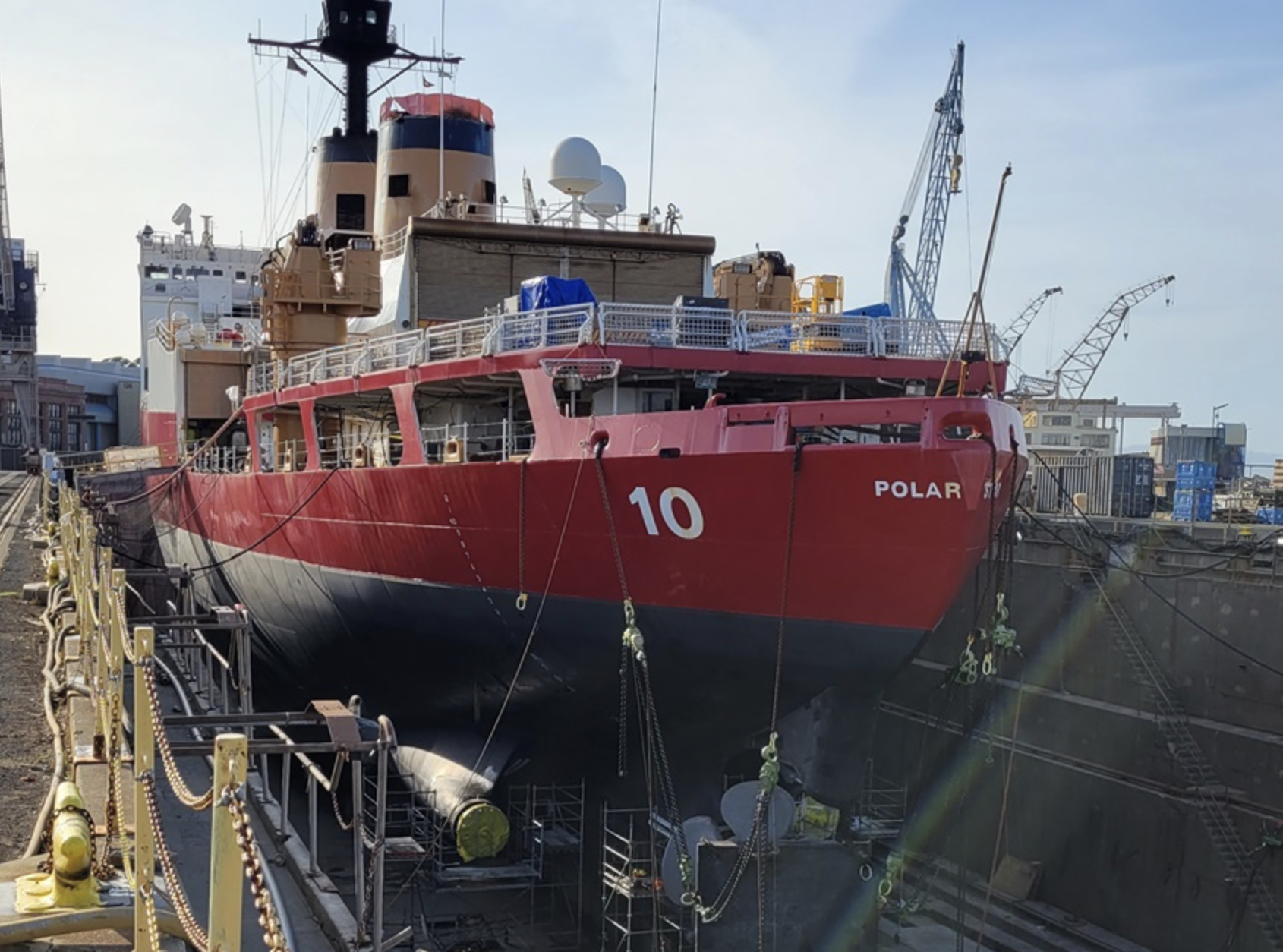
Looks like two Polar Security Cutters ($4.3 billion) and three Arctic Security Cutters so perhaps 12 light and medium Icebreaking Cutters from $816M. These are not medium icebreakers by the usual CG definition (20,000 to 45,000 SHP). There has already been a Request for Information (RFI) that referred to “two types of interest “DOMICE-M” domestic icebreaker, medium and “DOMICE-L,” domestic icebreaker, light” to replace the icebreaking tugs both 140 foot (nine ships) and 65 foot. (The RFI seemed unnecessarily limiting.)

Since the funding for a specifically Great Lakes icebreaker has been removed while the FRI for the Arctic Security Cutter specified a ship capable of transiting the Saint Lawrence Seaway, I expect we may see one or more Arctic Security Cutters seasonally assigned to break ice in the Great Lakes.

As to the 21 new cutters, we know nine will be OPCs (“$4.3B), presumably fully funding all remaining options in the existing contract with Austal for OPCs 5-15. I doubt they included the three Waterways Commerce Cutters ($162M) in the 21, so that suggests probably twelve more Fast Response Cutters ($1B).


July 4, 2025

U.S. Coast Guard receives historic investment to rebuild under President Trump’s One Big Beautiful Bill

WASHINGTON – The U.S. Coast Guard welcomed the nearly $25 billion investment included in the One Big Beautiful Bill Act Friday — marking the largest single commitment of funding in Service history.

This investment strengthens every facet of Coast Guard operations and supports the Service’s role as the Nation’s leading drug interdiction and maritime border security force.

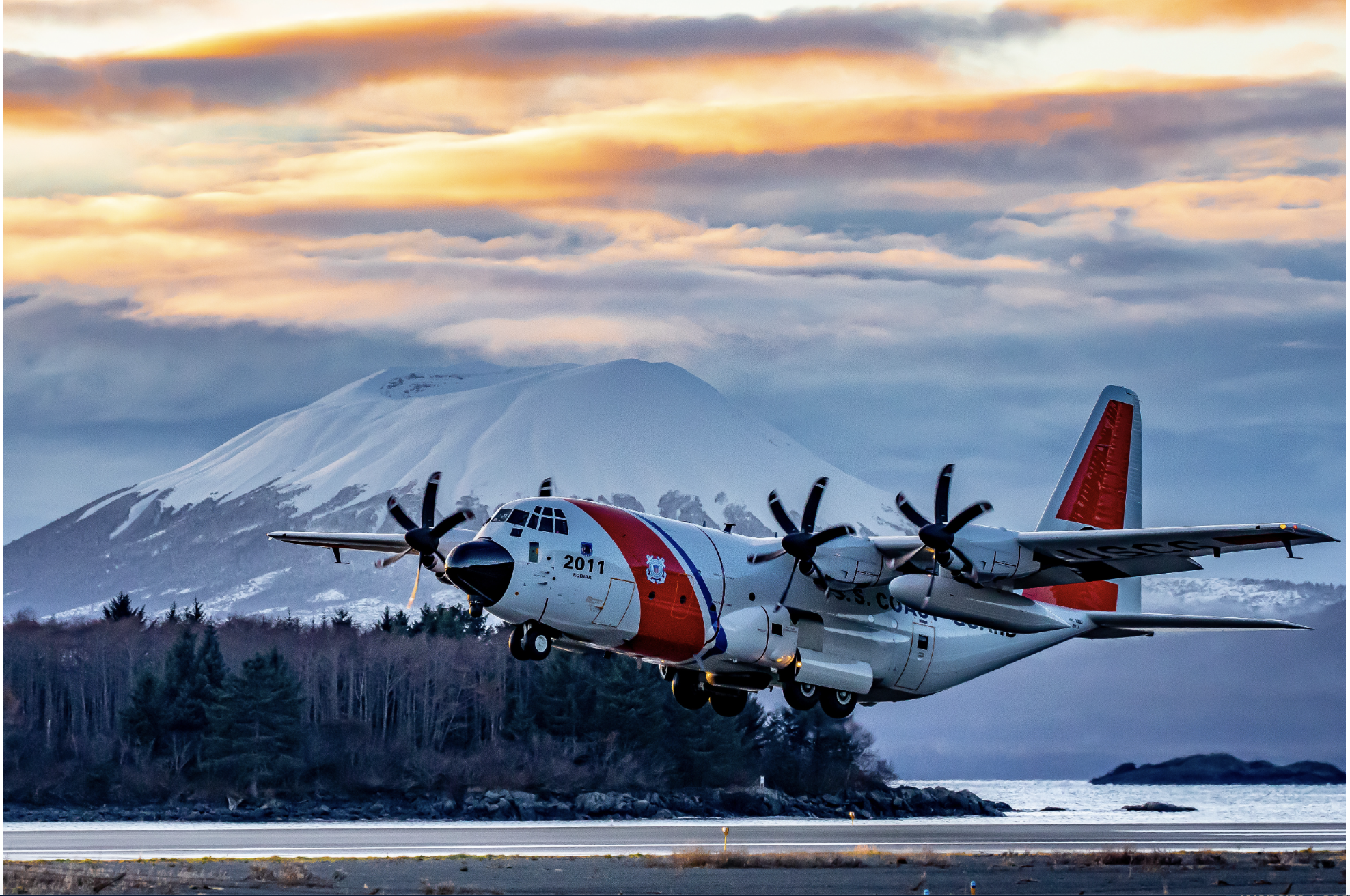
This funding will allow the Coast Guard to procure an estimated 17 new icebreakers, 21 new cutters, over 40 helicopters and six C-130J aircraft while modernizing shore infrastructure and maritime surveillance systems. The package also strengthens the Coast Guard’s ability to counter drug and human trafficking, conduct search and rescue, enhance navigational safety and enable maritime trade.

“This historic investment marks a new era for the Coast Guard,” said Coast Guard Acting Commandant Adm. Kevin Lunday. “It reflects the strong support of the American people and empowers us to restore our Service and prepare for the challenges of today and tomorrow. With this level of support, and the dedication of our Coast Guard men and women, there’s nothing we can’t accomplish. We are deeply grateful for this opportunity to build a stronger Coast Guard for the Nation.”

Investment highlights include:

  • $4.4 billion for shore infrastructure, training facilities and homeports
  • $4.3 billion for Polar Security Cutters, extending U.S. reach in the Arctic
  • $4.3 billion for nine new Offshore Patrol Cutters
  • $3.5 billion for three Arctic Security Cutters
  • $2.3 billion for more than 40 MH-60 helicopters
  • $2.2 billion for depot level maintenance to sustain readiness
  • $1.1 billion for six new HC-130J aircraft and simulators
  • $1 billion for Fast Response Cutters
  • $816 million for light and medium Icebreaking Cutters
  • $266 million for long-range unmanned aircraft systems
  • $170 million for maritime domain awareness, including next-generation sensors
  • $162 million for three Waterways Commerce Cutters

These investments support Force Design 2028 — the Secretary’s comprehensive effort to modernize operations and capabilities to ensure the Coast Guard remains the finest maritime fighting force ready to protect and defend the nation for decades to come.

The Coast Guard extends its appreciation for the leadership of the Administration, including President Trump and Secretary Noem, and leaders in Congress for recognizing the strategic importance of a ready, modern and resilient Coast Guard.

About the U.S. Coast Guard  
With more than 95,000 miles of shoreline, 25,000 miles of navigable rivers and 4.5 million square miles of U.S. exclusive economic zone, the U.S. Coast Guard defends the Nation, protects the maritime transportation system, regulates and safeguards ports and waterways, leads the Nation in drug interdiction and secures the maritime border. As a member of the joint force, a law enforcement organization, a regulatory agency and a member of the U.S. intelligence community, the Coast Guard employs a unique mix of authorities to ensure the safety and integrity of the maritime domain to protect the economic and national security of the nation. The more than 55,000 members of the Coast Guard operate a multi-mission, interoperable fleet of more than 250 cutters, 200 fixed and rotary-wing aircraft, 1,600 boats and its own dedicated cyber command to protect critical maritime infrastructure.

More information about the U.S. Coast Guard can be found at www.uscg.mil. Follow @USCG on X and Instagram, like us on Facebook, subscribe on YouTube and follow LinkedIn — connect with us.

This Day in Coast Guard History, 5 July

Based on the Coast Guard Historian’s timeline, https://www.history.uscg.mil/research/chronology/
With inspiration from Mike Kelso

July 5

1884  An Act of Congress (23 Stat. L., 118) created a special service known as the Bureau of Navigation, under the Treasury Department, with the duty of supervising the work having to do with the administration of American navigation laws.  “The act specifically allotted to the bureau the numbering of vessels and the preparation of the annual list of merchant vessels of the United States.”

USCGC Juniper

1996  The Coast Guard commissioned CGC Juniper (WLB 201) on this date in 1996.  The new 225-foot WLB was the lead ship in the Coast Guard’s Buoy Tender Replacement Project, a major acquisition to replace the service’s twenty-six 180-foot buoy tenders constructed during World War II.  A total of sixteen 225-foot WLBs were built by Marinette Marine Corporation for the Coast Guard.  Juniper was assigned to its homeport of Newport, Rhode Island.

CGNR 6539

2000  HH-65A CGNR 6539 rescued 51 persons from a burning oil rig in the Gulf of Mexico.  The aircrew responded to the fire and safely airlifted 15 people to a nearby platform nine miles from the fire.  They then evacuated another 36 people to awaiting boats.  One of the 6539’s crew, AST1 John Green, had landed on the platform to coordinate the rescue.  As the helicopter returned to retrieve him, the rig exploded and sent a fireball 100 feet into the air.  Unsure whether he survived, the 6539 flew into the thick, black column of smoke and safely rescued him.  All four aircrew were awarded the Distinguished Flying Cross. (read the linked story, it is fantastic–Chuck)

Lt. Troy Beshears, LCDR Brian Moore, AST1 John Green, AMT1 Mike Bouchard

Their accomplishments were entered into the Congressional Record by Louisiana Senator Mary Landrieu. The closing paragraph of her tribute is as follows:

“Today people say we live in a world without heroes, one in which cynicism and selfishness rule the day. I am proud to say this is not the case in our United States Coast Guard. Guardsmen and Guardswomen like Lieutenant Commander Moore, Lieutenant Beshears, Petty Officer Bouchard and Petty Officer Green put their lives on the line every day so that others may live. In this case, 51 men owe their lives to these four heroes who lived up to the Coast Guard’s motto of “Semper Paratus–Always Prepared.” On behalf of those 51 men, their families, the state of Louisiana and Americans everywhere, I am proud to stand here today and say “Thank you–job well done!” to these extraordinary heroes.”

“Trump Bill Secures $9 Billion for U.S. Arctic Surge, Six New Icebreakers to Counter Russian and Chinese Dominance” –gCaptain

gCaptain reports,

“President Trump’s vast tax and spending bill has secured funds the U.S. Coast Guard has been searching for since the early 2010s. The “One Big Beautiful Bill Act” appropriates close to $9 billion for the expansion of the Coast Guard’s Arctic icebreaker fleet.”

The report provides a breakdown of the appropriations that includes money for Polar Security Cutters, Arctic Security Cutters, and infrastructure in Juneau to support USCGC Storis,

Interestingly it also states,

“Rounding out the Arctic package, the U.S. Navy will also receive $115 million for the exploration and development of existing Polar infrastructure.”

That sounds like improvements in Adak that the Coast Guard might also exploit. It might also refer to development of facilities at Nome but it is not nearly enough to fund plans for a deepwater port that had been shelved by the previous administration.

This rendering provided by the City of Nome shows how the Port of Nome, Alaska, will appear following an expansion project that will cost more than $600 million. Shipping lanes that were once clogged with ice for much of the year along Alaska’s western and northern coasts have relented thanks to global warming, and the nation’s first deep water Arctic port should be operational in Nome by the end of the decade. (PND Engineers Inc./City of Nome via AP)