This Day in Coast Guard History, May 25

Based on the Coast Guard Historian’s timeline, https://www.history.uscg.mil/research/chronology/
With inspiration from Mike Kelso

May 25

1877  The training of first class of Revenue Cutter cadets began on the school-ship Dobbin at Curtis Bay, Maryland, with nine cadets, three officers, one surgeon, six warrant officers, and 17 crew members on board.

USCGC Reliance (WMEC-615)

1963  The first of the new class of 210-foot cutters, CGC Reliance (WPC-615, later WMEC-615), was christened at Todd Shipyard, Houston, Texas.  The wife of the Commandant at the time, Mrs. Edwin J. Roland, was the sponsor for the cutter.  A news report published at the time noted: “The CGC RELIANCE, to be stationed at Corpus Christi, Texas, marks a significant milestone in the building program of the Coast Guard as it is the first cruising cutter of any size built for Coast Guard service in almost twenty years.”

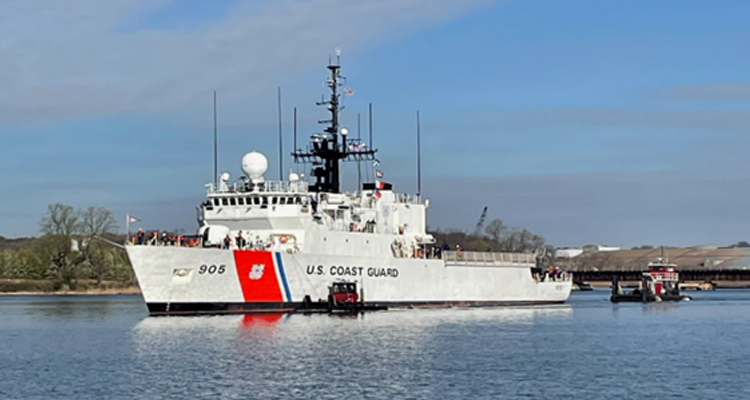
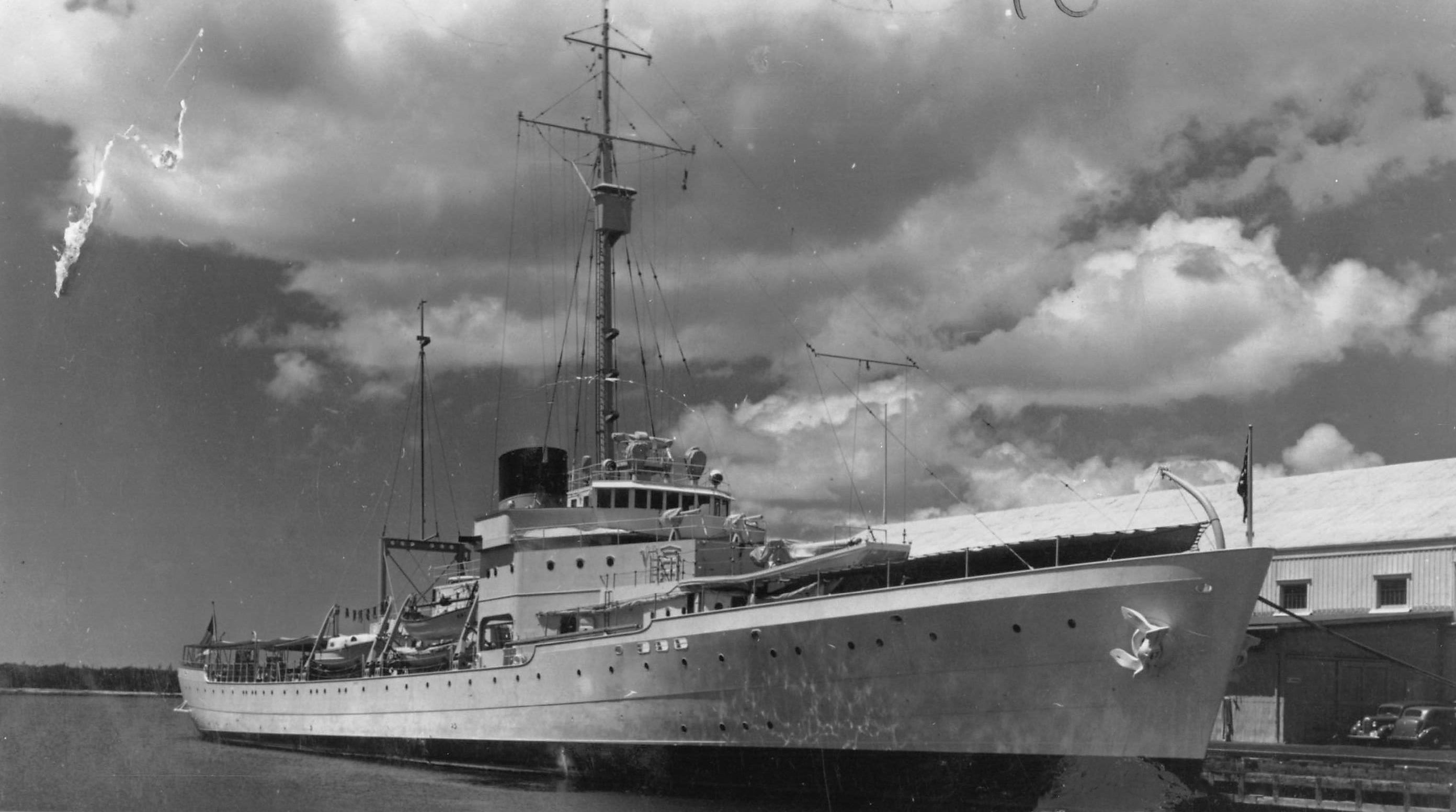
USCGC DILIGENCE returns to Pensacola.

2020  CGC Diligence departed Wilmington, North Carolina for the last time. The cutter spent the previous 28 years homeported on Wilmington’s historic downtown Riverwalk, along the bank of the Cape Fear River.

“Rebrand the Coast Guard Districts” –USNI / This was too good an idea not to bring up again

The post below the line was published in February 2024. It was generally well received but nothing happened.

We have a new administration that is talking about reorganization, so maybe it is a good time to bring it up again.

The only reservations seemed to be about using the word “Forces” instead of “District.” My final comment on the post was, we could also continue to call them districts but give them geographic names, e.g. Coast Guard District New England or Coast Guard District Alaska and Arctic.

I found that the author,

CDR Cole currently serves as the United States Coast Guard’s National Security Fellow at Harvard University where she examines defense, emerging technologies, and strategy at the Belfer Center of Science and International Affairs and advancing public policy for national security at the Harvard Kennedy School of Government.


The February edition of US Naval Institute Proceedings has a one page, “No Body Asked Me, But,” article on page 18, by Cdr. Leah Cole, USCG, suggesting that the Coast Guard Districts be given geographic names rather than numbers.

I’ll just list the proposed names without linking them to the existing numbers because, you will find them obvious and intuitive.

  • Forces New England
  • Forces Mid-Atlantic
  • Forces South and Caribbean
  • Forces Heartland and Gulf Coast 
  • Forces California and Southwest Border
  • Forces Pacific Northwest
  • Forces Pacific Islands
  • Forces Alaska and Arctic

I think she pretty much nailed it, though I think Forces Southeast and Caribbean might be more descriptive for D7, and for D11, Forces Pacific Southwest.

Along with these, she would rebrand the Areas Forces Atlantic and Forces Indo-Pacific.  There is a potential glitch here, in that PATFORSWA, which frequently operates in the Indian Ocean, is currently under Atlantic Area. (Both the Combatant Commanders and the Navy’s Fleet structure have the Indian Ocean split up three ways.) Just Forces Pacific should suffice.

She goes on to suggest,

“As an additional step, the Coast Guard could time the renaming to align with a new recruiting initiative for both the active-duty and reserve force that offers candidates the opportunity to serve in their home regions or a region in which they would like to live and serve long-term. This could create a sense of purpose, build belonging, and also reduce barriers to accessions.”

She also suggests how district Reserve programs could be tuned for predicable surge operations–it’s a short read.

As I am sometimes told, this makes too much sense to actually happen, but it is definitely worthy of serious consideration.

“Commander Cole, a permanent cutterman, is executive officer of the USCGC Bertholf (WMSL-750). She is the 2023 recipient of the John G. Witherspoon Award for inspirational leadership.”

This Day in Coast Guard History, May 24

Based on the Coast Guard Historian’s timeline, https://www.history.uscg.mil/research/chronology/
With inspiration from Mike Kelso

May 24

1830  Navy officers, under furlough from the Navy until April 1832, were given commissions in the Revenue Service.

1941  USCGC Modoc sighted the German battleship Bismarck while the cutter searched for survivors of a convoy southeast of Cape Farewell, Greenland.  There they were witnesses to an attack on Bismarck by nine Swordfish biplane torpedo bombers only hours after the Battle of the Denmark Strait where HMS Hood, the largest ship in the Royal Navy at the time, was sunk with only three survivors.

The first 12 Coast Guard women assigned to sea duty.
[190531-G-G0000-3001]

1977  The Coast Guard issued a request for female volunteers to serve afloat on board cutters as members of the cutters’ permanent crew.  Beginning in late-September of that year the first of 24 women chosen for afloat assignments began reporting on board the CGCs Gallatin and Morgenthau as members of their permanent crew.  Twelve women – two officers and 10 enlisted – served on board each cutter.

“Sec. Noem announces Force Design 2028, nominee for the next Commandant during Coast Guard Academy commencement address” –MyCG

Text below the line is quoted from MyCG. I hesitate to call it a news release, but I don’t think anyone will object to my passing it along.

The phase I see applied to the Coast Guard in discussions of Force Design 2028 is “Fighting Force.” 

  • “A More Agile, Capable, Responsive Fighting Force”
  • “You are the finest fighting force,”
  • “Force Design leaders emphasized the need to transform the Coast Guard into a stronger, more ready, and more reliable fighting force.”

Perhaps missile systems (or even torpedoes) will no longer be anathema to the Coast Guard.

I have long felt the Coast Guard is not currently properly armed to carry out its peacetime counter terrorism duties, much less its military readiness function. Hopefully we will see some movement in that direction along with mobilization planning that will assign the Coast Guard specific wartime missions and that would allow Coast Guard Units to host Navy Reserve equipment (like helicopters) and personnel upon mobilization for a large scale conflict.

Also discussed is growing the Coast Guard by 15,000 members. It is not yet clear if those will be regulars, reserves, civilians, or auxiliary.

No indication yet which programs will be deemed “non-essential or obsolete.”


May 21, 2025

Sec. Noem announces Force Design 2028, nominee for the next Commandant during Coast Guard Academy commencement address

By AJ Pulkkinen, Content Development Team

Department of Homeland Security Secretary Kristi Noem has charged the Coast Guard to “revolutionize how it functions and operates.”

Speaking at the Coast Guard Academy Commencement ceremony, Secretary Noem described her respect for the Service and committed to staunchly advocating for funding support. “Now, more than ever, the American people need a strong and capable Coast Guard,” said Noem. “The Coast Guard must not simply evolve. It must revolutionize how it functions and operates to ensure decisive advantage over adversaries. This requires a fundamental change. Force Design 2028 (FD28) is the bold blueprint needed to drive urgent action and win.”

Secretary Noem’s Force Design 2028 Executive Report outlines her vision for the Coast Guard’s future.

The Secretary also announced President Trump’s nomination of ADM Kevin Lunday to serve as the 28th Commandant of the Coast Guard. ADM Lunday will continue serving as Acting Commandant until confirmed by the U.S. Senate. His previous assignments include 38th Vice Commandant, Atlantic Area Commander, Commander Fourteenth Coast Guard District, and Commander Coast Guard Cyber Command. ADM Lunday has served in a number of intelligence, legal, and operations assignments including command afloat and ashore. Stay tuned to MyCG for more on ADM Lunday and his Senior Leadership Team.

The 28th Commandant will lead the Coast Guard through a historic period of change. Under their leadership, we will establish the first Coast Guard Service Secretary and get FD28 underway. We will guide the transformation through Force Design 2028 will be guided by the following priorities:

  1. A More Agile, Capable, Responsive Fighting Force: We will grow and develop the force structure and operating concepts required to execute and support Coast Guard missions.
  2. Contracting and Acquisition Reform: We will reform Coast Guard acquisitions to rapidly deploy capabilities to execute our missions.
  3. Deployment of Cutting-Edge Technology: We will leverage technology at every turn to enhance mission execution and support.
  4. Relentless Effectiveness, Maximum Return on Investment: We will eliminate non-essential or obsolete programs.

FD28 is comprised of four major campaigns of People, Organizational Design, Technology, and Contracting and Acquisitions. For more on these campaigns, read more on MyCG and below. You can also check out this video.

People  

“The Coast Guard will restore its most important treasure—our Coast Guard men and women that make up the total workforce of Active Duty and Reserve military personnel, Civilian employees, and Auxiliary volunteers.” – FD28 Executive Report

We will:

  • increase the workforce by 15,000 members,
  • institute a physical fitness test for all military members,
  • modernize and focus the Reserve Component to prepare for full-scale mobilization, and
  • enhance access to medical care.

Organizational Design 

“FD28 initiatives will restore clear lines of responsibility, authority, and accountability in officials leading operations, support, and other enabling functions.” – FD28 Executive Report

We will:

  • employ comprehensive lifecycle management approach for all assets – including a Program Executive Office (PEO) for Robotics and Autonomous Systems,
  • align our Deployable Specialized Forces under one Area Commanders,
  • strengthen Coast Guard Cyber Command, and
  • move service-delivery functions out of Headquarters.

Technology  

“The Coast Guard will become a leader within the military services and DHS for adoption and use of advanced technology, human-machine teaming, and data to conduct operations, support, and enterprise functions.” – FD28 Executive Report

We will:

  • develop an integrated sensor network for next generation maritime surveillance,
  • create an information technology system for workforce management,
  • deliver a logistics system needed to maintain more than 2,100 assets, and
  • establish a team to identify weaknesses and invent prototypes that will help scope requirements for long-term solutions.

Contracting and Acquisitions 

“The historic opportunity for significant investment from the Administration and Congress to renew the Coast Guard drive the imperative for the Service to be ready to successfully execute those investments.” – FD28 Executive Report

We will:

  • be disciplined in the requirement process to expedite acquisitions,
  • outsource procurement activities to other government agencies,
  • eliminate consensus-based decision-making to empower Program Executive Officers and increase accountability,
  • streamline contract approvals,
  • facilitate acquisition of icebreakers to provide assured U.S. access and presence to the polar regions, and
  • facilitate acquisition of unmanned systems to enable operations wherever needed.

“Now is the time for fundamental change. Secretary Noem has said that we must reinvigorate the Coast Guard or risk strategic failure,” said ADM Lunday, “I am honored to lead our Coast Guard men and women in this historic effort to renew the Service for the future. Force Design 2028 is the Coast Guard’s way forward. Under the leadership of Secretary Noem, we are moving out today to aggressively implement this transformational change.”

Finns Launch a New Class of Ice Capable Combatant / Looks Like a Coast Guard Cutter to Me

The first multi-purpose corvette built for the Finnish Navy’s Squadron 2020 project was launched at Rauma shipyard on Wednesday 21 May 2025.

A new type of ice capable combatant is emerging. There is nothing else quite like it.

While it is not an icebreaker, I don’t know of any other combatant that combines relatively high speed and robust AAW, ASW, and ASuW capability with the ability to operate in ice.

No US Navy combatants are designed to operate in areas where they might encounter ice, even if assisted by an icebreaker. 

This isn’t just about hull thickness,

In addition to structural details, the Polar Class rules have requirements for machinery systems such as the main propulsion, steering gear, and systems essential for the safety of the crew and survivability of the vessel. For example, propeller-ice interaction should be taken into account in the propeller design, cooling systems and sea water inlets should be designed to work also in ice-covered waters, and the ballast tanks should be provided with effective means of preventing freezing.

What makes these really unique, and perhaps of interest to the USCG, is the Ice Class requirement which translates to non-consolidated (refrozen) ice channels with a thickness of 1.0 meter (3.3 ft) in the middle.

(“Consolidated ice: Floating ice in which the concentration is 10/10 and the floes are frozen together. Compact ice. Floating ice in which the concentration is 10/10 and no water is visible.”)

Since the Finnish-Swedish ice class 1A is considered comparable to Polar Class 7 they should also be capable of operating in thin (30 to 70 cm (0.98 to 2.30 ft)) first year ice without icebreaker assistance.

Unlike ships we have seen designed for Arctic patrol the naval warfare capabilities of these ships are not compromised by the fact that they are designed to operate in ice.

The Coast Guard is already sending National Security Cutters North of the Arctic Circle. With the possibility of fisheries extending into the Arctic, the Coast Guard will want to be able to do fisheries patrols anywhere fishing vessels may go in the US EEZ including Alaskan Arctic waters that open seasonally but where ice may be encountered.

Since the graphic above, some specifications have changed. 

  • Displacement: 4300 tons
  • Length: 117 m (384′)
  • Width: 16 m (52.5′)
  • Draught: 5 m (16.4′)
  • Power: 29,000 kW (39,000 HP)
  • Speed: 26 knots (48 km/h)
  • Crew: 73

We first talked about this unique class almost ten years ago. The initial request for information went out in December 2015.

In 2017 we found out,

“…work on the propellers that was done in conjunction with the USN to make props to meet conflicting requirements…

The propellers are a minor project on their own, and are set to be of a highly advanced design. This is due to the somewhat conflicting demands of high top-speed, small diameter (due to overall draught requirement), and low noise (and high cavitation margin). All this, while at the same time being strong enough to cope with ice.”

The props are variable pitch. CODELAG (Combined Diesel Electric and Gas) propulsion includes a gas turbine for high speed and heavy ice conditions and electric motors for cruise speeds.

Our Situation:

The President has said he wants to build 40 icebreakers. While these would not be true icebreakers they can break ice.

The Icebreaker Collaboration Effort, or ICE Pact, provides a legal basis for technology transfer and collaboration in construction between Finland and the US.

The Coast Guard needs more ships capable of conducting law enforcement in the Arctic.

The Coast Guard needs more large cutters in the Pacific Area than the ten currently planned.

In the not too distant future the US may need combatants capable of fighting in Arctic or even Antarctic waters.

The US certainly would need more escort vessels to protect logistics across the vast distances of the Pacific in the event of a conflict with China.

Conclusion:

Ships like the Pohjanmaa class can meet many of the Coast Guard’s current and possible future needs.

We seem to have a confluence of political will and diplomatic possibilities that would allow the Finns to build ships for the US Coast Guard. They have a hot production line that will probably start production of the fourth and last Pohjanmaa class for the Finnish Navy in 2026.

The Coast Guard would probably want a ships with greater endurance and range but that could probably be provided by lengthening amidships.

If we could move fast enough, we might see steel cut for the first Coast Guard modified Pohjanmaa class in 2027 and delivery in 2031.


This Day in Coast Guard History, May 23

Based on the Coast Guard Historian’s timeline, https://www.history.uscg.mil/research/chronology/
With inspiration from Mike Kelso

May 23

1928  CGC Haida and the USLHT Cedar rescued 312 passengers and crew from the sailing vessel Star of Falkland near Unimak Pass, Alaska after Star of Falkland had run aground in the fog the previous evening.  Both the cutter and the tender managed to save all but eight from the sailing vessel.  This rescue was one of the most successful in Coast Guard history and was also one of the few instances where the Coast Guard and one of its future integrated agencies worked together to perform a major rescue.

The Coast Guard cutter Haida and the lighthouse tender Cedar prepare to rescue the passengers and crew from the sailing vessel Star of Falkland near Unimak Pass, Alaska on May 23, 1928. The Star of Falkland, a commercial fishing ship, was returning for the fishing season from its winter port in San Francisco when it ran into high winds and fog and struck stern first on rocks at Akun Head near Unimak Pass. The 280 Chinese cannery workers and 40 crewmen spent a night of terror while the ship pounded on the rocks – eight passengers committed suicide. The next morning, the U. S. Lighthouse Service buoy tender Cedar and the Coast Guard cutter Haida arrived on the scene and managed to take all the passengers off Star of Falkland without loss of life.

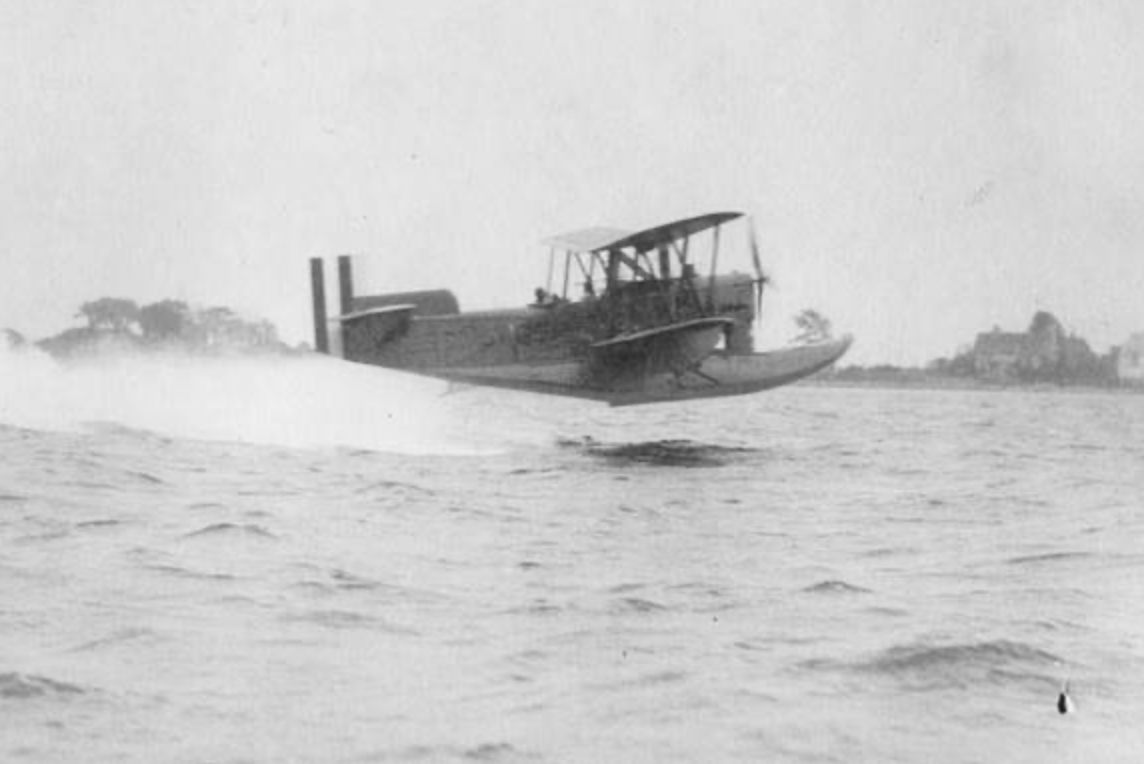
Curtiss NC seaplane. Plane number four of four built, named NC-4, sometime after the translatlantic test flight, 1919. Visible is the fourth pusher engine which was added for that flight. US Navy photo.

1930  Lieutenant Commander Elmer F. Stone received a medal from Congress for extraordinary achievement in making the first successful trans-Atlantic flight in 1919.  Stone was the pilot of the Navy’s NC-4.

Commodore Edward M. Webster

1946  Commodore Edward M. Webster, USCG, (and here) headed the US Delegation to the International Meeting on Radio Aids to Marine Navigation, which was held in London, England.  As a result of this meeting, the principal maritime nations of the world agreed to make an intensive study of the World War II-developed devices of radar, LORAN, radar beacons, and other navigational aids with a view to adapt them to peacetime use.  This was the first time that the wartime technical secrets of radar and LORAN were generally disclosed to the public. [USCG Public Information Division News Release, 7 June 1946.]

President Nixon and Nikolay Podgorny (Chairman of the Presidium of the Supreme Soviet of the USSR) sign agreements in cooperation between the United States and USSR in the fields of environmental protection, medical science, and public health. The signing ceremony took place in St. Vladimir Hall in the Grand Kremlin Palace, Moscow, between 6:08 PM and 6:20 PM on May 23, 1972. Photo by Robert Knudsen, White House Photo Office (WHPO). Courtesy of Nixon Library.

1972  President Richard Nixon and the Chairman of the Presidium of the Supreme Soviet of the USSR, N. V. Podgorny, signed the “Agreement on Cooperation in the Field of Environmental Protection between the United States of America and the Union of Soviet Socialist Republics.”  Under the agreement, the U.S. Coast Guard was the lead U.S. agency, in association with the EPA and MARAD, for the Task Group on Prevention and Cleanup of Pollution of the Marine Environment from Shipping.

This Day in Coast Guard History, May 22

Based on the Coast Guard Historian’s timeline, https://www.history.uscg.mil/research/chronology/
With inspiration from Mike Kelso

May 22

1920  An Act of Congress, which provided a system of general retirement for the civil employees of the US Government effective August 21, 1920, benefited those employees of the Lighthouse Service who were not covered by the retirement law of June 20, 1918, which provided retirement for certain classes of employees in the Lighthouse Service.

1926  An Act of Congress extended the benefits of the Public Health Service to apply to light keepers located at isolated points, who previously had been unable to avail themselves of such benefits, and made provisions for medical supplies and hospital services for the crews of the vessels of the Lighthouse Service, including the detail of medical officers.

USCGC Mendota (WHEC-69) at Montego Bay, Jamaica, in 1966. Photo credit: MM3 Robert Withers, USCG (Ret.)

1959  Two US Air Force jets collided near Ocean Station ECHO, patrolled at that time by the CGC Mendota.  A U.S. Air Force weather plane spotted both pilots in the water and, within two hours of collision, the Mendota rescued them.

Five white 311-foot cutters of Coast Guard Squadron Three, assigned to support Operation MARKET TIME tied up alongside Navy repair ship USS Jason (AR-8) at Naval Station Subic Bay in the Philippines, 4 August 1967. From inboard to outboard:
USCGC Half Moon (WHEC-378);
USCGC Yakutat (WHEC-380);
USCGC Gresham (WHEC-387);
USCGC Barataria (WHEC-381) and
USCGC Bering Strait (WHEC-382)
U.S. Coast Guard Historian’s Office. Photo by CDR Richard Morse, USCG, Commanding Officer USCGC Barataria (WHEC-381)

1967  CGC Barataria conducted the first fire-support mission for the newly created Coast Guard Squadron Three in Vietnam.  This force initially consisted of five Coast Guard 311-footers used to support Market Time operations.

This Day in Coast Guard History, May 21

Based on the Coast Guard Historian’s timeline, https://www.history.uscg.mil/research/chronology/
With inspiration from Mike Kelso

May 21

1849  Revenue Captain Douglas Ottinger reported completing the construction and furnishing of eight life-saving stations on the New Jersey coast between Sandy Hook and Little Egg Inlet, marking the beginning of Federal life-saving efforts.

Coast Guard manned USS LST-69 beached while unloading equipment, date and location unknown. US Coast Guard photo # 3237 from the collections of the US Coast Guard Historian’s Office. While moored in the West Loch at Pearl Harbor USS LST-69 was destroyed by an ordnance explosion, and sank, 21 May 1944.

1944  The Coast Guard-manned USS LST-69 was sunk as a result of explosions and fires in ships nested in the West Loch of Pearl Harbor. None of her crew were killed, but 13 were seriously injured.

The West Loch Disaster was a maritime accident during World War II at Pearl Harbor U.S. Naval Base in Hawaii. The incident, which occurred just after 3 p.m. on Sunday, 21 May 1944, began following an explosion in a staging area for Landing Ships, Tank (LSTs) and other amphibious assault ships in West Loch. A fire quickly spread among the ships being prepared for Operation Forager, the invasion of the Japanese-held Mariana Islands. Over the next 24 hours, six LSTs sank, 163 naval personnel died, and 396 were injured.

USCGC Woodbine (WAGL-289) is nosed in at the stern of USS LST-480 burned out and grounded on Intrepid Point, West Loch, on 22 May 1944. A pontoon causeway is floating along LST-480’s starboard side. A second causeway section is still attached to her port side.

1951  The Coast Guard announced the formation, within the Washington, DC area, of a new Organized Reserve Training Unit (Vessel Augmentation).  The mission of this new unit was to develop a force of experienced personnel, well-trained in all shipboard billets, with particular emphasis on anti-submarine warfare, and the use of radar, radio, and other branches of electronics.  Training was to be directed towards readying personnel of the unit for immediate assignment to ships of the Coast Guard and Navy in the event of mobilization.

JCG Settsu(PLH-07) at Port of Kobe July 22, 2017

1986  Japan’s Maritime Safety Agency (MSA) vessel Settsu arrived in Juneau for three days of meetings with 17th District staff members, SAR talks, softball games (against the crew of CGC Morgenthau – the MSA crew won one game out of three), and comparing operational notes.  The 348-foot Japanese vessel was homeported in Kobi, Japan.

2013  The Commandant, ADM Robert Papp, released the Coast Guard’s Arctic Strategy report.  He noted that this strategy would “guide our efforts in the region over the next 10 years. This strategy is based on nearly 150 years of Coast Guard experience in maritime operations in the Arctic region, since the U.S. Revenue Cutter Lincoln first arrived in the new U.S. territory of Alaska in 1867. The U.S. Coast Guard Arctic Strategy documents our intent to pursue three key objectives: improving awareness, modernizing governance and broadening partnerships. Beyond these objectives, we will continue to build upon our Service’s long heritage of leadership in the Arctic, working with Federal, state, local and territorial partners to ensure maritime governance in the region.”


This Day in Coast Guard History, May 20

Based on the Coast Guard Historian’s timeline, https://www.history.uscg.mil/research/chronology/
With inspiration from Mike Kelso

May 20

1882  The lookout of Station No. 10 (Louisville, Kentucky), 9th District, spotted two men and a skiff being swept toward the dam and falls of the Ohio River.  He sounded the alarm and “a boat at once shot out from the station, and reached the men in time to save them.  They were quite ignorant of rowing…and were at the mercy of the flood sweeping towards the dam.  They were terribly frightened and profuse in their thanks to their rescuers.”

Coast Guard’s 270-foot medium endurance cutter Bear underway in Africa. (Ensign Connor Brown, U.S. Coast Guard)

1999  CGC Bear arrived in Rota, Spain.  She was deployed to the Adriatic Sea in support of Operation Allied Force and Operation Noble Anvil, NATO’s military campaign against the forces of the former Republic of Yugoslavia.  Bear served in the USS Theodore Roosevelt Battle Group providing surface surveillance and SAR response for the Sea Combat Commander, and force protection for the Amphibious Ready Group operating near Albania.  Bear provided combat escort for U.S. Army vessel’s transporting military cargo between Italy and Albania.  This escort operation took Bear up to the Albanian coastline, well within enemy surface-to-surface missile range.

This Day in Coast Guard History, May 19

Based on the Coast Guard Historian’s timeline, https://www.history.uscg.mil/research/chronology/
With inspiration from Mike Kelso

May 19

1846  Secretary of Treasury Walker assigned Revenue Captain John A. Webster to control movements of vessels assigned to Army and to cooperate with the Navy in the War with Mexico.

U.S.R.C. Gresham, flagship of the patrol fleet, America’s Cup races, 1901, Library of Congress.

1896  Congress authorized the Secretary of Treasury to patrol regattas.

U.S.R.C. Onondaga, America’s Cup races, 1901. Library of Congress.

1921  Congress passed the “Emergency Immigration Act of 1921” (ch. 8, 42 Stat. 5), a quota law that limited the number of migrants in any year to three percent of the number of residents from that country already residing in the U.S. as of 1910.