Cutter Midgett has been busy in the Western Pacific

The U.S. Coast Guard Cutter Midgett (WMSL 757) moors in Manila, Philippines, Aug. 30, 2022. Midgett’s crew will engage in professional exchanges and capacity building exercises with the Philippine Coast Guard, and partner nations, and will patrol and conduct operations as directed while deployed on a months-long Western Pacific patrol under the tactical control of Commander, U.S. 7th Fleet. Philippine Coast Guard photo

Two news releases for Coast Guard News, “U.S. Coast Guard cutter visits New Zealand, conducts training and promotes maritime governance” and “U.S. Coast Guard cutter visits Tuvalu, strengthens partnerships and promotes regional security.”


Feb. 21, 2025

U.S. Coast Guard cutter visits New Zealand, conducts training and promotes maritime governance

WELLINGTON, New Zealand – U.S. Coast Guard Cutter Midgett (WMSL 757) recently concluded a month-long engagement with New Zealand, strengthening ties with the Royal New Zealand Navy (RNZN) and reinforcing the U.S. Coast Guard’s commitment to Oceania. The engagements included professional exchanges, bilateral maritime law enforcement trainings, and enhanced cooperation between the two nations in support of a peaceful, secure, prosperous, and resilient region.

During Midgett’s transit from Honolulu to Wellington, three RNZN members experienced operations aboard the cutter as part of an exchange program with the Coast Guard.

While in Wellington, Midgett’s crew participated in several events with the RNZN, the Rescue Coordination Centre New Zealand (RCCNZ), the New Zealand Maritime Police, and members of the local community. These events included a reception hosted by the RNZN, visits to the RCCNZ and the Maritime Police Base, a community event with Waka Ama’s outrigger canoes, and ship tours for more than 200 people.

The Coast Guard is an instrument of national power that bridges the divide between defense, diplomacy, and law enforcement, and creates opportunities to further national objectives and priorities. These engagements provided invaluable opportunities for personnel from both nations to interact, discuss experiences, and learn about roles in their services and communities. “The integration of our New Zealand partners into our crew was seamless and highly beneficial,” said Capt. Matthew Rooney, commanding officer of Midgett. “The professional exchanges and shared experiences, along with the friendships forged and sea stories shared, will undoubtedly enhance our ability to operate together in the future.”

The Coast Guard values New Zealand’s active engagement in international security efforts. This partnership is vital to countering destabilizing behavior in the Pacific that undermines mutual prosperity, economic well-being, and the health of the marine ecosystem. This visit builds on the Memorandum of Agreement signed with the RNZN in 2023, allowing both nations to share experiences and knowledge to cultivate best practices. The Coast Guard looks forward to continuing this partnership, based on mutual respect and shared values, to promote security and prosperity in the Indo-Pacific region.

Commissioned in 2019, Midgett is the eighth Legend-class national security cutter and is homeported in Honolulu. National security cutters are 418-feet long, 54-feet wide, and have a 4,600 long-ton displacement. They have a top speed of more than 28 knots, a range of 12,000 nautical miles, an endurance of up to 90 days and can hold a crew of up to 170.


Feb. 21, 2025

U.S. Coast Guard cutter visits Tuvalu, strengthens partnerships and promotes regional security

FUNAFUTI, Tuvalu – The U.S. Coast Guard Cutter Midgett (WMSL 757) recently concluded a successful engagement in Tuvalu, conducting joint bilateral maritime law enforcement shiprider operations and strengthening partnerships to combat illegal, unreported, and unregulated fishing in the region. This partnership underscores the U.S. Coast Guard’s unwavering commitment to maintaining a secure and prosperous Indo-Pacific, leveraging its operational expertise to enhance cooperation and strengthen its trusted partnership with Tuvalu.

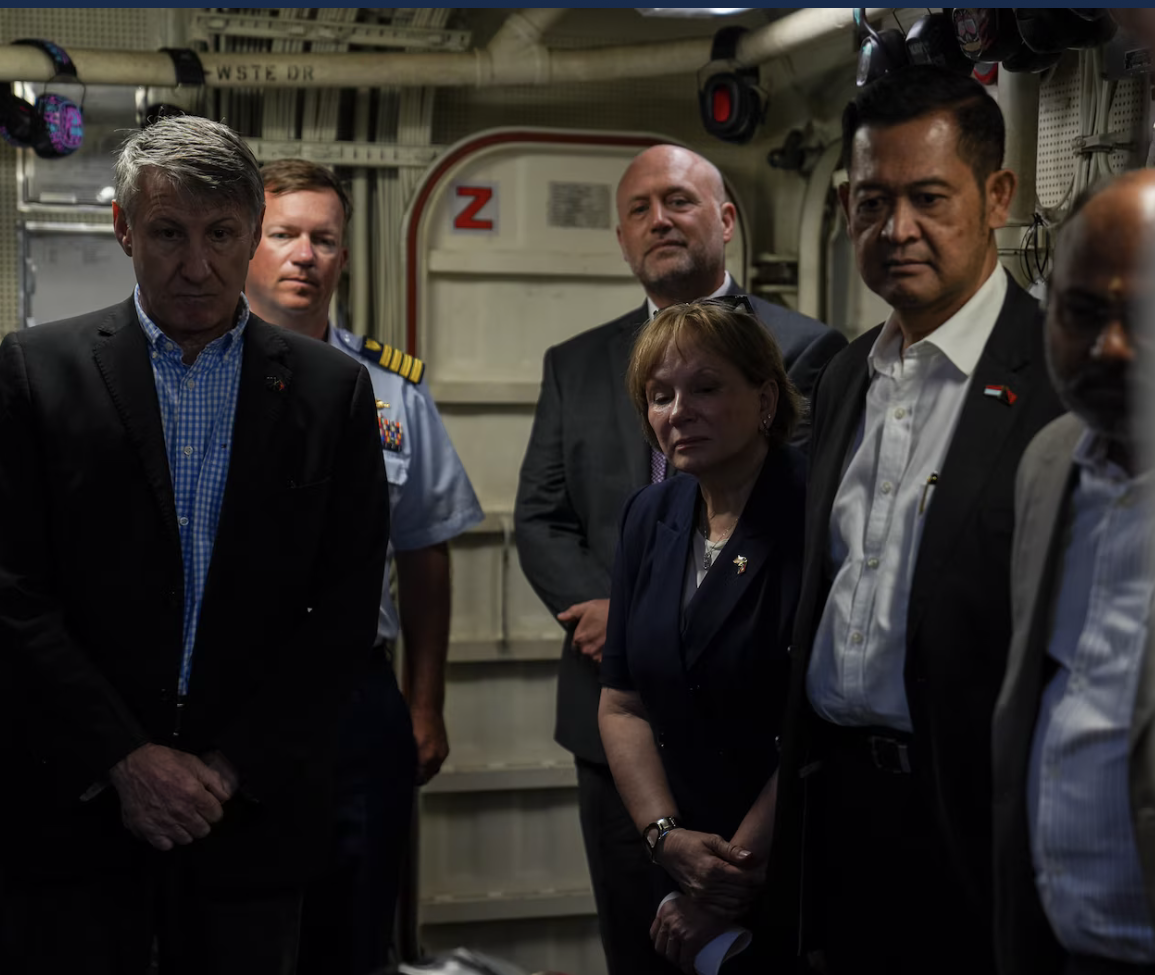
During the three-day operation, Midgett participated in three at-sea boardings, including two bilateral inspections within Tuvalu’s exclusive economic zone, the first in over a decade, and one Western and Central Pacific Fisheries Commission high-seas inspection. Midgett also deployed its ScanEagle unmanned air system to enhance maritime domain awareness and support the joint effort. These joint operations provided valuable opportunities for both Tuvalu and U.S. Coast Guard personnel to exchange expertise, share best practices, and strengthen interoperability. Following the shiprider operations, Midgett hosted 13 distinguished visitors from Tuvalu, including representatives from the Fisheries Department, Maritime Police, and the Tuvalu government. Discussions focused on the positive impact of the joint boardings, emphasizing the importance of maritime security cooperation in the region.

“This operation was a tremendous success on multiple levels,” said Capt. Matthew Rooney, commanding officer of Midgett. “Not only did we work alongside our partners in Tuvalu to conduct critical maritime law enforcement operations, but the experience also provided invaluable training for our crew. From the deck plate level all the way up to command and control, integrating with our Tuvaluan counterparts was seamless and incredibly beneficial for all involved. We learned a great deal from each other, and this experience will undoubtedly pay dividends in future operations.”

The partnership between Midgett and Tuvalu underscores the U.S. Coast Guard’s commitment to supporting Pacific Island nations in their efforts to safeguard their sovereignty and manage their maritime resources effectively. A secure and prosperous Indo-Pacific requires working closely with partners such as Tuvalu to promote maritime governance.

Bilateral maritime efforts enhance governance among regional partners, improving interoperability, and strengthening readiness.

Midgett, commissioned in 2019 and homeported in Honolulu, Hawaii, is the eighth Legend-class National Security Cutter. These 418-foot vessels are equipped with advanced technology and a range of capabilities, making them ideally suited to support a wide range of missions, including maritime security, law enforcement, and search and rescue operations. Midgett’s deployment to Oceania highlights the United States’ enduring commitment to promoting a peaceful, secure, prosperous, and resilient Pacific Islands region.


This Day in Coast Guard History, February 21

Based on the Coast Guard Historian’s timeline, https://www.history.uscg.mil/research/chronology/
With inspiration from Mike Kelso

February 21

USCGC Spencer (WPG-36) in 1942 or 1943. Spencer sank U-175 with assistance of USCGC Duane, on April 17, 1943.

1943  CGC Spencer received credit from the U.S. Navy for attacking and sinking the U-225 in the North Atlantic.  The British Ministry of Defence has since recorded that the U-225 was actually destroyed by B-24 Liberator “S” of RAF No. 120 Squadron on February 15, 1943 and they have revised the official British records to reflect this change.  However, the renowned German naval historian, Professor-Dr. Jurgen Rohwer, stated that Spencer “probably” attacked and sank the U-529 instead, although the Spencer has not received official credit for that sinking.

2008  On February 20, 2008, two U.S. Air Force F-15C fighter jets from Eglin Air Force Base, Florida, collided over the Gulf of Mexico off Panama City.  Coast Guard HC-144A, No. 2303, and its crew, which were diverted to the scene from a routine training flight.  They located the first pilot and directed his recovery.  Both F-15C pilots were eventually recovered; regrettably only one was recovered alive.  This search & rescue (SAR) mission included two important “firsts” for the U.S. Coast Guard’s new HC-144A Ocean Sentry Maritime Patrol Aircraft.  For the HC-144A, the incident marked its first SAR mission, and its first use as an On-Scene Coordinator (OSC) platform.

This Day in Coast Guard History, February 20

Based on the Coast Guard Historian’s timeline, https://www.history.uscg.mil/research/chronology/
With inspiration from Mike Kelso

February 20

1845  President John Tyler vetoed a bill providing that no cutter be built nor purchased unless an appropriation was first made by law, on grounds that sanctity of contract of those already contracted for should not be overridden by Congress.  Congress overrode his veto on March 3, 1845.

The U.S. Coast Guard Cutter USCGC Coos Bay (WAVP-376). Originally USS Coos Bay (AVP-25) was a Barnegat-class small seaplane tender commissioned by the U.S. Navy for use in the Second World War. From 1949 to 1966 she was loaned to the U.S. Coast Guard, first designated WAVP-376, later WHEC-376. After her return to the Navy, the Coos Bay was struck from the Naval Register and on 9 January 1968 she was expended as target by the guided missile destroyer USS Claude V. Ricketts (DDG-5), and 35 aircraft, 200 km (120 mi) off the coast of Virginia (USA). (The 40mm and boats suggest this is early in Coos Bay’s Coast Guard service.–Chuck)

1964  CGC Coos Bay rescued 11 of the crew of the foundering British freighter Ambassador in heavy seas, 1,000 miles east of Boston.  Coast Guard aircraft from Air Station Argentia, Newfoundland, were first on the scene after the freighter issued an SOS on February 18th. The Coos Bay, on Ocean Station patrol 350 miles distant, steamed to the area and arrived there 24 hours later.  In concert with the Norwegian freighter Fruen, they managed to get lines aboard the wallowing Ambassador in what was called one of the most dramatic rescues of the year.  Demonstrating outstanding seamanship during the rescue, the cutter’s commanding officer, Commander Claude W. Bailey, was awarded the Legion of Merit.  Many of his crew had volunteered to enter the frigid water to assist in the rescue as well.  Two were awarded the Coast Guard Medal while seven others received the Coast Guard Commendation Medal.

A team aboard Coast Guard Cutter Stratton’s long range interceptor-II cutter boat participates in the interdiction of a self-propelled semi-submersible vessel in the Eastern Pacific Ocean July 18, 2015. U.S. Coast Guard photo by Petty Officer 2nd Class LaNola Stone. 

2013  The first LRI-II was delivered by MetalCraft Marine U.S. to the Coast Guard on this date and commenced testing activities soon after. The LRI-II, which were built to be deployed on the National Security Cutter fleet, was 35 feet long with a range of over 220 nautical miles and was capable of achieving speeds in excess of 38 knots. “The stern-launched LRI-II’s high speed and extended range significantly enhanced its host cutter’s ability to execute missions while underway, particularly in migrant interdiction and law enforcement operations where teams need to be put on scene quickly. Its ability to extend the reach of its host cutter is also critical to search and rescue operations, enabling NSC cutter crews to patrol larger search areas. The LRI-II can carry up to 15 passengers, including crew, and safely operate in seas up to 13 feet.”


Selling Seapower / Failing PR

120727-N-VD564-015
PACIFIC OCEAN (July 27, 2012) Ships and submarines participating in Rim of the Pacific (RIMPAC) exercise 2012 are in formation in the waters around the Hawaiian islands. Twenty-two nations, more than 40 ships and submarines, more than 200 aircraft and 25,000 personnel are participating in the biennial Rim of the Pacific (RIMPAC) exercise from June 29 to Aug. 3, in and around the Hawaiian Islands. The world’s largest international maritime exercise, RIMPAC provides a unique training opportunity that helps participants foster and sustain the cooperative relationships that are critical to ensuring the safety of sea lanes and security on the world’s oceans. RIMPAC 2012 is the 23rd exercise in the series that began in 1971. (U.S. Navy photo by Chief Mass Communication Specialist Keith Devinney/Released)

It is apparent the Federal Government has been failing in demonstrating its value to the public. Of all the government agencies, the Coast Guard is among the leaders in keeping the public informed, but, even there, it seems we could be doing better.

I am a regular user of web sites that are charged with telling the stories of various agencies. Almost every day I go through my “Recommended Blogs” list of 30 web sites looking for news that may be of interest to our readers. The list includes:

  • Four Coast Guard run sites
  • Joint Interagency Task Force South
  • Three Combatant commander sites–for NORTHCOM, SOUTHCOM, and INDOPACOM
  • Four numbered Fleet commands–5th, 4th, 3rd, and 2nd

12 of the 30 are government sites and really the commercial sites tend to be more interesting.

The Coast Guard sites are generally good. MyCG is for internal consumption and United States Coast Guard News is good for both internal and external audiences. Both seem to have something new almost every day. Acquisitions Directorate (CG-9) is more specialized and less frequent, but I pass along virtually everything they post because it is all important and tends not to repetitive.

Unfortunately Defense Video Information Distribution Service Coast Guard News Wire seems to be underutilized. Their latest video was posted February 2, over a month ago. This would seem to be a good venue for providing videos that might appear on TV on a slow news day (although we don’t seem to be having many of those). When I use a video from this site, I usually pull the same videos off of YouTube because they are more easily accessible, but the site does alert me to the existence of the videos. Unfortunately there just isn’t much content there.

I would have thought Joint Interagency Task Force South would have had a lot of Coast Guard related stories, and much of their content is, but currently, the latest story was posted Nov. 19, 2024 and the one before that was Nov. 5, 2024. The one before that was August 27, 2024. Seven stories in the last year. That’s not frequent enough for most news agencies to bother looking at the site.

NORTHCOM’s on line magazine The Watch adds new content frequently. Most is not Coast Guard or Naval related. I think more of it should be, but it is probably not surprising since NORTHCOM is also NORAD.

SOUTHCOM, I would have thought, would have a lot of Coast Guard related content. Their web site has had four posts about the set up of the retention center at Gitmo 4 to 6 February, but before that they were a lot more quiet. Two posts in January; two posts in December; four in November; two in October; eight in September which included UNITAS, but there was never even a wrap-up at the conclusion of UNITAS. I had to go back to June 6,2024 to find a Coast Guard related story, and there were very few Navy related stories.

INDOPACOM”s Indo-Pacific Defense Forum seems to be written more for an international audience than to inform US citizens, and as such it does an excellent job. Much of it is Naval and coast guard related.

Second Fleet has not had a single story this calendar year. Last story was December 3, 2024, eleven weeks ago.

Third Fleet does not seem to have anything to report except units deploying or returning from deployment.

Fourth Fleet, you would expect to have a lot of Coast Guard related stories, since most of their ships are white with racing stripes, but you would be wrong. There were 14 stories in all of 2024, only a little over one a month. Not one story about a Coast Guard unit. No wrap up following UNITAS2024, I entered Coast Guard in the search function for this site and got this, “Sorry, no results found for ‘coast guard’. Try entering fewer or more general search terms.” They have, until recently showing interest in showing how they are helping prepare GITMO to receive immigrants, generally had any stories of any kind only infrequently. Remarkably I got this when I entered UNITAS (their premier annual international exercise) in the search function, “Sorry, no results found for ‘UNITAS’. Try entering fewer or more general search terms.”

Fifth Fleet, US Naval Forces Central Command, is something of a bright spot. They add a story about once a week, but perhaps more importantly the stories tend to be more operationally focused. Coast Guard Fast Response Cutters featured regularly.

“Elomatic awarded Polarstern 2 icebreaker design contract” –Marine Log / A Little Late for the Polar Security Cutter

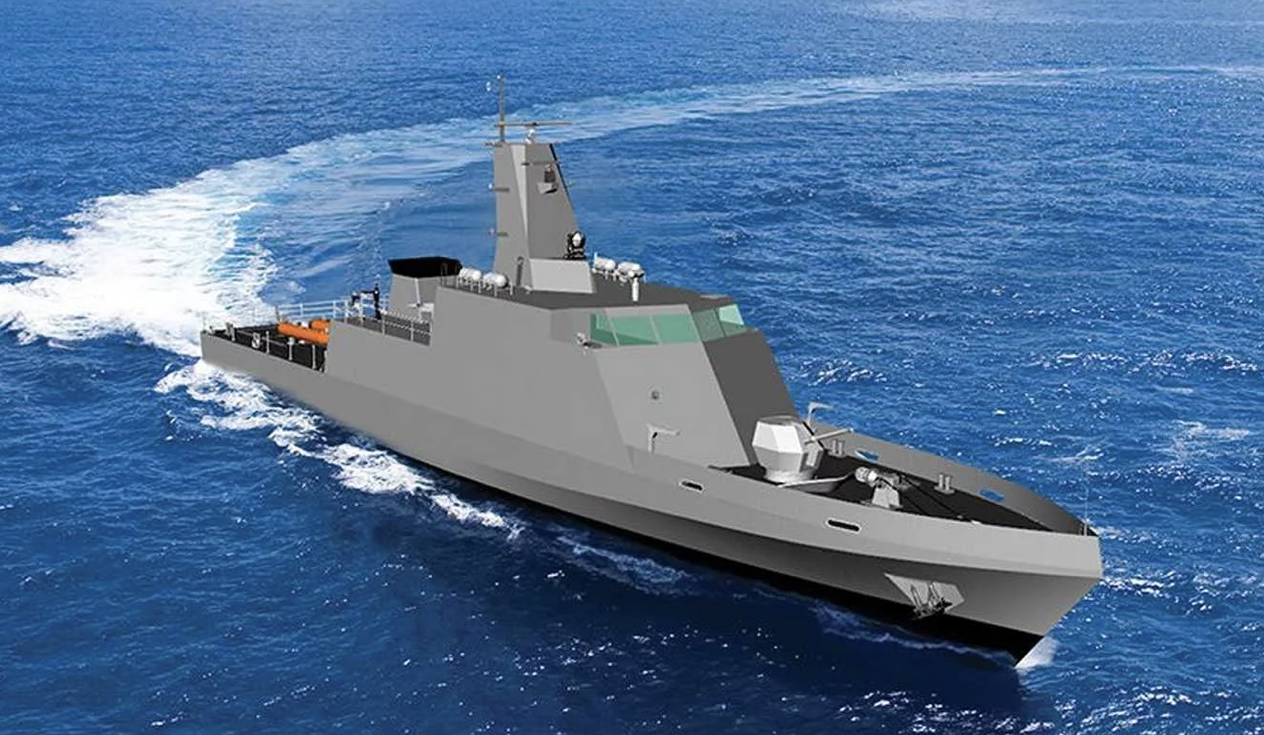
Polarstern 2 rendering: Ocean Architects and Elomatic. This does not look much like the Polar Security Cutter.

As you may recall ,the Polar Security Cutter was supposed to have been based on a proven design. VT Halter Marine Inc. won the contract based on the design of the Polarstern 2, but really Polarstern 2 was, at that point, vaporware rather than a proven design. Its design contract has just been signed almost six years after the award of the contract for the Polar Security Cutter, April 23, 2019.

Marine Log reports,

“Thyssenkrupp Marine Systems (TKMS) has awarded Elomatic Maritime Technologies GmbH a design and engineering contract to support the construction of Germany’s new Polarstern 2 icebreaker.

How did this happen?

“USCGC Clarence Sutphin Jr. Rescues Seven Mariners” –NAVCENT

M/V SHAYESTEH listing in the Arabian Gulf. Photo courtesy CENT COM

Below is a News release from U.S. Naval Forces Central Command Public Affairs. Other reports, here and here, indicate that the ship was Iranian owned but of Qatari registry and the rescued included five Iranians and two Indian nationals.

Feb 15, 2024
FacebookXCopy LinkEmailShare
U.S. 5TH FLEET – The U.S. Coast Guard Sentinel-class fast-response cutter USCGC Clarence Sutphin Jr. (WPC 1147) seizes a vessel carrying military-grade weapons and other lethal supplies in the Arabian Sea, Jan. 28. Clarence Sutphin Jr. operates in the U.S. 5th Fleet area of operations to help ensure maritime security and stability in the Middle East region.


20250218-G-NO416-1001 CENTRAL ARABIAN GULF – A U.S. Coast Guard team from the fast-response cutter USCGC Clarence Sutphin, Jr. (WPC 1147) rescue seven mariners as their vessel slowly sinks in the Central Arabian Gulf, Feb. 18. The mine countermeasures ship USS Devastator (MCM 6) watches over the scene as backup during the rescue operation. (Photo by U.S. Coast Guard)

USCGC Clarence Sutphin Jr. Rescues Seven Mariners

February 19, 2025

Crewmembers of the U.S. Coast Guard fast-response cutter USCGC Clarence Sutphin, Jr. (WPC-1147) and the mine countermeasures ship USS Devastator (MCM 6) rescued seven mariners from a disabled vessel in the international waters of the Central Arabian Gulf, Feb. 18.

Following a distress signal from the mariners, the Coastguardsmen embarked a rigid-hull inflatable boat to offer assistance. After determining the vessel was no longer sea worthy, the Coastguardsmen brought the mariners back to their ship. Devastator provided back-up support during the operation.

None of the mariners appeared to be injured.

“Providing assistance at sea to mariners in distress is a core Coast Guard mission,” said Coast Guard Lt. Michael O’Dell, Clarence Sutphin, Jr.’s commanding officer. “It is inherently dangerous, but the team executed without hesitation – without fear – to extend their compassion to people in a dire situation. I’m incredibly proud of to be a part of this team.”

Clarence Sutphin, Jr. is forward deployed to the U.S. 5th Fleet area of operations as part of Patrol Forces Southwest Asia. Devastator is an Avenger-class mine countermeasures ship also forward deployed to U.S. 5th Fleet. Both ships help ensure maritime security and stability in the Middle East region.

The U.S. 5th Fleet area of operations encompasses about 2.5 million square miles of water area and includes the Arabian Gulf, Gulf of Oman, Red Sea and parts of the Indian Ocean. The expanse is comprised of 20 countries and includes three critical choke points at the Strait of Hormuz, the Suez Canal and the Strait of Bab al Mandeb at the southern tip of Yemen.

This Day in Coast Guard History, February 19

Based on the Coast Guard Historian’s timeline, https://www.history.uscg.mil/research/chronology/
With inspiration from Mike Kelso

February 19

1845  Administrative control of the Lighthouse Establishment was transferred to Revenue Marine Bureau.

1845  Metal buoys were first put into service. They were riveted iron barrels that replaced the older wooden stave construction.

1862  Congress authorized revenue cutters to enforce the law outlawing the importation of Chinese “coolie” labor.

1941  The Coast Guard Reserve was established after Congress passed the Auxiliary & Reserve Act.  The Auxiliary was created from former Reserve.  The legislation was introduced by Representative Gordon Canfield of New Jersey.

USS Bayfield (APA-33) in the transport area off Iwo Jima, 20 february 1945.
Frames from a short film called “Amphibious Invasion of Iwo Jima, H-Hour Minus One”. Dept. of the Navy. National Archives ID 80201, Local ID 428-NPC-15841.

1945  The invasion of Iwo Jima commenced.  Coast Guard units that participated in this campaign included the Coast Guard-manned USS Bayfield, Callaway, 14 LSTs, and the PC-469.  Three of the LSTs were struck by enemy shore fire: LST-792, LST-758, and LST-760.

The U.S. Navy attack transport USS Callaway (APA-35) off the New York Naval Shipyard (USA), on 18 September 1943. Callaway was loading supplies from a civilian barge. Also alongside is the tug handling the barge and two Coast Guard motor boats.

1988  The largest drug bust in Hawaiian waters to date took place with seizure of the Panamanian-flagged freighter Christina M 800 miles southeast of Hawaii.  The units involved were the Navy fast frigate USS Ouellet with a Coast Guard Law Enforcement Detachment from the CGC Jarvis embarked, the CGC Mallow, and an AIRSTA Barbers Point HC-130.


This Day in Coast Guard History, February 18

Based on the Coast Guard Historian’s timeline, https://www.history.uscg.mil/research/chronology/
With inspiration from Mike Kelso

February 18

1842  The House of Representatives passed a resolution requesting the Committee on Commerce make an inquiry into the expenditures of the Lighthouse Establishment since 1816. This was to explore the possibility of cutting down on expenses, to examine the question of reorganizing the establishment and administration, and also to ascertain whether the establishment should be placed under the Topographical Bureau of the War Department.

Douglas RD “Dolphin” (1932)

1935  Three newly acquired Douglas RD Dolphin amphibious aircraft, CG-131, CG-132, and CG-133, took off from Clover Field, Santa Monica, California on “the first every trans-continental flight ever undertaken by a unit of Coast Guard men and planes.”  CG-131 flew to Air Station Cape May, CG-132 flew to Air Station Biloxi, while CG-133 flew to its assigned duty station at Air Station Miami.  All aircraft arrived safely.  Total flight time for CG-133 totaled 25 hours and 50 minutes.

MLB CG 36500 used by coxswain Bernard C. Miller

1952  During a severe “nor’easter” off the New England coast, the T-2 tankers SS Fort Mercer and SS Pendleton each broke in half.  Coast Guard vessels, aircraft, and lifeboat stations, working under severe winter conditions, rescued 70 persons from the foundering ships.  Five Coast Guardsmen earned the Gold Lifesaving Medal, four earned the Silver Lifesaving Medal, and 15 earned the Coast Guard Commendation Medal.

The 82-foot patrol boats of Squadron One (RONONE) deploying from Subic Bay in the Philippines to the theater of operations in Vietnam. (U.S. Coast Guard)

1966  Division 13 of Coast Guard Squadron One (RONONE) departed for Cat Lo.

1968  Engineman First Class Robert J. Yered was awarded the Silver Star for action on February 18, 1968 while attached to Explosive Loading Detachment #1, Cat Lai, Republic of Vietnam.  EN1 Yered was supervising the loading of explosives on board an ammunition ship when an enemy rocket struck a barge loaded with several tons of mortar ammunition moored alongside.  His citation noted that “without regard for his personal safety, [he] exposed himself to the enemy fusillade as he helped extinguish the fire on the burning barge…His courageous act averted destruction of the ammunition ship, and the Army Terminal.”  EN1 Yered also received the Purple Heart for injuries suffered during the incident.

A memorial to the fallen sits at the entrance to CGAS Cape Cod

1979  Coast Guard HH-3F helicopter CG-1432 crashed 180 miles southeast of Cape Cod, killing four of its five occupants. The helicopter was preparing to airlift a 47 year old crewman from the Japanese fishing vessel Kaisei Maru #18.

Lost on the mission were:
LCDR James D. Stiles
CPT George R. Burge
AT2 John B. Tait
HM2 Bruce A. Kaehler

Marine Air-Ground Tablet (MAGTAB)

A moving map on a MAGTAB. (Image credit: USMC/Cpl. Lisa Collins)

Having recently read a couple of posts about a test of a new missile system launched from a Marine Attack helicopter, discovered that the Marines have what is effectively a secure handheld tactical data link, and it has been in the field since at least 2019.

That it is also capable of being used as a fire control system for missiles in the maritime environment appears promising, but more importantly, the Coast Guard could use something like this for coordinating with small units like helicopters, patrol boats, cutter boats, and response boats. This appears to provide much of the capabilities of a Combat Information Center.

Maybe the R&D center should look into it.

Screengrab of a Nov. 27, 2019 video by the US Marine Corps on the MAGTAB, showing the mission status of various tactical actions and asset movements. (Image credit: USMC/Cpl. Lisa Collins)

This Day in Coast Guard History, February 16/17

Based on the Coast Guard Historian’s timeline, https://www.history.uscg.mil/research/chronology/
With inspiration from Mike Kelso

February 16

US Coast Guard Academy, New London, CT

1926  Congress authorized the Secretary of the Treasury to “acquire a site at New London, Connecticut, without cost to United States, and construct thereon buildings for the United States Coast Guard Academy at a total cost not to exceed $1,750,000.”

February 17

USCGC Nike, same class as the ships of the West Coast Squadron

1934  CGCs Daphne, Hermes, Perseus, Aurora, and Calypso stood out from New York harbor, bound for their new duty station on the West Coast.  They arrived safely in San Diego, California on March 21, 1934 after passing through the Panama Canal.  The cutters formed and were referred to as the “West Coast Squadron” of the Coast Guard.

Operation Catchpole, February 1944. U.S. Marines who died from wounds received in the attack on Parry Island, Eniwetok Atoll, Marshall Islands, being transferred from transport to be carried to beach for burial. Photograph received February 22, 1944. Official U.S. Navy Photograph, now in the collections of the National Archives. (2016/11/25). Accession #: 80-G-216210

1944  Coast Guardsmen participated in the invasions of Eniwetok and Engebi, Marshall Island.

USCGC CASCO 1961

1956  CGC Casco saved 21 persons from a U.S. Navy seaplane that was forced to ditch 100 miles south of Bermuda. The cutter then took the disabled seaplane under tow and delivered both the survivors and the seaplane to the Naval Air Station at St. Georgia Harbor, Bermuda.