“Operation Southern Spear: Latest Development in Operationalizing Robotic and Autonomous Systems” –4th Fleet

Commercial operators deploy Saildrone Voyager Unmanned Surface Vessels (USVs) out to sea in the initial steps of U.S. 4th Fleet’s Operation Windward Stack during a launch from Naval Air Station Key West’s Mole Pier and Truman Harbor, Sept. 13, 2023. (U.S. Navy photo by Danette Baso Silvers/Released)

Below is a news release from U.S. Naval Forces Southern Command/U.S. Fourth Fleet.

This involves the Coast Guard and the opposing forces are drug smugglers.


Jan. 27, 2025

By U.S. Naval Forces Southern Command/U.S. 4th Fleet Public Affairs

U.S. Naval Forces Southern Command/U.S. 4th Fleet is advancing the Navy’s Hybrid Fleet Campaign through Operation Southern Spear, which will start later this month in U.S. Southern Command Area of Responsibility (USSOUTHCOM AOR) and at U.S. 4th Fleet Headquarters at Naval Station Mayport.

“Southern Spear will operationalize a heterogeneous mix of Robotic and Autonomous Systems (RAS) to support the detection and monitoring of illicit trafficking while learning lessons for other theaters,” said Cmdr. Foster Edwards, 4th Fleet’s Hybrid Fleet Director. “Southern Spear will continue our (4th Fleet’s) move away from short-duration experimentation into long-duration operations that will help develop critical techniques and procedures in integrating RAS into the maritime environment.”

Specifically, Operation Southern Spear will deploy long-dwell robotic surface vessels, small robotic interceptor boats, and vertical take-off and landing robotic air vessels to the USSOUTHCOM AOR. 4th Fleet will operationalize these unmanned systems through integration with U.S. Coast Guard cutters at sea and operations centers at 4th Fleet and Joint Interagency Task Force South. Southern Spear’s results will help determine combinations of unmanned vehicles and manned forces needed to provide coordinated maritime domain awareness and conduct counternarcotics operations.

U.S. 4th Fleet is conducting Operation Southern Spear in support of our Navy’s Project 33 targets to operationalize RAS. Using RAS to increase presence in, and awareness of, strategically and economically important maritime regions will help decision-making, strengthen sovereignty, and facilitate regional cooperation.

“Operation Southern Spear is the next step in our Hybrid Fleet Campaign,” said Rear Adm. Carlos Sardiello, Commander, U.S. Naval Forces Southern Command/U.S. Fourth Fleet. “We look forward to the results of Southern Spear. Hybrid Fleet operations increase our collaboration with partners in the region while furthering the Navy’s tactics, techniques, procedures, and processes.”

U.S. Naval Forces Southern Command/U.S. 4th Fleet is the trusted maritime partner for Caribbean, Central and South America maritime forces leading to improved unity, security and stability.

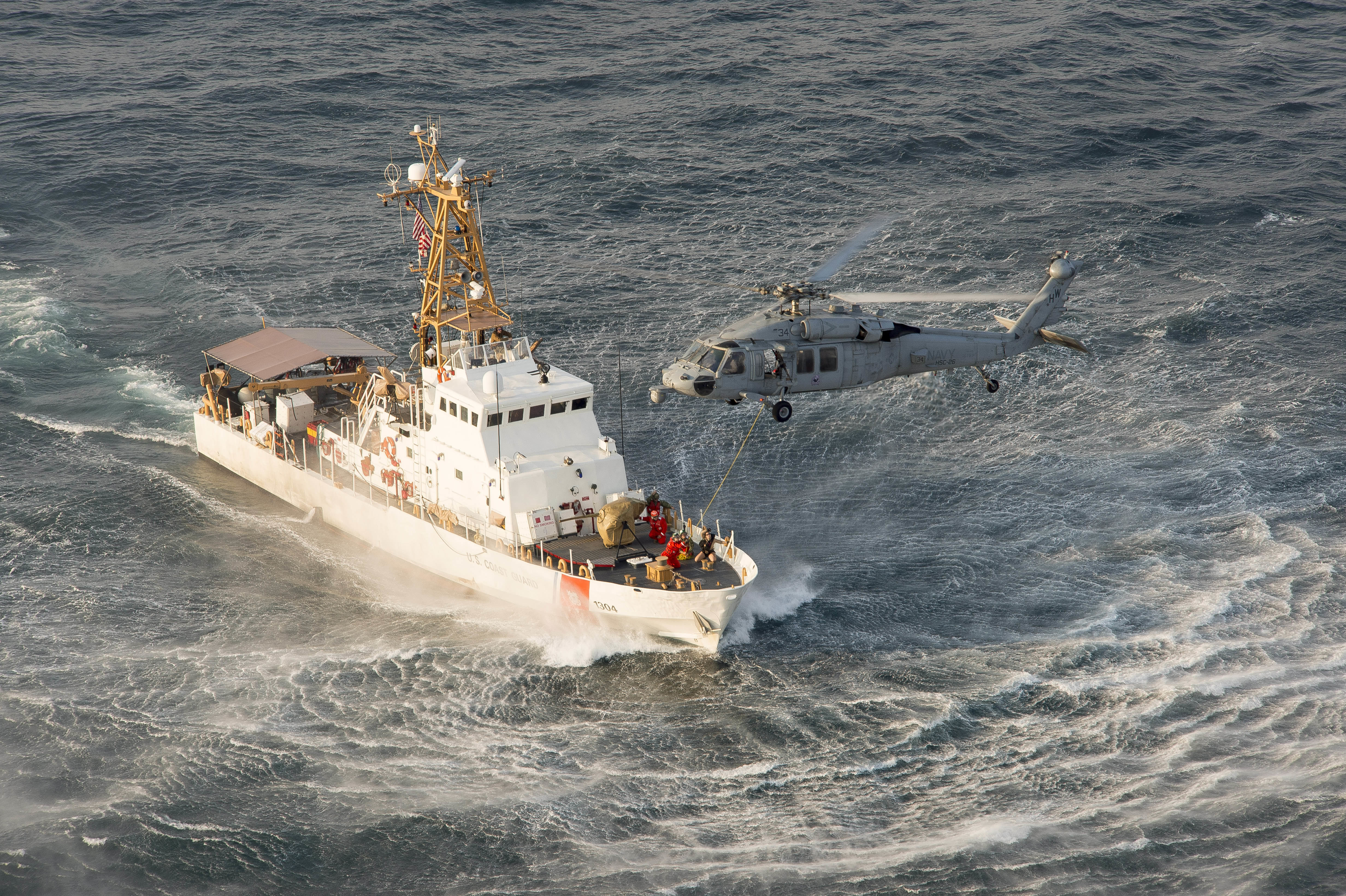
Airbus and U.S. Coast Guard sign support agreement for MH-65 fleet” –AIRBUS News Release

US Coast Guard photo, by PAC Dana Warr

Below is a news release from AIRBUS.

Looks like we expect the H-65 to continue serving in the Coast Guard until at least 2037. Cutters with flight decks but incapable of operating larger helicopters should all be gone by then.


Grand Prairie, Texas  – Airbus Helicopters has signed a Memorandum of Understanding (MOU) with the United States Coast Guard (USCG) to continue providing support for the service’s fleet of MH-65 Dolphin helicopters through 2037. The agreement reaffirms Airbus Helicopters’ commitment to ensuring the mission readiness of the USCG’s fleet as it performs critical search and rescue, law enforcement, and disaster response missions.

Under the terms of the MOU, Airbus Helicopters will deliver enhanced maintenance, spare parts, and technical support to optimize the performance and availability of the MH-65 fleet. The agreement also includes provisions for fleet modernization and engineering services to extend the operational life of the aircraft.

“The U.S. Coast Guard’s MH-65 helicopters are at the forefront of safeguarding our nation’s coastlines and saving lives,” said Bart Reijnen, President of Airbus Helicopters in the U.S. and Head of the North America region. “We are honored to continue working with the Coast Guard to ensure their fleet remains mission-ready for years to come. This agreement demonstrates our shared commitment to safety, reliability, and operational excellence.”

The MH-65 Dolphin has been the backbone of the Coast Guard’s aviation fleet for more than four decades. With this new MOU, Airbus Helicopters and the USCG aim to maintain the fleet’s high level of operational capability, enabling continued support for critical missions across the country.

Airbus Helicopters has a long-standing partnership with the USCG, providing tailored solutions to meet the service’s dynamic operational demands. The extended collaboration will build on this history, leveraging Airbus’ global support network and industry-leading expertise.

@AirbusHeli #MH65

This Day in Coast Guard History, January 31

Based on the Coast Guard Historian’s timeline, https://www.history.uscg.mil/research/chronology/
With inspiration from Mike Kelso

January 31

USCGC Itasca as HMS Gorlsston, a sister ship of HMS Culver (former USCGC Mendota), one of ten Lake Class cutters transferred to the Royal Navy under Lend Lease.

1942 HMS Culver (ex-CGC Mendota – one of the “Lake” Class cutters transferred to the Royal Navy in 1941 under the Lend-Lease program) was torpedoed and sunk with only 13 survivors.

An older woman polishes the mirror, known as a Fresnel lens, behind a light bulb

Salter polishes the Fresnel lens at Turkey Point Light, 1945

1948 Mrs. Fannie M. Salter, keeper of the Turkey Point Lighthouse in upper Chesapeake Bay since 1925 and the last woman keeper of a lighthouse in the United States, retired from active service.  The first woman had been hired as a lighthouse keeper 150 years before.  Salter’s retirement temporarily closed the tradition of women serving as keepers at lighthouses.

1968 Coast Guard SPAR Chief Storekeeper Mary Ashley Rose retired “after a career of more than 20 years of service in the Coast Guard.  Chief Rose is the first enlisted woman to retire from active duty in the Coast Guard.”

USCGC Vigorous

1975 CGC Vigorous (WMEC-627) became the first cutter to make a seizure of a foreign-flag fishing vessel on the high seas when she seized the Italian fishing vessel Tontini Pesca Cuarto for illegally taking lobster.  All of the other fishery seizures prior to this were of vessels that had violated territorial seas (TS) or Contiguous Fishing Zone (CFZ).  At the time, Vigorous was under the command of CDR Paul Welling, USCG.  The arresting officer was ENS S.T. Fuger, Jr., USCG.

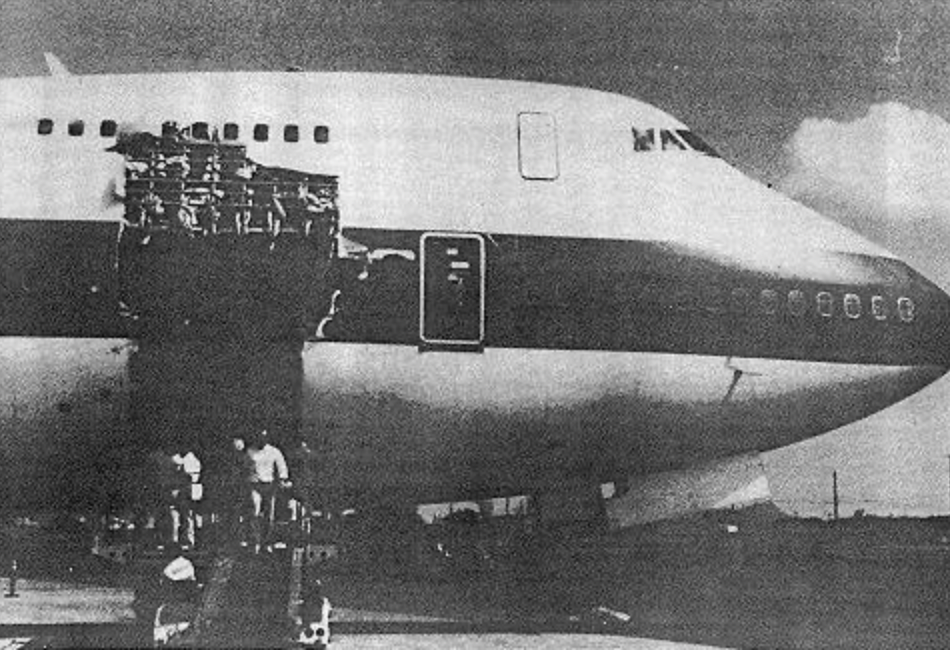
2000 Alaska Airlines Flight 261 crashed off the coast of California near the Channel Islands, killing all 88 on board.  Coast Guard Channel Island Station crewmen responded to the tragedy.

2004 The crews of a 47-foot MLB from Station Chincoteague and a rescue helicopter from Air Station Elizabeth City combined to rescue five men after their vessel began taking on water 25 miles east of Chincoteague.

“First of 3 new Coast Guard cutters arrives to homeport in Kodiak, Alaska” –Coast Guard News

One of the U.S. Coast Guard’s modern Fast Response Cutters underway. (U.S. Coast Guard) Below is a news release from CG News. We knew this was coming. There are only three WPB110s left in the USCG, all in Alaska. Presumably, this will be their last year.

What I found most interesting here was this statement, “… they will operate throughout the 17th Coast Guard District to include the U.S. Arctic, Gulf of Alaska, and Bering Sea.”

We have already seen Alaska based FRCs operating in the Aleutians. The US considers the Bering Sea as part of the Arctic, though it is below the Arctic Circle, so it may not mean they will operate North of the Bering Strait, but that’s what it sounds like.

Earlier story about Captain Witherspoon here.

The crew of U.S. Coast Guard Cutter John Witherspoon (WPC 1158) arrives to their homeport in Kodiak, Alaska, aboard their cutter for the first time, Jan. 28, 2025. (U.S. Coast Guard photo by Petty Officer 1st Class Shannon Kearney)


 Jan. 29, 2025

First of 3 new Coast Guard cutters arrives to homeport in Kodiak, Alaska

D17 Public Affairs

KODIAK, Alaska — The crew of Coast Guard Cutter John Witherspoon (WPC 1158) arrived at the cutter’s new homeport in Kodiak, Tuesday.

The cutter is scheduled to be commissioned during a ceremony in April.

The Witherspoon is the first of three Fast Response Cutters (FRCs) scheduled to be homeported at Coast Guard Base Kodiak and is now the fourth FRC currently based in Alaska. While these ships will be homeported in Kodiak, they will operate throughout the 17th Coast Guard District to include the U.S. Arctic, Gulf of Alaska, and Bering Sea.

The crew of the Witherspoon will carry out integral Coast Guard missions such as maritime law enforcement and security, living marine resources, and search and rescue. They will provide security for Alaskan coastal communities as they continue to utilize the ocean for their livelihoods while preserving Alaska’s living marine resources in conjunction with our partner agencies.

“The crew is humbled to be associated to a namesake honoring Capt. John G. Witherspoon, a trailblazer who found enjoyment and purpose in leading and mentoring others,” said Lt. Cmdr. Adam Young, commanding officer of the Witherspoon. “It is fitting that the cutter’s first sail was no tall order, stretching more than 7,000 nautical miles from Key West to Kodiak. Throughout the last five months, the crew displayed remarkable teamwork and resilience, a true testament to the core values Capt. Witherspoon epitomized throughout his illustrious career. I couldn’t be prouder of the team we have onboard, and I look forward to experiencing the beauty of Alaska once again.”

The new FRCs arriving in Alaska are designed to replace the service’s fleet of 110-foot cutters that are projected to be decommissioned this year. The Coast Guard is currently scheduled to have six FRCs operating throughout Alaska by the end of 2025 to reinforce our maritime boundaries and shorten on-scene response times to support search and rescue efforts and better serve the people of Alaska.

FRCs feature advanced command, control, communications, computers, intelligence, surveillance and reconnaissance equipment as well as over-the-horizon response boat deployment capability and improved habitability for the crew. The ships can reach speeds of 28 knots and are equipped to coordinate operations with partner agencies and long-range Coast Guard assets such as the Coast Guard’s National Security Cutters.

FRCs are 154-foot multi-mission ships designed to conduct drug and migrant interdictions; ports, waterways and coastal security operations; fisheries and environmental protection patrols; national defense missions; and search and rescue. Each cutter is designed for a crew of 24, has a range of 2,500 miles and is equipped for patrols up to five days. The FRCs are part of the Coast Guard’s overall fleet modernization initiative.

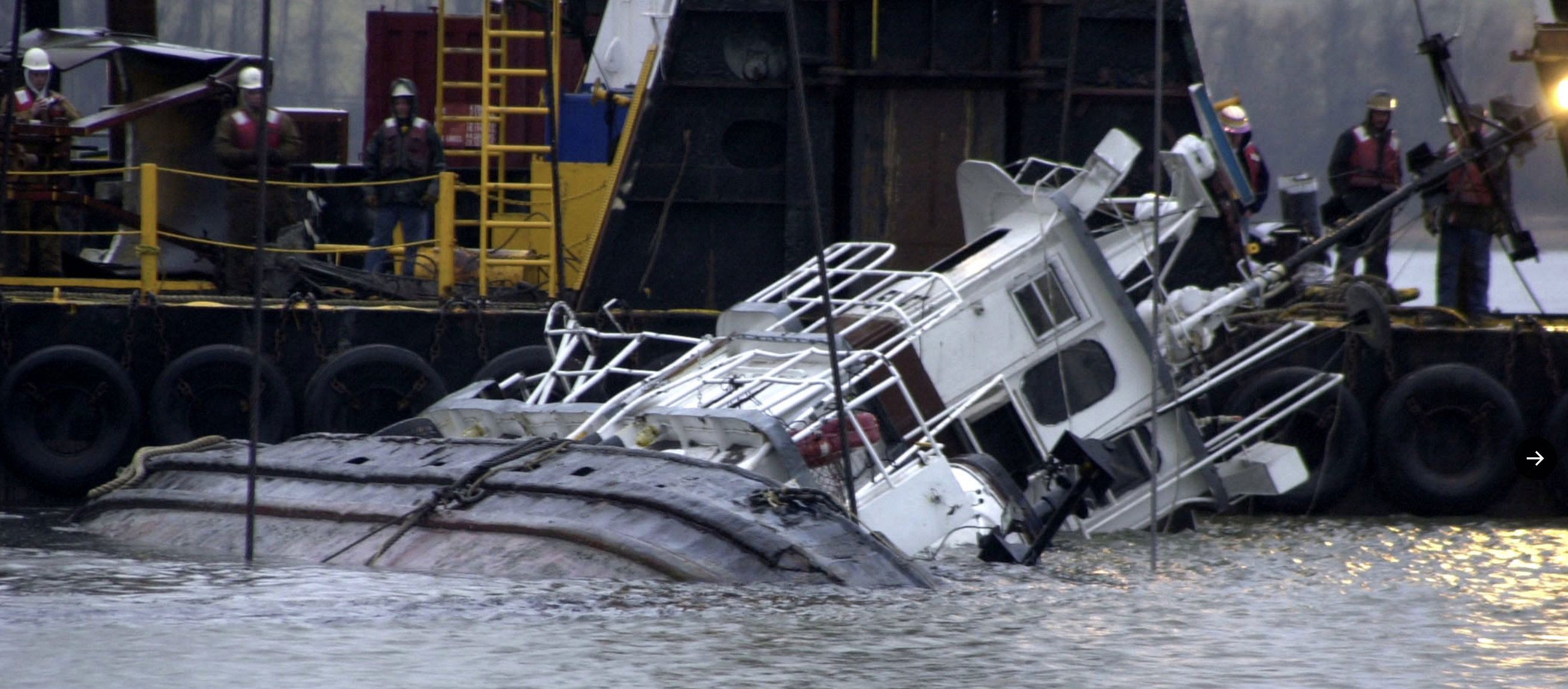
Coast Guard, multiple partner agencies, responding to plane crash in Potomac River

Jan. 30, 2025

Coast Guard, multiple partner agencies, responding to plane crash in Potomac River

WASHINGTON — The Coast Guard is coordinating with local, state and federal agencies in response to the aircraft collision which occurred Wednesday evening over the Potomac River in Washington.

Coast Guard Sector Maryland – National Capital Region command center watchstanders received a report at approximately 8:55 p.m. reporting a helicopter and a commercial passenger aircraft collided in the vicinity of Ronald Reagan Airport.

Response boat crews from Coast Guard stations Washington, Curtis Bay, Annapolis, St. Inigoes, Oxford and Crisfield have deployed to the incident to conduct searches in coordination with local partners and enforce a safety zone. Cutters Sailfish, Bruckenthal, Kennebec and Frank Drew are enroute to assist.

An Urgent Marine Information Broadcast was issued regarding the incident and a safety zone has been established, securing all vessel traffic from the Woodrow Willson Bridge heading north along the Potomac River. Mariners are urged to avoid the area.

Coast Guard pollution crews have mobilized and are pre-staged to respond to any pollution caused by the incident.

The Coast Guard is working with the Army Corps of Engineers and Navy’s Supervisor of Salvage and Diving to coordinate removing the wreckage and restoring the waterways once able to do so.

USCGC Alexander Hamilton (WPG-34) Lost January 30, 1942

Today is the 83rd anniversary of the sinking of USCGC Alexander Hamilton (WPG-34), January 30, 1942. She was the Coast Guard’s first loss of World War II and the first US warship sunk in the Atlantic after the US entered the War.

USCGC Hamilton (WMSL-753)’s web site has the story of her sinking which I have reproduced below.

There is a “Booklet of General Plans” as originally built here, and contract plans here.

U-132, which torpedoed Alexander Hamilton, also sank ten other ships but was “Sunk on 4 November 1942 in the North Atlantic south-east of Cape Farewell, in approx. position 55.38N, 39.52W, when the British ammunition ship Hatimura blew up in a huge explosion. U-132 had torpedoed this ship earlier and was probably waiting nearby for her to sink when caught in the lethal radius of the explosion. 47 dead (all hands lost). (FDS/NHB, January 1985).”

Found some photos of Cutter Alexander Hamilton on Facebook that were taken only five weeks before she was sunk. She is much better armed then when she was built, with three 5″/51s and three 3″/50s, but does not have some of the equipment seen on other ships of her class in pictures taken in 1942/43, no radar, no High Frequency Direction Finder (HF/DF), a Y-gun in the photo immediately but no K-Gun depth charge launchers.

U.S.C.G.C. Alexander Hamilton view from stern looking forward, Norfolk Navy Yard Portsmouth, VA. Photo Serial 2430(41) Dec. 27, 1941.

U.S.C.G.C Alexander Hamilton STBD. Side Norfolk Navy Yard Portsmouth, VA Photo Serial 8482(41) Dec 27, 1941″


THE FIRST LOSS; THE SINKING OF THE ALEXANDER HAMILTON
by Dr. Robert M. Browning Jr.

When the United States entered World War II, the Coast Guard had already demonstrated its value in this country’s national defense.  For over a year the Coast Guard, with its large cutters and experienced seamen, had protected American interest in the North Atlantic.  They had maintained patrols in Greenland and took a prominent role in the protection of America’s seaborne commerce in this area.  The 327 foot cutters in particular were well-suited for convoy duty in the North Atlantic. Because of their long-range and good sea-keeping qualities along with their speed and armament, the Navy Department put the entire class into naval service before the war began.  The Alexander Hamilton, participating with the ocean escorts in the icy North Atlantic, became the Coast Guard’s first loss of the war.

The Alexander Hamilton was one of the newest ships in the service.  Built at the New York Navy Yard, this twin-screw, geared-steam-turbine-propelled cutter was commissioned in March 1937.  The Alexander Hamilton was initially stationed in Oakland, California and performed patrols to the Bering Sea. All the vessels in the class carried their full names when commissioned, but these were shortened in 1937 to their surnames only.  The Navy requested that the Hamilton use its full name so as not to be confused with the Navy’s U.S.S. Hamilton.  In January 1942, the cutter resumed its full name once again.

When war began in Europe the cutter was ordered to Norfolk Virginia to perform Neutrality Patrol duties. The Alexander Hamilton also operated with the Grand Banks Patrol and made ten cruises on weather observation patrol. On 27 December, just three weeks after Pearl Harbor, the Alexander Hamilton reported for special naval duty in the North Atlantic. Mixed groups of U.S. Navy, Coast Guard and Royal Canadian Navy escorts had begun to escort fast and slow convoys between rendezvous points off the coast of Newfoundland and mid-ocean meeting points (MOMP). At this point British escort groups protected the merchantmen eastward. The 327 foot Campbell was the first cutter to perform this duty, followed by the Ingham and on January 15th 1942, the Alexander Hamilton.

After helping to screen convoy HX 170 to the MOMP, the Alexander Hamilton was tasked to tow the disabled storeship Yukon to Iceland. A destroyer, USS Gwinn, steamed ahead to act as an escort. The British rescue tug Frisky arrived later to take over the tow. At about 1:00 pm, the Alexander Hamilton handed off the tow to Frisky and steamed ahead to screen the other ships.

Unknown to all the allied ships, the German submarine U-132 had detected these ships at a vulnerable moment and maneuvered to a favorable position to attack.  Instead of singling out the crippled and near motionless 12,546 ton storeship Yukon, the U-132 fired a spread of torpedoes at the Alexander Hamilton.  The cutter had meanwhile worked up to 15 knots and passed the Yukon as the torpedoes sped past the storeship.  One torpedo passed ahead of the Yukon and struck the Alexander Hamilton on the starboard side between the fireroom and the engine room.(Right: crew of the Alexander Hamilton abandons ship after being torpedoed.)

Crew of the Alexander Hamilton abandons ship after being torpedoed.

The Alexander Hamilton was fatally wounded.  The explosion wrecked both the engine room and the fire room, initially killing seven men and burning and injuring many others.  The cutter immediately lost way and settled 4 feet in the water but was counter-flooded to trim the vessel. Afraid that the submarine might fire another torpedo, the crew began to abandon ship.  Thirty minutes after the attack, four boats began transferring the injured and some of the crew to the Gwin.  Three Icelandic fishing trawlers, responding to the distress signals, also came to help remove the “Hamiltons”.  The torpedo claimed 26 lives, including 6 who later died of burns. While attempting to rescue the damaged cutter, as many as 14 destroyers from the nearby base at Hvalfjordur searched unsuccessfully for the U-132.

The cutter remained afloat.  That evening the British tug Restive tried for two hours to take the Alexander Hamilton in tow.  The Frisky returned from Reykjavik after towing the Yukon and joined the ex-Coast Guard tug Redwing and the Restive in the attempt to save the cutter.

Darkness and rough seas, however, prevented salvage throughout the night.  Just after 10:00 am on the morning of 30 January, the weather moderated enough for the Frisky to take the Alexander Hamilton in tow. The cutter’s list had increased to nearly 20 degrees as seas broke over the starboard side aft while the bow rode out of the water.  The Frisky towed the Alexander Hamilton about 18 miles when the cutter suddenly capsized and floated bottom up.  The life of the gallant cutter ended at 7:57 pm when gunfire from the U.S.S. Ericksson sent it to its final resting place in forty fathoms of water, 28 miles off the coast of Iceland.

This Day in Coast Guard History, January 30

Based on the Coast Guard Historian’s timeline, https://www.history.uscg.mil/research/chronology/
With inspiration from Mike Kelso

January 30

Model of the revenue cutter Jefferson Davis. On display at Coast Guard Museum/Northwest, Seattle, Washington. Sister ship of McClelland.

1861 Treasury Secretary John A. Dix ordered LT S. B. Caldwell, the second in command of the cutter McClelland, “to arrest Capt. Breshwood [the cutter’s commanding officer and a Confederate sympathizer] assume command of cutter and if anyone attempts to haul down the flag, shoot him on the spot.”  The message was not delivered by the telegraph office.  Breshwood turned McClelland over to the State of Louisiana, where the cutter ended up in Confederate service.  The northern papers reported the story though and the Secretary’s order became a rallying cry in support of the Union’s war effort.

1942 The capsized wreck of CGC Alexander Hamilton was sunk by the Navy after U-132 torpedoed the cutter off the coast of Iceland the previous day.  She was the first cutter sunk by enemy action during World War II.  Twenty-six of her crew perished in the attack.

“Convoy WS-12: A Vought SB2U Vindicator scout bomber from USS Ranger (CV-4) flies anti-submarine patrol over the convoy, while it was en route to Cape Town, South Africa, 27 November 1941. The convoy appears to be making a formation turn from column to line abreast. Two-stack transports in the first row are USS West Point (AP-23) — left –; USS Mount Vernon (AP-22) and Coast Guard manned USS Wakefield (AP-21). Heavy cruisers, on the right side of the first row and middle of the second, are USS Vincennes (CA-44) and USS Quincy (CA-39). Single-stack transports in the second row are Coast Guard manned transports USS Leonard Wood (AP-25) and USS Joseph T. Dickman (AP-26).”

1942 USS Wakefield, the former passenger liner SS Manhattan converted to a troop transport and manned by a Coast Guard crew, transported British troops to Singapore.  Having disembarked the troops, she was bombed by Japanese aircraft while still tied up.  Five of her Coast Guard crew were killed and nine were wounded.  After temporary repairs, Wakefield evacuated 500 women and children to Bombay before the port fell to the Japanese

The U.S. Navy troop transport USS Wakefield (AP-21) off the Boston Naval Shipyard, Massachusetts (USA), in March 1944. Wakefield had been completely rebuilt at Boston after a large onboard fire in September 1942.

1979 There was an explosion at the Coast Guard Marine Safety Detachment office at Ponce Playa, Port Ponce, Puerto Rico.  The OVPR (Organizacion De Voluntarios Por La Revelucion Puerto Riquena) claimed responsibility.  The terrorist attack caused no casualties and little damage to the facility.

1982 Coast Guard 8th District units responded to the flooding of the Calcasieu River near Lake Charles, Louisiana.  Up river Coast Guard boats searched daily for stranded people and domestic animals.  Downriver COTP Port Arthur and Marine Safety Detachment Lake Charles wrestled with the problem of strong currents and four run-away barges that destroyed one bridge and threatened two others.

“Teledyne FLIR Defense Awarded $74 Million IDIQ Contract to Modernize U.S. Coast Guard Surveillance Systems” –Teledyne News Release

#USCG members of Maritime Security Response Team West, Maritime Safety and Security Team 91101, Port Security Unit 313, and a Sector Columbia River MH-60 Jayhawk helicopter crew conducted a maritime security exercise near Fox Island, WA recently. Photo by PA3 Michael Clark

Below is a Teledyne news release:

Sounds like all operational H-60s and H-65s will receive this system.


BOSTON, Mass., January 13, 2025 ― Teledyne FLIR Defense, part of Teledyne Technologies Incorporated (NYSE:TDY), announced it has been awarded a five-year Indefinite Delivery Indefinite Quantity (IDIQ) contract worth up to $74.2 million to provide modernized imaging surveillance systems to the United States Coast Guard (USCG).

FLIR Defense will deliver more than 125 Electro-Optic Sensor System-Modernized (ESS-M) systems for use on USCG rotary wing aircraft, specifically the MH-60 and MH-65. The advanced ESS-M platform features a full-HD sensor suite and updated user interfaces, as well as advanced processing capabilities and software enhancements that will support future growth.

The ESS-M systems provide operators with high-definition daylight, low light, and infrared imagery and will be used in support of all Coast Guard missions, with an emphasis on search and rescue, living marine resources, and law enforcement. The new technology also will augment coastal security, drug and migrant interdiction, ports and waterways protection, and other Coast Guard rapid response needs.

Teledyne FLIR Defense has been delivering and supporting legacy ESS systems for USCG medium- and short-range recovery aircraft since 2005.

“The significant updates through ESS-M will enable the U.S. Coast Guard to stay on technology’s cutting edge while conducting its wide range of key maritime operations,” said Dr. JihFen Lei, president of Teledyne FLIR Defense. “We’re proud to extend our history of support and look forward to building our relationship across all missions areas.”

Deliveries will begin in Q4-2025. For more on Teledyne FLIR’s maritime surveillance solutions, visit us online.

“Coast Guard conducts alien expulsion flight operations between California and Texas” –News Release

People on a Coast Guard flight being transported to Texas and California. U.S. Coast Guard photo.

Below is a news release. More on this operation here.

I have to wonder if we are using Minitour equipped aircraft for this? If so, is this the best use for aircraft that have been modified at great expense in time and money for maritime patrol, including supporting Alien Migrant interdiction?

I think we still have some unmodified HC-130Hs at Clearwater. Are they the ones doing this? “Inquiring Minds Want to Know?”


 Jan. 28, 2025

Coast Guard conducts alien expulsion flight operations between California and Texas

SAN DIEGO – Jan. 28, 2025, the Coast Guard conducted Alien Expulsion Flight Operations between California and Texas, in coordination with U.S. Customs and Border Protection.

In accordance with the President’s Executive Orders, these flights continue the Coast Guard’s actions to enforce the immigration laws of our country. Through these ongoing operations, and in close cooperation with our Department of Homeland Security and Department of Defense teammates, the Coast Guard is detecting, deterring, and interdicting aliens, drug smugglers, and individuals intent on terrorism or other hostile activity before they reach our border.

Led by the Eleventh Coast Guard District in California, the Coast Guard is coordinating the actions of multiple units in support of this operation. The Coast Guard is surging assets and personnel from around the nation – including Air Stations Elizabeth City, Kodiak, Sacramento, San Diego, and Hawaii – to support this Department of Homeland Security-led operation.

The Coast Guard’s current role is to assist with the national transport of aliens to designated locations in Texas and California, where the Department of Defense will transport the aliens internationally.

For more information about the Coast Guard, visit www.uscg.mil.

This Day in Coast Guard History, January 29

Based on the Coast Guard Historian’s timeline, https://www.history.uscg.mil/research/chronology/
With inspiration from Mike Kelso

January 29

1919 Ratification of the 18th Amendment to the U.S. Constitution occurred on this date.  The amendment prohibited the manufacture, sale, and transportation of alcoholic beverages.  Its enforcement was authorized by the National Prohibition Enforcement Act, otherwise known as the Volstead Act that was passed on October 28, 1919.  The Coast Guard was tasked with the prevention of the maritime importation of illegal alcohol.  This led to the largest increase in the size and responsibilities of the service to date.

USCGC Bibb

1938 CGC Bibb reported for duty in connection with the U.S. Navy exercises held off Culebra, Puerto Rico.

The U.S.S. Serpens Monument is dedicated to those who lost their lives when the U.S.S. Serpens was destroyed. The 14,250-ton ammunition ship exploded off Lunga Baech, Guadacanal, British Solomon Islands on the night of Jan. 29, 1945 and was the largest single disaster suffered by the U.S. Coast Guard in World War II. (U.S. Army photo by Rachel Larue/released)

1945 The Coast Guard-manned attack cargo vessel USS Serpens exploded off Guadalcanal due to unknown causes.  Only two men aboard survived.  This was the single greatest Coast Guard loss of life in history.

USCGC CASCO 1961

1963 CGC Casco inaugurated the expanded Ocean Station Vessel Oceanographic Program when it departed for Ocean Station Echo on this date.  Casco was outfitted for oceanographic research by the addition of a laboratory space, hydrographic winch, and other instruments.  As the first Coast Guard Ocean Station Vessel to be so outfitted, Casco’s mission represented “a significant step on the Coast Guard’s participation in the National Oceanographic effort.”

USCG HH-3F Pelican on the water, demonstrating its amphibious capability. This was also the first HH-3F delivered to the Coast Guard.

1980 Local authorities in the Tijuana, Mexico area requested Coast Guard assistance in evacuating flood victims stranded by the rising waters of the San Miguel River.  Two HH-3F helicopters from Air Station San Diego transported 180 persons to safety during the two-day operation.