Petty Officer 1st Class Erica Libbing leaned into the wind on the flybridge of the CGC Storis, camera raised, Arctic air biting at her gloves. It was mid-September, and just off the bow, two Chinese icebreakers—Jidi and Xue Long 2—cut through the U.S. Exclusive Economic Zone. As part of the cutter’s Viper Team, Libbing was there to film the transit, ensuring the vessels weren’t doing anything they shouldn’t.
“I’d never done that type of surveillance before,” Libbing said. “It was kind of cool to see how it was going to go.”
It was also not part of the plan. Storis’ first patrol, which began last summer, was supposed to be primarily a training mission. The ship was still being outfitted and the crew still learning its systems. But when the cutter proved capable sooner than expected, leadership was ready to take a calculated risk and employ it operationally in the Arctic.
“Getting into the ice and having a national-level impact on that first patrol was a big deal,” said Capt. Corey Kerns, Storis’ commanding officer. “It was an unprecedented opportunity and operational risk decision for a new ship and crew, and it showed just how ready our people were.”
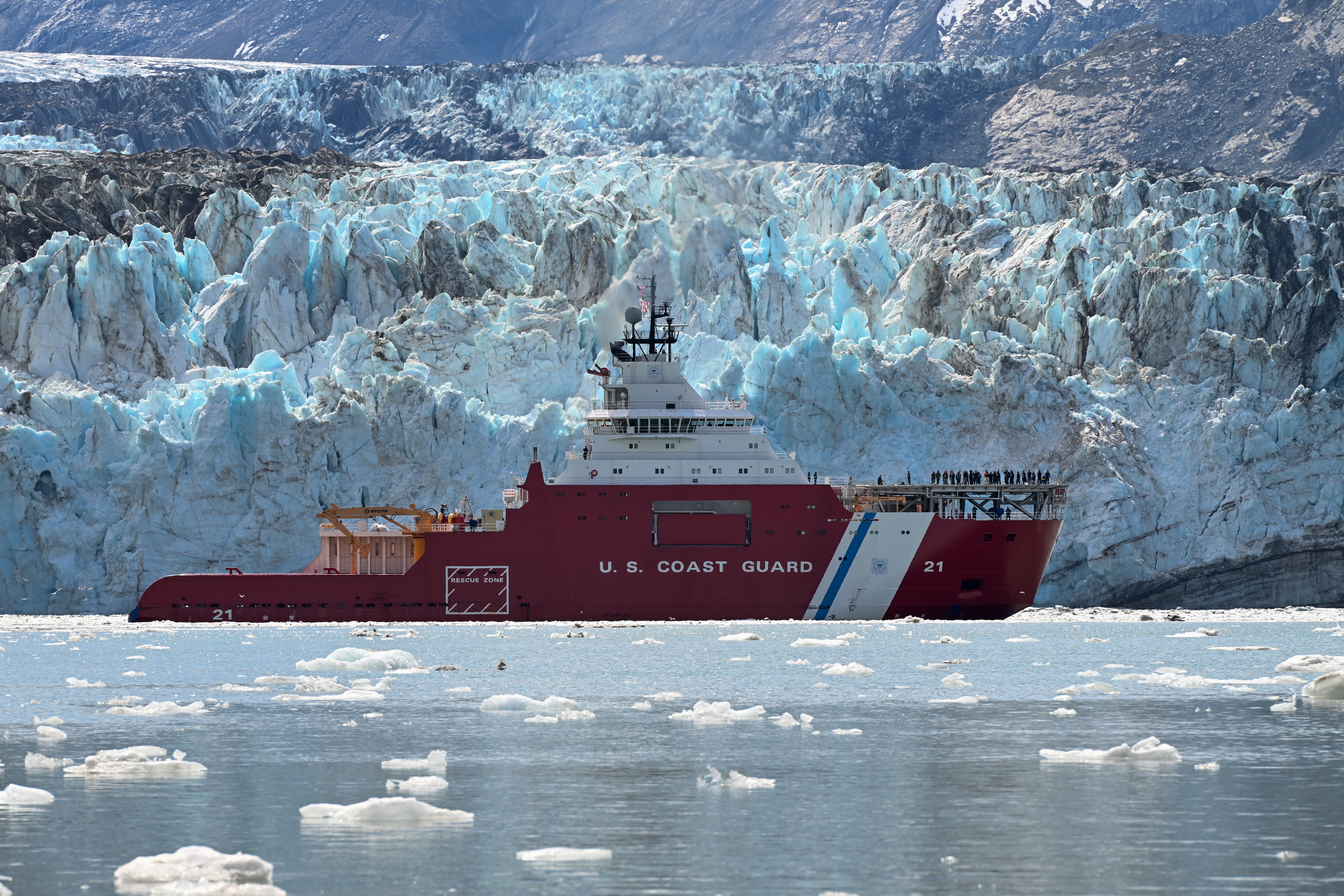
This story is a behind-the-scenes look at that first patrol and the Coast Guard members transforming the former Shell oilfield servicing vessel, Aiviq, into the service’s first new polar icebreaker in 25 years. Purchased last year for $125 million to increase the U.S. presence in the Arctic, Storis entered service fast and was manned without the usual lead time. What followed has been pure Coast Guard: learn as you go, document everything, and be ready when the mission changes.
The right crew for an unconventional ship
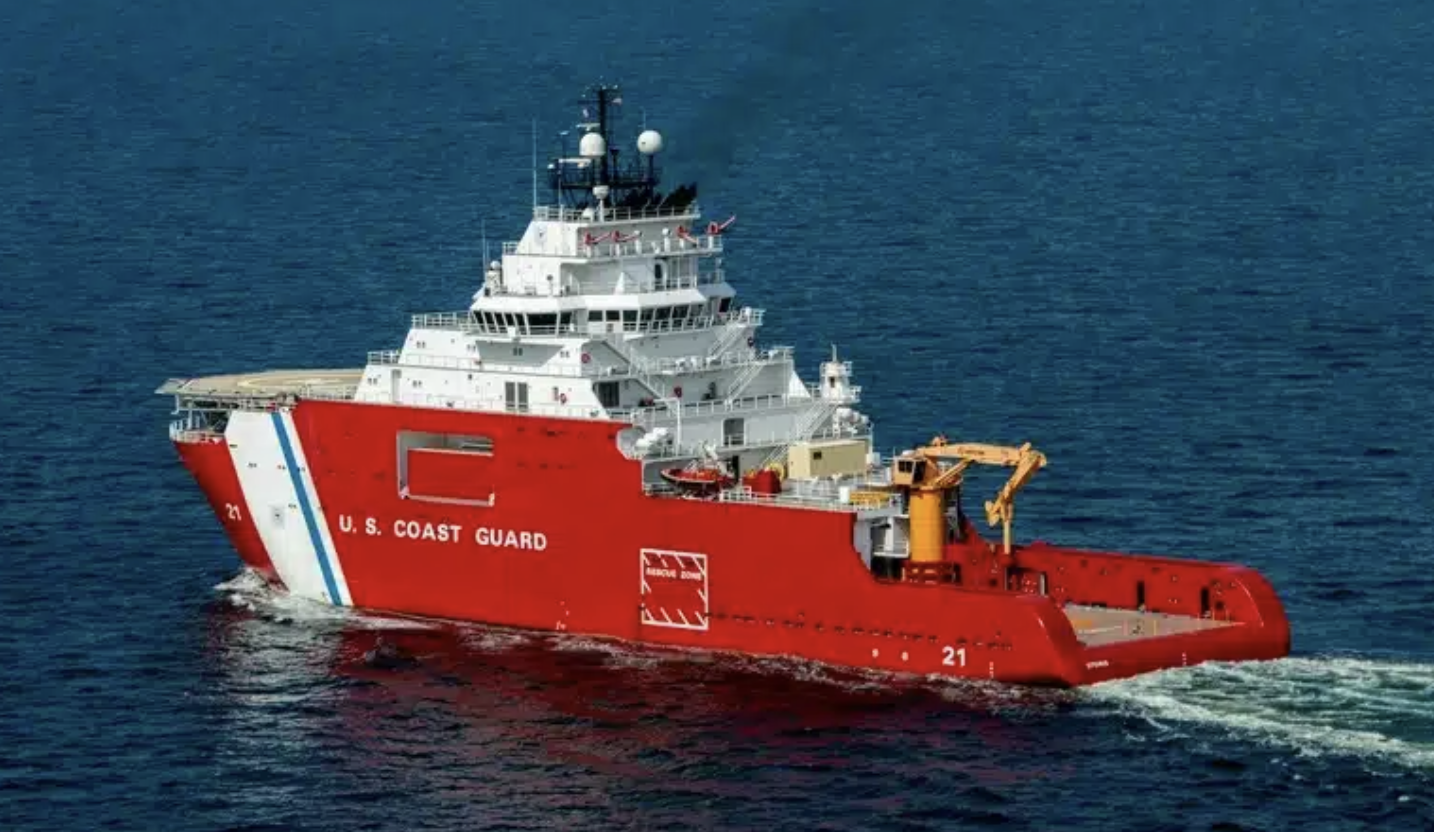
Even after being painted Coast Guard red, the Storis looks and feels different than traditional cutters. Built for Arctic oil exploration by Edison Chouest Offshore (ECO) in Louisiana, the ship is shorter and taller than legacy icebreakers. Its flight deck is forward as opposed to aft, and its systems are designed for commercial operations, not Coast Guard missions.
Kerns was selected with that challenge in mind. “I’m not an icebreaker guy,” he said, having most recently served as liaison officer to the Navy’s Seventh Fleet in Japan. “I was chosen for my engineering design background. This wasn’t the ship we would design and build. But it’s the ship we have, and we’re making it work.”
Because the Coast Guard acquired and commissioned Storis so quickly, there was no traditional six-month training pipeline. Instead, the cutter deployed with two crews: about 45 Coast Guard members, mostly E-5s and above—and 22 ECO civilian mariners who knew the ship inside and out.
“The idea was that they would teach us how to use the equipment,” Kerns said. “And gradually, we would reduce their numbers as we figured out the ship.”
Learning from civilian expertise
For Libbing, an operations specialist still building sea time, the arrangement initially raised concerns. “At first, I was a little nervous,” she said. “You don’t know these people. They’re not Coast Guard–vetted, and as a female you’re thinking about how that will work.”
Those concerns didn’t last long. The civilians impressed their military counterparts with their professionalism, deep knowledge, and endurance, standing 12-hour watches compared with the Coast Guard’s four.
Lt.j.g Sofia Scott, who’d served on the CGC Polar Star since graduating from the Academy in 2023, was usually paired with a third mate. “We’d stand watch together and they would basically teach me everything,” she said. “I couldn’t believe all the information they had to know about engineering to hold that qualification.”
Kerns worked deliberately to avoid an “us versus them” mindset. “We went in knowing this was how it was going to work,” he said. “I made it clear from the start—we’re one crew, one team, one mission.”
That partnership proved essential, especially when Coast Guard procedures didn’t always match how the ship was designed to operate. Systems aboard Storis are highly automated, with propulsion, electrical, and control systems tightly linked, so the ship can diagnose and correct some faults on its own rather than requiring an immediate hands-on response.
Early on, Chief Petty Officer Mike Underwood remembers how Coast Guard members reacted too quickly to an alarm on the ship and caused a blackout.
“It’s so ingrained in us that if you hear an alarm you need to do something to fix it right away,” said Underwood, a machinery technician with five years on the CGC Healy, a medium icebreaker. “One of the training challenges was to change that thinking, to learn to wait 40 seconds for the ship to correct itself. We had a pump fail on a generator that was overheating, and we never actually lost power because it just switched another generator online.”
Because the Storis was built with Arctic uncertainty in mind, it has extensive redundancy, including multiple ways to generate power, move water, and keep systems online. This setup has helped allay some concerns about buying a used ship.
“There’s a lot less fear of something breaking underway because there’s usually another system ready to take over,” Kerns said. “I think this probably makes the ship more capable to stand up to a long deployment than we expected.”
Putting together the playbook while underway
Even as Storis shifted into real-world operations, the inaugural patrol still accomplished its original mission. The crew focused on learning the ship, writing procedures, and building qualification standards that would eventually allow Storis to operate independently as a Coast Guard cutter.
A wall was erected to create a restricted space on the ship before it even left the yard in Mississippi. Libbing, serving as command security officer, then began building the cutter’s security program. She drafted emergency action plans and clearance processes—all on a ship with limited office space and no traditional CIC.
“I spent a lot of time writing instructions and manuals and making sure we’re in compliance, security-wise,” she said.
Below decks, Underwood, a machinery technician, was doing the same for engineering. He helped develop training packets, watchstander requirements, and qualification standards for a propulsion plant unlike anything most members had encountered.
“Everyone showed up here with zero knowledge and in a very short amount of time we had to learn everything so we could write policy, run drills, and get everyone qualified,” he said.
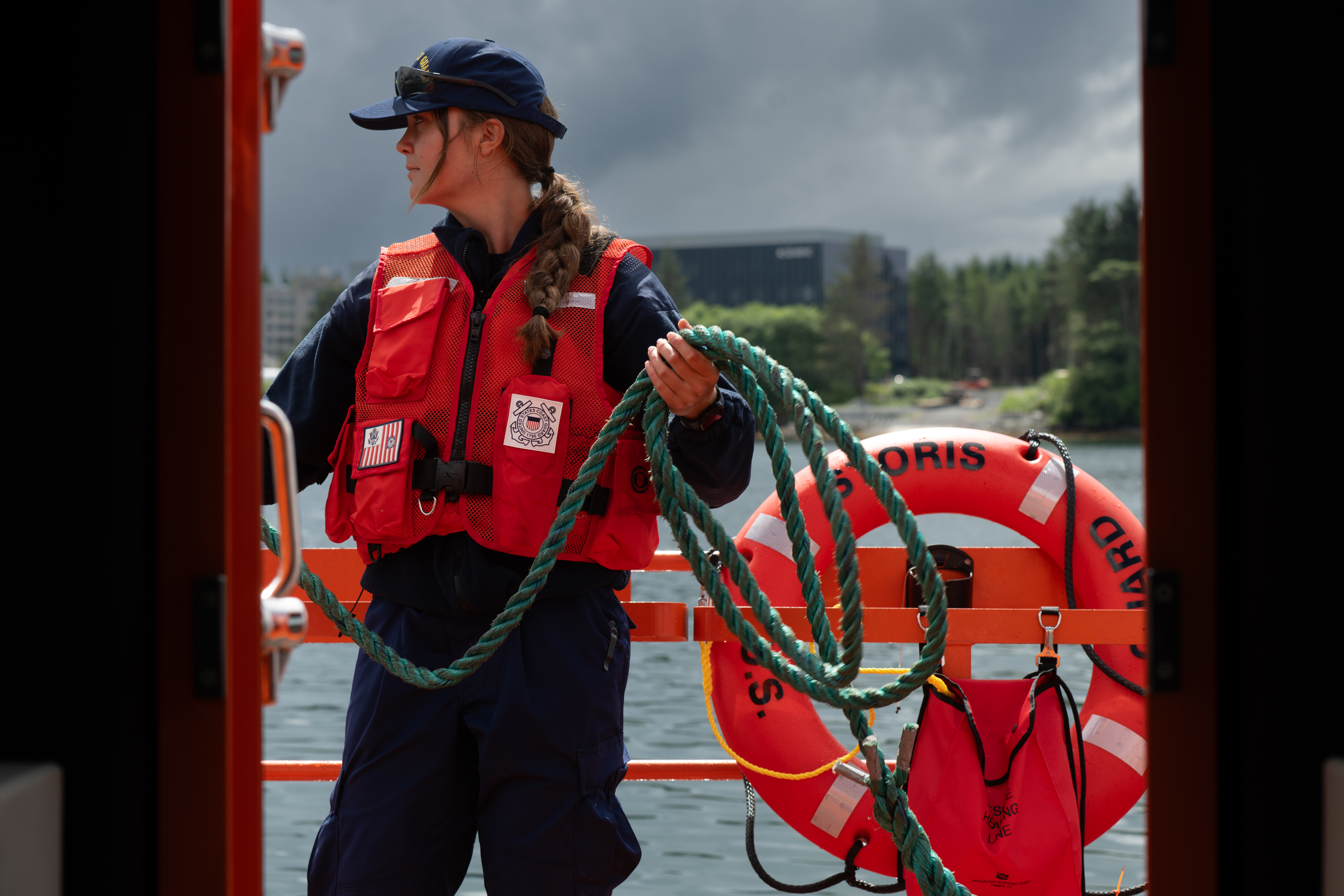
The crew focused on the basics: damage control, mooring and unmooring, watchstanding, and emergency response. Interim qualifications were issued, processes documented, and lessons tested at sea.
Comfort, capability and creativity
Despite the challenges, Storis surprised the crew in other ways, particularly quality of life. Rooms and lounges are spacious and well-appointed. There are stairwells as opposed to ladders between decks, as well as an elevator. Outside stairs, railings, and hallways are heated, so members don’t have to chip ice off of them.
“The berthings are insanely nice,” said Libbing, who shares a room with one other crewmember. It has twin beds, two desks, a flat-screen TV, and a private bathroom.
When her husband—who she met in 2009 while serving on the Polar Star—visited the ship in San Diego, he even called her out on it. “You need to stop complaining,” he said. “That berthing is amazing.”
Located higher in the ship, the berthings were also noticeably quieter than those on the Polar Star. While some of this could change as the cutter is refitted for a larger crew and ventures into thicker ice, it was an unexpected morale boost for Libbing.
Operationally, Storis has also proven more maneuverable than expected. Bow and stern thrusters allow the cutter to gingerly ease up to ice ledges and work in tight spaces. “On Healy, it was harder to get that kind of control,” Underwood said.
The ship’s large working deck and forward flight deck have sparked creative thinking, with members envisioning them as modular mission spaces. “You could put CONEX boxes out there for specialized missions,” Underwood said. “If a Navy dive team shows up with a barometric chamber, we can power it.
In fact, when the ship was commissioned in August, one of those spaces was already occupied by a container housing an armory, which includes four .50-caliber machine guns.
Underwood was also intrigued by dry bulk storage areas. “The Coast Guard doesn’t need these, but they might work for fuel storage,” he said. “There’s also a winch big enough to tow an aircraft carrier that I’m sure we can use.”
An unconventional tour
Just making their way to the Arctic offered experiences few members ever get. The Storis left Pascagoula, Mississippi on June 1 and transited the Panama Canal, stopping in San Diego, Calif. and Seattle, Wash. to add crew and supplies before arriving in Juneau, Alaska for its August 10 commissioning and heading on to its Arctic patrol.
Scott, who grew up watching ships from her home on Bainbridge Island, piloted Storis through the Panama Canal, maneuvering through tight turns and squeezing into locks at just a few knots.
“I was very lucky because that was eight hours of very intense ship handling,” she said. “I learned very quickly how the ship responds when making these turns.”
Once they got up to the Arctic, there was another surprise. Scott recognized Xue Long 2 from an earlier Antarctica deployment—this time in a very different context. “That was interesting,” she said. “Polar Star is kind of a one-trick pony—you’re icebreaking. I’ve never done much on the intelligence side of the house before.”
Crew members were also struck by the degree of public interest in the Storis. Underwood, for example, was accustomed to only a handful of people showing up for tours when he was aboard the Healy. During six port calls with the Storis, more than 1,500 people toured the ship. “It was exhausting,” Libby said, “but also fun to see all the excitement about what we’re doing in the Arctic.”
What’s next
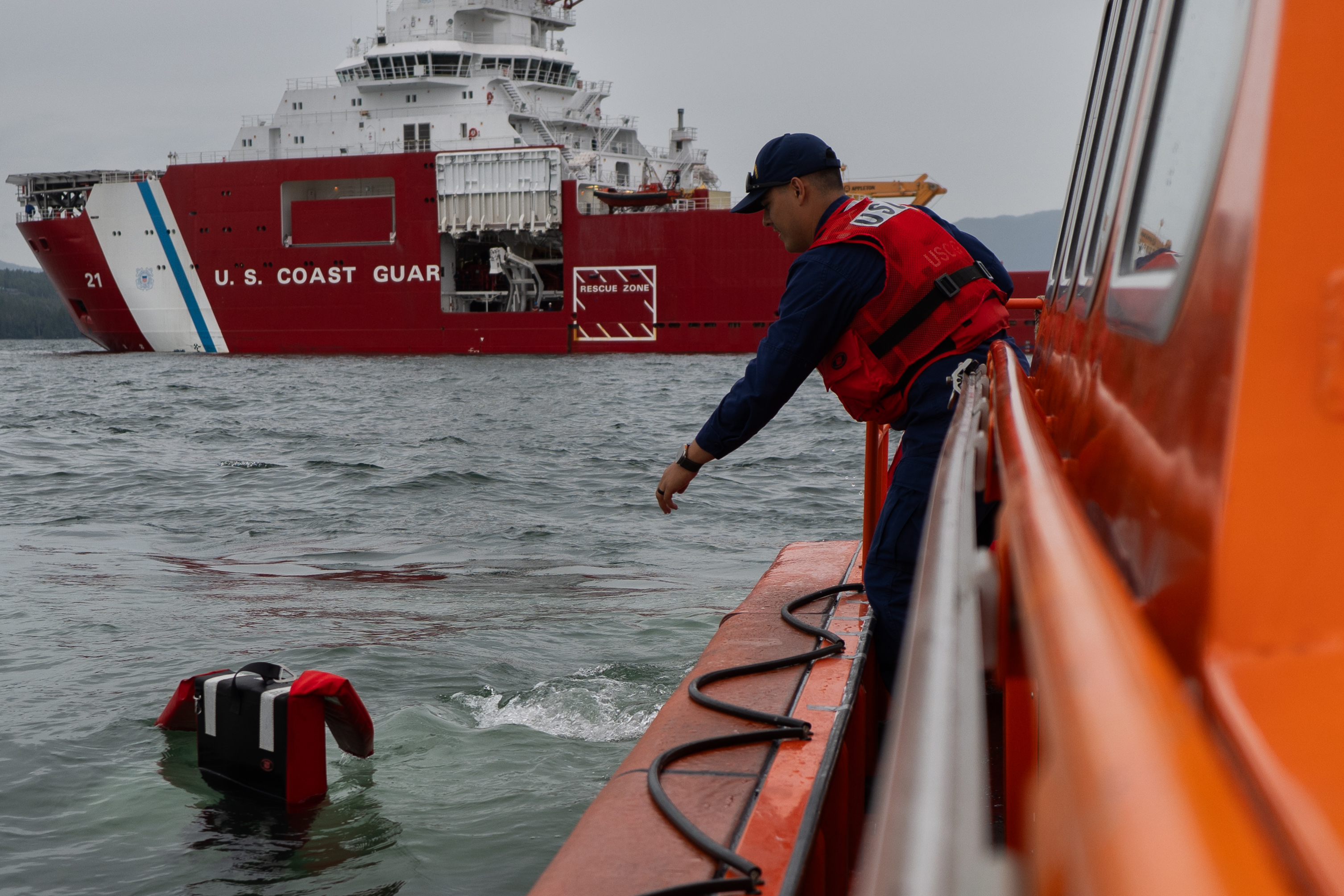
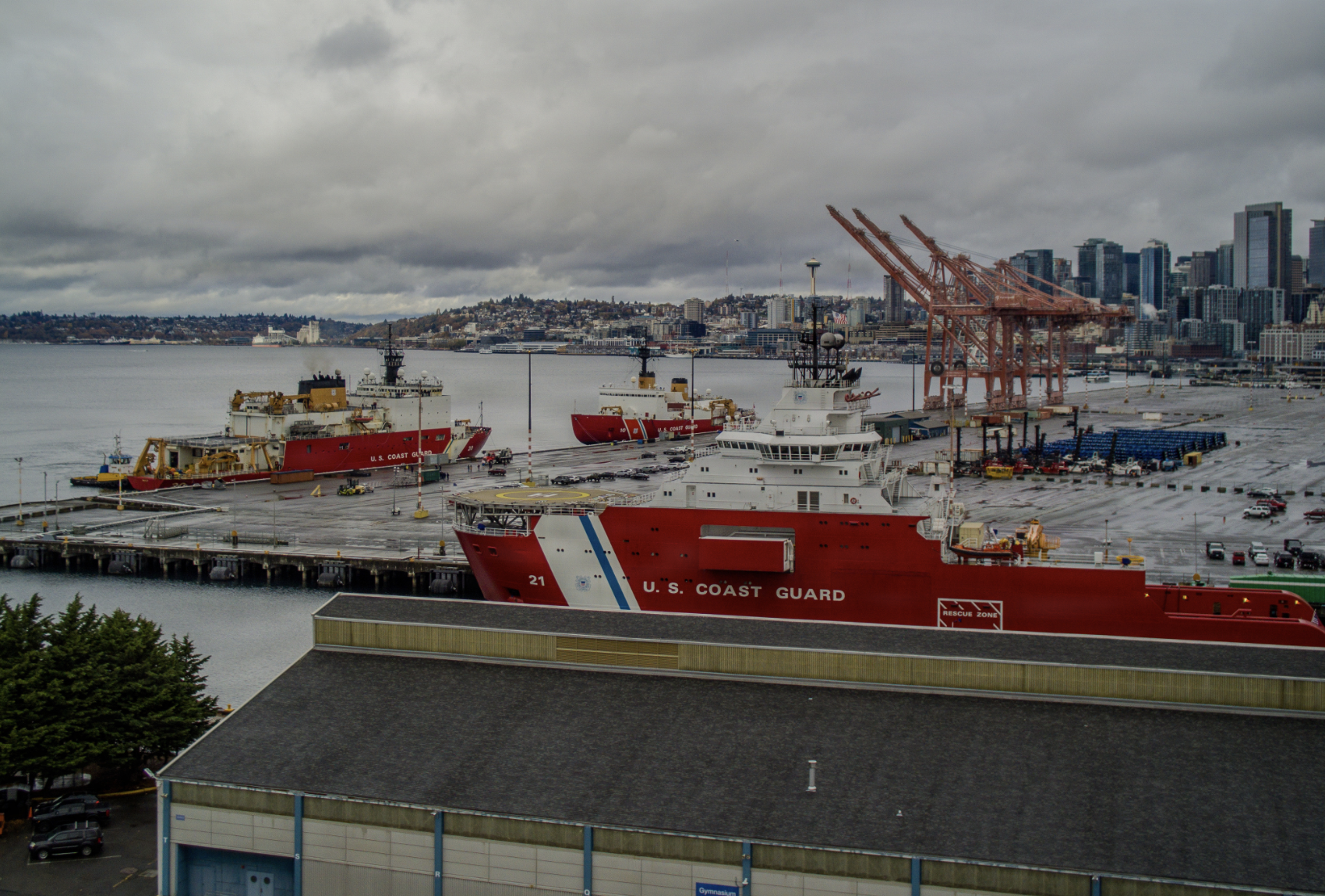
In early October, Storis returned to Seattle, its temporary berth until shore infrastructure is developed in Juneau. By mid-November, the crew had conducted firefighting and flood response drills to ensure the Coast Guard could handle a casualty onboard. Engineering took on more of the maintenance duties, which meant 12 ECO mariners could be relieved of duty, leaving just 10 civilians still on the ship.
Recently, nonrates have begun reporting aboard. Berthings are being retrofitted to increase capacity, which means more bunks in a room. Lounges have been converted into office space, and the damage control locker is almost built out. Tools and equipment, which were often absent early on, continue to arrive.
Ice trials are planned for spring 2026, something Scott is looking forward to since that is one of the reasons she was billeted. Storis is designed to break through at least six feet of ice, but the ice the Coast Guard encountered in September wasn’t that thick. So the crew needs to return to observe and document the ship’s capability. If all goes as planned, Storis will head back to the Arctic next summer where it will be able to project U.S. presence and conduct regular high latitude operations.
In the meantime, the work of getting this unique vessel mission ready remains anything but routine.
“Every day still has an element of discovery,” Kerns said. “It can be frustrating at times, but it’s fascinating.”



 Chuck Hill's CG Blog