“Chinese and Russian Icebreaking News” –Sixty Degrees North

Location of China’s five Antarctic Research Stations and a proposed sixth station. The U.S. operates three Antarctic Research Stations. (Image: ABC News: Maggie Khameneh)

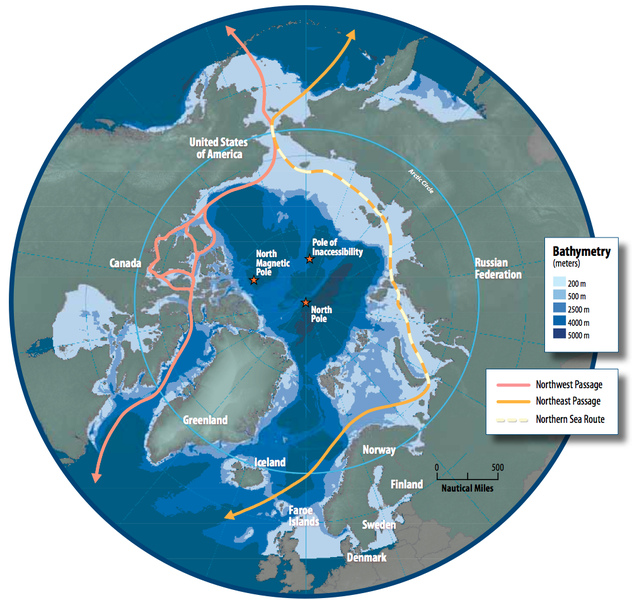
Sixty Degrees North has an interesting report on what is happening with regard to Chinese and Russian icebreakers.

China’s actions in the Arctic have been getting a lot of Press, but their actions in Antarctic deserve more attention.

The Russian section notes for the first time, Russia had eight nuclear powered icebreakers underway. Sanctions and the War in Ukraine have made exports from the Russian Arctic essential. The coverage reveals why Russia has so many icebreakers, that the Russian icebreaker fleet is getting old, and sanctions are making building replacements difficult.


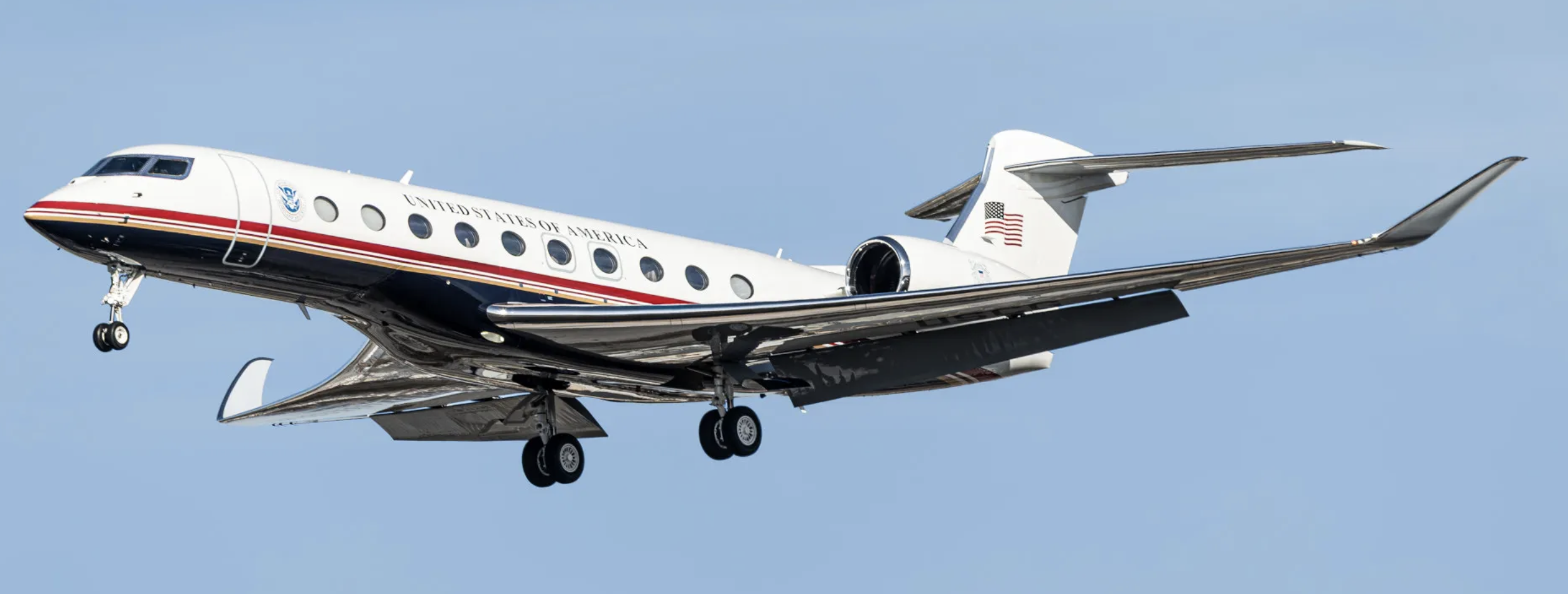
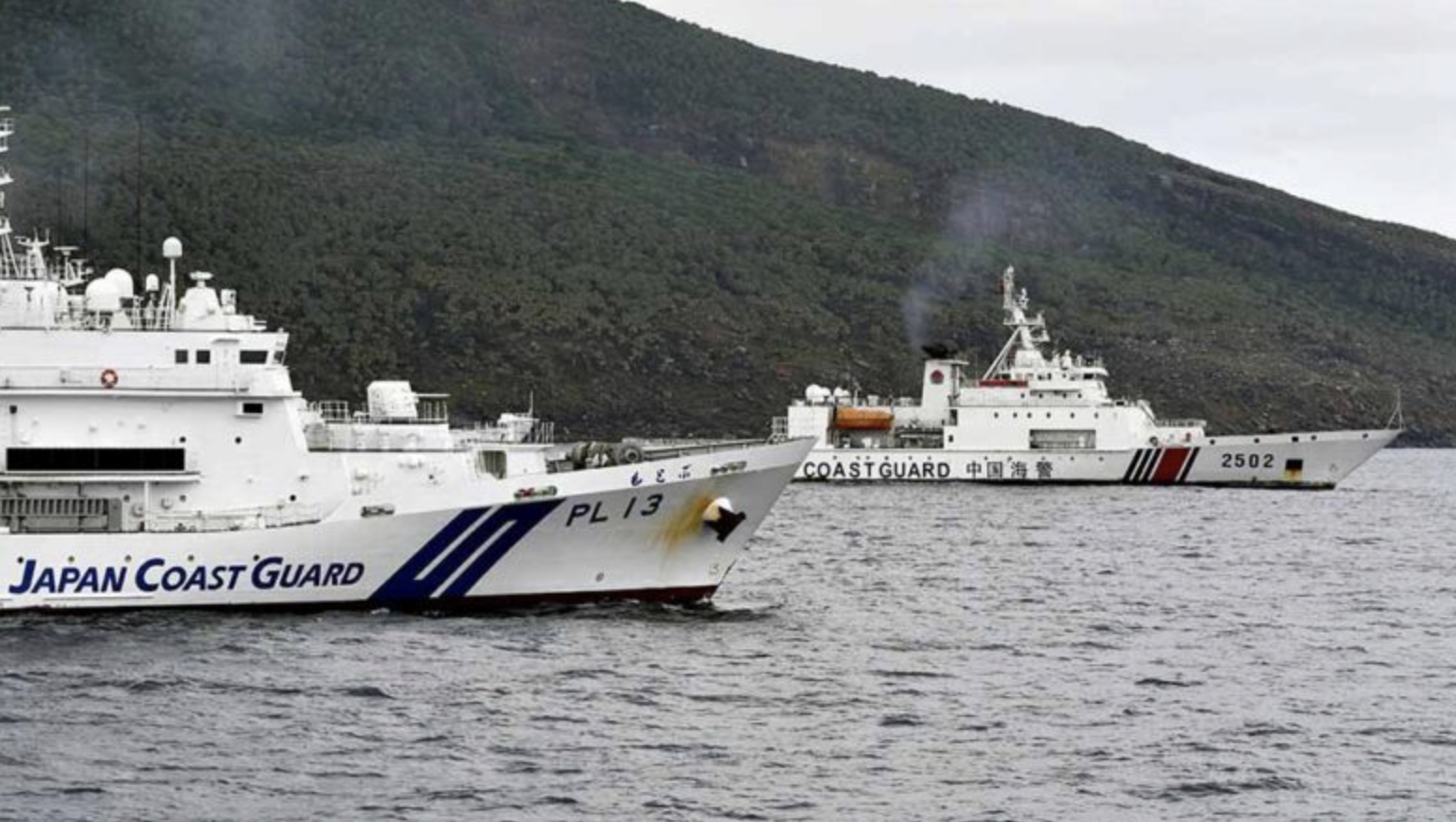
“China Coast Guard may have deployed Wing Loong II drone for first time near Taiwan” –Army Recognition Navy News

Manufactured by AVIC (Aviation Industry Corporation of China), the Wing Loong II is an advanced iteration of the earlier Wing Loong I. It features a wingspan of 20.5 meters, a length of 11 meters, a height of 4.1 meters, a maximum takeoff weight of 4.2 tons, and a payload capacity of up to 480 kilograms. It is powered by a rear-mounted turbocharged engine with a three-bladed propeller, allowing for a top speed of 370 km/h, a service ceiling of 9,900 meters, and a flight endurance exceeding 20 hours. Its satellite communications system enables long-range control over distances of more than 2,000 kilometers, covering the full expanse of the South China Sea and the Taiwan Strait.

Army Recognition Group’s Navy News reports,

“Illustrative images released by the China Coast Guard on December 30, 2025, suggest the operational use of the Wing Loong II unmanned aerial vehicle during the Justice Mission-2025 exercise. If confirmed, this would mark the first publicly documented appearance of the MALE drone in a coast guard mission, highlighting a potential shift in China’s maritime law enforcement capabilities.”

This only illustrates that China is following a world wide trend of employing land based medium altitude long endurance (MALE) UAS for Maritime Domain Awareness. The US Coast Guard is planning on getting some MQ-9s, but if anything, we may be behind the curve. Current MQ-9 maritime users include Canada, India, Italy, Japan, the UK, and the US Navy.

Wing Loong II appears to be similar to the MQ-9, perhaps a bit smaller. There is no indication if it has detect and avoid capability that would allow it to be certifiable in civil airspace like the MQ-9B. The Wing Loong II’s operational history is interesting and perhaps even a bit surprising. It has been used against Iran, Boko Haram, and the Houthi.

The exercise mentioned, Justice Mission 2025, simulated a blockade of Taiwan. Not surprisingly China Coast Guard seemed to have a significant role to play. This series of exercises might be used to normalize occasional movement of significant forces to surround Taiwan. Ultimately this apparent routine may be used to delay response prior to an attempt to forcibly unify Taiwan with the PRC.


“Coast Guard awards contracts to build Arctic Security Cutters” –CG News Release

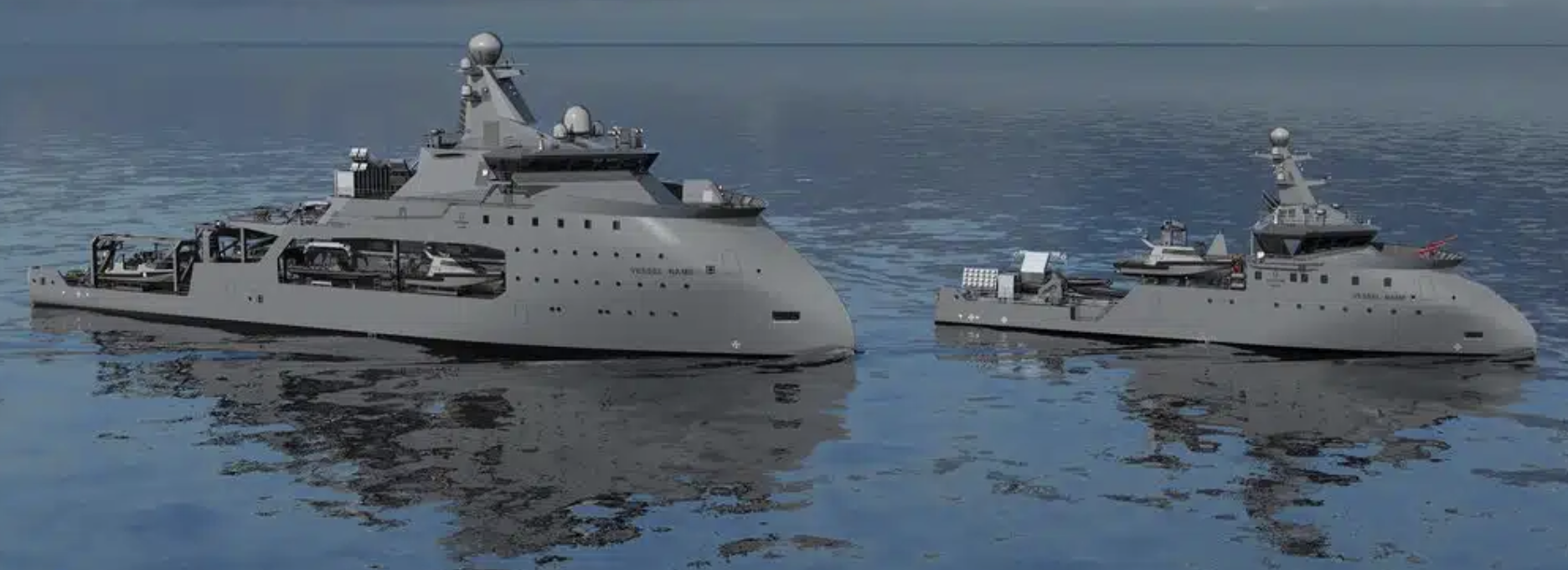
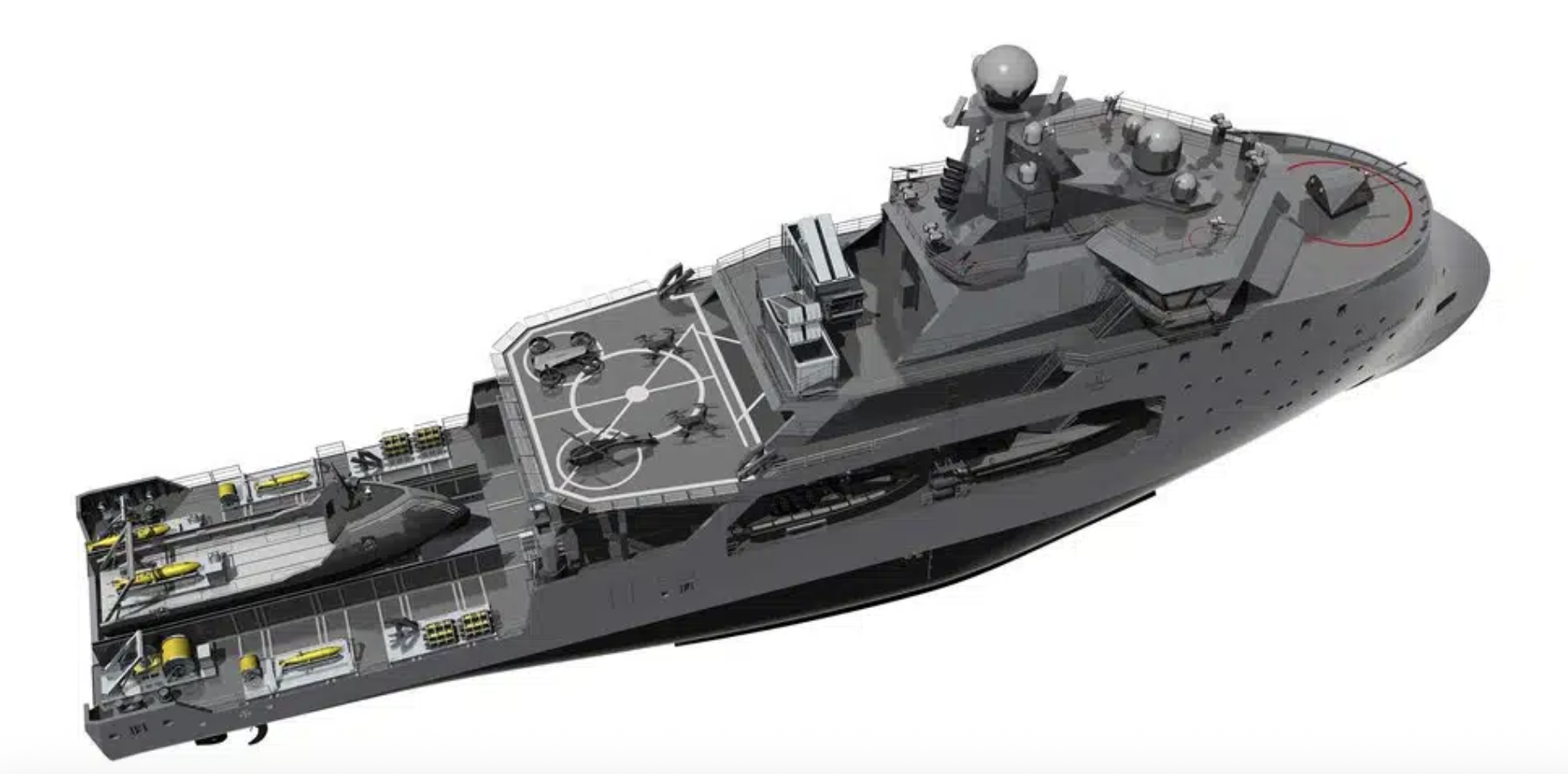
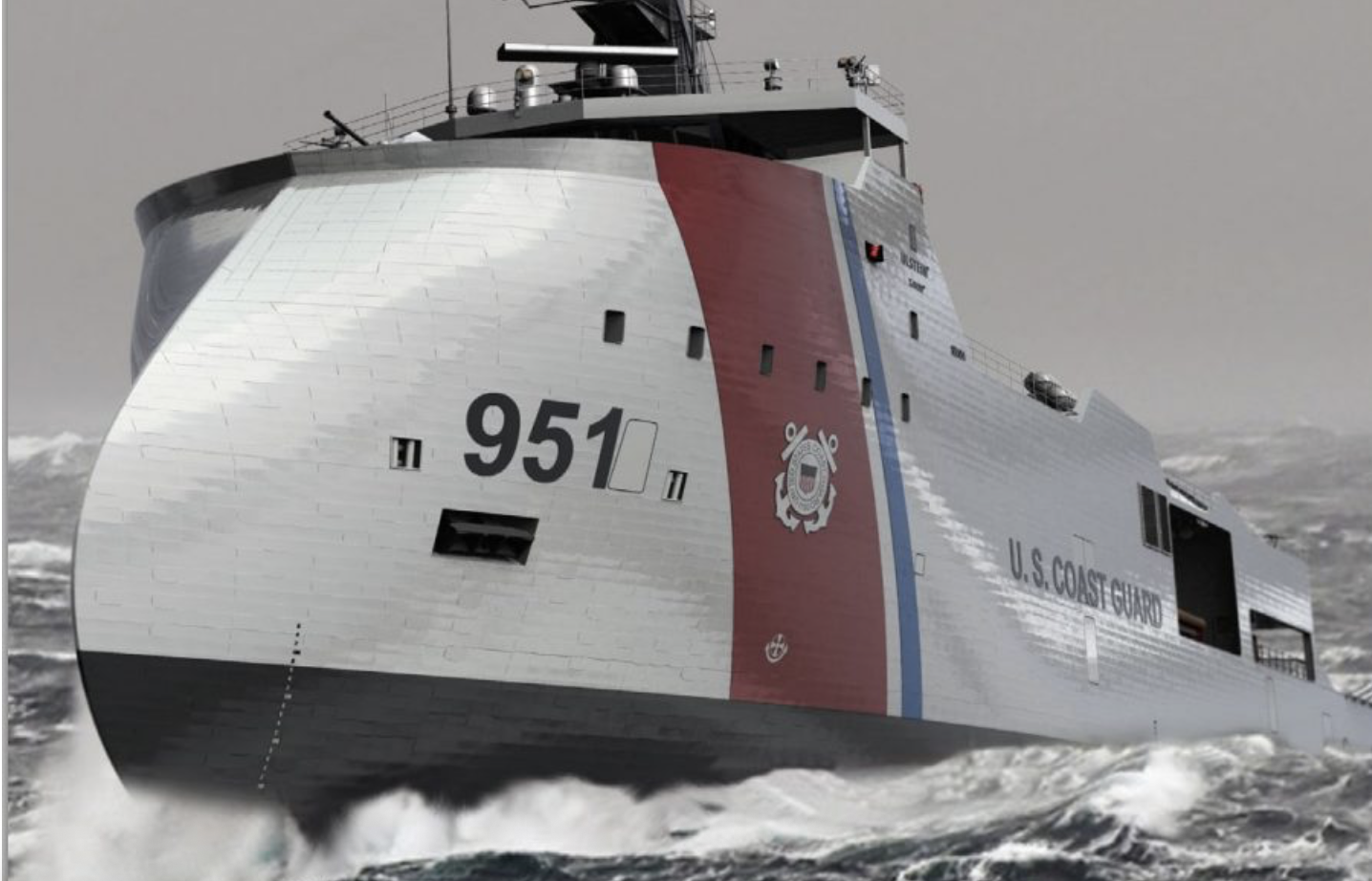
Source: Seaspan. Canadian Coast Guard Multi-Purpose Icebreaker (MPI). Source: Seaspan. This is the ship to be built by the Bollinger/Seaspan/Rauma Marine Constructions (Rauma)/Aker Arctic Team. Two will be built in Finland while four are be built in the US.
Note: The MPI image does not show the right propulsors; it will use Steerprop’s contra-rotating propulsors (CRP). Additionally according to Seaspan, the design could easily be upgraded to PC3. Confirmation from Seaspan and Aker Arctic.

Below are two news releases, first from the Coast Guard and second from Bollinger. This is one of two programs that are ultimately expected to provide eleven Arctic Security Cutters.


Dec. 29, 2025

Coast Guard awards contracts to build Arctic Security Cutters

WASHINGTON — The U.S. Coast Guard announced the award of two contracts to build up to six Arctic Security Cutter (ASC) icebreakers — ships designed to break through and navigate ice-covered waters — between the United States and Finland in a major step forward for America’s national security.

Contracts were awarded Friday to Rauma Marine Constructions Oy of Rauma, Finland, and Bollinger Shipyards Lockport, L.L.C. of Lockport, Louisiana, and are the result of President Donald Trump and Secretary of Homeland Security Kristi Noem’s visionary international agreements with Finland and the historic investments authorized in the President’s One Big Beautiful Bill Act.

The Arctic Security Cutters will defend U.S. sovereignty, secure critical shipping lanes, protect energy and mineral resources, and counter our adversaries’ presence in the Arctic region. They will enable the Coast Guard to control, secure and defend U.S. Alaskan borders, facilitate maritime commerce vital to economic prosperity and strategic mobility, and respond to crises and contingencies in the region.

“America has been an Arctic nation for over 150 years, and we’re finally acting like it under President Trump. Our adversaries continue to look to grow their presence in the Arctic, equipping the Coast Guard with Arctic Security Cutters will help reassert American maritime dominance there,” said Secretary Kristi Noem. “Revitalizing the U.S. Coast Guard’s icebreaking capabilities is crucial for our security and prosperity, and today’s announcement is an important step in that direction.”

“These awards represent decisive action to guarantee American security in the Arctic,” said Adm. Kevin E. Lunday, acting commandant of the Coast Guard. “The Arctic Security Cutters will deliver the essential capability to uphold U.S. sovereignty against adversaries’ aggressive economic and military actions in the Arctic. These cutters will ensure the Coast Guard’s ability to control, secure, and defend our northern border and maritime approaches – without question.”

The contract with Rauma Marine Constructions Oy includes up to two ASCs to be built in Finland, with delivery of the first vessel expected in 2028. The contract with Bollinger Shipyards Lockport, L.L.C. includes up to four ASCs to be built in the United States, with delivery of the first domestically built cutter expected in 2029. This plan is designed to take immediate advantage of our Finnish partners’ icebreaker expertise while coordinating the on-shoring of that expertise in the United States in the long run.

Acquisition of ASCs continues Service’s modernization through Force Design 2028, an initiative introduced by Secretary Noem to transform the Coast Guard into a more agile, capable and responsive fighting force.


BOLLINGER SHIPYARDS SIGNS CONTRACT TO BUILD FOUR U.S. COAST GUARD ARCTIC SECURITY CUTTERS

Construction of ASCs at Bollinger’s Gulf Coast shipbuilding facilities promotes the rapid onshoring of icebreaking technology and swift deployment of these new critical vessels to the fleet. 

LOCKPORT, La. — (December 29, 2025) – Bollinger Shipyards (“Bollinger”) today announced it has signed a contract with the U.S. Coast Guard for the construction of four Arctic Security Cutters (ASCs), a new class of medium polar icebreakers that will expand America’s operational presence in the Arctic.

The contract formalizes Bollinger’s leading role in the historic U.S.–Finland collaboration announced earlier this fall by the White House.   Bollinger will construct ASCs based on the Multi-Purpose Icebreaker design by Seaspan Shipyards of Vancouver, Canada, developed with Aker Arctic Technology Inc of Helsinki, Finland. To support the objectives of the White House, Bollinger has worked in close partnership with Rauma Marine Construction Oy, a Finnish shipyard, to ensure that the US receives these icebreaking capabilities as rapidly as possible.

Work on the four Bollinger-built ASCs will be based at its shipyard in Houma, Louisiana. Construction of the ASCs will be supported by the company’s workforce at multiple facilities across America’s Gulf Coast to meet the aggressive schedule set forth by President Trump.

“The Arctic Security Cutter is one of the most consequential and time-sensitive shipbuilding programs in U.S. Coast Guard history, and today’s contract award is a clear vote of confidence in the men and women of Bollinger,” said Ben Bordelon, President and CEO of Bollinger Shipyards. “The program will be Bollinger’s fifth class of cutters built for the Coast Guard, building on our current Sentinel and Polar Security Cutter programs and more than 40 years of experience in delivering over 187 cutters for the service. With clear direction from President Trump and an aggressive delivery timeline, our mission is straightforward: leverage the full strength of our shipbuilding facilities across the Gulf Coast, along with our proven partners, to deliver these cutters on schedule and mission ready on day one.”

“By centering ASC construction in Houma, Louisiana, while drawing on our broader footprint, we gain the flexibility and capacity to move fast without compromising safety or quality,” Bordelon added. “These ships will operate in some of the harshest conditions on Earth. Our responsibility is to deliver a stable, reliable platform that Coast Guard crews can trust from their first mission underway and for decades to come.”

The contract for four Bollinger-built ASCs is part of a broader program that will ultimately field up to eleven Arctic Security Cutters under the trilateral ICE Pact framework. Together with the ongoing Polar Security Cutter program, ASC will provide the Coast Guard with a modern, layered icebreaking fleet capable of enforcing U.S. sovereignty, protecting American interests against global threats and enabling year-round operations as commercial activity and strategic competition accelerate in the Arctic.

About the Arctic Security Cutter Program

The Arctic Security Cutter is a new class of medium polar icebreakers designed to conduct missions of the U.S. Coast Guard in the world’s most challenging maritime environments.  The ASC will be capable of breaking thick sea ice, sailing thousands of nautical miles without resupply and remaining on-station for extended periods. Along with the future Polar Security Cutter class, ASCs will provide the Coast Guard with the endurance and capability needed to protect U.S. interests in the rapidly evolving Arctic domain.

About Bollinger Shipyards

Bollinger Shipyards is a leading U.S. designer and builder of high-performance military and commercial vessels, including Coast Guard cutters, research vessels, double-hull barges, offshore energy support vessels, tugs, lift boats and other specialized steel and aluminum craft. With more than 80 years of continuous operation, Bollinger today operates 13 facilities strategically located across Louisiana and Mississippi with direct access to the Gulf of America, the Mississippi River and the Intracoastal Waterway, and is the largest vessel repair company in the Gulf region.

Size and Survivability

The choice of the NSC as the basis for the FF(X) has prompted a lot of discussion about their survivability. Ten years ago, I did a post, “Small Warship Survivability,” I think it is still relevant. Basically I found that while it is certainly true that a major hit is more likely to sink a small ship than a large ship, the probability of actually being sunk is, based on US WWII experience, less likely for smaller ships. Looking at the video above, it seems that is the British experience as well.

In addition, it is far more likely that large ships will be taken out of service for a period due to damage that does not sink the ship. The current lack of tenders, repair ships, and floating dry docks makes these periods likely to be relatively long.

Considering the possibility of a war with China, it seems little thought has gone into how the effort will be supplied. In 2018 the Navy frankly told Military Sealift Command that they would probably not be able to escort the logistics ships that supply the US military. Additionally we have so few merchant mariners, we cannot afford to loose any of them.

The head of the Chinese Navy is a submariner. The Chinese have studied the naval war in the Pacific during WWII and they found the Japanese’s primary mistake was not attacking US logistics. We can be pretty sure, if we go to war, Chinese nuclear submarines, supported by their constellation of satellites, will be positioned to ambush our logistics when hostilities start. (I think there may be a possibility of armed merchant ships as well early in the conflict. MSC ships are essentially unarmed making them easy prey.)

Our situation is not unlike that of the Royal Navy in WWII. We do not have enough ships to escort the logistics ships. If we try to make each new ship capable of dealing with every threat, we will be unable to build enough. We need to build enough that are just good enough to handle escorting in areas where the threats are limited to submarines and their limited number of weapons. In areas where the threats more diverse, they will have to be teamed with more capable ships.

We will also need to be able to take out their satellites, but that is a job for Space Force.

It might be possible to escort some ships with Maritime Patrol Aircraft like the P-8. To make that possible we probably need to reopen NAS Adak, but if the vessels are sunk, the aircraft cannot rescue the crew.

An aspect of the Battle of the Atlantic that is frequently overlooked, is how many merchant mariners were rescued by escorts and specialist rescue vessels. If the crews know that there will be no rescue if their ships are sunk, they might not even choose to start.

Check out the video. The success of the corvettes was remarkable.

“Navy’s New Frigate Will Not Have A Vertical Launch System For Missiles” –The War Zone / Maybe a Revolution in Coast Guard Military Readiness

The War Zone reports what seemed obvious from the artists’ renderings, that the FF(x) derived from the National Security Cutter will not have any permanently installed vertical launch missile tubes,

“The initial flight of FF(X) will have a 57mm gun, 2 x 30mm guns, a Mk 49 Rolling Airframe Missile [launcher], various countermeasures, and a flight deck from which to launch helicopters and unmanned systems. Aft of the flight deck, there will be a flexible weapons system, which can accommodate containerized payloads (Counter-UAS, other missiles),” a Navy spokesperson told TWZ today. “Much like the successful DDG-51 [Arleigh Burke class destroyer] program, we are building this in flights. The frigate will be upgraded over successive flights to evolve and has the space reservations needed to improve capability over time.”

Members of the aircraft carrier USS Gerald R. Ford’s crew remove a RIM-116 missile from a Mk 49 launcher during qualification trials.

I must admit, I missed the two 30mm guns, presumably Mk38 Mod4s.

A Revolution in Coast Guard Readiness:

There is reference to containerized, modular, or off-board unmanned systems operating from or in conjunction with the FF(X).

That sounds like the promises that accompanied the LCS, but if the Navy delivers on these systems, it could revolutionize the way the Coast Guard meets its military readiness mission. There are already mine counter measures and missile launching systems.

The Navy could maintain the mission modules and identify those who would operate and maintain them and simply assign them to Coast Guard units upon mobilization. The Coast Guard maintains and operates the platform while the Navy maintains and operates the payload.

Towed Arrays and helicopters is what I think about first, but it might include mine clearance if a US port may have been mined–don’t have to wait for a mine countermeasures ship to get there, just fly in the equipment and the crew, have them operate from a CG station or perhaps a buoy tender.

“USS Savannah (LCS 28) conducts a live-fire demonstration in the Eastern Pacific Ocean utilizing a containerized launching system that fired an SM-6 missile from the ship at a designated target. The exercise demonstrated the modularity and lethality of Littoral Combat Ships and the ability to successfully integrate a containerized weapons system to engage a surface target. The exercise will inform continued testing, evaluation and integration of containerized weapons systems on afloat platforms.”

Mk70 missile launchers could be flown to Alaska and mated to a cutter already in the area.

30mm Mk38 Mod4

30mm Mk38 Mod4

The Navy has decided to replace the 25mm Mk38 gun mounts on Burke class guided missile destroyers with the 30mm Mk38 Mod4. They have completed their first installation. (Marines are also likely to upgrade to the 30mm.)

We have heard the Polar Security Cutter will get the 30mm Mk38 Mod4 but so far no indication other Coast Guard classes will get the weapon.

I would like to see all Coast Guard Cutters armed with the 30mm because unlike the 25, the 30mm can fire an air burst round that is effective against UAS. In addition the 30mm is also significantly more effective against small craft than the 25mm (“nine times the damage to the hull and five times the damage inside the hull”).

“The MK38 MOD4 Machine Gun System (MGS) is an upgrade to the MK38 MOD3 MGS to address deficiencies in meeting Counter Unmanned Aerial Systems (C-UAS) requirements. In addition, the upgrade will also improve performance against surface targets and maintain Anti-Terrorist / Force Protection capabilities. This system will be composed of the MK48 MOD2 Electro-Optical Sight System (EOSS), MK88 MOD4 Gun Mount (GM) and the MK134 MOD0 Console. This contract is to procure the MK88 MOD4 GM and the other components will be procured separately. The system is intended for installation aboard the U.S. Navy and U.S. Coast Guard vessels.”

The Mod4 is significantly different from the earlier Mod 2 and 3 in that the earlier units had the electro-optics mounted on the gun mount. In the case of Mod4, the electro-optics are mounted separately.

MK 48 MOD 2 electro-optical sight system (EOSS)

It might be assumed that any future installations will be the new 30mm, but replacing two of the earlier mods on over 70 DDGs with Mod4s will free up a lot of earlier Mod2 and Mod3 gun mounts. I am afraid the Coast Guard will continue to get 25mm gun mounts for their FRCs and OPCs unless we make a strong case for the 30mm.

“USCGC Myrtle Hazard returns home after Operation Blue Pacific patrol to combat illegal fishing, deepen regional cooperation”

The USCGC Myrtle Hazard (WPC 1139) crew departs Guam for Honolulu on May 13, 2024, marking a significant milestone as the crew prepare for the first drydock maintenance period of approximately four and a half months. Commissioned in 2021, the Myrtle Hazard is the first of three Guam-based Fast Response Cutters to make the transit to Hawaii from Guam, traveling 3,743 miles to undergo this crucial maintenance phase. (U.S. Coast Guard photo by Chief Warrant Officer Sara Muir)

Below is a U.S. Coast Guard Forces Micronesia news release


Dec. 19, 2025

USCGC Myrtle Hazard returns home after Operation Blue Pacific patrol to combat illegal fishing, deepen regional cooperation

SANTA RITA, Guam — The USCGC Myrtle Hazard (WPC 1139) crew returned home Sunday after completing a successful expeditionary patrol under Operation Blue Pacific, deepening partnerships with Pacific nations and bolstering maritime security in the region.

The Sentinel-class fast response cutter crew operated for over 500 hours, patrolling 5,380 nautical miles from Nov. 17 to Dec. 14, with 15 days dedicated to providing a persistent presence in the exclusive economic zones of the Federated States of Micronesia and the Republic of Palau, as well as on the high seas.

Crew members worked closely with partners from FSM and Palau. They enacted the bilateral maritime law enforcement agreements with Pacific partners and embarked law enforcement officers from these nations’ maritime police forces to conduct interoperable patrols. This hands-on cooperation enabled the joint teams to conduct six bilateral boardings and inspections of fishing vessels in the FSM EEZ. On the high seas, the cutter’s crew inspected one vessel under the authority of the Western and Central Pacific Fisheries Commission.

These efforts helped combat illegal fishing and other illicit maritime activities. They also enhanced maritime domain awareness, supported the safe flow of commerce, and promoted good maritime governance.

Myrtle Hazard’s team stepped in to provide critical presence in Palau’s waters during a five-day patrol. This coverage supported Palauan authorities while their Guardian-class patrol boat underwent scheduled maintenance. The patrol went beyond simple transit. It focused on building maritime security, engaging directly with Pacific partners, and enforcing international maritime law through shared operations.

“The relationships we build with our Pacific partners are at the heart of this mission,” said Lt. Emma Saunders, commanding officer of Myrtle Hazard. “Executing bilateral maritime law enforcement operations with our partners allows us to work side by side with the common goals of deterring illicit maritime activities, protecting our oceans, and supporting the communities that rely on their natural resources.”

These actions advanced U.S. Coast Guard priorities, enabling border security, protecting lawful commerce and trade, and staying ready for contingencies. A persistent, low-visibility presence fosters trust and strengthens ties within the Pacific community through shared law-enforcement-led and community-engagement efforts.

To build goodwill, the crew organized five community events in Pohnpei and Kosrae, FSM. These included a volleyball game with locals, swimming lessons for children, and tours of the cutter.

“The community events in Pohnpei and Kosrae were some of our favorite parts of the patrol,” said Saunders. “We have some pretty good athletes on the crew, and sharing the court with the all-stars from the local village teams made for an unforgettable volleyball match full of laughs and friendly competition. The swimming lessons for local youth and cutter tours for veterans and their families were a hit all around. It’s moments like these that really help build lasting relationships.” Crew members further maintained readiness through training, earning new qualifications and currency, and completing 10 drills covering navigation, engineering, damage control, and medical response. During the patrol, Myrtle Hazard crossed the equator. The crew celebrated with traditional ceremonies, including a line-crossing event, a Cutterman ceremony recognizing a member serving more than five years at sea, and a promotion to lieutenant junior grade.

-USCG-

About Operation Blue Pacific Operation Blue Pacific is the U.S. Coast Guard’s strategic, multi-mission campaign to foster security, safety, sovereignty, and economic prosperity across Oceania and the Pacific Islands, working collaboratively with island nations to combat illegal fishing, narcotics, support search and rescue, and build strong mutual maritime governance through ship patrols, training, and shared operations, enhancing regional stability and the U.S.’s role as a trusted partner.

About USCGC Myrtle Hazard The Myrtle Hazard is the 39th 154-foot Sentinel-class FRC, named in honor of the first enlisted woman in the U.S. Coast Guard who served as an electrician and radio operator. It is one of three cutters currently based in Guam, a cornerstone for the U.S. Coast Guard’s ongoing commitment to the U.S. and the people of Oceania.

Turkish-built Hisar-class Offshore Patrol, Another Cutter X

The first Hisar-class OPV TCG Akhisar during sea trials (ASFAT photo)

A Defense News story, “Romania to boost its Black Sea fleet with Turkish-made patrol ship,” prompted me to look up the Hisar class OPV.

ASFAT full armament configuration of the Hisar-class Offshore Patrol Vessel on display at the IDEF25 defence exhibition held in Istanbul. The full armament loadout option for the Hisar-class OPVs includes the addition of eight MİDLAS vertical launch cells, Atmaca anti-ship missiles, and ROKETSAN ASW rocket launcher.

Seeing the model above, ships of this class potentially make pretty good warships, but that should not be too surprising since they are mildly modified versions of Ada class corvettes, using a more efficient but less powerful CODELOD (Combined Diesel-Electric or Diesel) power plant that increased endurance 50%.

I admit a bit of prejudice in favor of this class because of its length. They are 327s. I still have great affection for the 327 I served on. It also looks like it would make a great “Cutter X” my proposal for a true WMEC replacement to be built in greater numbers in lieu of some OPCs.

This class is what I would call a prototyptical modern OPV–medium size (close to 100 meters in length overall), efficient propulsion, moderately fast, helicopter and UAS hangar and flight deck, crew of less than 100, and the ability to function as an escort in wartime.

Specifications:

  • Overall length: 99.56 m (326 ft 8 in)
  • Beam: 14.42 m (47 ft 4 in)
  • Draft: 3.77 m (12 ft 4 in)
  • Maximum speed: 24 knots
  • Displacement: 2300 tons

The Coast Guard definitely needs more large patrol cutter. I would say at least 45. I still think substituting a greater number of cutter X for a smaller number of OPCs is a better idea than the program of record, but given the Navy’s decision to build frigates based on the NSC, I now favor building frigates for the Coast Guard as well. This would require accepting both that that the Coast Guard needs more than 35 large patrol cutters and that the frigates will cost more than OPCs. The payoff would be a more capable Coast Guard whether we are at peace or at war.

It might not add much to the total US budget. To some extent, if the Coast Guard has frigates, the Navy might not need as many.

“U.S. Seizes Second Tanker Near Venezuela, Reuters Reports” –gCaptain

The chart above is a bit disorienting because South is up. 

gCaptain reports,

Dec 20 (Reuters) – The United States is interdicting and seizing a vessel off the coast of Venezuela in international waters, three U.S. officials told Reuters on Saturday, a move that comes just days after U.S. President Donald Trump announced a “blockade” of all sanctioned oil tankers entering and leaving Venezuela.

It also provides an overview of what is happening in regard to the blockade announced by the President.

Apparently the Coast Guard, after seizing the first tanker, is still deeply involved.

“The officials, who were speaking on the condition of anonymity, did not say where the operation was taking place but added the Coast Guard was in the lead.”

The chart at the head of the post was found on Facebook. I can’t vouch for its accuracy, but the list of Navy assets seems to reflect what I have heard from reliable sources so I suspect the Coast Guard assets listed are at least representative, though I question 26135 and 55115 which in silhouette appear to be 87 foot WPBs.

I wish I could give you a more comprehensive overview of what the Coast Guard is doing but I have seen almost nothing official.


“USS St. Louis returns home after deployment near southern border” –The Watch

NORTHCOM’s on line magazine “The Watch” reports,

“TThe USS St. Louis returned to its home port of Mayport, Florida, on November 10 following a surge deployment in support of the United States Coast Guard’s maritime interdiction mission. The U.S. Navy Freedom-variant littoral combat ship, which carried a Navy helicopter and embedded U.S. Coast Guard law enforcement detachment (LEDET), patrolled U.S. waters near the southern border with Mexico, under the direction of the U.S. Northern Command (USNORTHCOM).

This was an unusual deployment. Normally US Navy ships supporting Coast Guard interdiction efforts operate under SOUTHCOM, specifically under Joint Interagency Task Force South.

No interdictions were reported.