There is an interesting conversation going on over at Tim Colton’s Maritime Memos, with Mr. Colton commenting on Governor Romney’s critique of the Navy’s bureaucracy and Reagan era Secretary of the Navy John Lehman coming to Governor Romney’s support.
The argument has some bearing on how the Coast Guard’s own procurement organization should be structured.
“GOVERNOR ROMNEY ON NAVAL SHIPBUILDING
“’While the output has declined, the bureaucracy at the DOD has increased. There is enormous waste. Let me give you an example that was reported to me by former Secretary of the Navy John Lehman. During World War II we built 1,000 ships a year. And there were 1,000 people in the Bureau of Ships. That’s the purchasing department, if you will. In the 1980s we built 17 ships per year, and we had 4,000 people in purchasing. Today we build nine ships a year. Guess how many people are in purchasing? Twenty-five thousand people.’
“Well, not really.
“First, if you define a ship as a large, oceangoing, commissioned vessel or submarine, as we do today, and you count them in the year in which they were delivered, the peak year was 1943, when about 550, not 1,000, were delivered. Remember that a significant number of the simpler designs of naval ships, both new construction and conversions, came out of the merchant shipbuilding program, which was managed by the U.S. Maritime Commission, not by BuShips. On the other hand, BuShips also bought several thousand landing ships, minesweepers, subchasers and other small vessels, plus tens of thousands of small craft – patrol craft, landing craft and yard craft. So this comparison is not apples-to-apples.
“Second, the ships built in WWII were much, much simpler than the ships we build today, and were almost all built in very long runs of a small number of standard designs, requiring much less supervision than today. In those days, as today, there was a three-way split of the work among BuShips, the shipbuilders and a bunch of third-party contractors. Is that split the same today as it was then? No. Does today’s NAVSEA have the same scope of responsibilities as the BuShips of WWII? No. In addition, it’s hard to imagine that BuShips operated with only 1,000 people, because the Maritime Commission had almost 15,000 at its peak, of whom about 5,000 were directly concerned with the shipbuilding program. One suspects that BuShips may have had an authorized strength of 1,000 and supplemented this with several thousand contractors, or folks posted in from other departments. (Does anyone know the correct numbers?) In any case, the number of NAVSEA employees involved in ship procurement today is about 3,000, not 25,000. So this comparison is not apples-to-apples either and, in addition, the figures quoted are not accurate.
“Aren’t politics wonderful? November 9, 2011.
(The Navy’s own figures indicate they had 6,768 ships active at the end of WWII. Of these, about 1,600 were over 1,000 tons. Not only were many of these ships relatively simple and/or standard designs replicated many times, but also construction quality was in many cases sub-standard, which would not have been accepted in peacetime. –Chuck)
“SECRETARY LEHMAN RESPONDS
“John Lehman has sent me the following response to my comment on Governor Romney’s remarks about naval shipbuilding:
"'Yes Really.
” ‘On VJ Day, 1945, there were 5100 ships (defined as greater than 150’ length on the waterline) in commission in the US Navy. All but about 180 had been delivered between 1941 and 1945. While it included many capital ships (115 aircraft carriers),the bulk was made up of “small boys,” destroyers, DE’s, and amphibs, LCS, LCI, LST, etc.( but not counting thousands of Higgins boats and other craft). Thus the average output over the 4 1/2 years was about 1000 per year. Buships had an authorized strength of roughly 1000. Much of the work now done by Navsea in its Supships, field activities and especially in OSD and the Defense agencies, was done by contractors in WWII. Thus when the war was over the overhead disappeared. Now that it is done in-house, and especially in the OSD/Defense Agency house, overhead never disappears, but grows every year. Hence the DBB Pentagon report of last June listing a total of 750,000 civilian employees.
"'The Navy is correct in saying that the current Navsea headquarters currently employs 3,127 full time equivalents (FTEs) Governor Romney is correct in using the 24,000 figure which includes not only headquarters staff but staffs that report to Navsea headquarters, though located outside the beltway, and staffs that are now located in Defense agencies such as Defense Logistics Agency. These are functions that were in the past performed by small offices in Navy headquarters and outside contractors, that have now been subsumed into much larger staffs in the Defense Department. The actual numbers of Navsea workers is well over 50,000. The 24,000 number is an attempt to compare apples (as performed in WWII) to apples (as currently performed). Most of this growth is a consequence of the constant expansion of the DoD bureaucracy.'
“I could argue about some of these numbers but I won’t. Not everyone would agree, but, in my view, John Lehman was the most effective SECNAV of the last 30 years. President Romney’s SECDEF? November 21, 2011.”
I certainly share Mr. Colton’s respect for former Secretary Lehman.
I can’t begin to say what the proper mix of in-house expertise and contracting out is, its probably a moving target anyway, but we have tried contracting out, essentially without in-house expertise as oversight–we know that does not work. In the coming budget battles, you can be sure there will be pressure to cut Acquisitions Directorate (CG-9) staff. The Commandant has said he will resist the temptation to disproportionately cut staff to maximize operations.
The system the Navy used in the first half of the 20th century was highly regarded. My understanding is that it was structured to provide a creative tension between the desirable, the possible, and the affordable represented by the operators, the engineers, and the budgeteers. There was enough in-house expertise within the engineering branch to prepare preliminary ship designs and reasonably accurate cost estimates upon which decisions could be based.
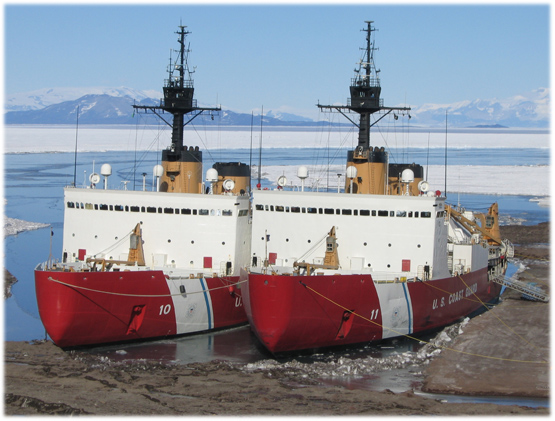
CG-9 still has unmanned air systems and two more classes of ships to procure, a new heavy icebreaker and an Arctic Patrol Cutter/medium icebreaker, in addition to the National Security Cutter, Offshore Patrol Cutter, and Fast Response Cutter. Let’s hope the service finds the right balance.


 Chuck Hill's CG Blog