
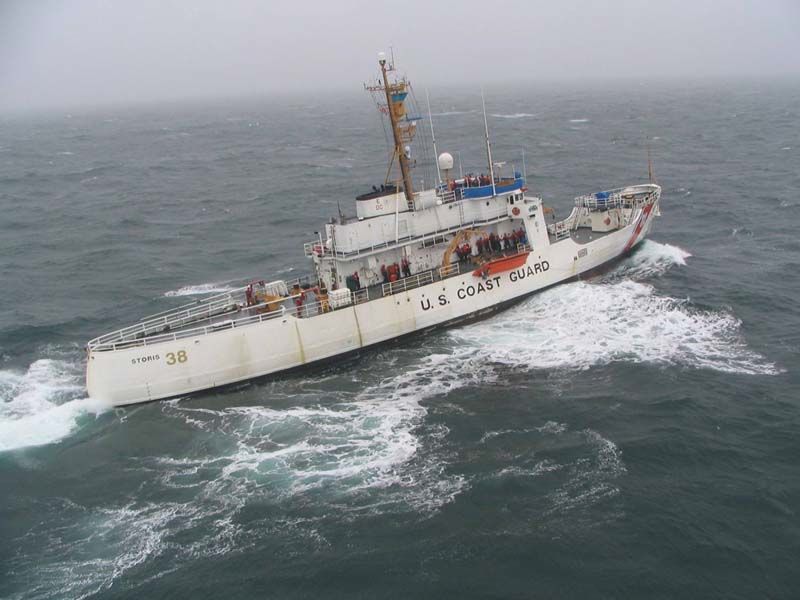
USCGC Storis, 2,030 ton Arctic Patrol Cutter (1942 to 2007).
A recent discussion in the comments of an earlier post, Canadian Coast Guard Multi-Purpose Vessel Recapitalization, led me to a sudden realization that every nation with a coastline in the Arctic, except the US, is building new ice strengthened patrol vessels.
Are we missing something?
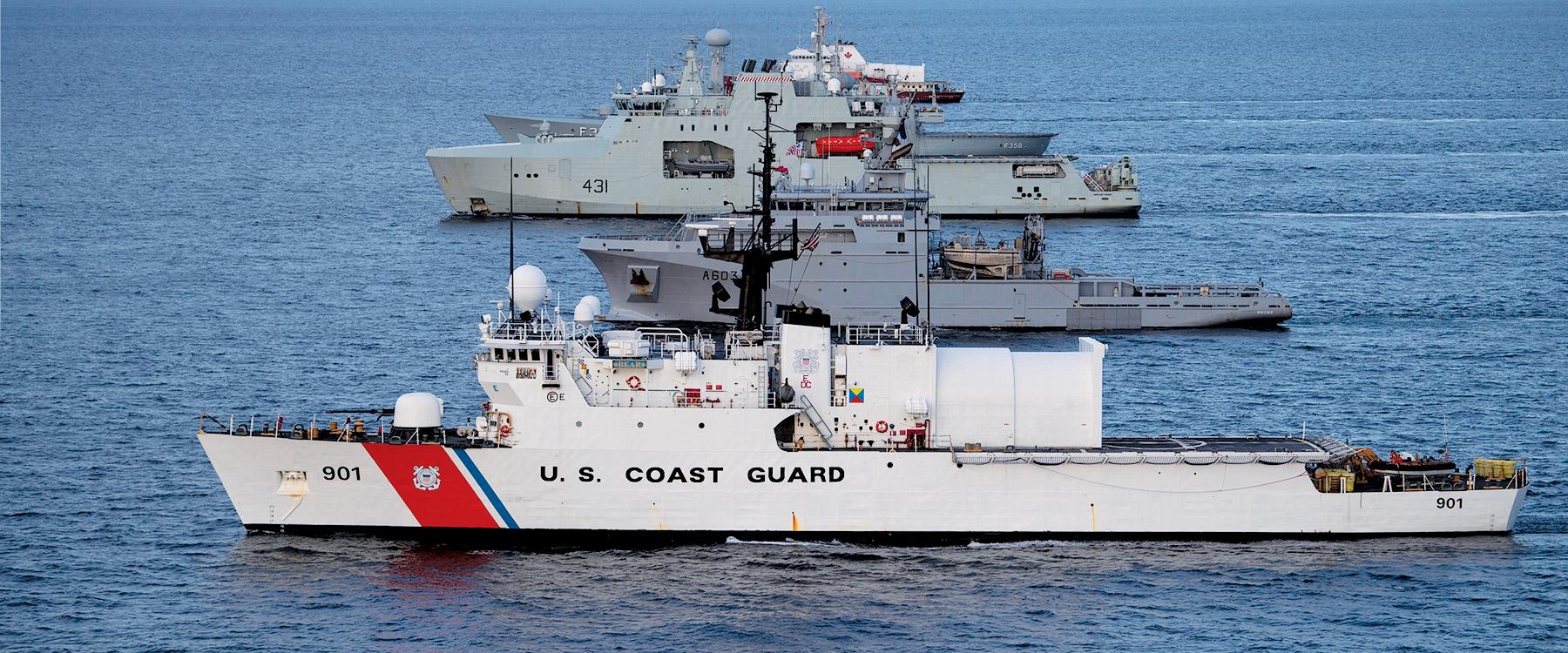
The USCGC Bear (WMEC-901) and allied ships from Canada, Norway, France, and Denmark steam in formation in the North Atlantic Ocean during Operation Nanook in August 2022.
These vessels may have some of the characteristics of icebreakers, but while intended to operate in an icy environment, they would be expected to spend a lot of time on solitary patrol rather than being used primarily to open ice covered waterways for other ships.
In 2011 I did a small survey, “Arctic Patrol Cutter, State of the Art.” The 2011 post looked at four classes, a total of nine ships:
- Denmark’s 1,720 ton Knud Rasmussen class
- New Zealand’s 1,900 ton “Protector” Class
- Denmark’s 3,500 ton Thetis class
- Norway’s 6,375 ton Svalbard Class
(OK, the New Zealand ships are really Antarctic Patrol Vessels. Perhaps I should also note that New Zealand laid up her two “Protector” class patrol ships, as well as another vessel in 2022 because of personnel shortages.)
Now Canada, Denmark, Norway, and Russia–every nation with an Arctic Ocean coast except the US–are building ice-capable patrol vessels.
New programs, built, building or planned, are expected to produce five classes, a total of 25 ships (14 for Canada alone) that might be considered Arctic patrol vessels.
Canada:
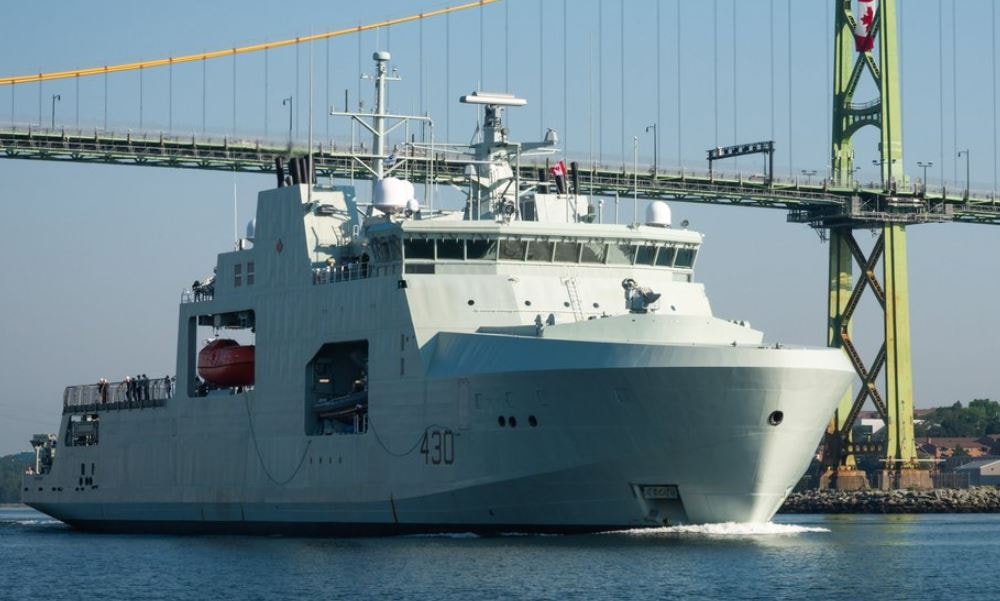
HMCS Harry DeWolf, leaving HMC Dockyard in Halifax and steaming under Angus L. Macdonald
suspension bridge crossing Halifax Harbour in Nova Scotia, Canada
Canada is building a class of eight “Arctic Offshore Patrol Ships,” the Harry DeWolf class, six for their Navy and two for their Coast Guard. First of class was laid down in 2017. Four ships have been completed.
- Displacement: 6,615 tons (full load)
- Length: 103.6 m (339 ft 11 in)
- Beam: 19 m (62 ft 4 in)
- Draft: 5.7 m (18 ft 8 in)
- Propulsion: Diesel electric, 4 × 3.6 MW generators, two 2 × 4.5 MW, twin shaft drive, total 12,000 HP.
- Speed: 17 knots
They are Canadian Polar Class 4, meaning can maintain a speed of 3 knots through ice 4 feet thick.
—

Canadian CG MPV. Credit Aker Arctic.
Canada is also building six “Multi-Purpose Vessels” for the Canadian Coast Guard, that the USCG would probably classify as light icebreakers. I have no information on their speed or horsepower. They are also Canadian Polar Class 4 (speed of 3 knots through ice 4 feet thick. (I will refer to these as CCG MPV.) It might be debated that these are not really patrol vessels since the Canadian Coast Guard is neither a military nor a law enforcement agency. Their primary missions are icebreaking, buoy tending, and cargo, but the Canadian Coast Guard does provide transportation for Canadian law enforcement agencies.
- Displacement: about 8,500 tons
- Length, overall: 99.9 meters (328′)
- Beam: 20.3 meters (66.7′)
- Draft: 6.2 meters (20’4″)
- Propulsion: diesel-electric; two azimuthing propulsion units
- Range 12,000 nautical miles
Russia:
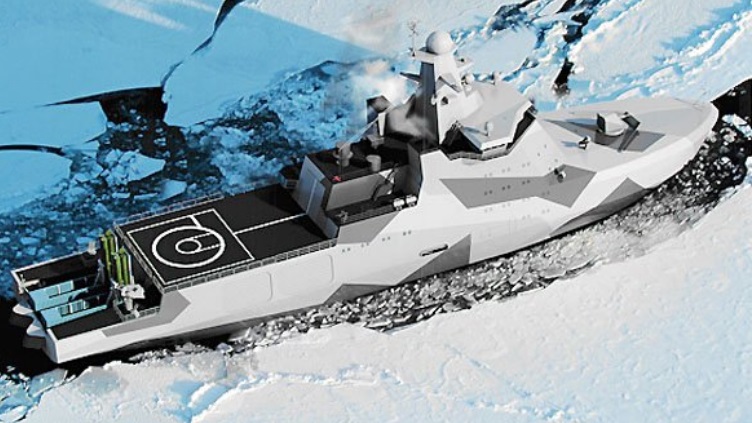
Project 23550, Ivan Papanin class icebreaking patrol vessel with towing capability and containerized cruise missiles.
Russia is building a class of small armed icebreakers, Project 23550. Four ships are planned, two for the Navy and two for the Russian Coast Guard. The first ship was laid down in 2017. None of the class have been completed.
- Displacement: 8,500 tons (full load)
- Length: 114 m (374 ft 0 in)
- Beam: 18 m (59 ft 1 in)
- Draft: 6 m (19 ft 8 in)
- Propulsion: two 6,300-kilowatt propulsion motors for 16,800 HP
- Speed: 18 knots
They are diesel electric with conventional twin shaft drive. They are designed to break ice up to 1.7 meters (5 ft 7 in) thick.
These ships have gotten a lot of press because they have been associated with use of containerized cruise missile systems. Such systems were also associated with the Project 22160 patrol ships, but in spite of the fact that all Project 22160 ships are based in the Black Sea, I have seen nothing to indicate they have actually been used as missile launchers.
The patrol, rather than icebreaker, character of this class is reflected in its length to beam ratio (6.33:1) which is greater than that of any of the other ships looked at here, with the exception of the Thetis class (7.8:1). That is also substantially greater than the length to beam ratios of Glacier (4.18:1), Healy (5.12:1), the Polar class (4.79:1), or Polar Security Cutter (5.19:1).
Otherwise, the Project 23550 ships seem to be logical successors of the Ivan Susanin class of eight small military icebreakers that date back to the 1970s.
Norway:
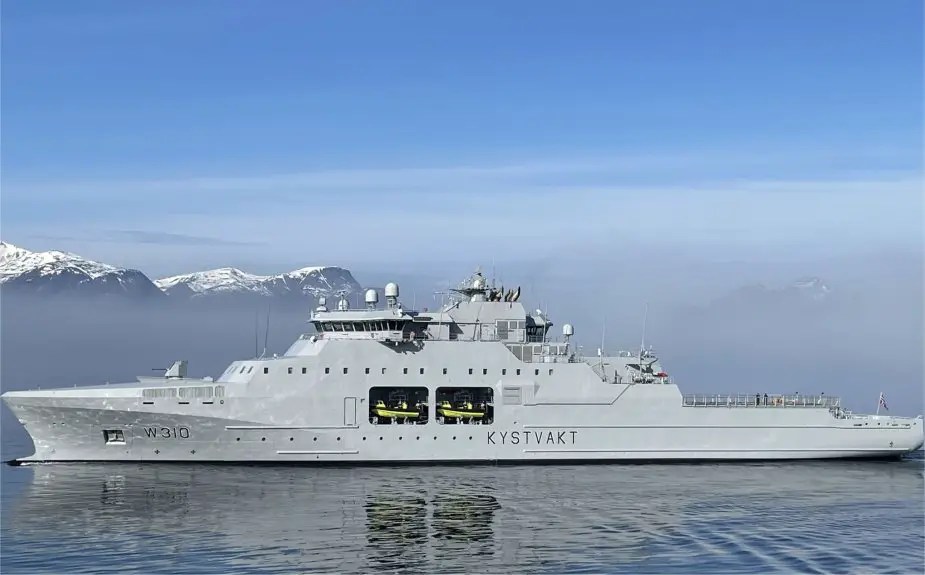
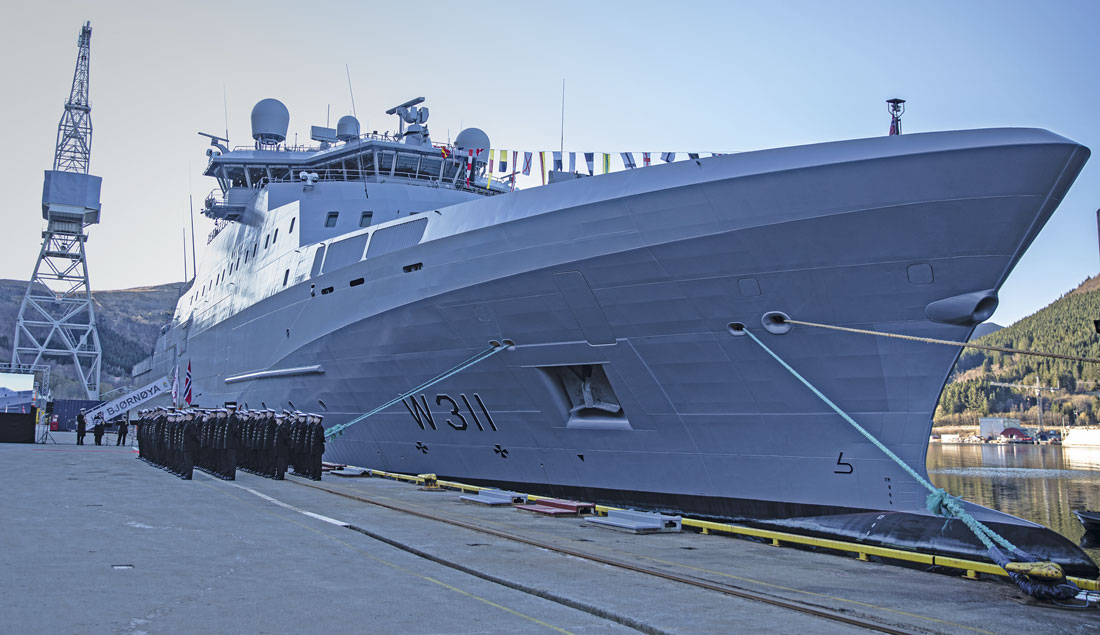
Jan Mayen class Offshore patrol vessel Jan Mayen. (Picture source: Vard)
Norway is completing a three-ship class of ice capable Offshore Patrol Vessels, the Jan Mayen class. The first was laid down in 2020 and at least two are already commissioned, with the third expected this year.
- Displacement: 9,800 tons (Standard, full load will be greater. These are big OPVs.)
- Length: 136.4 meters (447.4 ft) loa
- Beam: 22 meters (72.16 ft)
- Draft: 6.2 meter (20.3 ft)
- Speed: 22 knots.
They are expected to hangar two NH90 helicopters (10,600 kg/23,370 lb max take-off weight) with deck space to land an AW101 (14,600 kg/32,188 lb max TO weight). They are expected to have an endurance of eight weeks, accommodations for 100, collective CBRN protection, and space for containers on deck. (See late addition at the end of the post for more details.)
Denmark:

OMT MPV-80 technical specifications
Denmark is in the preliminary stages of designing a replacement for their Thetis class ice capable frigates. Earlier reports had indicated a consortium has been selected to design and build vessels of a new class (pictured above) referred to as the MPV-80, a design intended to be “future proof” by the incorporation of modular systems. Later information seems to indicate no particular design has been chosen.
Trends:
I was curious to see if there were evolutionary changes over time in this type of ship. Chronologically, based on the “laid down” date of the first ship of class, from earliest to latest for which we have data, the order is:
First Group
- Thetis (Denmark), 1988
- Svalbard (Norway), 2000
- Knud Rasmussen (Denmark), 2005
- Protector class (New Zealand), 2005
Second Group
- Harry DeWolf (Canada), 2016
- Project 23550 (Russia), 2017
- Jan Mayen (Norway), 2020
- Canadian CG MPV, TBD
- Thetis class replacement (Denmark), TBD
We have four new designs to look at. As with the earlier group, some seem more closely related to icebreakers (Svalbard, Harry DeWolf, Project 23550, and CCG MPV classes) while others are more conventional OPVs with adaptations for operating in ice.
Let’s look at how the new members of the two groups compare with their older counterparts.
Size
There has not been a lot of change in size between Svalbard (Norway), 6,375 tons, the only near icebreaker in the earlier group, and her newer Canadian and Russian counterparts. In fact, the Harry DeWolf class is, in some ways, a simplified version of the Svalbard design. The CCG MPV and Russian Project 23550 ships will be about 28.5% larger than the Svalbard. On the other hand, the Project 23550s and CCG MPV can be seen as 229% larger than the Ivan Susanin class of the late 70s, about 30% larger than the Wind class icebreakers of the 1940s, or almost exactly the same size as USS/USCGC Glacier, commissioned in 1955. They are only a little over half the size of USCGC Healy, and about 37% the size of the Polar Security Cutter.
Norway’s 9,800 ton Jan Mayen class, as the only new non-icebreaker example we have for an Arctic Patrol Cutter, represents a big jump in size from the earlier group, 2.8 times as large as the Thetis class, 5.2 times as large as the Protector class, and 5.7 times larger than the Knud Rasmussen class. Also, about 15% larger than the largest of the icebreaker style designs, the Project 23550s and CCG MPV. It should be noted that the Jan Mayen class will not replace the Svalbard, they are replacements for the Nordkapp class ice-strengthened patrol frigates, which were 3,200 tons full load. (See the late addition note at the end of the post. The Jan Mayen class bow does seem to have been designed to break ice.)
Speed
Here we see significant differences between the icebreaker group and the rest. All the icebreaker patrol ships have speeds between 17 and 18, with almost no difference between Svalbard (Norway, 2000) 17.5 knots, Harry DeWolf (Canada, 2016) 17 knots, and Project 23550 (Russia, 2017) 18 knots.
With the exception of the Knud Rasmussen class, (Denmark, 2005) 17 knots, which is a minimalist design, the non-icebreaker patrol ships show remarkable consistency, Thetis (Denmark, 1988), Protector class (New Zealand, 2005), and Jan Mayen (Norway, 2020) all have top speeds of 22 knots.
Propulsion
All the icebreaker designs are diesel electric, but while the Svalbard is powered by Azipods, the newer Harry DeWolf and Project 23550 designs use twin conventional shafts. The CCG MPV seem to replicate the Svalbard’s basic design.
All the older non-icebreaking patrol ships use geared diesel propulsion. The Danish Thetis and Knud Rasmussen classes using single shaft propulsion; the Protector class has twin shafts. The newer, much larger Jan Mayen class have three screws including a center shaft and what appear to be Azipods providing the outer propellers.
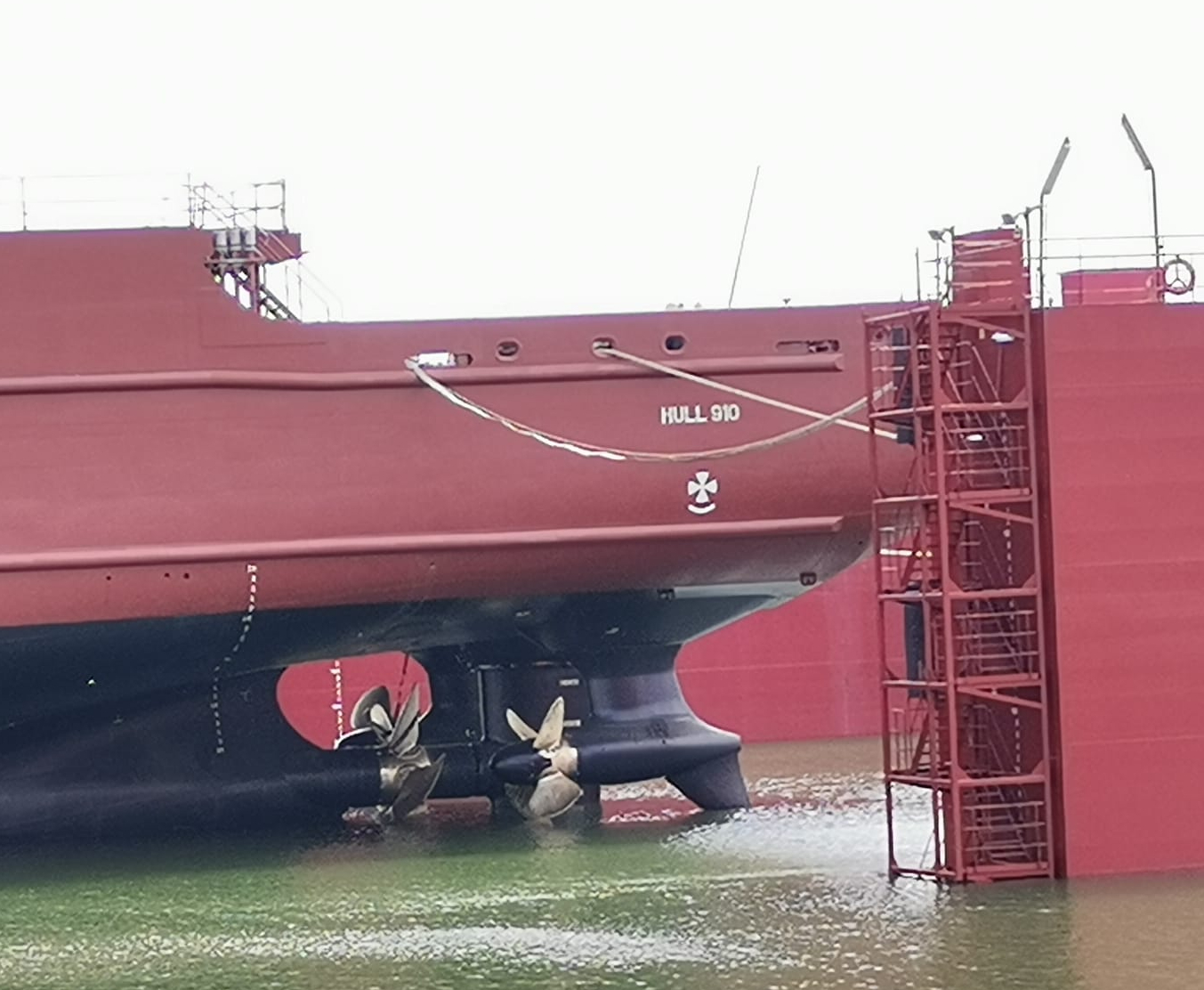
Norwegian Jan Mayen class OPV under construction showing its three propellers, a conventionally shafted prop on the centerline and two rotating units. In addition, there is a rudder behind the centerline pro to allow directional control when the trainable units are idling.
Aviation
All eight of the classes of ships have flight decks and only the small Knud Rasmussen class lack a hangar. Only the newest and largest, the Jan Mayen class has provision for hangaring two helicopters (NH-90s). The Jan Mayen class also has a torpedo magazine for storage of helicopter weapons.
Weapons and Add-On Systems
There seems to be no particular trend in how they are armed as built. Three classes are equipped with 76mm guns, the Thetis and Knud Rasmussen classes from the earlier group and the Russian Project 23550 class from the newer group. Two classes are equipped with 57mm guns, the Norwegian Svalbard and Jan Mayen classes. Two classes are equipped with 25mm guns, the older New Zealand Protector class and the newer Canadian Navy Harry Dewolf class. The Canadian Coast Guard Harry DeWolf and CCG MPV classes, like all Canadian CG cutters is essentially unarmed.
Most of these ships include some provision for upgrades using modular or containerized systems. Even the oldest Danish ships incorporated the StanFlex system, that allowed addition of weapons including AAW and ASuW missiles and ASW torpedoes. The Russian Project 23550 has the reported ability to accept containerized cruise missiles. The Canadian Harry DeWolf class have tested use of a “Towed Reelable Active Passive Sonar” TRAPS. It appears that when Denmark does choose a design for their next class, it will incorporate even more flexibility using the SF Defense “Cube” system.
It should be noted that all of these designs, with the exception of the CCG MPV, were done before the Russian invasion of Ukraine set Europe on edge and before China became a “near Arctic power.” It appears, Denmark is determined that their Arctic Patrol Ship will be upgradable to a credible combatant.
Conclusions:
While the US plans to build medium icebreakers for Arctic patrol, the other four Arctic nations, that have been patrolling Arctic waters for decades are building different types of ship.
We still see both Arctic patrol vessels that include strong icebreaker characteristics and some that do not. (See the late addition note at the end of the post. All the new arctic patrol vessels have icebreaker characteristics.) Maximum speeds have not materially changed, ranging from 17 to 22 knots. Clearly, they value good aviation facilities with preferably at least two aircraft, at least one helicopter and a UAS or second helicopter.
I have to believe the Norwegian Jan Mayen and the Russian Project 23550 represent the latest thinking on an Arctic patrol ship. The Canadian Harry Dewolf class is not much of a departure from the Norwegian Svalbard, and patrol was not a primary driver in the design of the CCG MPV.
The Norwegians have had a decade and a half experience with the Svalbard and apparently decided one icebreaker was enough. They had almost four decades of experience with the Nordkapp class before designing the Jan Mayen.
The Jan Mayen will certainly be able to go anywhere fishing vessels or other non-icebreakers will be able to go in the Arctic. Still, I think they may regret not giving the ships an icebreaker bow. (A second look shows that the Jan Mayen does have a bow designed for icebreaking. See late addition note at the foot of the post.)
The Jan Mayen design might have been a bit different if it had been designed after the Russians attacked Ukraine.
The Project 23550 design is fairly conservative and probably relatively inexpensive. Compared to the preceding Ivan Susanin class, it is more than twice as large, 8,500 vice 3,710 tons; much longer, 374 vice 230 ft; faster, 18 vice 15.4 knots; but perhaps not as well armed if not equipped with containerized cruise missiles. While the project 23550 has a single 76mm gun, the older ships were armed with a twin 76mm and two 30mm Gatling guns. Notably the project 23550 has no credible defense against cruise missile or even UAS. Like all these ships, it was designed before the Russian Navy experienced combat in the Black Sea against Ukraine. 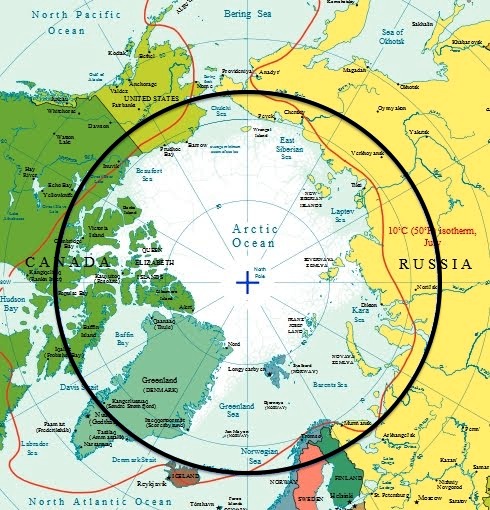
Reflection:
(In the comments below, when I say Arctic, I refer to the area North of the Arctic Circle. There are other definitions.)
The US icebreaker fleet is frequently compared to that of Russia, but the economic case for icebreakers for service in the Arctic for those two nations is completely different. The Russian economy is heavily dependent on mineral extraction from the Arctic. They have a relatively large population in the Arctic. They have several ports in the Arctic from which the minerals are shipped. They need icebreakers to keep those ports open and keep the minerals moving to export markets. Most of their icebreakers operate for commercial purposes. The Russian Navy and Coast Guard operate only a few light icebreakers.
If we compare our icebreaker fleet to that of other Arctic nations, we see an entirely different picture.
Canada has more interests in the Arctic than the US, though much less than Russia. They have a lot more area, and I believe a larger population in the Artic than the US. Their fleet of Polar icebreakers is nowhere near as large as large as that of the Russians. While they have a fairly large number of what the USCG would call light icebreakers, some of which operate in the Arctic during the summer, they have only a couple of what the USCG would call medium icebreakers. They do intend to build a couple of what the USCG would call heavy icebreakers, but currently they have none.
The Mainland of Norway extends about as far north as the Northern most parts of Alaska (71degrees 17′ 26″N). In addition, they administer the Arctic island archipelagoes of Jan Mayen (71 degrees N) and Svalbard (74-81 degrees N), but the Norwegian Navy and Coast Guard operate only one icebreaker, the Svalbard, which the USCG would consider a light icebreaker.
Denmark administers Greenland, most of which is in the Arctic. Cape Morris Jesup, the most northerly point in Greenland is only 383.4 nautical miles (710 km) from the North Pole, while the most northerly point in Alaska, Utgiagvik (formerly Pt. Barrow) is 1127 nautical miles from the Pole, but the Danish Navy has no icebreakers at all.
What does this mean for the US Coast Guard?
The US Coast Guard has not built nor operated any patrol vessels specifically for the Arctic since USCGC Storis was decommissioned in 2007 (commissioned 1942). Storis was one of the ships intended to be replaced by the Deepwater Program of Record.
The Coast Guard has sent at least one National Security Cutter to patrol of the North coast of Alaska.
The Coast Guard has recognized a growing need for presence in the Arctic for SAR, fisheries protection, and potentially pollution response. Currently it appears these missions will go to the planned new class of medium icebreakers, the “Arctic Security Cutters.”
The Arctic Security Cutters are likely to be large, complex, and expensive ships similar to Healy, but I have also seen reference to the need for shallow draft.
For fisheries protection and SAR, the Coast Guard needs the ability to go wherever fishing vessels are likely to go. On the other hand, significant frequent commercial traffic over the length of the Northwest Passage is unlikely, and if it develops, that would be primarily Canada’s responsibility.
It seems we could build two or three light icebreaking Arctic Patrol Cutters of less than 10,000 tons for the price of one medium icebreaker. It is true that they might not be able to go everywhere a medium icebreaker could go, but they could go where most of the missions require. Even light icebreakers can be remarkably capable. Svalbard has made it to the North Pole several times and took over recovery of research buoys for Healy when she had a major machinery casualty. Even little Storis, with only 1,800 HP, transited the Northwest Passage. A Harry DeWolf class also transited the Northwest Passage as part of a circumnavigation of North America.
Perhaps the Coast Guard should consider if perhaps one more Heavy Icebreaker and a number of Arctic Patrol Cutters with light icebreaking capability might be both cheaper and more effective than a new class of medium icebreakers. Given the difficulties we have had with the Polar Security Cutter program, it might also be quicker way to get more Arctic presence.
Late addition:
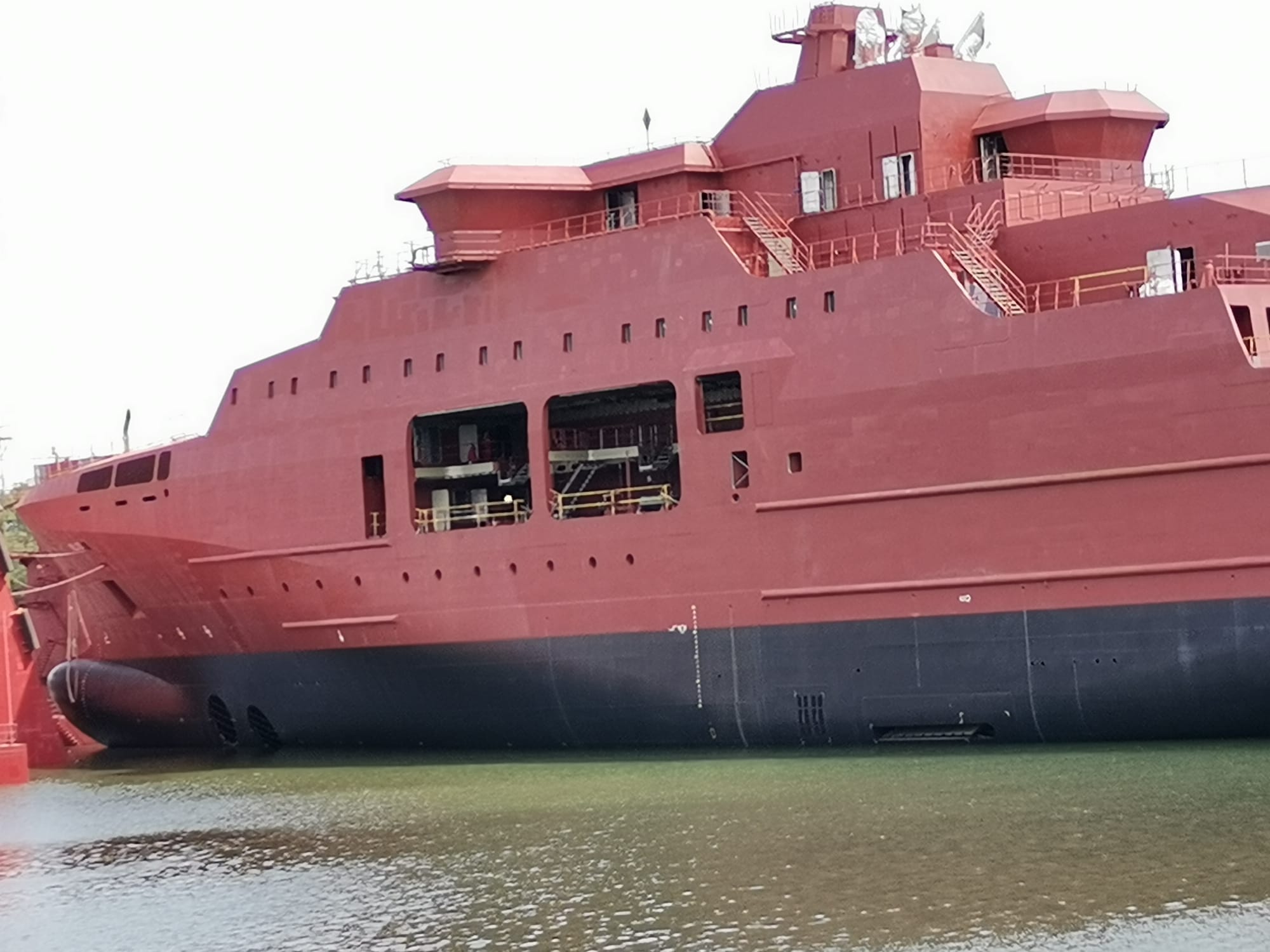
I ran across a diagram of the Knud Rasmussen class after writing the post above and found that the class has the cutaway bow typical of icebreakers. That made me wonder if perhaps I had misjudged the shape of the Jan Rasmussen class bow, so I took another look. If you click on the photo below and look closely at the bow below the waterline you will see that while it is a bulbous bow, the bottom of the bulb is the spoon shape typical of modern icebreakers.
The USCG might do well to buy and build the Jan Mayen design with minimal changes. They may actually have enough horsepower to be considered medium icebreaker, though they are probably much different from what the Coast Guard has been thinking of for their Arctic Security Cutter.
I would also hope that we would apply a sense urgency to the program and not wait until the Polar Security Cutter program is finished.
 Chuck Hill's CG Blog
Great read! I know we will be referring to this write up for years to come.
Agreed, 100%!!!
This is a very nice summary of the Arctic patrol ships.
The Canadian Harry DeWolf-class ships are sometimes referred to as “slushbreakers” due to their mere four-feet continuous icebreaking capability. However, as you said, an Arctic Patrol Cutter would not necessarily need “icebreaker-level” performance. After all, ships like Svalbard have already proven what a modern “light icebreaker” can do. Perhaps a balanced design that trades some ice-going capability for e.g. better seakeeping would be better as the seas bordering the Arctic are not known for their kindness. If the hull and propulsion are built robust enough (e.g. Svalbard’s “POLAR-10 Icebreaker” rating and the Russian “Arc7” ice class are somewhere near Polar Class 3), the ship can brute-force its way through quite a bit more than its nameplate capacity if needed and given enough time, and perhaps team up with an icebreaker if it needs to transit across a heavier ice pack faster.
Speaking of the CCG MPV, its three-dimensional CAD model was on display at CANSEC 2024. Although the post talks about the polar icebreaker (they officially “unveiled” its model; link to Seaspan’s press release at the end), three of the four pictures are actually of the MPV (just the one with the propellers is the polar icebreaker):
https://www.linkedin.com/feed/update/urn:li:activity:7201958914651820032/
You can view the bigger versions even without logging in into LinkedIn by opening the pictures in a new tab/window.
Although there isn’t much new visual information and the artist’s impression was already close to the final product, this appears to be the actual engineering model in CADMATIC environment. For example the main mast is quite different.
…and here’s the press release for the polar icebreaker:
https://www.seaspan.com/press-release/seaspan-shipyards-unveils-digital-model-of-canadas-heavy-polar-icebreaker/
@Tups, I was hoping you would comment. Thanks for the input.
One thing I admired most about the Polar Sea as well as other older vessels was the simplicity and reliability of their design. I see technology hindering a ship, boat, or aircraft ability to carry out its mission due to Technology ie sensors, integrated electronic systems etc.
When we lost the boilers on the Polar Sea you recognize your vulnerability.
in such harsh environments.
Just like the A-10 aircraft; which are highly effective, survivable and simple to repair in an emergency.
I’ve never heard of the 44MLB, 52 or 82 WPB being held at the dock because of a bad servo or electronic sensor.
KISS Keep it simple. Keep it reliable, keep it powerful to work through the harshest environments. So many rely on us to carry out the mission.
Mike Butz
Canada does have a heavy icebreaker still in service. The CCGS Luis St. Laurent.
@Ray West, Canada classifies CCGS Luis St. Laurent as a Heavy Icebreaker but the US Coast Guard would not and I tried to make that distinction clear in what I wrote.
The US Coast Guard bases their classification not on the size of the ship, but on the shaft horsepower, with heavy icebreakers having at least 45,000 HP. CCGS Luis St. Laurent. has about 29,000 HP so the USCG considers it a medium icebreaker.
USCGC Healy is slightly more powerful than CCGS Luis St. Laurent, but it is considered a medium Icebreaker even though it is larger than the Polar Star.
https://vanguardcanada.com/seaspan-shipyards-reveals-cutting-edge-digital-design-for-canadas-new-polar-icebreaker/
@Michael West, Thanks for the up date. This will be a bit larger than the Polar Security Cutter, but very similar in capabilities. There are a lot of similarities. Probably because the two services have been sharing research.
The losing, Marinette/Finncantieri proposal for the Polar Security Cutter was based on the design of the CCG Polar icebreaker, at least as far as they had gotten at the time.
I recently ran across a side view of the Knud Rasmussen class patrol vessels and it appears they have an icebreaker style bow. I don’t think that makes much difference, but it is a difference.
This realization made me wonder if I had missed judged the bow of the Jan Rasmussen too. Looking at the only photo of I have of Jan Rasmussen out of the water that includes the bow is does appear that while it has a bulbous bow the bulb appears to be inclined so that it does look like the effective shape is something like the spoon shape seen on modern icebreakers.
I have added a “late addition” note at the foot of the post that discusses this.
To me it looks like a fairly normal “gooseneck” style bulbous bow used in relatively fast vessels. Utilizing the lower surface for icebreaking would require trimming the bow very high.
However, a well-designed bulbous bow can still work in moderate ice conditions as shown in this video from about 2:00 onwards. The bulbous bow breaks the ice by lifting it before it hits the vertical stem, and the rest of the bow area bends it downwards. The key is not to have the nearly vertical “face” of the bulbous bow hit the ice at any depth.
https://www.youtube.com/watch?v=peXo3LIOoSw
Another photograph of Bjørnøya shows how there’s a sharp “ridge” on top of the bulbous bow. That should help splitting the floes before they come in contact with the stem.
https://maritimt.com/nb/batomtaler/bjornoya-012024
@Tups, thanks for your input. I added the photo and your comments to the end of the post.
Appreciate your continued support.
Patrolling in the US Arctic is hampered by the lack of deep water ports. Dutch Harbor, Nome, and to a lesser extent, St Pauls and Kotzebue (6 ft draft max) are the only places for refueling/resupply on the West Coast of Alaska. So a USCG Arctic Patrol vessel (which I’m thinking would be suitable for Summer operations in up to 4/10th coverage, for example) would either need VERY long legs for a relatively small hull, or shallow enough draft (4-1/2 ft) to pull up to the barge docks at Prudhoe Bay. And where would you homeport? Do maintenance?
I’m almost appalled (almost – in the challenging environment of the Arctic, you WANT a Stonkin’ great copter with two engines, IFR capability and an ocean of fuel) at the size of the helicopters the Norwegian ship supports (bigger than MH-60), and two of them at that. Aviation support is a major driver of ship size. In vessels of this general size, it probably costs at least 15-20 ft of length, and proportional increases in displacement, fuel burn, and cost.
If we ever get the 2nd Great Lakes Icebreaker we probably don’t need, want, or can afford to man or maintain, perhaps we buy a couple more for the Arctic.
The M/V AIVIQ is probably coming soon, so it should be figured into the mix.
Aiviq looks like it will give us some experience with an Arctic Patrol Cutter. We may be able to determine if geared shaft drive is adequate or do we want to go with something like Azipods?
The Deepwater port at Nome should be ready before we see any new light or medium icebreakers.
We should not have any trouble giving these ships adequate endurance.
I don’t think we will be basing Icebreakers or Arctic Patrol vessels of more than about 2000 tons inside or near the Arctic Circle (e.g. Nome). Maybe Kodiak. Still a long way from the Bering Strait, but a lot closer than Seattle. We might see a large Buoy Tender that can break light ice (WLB) in Nome.
Chuck, it just takes so long for the USCG to get anything done. The gestation period is practically two lifetimes for anything. Of course, the National Security Cutter and Fast Response Cutters are the exception.
This is a great article. Sorry that I am late to the party.
The gap in Arctic patrol cutters is precisely why I recommended an ice-strengthened replacement for the National Security Cutter in my USNI article a few months ago.
I also agree with Ryan that the Aiviq might give us a preview of how we might use an Arctic patrol cutter. The speed and aviation capabilities are both lower than what Chuck advocates in this article, but it would still be useful experience.
I also agree with Ryan that that USCGC Mackinaw replacement is another program that could fill that Arctic patrol cutter role. In the aforementioned article, I mentioned the possibility of building more of the Mackinaw replacements and using those to replace the NSC as they come off line. This approach would make sense if we judged that working with the Navy is not important, but working in the Arctic is important. Chuck’s suggestion of displacing the Medium Ice Breakers with Arctic patrol cutters is probably an easier sell than my suggestion. It will be interesting to see if the Mackinaw replacement can hangar an H60.
Am I missing something? Is the Mackinaw replacement going to be anything other than an ice-strengthened WLB (a.k.a. “WLBB”)??
Extending commerce mobility into light ice conditions, doing ATON, and SAR seem to be the only missions for the Great Lakes. Fisheries enforcement, SAR, potential defense activities, and most-drastically, endurance for the Arctic mission-set will be very different. (After all, the US hasn’t been at war with Canada since 1776.😉)
Congress has said the Great Lakes Icebreaker should be as capable as USCGC Mackinaw. It does look a lot like the WLBs but is a much better icebreaker. It may be only 15 feet longer, but it is 75% larger and about 50% more powerful and uses Azipods rather than shaft drive.
There is also the possibility that the Coast Guard could build something more capable. The Canadian Coast Guard vessels discussed above will also operate in the Great Lakes as icebreakers.
Norwegian Coast Guard Christens 3rd and Final Jan Mayen-class OPV – Naval News
Pingback: Russian Project 23550 Icebreaking Patrol Vessel in Sea Trials | Chuck Hill's CG Blog
Chuck, do you have any insight or comment regarding the below “Ice Pact”? I am baffled by Bollinger’s statement considering its challenges with the Polar Security Cutter delivery. Is this agreement a political (and less embarrassing) solution to the U.S. shipbuilding industry’s atrophy of knowledge in building polar ice breakers?
https://www.whitehouse.gov/briefing-room/statements-releases/2024/07/11/biden-harris-administration-announces-new-polar-partnership-ice-pact-alongside-finland-and-canada/
https://www.theguardian.com/world/article/2024/jul/11/us-canada-finland-ice-pact-arctic
https://seapowermagazine.org/bollinger-to-play-critical-role-in-new-polar-partnership-ice-pact/
@etgonehome, Thanks for bringing in the Whitehouse statement, I had not seen that. Everything I know about it was in the post I did. Clearly the American and Canadian projects are hoping to benefit from Finland’s expertise.
Pingback: ICE Pact | Chuck Hill's CG Blog
“Russia conducts Arctic trials of new Ivan Papanin combat icebreaker to expand control over strategic maritime zones.”
https://www.armyrecognition.com/news/navy-news/2025/russia-conducts-arctic-trials-of-new-ivan-papanin-combat-icebreaker-to-expand-control-over-strategic-maritime-zones#google_vignette