

Based on the Coast Guard Historian’s timeline, https://www.history.uscg.mil/research/chronology/
With inspiration from Mike Kelso
November 23

The staff of the Boston District personnel office celebrate VJ day.
[190530-G-G0000-3018]

1970 – Editorial cartoon run during the Kudirka Incident. Credit New York Times
1970 Simas I. Kudirka, a Lithuanian seaman, attempted to defect from his Soviet fishing vessel to CGC Vigilant. The incident occurred during a meeting near Martha’s Vineyard between the Soviets and the U.S. on fishing rights. After consulting with the First District command, the cutter’s commanding officer allowed Soviet crewmen to board the cutter and forcibly remove Kudirka.
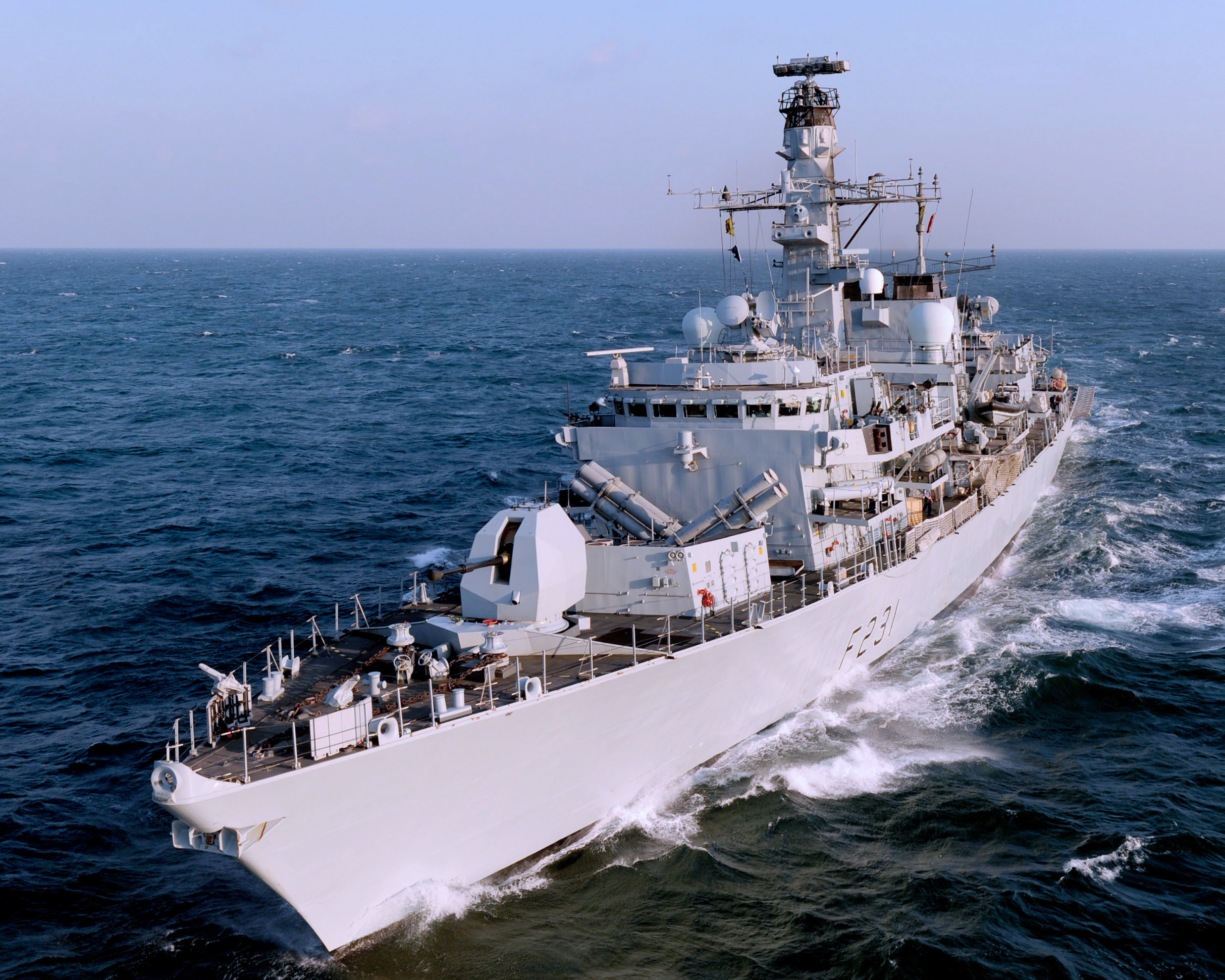
Royal Navy Type 23 frigate HMS Argyll is pictured at the end of Exercise Goalkeeper in the Middle East. Based in Plymouth, HMS Argyll was the longest-serving Type 23 frigate in the Royal Navy. Built in the late 1980s at the Yarrow Yard in Scotstoun on the Clyde (today part of BAE Systems), she was commissioned in 1991. She was decommissioned May 2024.
2014 While on a routine patrol, a Joint Interagency Taskforce South maritime patrol aircraft crew detected a go-fast vessel south of Haiti heading north at 15 knots with fuel barrels and possible contraband on board. Watchstanders from the Coast Guard 7th District Command Center directed HMS Argyll to intercept and conduct a boarding of the vessel. The go-fast began to jettison objects and Argyll launched both of its smallboats. Shortly after, the go-fast vessel with four suspected smugglers aboard became compliant and was boarded by a U.S. Coast Guard law enforcement team assigned to Argyll. The Royal Navy warship’s crew recovered 29 bales of contraband the suspects jettisoned into the water. All bales later tested positive for cocaine. The smuggling vessel was destroyed as a hazard to navigation. In a separate case, the Coast Guard LEDET and crew of Argyll teamed to seize 216 kilograms of cocaine after a Dutch maritime patrol aircraft detected a suspect go-fast and vectored Argyll to the vessel’s location on November 23, 2014. The go-fast vessel was stopped and two suspects were taken into custody. The contraband was offloaded in Mayaguez, Puerto Rico.
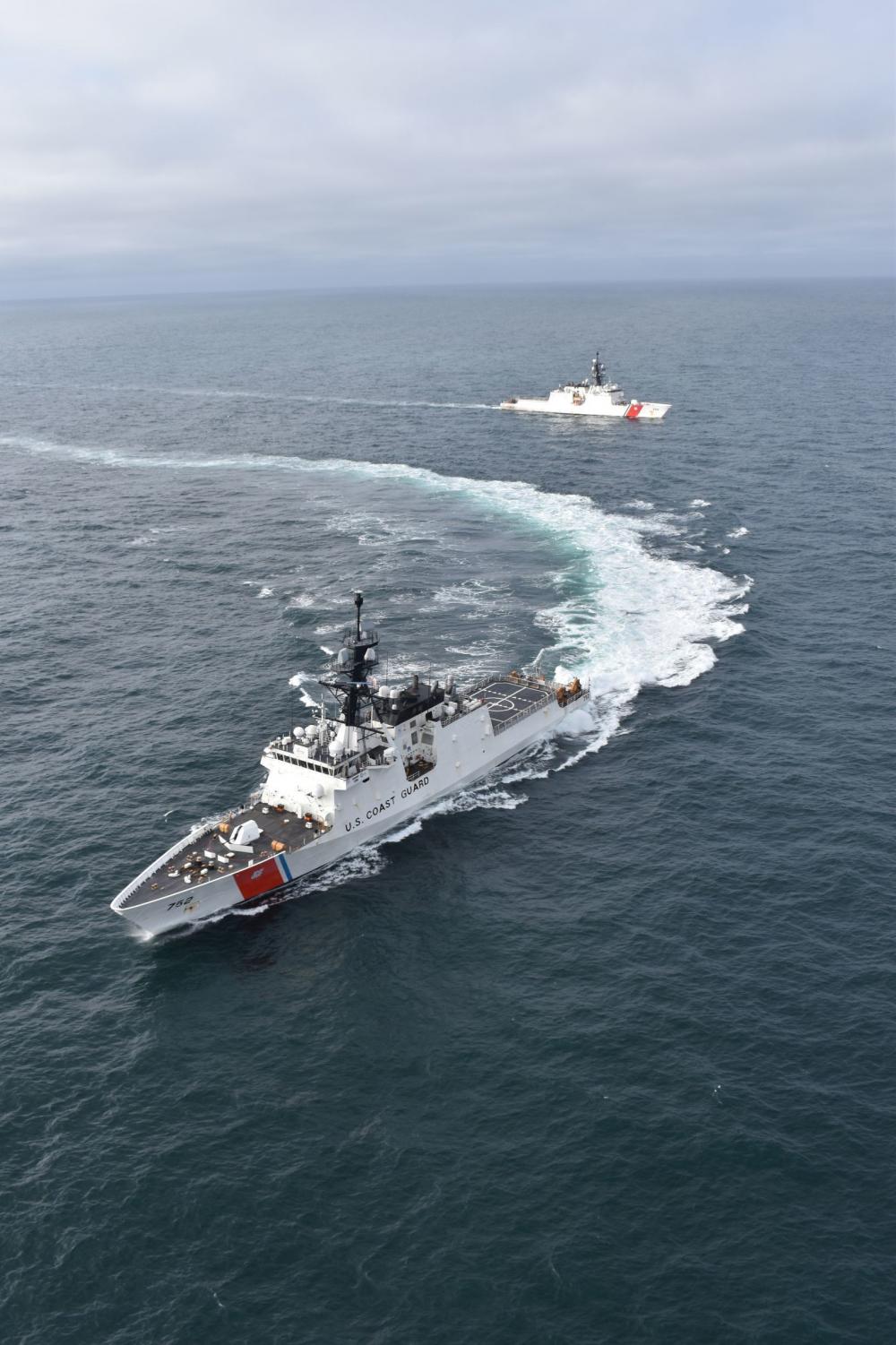
U.S. Coast Guard Cutters Stratton (WMSL 752) and Kimball (WMSL 756) steam in formation while patrolling the U.S.-Russian Maritime Boundary Line (MBL), in the Bering Sea, Sept. 26, 2022. This marked the first time two national security cutters jointly patrolled the MBL above the Arctic Circle. (U.S. Coast Guard courtesy photo).
2022 The Coast Guard Cutter Stratton (WMSL 752) and crew returned to Alameda, Wednesday, November 23, 2022 following a 97-day, multi-mission deployment to the Arctic Ocean and Bering Sea. In August, the cutter and crew departed Alameda to project U.S. sovereignty throughout U.S. Arctic waters, provide search and rescue capabilities in the region, and meet with Alaskan communities. Stratton repeatedly operated along the length of the U.S.-Russian maritime boundary line (MBL) from the Diomede Islands to well above the Arctic Circle, while they patrolled within the U.S. Arctic zone. Stratton also patrolled the U.S.-Canadian MBL in the Beaufort Sea, demonstrating a presence in the distant regions of the Arctic. On September 26, 2024, Stratton and the Coast Guard Cutter Kimball (WMSL 756) became the first national security cutters to jointly patrol the U.S.-Russian MBL above the Arctic Circle. The operational intent was the protection of the sovereign rights of the U.S. and the promotion of international maritime norms through Coast Guard presence and influence in this increasingly strategic and competitive region. Stratton’s crew supported multiple search and rescue cases during their patrol, including rescuing two fishermen from a disabled vessel 180 miles off the Oregon coast while Stratton was transiting to the Arctic. The crew towed a 66-foot disabled fishing vessel toward shore and then transferred the vessel and survivors to a Coast Guard Station Coos Bay 47-foot Motor Lifeboat crew, approximately 45 miles offshore Coos Bay, Oregon. Stratton’s crew also coordinated with Air Station Kodiak aircrews and the Alaska State Troopers to help locate a family stranded on the remote shores of Kotzebue Bay, Alaska, after their boat capsized. Stratton and the Canadian Coast Guard Ship Sir Wilfrid Laurier crews conducted an Arctic search-and-rescue exercise near Point Hope, Alaska. The crews exercised bilateral coordination to locate a simulated vessel in distress using Stratton’s Scan Eagle unmanned aerial system and operations specialists aboard Stratton, who directed the Canadian small boat crew toward the distressed vessel while watching a live feed from the overhead drone. The Canadian small boat located, recovered, and returned the distressed vessel to Stratton. While operating near and above the Arctic Circle, Stratton’s crew conducted multiple outreach events with community members and key leaders in Kaktovik and Utqiagvik on Alaska’s North Slope. The crew also visited the village of Savoonga on Saint Lawrence Island, Alaska.
 Chuck Hill's CG Blog
It’s both impressive and embarrassing that Vigilant is still serving
She was already six years old when this happened. Now 60 years old, and yes, our enlisted maintainers can be proud and some of our past leadership should be embarrassed.
Yeah, I of course looked her up earlier on Wikipedia and saw she was commissioned in Oct ’64 (a year younger than me.)
And it struck me as I’ve recently been reading about how the Royal Navy will be decommissioning the frigate HMS Northumberland. She is reported to have a rotten keel and is determined uneconomical to repair. She’s 30 years younger than Vigilant
I was just out of the academy when the incident happened, and it made a lasting impression on me and the Coast Guard.
@WB HMS Northumberland is probably only “uneconomical to repair” because the Royal Navy can’t man the ships they have and if repaired there would be very few years before her replacement was delivered.